Connect with us

Politics

The hilarious delusions of the Tory wets

Published

on

The hilarious delusions of the Tory wets

God love the ‘centrists’. It doesn’t matter how many times the world shows it has moved on, how stubbornly insoluble today’s problems prove to be to their insipid, deluded technocracy – nothing can dent their conviction that the future belongs to them, or dampen their thirst for a Sunday broadcast round.

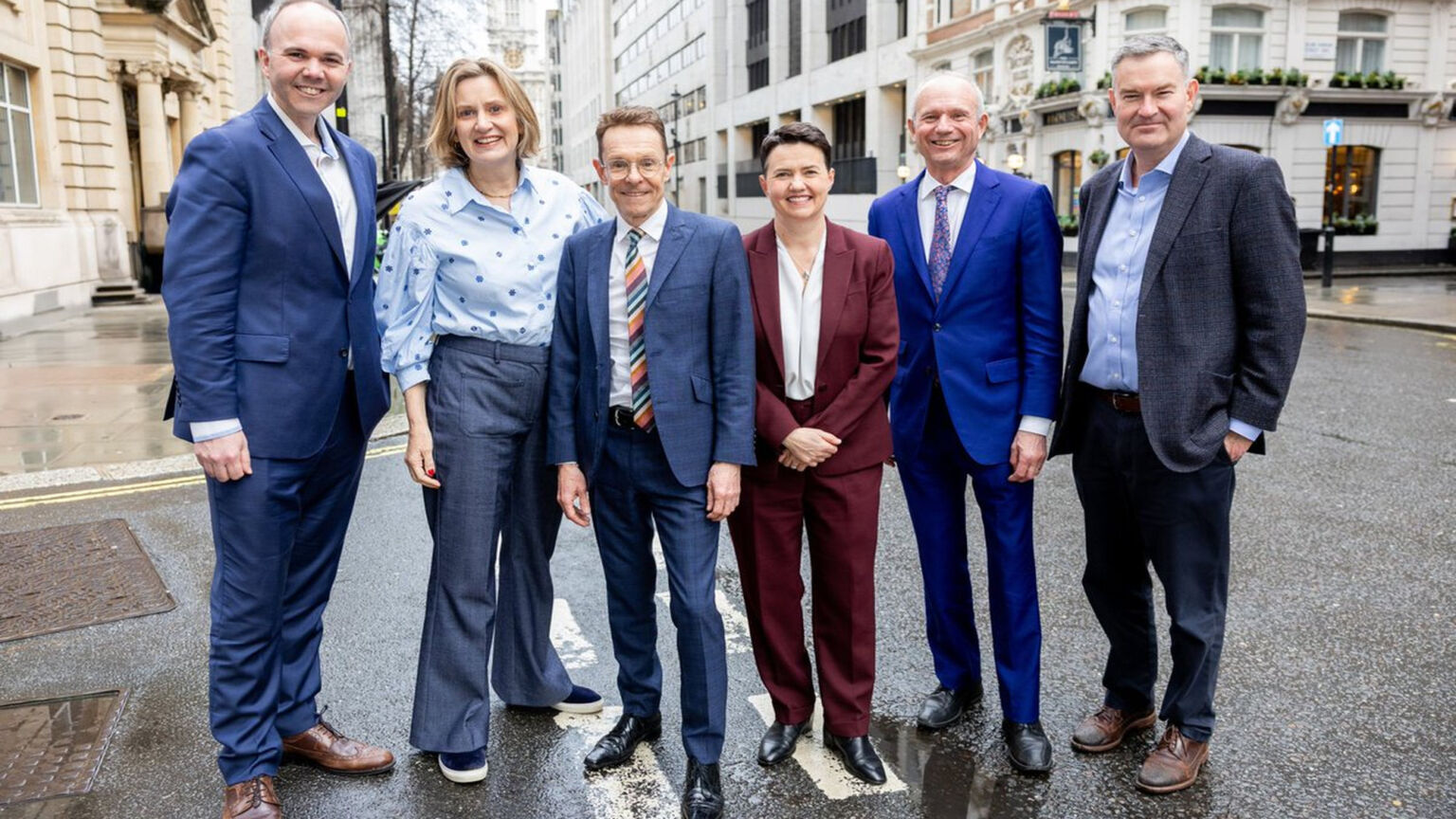
Enter stage (centre-)right, Prosper UK – a new Tory-wet initiative with all the energy of a third-rate management consultancy, and the corporate branding to match. At a launch event in London this week, the new group laid down the gauntlet to Kemi Badenoch’s Conservative Party, calling for it to stake out a ‘practical, pragmatic’ alternative to Keir Starmer’s profligate Labour and Nigel Farage’s populist Reform. The old boys down the Dog and Duck have been talking about little else since.

It was a roll-call of yesterday’s men and women – former Tory ministers and politicians who we had all too briefly been allowed to forget. Andy Street, Ruth Davidson, David Gauke, Amber Rudd. One by one, they took to the lectern to decry populism and extol the virtues of blue-rinsed Blairism. They might not have used that phrase, but it is about the measure of their technocratic, Third Way outlook – one that is gripped by the conviction it is still the early 2000s.

Advertisement

This wasn’t another launch of another new centrist party. At the very least, Prosper UK has learned the lesson of Change UK – that unholy alliance of anti-Brexit Tories and Labourites that sent lobby journalists into raptures before being humiliated at the 2019 European elections. Instead, the assorted Tory sensibles called Prosper ‘a movement’, aimed at ‘reaching out to the whole country’, and building a ‘broad church’ within the Conservative Party, deploying every tired cliché at their disposal.

Inspiring it wasn’t. As with all of history’s most galvanising public meetings, it began with the chair – in this case, former mayor of Birmingham Andy Street – directing the journalists assembled to look at a handout, laying out some polling. They say you campaign in poetry and govern in prose. This lot want to campaign in PowerPoint and never govern again.

Advertisement

Enjoying spiked?

Why not make an instant, one-off donation?

We are funded by you. Thank you!

Advertisement


Please wait…

Advertisement
Advertisement

You’ll have heard it all before. That you can only win elections from the centre ground. That much of the nation has been left ‘politically homeless’ by the nasty ‘polarisation’ of left and right. Yada yada. And so Prosper UK charged pollsters More in Common with furnishing these platitudes with some numbers. They asked voters to position themselves on a scale of one to 10, from left to right, concluding that 22million Brits are ‘centre right’ (between a five and a 6.5), of whom seven million ‘feel no parties represent them’.

There are some obvious problems with this. As the Telegraph’s Tim Stanley has pointed out, most people think of themselves as moderate or centrist. The problem is, what passes for moderate or centrist among the political class is wildly different to what is widely held and considered commonsensical among the electorate. The median view on, say, immigration or Net Zero – though eminently reasonable – would scandalise the geniuses of SW1. When this forgotten seven million say they feel unrepresented, that doesn’t mean they are hankering for the lukewarm Cameroon slop this mob appears to be selling.

Advertisement

Cameron’s ghost haunted this launch. You would have thought Dave was a Disraeli-esque titan of One Nation conservatism, rather than one of the last gasps of a bloodless, managerialist era in which vision and ideas gave way to mere ‘electability’. He rode the tide of the global financial crisis into a coalition government in 2010, before sneaking a majority in 2015 off the back of a deeply cynical, not to mention expensive, campaign – plunging activists and resources into key marginals, rather than articulating an inspiring case to the nation.

This is a trick that would also be all but impossible to pull off for Badenoch’s diminished, cash-strapped Conservatives, who can no longer count on the affections of their core vote – much of it lost to the Faragistas – let alone hope to woo the waverers. As top pollster James Johnson argues, you can only ‘reach out’ to the supposed centre of the electorate if you have a strong base of support to begin with. Otherwise, it’s ‘like trying to grow a tree without a trunk’. Plus, thanks to Brexit and Boris, the Tory name is now dirt among precisely the ‘social liberals’ who swooned so hard for Cameron in the first place. The delusional take across the comment pages – that the defection of right-wing MPs Robert Jenrick and Suella Braverman to Reform clears the decks for Badenoch to go the Full Rory Stewart – is, in Johnson’s unminced words, ‘electoral madness’.

You cannot expect to win if you refuse to understand why you lost. Voters haven’t been fooled by the ‘easy answers’ peddled by beguiling populists, they are rebelling against a phoney old consensus that locked them out of politics and produced some of the barmiest ideas ever to be inked in statute. Indeed, it is the supposed sensibles who thought you could make energy scarce and expensive and still have a thriving economy, or impose unprecedented levels of immigration, against voters’ express wishes, without any social consequences whatsoever. (When pressed on migration and greenism at their launch, the Prosperers could only warble a little about trade-offs while staring blankly into the distance.)

Advertisement

These people want to lead a country that no longer exists. They long for a time when the public were demoralised, deprived of political choice; when relative economic and geopolitical stability allowed them to pursue their mad schemes without the nation feeling the full effects of them. Those days are over. Democracy is back. Politics is back. Voters want leaders who will actually listen to them – and clean up the mess left by the David Gaukes of this world. Now it’s the turn of the ‘centrists’ to be left behind.

Tom Slater is editor of spiked. Follow him on X: @Tom_Slater_.

Advertisement

Source link

Advertisement
Continue Reading
Click to comment

Leave a Reply

Your email address will not be published. Required fields are marked *

Politics

Trump’s 2 Words To Sum Up Peter Mandelson’s Fall From Grace

Published

on

Trump's 2 Words To Sum Up Peter Mandelson's Fall From Grace

Donald Trump has appeared to downplay former US ambassador Peter Mandelson’s fall from grace over his links to Jeffrey Epstein.

Mandelson served as the UK’s main link to the Trump administration for much of last year until he was sacked for his friendship with Epstein, the dead paedophile.

After the US Department of Justice released a fresh batch of files unveiling Epstein’s extensive network with the elite over the weekend, it was revealed that Mandelson may have been leaking confidential government information to the disgraced financier.

The peer quit the Labour Party on Sunday night and, after intense backlash, stood down from the House of Lords though his title technically remains.

Advertisement

When reminded by a reporter in the Oval office that Mandelson has been forced to resign over his links to Jeffrey Epstein, Trump replied: “I didn’t know about it. I really don’t know too much about it.

“I know who he is, but it’s… too bad.”

Trump previously claimed not to know who Mandelson was during his most recent state visit to the UK, back in autumn.

“I don’t know him, actually,” he said, at a joint press conference with Keir Starmer.

Advertisement

Asked if he was offended by that, Mandelson brushed it off. The former US ambassador told The Times this week: “He’s so clever.

“I mean, if he had defended me, that would have been embarrassing to the prime minister.

“If he had attacked me, it would have been hurtful to me.”

He also praised the US president in the interview, saying: “You may not like all of Trump’s decisions, but at least he is decisive.”

Advertisement

Trump welcomed Mandelson when he first started in the job a year ago, praising his “beautiful accent” in May and welcoming him into the Oval Office in early September, shortly before he was fired.

Source link

Advertisement
Continue Reading

Politics

PMQs: Who’s Asking the Questions?

Published

on

PMQs: Who’s Asking the Questions?

Johanna Baxter (Lab) Julie Minns (Lab) Kerry McCarthy (Lab) Charlie Dewhirst (Con) Luke Charters (Lab) Alex Baker (Lab) Jonathan Brash (Lab) Neil Hudson (Con)  Alan Strickland (Lab) Helen Hayes (Lab) Layla Moran (LibDem) Ben Goldsborough (Lab) Christine Jardine (LibDem) Chris Coghlan (LibDem)

Source link

Continue Reading

Politics

Is Lady Danbury Leaving Bridgerton? Producer Jess Brownell Speaks Out

Published

on

Luke Thompson and Yerin Ha in Bridgerton's fourth season

Bridgerton showrunner Jess Brownell has a reassuring update for anyone worried about Lady Danbury’s future in the hit period drama.

After three seasons as Queen Charlotte’s right-hand woman in the popular Netflix series, Adjoa Andoh’s character has been seen in the latest run of episodes contemplating whether she wants more for herself.

After Lady Danbury’s declaration that she intends to step back from service, many fans have been concerned that this could mean Adjoa may not be appearing in the coming seasons of Bridgerton.

However, during a recent interview with Deadline, Bridgerton’s executive producer said she and her team have “no intentions” of that being the case.

Advertisement

“I want to say very clearly that we have no intentions of Adjoa stepping back,” she insisted. “She’s still absolutely a part of the story in season five.

She continued: “It was more about wanting to explore the dynamic between a friendship in which there’s a power imbalance, which is very on theme with this season, where we’re looking at the relationship between servants and their employers.”

She continued: “The Queen and Lady Danbury are real friends, but because of the power imbalance, it was interesting to explore what happens when Lady Danbury wants to do something for herself. It was an opportunity to explore new depth for their friendship.”

As Brownell stated, themes of power and class are being explored in all areas of Bridgerton season four, including its central love story between Luke Thompson and Yerin Ha’s characters.

Advertisement

Luke and Yerin recently explained how these divisions led to the setting of one of the stand-out steamy scenes between characters Benedict Bridgerton and Sophie Baek, who grow close after meeting at a masquerade ball early on in season four.

Luke Thompson and Yerin Ha in Bridgerton's fourth season
Luke Thompson and Yerin Ha in Bridgerton’s fourth season

The first half of Bridgerton’s fourth season is currently streaming on Netflix, with part two following on Thursday 26 February.

Source link

Advertisement
Continue Reading

Politics

Rafe Fletcher: Statist Singapore builds homes whilst statist Britain just plans

Published

on

Rafe Fletcher: Statist Singapore builds homes whilst statist Britain just plans

Rafe Fletcher is the founder of CWG and writes The Otium Den Substack

You can regularly eat and drink for free in Singapore.

Just turn up at one of the British property seminars that pepper the city’s function rooms. Developers and agents swallow the cost of a few freeloaders because it has been a fruitful market. Singaporeans are the second largest group of foreign home owners across England and Wales.

Demand isn’t spurred by colonial nostalgia. Rather, Singaporeans can buy a second home in Britain with far less hassle than in Singapore. And developers welcome the liquidity lacking in those supported only by a British-earned income. Just as a punitive tax regime leaves British buyers short of a deposit, so builders find construction can leave them short of a profit once they have navigated nebulous planning diktats.

Advertisement

Confronting the resulting housing bubble may look awkward for the Conservatives. Even in 2024, 37 percent of outright homeowners voted for them, a 12-point lead on Labour in second place. But the consequences of ducking the issues are starker. Those homeowners will see values deplete anyway under Labour’s trajectory of making everyone poorer. And the Conservatives will make no inroads with a generation shut out of the housing market.

It’s a lesser problem in Singapore where 90 per cent of citizens are homeowners. A product of mass public housebuilding under the Housing and Development Board (HDB). Only Singaporeans are eligible to buy these properties. Buyers draw upon their Central Provident Fund (CPF), a forced personal savings system to put down a deposit on HDBs’ subsidised values. Mortgages are offered with fixed interest rates of 2.6 per cent.

The HDB market is heavily restricted. They can’t be purchased by non-citizens and Singaporeans can only own one unit at a time. Re-sales are prohibited for five years, so there’s no “flipping” on the back of sudden value increases. If Singaporeans want to buy a second home, they must enter the fully private market, which constitutes just 20 per cent of the country’s housing stock. Doing so incurs 20 per cent stamp duty on any second property and 30% on additional ones after that.

Hence why buying in Britain is much more attractive where non-resident stamp duty is only two percent. With far lower tax rates and HDBs available at 3.8 times average income, Singaporeans have the means to buy British stock. Penalising such foreign buyers may play well optically. But as it is, they’re vital in getting homes built. Britain’s largest developer Barratt Redrow recently blamed a lack of them for missing its sales target. International capital helps developers meet affordable housing provisions under Section 106 of the Town and Country Planning Act. Without buyers for higher-price units, the think-tank Onward reports that the cost of delivering new homes often exceeds their capital values.

Advertisement

Section 106 is one of many regulatory hurdles strangling supply. Onward’s research shows that small and medium-sized (SME) developers have been effectively priced out of the market. In the late 1980s, SMEs delivered about 40 per cent of new homes; by 2007, 30 per cent; and today just 12 per cent. They don’t have the scale or balance sheet to weather the costly and cumbersome planning permission process.

Mired in such regulation, Britain’s housing policy is hardly less statist than Singapore. But that statism resides in obstructiveness instead of forcefulness. Singapore can build because the state owns 90 per cent of the land (HDBs and most private housing are on 99-year leases). A situation engineered through the Land Acquisition Act of 1966 that empowers the government to buy any land it wishes at current market value. It is frustrating for golfers as the city-state’s few remaining courses are forcibly purchased to make way for new housing. But it gives the government total control over the supply-chain and costs.

A similar land grab is probably only contemplated by Zack Polanski in Britain. And it’s more likely to resemble Zimbabwe if it comes under the Greens. But there are other lessons Britain can learn from Singapore.

Firstly, provide tax-free incentives for young people to save for a house. Robert Colville writes in The Times that Brits with student loans are paying 50p in tax from every pound they earn over £50,000 and 71p over £100,000. Getting a deposit together is often hopeless for even top-earning graduates without help from the bank of mum and dad. Something like Singapore’s CPF would allow workers to save into a specific house-buying account. It need not be compulsory nor state managed. But it should be ring-fenced and explicitly linked to first-home purchase.

Advertisement

Secondly, remove uncertainty. Singapore’s Urban Redevelopment Authority fixes land use, density and infrastructure expectations in advance. Builders operate within known limits. They don’t have to contend with Section 106-esque regulations that leave developers unsure if local housing associations will even buy the affordable housing they’re obligated to provide. Get things built first.

Finally, Britain needs to stop concerning itself with fringe measures that play only to the politics of envy. I recently went to an event at the Seven Palms complex on Singapore’s Sentosa island, an enclave of wealthy foreigners. It had the ghostly feel of many of London’s high-end developments, with owners mostly in absentia. We may criticise the atmosphere created by such projects but they’re incidental to the wider problem. It’s virtue signalling rather than serious policy.

Britain’s housing crisis is not unique amongst developed nations. But alongside an acute supply shortage, it faces weakening demand. If the most talented young people don’t believe there’s a realistic route to buying, they will leave. And house prices will fall anyway while the country gets poorer. Fixing things now may unsettle Conservative voters who sit on high paper valuations. But a reckoning will come anyway. Perhaps those free evenings out in Singapore will start to dwindle.

Singapore shows the benefits of a government that acts forcefully. Britain shows the consequences of a government that meanders – forcing risk onto developers, disincentivising building and earning, and pandering to NIMBYism. Noel Skelton’s property-owning democracy was once an inspiration to a young Lee Kuan Yew.

Advertisement

The Conservatives need to reclaim that legacy to feed aspiration rather than resentment.

Source link

Advertisement
Continue Reading

Politics

Why Cola Tastes Different In Glass Bottles

Published

on

Why Cola Tastes Different In Glass Bottles

Did you know cola is made with a kola nut? The ingredient, which is from Africa, is where the fizzy drink gets its caffeine from.

Of course, some cola brands keep the other parts of their recipe top-secret. But why do beverages made by the same company seem to taste different in a glass bottle, can, and plastic bottle?

Well, according to Rowland King, a director at the glass bottles supplier, Quality Bottles, there’s real science behind the difference.

Why does cola taste different in a glass bottle vs a can or plastic bottle?

Advertisement

First, there’s the chemistry of each material to consider.

“Glass is chemically inert and non-porous, which means it doesn’t react with the drink or absorb flavour compounds,” King said.

“That helps keep the taste exactly as intended from the moment it’s filled to the moment it’s opened”.

Some experts think the polymer lining of tinned fizzy drinks can lead to a milder taste, while it’s possible that acetaldehyde in plastic bottles could affect the flavour.

Advertisement

And carbonation (bubbles) matter, too, King added.

“Fizzy drinks rely on dissolved CO₂ for their bite and freshness. Over time, plastic is slightly permeable to gas, even when sealed.

“Glass isn’t, so carbonation is typically retained more consistently, which can noticeably affect the taste and how it feels to drink.”

The screw or crown caps commonly used on glass bottles provide a tighter seal, too, allowing less CO2 to escape.

Advertisement

“Bottle shape also comes into it,” King continued.

“A narrow bottleneck concentrates aroma and slows down how quickly the drink hits the palate. That subtly changes the flavour perception compared to drinking from a wide can opening or pouring into a cup.”

Then, there’s temperature to consider

I personally love an ice-cold can of diet cola – sometimes called a “fridge cigarette” – because I feel like it stays cooler and crisper than plastic bottles.

Advertisement

But King explained, “Glass bottles are thicker and tend to chill more evenly and stay cold a bit longer once removed from the fridge. Since temperature strongly affects flavour perception, that alone can make the drink seem more refreshing.”

Of course, companies try their hardest to make their product taste as consistent as possible across a range of containers, King stated.

But, he ended, “material science is material science. The container does make a difference, especially with carbonated drinks”.

Advertisement

Source link

Continue Reading

Politics

The House Article | Britain needs a National Pier Service to save our seaside heritage

Published

on

Britain needs a National Pier Service to save our seaside heritage

Grade II-listed Southport Pier, the oldest iron pier in the country (Alamy)


3 min read

Britain’s piers are more than Victorian seaside relics – they define the British coast and the communities that depend on them, driving tourism and underpinning local economies.

Advertisement

Both of us represent constituencies — Worthing West and Southport — where the state of our piers is a huge talking point for constituents.

There are currently 60 operational piers in the UK, down from 150 in the early 20th century. Sadly, last week Storm Ingrid’s 60mph winds destroyed Teignmouth’s famous Grand Pier overnight.

Other British seaside piers face a growing political crisis, with about 20 per cent at risk of being lost due to rising costs, climate change and maintenance issues. Many MPs – us included – are calling for a ‘National Pier Service’ or ‘National Piers Trust’ to manage, preserve and regenerate many of these iconic structures, which are vital to local, seasonal economies.

Advertisement

The benefits of such a model include economies of scale. Centralising key functions such as procurement and maintenance through bulk purchasing and shared contracts, deploying specialist expertise via a dedicated national team, and pooling insurance risks for better terms would reduce expenses and improve quality.

Commercial branding, marketing and events would attract more visitors and generate higher revenues. Centralised training and workforce development would enhance service quality and safety while minimising duplication. Collectively, these efficiencies would make limited public and charitable funding stretch further, enabling the preservation and revitalisation of more piers without placing more strain on local councils and communities.

Southport Pier is the second longest in the country and has a proud history. It closed in 2022 due to its condition, but thanks to £20m funding from central government, the pier is due to be repaired and reopened in 2027.

Advertisement

Worthing’s Grade II-listed art deco pier is a much-loved feature of the town for residents and visitors alike and was named UK Pier of the Year in 2019. Opened in 1862 and reconstructed in 1887 to mark the Jubilee of Queen Victoria, it survived almost complete collapse due to storm damage in 1913 and a huge fire 20 years later that could be seen as far away as Beachy Head. More recently, storm damage caused the pier to be closed for almost three months at the end of last year, during which Beccy supported the borough council’s extensive restoration work.

This month we saw DCMS announce that £1.5bn will be invested in cultural organisations over the next five years to restore national pride. The funding will protect and restore more than 1,000 arts venues, museums, libraries and heritage buildings across the country. The investment will tackle urgent capital needs, preserve local heritage, and provide accessible, no- or low-cost cultural experiences for families. We are campaigning to ensure piers are part of the funding.

This Labour government’s core mission is a decade of renewal, and Britain’s iconic piers are a national symbol of our identity – after 14 years of Tory mismanagement, they should be treated as such.

Coastal towns have long been left behind through the austerity of consecutive Conservative governments, but Labour is now working to tackle regional inequality.

Advertisement

To combine the history and aesthetic of piers with a modern regeneration of coastal economies, let’s invest in rebuilding and refurbishing these iconic British monuments.

Dr Beccy Cooper is the Labour MP for Worthing West and Patrick Hurley is the Labour MP for Southport

Source link

Continue Reading

Politics

What to know about Trump’s $12 billion critical minerals strategy | Energy Pod

Published

on

What to know about Trump’s $12 billion critical minerals strategy | Energy Pod

What to know about Trump’s $12 billion critical minerals strategy | Energy Pod

lead image

Source link

Continue Reading

Politics

Zarah Sultana just showed how solidarity is done

Published

on

Zarah Sultana just showed how solidarity is done

Your Party MP Zarah Sultana has backed the Greens’ candidate Hannah Spencer in the Gorton and Denton by-election later this month. Sultana has also called for left unity and stressed the threat to Muslims posed by the far-right of which Reform UK is part:

Sultana’s statement followed an “awful”, factional statement by the Your Party ‘Grassroots Left’ slate that she has backed. The statement attacks the Greens as ‘pro-capitalist, pro-NATO’ and says that the faction cannot “lend unconditional support” to Spencer.

Of course, no one asked them to or suggested that they should lend unconditional support to anyone. As Sultana pointed out, the far-right is an existential threat to Muslims and other minority groups and defeating fascism has to take priority over purism and posturing. The Workers Party has recognised this and announced it will not stand a candidate to allow support to concentrate behind Spencer to defeat the red, blue and teal Tories.

Advertisement

Zarah Sultana did the right thing by coming out with a clear statement of support. If the whole of Your Party does not galvanise to help the Greens win what is likely to be a tight election between them and the Farage fascists, shame on it.

Featured image via the Canary

Advertisement

Source link

Continue Reading

Politics

Zack Polanski Accuses Nigel Farage Of Avoiding Debate

Published

on

Zack Polanski Accuses Nigel Farage Of Avoiding Debate

Farage said “if you pick a fight which a chimney sweep you get covered in soot” when asked whether he would take Polanski up on the offer.

It comes after the Green Party leader knocked back the chance of a debate with Reform policy chief Zia Yusuf.

Referring to Polanski’s support for drug legalisation, Farage added: “You know, he’s got a fan club. All the heroin smokers think he’s absolutely marvellous.”

But Polanski told HuffPost UK: “Farage is running scared – he doesn’t want to talk about Reform’s super-rich backers, their Russia links, their plans to strip rights away from working people and to introduce charges to use the NHS.”

Advertisement

The Greens are locked in a three-way battle with Reform and Labour in the crunch Gorton and Denton by-election, which takes place on February 26.

Polanski added: “Farage knows that in Gorton and Denton, Labour are out of the race and Hannah Spencer is coming for Reform.

“It’s no surprise Farage is hiding behind cheap jokes – he’s got nothing to gain and everything to lose from going up against someone willing to say it how it is.”

Advertisement

Source link

Continue Reading

Politics

Starmer moves to BLOCK release of more dirt on Mandelson

Published

on

Starmer moves to BLOCK release of more dirt on Mandelson

In an appalling move, Keir Starmer has moved to block some of the dirt on Peter Mandelson from getting out. The reason given is as follows:

Broken trust

Of course, no one believes this is down to national security. After all, Starmer is the man who hired known paedophile associate Peter Mandelson in the first place. As such, it’s clear Starmer doesn’t have the UK’s interests in mind when he makes decisions.

Advertisement

No, everyone can see this for what it is; a last minute attempt for Starmer to save himself and his cronies from embarrassment (and potential criminal charges).

This isn’t the only headache for Starmer, either, as Skwawkbox wrote for the Canary yesterday:

Keir Starmer has given evidence to the Met Police of Peter Mandelson leaking confidential government information to serial child rapist – and Mandelson’s bestie – Jeffrey Epstein. The evidence includes original emails containing sensitive economic information. The emails released by the US justice department also show Mandelson engaging in insider trading that would enrich Epstein and his allies.

Now Starmer has. But his Downing Street officials – and therefore Starmer – were aware of Mandelson’s emails to Epstein months before now, probably even longer.

Advertisement

And as people are pointing out, Mandelson’s Epstein friendship is far from the only unseemly connection between Labour and total depravity:

The emails keep coming too, including this exchange which shines a light on the relationship between Mandelson and Epstein (read the below email first):

What’s clear from this is that Mandelson was desperate for Epstein’s attention; Epstein, meanwhile, clearly just saw Mandelson as a pawn in his international power games. This is clearly why the pathetic Mandelson ended up sending him British state secrets.

What sort of man betrays his country to encourage the affections of a paedophile?

Advertisement

Justice at last?

Many – including the Canary – were speaking out against Mandelson and Starmer long before these latest revelations:

Mandelson has been sacked; pressured to resign from Labour, and bullied into stepping down from the lords. But this isn’t enough.

He must face criminal consequences for leaking British state secrets to Epstein, with a full investigation into whatever else the pair got up to.

Advertisement

Further than that, Starmer must answer for what he knew, and for how this sorry affair came to pass.

Featured image via Number 10

Advertisement

Source link

Continue Reading

Trending

Copyright © 2025