

Business
Super Micro Computer Stock Surges 7% as AI Server Demand Fuels Rebound Despite Ongoing Legal


Super Micro Computer Inc. shares jumped more than 7% in morning trading Friday, climbing to $24.93 as investors appeared to look past recent governance and legal concerns and focused instead on the company’s explosive growth in AI-optimized servers amid unrelenting demand from hyperscalers building massive data center infrastructure.

The San Jose, California-based maker of high-performance servers and storage solutions, listed on Nasdaq as SMCI, added $1.71, or 7.36%, by 11:28 a.m. EDT. The rebound followed a sharp March selloff triggered by a federal indictment involving a co-founder and two associates accused of export violations related to advanced Nvidia AI chips. The company itself was not charged, and it has cooperated with investigators while launching an independent board review.
Super Micro has emerged as one of the purest plays on the artificial intelligence infrastructure boom, designing and manufacturing servers optimized for Nvidia GPUs that power large-scale AI training and inference clusters. Its liquid-cooled and rack-scale solutions help customers deploy high-density computing faster and more efficiently than traditional approaches.
Fiscal second-quarter 2026 results released in early February underscored the momentum. Net sales reached a record $12.7 billion, soaring 123% from the year-ago period and 153% sequentially. The performance was driven overwhelmingly by hyperscale AI deployments, with the OEM Appliance and Large Data Center segment — roughly 84% of revenue — surging more than 150% year-over-year to $10.7 billion.
Non-GAAP gross margin came in at 6.4%, down from prior periods due to an unfavorable product and customer mix, higher freight costs and aggressive pricing on new AI platforms. Still, the company delivered non-GAAP net income of roughly $401 million. It raised full-year fiscal 2026 revenue guidance to at least $40 billion, implying robust continued growth even as margins face pressure from scale and competition.
Management guided for fiscal third-quarter revenue of at least $12.3 billion, well above prior consensus estimates, with non-GAAP earnings per share of at least 60 cents. The strong outlook reflected sustained order momentum for Nvidia Blackwell-based systems, with the company reporting a substantial backlog including around $13 billion in confirmed orders for next-generation platforms early in the year.
On April 9, Super Micro announced its new Gold Series Enterprise Server Solutions, designed to accelerate deployment times for a wide range of compute, AI, storage and intelligent edge workloads. The ready-to-ship configurations aim to help customers bring systems online faster in an environment where time-to-deployment is critical for AI projects.
The company also continues pushing into rack-scale and full data center solutions. It has scaled internal power capacity to 63 megawatts and targets production of up to 6,000 racks per month to meet demand for complete AI factories. Partnerships with SK Telecom and Schneider Electric for modular, prefabricated AI data centers further expand its addressable market beyond individual servers.
Legal and governance issues have weighed heavily on sentiment. In March 2026, the U.S. Attorney’s Office indicted co-founder Yih-Shyan “Wally” Liaw along with two others on charges related to an alleged scheme to divert $2.5 billion in advanced Nvidia AI servers to China in violation of export controls. Liaw, who resigned from the board but remains an employee on administrative leave, has pleaded not guilty. Super Micro has stated it is not a defendant and is cooperating fully.
On April 7, the company provided an update confirming that independent board directors are conducting an investigation into the matter. A securities class action lawsuit has also been filed, with a deadline for investors to seek counsel. Despite the headlines, analysts note that the core business — access to Nvidia GPU supply and execution on AI server deliveries — remains intact for now.
Analyst sentiment is mixed, reflecting the tension between extraordinary top-line growth and risks around margins, governance and potential supply disruptions. Consensus ratings lean toward Hold, with an average 12-month price target around $36 to $37, implying roughly 45-50% upside from recent levels. Targets range from lows near $22 to highs of $64, with some firms citing valuation concerns and execution risks while others highlight the company’s ability to capture share in the exploding AI server market.
Gross margins have compressed significantly from earlier peaks as the business scales with high-volume, lower-margin hyperscale deals. Operating expenses remain relatively controlled as a percentage of revenue, but the heavy reliance on a few large customers — one reportedly accounting for a substantial portion of sales — adds concentration risk.
Super Micro’s competitive edge lies in its speed and flexibility. It has built a reputation for rapidly integrating the latest Nvidia platforms, including liquid-cooled HGX B300 systems now ready for high-volume shipment. The shift toward rack-scale solutions, where it can capture more value in power, cooling and integration, is seen as a path to improved profitability over time.
Broader AI infrastructure spending shows no signs of slowing. Major cloud providers and tech giants continue committing tens of billions to data center expansion, driving demand for servers that can handle dense GPU clusters efficiently. Super Micro’s ability to deliver complete, optimized systems gives it an advantage over slower, more traditional server makers.
Challenges remain significant. Beyond legal overhang, the company faces intense competition from Dell, HPE and others expanding their AI offerings. Supply chain constraints on advanced chips, potential changes in U.S. export policies and customer pushback on pricing could all impact results. Fiscal third-quarter earnings, expected around early May, will be closely watched for updates on margins, Blackwell ramp progress and any developments from the ongoing investigation.
The stock has been highly volatile. It soared during the initial AI enthusiasm phase but has given back substantial gains amid margin concerns, dilution fears from capital raises and the recent legal news. Friday’s move came on elevated volume as shares tested short-term resistance after trading near multi-month lows.
Founded in 1993, Super Micro has transformed from a niche server provider into a key enabler of the generative AI revolution under longtime CEO Charles Liang. Its vertically integrated model — designing motherboards, chassis and full systems in-house — allows rapid innovation and customization.
As the industry moves toward more efficient liquid cooling and higher-density racks, Super Micro’s engineering expertise positions it well. Yet sustaining growth while improving profitability and navigating regulatory scrutiny will test management’s execution in the quarters ahead.
Investors will monitor upcoming updates on the independent investigation, gross margin trends and any commentary on Nvidia supply allocations during the next earnings call. For a company at the heart of the AI buildout, the coming months could determine whether recent volatility creates a buying opportunity or signals deeper challenges.

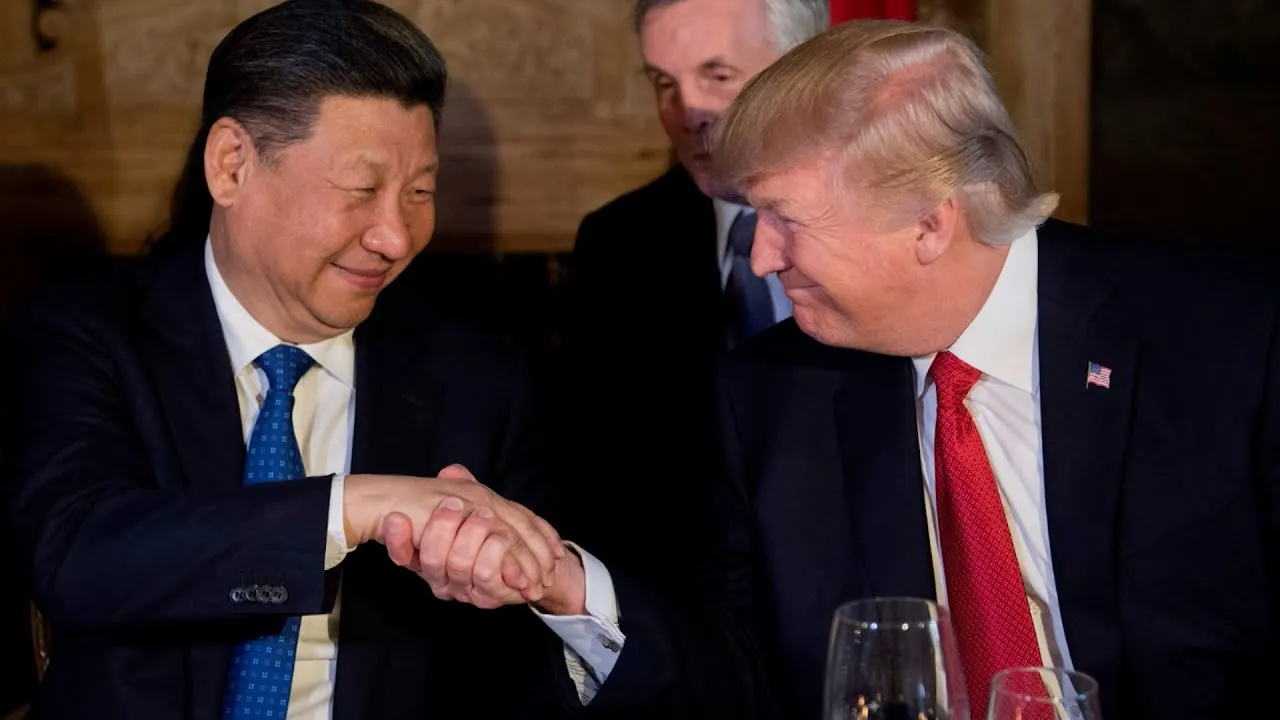
U.S. President Donald Trump is scheduled to meet with Chinese President Xi Jinping in Beijing for a two-day summit aimed at stabilizing bilateral relations amidst significant geopolitical and economic tensions. The talks are expected to cover a broad spectrum of issues, including trade agreements, the war in Iran, Taiwan, nuclear arms control, and the development of artificial intelligence, as both leaders seek to address areas of conflict while exploring potential cooperation on economic and technological matters.
Key Points
- Economic Cooperation: The two nations are expected to announce forums for trade and investment, alongside Chinese commitments to purchase American agricultural products, Boeing aircraft, and energy resources.
- Trade War Status: Discussions will address the potential extension of a trade truce that currently facilitates the flow of Chinese rare earth minerals to the U.S., with U.S. officials expressing confidence in an eventual renewal.
- Geopolitical Tensions: President Trump intends to pressure President Xi regarding China’s economic and material support for Russia and its influence over Iran, urging Beijing to help resolve the ongoing conflict between Iran and the U.S.-Israel coalition.
- Strategic Disagreements: The summit will address persistent friction over Taiwan, with the U.S. reaffirming its support for the island despite China’s increased military presence in the region.
- AI and Nuclear Policy: The U.S. administration aims to establish formal communication channels regarding the risks of advanced artificial intelligence; however, China continues to show reluctance toward participating in nuclear arms control discussions.
China has officially confirmed that U.S. President Donald Trump will conduct a three-day state visit to Beijing, marking his first trip to the country since his 2017 term. This high-stakes summit with President Xi Jinping is intended to project stability between the world’s two largest economies, with discussions centered on trade, investment mechanisms, and industrial agreements, while observers closely monitor potential dialogue regarding the ongoing conflict in Iran and issues related to Taiwan.
The upcoming talks come at a pivotal moment as China continues to assert itself on the world stage, while the United States seeks to recalibrate its approach to Beijing. Experts believe this meeting could influence future diplomatic and economic policies for both nations. It also signals a desire to manage conflicts through direct dialogue rather than confrontation.
Other People are Reading

Your net interest margin (NIM) has dropped year-on-year. What is the outlook on core profitability?
All banks have taken a cut on NIM year-on-year; so it is in line with industry. Rather, our drop is lower than many of the banks. Going forward, the deposit cost is going to be sticky. I am not looking at further moderation. To protect NIMs, the bank will need to look at the asset side. EBLR is not going to change because there is a long pause of the expectation, so not going to change. In the corporate loan book there are two components MCLR and non-MCLR linked. The only segment I am looking at a realignment possibly is a non-MCLR book in corporate loan, which is linked to t-bills and government securities because our rates linked with those would move up with the benchmarks. We closed last year at 2.89% but we are giving a guidance of 2.75% to 2.95% this year. Last fiscal, there was an element of interest on tax refund. Keeping that volatility in mind we are giving a lower guidance of 2.75% on the downside.
Will the pressure on margin continue in the medium term?
As we migrate to a mature market, I think the margin needs to be squeezed because banks will have to operate at a lower margin, while keeping the return on assets (RoA) more than 1%. We need to be aligning ourselves for a slightly lower margin. In a mature market, the borrower would demand fine pricing, whereas the depositor would expect a higher rate. We will be trying our best to protect the margin, but the mature market scenario would force us to operate slightly at a lower margin and upsizing our non-interest income and lowering our cost to income.

You have made an extra ₹1,500 crore floating provision. is it to do with the expected credit loss (ECL) framework?
With that ₹1,500 crore floating provision we have buffered the balance sheet. With this, our total floating provision is ₹2,500 crore. This provision can be used in extraordinary scenarios with the approval of the regulator. It is not tagged with ECL provision. On ECL provision, the bank is well prepared to capture any impact. We are still computing ECL impact but for the year ended March 2026, my credit cost was 0.46%. I am now giving a credit cost guidance of below 0.6% for the current fiscal. This increase is sufficient to take care of the ECL provision on the income. ECL has two impacts, one the capital adequacy and another on the income. This increase is sufficient to take care of the impact on the income side.Any new businesses you plan to start this year?
Given that our current NIM is elevated vis a vis the system, we have to increase our non-interest income. Reducing cost to income is a challenging task. But to increase non-interest income we can upsize our wealth and treasury business. The treasury is where we have a lot of scope to get more fee income. The precise reason to float the primary dealer (PD) business is for us to do DCM business which we are not doing currently. We want to replicate a model of global banks where fee out of treasury would be a significant part of non interest income. There are debt market products like STRIPS, a non-corporate bond market where we can get fees. The PD business started operation from April 1 2026. We have committed ₹2,000 crore capital into the PD business. We plan to upscale that business. BoB Capital Markets will focus entirely on the equity side. We expect to start the pension fund in six to nine months.
What are the plans on subsidiaries like BoB Cards and Nainital Bank?
On BoB Cards we want to strengthen and create scale in the company and become a significant player in the market. Their ranking is almost at number 10 and we want them to improve. We have no board mandate as of today. We are open to infuse more capital there. Nainital is also doing well. They have good profitability, asset quality and strengthened their board and governance structure.


Discover the purchasing drivers and considerations that matter most when switching from synthetics

Astera Labs director Stefan Dyckerhoff sells over $2.5m in stock
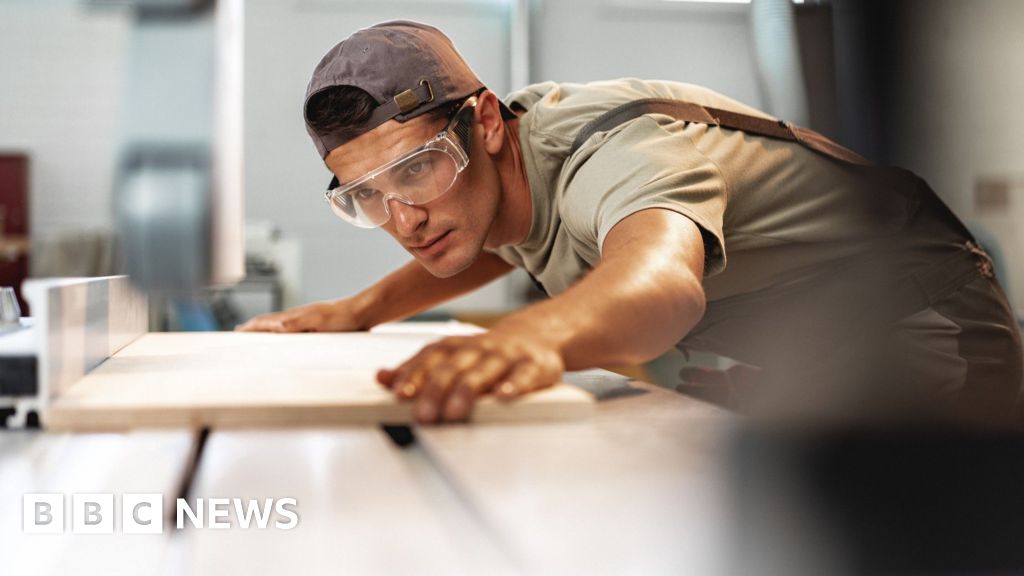
Woodworking shops have been transformed by tech to make tools safer and more precise.
Business
SBI sheds over $11 billion in market value in 2 sessions on margin squeeze, disappointing earnings

Shares of India’s largest lender by customers dropped 4.5% to a year-to-date low of 973.60 rupees on Monday, extending Friday’s near-7% post-results fall.
The selloff brought the stock down more than 10% in two sessions, wiping out $11.3 billion.
NSE data showed the heaviest fresh call writing on SBI’s 1,000 strike on Monday, signalling that investors expect any near-term rebound in the stock’s price to likely be capped at that level.
About 95 million shares changed hands over the two sessions, almost five-fold the 30‑day average of 18.7 million.
Analysts said the lender’s fourth-quarter earnings miss reinforced concerns that Indian banks are entering a tougher profitability cycle, with rising funding costs beginning to erode lending margins.
SBI on Friday reported a narrower net interest margin of 2.8% for the quarter, compared with 2.98% in the previous three-month period, and also missed analysts’ profit estimate.”NIM compression is becoming more visible as funding costs reprice faster,” JP Morgan said on Monday, adding that earnings momentum could moderate in the coming quarters.
“Core earnings were underwhelming, with incremental margins tightening,” Bernstein said, cautioning that upside catalysts may be limited without a stabilisation in margins.
SBI’s asset quality remained a key positive, with bad loans and credit costs staying benign, brokerages said, but warned it may not fully offset pressure on net interest income from margin compression.
Nonetheless, analysts retained a constructive long‑term view, citing the bank’s strong balance sheet, scale and market leadership.
The two-session selloff erased SBI’s year-to-date gains, leaving the stock down 0.8% in 2026, though it still outperformed the benchmark Nifty 50’s 8.8% drop.
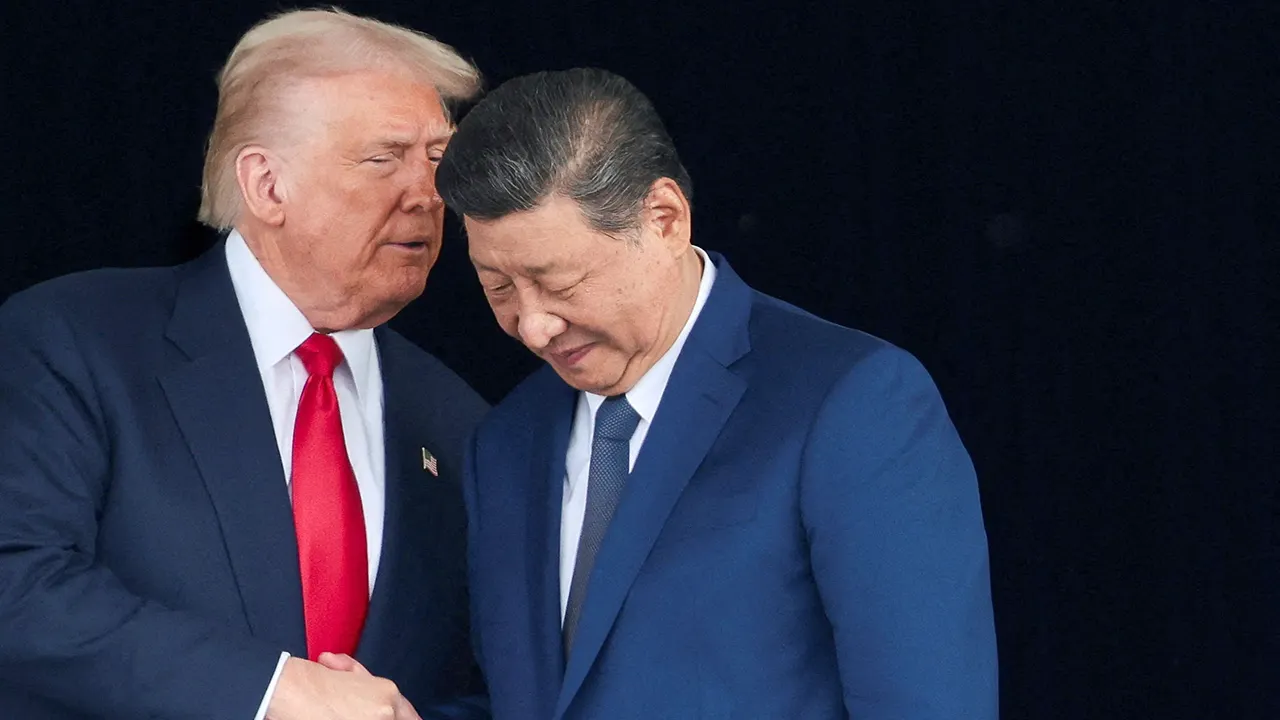
Former White House ‘AI czar’ David Sacks discusses President Donald Trump’s upcoming China trip, where he is expected to talk about AI with Chinese President Xi Jinping on ‘The Claman Countdown.’
Former White House AI czar David Sacks predicted potential outcomes of President Donald Trump’s meeting with Chinese President Xi Jinping as the two leaders prepare to discuss artificial intelligence.
Sacks assessed the state of the intensifying AI arms race on “The Claman Countdown” Monday as China and the U.S. emerge as fierce competitors on the global stage.
“I do think that there are things that may be in our common interest, and it’s worthwhile to explore having those conversations,” he said.
“The fact is we have to still protect from against each other. So I think it’s going to be a little bit limited in terms of what we can achieve there.”
BEIJING IS QUIETLY DICTATING THE TRADE WAR’S NEXT MOVES AS TRUMP AND XI PREPARE TO MEET
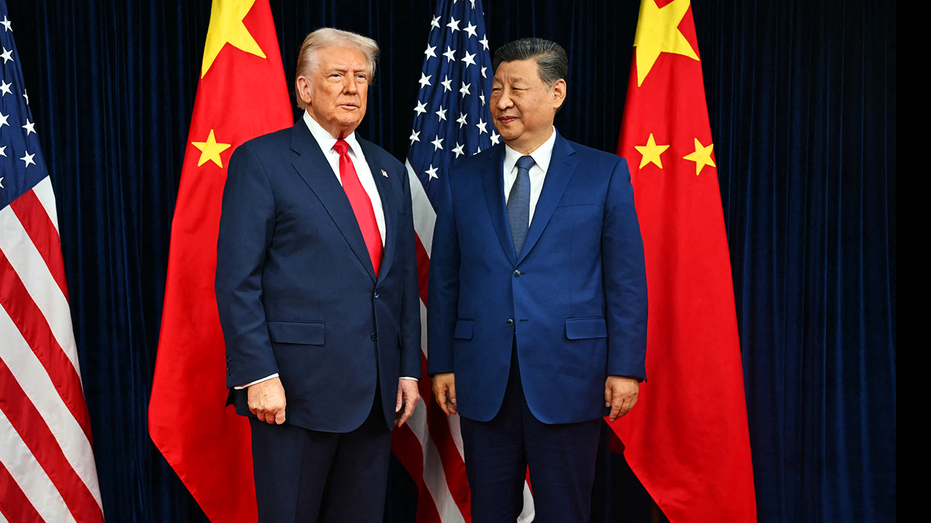
US President Donald Trump and China’s President Xi Jinping (ANDREW CABALLERO-REYNOLDS/AFP / Getty Images)
Sacks’ comments follow the release of Anthropic’s Mythos, a model that has raised widespread worry over its capability to identify decades-old security vulnerabilities.
Sacks said the U.S. and China could potentially reach an agreement on new cyber standards during this week’s meeting, noting that neither country wants “rogue actors” to use AI models for dangerous purposes.
He also warned that the U.S. must take proactive defensive measures to ensure new AI models do not exploit existing vulnerabilities.
WHITE HOUSE MEETS AI FIRM ANTHROPIC AMID POLITICAL TENSIONS, PENTAGON DISPUTE
“We need to take steps now to harden our systems and scan our code bases to find latent vulnerabilities and patch them,” the former ‘AI czar’ said.

AI assistant apps on a smartphone — OpenAI ChatGPT, Google Gemini, and Anthropic Claude. (Getty Images / Getty Images)
Sacks also downplayed concerns about AI, arguing there is no need for strong federal regulation of the technology, while cautioning that China’s advancing cyber capabilities remain a serious concern.
“There’s been this debate about whether we needed an FDA for AI. That would be solving a problem I don’t think we have,” he told FOX Business.
“The real issue is not what the American labs do. It’s the fact that Chinese models and other models that other actors could train are gonna have advanced cyber capabilities within the next six months or so.”
Sacks cited previous success in AI discussions with China, including a late 2024 summit between former President Joe Biden and Jinping, where both countries agreed to keep AI away from nuclear weapons systems.
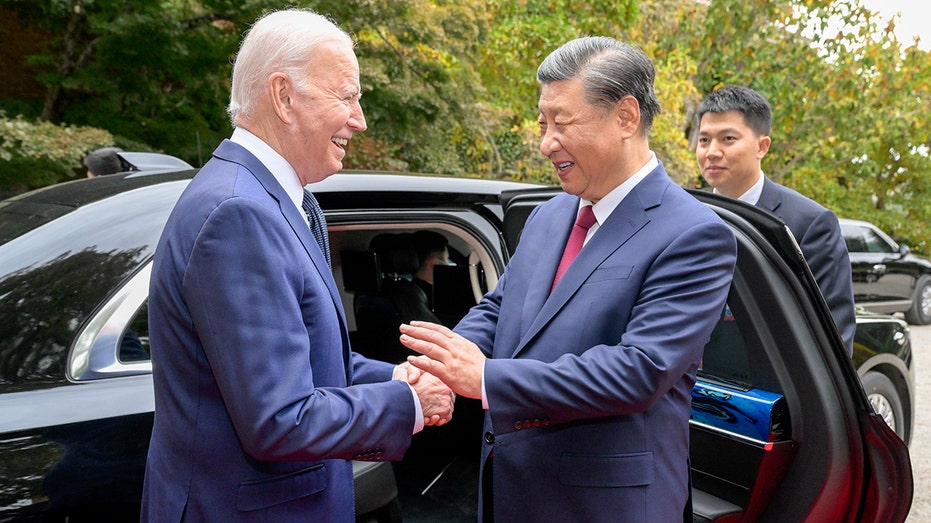
U.S. President Joe Biden escorts Chinese President Xi Jinping to his car to bid farewell after their talks in the Filoli Estate in the U.S. state of California, Nov. 15, 2023. (Photo by Li Xueren/Xinhua via Getty Images / Getty Images)
GET FOX BUSINESS ON THE GO BY CLICKING HERE
The former ‘AI czar’ said that while the U.S. and China remain locked in a highly competitive race for AI dominance, dialogue about the technology is a step in the right direction.
“I think the point here is for the two sides to start talking, to establish an initial dialogue and just to see how the Chinese are thinking about this,” Sacks said.
The US Supreme Court in Washington, DC, US, on Monday, April 20, 2026.
Graeme Sloan | Bloomberg | Getty Images
The U.S. Supreme Court cleared the way on Monday for Alabama Republicans to pursue a congressional voting map more favorable to their party ahead of November’s midterm elections, the latest fallout from the court’s seismic voting rights ruling.
The justices lifted a lower court’s decision that had blocked state Republicans’ preferred map as racially discriminatory and for illegally diluting the voting power of Black Alabamians.
The politically conservative Southern state is expected to seek to revert to this previous map, which would drop the number of districts where Black voters comprise a majority, or near-majority, from two to one out of the state’s seven U.S. House districts. Use of the previous map could be beneficial to Republicans.
The order was powered by the nine-member court’s conservative majority. The three liberal justices dissented and suggested that the lower court could reapply its judicial block to the Alabama Republicans’ preferred map.
President Donald Trump‘s fellow Republicans are fighting to maintain their control of the House, as well as the Senate, in the midterm elections.
Alabama is among a group of Republican-led states that has sought to eliminate majority-Black congressional districts and boost their party’s chances ahead of the elections following the Supreme Court’s ruling undercutting a key provision of the Voting Rights Act. Black voters tend to support Democratic candidates.
In its landmark April 29 ruling, the court, in a 6-3 ruling powered by its conservative members, struck down an electoral map that had given Louisiana a second Black-majority U.S. congressional district. The redrawn map, the majority ruled, had relied too heavily on race in violation of the constitutional equal protection principle.
Following the Supreme Court’s decision, Alabama immediately filed emergency motions asking the justices to allow it to revert to an older map with only a single majority-Black district.
Alabama, where Black voters make up a quarter of the electorate, had been ordered by a lower court to use a map that includes two majority-Black districts out of seven. Both are held by Black Democrats.
The lower court decided that a prior map had intentionally discriminated against Black voters and unlawfully diluted their voting power.
Alabama officials had argued in Supreme Court filings that Alabama’s court-ordered map shared the same constitutional defects as Louisiana’s.
In a dissent, liberal Justice Sonia Sotomayor emphasized that the lower court’s ruling concerning Alabama’s map was more expansive than the case involving Louisiana and included a finding of unconstitutional discrimination by intentionally diluting the votes of Black voters in Alabama.
The majority’s decision to set aside the lower court’s ruling is therefore “inappropriate and will cause only confusion as Alabamians begin to vote in the elections scheduled for next week,” Sotomayor wrote in a dissent that was joined by her two fellow liberal justices.
She said the lower court “remains free on remand to decide for itself whether Callais has any bearing on its Fourteenth Amendment analysis or if its prior reasoning is unaffected by that decision,” referring to the court’s April 29 decision, called Louisiana v. Callais.
In 2023, the court had upheld the lower court’s decision that the state’s Republican-drawn electoral map diluted Black voters’ power, violating the Voting Rights Act. That 5-4 ruling was authored by Chief Justice John Roberts, and he was joined by fellow conservative Justice Brett Kavanaugh and the court’s three liberal justices.
In a process called redistricting, the boundaries of legislative districts across the United States are reconfigured to reflect population changes as measured by the national census conducted every 10 years. Redistricting typically has been carried out by state legislatures once per decade.
Republicans and Democrats have been waging a multistate redistricting fight ignited last year when Trump initiated an unprecedented mid-decade effort to redraw maps in Republican-led states, starting with Texas.

Check out what’s clicking on FoxBusiness.com.
Passengers aboard Disney Cruise Line’s Disney Adventure say their four-night Singapore sailing was canceled after boarding due to technical issues, leaving families waiting hours for answers before being sent to hotels late at night.
Guests had already embarked on the May 7 voyage when the ship’s captain reportedly told them there were technical issues and that they would “set sail soon,” according to a passenger who documented the situation on Reddit.
By around 2 p.m. local time the following day, the captain announced the sailing would be canceled entirely.
“It’s really disappointing especially if vacationing with kids,” the user wrote.
DISNEY LAUNCHES NEWEST CRUISE SHIP AMID MASSIVE SEAFARING EXPANSION

The cruise ship “Disney Adventure”, built in the Wismar shipyard, is moored in the port of Mukran on the island of Rügen, while bathers and a windsurfer are in the water in the foreground. After around seven years of construction, one of the world’s (Photo by Stefan Sauer/picture alliance via Getty Images / Getty Images)
The passenger said guests waited hours for official instructions after the announcement, with only a handful of crew members assisting guests.
They said they did not receive hotel details until 12:10 a.m. and did not expect to reach their hotel until well after 1:30 a.m.
A letter to guests, later obtained and published by Disney Cruise Line Blog, said the sailing could not proceed as planned and apologized for the disruption.
DISNEY UNVEILS NEW SHOW IN PARK UNDERGOING MASSIVE TRANSFORMATION
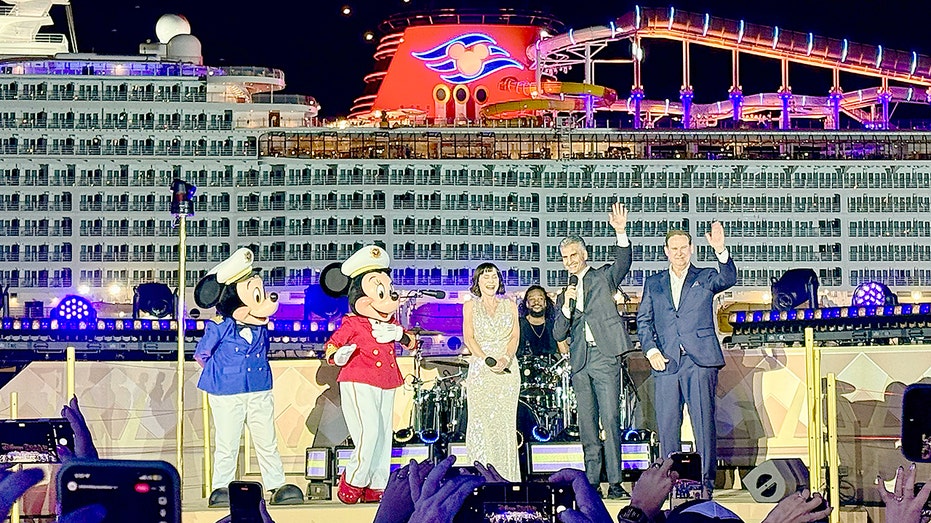
Captain Mickey, Captain Minnie, Susan Egan, Josh D’Amaro and Joe Schott during the Disney Destiny christening in Fort Lauderdale, Florida on Nov. 10, 2025. (Pilar Arias/Fox News Digital / Fox News)
“We are truly sorry to let you know that we are unable to proceed with your Disney Adventure experience from May 7-11, 2026 as planned,” the company wrote, adding that “your safety and comfort as our guests are always our highest priority.”
The cruise line said affected guests would receive a full refund, 50% off a future cruise and a complimentary hotel stay, along with coverage for potential flight change fees and up to $500 per stateroom for incidental expenses.
However, the passenger raised concerns about the compensation, noting that the 50% future cruise discount requires booking by July 31, 2026, and sailing by May 31, 2027.
DISNEY ANNOUNCES MAJOR PLANS TO COMMEMORATE AMERICA’S 250TH ANNIVERSARY
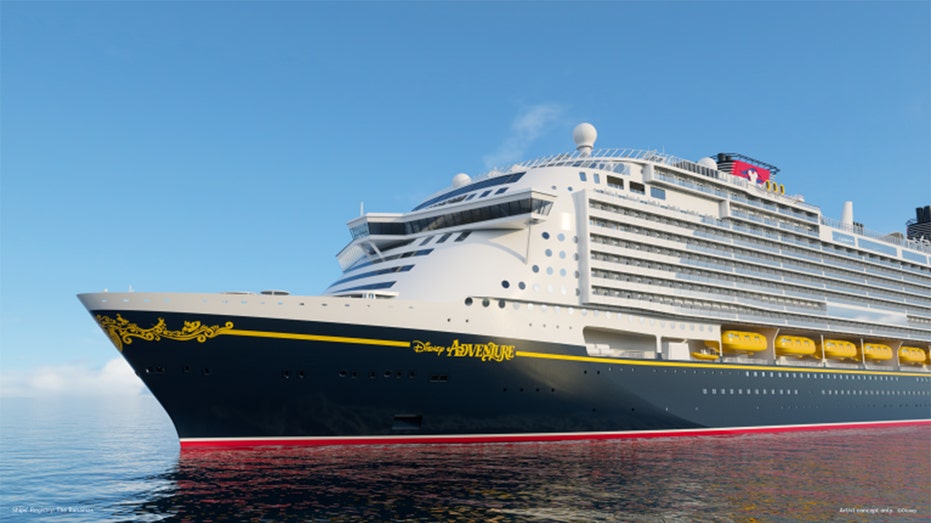
Disney Adventure should have capacity for about 6,700 guests and 2,500 crew members, Disney Cruise Line said. (Disney)
The user also questioned whether accommodations were consistent across guests, claiming that some passengers with back-to-back bookings received multiple complimentary nights while others were provided just one.
“We reached our hotel at around 2:00 a.m. and we have to check out at 12 noon… that isn’t even a full night,” the user wrote.
Additional complaints included a reported S$200 (about $150 USD) food and beverage credit, which the passenger said barely covered meals for one person — let alone a family of four.
The user said some travelers had flown in from countries including India, Australia and Canada specifically for the cruise, describing it as “one of the worst” experiences they’ve had with Disney.
“The Disney Adventure departed as scheduled on its next sailing after the mechanical issue was resolved,” a Disney spokesperson told FOX Business. “We completely understand this was an unfortunate situation for our guests and worked with them directly to support their travel needs, help make their trip home as smooth as possible and invite them back to a future sailing.”
CLICK HERE TO READ MORE ON FOX BUSINESS
The Disney Adventure is part of Disney Cruise Line’s major expansion plans, with the company aiming to grow its fleet to 13 ships by 2031. The vessel, which is home ported in Singapore, marks Disney’s first permanent cruise deployment in Asia.
FOX Business previously reported that Disney Cruise Line has been aggressively expanding its global cruise footprint, with Disney Experiences Chairman Josh D’Amaro saying the company is focused on bringing Disney cruises “to new guests on new shores.”
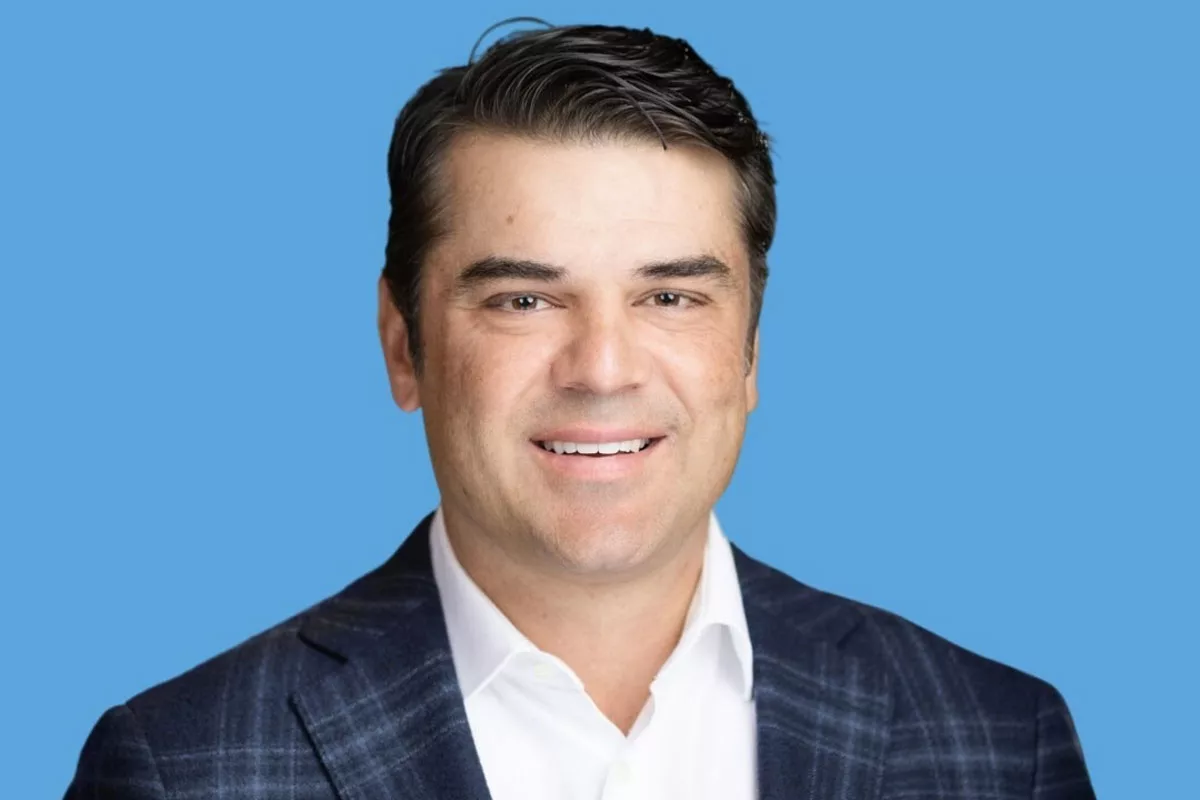

Andrew Archambault named president and chief operating officer.

Trump and Xi Prepare for Crucial Talks in Beijing

Sandra Bullock Reunites With Matthew McConaughey Online

Galaxy identifies 7 Democrats as key to advancing CLARITY Act

Manchester United reach agreement with Casemiro over contract clause amid transfer speculation

US brings back mandatory military draft registration

Steven Gerrard disagrees with Gary Neville over ‘shock’ Chelsea and Arsenal claim | Football


-
 Crypto World4 days ago
HarrisX Poll Found 52% of Registered Voters Support the CLARITY Act
-

 Fashion3 days ago
Weekend Open Thread: Marianne Dress
-

 Crypto World5 days ago
Upbit adds B3 Korean won pair as Base token gains Korea access
-
 NewsBeat5 days ago
NCP car park operator enters administration putting 340 UK sites at risk of closure
-

 Tech2 days ago
Auto Enthusiast Carves Functional Two-Stroke Engine from Solid Metal
-

 Politics1 hour ago
What to expect when you’re expecting a budget
-

 Politics3 days ago
Politics Home Article | Starmer Enters The Danger Zone
-
 Business2 days ago
Ignore market noise, India’s long-term story intact, say D-Street bulls Ramesh Damani and Sunil Singhania
-

 Crypto World6 days ago
UAE Free Zone Deploys Blockchain IDs to Verify Registered Firms
-

 Fashion22 hours ago
What to Know Before Buying a Curling Wand or Curling Iron
-

 Tech17 hours ago
GM Agrees To Pay $12.75 Million To Settle California Lawsuit Over Misuse Of Customers’ Driving Data
-

 Fashion6 hours ago
Coffee Break: Travel Steam Iron
-

 Crypto World5 days ago
BlackRock CEO Larry Fink Discusses a New Asset Class
-

 Crypto World5 days ago
Robinhood says Wall Street is building onchain
-

 Entertainment5 days ago
Sarah Paulson Called Out For Met Gala ‘Hypocrisy’
-

 Tech6 days ago
Apple and Samsung are dominating smartphone sales so thoroughly that only one other company makes the top 10
-
Entertainment7 days ago
Serena Williams hits Met Gala in metallic dress after GLP-1 reveal
-

 Tech6 days ago
I tested the Xiaomi 17 Ultra’s camera and I don’t think I’ll ever go back to an iPhone
-
 Sports6 days ago
NBA playoff winners and losers: Austin Reaves is not loving Lakers vs. Thunder matchup, but Chet Holmgren is
-

 Fashion5 days ago
The Best Work Pants for Women in 2026
You must be logged in to post a comment Login