
Politics
The House | A bunch of narcissistic, psychopathic, Machiavellians? Britain’s party members and their leaders

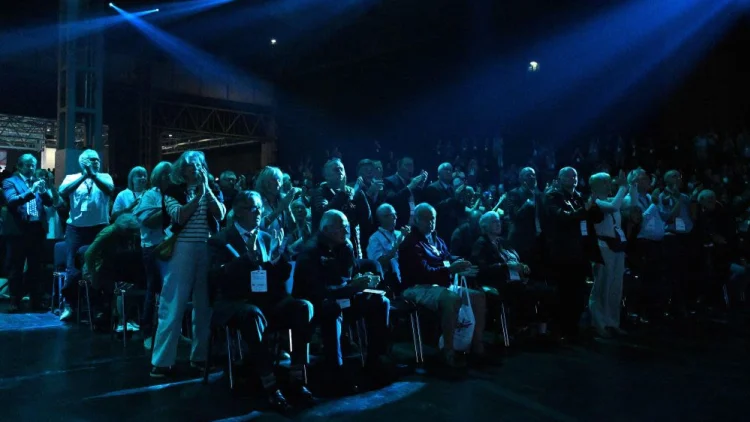
(Alamy)
3 min read
In 1964, Fact magazine sent a survey to over 12,000 American psychiatrists, asking them whether they believed that the ultra-conservative Republican candidate Barry Goldwater was “psychologically fit to serve as President of the United States”.
It was a wheeze that not only led to it being successfully sued for libel by Goldwater but also to the American Psychiatric Association eventually adopting the so-called Goldwater rule, which states that, when it comes to public figures, “it is unethical for a psychiatrist to offer a professional opinion unless he or she has conducted an examination and has been granted proper authorization for such a statement.”
So, while we might casually and informally dismiss a politician we don’t like as mildly loopy or even downright dangerous, only a fool would insist in print or pixel that their professional qualifications enabled and entitled them to diagnose that same politician with one of the plethora of full-blown psychiatric disorders listed in the tome known as the DSM.
Fortunately, then, that’s not what our recently published research on Personality, populism and party: support for ‘dark triad’ leaders in the UK tries to do. Instead, we use surveys of the members of five political parties (Greens, Lib Dems, Labour, Tories and Reform; Restore Britain wasn’t a thing at the time) to tap into their personality traits – including those associated with the so-called dark triad: narcissism, Machiavellianism, and (subclinical, as opposed to mad-axe-murdering!) psychopathy, whose definitions we borrow from psychologist John Rauthmann.
Narcissism, then, is ‘the tendency to harbour grandiose and inflated self-views while devaluing others…. Narcissists are shown to exhibit extreme vanity; attention and admiration seeking; feelings of superiority, authority, and entitlement; exhibitionism and bragging; and manipulation.’
Machiavellianism is ‘the tendency to cynical, misanthropic, cold, pragmatic, and immoral beliefs; detached affect; pursuit of self-beneficial and agentic goals (e.g., power, money); strategic long-term planning; and manipulation tactics.’
Psychopathy is ‘the tendency to impulsive thrill-seeking, cold affect, manipulation, and antisocial behaviours…, often falling into a primary (affective shallowness, lack of empathy and remorse, superficial charm, and manipulation) and secondary component (social deviance, low socialization, impulsivity, irresponsibility, aggression, sensation seeking, delinquency.)’
First, we look at the extent to which members of each party exhibit those three traits. Then we look at whether party members who themselves exhibit them prefer – at least in the abstract (no names, no pack drill!) – leaders who seem to exhibit them too, before going on to ask whether members of particular political parties are more likely to prefer those dark triad leaders.
And it turns out that they are. Reform UK members and Conservative Party members score higher on dark triad measures than Labour, Lib Dem and Green members. And party members with stronger dark triad traits are, indeed, more likely to favour leaders displaying them too.
No surprise, perhaps, that Tory and Reform members gravitate towards populist leaders such as Boris Johnson and Nigel Farage, who in many ways are the personifications of the kind of leader they say they like − supremely self-confident and charismatic alphas who mix charm with a take-no-prisoners/rules-are-for-little people attitude.
Just as importantly for our understanding of British politics, however, is the psychological convergence our research reveals between, on the one hand, members of the centre-right Conservative Party and the populist radical right Reform UK and, on the other, those who belong to the Greens, Labour and the Lib Dems. This is yet another piece of evidence supporting the emerging consensus among political scientists that the UK is now characterised by two-bloc, rather than two-party, politics – all of which has huge implications for tactical voting at the next general election, whenever Andy Burnham decides to call it.
Tim Bale is Professor of Politics at Queen Mary University of London


But it seems the Queen of Pop is not done yet.
Over the weekend, the Grammy winner posted a TikTok video of herself pensively listening to the Confessions II cut L.E.S. Girl, which brings the album to a melancholic ending.
“Thinking about Charli…” she captioned the post, with Charli XCX then popping up in the comments section shortly afterwards.
“Wait… I got something I wanna talk about,” the British singer-songwriter wrote, in a nod to the lyrics of Madonna’s recent Sabrina Carpenter duet Bring Your Love, which has become something of a meme in recent weeks.
The two singers’ exchange has led many fans to speculate that they might be about to cross musical paths, potentially on a new remixed version of L.E.S. Girl.
Over the summer, Charli and Madonna were both pictured on the front row of Saint Laurent’s show at Paris Fashion Week, where they were seen laughing and smoking together.
After that, Charli told Nick Grimshaw for Radio 6 Music that she and the Like A Prayer singer kept running into each other, to the point their Paris trip felt like a “mini break together”.
Charli enthused: “She’s fab. She’s just so cool, and so interested in really talking about the music that she makes, and how, and why. I found it very inspiring to hang out with her.”
She also praised Madonna’s “wealth of songs” and “high” taste level, revealing the first Madonna song she “fell in love with” was the 2003 single Hollywood, taken from the album American Life.
Interestingly, earlier in the year, it looked like there may have been some mild beef between Charli and Madonna, after the Von Dutch singer claimed during a now-infamous British Vogue interview (and, subsequently, on her divisive single Rock Music) that she thinks the “dance floor is dead”.
“If your dance floor feels dead, maybe you’re playing the wrong music,” Madonna cryptically wrote on Instagram shortly afterwards.
Sten Rynning and Anne Ingemann Johansen look at the day-to-day work being done in Norway as a frontline state to counter the threat posed by Russia and how this contributes to European security.
What a difference a few decades make. In 1990, “not one inch” reflected an idea, most famously tried by Secretary of State James Baker to soothe Soviet sensibilities, that European stability depended on Western restraint. Today, the tables have turned: stability will follow to the extent Western countries can impose restraint on Russia.
The geopolitical enormity of the shift is obvious. Less obvious is the burden this has placed on frontline governments busy fighting a shadow war with Russia. We recently concluded a three-year research project on Norwegian and Danish NATO policy with a research visit to Norway’s Finnmark. It confirmed what we had learned from many conversations in the Ministry of Foreign Affairs in Oslo: that concerted action between Norway and allies is key, that it increasingly happens to warn off Russia, but that the bread and butter of “not one inch” rests on comprehensive and agile strategic thinking at home. And this is by no means easy. Four conclusions stood out.
First, the effort to counter Russia must rest on a solid military foundation that once was allowed to wither but which now in haste must be reconstituted. Thus, Norway is standing up a Finnmark Brigade located to the rear, in Porsangmoen near Lakselv, with a forward-deployed battalion at the border. This brigade is placed to block Russian incursions into the national territory and, more importantly perhaps, to counter a Russian land offensive through the more geographically permissible Finnish and Swedish Finnmark.
The new brigade is a type of frontend bulwark backed by Norway’s main land force, the Northern Brigade, headquartered further south. It is likewise backed by intense cooperation with US and UK forces. When we visited, the brigade was about to inaugurate its artillery battalion equipped with self-propelled Howitzers, alongside new air defence and signal units. To speak softly, the Norwegians have realised, they must carry a big stick.
Second, from this foundation, Norway engages a broad set of policies to prevent societal discontent and thus societal divisions that Russia will exploit. This is not straightforward, as Norway’s Sami (indigenous) population has historically had a strained relationship with the central government. Norwegian Sami have a type of parliament in Karasjok, which articulates Sami interests and distributes funds. However, decades of assimilation policy run out of Oslo have taken a toll: the Norwegian parliament issued a formal apology in 2024 in the wake of a painful truth and reconciliation commission report. Thus, even if current relations are manageable, history remains alive.
The main cleavages in the region now seem to turn on wind power (many Sami are opposed to it, believing it infringes on their territorial rights and pastures) and electricity. The region simply does not have enough grid and transmission capacity, making electricity a sore point of distributive politics. When the government decided in 2023 to privilege transmission to a large LNG (liquid natural gas) plant on Melkøya, next to Hammerfest, it was being environmentally astute (the plant emits large amounts of greenhouse gas) but regionally reckless (local governments strongly objected to being sidelined). The governing Labour party suffered in ensuing local elections and since fast-tracked legislation to accelerate the regional expansion of the grid. At this point, arguments over regional energy policy seem contained, but the potential for disruptive regional and identity politics remains significant.
Third, Russian minorities reside in Norway, mostly in and around Kirkenes, right next to the only functioning border post, Storskog. There are about 400 Russians in Kirkenes, a city of 3,400 people, with 1-200 additional Russians in the wider area. The authorities do not seem unduly worried by their presence, perhaps because the authorities feel well informed of where local loyalties lie.
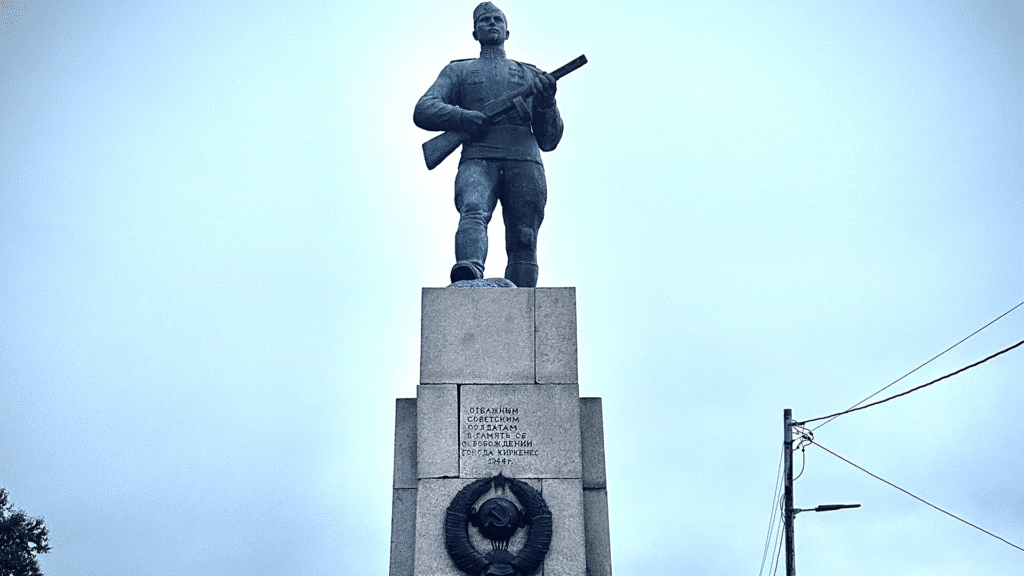
History is the battle space, though. Norway and Russia have never been at war with each other, and Russia (the Soviet Union) liberated Northern Norway from Germany in 1945—and then retreated to Soviet territory. But there is a rub: there are memorials dedicated to these events, and today, their significance is disputed. The “liberation memorial”—aka, Russian memorial—in central Kirkenes is a case in point. Supposedly depicting a Soviet solider liberating Norway, it is today portrayed variously as an occupier or, tongue in cheek, a Ukrainian fighting for freedom.
Fourth, Russian diplomats continue to enter Kirkenes and to operate freely in the region. Norway has not closed Russia’s consulate in the city, granting diplomats an opportunity to go about their business (it is centrally located and contains residential facilities for a group of diplomats). Since they have very little to do in terms of issuing visas, they are more likely mapping the human terrain and, among other things, stoking local Russian concern with memorial politics.
Understanding and tracking Russian authorities—inside Norway or along the border—thus remains an acute task. From their watch towers, Norwegian troops can observe training and firing ranges where Russia prepares newly recruited units for war in Ukraine. In the air, they observe Russia’s sometimes erratic behavior in terms of GPS jamming. Some of this behavior is driven by fear, the Norwegian authorities believe: fear that Ukraine will manage to sneak drones past Russian defenses and strike at their strategic (nuclear) forces on the Kola peninsula (the Russian nuclear submarine base, Zapadnaja Litsa, is a mere 45 km from the border).
Much Western attention has recently been devoted to the haze of US strategic thinking and Trump’s anger with NATO. Much less to the day-to-day hard work being done in Norway and other frontline states to keep Russia at bay. This is a pity. These states are living an experiment in rethinking societal security and in retooling government for an environment of competitive geopolitics. It is from their hard work that Europe—Norway and its partners—can reach agreement on where Russia’s political mindset lies between the outer bounds of paranoiac and aggressive. If they can agree on this, they can determine what to do about it and, in time, hope to wrestle a degree of geopolitical control from its capricious flanks.
By Sten Rynning, Professor, University of Southern Denmark and Anne Ingemann Johansen, Assistant Professor, University of Southern Denmark.

How do we define the far-right?
It’s a phrase which has been long associated with those on the political fringes, like the English Defence League (EDL) and the British National Party (BNP).
But the Alternative for Germany (AfD)’s success in a regional election this week has sparked significant alarm that far-right ideas are becoming mainstream again.
The AfD is now the first far-right party to gain power in Germany at a state level since the Nazi era of World War 2.
Britain’s Treasury minister Emma Reynolds said she would put Reform UK in the “same bracket” as AfD, even though many of the parties’ policies are different.
Rising concerns over immigration and the impact of Donald Trump’s second term in power have also caused concern about a global swing towards the political right.
But what exactly makes something or someone far-right? Here’s what you need to know.
What is the far-right?
According to the European Commission, the “extreme right” consists of five characteristics: nationalism, racism, xenophobia, calls for a strong state and an anti-democratic attitude.
Yet the Commission said not all of these traits need to be present for it to qualify as far-right extremism.
Campaigners at Hope Not Hate have also warned that the term is not interchangeable with fascism.
They describe it is an umbrella term which encompasses the “radical right” – who still believe in the essence of democracy – and the “extreme far right” – who reject the ballot box.
Hope Not Hate then claimed the definition of “far right” has not been broadened in recent years, but what we see as normal has changed.
“More ‘mainstream’ figures are increasingly crossing the line making it legitimate to use the term to describe them. The centre ground and conservative right are shifting rather than the definition expanding,” the campaigners said.
They added: “You do not have to be part of a far-right organisation to be a far-right activist.”
So what are the key differences between the far-right and the right-wing?
As voices on the right grow stronger in both the UK and the US, the term “far-right” is often used as an insult, but they are fundamentally different.
Dr Nafeez Ahmed – author of Alt Reich: The Network War to Destroy the West from Within – previously told HuffPost UK: “The right and the far-right are not the same.
“The right is about conserving markets, liberty and nations within a democratic framework.
“The far-right is anti-democratic: it thrives on conspiracy theories, scapegoating minorities and authoritarian ‘solutions’.”
Does anyone in the UK identify as far-right?
According to YouGov, only 3% of Brits identified themselves as “very right-wing”, while a further 9% describe themselves as “fairly right-wing”.
That’s compared to 4% who describe themselves as “very left-wing” and 14% who say they’re “fairly left wing”.
Figureheads like Nigel Farage have been clear to reject the “far right” label, and claims to have “done more than anyone else to defeat the far right in Britain”.
His deputy leader Richard Tice has also described being called far-right “defamatory and libellous” – and the BBC had to issue an apology for describing Reform so in 2024.
How do we define what is happening in the UK right now?

Robinson’s “Unite the Kingdom” rally last September saw Brits from all over the country call for “free speech” and listen to Elon Musk’s call for them to “fight back or die”.
The leader of the Conservatives – traditionally seen as a centre-right party – Kemi Badenoch refused to condemn Musk’s statement, saying that she does not think he was inciting violence.
Two anti-migrant protests over the weekend have also sparked concern, even though the number of small boat crossings have declined compared to last year.
So what does this all mean?
Ahmed explained: “What we’re seeing in Britain is not just a surge of street mobilisation.
“It’s something deeper: far-right narratives – from the so-called ‘Great Replacement’ which says white people are being replaced by Black and brown migrants to attacks on fundamental rights – bleeding into mainstream politics.
“This signals a dangerous new phase. The far right is going mainstream, but it is also morphing into something unrecognisable: a trans-Atlantic project that fuses white nationalism with billionaire-backed techno-authoritarian hyper-capitalism.
“Its goal is not simply to influence democracy, but to smash it and replace it with a system built on surveillance, disinformation and the concentration of wealth and power.”
Why is this such an important topic?
As Britain’s two-party system looks ever-more precarious, movements usually confined to the peripheries of the political system are shifting into the spotlight.
While there is appetite for further movement on the left – as seen by the spike of interest in the Greens – right-wing policies are dominating the news agenda right now and influencing government policy.
The Tories, usually Labour’s strongest centre-right opponents, have also started to drift further right to try and take back its voters from Reform.
As all the parties compete for voters’ attention with stronger policies to tackle immigration, some critics believe there is a dangerous drift to the far-right within the mainstream.
This debate is compounded by rising tensions over in the States, where opponents of the Trump administration have accused the White House of taking government policy to extremes.
London mayor Sadiq Khan claimed in 2025 that the US president had been “fanning the flames of the far-right” by “scapegoating minorities, and illegally deporting US citizens, deploying the military to the streets of diverse cities”.
He warned that the rise of the far-right presented a major threat to Britain’s progressive values – and urged voters to hold onto them during this time of change.
Anyone who’s tried to fix up or add to their garden in the winter months will know how hard it can be to get outdoor jobs done in the cold.
Aside from the unpleasantness of freezing fingers and relentless rain, there’s also the issue of hard soil, decreased insect life, and hibernating plants.
So, we thought we’d share the jobs to get done this autumn to prep your garden perfectly for the cold months ahead.
1) Consider scarifying your lawn
The Royal Horticultural Society (RHS) recommends scarifying your lawn, or raking it to remove moss, grass, and other debris, in autumn. This helps to ensure water penetrates through to the soil and reduces the change of fungal problems. If you’re unsure whether or not your garden needs scarification, look down at your grass; if you can’t see any soil beneath the blades, you might want to give the practice a go. “A lawn can only really take this brutal treatment in autumn, when it should recover well,” says the RHS.
2) Fill in any bare areas
As we said earlier, it can be hard to maintain ― never mind add to ― your garden in the cold winter. So planting up the plainer parts of your lawn is best done before it gets too cold. Whether it’s due to pest damage or just plain forgetfulness, seed empty areas of turf now for a fuller garden in spring ― autumn’s cool, damp weather is the perfect time for planting.
3) Cut your flower borders
Now’s a good time to deadhead flowers for continued growth in autumn and a healthier return in spring. While some plants, like sedum, monarda, alliums, rudbeckia, Jerusalem sage and echinacea, along with most ornamental grasses, can keep their flowers, consider removing the tops of all your border flowers to keep them strong over the winter. Check the advice for your specific plant, of course; fuchsia might need cutting down almost to the ground, for instance.
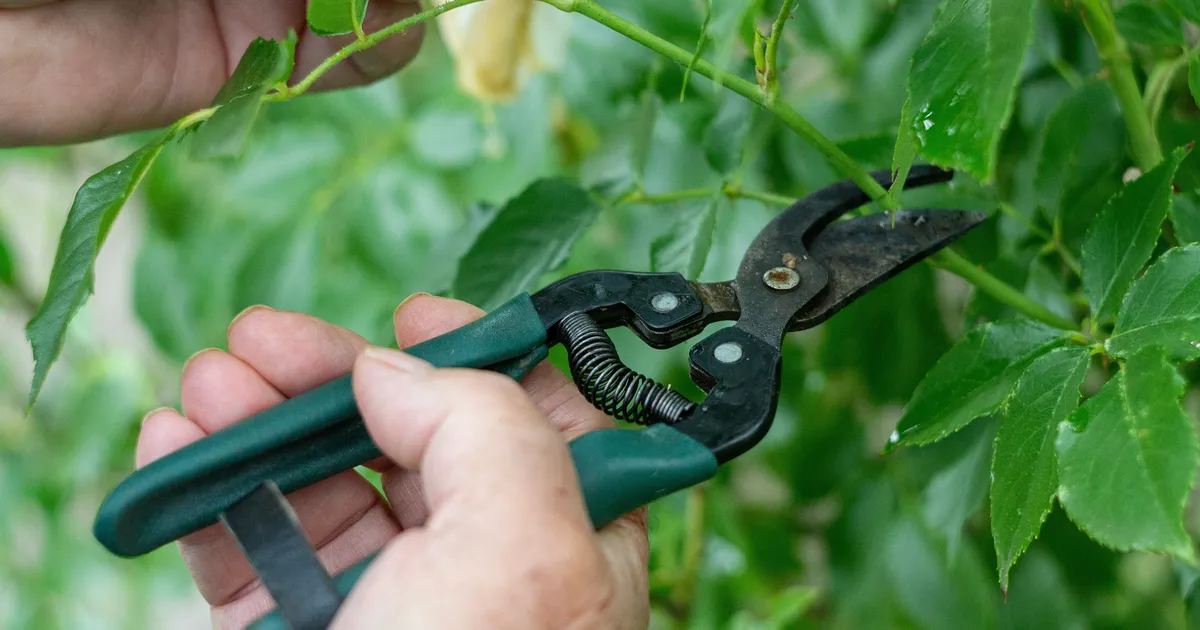
4) Prune, prune, prune
Whether it’s fruit trees, rosemary bushes, or lavender, now’s a great time to (literally) cut back. Removing dead, dying, or overgrown branches and flowers will help to keep your plants healthy and ensure easier growth in the next year.
5) Fix any bumps in your garden
Cutting H-shape slits on any small humps in your garden, peeling back the turf, and adding or taking away soil to address the unevenness sounds extreme. That’s because it is, so the job is best done in autumn, when the garden has time to repair itself.
The work of a gardener is never done, but finishing these five jobs before we find ourselves in winter should at least make it a little easier.

Autumn is an amazing season for so many reasons.
The beautiful leaves. The pumpkin spice-flavoured foods. I even like the nip in the air.
But – perhaps due to decreased light, seasonal affective disorder (SAD), grim weather, or all of the above – it seems a lot of us find it the toughest time to work out.
A 2022 study by Peleton found that “autumn apathy” affects a lot of us in the UK.
Only 2% listed October and November as their least favourite time to work out compared to the 27% of people who felt motivated to get moving in spring.
That’s a shame, as moving more and getting more sunlight may help to alleviate some symptoms of seasonal low mood.
While all exercise is good exercise, one sport may be easier than usual to pick up around this time of year: running.
Why is autumn the best time to start running?
Part of the reason is the weather.
Speaking to HuffPost UK, Dr Bryn Mota, Senior Director of University Fitness Centres at Case Western Reserve University, said: “Cooler temperatures and lower humidity are ideal for running outdoors.”
A 2007 paper published in Medicine & Science in Sports & Exercise found that runners perform best at around 7-15°C – in other words, autumn temps.
No wonder Dr Mota said, “On the perfect autumn day, you can feel like you can run forever!”
There’s also a logistical element. If you’re training for a marathon, half-marathon, 5k or 10k in spring (when lots of events take place), starting now gives you time to develop your cardio base by race season.
Consider, too, the endless small races and park runs already happening. Little wins are key to motivating beginners.
“There are many fall fun runs (or walks) that are easy and attainable short-term goals you can enjoy with your friends, family and a newfound running community,” Dr Mota told us.
Sports partners seem to help people stick to their exercise plans, so bringing a friend or joining a group is a great idea.
And speaking to The Independent, keen runner Ania Gabb also pointed out that kids’ return to school frees up some parents’ time a little, making autumn the perfect time to get started.
Anything else?
Autumn runs aren’t just a mindfulness-boosting feast for the senses (Dr Mota said, “The sound of the leaves beneath your feet, smell of falling leaves, the crisp air, and the colourful landscape both invigorate and relax you”).
They can keep your body safer over winter, too.
Exercising in chillier climes can help you to build your immune system’s defences in time for winter when bugs abound, exercise-focused social enterprise Better Health says.
It may even help to lessen the symptoms of SAD.
Dr Milica McDowell, an exercise physiologist and vice president of operations at Gait Happens, told us: “Running in the autumn can help to set you up to be more active in winter; if you establish a consistent running habit throughout the fall, it’s easier to stick with it as the weather gets even colder”.
She added, “many individuals experience seasonal mood changes, and committing to a running practice can help counteract this.
“Running (and walking) have both been shown to boost your mood, reduce feelings and symptoms of depression and help to manage anxiety.”
So, if you can, avoid that “autumn apathy” where possible – and consider getting your running shoes on.
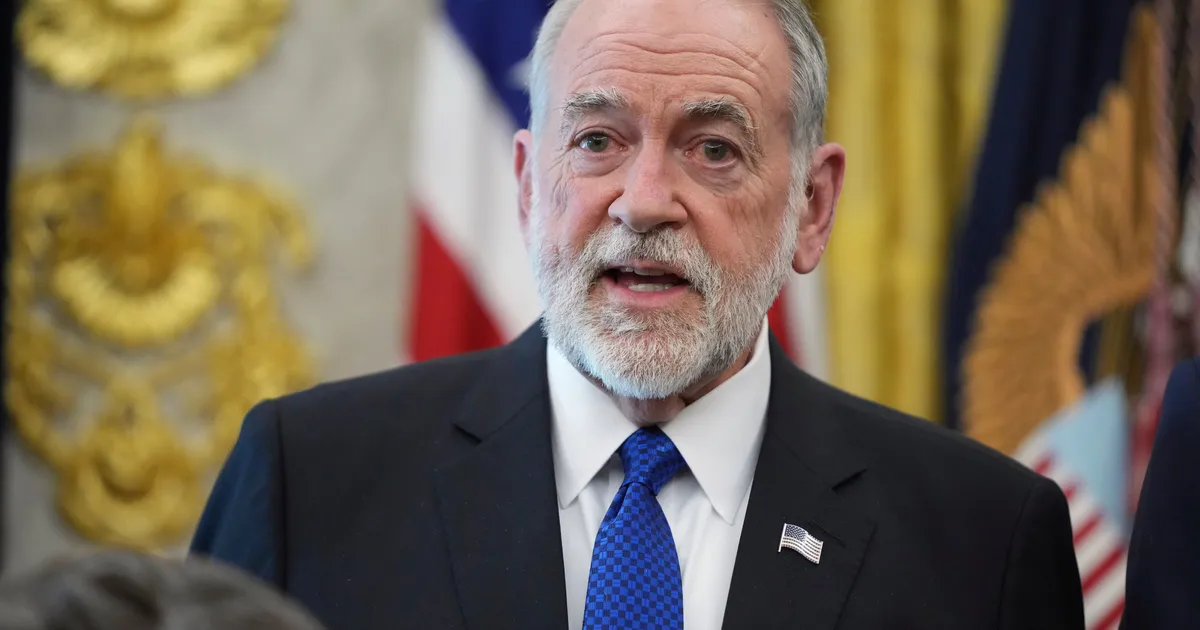
Downing Street has hit back at a close ally of Donald Trump after he accused the UK government of “Jew hate”.
Mike Huckabee, who is America’s ambassador to Israel, hit out after foreign secretary Ed Miliband made a video on the “horrific” situation in Gaza.
He said there had been reports of “medicines being blocked” and “children dying while waiting for vital life-saving treatment”.
Miliband’s comments were condemned by the Israeli government, who accused him of spreading inaccurate “stories”.
The Israeli foreign ministry said: “If the foreign secretary were interested in facts rather than stories, he would know that there are no restrictions whatsoever on the entry of medicines into the Gaza Strip, and that no medicines are being blocked; that 22,500 tons of medical supplies have entered Gaza since the ceasefire began; and that Gazans exit the Strip for medical treatment, including 200 who did so in just the last two weeks.”
Huckabee then weighed in on X, saying: “The Brits have lost it. The Jew hate of their government knows no boundaries and knows no facts.”
Responding to his comments, a No.10 spokesman said: “We completely reject that assertion. We’re committed to protecting Jewish communities in the UK, and continue to engage with community leaders and groups.
“The government is investing almost £318 million over three years to protect Jewish communities, crack down on anti-semitic extremism and hostile state activity, and tackle anti-Jewish hostility in schools.”
The spat is a further blow to the so-called “special relationship” between America and Britain.
Just last week, Donald Trump said he was “reviewing” America’s position on the Falkland Islands.
And he suggested that the US may not help the UK if the British Overseas Territory was invaded again by Argentina, who say the islands belong to them.
Listen to Commons People, the podcast that makes politics easy. Every week, Kevin Schofield and Kate Nicholson unpack the week’s biggest stories to keep you informed. Join us for straightforward analysis of what’s going on at Westminster.
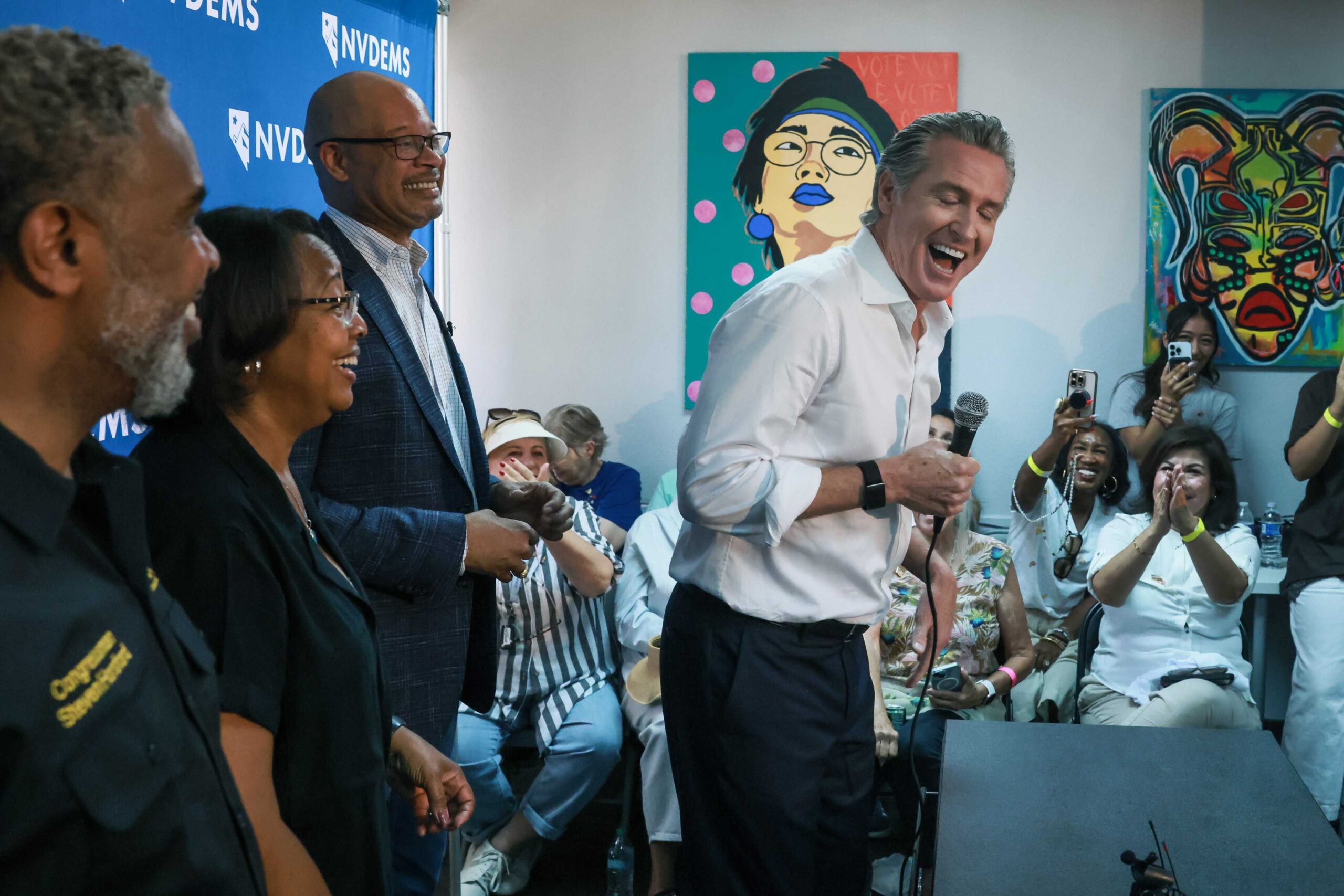

LAS VEGAS — If California Gov. Gavin Newsom runs for president in 2028, next-door Nevada will be a crucial test. This fall’s governor’s race is offering a preview.
As GOP Gov. Joe Lombardo runs for reelection, he’s trying to pin high Nevada fuel prices — a majority of which is imported from California — on “Gavin Newsom’s energy policies.” He lambasts California as too expensive and too regulated. And he’s hammering his Democratic opponent, Attorney General Aaron Ford, for accepting Newsom’s endorsement, betting that it will turn off Nevada swing voters.
“The contrast is simple: I’m fighting Gavin Newsom’s agenda and Aaron Ford is trying to import it into Nevada,” Lombardo said in a statement to POLITICO.
This could be a test run for 2028, when Newsom may call upon Nevadans — one-fifth of whom were born in California — to deliver him a primary victory in the early-voting state, and possibly a presidential victory.
“They understand California costs more,” Donna West, chair of the Nevada Democratic Party’s senior caucus, said of Nevada’s California expats. “They also understand that California is the fourth-largest economy in the entire world, and that Gavin Newsom ran that as effectively as he possibly can.”
Newsom’s office declined to comment. A person close to the governor, granted anonymity to discuss the sentiment in his orbit, said they are “thrilled” Republicans are spending money to “plaster Newsom’s name across a key early state.”
“Republicans seem awfully concerned about an endorsement from someone who leads the 2028 Democratic field in Nevada by nearly 2-to-1,” the person said, pointing to a November 2025 Emerson poll of a hypothetical 2028 Democratic primary field.
Ford, for his part, shrugs off the attacks.
“Lombardo tries to cast blame elsewhere, but everyone knows that when the war started in February, that we saw our gas prices increase almost immediately,” Ford told POLITICO after a recent town hall in Las Vegas. “People believe their own eyes, and they remember their experiences.”
The demonization of California is nothing new in Nevada politics: For years, Republicans have blasted their western neighbor as too expensive and too woke.
But the stakes are higher, and the connection more palpable, this year, as Newsom explores a presidential bid. He would likely need to perform very well in Nevada, now second on the Democratic calendar, to build early momentum toward the party nomination. And come November 2028, he’d need to fare well in Nevada again, this time among the state’s general electorate, a plurality of which are independents.
Newsom has stumped for Democrats across the country this cycle, and he blitzed through the South this week, including a swing through South Carolina, whose Democrats will vote first, right before Nevada, in 2028.
But Republicans are looking to weaponize Newsom’s Silver State swing in July, where Ford introduced him at a new Las Vegas field office as “the governor of the great state of California.”
“Our next president!” an audience member shouted, eliciting cheers.
The Lombardo-aligned Better Nevada PAC shared polling with POLITICO in July showing Newsom’s favorability 20 points underwater in Nevada and losing a hypothetical 2028 head-to-head with Vice President JD Vance. Shortly thereafter, the PAC began an ad blitz tying Ford to the California governor.
Billboards touting Newsom’s endorsement of Ford, paid for by the PAC, now line highways across Nevada, and digital and streaming ads have run consistently since the visit. “Newsom and Ford: Shared vision. Shared values,” one ad says.
A person familiar with the PAC’s internal polling, granted anonymity to discuss private data, said it shows Newsom’s endorsement is now the second-most-known datapoint about the attorney general.
“Gavin Newsom is the singular most unpopular elected official in Nevada,” said Jeremy Hughes, a longtime Nevada GOP strategist running the Lombardo-aligned PAC. “Aaron Ford brought him into the state. … There’s no better way to help him out than to put up these signs and run ads, letting people know that he’s excited about being endorsed by Gavin Newsom.”
Republicans in the state have long blamed Californian expats for housing shortages and rising prices and connect their opponents to California liberals. A surge of ex-Californians leaving the state during the Covid-19 pandemic, some fleeing high taxes and cost of living, accelerated the trend.
Sam Brown, the GOP nominee for U.S. Senate in 2022, blasted the “energy policies of Gavin Newsom”; in 2018, GOP governor nominee Adam Laxalt lamented the “Californization” of Nevada, even as Californians bankrolled his campaign. During Lombardo’s first run for governor in 2022, he slammed incumbent Democratic Gov. Steve Sisolak for taking his cues from Newsom: “Don’t let Steve Sisolak turn Nevada into California,” one post said. Republicans tied their opponents to Nancy Pelosi for decades.
Lombardo’s argument this time around is more focused. He notes that the vast majority of Nevada’s gasoline comes from California, and argues that California’s efforts to cut carbon emissions have caused fuel prices to soar. A gallon of gas in Nevada costs nearly $5, according to AAA, one of the highest prices in the nation.
“The policies coming from Gavin Newsom and California Democrats … don’t stop at their state line,” Lombardo said in a statement. “Nevada and other states import a significant portion of our fuel from California, so when Governor Newsom shuts down refineries and imposes regulations that reduce supply and increase costs, Nevada families feel the consequences at the pump.”
It’s a strategy that allows Lombardo — running in a difficult national environment for incumbent Republicans — to acknowledge voters’ economic pain without blaming President Donald Trump or his own party. Indeed, Lombardo shared an April column in the Nevada Independent that placed blame at the feet of both Newsom and Trump. (Lombardo, in his post, blamed only Newsom.)
Democrats don’t think voters will buy it. ‘“As far as gas prices, it’s so obviously increased since the war,” Rep. Dina Titus said. “People in Nevada aren’t stupid.”
Ford has his own millstone to saddle Lombardo with: the president. At a recent town hall in Las Vegas, he repeatedly blasted the “Lombardo-Trump economy” that is “making everything too expensive.”
“Voters absolutely tie the handling of the economy to Trump,” said Mike Noble, an independent Phoenix-based pollster who works in Nevada regularly. “Instead of blaming Trump, why not tie it to the boogeyman next door and blame California?”
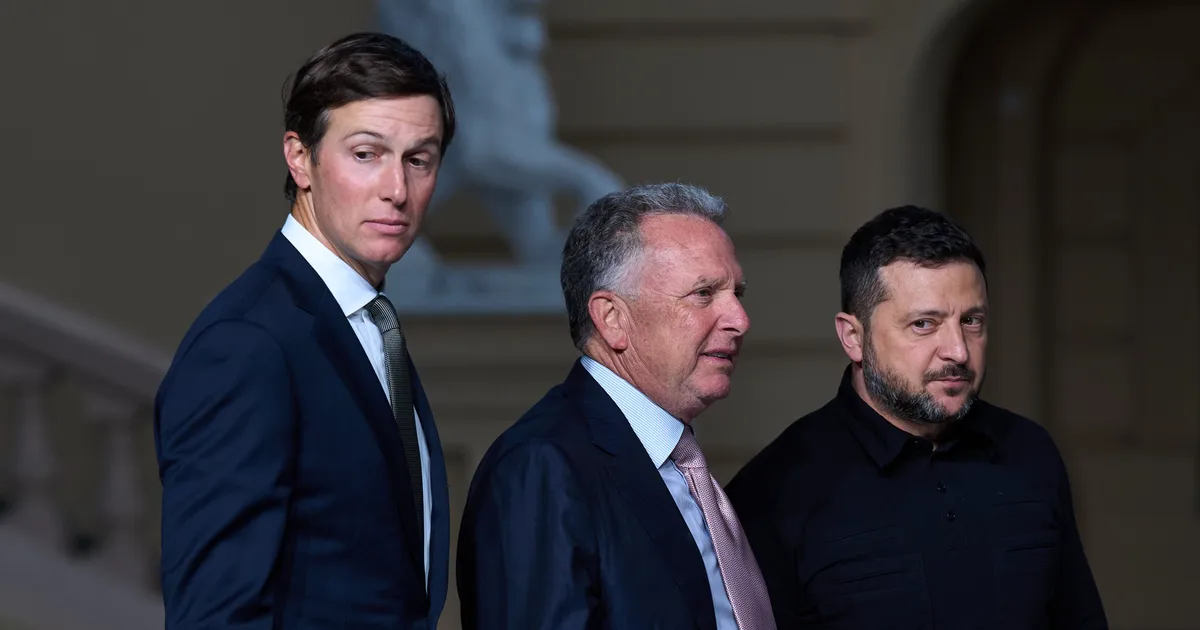
Donald Trump’s peace envoys have raised eyebrows after saying the end of the Ukraine war should be a “win-win” deal with Russia.
After his eighth visit to see Russian President Vladimir Putin, Steve Witkoff went on his first trip to Kyiv over the weekend together with Trump’s son-in-law, Jared Kushner.
The two are currently trying to fulfill the US president’s demand to end the Ukraine war.
Trump vowed to end the war within 24 hours of his second term. More than 18 months later, the war continues to rage.
Witkoff and Kushner then appeared to advocate for Putin while in the Ukrainian capital, completely glossing over the fact that the war began in 2022 with Russia’s invasion of its European neighbour.
During a press conference, Kushner said: “From President Putin’s perspective, I think he has certain objectives that he expresses he wants to achieve but obviously there are different aspirations that he has for his country that can also be achieve once this is concluded.
“We will continue to have a positive dialogue in order to find a pathway to get there.”
He added that Trump comes from the “business world”, where “you think about things in the context of win-win”.
“How do you create opportunities for both sides. War is a negative sum,” he claimed. “Everyone loses from war, whereas business and peace is a positive sum, so hopefully we can find big benefits from that in a big way.”
The remarks came after Witkoff told Putin over the weekend in the Kremlin that they had made some “incredible memories” together.
Eagle-eyed social media users claimed Ukrainian president Volodymyr Zelenskyy looked incredibly uncomfortable while Kushner was explaining how he saw the bloody four-year conflict.
Others were just stunned by the envoys’ bizarre approach to a conflict which has outlasted World War 1.
Kushner and Witkoff were also put on the spot by Ukrainian journalist Dmytro Gordon who asked if Putin was “deceiving” the US.
“You have met with President Putin very often,” the reporter said said. “Does it seem to you that Putin has been deceiving you all this time?
“And don’t you find it disgusting to sit at the same table with an international war criminal, the executioner of the Ukrainian people, who is personally responsible for the tragedy in Ukraine?”
Witkoff insisted that “you have little chance of getting to a peaceful resolution” unless you have a relationship with both sides.
He said his job is to “create good communication channels” between Russia and Ukraine, and they are “confident” there will be a good resolution here.
There was no major breakthrough following the envoys’ trips to both Moscow and Kyiv, even though they held extensive talks behind closed doors with both Putin and Zelenskyy.
After speaking to Witkoff and Kushner, the Ukrainian president said he expects the war to continue into the winter.
However, Witkoff tried to establish a more positive tone.
He said he was “encouraged” by what he described as “substantive” talks in Ukraine, while Zelenskyy said he wants a just peace with no opportunity for Russia to revive its aggression.
The Ukrainian leader also told reporters he wanted officials from Ukraine, Europe and America to meet soon for more discussions on peace.
Witkoff also claimed they “made a lot of progress in Moscow”.
Listen to Commons People, the podcast that makes politics easy. Every week, Kevin Schofield and Kate Nicholson unpack the week’s biggest stories to keep you informed. Join us for straightforward analysis of what’s going on at Westminster.

Just when we thought we’d heard the last of hot weather events for 2026, a September heatwave has been forecast across Europe, with warnings of a ‘heat dome’ over the continent.
According to the BBC, France and Spain have been among the hottest locations in Europe with temperatures exceeding 40C at times – around 10C hotter than the average temperature at this time of year.
“The extreme heat is forecast to intensify for central and eastern areas over the next few days,” they added.
What is a heat dome?
A heat dome develops “when a large area of high pressure becomes established over a region and remains there for an extended period”, according to weather and climate experts at the Met Office.
“Under high pressure, air sinks through the atmosphere. As it sinks, it becomes compressed and warms. At the same time, cloud formation is suppressed, allowing strong sunshine to reach the ground,” they explain.
The longer it goes on, the greater the heating effect.
“Clear skies encourage daytime temperatures to rise, while soils gradually dry out. As ground moisture decreases, less solar energy is used for evaporation and more becomes available to directly heat the land surface and the air above it,” they added.
It becomes a vicious cycle, where dry ground promotes additional warming, encouraging further drying. And because warm air occupies a deeper layer of the atmosphere than cooler air, the resulting pattern can resemble a dome-shaped area of heat – hence the name.
Is the UK going to experience a heat dome?
According to the BBC, the UK will not be massively impacted by the heat dome and the highest temperatures are behind us for now, it seems.
While there were warmer temperatures over the weekend for some parts of southern England, they assure: “The warmth is forecast to fade quickly as fresher Atlantic air and rain-bearing fronts are likely to arrive through next week.
“A return to heatwave conditions is unlikely through the next 10 days.”
The long-range weather forecast from the Met Office for 11-20 September suggests “dry interludes and relatively cool nights” are on the cards, “interspersed with occasional spells of rain and showers arriving from the west, perhaps accompanied by some strong winds at times too”.
The UK is bracing itself for wetter, stormier conditions throughout autumn and winter as a result of a ‘supersized’ El Niño weather event.
Experts suggest dry, settled weather looks “unlikely” as we reach mid-September and that temperatures will be close to average overall – with some relatively cool nights here and there.
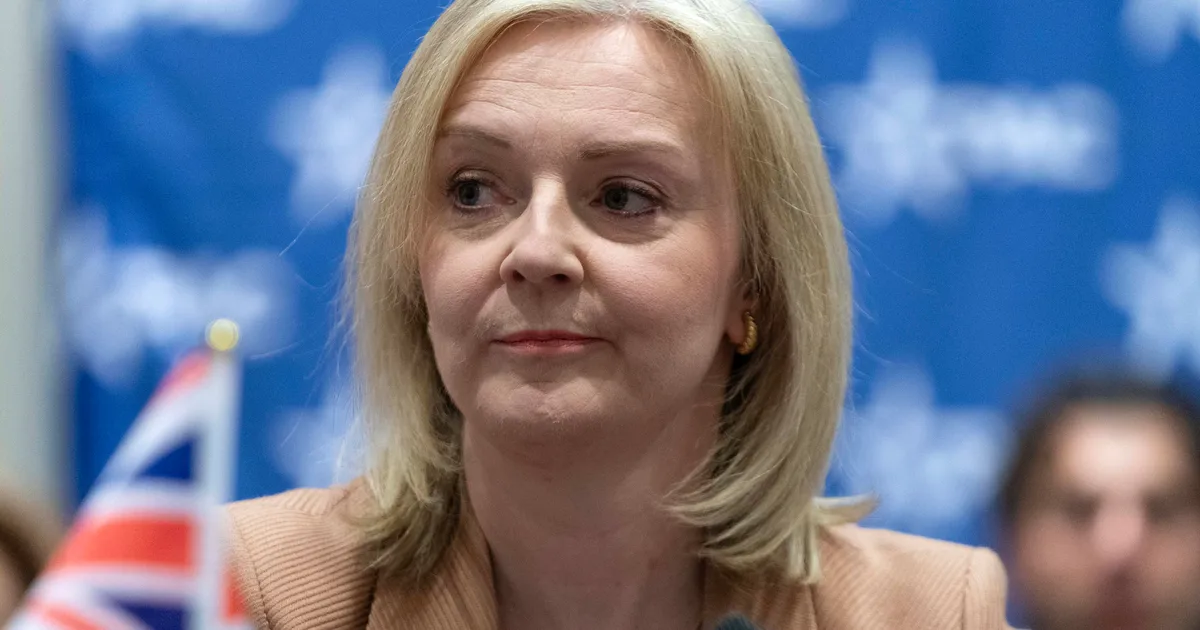
Liz Truss still appears to be in denial over the impact her disastrous mini-Budget had on the UK economy.
The ex-prime minister furiously defended her historically short premiership on social media after Labour’s new chancellor John Healey said the “Truss penalty” is to blame for the UK’s stagnant economic growth.
Truss hit back on social media, writing on X: “The penalty is a result of NOT following my policies.”
Truss’s 2022 mini-Budget announced £45 billion unfunded tax cuts, triggering market chaos and sending the value of the pound into decline.
She was forced out of office by her own panicked MPs as the Bank of England was forced to step in to steady the economy.
But Truss appeared to ignore all of that with her online retort – while also overlooking how Healey had also criticised two of her Tory predecessors.
The chancellor said: “Our borrowing costs are at historic highs and the reasons are plain.
“High borrowing, low growth has allowed national debt to rise from 64% of GDP – the amount we produce as a country – to 100%.
“[David] Cameron’s austerity gutted our public services, while [Boris] Johnson’s hard Brexit hammered goods exports.
“Unfunded spending then, after Covid, meant that inflation hit 11%, increasing the cost of living and the cost of business.
“And of course, UK debt costs were historically around the G7 average, until Liz Truss’s mini-Budget crashed the economy and collapsed confidence in Britain’s fiscal strength.
“Since 2022, we have been paying that Truss penalty, as we battle to re-establish belief in Britain and the UK’s fiscal sustainability.”
Labour has frequently used Truss’s legacy to mock their Tory opponents.
During his first prime minister’s questions, Andy Burnham claimed Conservative leader Kemi Badenoch had chosen the “author of the mini-Budget” to be her new shadow chancellor.
Andrew Griffith was promoted to the senior role over the bank holiday.
He had been a keen supporter of Truss when she was in power and defended the mini-Budget during the dying days of her premiership when he was financial secretary to the Treasury.
Asked by broadcasters on Sunday if he really was fiscally responsible, Griffith hit back: “There’s only one person responsible for the Liz Truss’s budget, and that’s Liz Truss.
“I was a very junior minister at the time, I wasn’t cited on that Budget, and my portfolio did not include tax and spend decisions.”
But he also claimed that the mini-Budget “wasn’t all bad”.
Since losing her seat at the 2024 general election, Truss has drifted closer to the pro-Donald Trump MAGA community and repeatedly claimed the West is in severe decline due to high taxes.
Listen to Commons People, the podcast that makes politics easy. Every week, Kevin Schofield and Kate Nicholson unpack the week’s biggest stories to keep you informed. Join us for straightforward analysis of what’s going on at Westminster.
Man arrested after fleeing scene of Derry crash

More Than A Million Suncorp Customers To Be Moved To ANZ By June 2027, Bank Brand Retires In Big Shift

Weekend altcoin rally runs out of road as bitcoin slips





-
 Fashion3 days ago
Weekend Open Thread: Beyond Yoga
-

 Crypto World3 days ago
Bitcoin price stalls near $82K as key resistance holds
-

 Politics3 days ago
Best Gaming Laptops, CPUs, TVs, And Keyboards To Upgrade Your Set Up For GTA VI
-

 Tech3 days ago
The Birds Outside, Drawn For You Automatically
-

 Crypto World3 days ago
IMF Says El Salvador’s Post-Review Bitcoin Purchases Used No Public Funds
-

 Crypto World3 days ago
U.S. added stronger than expected 162,000 jobs in August as labor market bounced back
-

 Sports3 days ago
Alexandre Pato consortium’s Northampton Town investment approved
-

 Sports3 days ago
Commanders’ Chig Okonkwo is a top breakout fantasy football candidate
-

 Sports3 days ago
Golden Eaglets Drawn in Group B for 2026 WAFU B U17 Championship
-
 Crypto World3 days ago
XRP price breaks falling channel as bulls target $1.53
-

 Politics3 days ago
A new European chapter for Gibraltar
-

 Politics3 days ago
How To Avoid Winter Colds: 4 Everyday Habits That Spread Germs, Says Pharmacist
-
 Politics3 days ago
The House | Bin the lectures, bring gossip and be ready to banter: how the new PM should prepare for his Trump encounter
-

 Crypto World3 days ago
From warning to listing: UK’s largest retail investment platform opens access to crypto ETNs
-

 Crypto World3 days ago
FinCEN flags $12.7B tied to Southeast Asia crypto investment scams
-

 Tech3 days ago
A Worthy Android Ereader, With Some Tradeoffs
-

 Crypto World3 days ago
Trezor Data Breach Impacts 67,000 More US Customers
-

 Tech3 days ago
How To Edit Claude’s Memory
-

 Politics3 days ago
33 Cosy Autumn Home Decor Ideas: Blankets, Pumpkin Decorations, And Candles
-
 Tech3 days ago
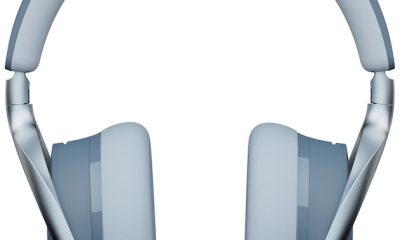
beyerdynamic AVENTHO Y Debuts at IFA 2026 and Makes Wireless Headphones Less Disposable
You must be logged in to post a comment Login