Politics
The House | “An evocative tale of intrigue and manipulation”: Baroness Hayter reviews ‘In The Print’


Alan Cox as Rupert Murdoch and Claudia Jolly as Brenda Dean | Image by: Charlie Flint Photography


4 min read
Tightly written and well-directed, Robert Khan and Tom Salinsky’s retelling of the 1986 Wapping dispute is a timely reflection on the human cost of technological change
Back in 1986, battles raged between police and print workers almost every night for 54 weeks at Rupert Murdoch’s new plant in Wapping, east London.
For those of us on the red benches, these events remain a vivid memory, while for most of those sitting on the green benches it is a bit of history brought to life on stage.
In The Print is a docudrama that focuses on two central characters in the dispute: the newspaper baron Rupert Murdoch, owner of four national titles, and Brenda Dean, the strong female leader of print trades union Sogat (which, several mergers later, became part of Unite).


This play manages to transport the audience into the murky world of Fleet Street at a time when the print unions wielded enormous power. The briefest of stoppages could mean no papers delivered through the nation’s letterboxes in the morning, which explains both the bargaining power of the unions – and also their weakness.
When Murdoch comes along with computer-generated pages and the ability to send these over the wires to remote print and distribution centres, the balance of power is changed.
Dean faced a heartless, rich and determined Murdoch
Playwrights Robert Khan and Tom Salinsky detail a dark but human story; one of intrigue and manipulation. They recall the calculated disinformation Murdoch uses to build his Wapping empire, claiming his new print works was for the sole production of a new evening paper, the London Post. But a leaked blueprint for the works reveals to union bosses its true purpose… to print all four titles in the Murdoch stable, The Sun, News of the World, The Times and Sunday Times.
Brenda Dean – later our much-loved and missed colleague Baroness Dean of Thornton-le-Fylde – fights a focused, tightly organised attempt to save her members’ livelihoods and future. But she faces a heartless, rich and determined Murdoch.

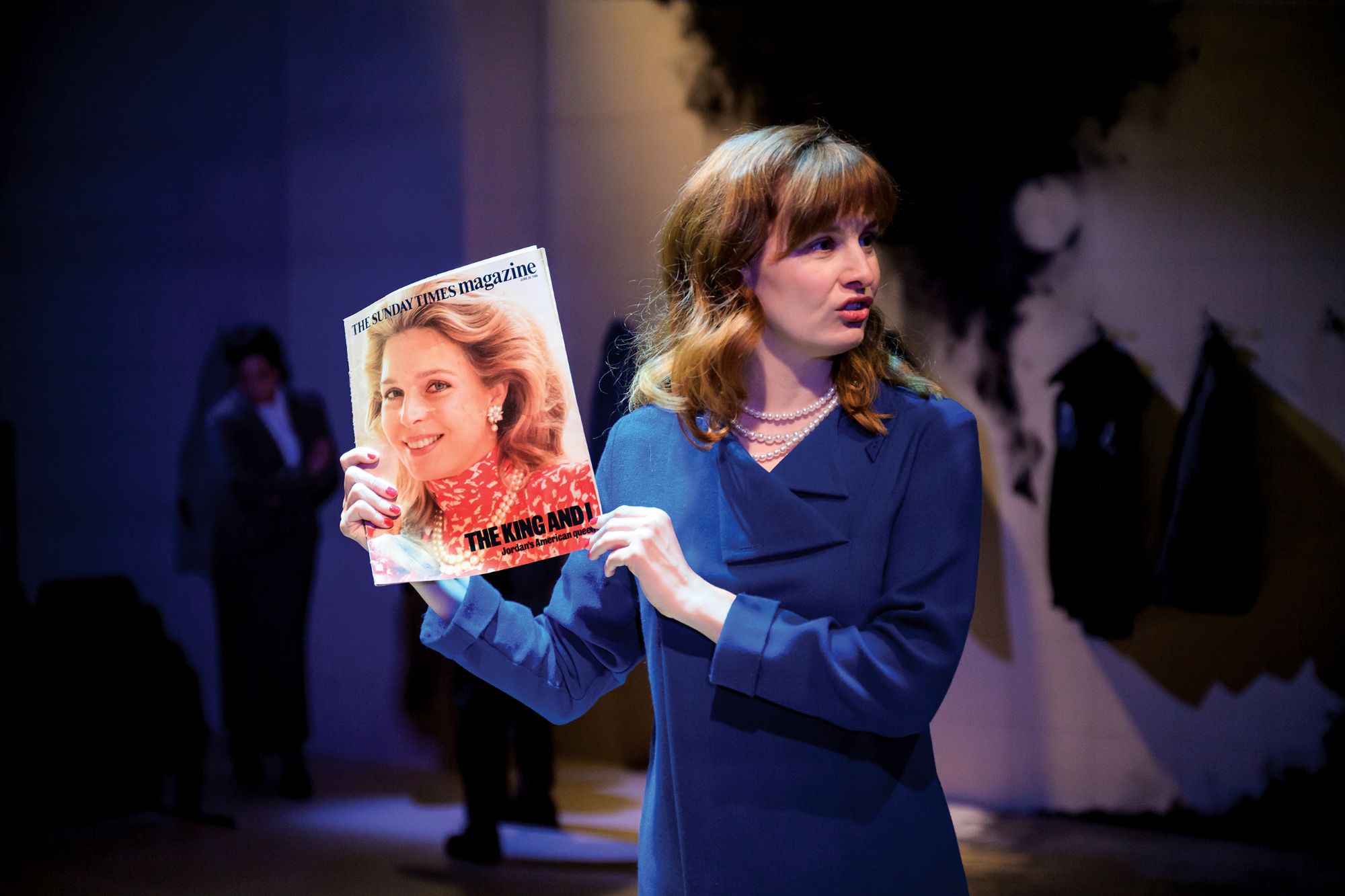
In a calculated move, taking the unions by surprise, a ruthless Murdoch sacks the strikers immediately after the industrial action is called, saving himself some £40m in redundancy payments.
We witness clandestine negotiations between the two, where Dean (played by Claudia Jolly) secretly meets Murdoch, played by Alan Cox (who embodies some of the character of Logan Roy portrayed by his father, Brian Cox in the TV series Succession), with scenes playing out in Dean’s home and later in Murdoch’s Californian residence.
Dean tries to negotiate a settlement for the 6,000 striking members of the print unions – only a small number of whom were highly paid printers – hoping that some jobs would be saved, and for improved redundancy offers for the rest. But she is ultimately outmanoeuvred by Murdoch, who leaves her empty handed – and ends the era of print union power.


For MPs from all parties new to the story, it portrays a lost time of strong working class bonds – when industry-based, expert union leaders had the power to tame dictatorial bosses. For older theatre-goers, it is a reminder of lost times and fights well-fought, and of the extraordinary role played by a pioneering female leader.
And for all of us, in the age of AI, an important reflection on both the inevitability and the human cost of technological change.
Baroness Hayter is a Labour peer
In The Print: Rupert Murdoch vs Brenda Dean in the Battle for Fleet Street
Written by: Robert Khan & Tom Salinsky
Directed by: Josh Roche
Venue: King’s Head Theatre, London, N1 – until 3 May

You must be logged in to post a comment Login