Politics
The House Article | A step change is needed in government’s financial management


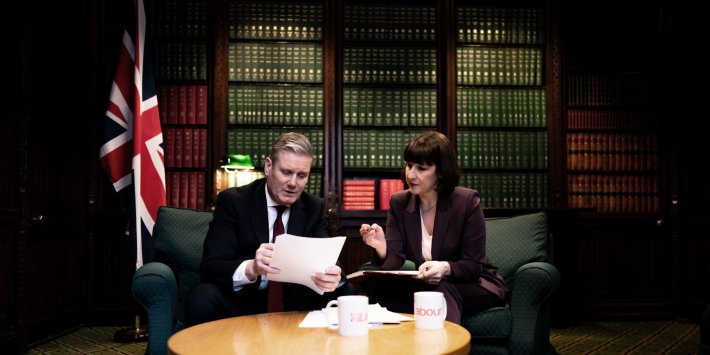
Keir Starmer and Rachel Reeves in March 2024 (PA Images / Alamy Live News)
2 min read
Too many public services remain difficult to use and expensive to deliver. A background of increasing geopolitical tension, an ageing population and myriad demand pressures add further complexity.
This is a critical time for all of us focused on getting better results for citizens from the available public resources – and government must get the basics of good financial management right.
At the National Audit Office (NAO), we’ve seen countless examples in the past year of opportunities to get better value for taxpayers.
Across the 17 major departments and 400 other organisations, from The College of Policing to National Savings and Investments, that we provide an audit opinion for, common themes have emerged, as highlighted in our recent report Audit Insights.
The difficulty of grappling with legacy IT systems, poor asset management and the rising cost of compensation schemes are just three – and they show up in our value for money investigations too.
Our work tells us that we won’t see the public service improvements that taxpayers deserve without concerted attention on four fundamentals of good financial management in government, namely: timely and accurate financial reporting; fit for purpose financial management information; the skills and capability to inform decision-making; and the leadership and culture that supports innovation and continuous improvement.
Most departments and public bodies complete timely and high-quality accounts. But a significant number don’t yet achieve that, and we’re working with them to accelerate timetables and improve the quality of reporting.
If you are in any doubt that timely and robust accounting matters in the public sector, the situation in English local government remains a cautionary tale. Backlogs of unaudited accounts going back several years are only being cleared by means of disclaimed audit opinions, meaning that in many cases we have no independent assurance about how local authorities spent billions of pounds of public money.
To drive the efficiency and productivity improvements set out in the Spending Review, finance leaders should be strategic partners with a seat at the top table. The right people, skills and leadership culture are essential. Government is rightly focusing on increasing digital skills in the civil service and should ensure that finance skills keep pace with changing business models.
The right information matters too. Our recent report on improving productivity through better cost information showed that too many managers in the civil service lack the financial information to drive improvements in value for money.
In other areas there are important steps forward. I welcome particularly the 10-year infrastructure strategy, addressing the failures of asset management shown by our previous work on schools, hospitals and roads.
On so-called ‘mega-projects’, I welcome the new governance arrangements being implemented by Treasury and the National Infrastructure and Service Transformation Authority, based on recommendations from us as well as the Office for Value for Money.
The NAO’s new five-year strategy sets a new level of ambition for our work to help improve the productivity and resilience of public services and support better financial management and reporting in government.
In short, we want to make a difference.
And I would argue that the need for independent, evidence-based auditing to support accountability and public trust has never been greater.
Gareth Davies is head of the National Audit Office

You must be logged in to post a comment Login