Politics
The House Article | Bringing back the assisted dying bill is a huge mistake




4 min read
Over 18 months of debates, hearings and amendments failed to make the assisted dying legislation bill fit for purpose. So why is it coming back?
Labour governments are rare. When entrusted with power, we must act with purpose, pursue a clear vision, avoid unnecessary distractions, and deliver the change our constituents expect. I have made no secret of my belief that we are not currently getting this right, and it gives me no pleasure to say so.
A new parliamentary session presents an opportunity for backbench MPs to enter the Private Members’ Bill (PMB) ballot and advance legislation capable of addressing the real challenges people face in their everyday lives. Increasingly, I am of the view that if the government remains unwilling to focus on those priorities, backbench MPs will have to do much of the heavy lifting themselves.
The last PMB ballot saw Parliament spend the best part of 18 months attempting – and ultimately failing – to make Kim Leadbeater’s Assisted Dying Bill workable. Despite hundreds of amendments and an unprecedented 14 sitting days of scrutiny in the House of Lords – far more than most PMBs ever receive – the legislation remained fundamentally flawed. Even Lord Falconer felt compelled to table 74 amendments in an effort to rectify its shortcomings.
Rather than accept that the PMB process was not the appropriate vehicle for such a profound moral question, Lauren Edwards has reintroduced the same assisted dying bill — a move that will further divide an already fractured Parliamentary Labour Party.
At the outset, I supported Kim Leadbeater’s Bill because I am not opposed to the principle of assisted dying. However, we are no longer debating an abstract principle. We are considering legislation that would fundamentally alter the role of the NHS and govern decisions relating to the deliberate ending of human life.
In the end, I could not, in good conscience, support the Bill. I remained unconvinced that adequate safeguards were in place or that sufficient consideration had been given to the profound changes it would make to the relationship between doctor and patient, and between the state and the citizen.
Polling conducted by Whitestone Insight found that 52 per cent of MPs lacked confidence in the Bill’s safeguards, while only 41 per cent said they would vote for it again.
The debate raised profound moral, legal, and societal questions. MPs and peers from across the political spectrum worked diligently to improve legislation that would fundamentally reshape the relationship between patients and healthcare professionals, and between individuals and the state. Yet after 18 months of debates, committee hearings, and amendments, key questions remained unresolved. So why bring back the same piece of legislation?
We still do not know how an assisted dying service would operate in practice, which drugs would be authorised to end life, or what the consequences would be – for patients or clinicians – if procedures went wrong.
If such fundamental questions could not be resolved after such extensive scrutiny, why would Parliament willingly choose to repeat the same flawed process?
Supporters of the Bill argued that safeguards would prevent abuse. Yet safeguards on paper are no guarantee in practice. Pressure is rarely overt. More often, it manifests as a sense of being a burden, financial anxiety, unspoken family expectations, or fear of dependency. These are precisely the kinds of pressures that no safeguarding framework can reliably identify or eliminate.
Those concerns are not merely theoretical. Conditions such as eating disorders fundamentally distort an individual’s perception of themselves and their own worth. To suggest that such vulnerabilities can be neatly separated from end-of-life decision-making is implausible. Once the principle is conceded, the boundaries become increasingly difficult to maintain.
Proponents dismissed concerns about a so-called “slippery slope”, yet evidence from other jurisdictions suggests a recurring pattern: eligibility expands, safeguards are loosened, and the scope of the law gradually extends. This matters because those most at risk are invariably the most vulnerable – disabled people, those with learning difficulties, and those whose lives are too often judged, implicitly or explicitly, as less valuable. In several countries where assisted dying has been introduced, eligibility has expanded over time to include individuals suffering solely from mental health conditions.
Even with the best of intentions, such societal biases cannot simply be legislated away.
In the last parliamentary session, some MPs and peers openly acknowledged that the Bill was flawed, yet argued it should proceed regardless. That is not how Parliament should legislate on matters of life and death.
The Bill risks sending a deeply troubling message: that some lives are less worth living than others, and that the role of the state may extend to facilitating death rather than improving care.
Parliament should address existing failures within our healthcare system – not seek to give the most vulnerable in society a false choice.
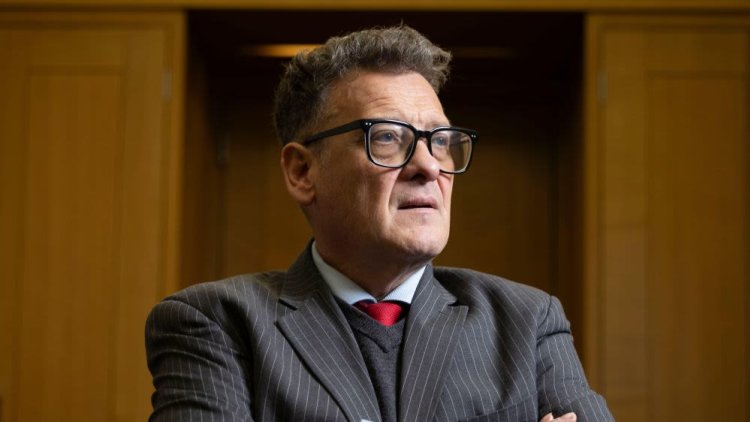
Karl Turner is Independent MP for Kingston upon Hull East

You must be logged in to post a comment Login