

Politics
The House Article | Britain doesn’t need fewer graduates, it needs better ones

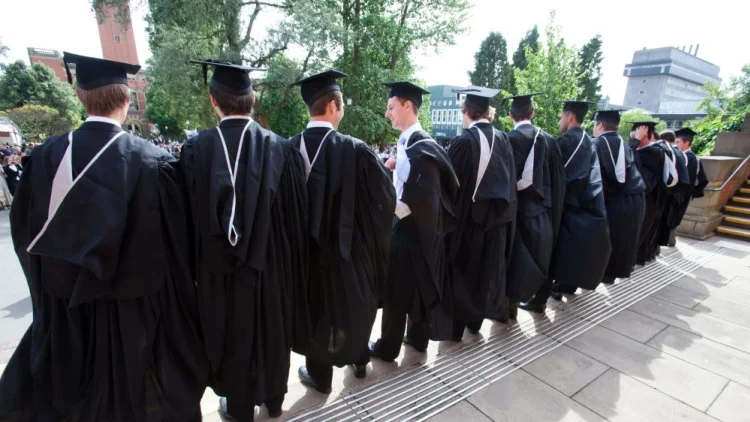

(Alamy)

Dr Michael Spence, President and Provost
4 min read
It is time to consider what a graduate is actually for.
On Monday, a new Policy Exchange report added to the ever-growing pile of literature and comment about whether too many young people are going to university. It is a question that deserves serious consideration and practical answers. If graduates are struggling to find good jobs, as the recent Milburn review concluded, universities cannot dismiss those concerns. If employers say they cannot find the skills they need, we must listen.
Before concluding that Britain needs fewer graduates, however, it is worth considering the world that today’s students are preparing to enter. We must consider seriously what a graduate is for.
The world they will inherit is likely to need more highly skilled people than the one we inhabit now. A QS report in March identified that among the 1,436 occupations essential to the delivery of the Industrial Strategy, 80 per cent require level six skills or above. In common parlance, that’s a bachelor’s degree or higher. From healthcare and education to science, engineering and professional services, we require more high-skilled workers, not fewer. Advances in artificial intelligence are also increasing the value of capabilities that remain distinctly human: judgement, creativity, communication and the ability to work effectively with others.
That picture feels familiar to me. UCL educates future clinicians, engineers, teachers, architects, data scientists, entrepreneurs and public servants. When I speak to employers, I rarely hear them asking for graduates who know less. More often, I hear them asking for graduates who are better able to apply what they know. They want people who can work effectively in teams, communicate clearly, manage projects and adapt when circumstances change.
None of this means concerns about graduate outcomes should be waved away. Quite the opposite. An economy can need more graduate-level skills and still leave some graduates struggling to make the transition into good work.
Universities are asking themselves what more they can do to close that gap. For many years, employability was often treated as something that happened alongside a degree rather than through it. Students would study their subject, then visit the careers service towards the end of their course and think about what came next. That model became outdated some time ago.
Universities cannot become strictly vocational training providers. A university education ought to expand horizons, cultivate intellectual confidence and encourage students to think critically about the world around them. The graduates Britain needs are those who are prepared not only for the workplace as it currently stands, but also for the workplaces of the future. That is where an education from a university like UCL has a distinct value add. Students benefit from learning alongside people who are helping to shape the future of their disciplines, whether that means developing new technologies, advancing medical treatments or exploring solutions to complex social problems.
Yet there is plenty of room to be more ambitious about helping students connect those qualities and experiences to life beyond the campus. Students should encounter more opportunities to work on real-world problems before they graduate. Increasingly, at UCL, we are experimenting with ways of doing that. For example, through our ExtendEd programme, every student is now given the opportunity to take part in industry challenges, community projects and collaborative problem-solving activities alongside their academic studies.
I am proud that our graduates enjoy some of the strongest outcomes in the country. Yet spending time with students and employers leaves me convinced that this conversation cannot stop at employment statistics. The economy is changing too quickly for that. Many of today’s students will move between organisations, sectors and technologies that do not yet exist. Preparing them for that future involves more than helping them secure a first job after graduation. It means equipping them with the knowledge, judgement and adaptability to navigate a lifetime of change.
Britain faces genuine skills shortages. Employers need talent. Young people need opportunities. Universities have a responsibility to work with both of these groups to be part of the solution.
Britain’s economy will continue to need graduate-level skills in the years ahead. The task for universities is to ensure that more graduates are equipped to make use of their knowledge, contribute in meaningful ways and adapt as the world changes around them.
Dr Michael Spence is president and provost of UCL

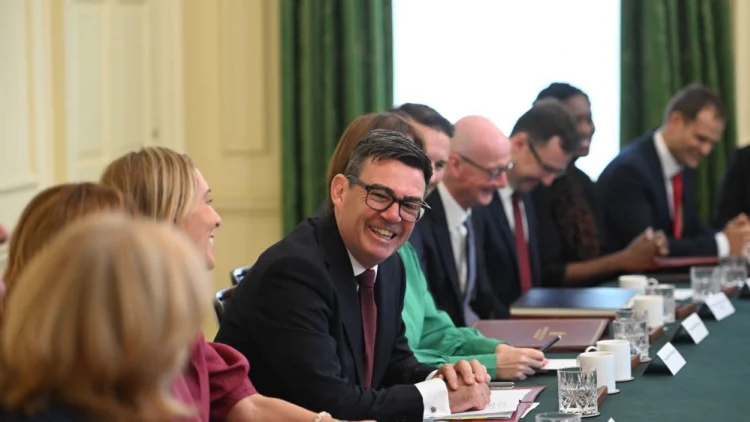

Andy Burnham appointed his cabinet on Monday (Alamy)
2 min read
Andy Burnham’s Cabinet has been described as a northern takeover of government. Analysis shows one part of the north in particular is on the rise.
After taking office on Monday, the new Prime Minister gave high-profile ministerial jobs to fellow northern Labour MPs like Angela Rayner and Lucy Powell. There are also seats at the Cabinet table for Lou Haigh and Anneliese Midgley, who both played key parts in Burnham’s journey from the Manchester mayoralty to Downing Street.
Burnham’s northern roots, particularly “Manchesterism”, are an important part of his political identity.
He has set up a new Downing Street base in Manchester, ‘No 10 North’, where he intends to work at least one day a week, starting on Friday, and where he could host foreign leaders.
It’s not just the politics of these places and his devolution agenda, but the cultural side, too, like his love for Everton FC, rugby league and The Smiths.
A comparison of Burnham’s Cabinet with Keir Starmer’s top team when he stood down to make way for his successor shows that specifically the northwest – the PM’s home region – is the big winner in terms of senior ministerial representation.
Burnham has appointed six Labour MPs representing seats in part of the country: Education Secretary Powell; Communities Secretary Rayner; Chief Whip Midgley; Business Secretary Jonathan Reynolds; Environment Secretary Angela Eagle; and Culture Secretary Lisa Nandy.
This compares to two MPs in Starmer’s cabinet at the time of his resignation who were from constituencies in the northwest.
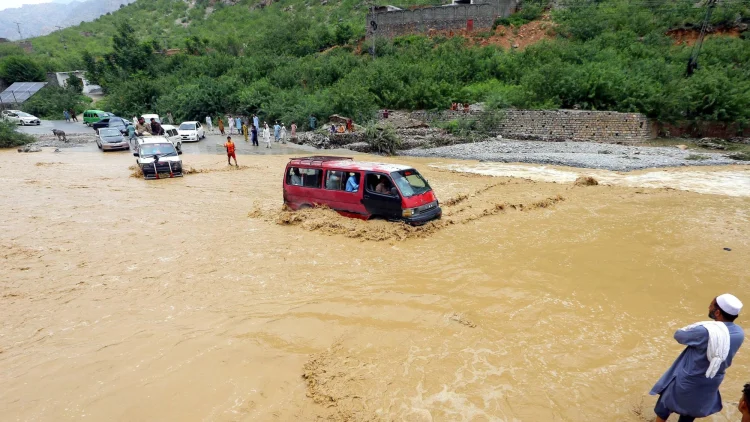
Heavy monsoon rains triggering flash floods in Pakistan, July 2026 (Pakistan Press International / Alamy)
5 min read
Too often, political debate about migration begins with a boat, a border crossing or an asylum claim.
But when Abdihakiin Hassan Jiirow gave his testimony to our recent APPG inquiry on Climate Change and Migration, he did not offer such a simple explanation for how and why people move. He described drought and the loss of livestock; he spoke of flooding, insecure shelter, food shortages and scarce clean water; he talked about interrupted schooling, and persistent violence from militias and non-state actors.
For him and for many others, those pressures accumulated until the conditions necessary for ordinary life had broken down. At that point, remaining at home was no longer a meaningful choice. His testimony should change how we discuss climate migration.
That is the central argument of Before the Border, the new report from the All-Party Parliamentary Group for Climate, Nature and Security. It is also why the government’s new Climate Security Taskforce must be matched by a permanent capability able to identify emerging risks and act before crisis becomes displacement.
Climate change does not operate as a single trigger sending people directly towards Britain. It acts through systems. Drought, flooding, extreme heat and environmental degradation interact with poverty, conflict, weak governance and failing infrastructure.
Movement is usually internal or regional. People travel first to the nearest town, city or neighbouring country where they hope to find safety, employment or essential services.
But geographic distance is not strategic distance. When host communities are overwhelmed, public services fail, food prices rise and governments lose legitimacy, the consequences can reach the UK through humanitarian crises, conflict, disrupted supply chains, pressure on allies, organised crime and irregular migration routes.
The principal security threat is not the person who moves. It is the unmanaged systems failure that removed their choices.
Our evidence also showed what can happen when some of those choices are restored. Ahmad Ouwier arrived in Jordan as a Syrian refugee. He moved from informal work into information technology and entrepreneurship, founded a business, and created opportunities for refugees and Jordanian citizens.
His story shows that resilience depends upon institutions as much as individuals. Ability and ambition can still be frustrated by restrictions on documentation, lawful work, education, finance and company registration.
Shahd Smadi made the same point when speaking about displaced young Syrians. They do not want to remain permanently defined by vulnerability or treated solely as recipients of aid. They want education, skills, lawful employment that facilitates agency and ability to further the social and economic future of the country hosting them – the opportunity to potentially contribute rather than permanently consume.
These testimonies illustrate two paths. Where institutions collapse, displacement can become prolonged, destabilising and intergenerational. Where people retain access to education, water, lawful work, finance and functioning local government, mobility can become a form of adaptation – a means of rebuilding lives and strengthening receiving communities.
This is not only a humanitarian issue. It is a matter of preventive security.
Britain already possesses expertise across government, the intelligence community, local authorities and universities. What it lacks is a permanent mechanism capable of combining that knowledge, identifying where climate pressures are converging with fragility and translating warning into action.
Our report therefore recommends a UK Climate Security Intelligence Team: a small, cross-government capability focused not on producing more reports but on improving decisions.
It should identify where pressures on water, food, livelihoods, infrastructure and public trust are approaching critical thresholds. It should assess those already displaced, but also those trapped because they lack the resources to move. Every warning should be linked to a practical policy choice – diplomatic engagement, adaptation finance, humanitarian assistance or conflict prevention.
This capability must work with countries, not impose solutions upon them. The climate security intelligence model developed with Jordan and funded by the UK Foreign, Commonwealth and Development Office demonstrates the value of nationally owned systems combining environmental data with local knowledge and political analysis.
Satellite data can reveal rainfall decline, vegetation loss or rising temperatures. It cannot explain whether a family will adapt, move, become vulnerable to exploitation or lose faith in the state. Effective warning requires both data and human judgement.
Britain must also recognise its own exposure. Flooding, coastal erosion, extreme heat and infrastructure disruption will increasingly affect where people can live and whether receiving communities can absorb internal movement. Managed retreat and local resilience are now matters of national preparedness.
Migration policy will remain necessary. Borders will still require management. But a government that begins its response only when people reach a border has begun too late.
The risks posed by climate change and ecological collapse have been recognised in the National Security Assessment; and the new Climate Security Taskforce is a very positive move. Government now needs to establish a permanent warning capability, and the financial strategy and parliamentary accountability required to turn awareness into action.
Security policy is ultimately about preserving choices before events remove them. Acting before the border means helping communities remain safely where they are, enabling movement where necessary and preventing environmental stress from becoming institutional collapse, conflict or coercion.
Climate change is already reshaping mobility. The question is whether Britain will manage the consequences intelligently and early, or continue paying more to confront them after prevention has failed.
Barry Gardiner is Labour MP for Brent West and chair of the APPG on Climate Nature and Security, and Prof Tim Clack is an associate fellow of the Centre for Historical & Armed Conflict Research
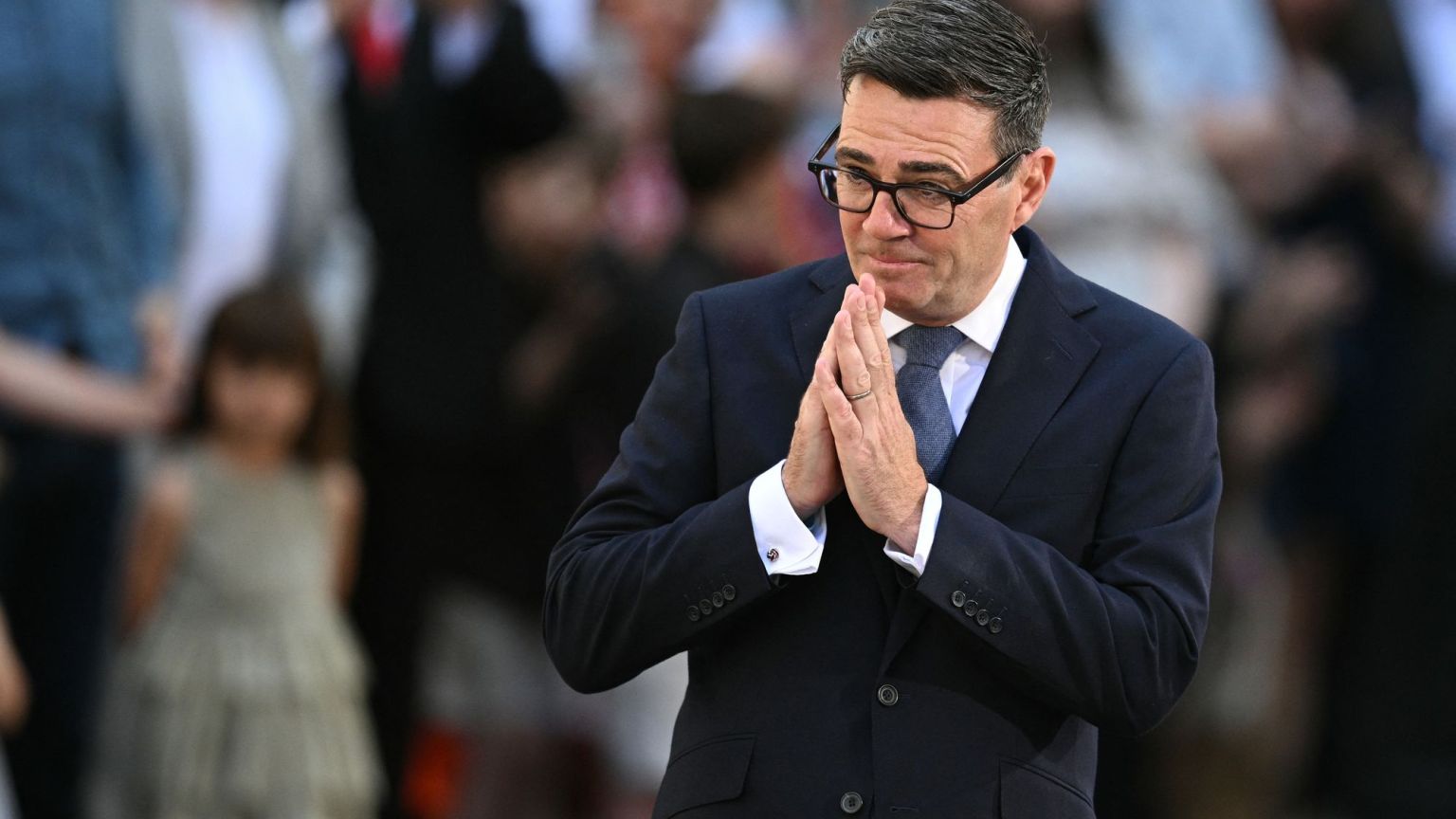
Andy Burnham was born in January 1970, in the Liverpool suburb of Aintree (famed for its racecourse and its iron). His dad was a telephone engineer, his mother a GP’s receptionist. It is my regrettable but inevitable duty to have to inform you that he joined the Labour Party when he was 15 years old. He has a Roman Catholic background, but then this shouldn’t really surprise us, as so much of progressivism is homily and responses – it requires no thought at all.
A lot has been written about Burnham lately, and he has certainly talked at great length, but very little information has been imparted. He is like a book that you’ve forgotten you’ve read. You recall the cover, the sensation of turning the pages, but nothing about the story.
As you will know, the new UK PM appears to be a very ordinary man, and in fact almost painfully well-adjusted in his demeanour. Ordinariness should be a virtue in a prime minister, particularly after the run of freaks and geeks we’ve had over the past decade. But it is not. And actually, he is stranger than we think – not in himself, no, but in the aura he creates and its curious effect on others. He is a very weak flavour of a man, which makes his elevation to saviour by Labour MPs all the more depressingly baffling. It’s like being tied up awaiting a terrible fate when the door bursts open and you cry, ‘Thank heavens, it’s Superman!’, when in fact it’s the bassist from the Inspiral Carpets. Labour MPs seem to rate his modestly impressive achievements as mayor of Manchester rather higher than they deserve.
When Keir Starmer came to power, even though I was certain it would mean disaster and would end pretty much the way that it has (though sooner than I anticipated), I kept schtum. I couldn’t help doubting myself. Maybe I’ve judged this wrong, I thought. Remember, at the dawn of Starmer, all those articles by folk supposedly in the know about those ruthlessly efficient, pragmatic political masterminds Morgan McSweeney and Sue Gray?
Reading those, I pondered that perhaps I’d overlooked something. And it would be a mistake to underestimate the intelligence and acumen of your political opponents, wouldn’t it? But this fair-mindedness has now become far harder to sustain. It is very difficult to compose a thought along the lines of ‘Perhaps the mighty brains of Lucy Powell and Chris Bryant know something I don’t?’. I find that there are limits of Pollyanna-ishness which I cannot cross.
This time round, I feel so confident in my prediction that I’m going to put it on paper. Here it is: Andy Burnham will be a disaster. He cannot succeed because he is totally out of step with reality. Even with the most favourable prevailing political conditions, he would fail. And the prevailing conditions are awful.
Andy Burnham as the answer to Britain’s problems? He is comically unequal to the task. The solutions he is unveiling as I write – there should be more mayors, we must have a second No10 in Levenshulme, there’s been too much Thatcherism! – are risibly out of touch. It is like somebody presenting at an emergency room, projecting blood and vomit from every orifice, and being sent away with a couple of Nurofen.
But before we get on to that Burnham policy agenda, let’s examine the tone of its delivery. Apparently, the feeling in Labour is that Starmer was far too doomy and gloomy at the kick-off back in 2024, what with Rachel Reeves circling overhead cawing like a constipated crow. So, in the time-honoured political tradition of overcompensating for a predecessor, Andy is going to be breezy, bright and light.
He has a low bar to clear – to be less annoying than Keir Starmer. Unfortunately, Andy is just as annoying, but in a different way. Starmer makes one want to vomit. The Burnham aesthetic brings on more of a dry heave. He is reminiscent of Chorlton from Chorlton and the Wheelies, but without Chorlton’s innocence. Worse, he has obviously started to believe in his own myth, peacocking and preening and taking everybody and everything for granted.
We’ve had much evidence of self-adoration in the three weeks of his run-up. Excruciating social-media content has abounded. Scrutiny from journalists, even friendly ones, would be far too much of a downer. Instead, Andy has popped up on Reddit for an ‘Ask Me Anything’, in which he answered only the questions he liked the sound of. He ran away from journos after his one public speech of this little interval, but agreed to be grilled by… Gary Lineker. And he chatted on the street to the people of Cardiff, the poor sods. Haven’t they suffered enough? He described this stunt as evidence of him ‘doing politics differently’, as if speaking to members of the public was a spiffing new idea nobody had ever previously considered. I suspect that people don’t care how politics is done, as long as it is done competently. This obsession with tone is a sure sign that there is no actual content.
When the accusation of not being ‘serious’ is made against politicians, I flinch a bit. Neither seriousness nor its lack intrinsically counts for very much. If the person concerned has an easy, affable manner or if they are a crabby, snappy downer, what does it matter? The only important consideration is that they perform effectively and display good judgement. Starmer, like Boris, Truss and Rishi, was dumped not because of his demeanour – though obviously it didn’t help – but because he kept making really bad decisions. The public is remarkably tolerant of weird and unpleasant politicians who govern wisely, though it’s been a long time since that was tested. The current Andy vibes – big head swelling, big mouth running on – are inappropriate, yes. But they wouldn’t be a problem if his worldview were closer to reality.
Which brings us back to Andy’s policy platform, such as we know it. Burnham refuses to acknowledge that anything has happened since about October 1990 (the height of Madchester, appropriately). He is still 20 years old, still the bright northern lad at Cambridge with hair horns and the coolest girlfriend, and the Beautiful South are still at No1 with ‘A Little Time’. John Major, Tony Blair, Gordon Brown and the long list of subsequent nits – no, didn’t happen.
Britain in 1990 is a world that many would wish to return to. But you have to face reality to deal with reality. ‘Britain took a series of wrong turns in the 1980s’, says Andy, 36 years later, as if the Eighties were a few months ago. While I am all for long-term thinking, this is fascinatingly nonsensical. And why stop there? Down with Stafford Cripps! Kick out Bonar Law! It is bizarre, this throwing back of our current malaise to the most recent period that we were governed remotely competently.
It takes blinkers of a most peculiar kind to look at Britain in 2026 – benefits bill bringing us to the verge of bankruptcy; mass immigration, both legal and illegal, destroying the social framework of centuries; staggering rates of taxation choking any hope of economic recovery – and conclude that the problem is Margaret Thatcher. But she remains the indivisible, indigestible block in the guts of the ageing British progressive. They can’t let Maggie go. Things are bad? It must be because of Thatcher, not the subsequent 36 years of progressive rule. In fact, in what passes for Burnham’s mind, the problem must be that her successors were not progressive enough. So he has to correct that.
This is quite frighteningly infantile when you stop to think about it. Burnham is running an ancient mental model that simply cannot be updated by new facts – Windows 3.0 in the age of Windows 11. I told you he is stranger than he seems. His amiable envelope disguises this madness. He may be strikingly inane in his tone, but he is strikingly insane in his thinking.
He has kept details of his actual plans very vague. What do we know? Apparently, he intends to take the political fight to Reform UK head on – with policies such as increasing immigration by admitting the Boriswave at terrifying cost, genuflecting to Hamas and immiserating the final remaining pockets of wealth that are keeping the entire show just barely on the road. He seems to desire the return of British Leyland, which will somehow empower the working class.
And this wonky Weltanschauung is why he cannot succeed. His in-tray is heavy with 2026 problems, and he has a 1990 mind (maybe even a 1978 mind). The first horrible exogenous atrocity of his premiership – and there will be many, things being as they are – will confront him with contemporary reality, but he will be unable to process it.
In fact, the happy-chappy banter already clashes in a very ugly way against the substance, such as it is. ‘We got that wrong’, he mumbled earlier this month, in his apology to Hamas and their British-born proxies.
And who has he assembled as his team? Louise Haigh, a convicted fraudster as the first secretary of state – but this doesn’t seem to matter somehow. Loopy Net Zero fanatic Miatta Fahnbulleh as energy secretary. His director of political strategy is Matthew McGregor – a name which sounds like a spoof version of Morgan McSweeney. Maybe he can be followed by Michael McClaren or Mitchell McFarlane? McGregor is a disastrous quango progressive, all up for the repatriation of ISIS brides and a former head honcho of sinister outfits 38 Degrees and the egregiously misnamed Hope Not Hate.
Burnham is laughably unqualified for the job of prime minister, a job he has been wafted into not by the public but at the urgent demand of the tragic one-term Weebles on the Labour backbenches. His arrival in Westminster has been incredible to behold. Andy Burnham, the also-ran non-entity who falls apart at the suggestion of a difficult question, whose only mark in government in the New Labour era was the MRSA scandal… this is Labour’s messiah?
It can only end in disaster, because neither he nor they can face the reality of what they have done to Britain. They are living in a false paradise. In the words of Charlene in the spoken section of her 1982 No1 smash, ‘I’ve Never Been To Me’:
‘Hey! You know what paradise is? It’s a lie. A fantasy we create about people and places as we’d like them to be.’
Of course, Andy Burnham is not the answer to Britain’s decline. That would take superhuman powers of forbearance and a revival of Victorian-era levels of dedication and enterprise. It also requires honesty and judgement – two interlocking qualities that this trivial twit does not possess and cannot hope to provide. The best we can hope for is that the Burnham era is the final stop of the cognitive dissonance roadshow. That it’s the last splutter of progressivism – and the terminal stage of the final Labour government.
Gareth Roberts is a screenwriter, author and novelist, best known for his work on Doctor Who. This is an edited extract from his ‘Working Class Zeroes’ series on Substack.

3 min read
Prime Minister Andy Burnham’s plan to scrap digital ID has created confusion in Whitehall and resulted in an apology to officials working on the scheme.
Before entering office on Monday, Burnham announced that he would abandon the Keir Starmer policy and redirect the resources to tackling cost-of-living pressures.
Speaking in his first Cabinet as PM on Tuesday, he said the decision was about “reprioritisation”, after announcing that money saved by ditching the scheme would be put towards cutting VAT from household energy bills.
On Tuesday morning, the Permanent Secretary in the Cabinet Office, Cat Little, apologised to department officials who had been working on digital ID for not being told about the decision before it was announced, PoliticsHome understands.
Little told officials that what remains of the scheme will move to an expanded Department for Digital, Culture, Media and Sport, headed by Lisa Nandy.
This detail has led to questions over what part of the policy is actually being discarded.
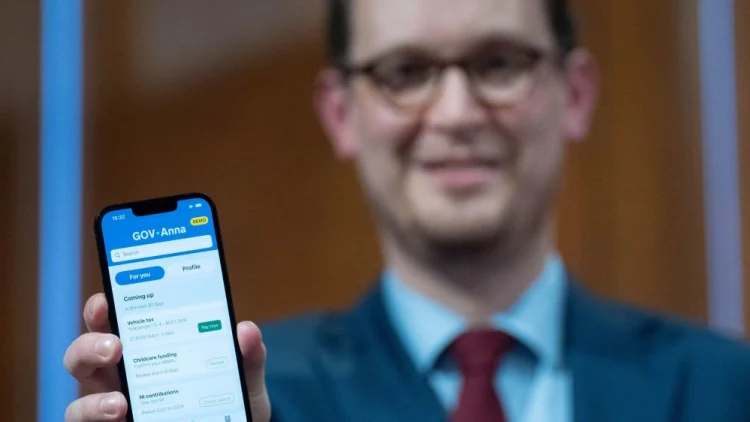
The new Burnham administration has said that it remains committed to the existing Blueprint for Modern Digital Government, including the GOV.UK app, GOV.UK OneLogin and the Government Wallet, with a digital driving licence expected shortly. Digital inclusion work will continue, building on the 2025 Digital Inclusion Action Plan.
Insiders have told PoliticsHome that the government has already spent around £15m on developing the policy since it was announced by Starmer in September last year.
The Institute for Government’s Heloise Dunlop said the money that has already been spent on the policy “is unlikely to be insignificant, given the size of the team and extensive consultation process”.
She told PoliticsHome it was “not clear how the government was going to fund digital ID: the policy was not yet fully finalised, there was no clear idea what online services would be included in the join-up, and the OBR had said no specific funding had been allocated for digital ID in the spending review”.
On Tuesday morning, Darren Jones, a Starmer ally who Burnham sacked from Cabinet on Monday, and who led on digital ID while in government, posted on X that the policy of scrapping digital ID to fund energy bill cuts was “unfunded” as the latter is based on unspecified departmental cuts.
“The government will have to set out how it will pay for its new policies at the budget,” he wrote.
Helen Miller, director of the Institute for Fiscal Studies, added: “At last year’s Budget, the OBR estimated that the [digital ID] programme could cost a cumulative £1.8bn between 2026–27 and 2028–29, and the Treasury estimates that today’s VAT cut will cost £850m this year.”
Miller said that the numbers mean that the government “will therefore still need to make around £850m of as yet unspecified cuts from other departmental spending to pay for this”.
If the tax cut remains permanent, Miller said, “the government would have a range of options for how to pay for it in future years”.
“This could include departmental spending cuts, but it is unlikely these can be justified solely by scrapping digital ID. Much of the cost of this scheme was likely to be upfront investment to set it up over the next few years, such that scrapping it cannot fund a permanent tax cut.”
The Starmer government hoped that introducing digital ID would help modernise the state and make public services more efficient.
However, it polled negatively once announced, with Labour MPs complaining that the early communications strategy focused too much on how it could help combat illegal migration, with not enough messaging about how it could improve the everyday lives of voters.
In January, PoliticsHome revealed that the Starmer administration was abandoning plans to make the scheme mandatory amid warnings, including from many Labour MPs, that going ahead with the compulsory element would be strongly opposed by the public.
Lord Ashcroft KCMG PC is an international businessman, philanthropist, author and pollster. For more information on his work, visit lordashcroft.com
As Lady Bracknell didn’t quite say, to lose one prime minister before they have served four years may be regarded as a misfortune; to lose five in a row looks like carelessness – or worse. Some argue that a nefarious combination of factors including Brexit, the media, the centralised state, unaccountable elites, the bond markets and political and cultural polarisation has made the job of leading Britain more or less impossible. Did Keir Starmer lose his job because he wasn’t very good at it, or because it can’t be done? And as Andy Burnham settles in at Number 10, do voters think Britain is ungovernable? Or just that it has been badly governed?
We can look in detail at three arguments: that it is impossible to maintain a governing coalition while making painful decisions in office; that the cost of living crisis and the 24-hour news cycle have made people too impatient for change; and that voters are unwilling to accept the consequences of trade-offs between taxes and state spending, while populist parties claim this circle can be squared.
The starting point is that Keir Starmer’s defenestration followed two disastrous sets of local elections – not to mention hundreds of polls – suggesting that he was leading the Labour party down the road to defeat. It is worth noting that Labour started 2025 with a slender polling lead; by the end of that year they were in third place, with Reform well ahead.
Since January 2025 my monthly surveys have asked people what they have noticed that the Labour government had done since taking office. Crucially, they were not choosing from a pre-defined list – they could write anything. This gives us a record of what voters observed month by month over the Starmer premiership. The chart below shows the fifteen most frequent answers over that time and the proportion of respondents mentioning them in each survey.

This suggests that Starmer’s time as PM falls into three chapters. The focal point of the first chapter is the decision to means-test the winter fuel allowance (the fact that the policy was announced in the government’s first month in office and still dominated recall six months later suggests the second half of 2024 can be considered part of this phase). The chapter closes with the U-turn following Labour’s hammering in the 2025 local elections.
The second chapter opens in July 2025 and still has the Winter Fuel Allowance as the most-noticed action, albeit being mentioned less frequently, with small boat crossings consistently in second place. This chapter ends in December with some spikes relating to Rachel Reeves’ budget. The final chapter, covering 2026, does not have a clear-cut narrative: there is not a consistent most-noticed action.
Some of the successes the government claim – such as raising the minimum wage, cutting NHS waiting lists and improving workers’ rights – appear in the chart. But none of these ever attracted the notice of even ten per cent of respondents or made it into the three most noticed actions in a month. This itself says a lot about a government which was never able to articulate a clear vision or plan. Instead, the government allowed itself to be defined by the decision on the winter fuel allowance. Historians of Starmer’s premiership will puzzle over the decision to spend so much political capital on a policy which would save, in the context of government spending, a tiny amount of money – especially as few people were demanding any such action.
Another way to look at the things people noticed about Starmer’s government is to group them into the following four categories. Inevitably, deciding which actions fall into which category is somewhat subjective, but the goal is to look at general trends rather than precise figures.
- Unforced errors, of which winter fuel is the most obvious, but which also includes scandals and other policy U-turns. (This doesn’t include things which simply proved unpopular or turned out badly).
- Occupational hazards, such as difficult trade-offs inherent in governing modern Britain, and the consequences of issues facing the country. Generously interpreted – and whether or not we agree with the policies – increasing employers’ National Insurance contributions and failing to stop the boats could be included here (the former as an unpalatable choice to raise substantial revenue, the latter as something any government would face)
- Achievements, which the government’s supporters could reasonably cite as examples of progress (whether or not they are objectively popular or successful). The Renters’ Rights Act could fall into this category.
- Nothing – that is, not noticing any government actions. This gradually decreases over time.
If we found that occupational hazards dominated public awareness when Starmer’s decline set in, this might support the idea that maintaining a coalition while making tough choices is impossible. If it also showed government achievements being widely noticed during this period, it would boost the argument that voters are too impatient for change. But as we can see, our chart shows neither of these.

The first chapter, to around May 2025, is dominated by unforced errors. These are also the plurality right up to the end of 2025. By the time the writing was on the wall in early 2026, the story of the government had been one of avoidable mistakes rather than the occupational hazards of modern government. Achievements do not comprise more than a quarter of the noticed actions until March 2026; their rise in the last few months was too little and too late to salvage Starmer’s premiership.
What about the second strand in the argument that Britain is ungovernable: that the public has unreasonable expectations about the speed of change? Earlier this month we asked people whether they believed real progress on the country’s problems could be made in a couple of years with the right policies, would take at least a full government term, at least ten years, or if the problems ran so deep that they were beyond fixing. The chart below shows how these responses break down among people currently intending to vote for each of the five largest parties; it also shows the distribution of opinions among people who are not likely to vote for anyone.

The most significant thing about this chart is how little views on this question vary between parties. Populist party supporters are more likely to believe that quick progress is possible, but even then, only one in three Green or Reform voters expect to see real change within a couple of years. A clear majority (the yellow and orange bars) of supporters of each major party think that real progress will take more than two years; a different clear majority (the green and yellow bars) believe that a government should be able to achieve real progress in a full term.
If we can take this at face value, this suggests that most people would not have expected to see major progress by the time Starmer resigned (although people might be less patient in practice than they say they are).
In January 2025, we asked people whether they thought the Labour government was making progress and achieving good things; had yet to achieve much but they were giving them the benefit of the doubt; or wasn’t going to achieve anything good and they wanted them out as soon as possible. At that time, 41 per cent of people were giving the government the benefit of the doubt and a further ten per cent believed that the government was making progress. Thirty-eight per cent felt that the government wasn’t going to achieve anything. When we asked the same question a year later, these figures were 31 per cent, 10 per cent and 48 per cent, respectively.
This is striking: one in four of those who started 2025 willing to give Starmer the benefit of the doubt began 2026 having concluded that they’d seen enough to know they wanted the government out. The following month, more agreed that the government had no direction (46 per cent) than it had the right direction (28 per cent) or the wrong direction (15 per cent) combined. Seen in this way, and against the background of a 2025 dominated by unforced errors, the criticism was not that the government had failed to reach its destination; it was that the government didn’t seem to know what the destination was, let alone how to get there.
Finally, what about the idea that voters are under the illusion that the government can spend more on public services without raising taxes? Labour certainly did little to dispel this notion in the 2024 election campaign, but is the wider argument well founded?
We can discern some clues by looking at voters who hold all three of the following views: that the incoming Labour PM should stick to the 2024 manifesto promises not to increase income tax, VAT or National Insurance; that it is more important to spend more on public services than to cut taxes, borrowing or other public spending; and that austerity is a way of protecting the well-off at the expense of the less well-off, rather than just meaning the country not spending more than it can afford. In other words, people who want higher spending on public services but will not accept it being paid for by increases in the main taxes or spending cuts elsewhere.
In our poll, 17 per cent of people hold these views, but it is not just a question of numbers. If they are mostly dedicated non-voters, they are much less important for a governing coalition. However, if they are largely the kind of swing voters any government needs to stay in power, then any electoral coalition is built on sand. In fact, neither is true: these views are held by 17 per cemt of voters and non-voters alike. The chart below illustrates current voting intention among people holding these views:
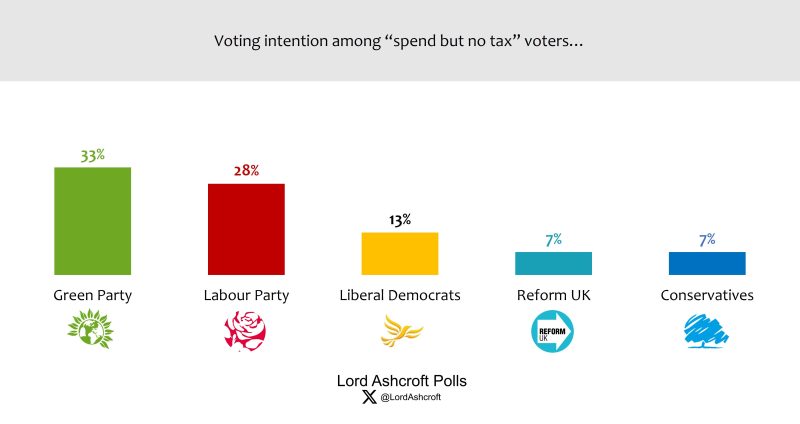
Perhaps not surprisingly, such voters are overwhelmingly in the left bloc of British politics. If governing coalitions are unstable because they cannot match their voters’ expectations, it is a bigger problem for those built around the left.
Starmer’s defenders sometimes argue that he is the victim of voters’ unwillingness to show any patience or accept tough choices. Yet his political downfall is attributable to neither of those, but to avoidable mistakes. In the end, his premiership was a demonstration of bad governance, not of an ungovernable country.
There are lessons in this, both for our new PM and the parties currently in opposition. Some of Starmer’s unforced errors can be traced back to a manifesto which dodged difficult choices, meaning the government came to office with neither a clear direction nor any clarity as to the change voters had given their blessing to. Those same manifesto pledges largely tie Burnham’s hands: 54 per cent of people, and 44 per cent of current Labour voters, expect him to adhere to the 2024 promises on tax. Even if he can avoid the unforced errors and communicate a plan in the way his predecessor could not, he will soon reach the next obstacle – that Labour doesn’t have a mandate to make the sort of tough choices the country needs if economic growth does not allow the government to have its cake and eat it.
Full data at LordAshcroftPolls.com
The post Lord Ashcroft: Another new prime minister. But is the UK ungovernable? appeared first on Conservative Home.
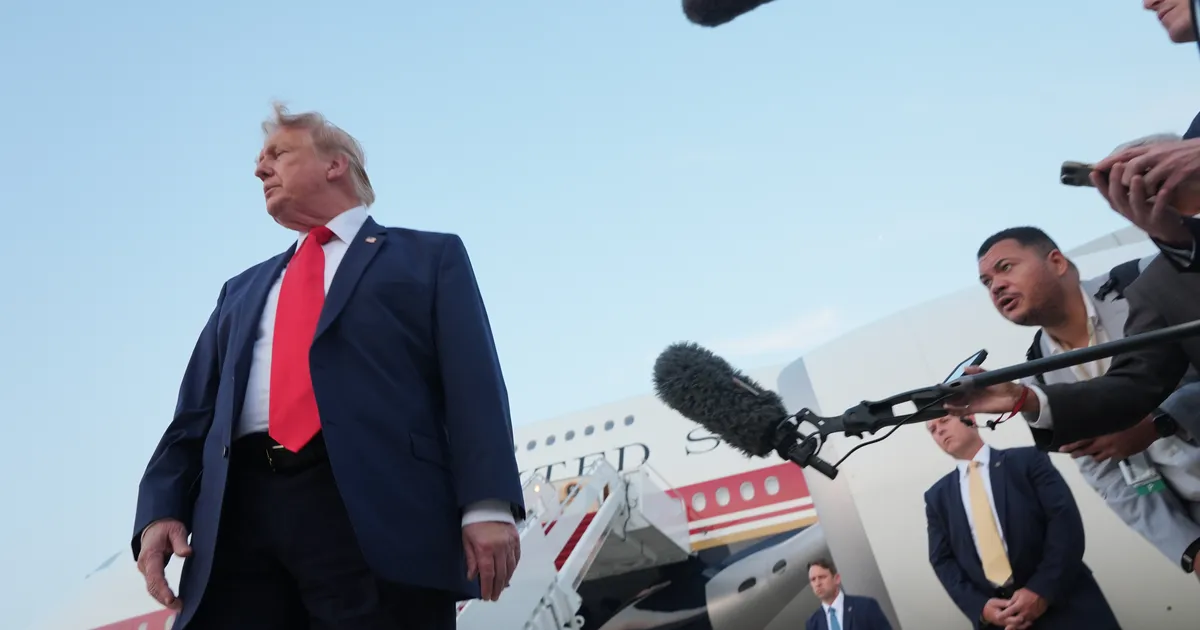
Donald Trump is “losing support all the time” from American voters and his political allies as the Iran war drags on, according to a BBC expert.
Sarah Smith, the broadcaster’s North America correspondent, said the public’s patience was wearing thin as the cost of petrol continues to rise.
She said the Republican Party is set to pay the price at November’s midterm elections unless a peace deal can be reached soon.
The US military launched another wave of air strikes on Iranian targets overnight as it tries to stop ships using the Strait of Hormuz from being attacked.
That is despite a ceasefire being agreed between Iran and the US in April.
On Radio 4’s Today programme this morning, Smith said: “We are in a position now where the president is getting close to full scale conflict once again with Iran, when the majority of Americans are not in support of this, they never were from the beginning.
“He’s losing support all the time as prices are going up and the ever-present problem of the price of petrol back over $4 a gallon, is the tipping point at which voters do not like what is happening.
“Whilst Donald Trump’s base are still very supportive of this … that’s not what the majority of Americans think, and Donald Trump knows that going into midterm elections in just three months time with this kind of economy is going to be very very difficult for his Republicans.
“He’s losing support in Congress as a result of that, where Republicans are deeply worried about the political situation.
“So when you hear travel warnings like that, it’s just one more reason for Americans to wonder what on earth the president, who promised that he would keep them out of forever wars, is doing.
“It may not be a forever war yet, but it’s one that one cannot see the end of easily.”
Listen to Commons People, the podcast that makes politics easy. Every week, Kevin Schofield and Kate Nicholson unpack the week’s biggest stories to keep you informed. Join us for straightforward analysis of what’s going on at Westminster.
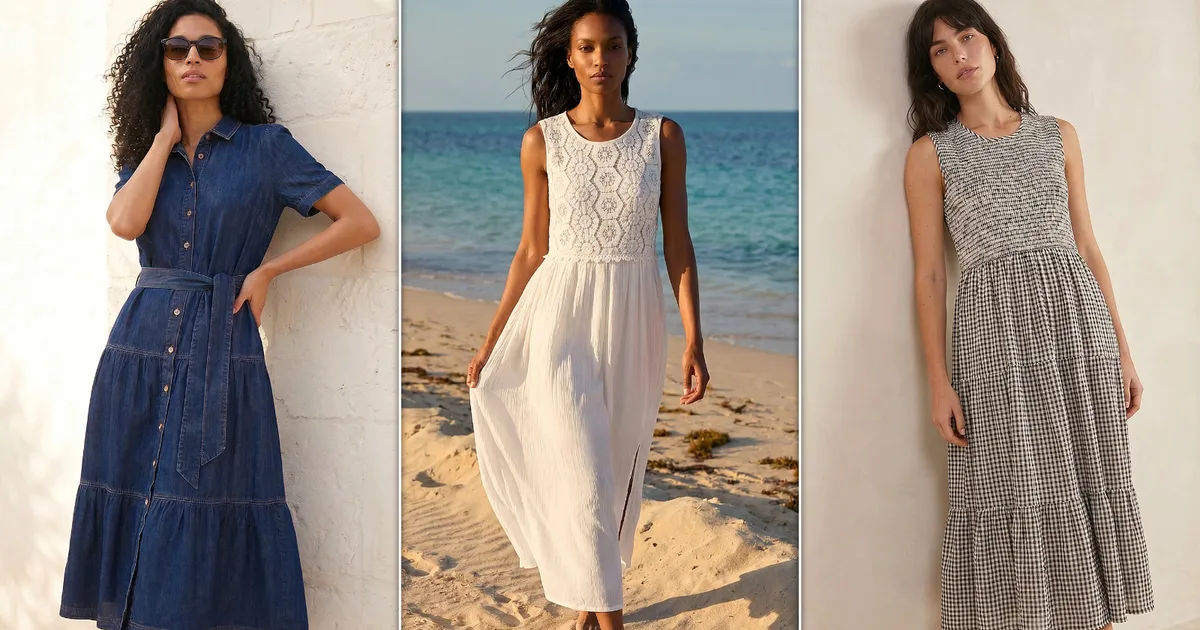
We hope you love the products we recommend! All of them were independently selected by our editors. Just so you know, HuffPost UK may collect a share of sales or other compensation from the links on this page if you decide to shop from them. Oh, and FYI — prices are accurate and items in stock as of time of publication.
Remember #TheDress? In case you (somehow) missed it, someone posted a photo of (you guessed it) a dress in 2015, and the internet collectively lost its mind about colour theory by debating whether it was truly black and blue or gold and white.
Well, the brand behind it has just launched a new collection that will redefine your wardrobe in an entirely different way.
Similar to the likes of M&S and Tu, Roman has just launched a new collection that makes luxury fashion affordable and accessible.
Priced below £50, the collection is made up of everything from floaty summer dresses, to shorts, cotton tops, and even cute co-ords.
Best of all, it’s all designed to be completely multi-generational, so you can share with your daughter or rest assured it’ll get the seal of approval at the family gathering, just as much as it will on holiday or at the office.
Don’t worry, we’ve already trawled the Roman webite for the best picks we think will level up your summer wardrobe, whether you’re going for business casual, bohemian, or beach babe.

The race to fill Lindsey Graham’s seat has created a new test of President Donald Trump’s power. South Carolina Republicans aren’t sure Trump will pass.
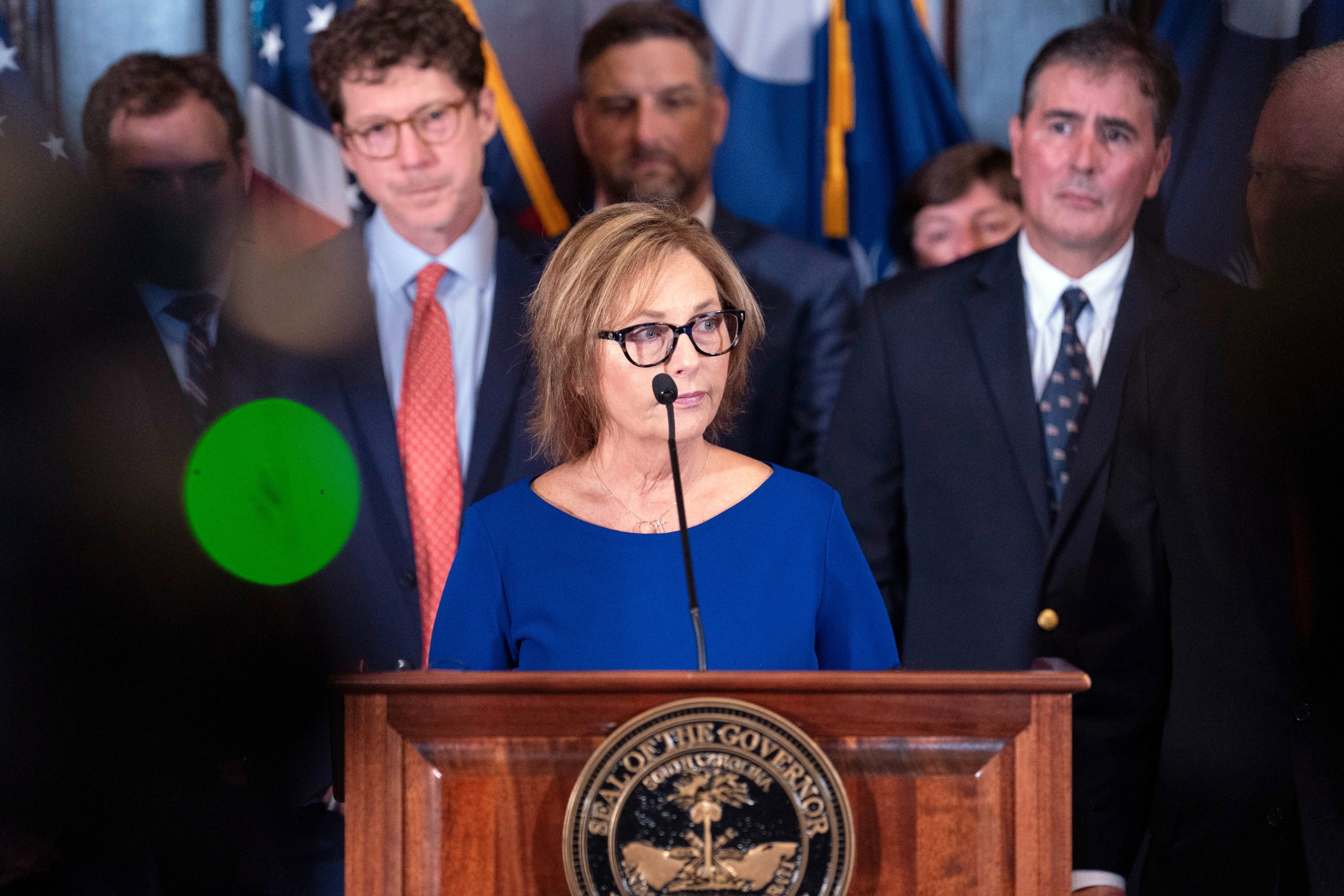
Sen. Darline Graham, who was appointed last week to fill the remainder of her late brother’s term, announced Monday she will seek a full term for her brother’s old seat. Her decision came after winning Trump’s backing, and his endorsement of the political newcomer had the potential to scare away challengers.
But other Republicans are still charging forward, seeing an opening in a race with a highly untested candidate. Their determination is a signal that challenging a Trump-backed candidate may no longer be the career-ender it once was within the party.
“Even folks that didn’t like Senator [Lindsey] Graham or didn’t vote for him in the primary were pretty happy about the appointment, as a tribute to Senator Graham,” said CJ Westfall, chair of the Dorchester County GOP. “But once we saw the president jump in and support her, 95 percent are saying, ‘What the hell are we doing here? We don’t know how she votes. We don’t know what she believes.’”
“People that were excited about the appointment are now skeptical of the endorsement,” Westfall said.
Rep. Russell Fry, one of Trump’s most loyal congressional allies, announced earlier Monday he was jumping in. He joins Rep. Ralph Norman, who declared his own candidacy over the weekend, along with self-funding businessman Mark Lynch, who lost to the former senator in the primary. A number of other Republicans are mulling runs as well, including former Gov. Mark Sanford and Lt. Gov Pam Evette, who lost her own bid for governor a few weeks ago in spite of Trump’s endorsement.
While Trump’s endorsees have largely won their primaries, Evette’s recent loss isn’t his only setback. His picks lost in the Iowa and Georgia gubernatorial races.
“I think people saw [Trump’s] endorsement of Pam Evette and her terrible performance and know this race could be up for grabs like the gubernatorial was,” said a Republican operative unaffiliated with race who was granted anonymity to candidly discuss the landscape.
While Graham’s candidacy will test the power of Trump’s direct endorsement, there’s no question the MAGA movement is still the dominant force in South Carolina politics: All Republicans in the race are running as unapologetic supporters of the president, competing among themselves to prove who is the most authentic champion of Trump’s agenda — a dynamic that has defined GOP primaries across the country this year.
Norman told reporters on Monday that Trump’s endorsement “helps a great deal.” “That’s why I ask[ed] him for it,” he added. “I’d rather have it, but it’s up to the people.”
In Fry’s launch video, he presented himself as a Trump-aligned “MAGA warrior” — and included pictures of him grinning alongside the president.
In a statement, Fry campaign spokesperson Luke Byars noted Fry has “been honored to receive President Trump’s endorsement” in his previous elections.
“Our focus for the next three weeks remains ensuring South Carolina has a conservative fighter in the United States Senate who will advance the President’s agenda and deliver real results for South Carolina families,” Byars said.
Some Republicans said Graham’s lack of prior elected experience and the original expectation that she would only serve the remainder of her brother’s term have kept the field open.
“There is a desire to avoid yet another bruising Republican primary, right after we had a pretty contentious one for governor,” said Joel Sawyer, a longtime GOP strategist in South Carolina who’s not involved in the race. “But I don’t think that’s going to be the case.”
Trump’s endorsement of Graham gives her instant credibility despite her lack of electoral experience. But her campaign announcement on Monday was met with surprise and confusion by many across the state.
Most saw her appointment as a respectful gesture to the Graham family, and she was expected to be a caretaker who would hold the seat until the end of her brother’s term in January. Her interest in running for a full term even caught South Carolina party brass off-guard: Drew McKissick, chair of the South Carolina Republican Party, told POLITICO Friday he thought Graham told Gov. Henry McMaster she’d “accept the appointment to fill the rest of the term, not to be a candidate for it.”
A South Carolina GOP rule adopted earlier this year requires candidates for office to have voted in at least two of the past three statewide GOP primaries.According to local political outlet FITSNews, Graham voted in the 2024 GOP runoff but neither the 2022 nor 2024 GOP primaries. Whether Graham qualifies depends on whether, alongside her vote last month, her 2024 runoff vote counts as a primary vote under the new rule. The Dorchester County Republican Party announced it was formally requesting the state party’s rules committee review Graham’s eligibility.
McKissick, the state party chair, said Monday he hadn’t taken a look at the issue yet since the filing window doesn’t open until midday Tuesday, so no one had officially filed to run.
“As a result I haven’t seen information from any candidates yet,” he told POLITICO. “But suffice it to say that we will look at all of the various candidates’ information and official voting records from the state election commission when they do.”
A spokesperson for Graham’s campaign said she meets the state GOP’s primary voting requirement to file as a Senate candidate and is “qualified to run because she has real experience leading.”
“As to why she is running, it’s quite simple: she is a strong conservative who wants to build upon her brother’s legacy. There were never any conversations surrounding her appointment that were contingent upon serving only the remainder of Senator Lindsey Graham’s term,” Abby Zilch, a spokesperson for Graham’s campaign, said in a statement.
Trump’s endorsement power has been decisive across contested Republican primaries over the last several months, repeatedly propelling his favored candidate across the finish line. But his track record in South Carolina is murkier. After backing Evette early in the gubernatorial race only to see her struggle in the runoff, Trump offered a last-minute dual-endorsement to also back Attorney General Alan Wilson. Wilson ultimately beat Evette in the runoff by more than 30 points.
“I think it’s a nice sentiment,” said another GOP strategist of Trump’s endorsement granted anonymity to speak openly. “But at the end of the day she has no record, nor a right to the seat all because her brother held it. This is up to the people of South Carolina to decide.”
On Capitol Hill, Senate Majority Leader John Thune said he would stay out of the August 11 special election. Thune, who was close friends with Lindsey Graham, called his sister a “strong candidate” but said “I’ll let voters in South Carolina decide it.”
Other senators are diving in. Sens. Mike Lee (R-Utah) and Rick Scott (R-Florida), staunch allies of the president, announced their support for Norman over the weekend, publicly bucking Trump to back one of the House’s most conservative members. Both Lee and Scott specifically cited Norman’s support for the Save America Act, the election reform bill that has been a central focus for Trump in recent months. Norman also earned the nod of Turning Point Action.
Meanwhile, Norman — who passed on another term in the House to make an unsuccessful run for governor — has suggested Fry, his House colleague, could jeopardize Republicans’ House majority. If Fry wins the special election for Graham’s seat, the state would have to call a special election to fill his House seat, potentially leaving it empty for months.
“I respect Russell Fry and I have enjoyed serving with him in the House, but the reality is, his candidacy could leave his seat vacant until May 18th,” Norman wrote Monday.
GOP Rep. Nancy Mace announced Monday she would not enter the race.
The candidate filing window closes on July 28. Election Day is just two weeks later. The breakneck speed could play to Graham’s favor: She has the benefit of her brother’s campaign apparatus, which mobilized to win a primary outright last month while many of the state’s other contested races went to runoffs. And the memorial services for Lindsey Graham — scheduled for July 28 in Washington and July 29 in South Carolina — will shrink the calendar further.
“We say it’s a three-week campaign, but really it’s a two-week campaign after the funeral,” said Tyson Grinstead, an RNC committeeman and Richland County GOP chair. “I’m sure there’ll be ads and stuff, but it’s going to be hard for everybody to focus on campaign rallies and make a decision on this, in terms of voters, until after the funeral.”
If no candidate reaches 50% of the vote, a runoff election would be held in late August.
“We don’t always understand what’s going on in D.C.,” said Jeff Green, the GOP chair in Greenville County. “We try to give the president a lot of grace on these things. Would I have picked, you know, another Graham to replace Lindsey Graham? Probably not.”
“We don’t know her yet,” Green added. “But we’re open and trusting in what the president and his team are doing.”
Katherine Tully-McManus contributed to this report.
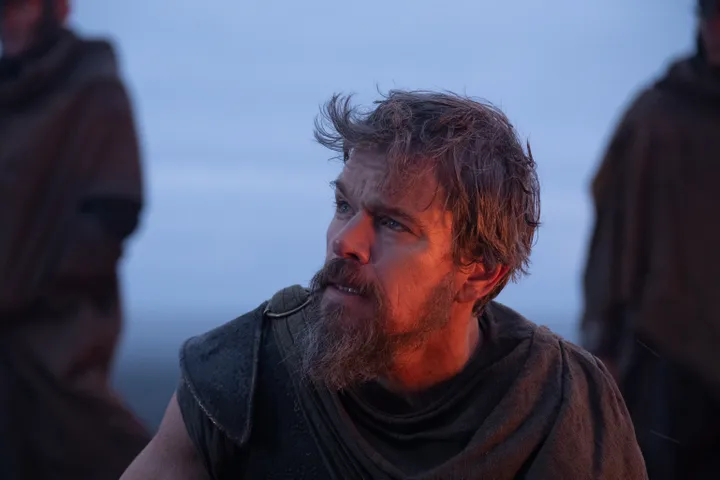
Christopher Nolan has claimed that fans could be in for a bit of a wait before he next makes a film.
Three years after the release of his Oscar-winning historical epic Oppenheimer, Nolan’s new adaptation of The Odyssey hit cinemas last week, and has already been a huge hit with critics and at the box office.
While promoting The Odyssey, the director and its stars have made no secret of the fact that the on-location shoot was an especially gruelling one, with leading man Matt Damon previously sharing that Nolan threw himself into the experience as much as his cast.
“When you’re uncomfortable – and you are most of the time, physically, just by nature of what’s required to get these shots – if you turn and look over your shoulder, he’s no more than five feet away and doing the same thing without complaint,” he told Time magazine.
“There’s something really nice about being a soldier in the foxhole and looking over and the general is right next to you.”

During a recent interview about the film on Today, Nolan admitted: “I definitely hit the limits of my own stamina and everybody’s stamina, I think.
“I mean, it’s The Odyssey – of course it should be difficult. We’re not doing the job right making a film of The Odyssey if it doesn’t seem difficult.”
As a result, he said he intends to take a break from filmmaking before getting behind the camera again.
When asked if he’d be following his usual pattern of waiting three years between releases, Nolan responded: “Oh, at least.”
Earlier this month, the British director opened up about how his latest film wrapped filming both ahead of schedule and under budget.
“We [scheduled for] 100 days. And by day 91, we couldn’t have taken another step. So we finished,” he told The Daily Show.
Nolan stated that filming “finished at the right time”, pointing out that “everybody was done”.
“People were just exhausted,” he recalled. “They’d been through it. So, it took the right time to make the film. We had enough time to make it.”
The Odyssey is in cinemas now.
Robbie Williams is clarifying exactly what was going on in a recent viral video taken behind the scenes of the World Cup final.
On Sunday night, Robbie was one of the performers at Fifa’s World Cup final pre-show, where he was joined on stage by Pussycat Dolls star Nicole Scherzinger and Italian pop star Laura Pausini.
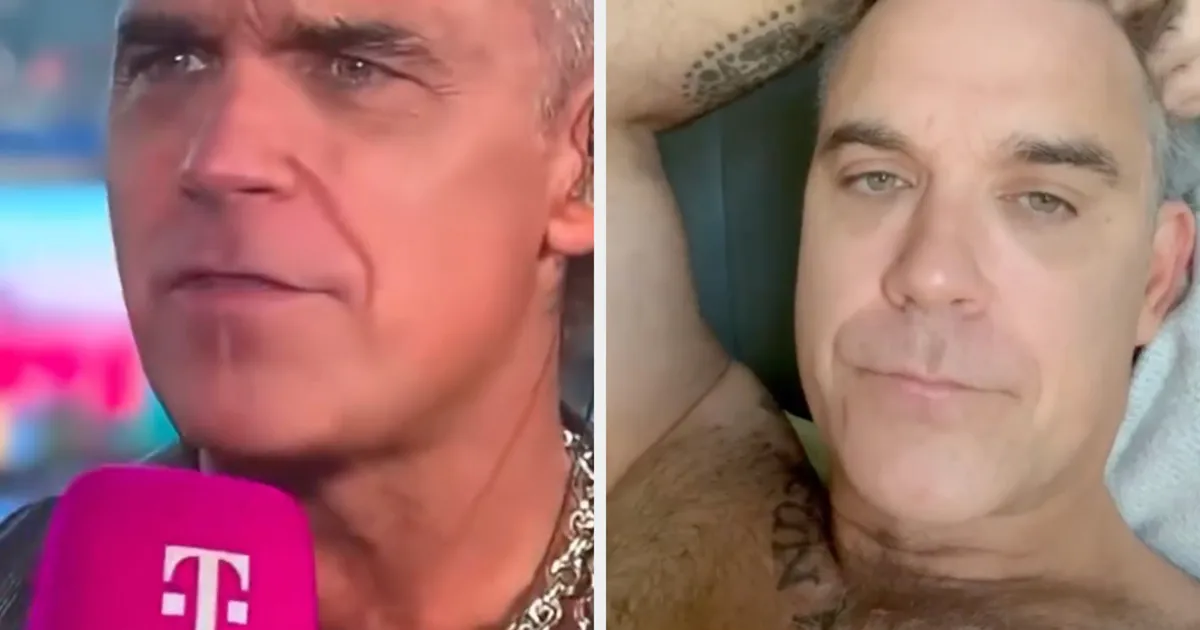
Before the game, the Let Me Entertain You singer and football superfan spoke to German TV channel Magenta Sport – and inadvertently sparked a viral moment, when something appeared on the mic in front of him while he was speaking.
He then promptly removed it without comment, leaving many curious as to exactly what had gone down.
As footage of the incident racked up views on social media, an undiscosed “source” told The Sun that it was actually a semi-chewed Nicorette mint that had fallen from Robbie’s mouth, which he confirmed to be the case in an Instagram video.
“I’d just like to apologise for the object that fell onto the microphone yesterday,” he deadpanned. “I was deeply unprofessional and people worried about me. But it’s OK, because I had several more.”
Following this, the Brit Award winner opened his mouth with a laugh, to reveal he was chewing on two more of the mints in question.
In addition to Robbie, Nicole and Laura’s performance, the World Cup final also featured Fifa’s first ever halftime show, which was met with a somewhat muted response.
The World Cup halftime show got off to a strong start with a (mostly pre-recorded) rendition of Music by Madonna, with some iconic football cameos.
Following this, its star-studded line-up included the South Korean boyband BTS, Canadian chart-topper Justin Bieber and Grammy winner Shakira, who teamed up with Burna Boy for a performance of their World Cup anthem Dai Dai.
Other guests included The Muppets and Jason Sudeikis, performing a short skit in character as Ted Lasso ahead of the award-winning sports comedy’s return next month.

Fave raises funds to bet on flavor

Crypto Clarity Act still at mercy of ethics section as Democrats balk at Trump deal

Mom Arrested After Waiting to Report Autistic Child Missing


-
 NewsBeat5 days ago
London Mayor Sadiq Khan handed a peerage by Keir Starmer alongside 15 other Labour figures… just days before the PM leaves No10
-

 Fashion4 days ago
Weekend Open Thread – Corporette.com
-

 Politics4 days ago
The House | The City of London can help the new chancellor deliver growth in every postcode
-

 Politics6 days ago
Young campaigners urge incoming PM to act on outdoor junk food ads
-
 Crypto World4 days ago
Two July Windows Left: The CLARITY Act’s Senate Fight and What Failure Means
-

 Crypto World6 days ago
CFTC blocks Kalshi from unwinding Michigan trades after court order
-

 Crypto World3 days ago
Ripple Payments Joins MiCA With 14 Firms, Does It Mean Anything For XRP?
-

 Business6 days ago
Nvidia Stock Slips After Big Tuesday Rally as Huang Confirms Vera Rubin Chip Is Now in Production Today
-

 Politics2 days ago
Democrats look to World Cup watch parties to register thousands of voters
-
 Entertainment6 days ago
Disney’s Most Ambitious Failed Star Wars Attraction Is Coming to SDCC
-

 Crypto World4 days ago
Ripple wins EU-wide access as ESMA adds it to MiCA register
-

 Crypto World14 hours ago
Grayscale Files For Worldcoin ETF, WLD Registers Sharp Rise
-

 Crypto World5 days ago
Injective Submits SEC Transfer-Agent Registration to Onchain Ownership Records
-

 Business6 days ago
Palantir Shares Rise After Expanded Nvidia Partnership and Fresh Analyst Upgrades Ahead of Earnings Day
-

 Tech22 hours ago
Sail Virtually Aboard The “Itanic” With IA-64 Emulator
-
 Tech19 hours ago
Turtle Beach Command Series KB7 review: a nifty screen-equipped gaming keyboard
-

 NewsBeat4 days ago
Registration is now open for March for Men with Kev 2026
-

 NewsBeat1 day ago
Unregistered fitter used Gas Safe logo on business flyers
-
 Sports6 days ago
New Cornerback Enters Vikings Trade Rumor Mill
-

 News Videos5 days ago
Money | Class 12 Economics | CBSE Board Exam 2026-27
You must be logged in to post a comment Login