Politics
The House Article | Britain needs a National Pier Service to save our seaside heritage


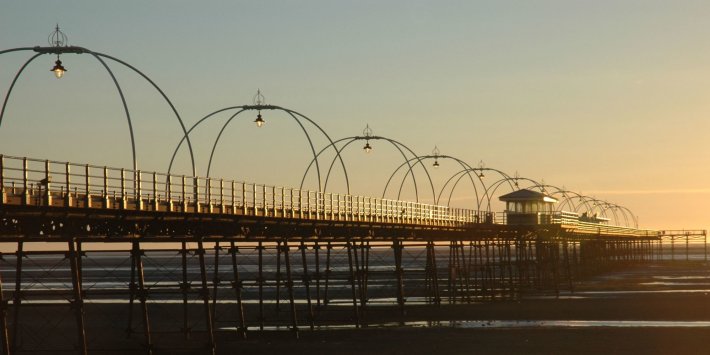
Grade II-listed Southport Pier, the oldest iron pier in the country (Alamy)
3 min read
Britain’s piers are more than Victorian seaside relics – they define the British coast and the communities that depend on them, driving tourism and underpinning local economies.
Both of us represent constituencies — Worthing West and Southport — where the state of our piers is a huge talking point for constituents.
There are currently 60 operational piers in the UK, down from 150 in the early 20th century. Sadly, last week Storm Ingrid’s 60mph winds destroyed Teignmouth’s famous Grand Pier overnight.
Other British seaside piers face a growing political crisis, with about 20 per cent at risk of being lost due to rising costs, climate change and maintenance issues. Many MPs – us included – are calling for a ‘National Pier Service’ or ‘National Piers Trust’ to manage, preserve and regenerate many of these iconic structures, which are vital to local, seasonal economies.
The benefits of such a model include economies of scale. Centralising key functions such as procurement and maintenance through bulk purchasing and shared contracts, deploying specialist expertise via a dedicated national team, and pooling insurance risks for better terms would reduce expenses and improve quality.
Commercial branding, marketing and events would attract more visitors and generate higher revenues. Centralised training and workforce development would enhance service quality and safety while minimising duplication. Collectively, these efficiencies would make limited public and charitable funding stretch further, enabling the preservation and revitalisation of more piers without placing more strain on local councils and communities.
Southport Pier is the second longest in the country and has a proud history. It closed in 2022 due to its condition, but thanks to £20m funding from central government, the pier is due to be repaired and reopened in 2027.
Worthing’s Grade II-listed art deco pier is a much-loved feature of the town for residents and visitors alike and was named UK Pier of the Year in 2019. Opened in 1862 and reconstructed in 1887 to mark the Jubilee of Queen Victoria, it survived almost complete collapse due to storm damage in 1913 and a huge fire 20 years later that could be seen as far away as Beachy Head. More recently, storm damage caused the pier to be closed for almost three months at the end of last year, during which Beccy supported the borough council’s extensive restoration work.
This month we saw DCMS announce that £1.5bn will be invested in cultural organisations over the next five years to restore national pride. The funding will protect and restore more than 1,000 arts venues, museums, libraries and heritage buildings across the country. The investment will tackle urgent capital needs, preserve local heritage, and provide accessible, no- or low-cost cultural experiences for families. We are campaigning to ensure piers are part of the funding.
This Labour government’s core mission is a decade of renewal, and Britain’s iconic piers are a national symbol of our identity – after 14 years of Tory mismanagement, they should be treated as such.
Coastal towns have long been left behind through the austerity of consecutive Conservative governments, but Labour is now working to tackle regional inequality.
To combine the history and aesthetic of piers with a modern regeneration of coastal economies, let’s invest in rebuilding and refurbishing these iconic British monuments.
Dr Beccy Cooper is the Labour MP for Worthing West and Patrick Hurley is the Labour MP for Southport

You must be logged in to post a comment Login