Politics
The House Article | Britain’s hospices do not need any more sympathy. They need us to act




4 min read
For months, those of us campaigning for Britain’s hospices have asked what is going to happen.
Then we watched what happened.
Hospice beds remained closed. Services were reduced. Hospices consulted on further cuts. Families found that the care they desperately wanted for someone they loved simply was not available.
And this week the i Paper put the consequence on its front page in terms nobody in Westminster should be able to ignore: vulnerable people left to die in hospital corridors and busy hospital wards when hospice care was unavailable.
We cannot keep wondering what happens next. Now we have to make something happen.
I am not a palliative-care expert. I do not run a hospice and I do not pretend to have all the answers. I became involved because when I see something profoundly unfair happening to some of the most vulnerable people in our country, I find it very difficult simply to stand by and watch.
Hospice care offers something extraordinarily precious: dignity, comfort, specialist care and time for families at one of the hardest moments they will ever experience. Yet too much of that care still depends on charities continually raising the money required simply to keep services operating.
Hospice UK is asking the Government for an immediate £112.5 million intervention. That is their figure, not one invented by me. My role has simply been to help amplify the voices asking Government to hear it.
Those voices are becoming increasingly difficult to dismiss.
More than 60,000 people have now signed the Every Hospice Matters petition. Around 19,000 have shared it. Almost 300 MPs and Peers have previously supported the wider call for fair and sustainable hospice funding, representing an extraordinary breadth of political opinion.
Their words show how little disagreement now remains about the principle. Lord Blunkett has urged the Prime Minister to “find the money” for end-of-life care. Senior Conservative, Liberal Democrat, Labour and crossbench voices have all made the same essential point in different ways: hospice care is not a luxury, and the present position is not sustainable.
Lord Blunkett’s intervention is especially powerful because it is personal. He has spoken movingly about two of his longest-standing friends, husband and wife, who entered St Luke’s Hospice in Sheffield together earlier this year and were subsequently buried together. Hospice care, he said, made their final weeks as comfortable, supported and dignified as possible.
That is ultimately what all the statistics, funding formulas and parliamentary arguments are about: real people.
One petition supporter wrote that she had been told she might make it to Christmas. Another described how her mother begged for a hospice bed while only seven of 21 beds were available because of cuts.
Nobody approaching the end of their life should have to wonder whether the compassionate care they need will be available because the money is not. And no family should discover the answer only when they desperately need that care.
The Government is developing longer-term reforms to palliative and end-of-life care. That matters, and sustainable reform is essential. But a longer-term framework cannot become a reason to watch hospices struggle in the meantime.
Hospice chief executives have bills and wages to pay now. Beds are needed now. Families need help now. People are dying now.
That is why I believe Westminster has reached an important moment.
We have moved beyond needing to establish whether there is a problem. We have moved beyond asking whether the public cares. We have moved beyond wondering whether this can command cross-party support. It already has.
The question now is whether all of that agreement can be converted into action.
This week I have asked around 400 Parliamentarians to help do precisely that: through questions, debates, public interventions or whatever Parliamentary opportunity is available to them.
And I have asked them to put one very simple question to the Prime Minister:
“Prime Minister, will you personally receive this national hospice petition and make sustainable hospice funding a national priority?”
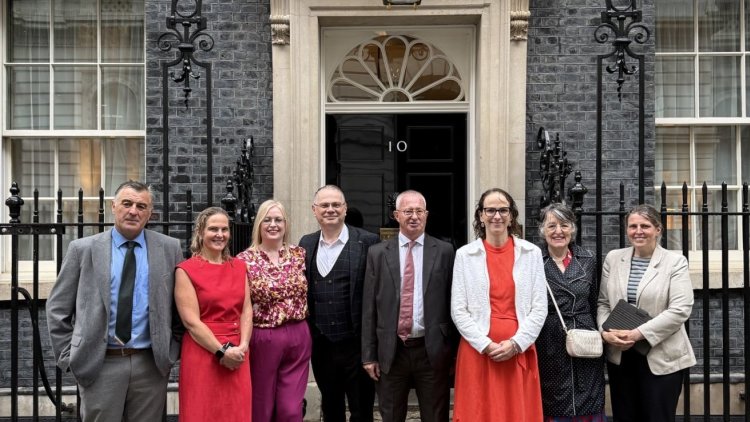
We will shortly take those tens of thousands of voices to Downing Street. I believe the Prime Minister should receive the petition in person as soon as possible.
Personally receiving it would not solve the funding crisis by itself. But it would demonstrate that the Prime Minister has heard the patients, families, hospice staff, volunteers, more than 60,000 members of the public and the remarkable coalition across Parliament asking him to act.
Then comes the more important question: what will Government do? There are moments in politics when another sympathetic statement, another consultation or another promise of future reform simply is not enough. For Britain’s hospices, I believe this is one of them.
We have wondered what would happen. We have watched what is happening. Now we need to make something happen.
Because for somebody approaching the end of their life, another week is not simply another week in the political calendar.
Every day matters. This is the time. Now is the moment.
Corin Dalby is Chief Executive of Box Power CIC and founder of the independent Every Hospice Matters campaign.

You must be logged in to post a comment Login