Politics
The House Article | Burnham must act to ensure devolution can pass the Makerfield Test


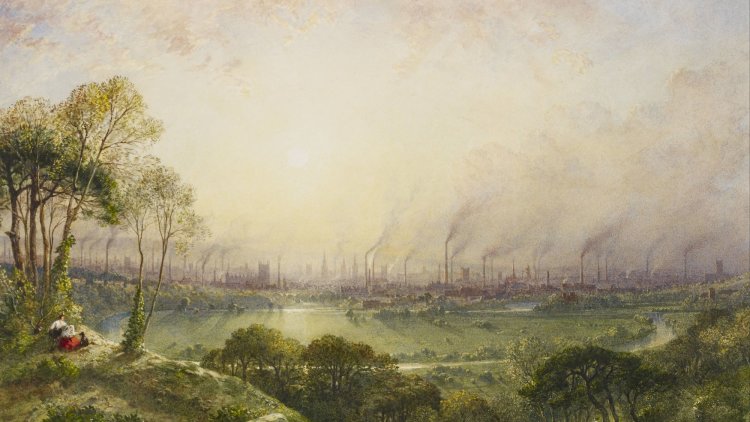
Manchester from Kersal Moor, by William Wyld in 1852
5 min read
In the 19th century, Manchester earned the nickname Cottonopolis, such was its reputation as a global centre for the cotton and textiles industries.
These industries reshaped the economies and culture of what we now recognise as Greater Manchester. Oldham was, at its peak, the most productive cotton spinning town in the world, while the novel of Lancashire author Allen Clarke (‘Teddy Ashton’) fictionalised Bolton as “Spindleton”, reflecting how deeply the industry had defined its culture.
Today Manchester has regained a place at the centre of power, but of a different kind. The new No 10 North will focus the energy of the central state on Andy Burnham’s aspiration to be the Prime Minister who gave power away.
There has been no shortage of opinion pieces on No 10 North. Its stated purpose is clear enough. It will oversee reforms to essential utilities and deliver reindustrialisation and the regeneration of places, consolidating existing Whitehall powers before handing them to places, particularly metro mayors, across the country. This is how Burnham’s ambitions of delivering “good growth in every postcode” and greater power to communities are to be realised.
Devolution’s ultimate success will be measured against the ambition the Prime Minister set out during his Makerfield campaign to rebuild places scarred by deindustrialisation and overlooked by centralisation. With the Independent Commission on Neighbourhoods (ICON), I have been fortunate to spend many of my Fridays over the past 18 months visiting such places across every corner of England. It is often impossible to leave at the end of the day without a bitter feeling that successive governments have not even tried and failed to deliver for these places, but have simply not tried, and that a change of approach is both necessary and welcome.
This makes devolution all the more important. Many of these places will soon be represented by mayors with a deeper understanding what has held them back. Is it worth noting, though, that the majority of England’s most disadvantaged neighbourhoods already have a regional mayor, as do many former mill towns, coalfields, steel communities and seaside towns that once powered Britain’s economy.
This does not diminish devolution’s potential. It is urgent, however, that its next stage puts places that have been left behind front and centre
Devolution is popular. Our polling published today shows a majority (52 per cent) support it. Yet there is a contradiction between what the public want and expect from it and the overarching focus of existing mayors.
People expect direct benefits to their areas, and expectations are highest in the most disadvantaged areas, where 51 per cent expect their area to benefit a “great deal or fair amount”. The public wants devolution to prioritise highly deprived places and our industrial heartlands. Asked whether mayors should direct more funding to the most disadvantaged parts of their region, even if this meant less elsewhere, 38 per cent supported this while 24 cent opposed.
The question, then, is whether mayors are delivering for these places.
In our report, we analysed dozens of mayoral strategy documents across economic growth, transport and skills. We found hundreds of policies, including innovative approaches to public services, partnerships with communities and investment prioritising deprived or deindustrialised areas.
But these examples remain the exception rather than the rule. We found few initiatives to connect residents of disadvantaged places to opportunities in the eight industrial strategy (IS-8) sectors, for example. Our review suggests that improving these places has yet to become a consistent priority running through mayoral authorities’ work.
This does not diminish devolution’s potential. It is urgent, however, that its next stage puts places that have been left behind front and centre. The test should be whether it changes the economic prospects of the towns and neighbourhoods that deindustrialisation abandoned and centralisation made too easy to overlook. Worryingly, we find 53 per cent of people think devolution will either make no difference to inequality between rich and poor parts of the country or widen the gap.
Devolution itself must still pass the Prime Minister’s “Makerfield Test”. There are practical ways to make this happen.
Mayors should be supported with new Good Growth Funds, based on that of Manchester, investing in social as well as physical infrastructure. We should build on the promise of community-based service delivery by establishing the JobsPlus employment support scheme as a permanent national programme. Mayors should be able to fund and integrate community transport schemes into their networks, and target tax reliefs at firms that invest in or hire from disadvantaged neighbourhoods.
A dedicated Chief Secretary of the Nations and Regions, with a seat at the Cabinet, should oversee this agenda. This would give No 10 North the political authority to match the government’s ambition to rewire the state.
The government’s forthcoming 10-Year Plan and Devolution White Paper are the opportunity to put these priorities at the heart of devolution. If No 10 North is to deliver on its promise, Manchester’s return to the centre of power must help renew the prospects of the towns that once made it Cottonopolis. The Makerfield Test will be passed when the communities that powered Britain’s industrial past have a stake in its economic future.
Ross Mudie is head of research analysis at the Independent Commission on Neighbourhoods (ICON)

You must be logged in to post a comment Login