Politics
The House Article | Confessions of an election observer: Viktor Orban’s defeat


4 min read
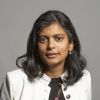
Labour MP Rupa Huq shares her diary from Hungary, where she led a team of international MPs examining the elections that saw Viktor Orbán defeated
It was the morning after Hungary’s landmark election last month. “I think they heard the cheers in Brussels, Washington and Moscow,” one of two Portuguese MPs I bumped into in Budapest city centre told me. We were amongst international parliamentarians there to observe and certify them legit.
Over the years, I’ve conducted monitoring all over the world: the US, Poland, Turkey, Kazakhstan… When asked to lead the Organization for Security and Co-operation in Europe (OSCE) MP team examining the electoral contest that eventually ended Viktor Orbán’s four-term premiership, I had no hesitation.
My role included Budapest twice: a scoping visit in the run-up to the mission; then chairing briefings for 200-odd fellow MPs from 38 countries, culminating in an intense election day of primary schools where voting occurs to see the process close-up. I met ministers, media, NGOs and counterparts in the Hungarian parliament (architecturally based on Westminster) along the way.
Our mission was the second most popular after the US, such was the gravity of what was at stake from Maga strongman politics to multilateralism. Observers were deployed all over the country to check no funny business was afoot.
On the Sunday night, as the outcome became clear from my hotel room, I heard cheers and hooting of horns from mostly young people excited at both the record 80 per cent turnout and the remarkable turnabout – a regime that seemed so entrenched was gone.
I was flagging after a long polling day from opening of polls in central Budapest to the count, so I ducked out. I was also conscious that as team leader I needed to be impartial. The Portuguese, however, had gone out for air and crashed impromptu festivities, witnessing history.
Queues had already started building when we arrived to inspect empty ballot boxes at 6pm, then subsequently secured shut before us. It reminded me of similar showing-off routines with 1970s/80s magician tricks when girls were sawn in two.
We criss-crossed Budapest, observing multiple polling stations including in Veresegyház and Pestszentlőrinc. We encountered huge numbers of people; a 95-year-old great gran, kids skipping hand in hand with parents. I did a 10am press conference in a polling station location where the message was things were going smoothly. At 8pm, at the final station I ended up in, proceedings saw the boxes opened and two separate lots of ballot papers manually recounted by municipal officials, such was the unprecedented volume with a 85 per cent turnout. It all concluded beyond 10pm.
On the Sunday night, as the outcome became clear from my hotel room, I heard cheers and hooting of horns
Memorable from my first visit in March was President Volodymyr Zelensky looking out from every lamppost and billboard, with Ursula von der Leyen a close second starting from the airport road. It had to be explained to me that these were negative scare-mongering Fidesz/governing party posters about the wrong turn the country could take if it fell into opposition hands. “Wipe the smile off of Zelensky’s face, don’t be a vassal state of the EU,” they screamed, demonstrating how it takes a sophisticated electorate to recognise such propaganda – albeit with crude messaging.
On paper, Hungary has efficient election systems and a multiple-choice contest, but allowing unlimited campaign funding limits and the folding of many parties to allow Tisza a clearer run make “free and fair” hard to certify. The new parliament has different flavours of right-wing, from the victorious Tisza to extreme nationalists “Our Homeland”.
By visit two, Orbán was omnipresent – plastered too on government-owned billboards, looking suspiciously chisel-jawed compared to recent TV footage. We heard how he’d used his prime ministerial status to write to every mother in the land promising tax reductions the more kids they produced, abusing state resources for party politics.
Fears that factors wider than just the day itself of systematic changes to judiciary, constituency boundaries and media ownership designed by Orbán for Orbán would ensure his re-election were confounded. Even government “state of danger” emergency powers invokable to overrule parliament and rule by decree – rather like Boris Johnson’s Covid provisions – came to nought. The OSCE concluded it was a fair fight on the day but the line between state and party along with any ‘level playing field’ had dissolved over the 16 years.
The EU, US and Russia where the cheers landed should take note: even with a meticulously rigged system, you can’t deny an unstoppable thirst for change.
Rupa Huq is the Labour MP for Ealing Central and Acton

You must be logged in to post a comment Login