
Politics
The House Article | Forensic science in England and Wales is failing the public

4 min read
Forensic science in England and Wales is not working.
Not for the police, not for forensic scientists, or lawyers and ultimately, it is not working for the public and the criminal justice system.
That’s what our recent House of Lords Science and Technology Committee inquiry heard from Professor Angela Gallop, a renowned forensic scientist. Our report, Rebuilding forensic science for criminal justice: an urgent need, found little to contradict this. The criminal justice system relies on good, solid forensic science to convict the guilty and exonerate the innocent. But we have grave concerns about the forensic science system in England and Wales on the basis of our inquiry.
Prior to 2012, forensic science was provided by the Forensic Science Service, which was at arms length from the Home Office. It was shut down and replaced by a mix of a private forensic science market and in-house provision by the police. Witnesses to our inquiry, including Government ministers responsible for overseeing the system, were almost unanimous in saying that this system needs urgent reform. Let me outline why.
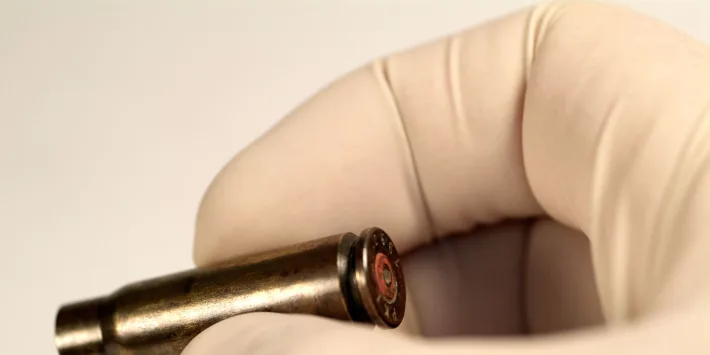
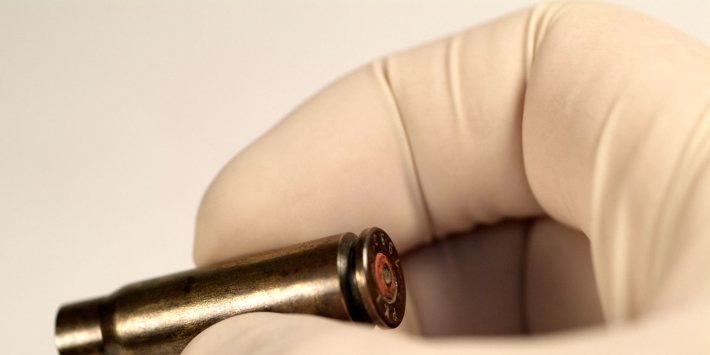
When the Forensic Science Service was closed, the responsibility for storing new evidence fell to the 43 police forces, who were apparently not resourced to undertake it properly. Some rose to the challenge. But national guidance was not consistently followed, and many criminal cases are collapsing, often due to lost and damaged evidence. Overstretched police forces are struggling to keep up. This is true in digital forensics as well. It’s increasingly important for fighting crime, but a backlog of over 20,000 digital devices to be analysed has not shrunk in years.
Police provision is patchy, inconsistent, and lacking in oversight. There are 43 police forces in England and Wales, so the quality of in-house forensic provision varies in a ‘postcode lottery’ – some is excellent and some is quite badly underresourced. Our committee believes that forensic science should be at arm’s length from the police to avoid unconscious bias.
There is no equality of arms between prosecution and defence. Defence experts are needed to challenge the claims made by the prosecution, but rely on limited legal aid funding which is often painful to obtain. The defence expert community is being allowed to wither away, which risks leaving claims from the prosecution unchallenged.
The market meant to provide many forensic services has collapsed. Market competition was supposed to provide better forensics at a lower cost. But the market is dysfunctional, with one buyer – the police – resulting in very thin profit margins; and there are very high barriers to entry for new companies to set up, get accredited, and compete. The result is that now one company provides more than 80% of forensic science to the police. This puts the market in a very perilous position.
The market is also not supporting specialist forensic disciplines like fibres, marks and traces because they don’t make money – but we’ve heard from witnesses about high profile cases that would never have been solved without these specialist disciplines. Without more funding, we will lose these areas of expertise forever, and some cases may become impossible to solve.
Nor are these problems new – this inquiry is a follow-up to one I participated in back in 2019. Many of the problems we identified then have got worse in the intervening years.
Ministers accept that this system has to change. They have launched proposals for large-scale police reforms that will consolidate the number of forces and deliver forensics on a national basis. This is a good first step to finally address some of these problems and hopefully provide consistent and reliable forensic science across the country.
I was struck throughout our inquiry that there was widespread agreement on the issues. No one wants to risk miscarriages of justice when forensic science is used incorrectly. No one wants the guilty to walk free or the innocent to be convicted because of a lack of quality, independent forensic analysis. The forensic science community is full of hard-working, dedicated professionals: in the police, in forensic science providers, in the law, in academia, who do what they do out of a desire to see that justice is done. They are constrained by a failing system.
These deeper-rooted issues of structural underfunding, market failure, inequality of arms between prosecution and defence, and independence—capacity, resilience, quality, and fairness—must be addressed. We have urged the government to take action now, and not to wait for the end of this lengthy and uncertain policing reform process. Otherwise, there is a very real risk of more miscarriages of justice, which could take years or decades to be put right. These reforms, and the sense of crisis around the sector, provide a real opportunity to address these long standing problems. Will the Government finally seize it?
Lord Mair CBE, Chair of the House of Lords Select Committee on Science and Technology


Iran has claimed Donald Trump’s threat to attack its civilian infrastructure “constitute war crimes”.
The president threatened to strike Iranian power plants and bridges in a foul-mouthed rant on Sunday if Tehran did not open the Strait of Hormuz.
Approximately one fifth of the world’s oil supply passes through the waterway, but Iran effectively blocked the shipping lane after the US and Israeli bombings against the country began at the end of February.
Subsequent economic pressure has seen the president grow increasingly irate.
He said on Saturday that “all hell would reign down” if Tehran did not re-open the strait within 48 hours, and on Sunday he listed all of the civilian targets the US would go after.
He said: “Tuesday will be Power Plant Day, and Bridge Day, all wrapped up in one, in Iran. There will be nothing like it!!! Open the Fuckin’ Strait, you crazy bastards, or you’ll be living in Hell – JUST WATCH! Praise be to Allah.”
Iran’s deputy foreign minister Kazem Gharibabadi claimed on Monday that Trump’s threats “constitute war crimes” and a “flagrant violation of Article 2(4) of the United Nations Charter”.
He added that Iran will deliver a “decisive, immediate and regret-inducing response to any aggression or imminent threat”.
An earlier statement from the spokesperson for Iran’s highest operational military command unit, Khatam al-Anbiya Central Headquarters, also warned: “If attacks on civilian targets are repeated, the next stages of offensive and retaliatory operations will be much more devastating and widespread.”
Tom Fletcher, the UN’s under-secretary general for humanitarian affairs told the BBC: “This stuff isn’t negotiable. You don’t hit civilian infrastructure. You don’t hit schools, you don’t hit energy sources, you don’t hit bridges. Those are war crimes. That is absolutely clear in international law.
“But somewhere along the way we seem to have thrown that all aside and we’ve chosen impunity, indifference, game show gambling over solidarity and humanity.”
Subscribe to Commons People, the podcast that makes politics easy. Every week, Kevin Schofield and Kate Nicholson unpack the week’s biggest stories to keep you informed. Join us for straightforward analysis of what’s going on at Westminster.

I write a lot about gardens for someone who (shhh) doesn’t actually have one.
While I grew up surrounded by luscious greenery, I’ve remained a member of the backyard-less minority since I moved to go to uni.
But that doesn’t mean I (or you) have to give up greenery for good. Here are the best plants that would rather sit pretty on your windowsill than struggle in some deeper soil:
1) Cacti and succulents (perfect for sunny windowsills)
The prickly plants are designed to last in the literal desert, so perhaps it’s no wonder they can handle the white ledge you put your picture frames on pretty well.
They don’t need much water, but they do thrive best in a sunny, bright room. Water infrequently and ensure the soil can drain.
2) Streptocarpus (ideal for shady windowsills)
If your room is giving more “shady cove” than “greenhouse”, the lower light needs of Streptocarpus will prove ideal. They produce pretty flowers across several months and will flourish on an east or west-facing windowsill.

3) Monstera obliqua (thrives on bathroom windowsills)
If you want a trailing, Swiss cheese-level-holey plant that won’t outgrow your little ledge any time soon, this is perfect.
Its massive leaves are light and lacy, but its maintenance is relatively simple: keep it in bright (but indirect) light, and make sure it’s in a humid environment. Your loo windowsill is perfect.

4) Pelargoniums (another sun lover)
Bright and sunny windowsills will look even more cheerful with pelargoniums trailing down them. They come in pinks, oranges, reds, and white, too. The RHS noted that “on a sunny windowsill or in a heated conservatory, these evergreen perennials and shrubs can flower virtually year round”.

5) Banana Dwarf Cavendish (for sunny windows)
Yes, that does say banana. And while you might think that makes its presence on your windowsill an inconvenience at best, and an impossibility at worst, this smaller version of the plant has actually been bred indoors since Victorian times.
Some small (and big) caveats, though. It’s not a beginner plant: it needs a lot of watering, a spacious pot, and relatively high temperatures. And while it will fit on your windowsill for a good few of its early years, it will eventually reach two metres tall.

6) Aloe vera (ideal for kitchen windowsills)
They grow upwards rather than outwards, making them great for the narrow ledge by your window. And, the RHS said, because their gel has traditionally been used to manage minor burns, they’re a great addition to the kitchen.
Water when the leaves turn reddish.

7) Ivy (loves shade)
The “tough” plant can take shade and even neglect in its stride. It’ll trail prettily off your windowsill and comes in a variety of different colours and patterns.

Politics
‘If Your Children Are Watching, Be Warned’: Here’s How Networks Covered Trump’s F-Word To Iran

Donald Trump’s deranged call for Iran to “Open the Fuckin’ Strait” on Sunday led some major news networks to do something that’d be otherwise stunning — cursing on live TV — if it were not to accurately depict the president’s wild online behaviour.
Nearly an hour after Trump’s unhinged Easter morning post where he threatened to attack Iran’s civilian infrastructure should the regime not open the Strait of Hormuz, CNN’s Jake Tapper emphasized the “extraordinary graphic” nature of Trump’s words.
“If your children are watching, be warned — the president did not use polite language,” advised the State of the Union host before reading Trump’s post in full, including his call for Iran to “Open the Fuckin’ Strait, you crazy bastards, or you’ll be living in Hell – JUST WATCH!”
He went on to note that destroying civilian power infrastructure is “generally considered to constitute a war crime under international law, though the president could argue that the infrastructure has dual use and also is utilized by Iran’s military.”
He proceeded to drop the word “fuckin’” several more times on his program.
His colleague, Manu Raju, avoided using the word altogether with an “f-bleep strait” workaround whereas the network’s Fareed Zakaria freely used the word.
Before Tapper’s program hit the air, MS NOW’s The Weekend host Eugene Daniels censored himself while initially reading the post before dropping the f-word minutes later, likely to stress the president’s unprecedented use of language in the public eye.
“That is a quote from the president so, yes, we are saying it on television,” Daniels stressed.
“Should’ve given parental warning,” added host Jacqueline Alemany of Daniels reading the post, which did not include such a warning on social media.
MS NOW’s Jonathan Capehart, Meet the Press host Kristen Welker and Fox News’ Trey Yingst steered clear of reading the word aloud while BBC News put a censorship bar over a screenshot of the post.
It’s worth noting that the Federal Communications Commission prohibits the airing of “profane content” on broadcast TV from 6 am to 10 pm, times when “there is a reasonable risk that children may be in the audience,” per its website.
That rule, however, doesn’t appear to apply to cable TV networks as they are “subscription services.”
It’s unclear how the FCC, which is currently headed by a Project 2025 contributor who has sought to use the agency to punish broadcasters deemed unfair to the president, could proceed with any wave of public complaints.

Former US representative Marjorie Taylor Greene blasted President Donald Trump for issuing more threats against Iran, in what she called an “evil” social media post on Easter Sunday.
“On Easter morning, this is what President Trump posted,” she began in an X post alongside a screenshot of Trump’s scathing Truth Social Post. “Everyone in his administration that claims to be a Christian needs to fall on their knees and beg forgiveness from God and stop worshipping the President and intervene in Trump’s madness.”
Greene, a once staunch Trump ally, said the president has “gone insane” and all of his supporters are “complicit.”
Noting that she’s “not defending Iran,” she continued, “But let’s be honest about all of this. The Strait is closed because the US and Israel started the unprovoked war against Iran based on the same nuclear lies they’ve been telling for decades, that any moment Iran would develop a nuclear weapon.”
The ousted MAGA outlier then accused Israel of having nuclear weapons.
“You know who has nuclear weapons? Israel. They are more than capable of defending themselves without the US having to fight their wars, kill innocent people and children, and pay for it. Trump threatening to bomb power plants and bridges hurts the Iranian people, the very people Trump claimed he was freeing.”
Greene went on to decry that on Easter “of all days” Christians should remember that “Jesus commanded us to love one another and forgive one another — even our enemies.”
Slamming Trump as a fake Christian, she stressed that “his words and actions should not be supported by Christians,” and Christians in the Trump administration “should be pursuing peace” and “urging the President to make peace.”
“Not escalating war that is hurting people,” she added. “This NOT what we promised the American people when they overwhelmingly voted in 2024, I know, I was there more than most. This is not making America great again, this is evil.”
MTG’s post came after Trump posted an expletive-laden message on Sunday telling Iran to open the Strait of Hormuz or “you’ll be living in Hell.”
“JUST WATCH! Praise be to Allah,” the president added in the post.
On Saturday, Trump made more threats against Iran on Truth Social while reminding the Middle Eastern country of the April 6 deadline he set for them to open the strait.
“Remember when I gave Iran ten days to MAKE A DEAL or OPEN UP THE HORMUZ STRAIT,” he wrote. “Time is running out — 48 hours before all Hell will reign down on them.”
Trump’s former campaign manager Bill Stepien defended the president’s Easter post while appearing Sunday on CNN’s State of the Union.
“This is the first war fought in this age of social media with this president. I think he does things very differently. I think he does things in his own way — different than Biden, different than Obama. And I think we were seeing this playing out this morning,” he said of Trump.
For many of us, loading the dishwasher isn’t just a household chore, it’s a minefield of opportunities to drive the people we love absolutely bonkers by where we choose to put our dirty bowls, how we insert our spoons, and how much gunk we leave on the lasagne pan.
“It really impacts people’s relationships,” Carolyn Forté, executive director of the Good Housekeeping Institute’s Home Care and Cleaning Lab, recently told Raj Punjabi and Noah Michelson, the hosts of HuffPost’s Am I Doing It Wrong? podcast, when she dropped by the studio.
“If you’re the type of person that wants to control the dishwasher and how it’s loaded, and your partner isn’t that fastidious, that can be a real bone of contention between couples or partners or whoever – even parents and kids,” she said. “People are very passionate about it.”
That’s why we asked her to share the dishwashing secrets she’s learned during her 40-plus years working in Good Housekeeping’s illustrious test labs – and she did not disappoint.
“The biggest thing to think about when you’re loading the dishwasher is if the water’s not gonna hit it, it’s not going to get clean,” Forté said. “So you just have to make sure that the water has access to everything in there. If you’ve got bowls on top of each other – not good.”
Using all of the adjustable components in our dishwashers means we can take advantage of the space and ensure everything is sitting snuggly and will be hit by the machine’s water jets.
“Use the racks. Most dishwashers today have flexible tines that bend up and down, or fold up and down, so you can put bowls down or you can put them up if you’ve got small bowls,” Forté explained.
“There are cup shelves that fold up or down to double tier, and [can give] you a double tier in the top rack. It’s all to expand and give you more flexibility when it comes to loading. Just think, ‘Is the water going to hit this?’ And if it is, then you’re good.”
The biggest mistake Forté sees people making is the way they’re loading their glasses.
“Glasses should go not over the tines in the top rack, but against them,” she advised. “So don’t put a glass over, let’s say, two tines. You feel like [putting it over the tines helps it] stand upright, but it could damage the glass, depending on how tight the fit is.”
Forté and most manufacturers recommend that our glasses rest against the tines not only so that they won’t break, but for another very smart reason.
“[If you load them against the tines, the glasses are] usually at an angle, so the water [automatically] runs off,” she said, which prevents those annoying water spots.
“Sometimes you have a cup that has a little base on it and you end up with puddling in there [if you haven’t loaded the glass correctly],” she said. “If it’s a shallow base, usually that’s not a problem, but sometimes it’s a pretty hefty base and you get a puddle of water. If you think that’s happening, make sure you unload the bottom rack first. That way when you pull the top rack out, the water doesn’t go down all over everything.”
Another supremely contentious dishwashing debate involves how to load cutlery.
“Years ago, you’d just have a basket in the bottom rack with all the different sections, and that’s really where most of the confusion came from – up? Down? Whatever,” Forté said.
“A lot of dishwashers today have that top tier, so that’s a flat rack that you can put your flatware in just one at a time and line them up. It’s not as important if you put your flatware up there – how you put it in – because they’re all just laying down, and they’re all going to get clean.”
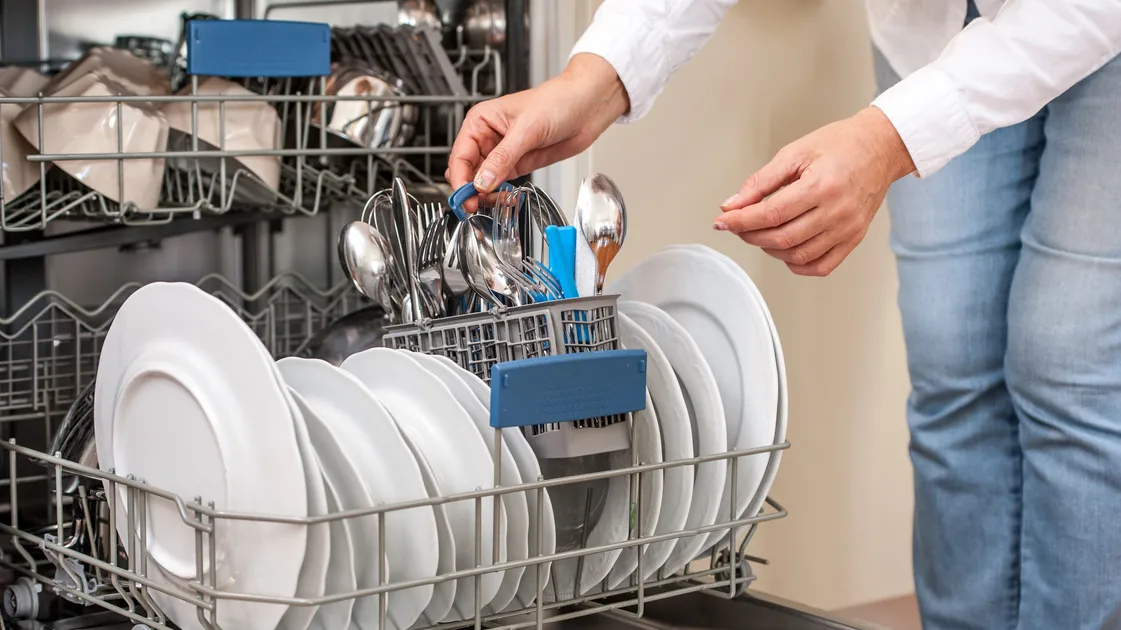
However, if your machine has a basket in the bottom rack, as many of our dishwashers do, there is an optimal way to load your silverware according to the research Forté’s team has conducted.
“We recommend that you put the knives point or blade down,” she told us. “Spoons should alternate up and down, because you don’t want two spoons to nest. If two spoons nest each other, then one’s not gonna get any [water or cleanser].”
Forks should go into the basket with their tines up, but Forté emphasised that we should grab them by the handle when we unload our clean dishes because our hands usually aren’t sanitised, and we don’t want to dirty our freshly disinfected pieces.
You can also separate all of your forks, knives and spoons into groups in the basket. That way you can easily grab bunches of the same kind of silverware and save time when you’re placing them back in your cutlery drawer.
Forté had tons of other great tips, including what she would never put in the dishwasher, her foolproof secret for removing burnt-on food from pans, and much more, so listen to the full episode here or wherever you get your podcasts.
Have a question or need some help with something you’ve been doing wrong? Email us at AmIDoingItWrong@HuffPost.com, and we might investigate the topic in an upcoming episode.
It’s looking increasingly like Strictly Come Dancing will be a noticeably different show when it returns to our screens in the autumn.
Over the last few months, a number of the show’s resident professional dancers have parted ways with Strictly under a variety of circumstances, while it’s also been suggested that companion show It Takes Two could be getting something of an overhaul, too.
Then, of course, there’s the search for a new presenting team in the wake of Tess Daly and Claudia Winkleman’s exits at the end of last year.
Before her departure, Tess had been with Strictly since its inception in 2004, with Claudia joining on a permanent basis a decade later, taking over presenting duties from the late Sir Bruce Forsyth.
When the duo began hosting together, they made history as the first female presenting team to front a primetime show, and there’s no denying that Strictly viewers are going to miss their unique dynamic on those wintery Saturday nights.
But, with Tess and Claudia having now left the ballroom for good, fans are now looking to the future, and speculating over exactly who could be brought in to fill their shoes.
Rumours began circulating late last year, with The Sun publishing a list of names supposedly doing “chemistry tests” with the aim of landing the coveted Strictly role.
Since then, there’ve been a fair few developments, including one report claiming that BBC bosses could be looking to boost Strictly’s presenting team from two to three to shake things up even more.
As we wait for further news, here’s a quick round-up of everyone who’s been rumoured for the gig so far…
Zoe Ball

When we first heard that there were two vacant spots on the Strictly presenting line-up, our minds immediately went to Zoe Ball, who competed in the third series before going on to front companion show It Takes Two for 10 seasons.
She’s even guest hosted the main show, filling in for Claudia Winkleman back in 2014.
Zoe has also expressed interest in the job, with the rumour mill going into overdrive when she was included in The Sun’s supposed presenter shortlist, with the tabloid naming her the “frontrunner” for the gig as recently as February.
Emma Willis

The Sun’s piece naming Zoe Ball as a frontrunner claimed that the job search had become a “straight shoot-out” between her and another popular British presenter, Emma Willis.
Emma is best known for her work fronting a variety of reality shows over the years, including The Voice, The Circle and Big Brother.
More regularly, she’s also become a regular face on This Morning, and gained a more international audience when she began co-hosting the UK edition of Love Is Blind alongside her famous husband Matt Willis.
According to The Sun’s “source”, the BBC were hoping to pair either Zoe or Emma with a “more left-field person” with a “female stand-up comedian” being the preferred choice.
Mel Giedroyc

Ken McKay/ITV/Shutterstock
Just days after this, the Daily Mail published a piece saying that Mel Giedroyc was being “eyed” for a presenting role at the helm of Strictly.
It was claimed that Mel’s “gentle touch” and ability to “use humour to relieve [any] tension”, as displayed during her time in the Great British Bake Off tent, had made her a favourite for the job.
Mel can currently be seen in action in the latest season of Last One Laughing, and has recently competed on The Masked Singer and fronted the TV quiz show adaptation of Pictionary.
She also took part in the annual Strictly Christmas special back in 2021, where she was paired with Neil Jones.
Miranda Hart

Ken McKay/ITV/Shutterstock
Self-professed Strictly super-fan Miranda Hart was mentioned as a possible new host by The Sun in late March 2026.
According to the tabloid, Miranda was being considered for the role due to the fact that she and Claudia Winkleman share a similar sense of humour, with a source describing the rumoured signing as a “massive coup for the BBC”.
Angela Scanlon

Ken McKay/ITV/Shutterstock
Another former Strictly star rumoured to be on the BBC’s “golden ten” shortlist late last year, Angela Scanlon competed on the show in 2023, where she was paired up with now-reigning champion Carlos Gu.
The Irish presenter is best known for her work on shows like Robot Wars, Your Home Made Perfect and The One Show, and will next be seen trying her luck on The Celebrity Apprentice.
In March 2026, the Daily Mail said it was increasingly likely that Angela would bag one of the Strictly presenting jobs, following “meetings over the past few weeks with show bosses”.
Rylan Clark

A week after the Mail named Angela Scanlon as a top pick to take over as one of Strictly’s new hosts, the same publication claimed that she and Rylan Clark were a potential new duo.
They cited a “Strictly source” who suggested that bosses liked the idea of creating a new presenting pair rather than relying on an existing TV duo, and that Angela and Rylan would definitely fit the bill.
Meanwhile, The Sun claimed more recently that bosses were looking to add a male presenter into the mix, rather than trying to replicate Claudia and Tess’ dynamic, with Rylan one of three names mentioned as being in the frame.
Like Zoe Ball, Rylan previously fronted the spin-off show It Takes Two for four seasons between 2019 and 2022, and is a regular fixture on the BBC thanks to his Radio 2 show, his coverage of the Eurovision Song Contest and his travel series Rob And Rylan’s Grand Tour, which he co-presents with Rob Rinder (more on him in a sec).
Bradley Walsh

Even before he was included on The Sun’s list of the “golden ten” stars supposedly in consideration for the Strictly gig, Bradley Walsh was named in the press as a top pick to take over at the helm of the dance show.
Currently known for his work at the helm of The Chase, Gladiators and Blankety Blank, the tabloid reported in November that Bradley was being “lined up” by higher-ups at the BBC to take over from Tess and Claudia, as part of an apparent “revamp” for the show.
Last month, The Sun revived the speculation when they included him in their shortlist of three male stars reportedly in consideration to join Strictly’s new presenting team.
However, despite the persistent rumours, Bradley has repeatedly cast doubt on the suggestion that he’ll be taking over at the helm of Strictly.
Alex Jones

Ken McKay/ITV/Shutterstock
Last year, when Bradey’s name was mentioned in the press for the first time as a possible Strictly host, The One Show host Alex Jones was also suggested as a potential co-host.
Back in November 2025, The Sun cited “insiders” who claimed that Alex and Bradley were being “courted as the perfect partnership” to take over the show.
Later, Alex was also one of the 10 names listed to be on the rumoured shortlist, and while many other names have been mentioned in the months since, the tabloid insisted as recently as March that she was “still the favourite” in producers’ eyes.
Fleur East

Since competing on The X Factor in 2014, Fleur East has carved a new career for herself as a presenter, fronting Hits Radio’s breakfast show, as well as a recurring segment on Ant and Dec’s Saturday Night Takeaway.
Fleur has most notably fronted Strictly’s companion show It Takes Two since 2023, a year after competing on the main show, making it to the final alongside her professional partner Vito Coppola.
In March, The Sun mentioned that the Sax singer was still “in the mix”, indicating she could still land one of the coveted presenting slots.
Johannes Radebe

One of the most recent additions to the ever-growing list of rumoured hosts is Striclty pro Johannes Radebe.
Johannes has been a favourite of Strictly fans ever since he first joined as a professional dancer in 2018, and in March, The Sun named him as a wildcard third male star near the top of bosses’ wishlists, alongside Bradley Walsh and Rylan Clark.
If the South African performer did land the job, it wouldn’t be the first time a former Strictly pro moved to a different role within the show.
Current It Takes Two host Janette Manrara was previously a pro dancer on Strictly, as was resident judge Anton Du Beke.
Alan Carr

Tess and Claudia’s Strictly exits were announced in the middle of last year’s series of The Celebrity Traitors, meaning plenty of people’s minds immediately went to scene-stealer Alan Carr as a favourite for the hosting job.
Already a popular stand-up comic, Alan has plenty of TV experience to his name now, not just as host of his talk show Chatty Man, but also series like Picture Slam, Interior Design Masters and RuPaul’s Drag Race UK.
Unfortunately, he quickly poured water on the rumours, insisting the gig would be “too nerve-racking” for him.
That being said, he was still named in The Sun’s subsequent list of possible hosts, even if the man himself seems less keen on the suggestion.
Amanda Holden

David Fisher/Shutterstock
Also on that list was Amanda Holden, with whom Alan has now shared the screen on a number of occasions.
Like Alan, Amanda was mentioned on The Sun’s rumoured shortlist, but also dispelled the rumours, insisting that her commitments with Britain’s Got Talent would mean she wouldn’t be able to do Strictly.
“We are so flattered to be in that mix,” she told her Heart listeners. “[But] we both are not doing it.”
Holly Willoughby

Of course, it was always going to be inevitable that rumours about Holly Willoughby landing the gig would also start to circulate.
Former Dancing On Ice host Holly – who has been keeping something of a low profile since her This Morning exit in 2023 – was named as the bookies’ favourite for the hosting gig almost immediately, after which Daily Mail reporter Richard Eden wrote in his column that he’d heard from former BBC One controller Peter Fincham that a reliable source had told him that the job was Holly’s for the taking.
He alleged: “My hairdresser also cuts the hair of a well-known channel controller. What’s said in Harry’s the hairdresser stays in Harry’s. But he says with great confidence that Holly Willoughby will take over.”
Tabloid reports stretching as far back as 2023 even suggested that the BBC had been hoping to “lure” Holly over to them from ITV via a rumoured offer to present Strictly, two years before Tess and Claudia even announced they were departing.
More recently, Holly was included on the “golden ten” list published in The Sun.
Alison Hammond

Anthony Harvey/Shutterstock
Daytime legend Alison Hammond was also reported by The Sun to be one of the stars undergoing “chemistry tests” to try and land the co-presenting gig on Strictly Come Dancing.
Following this, she made an appearance on Loose Women where the Great British Bake Off presenter made no secret of her hopes to end up with the Strictly hosting job.
When she was still more of a beloved cult figure than a full-blown national treasure, Alison competed on Strictly back in 2014, where she was partnered with Aljaz Skorjanec.
Rob Rinder

David Fisher/Shutterstock
The Sun’s much-cited piece about the search for the new Strictly hosts mentioned that bosses were considering existing presenting teams, mentioning travelogue stars Rylan and Rob Rinder.
Rob – who first rose to fame as the host of Judge Rinder and now regularly co-presents ITV’s Good Morning Britain – was also reported to be taking “chemistry tests” with a variety of different potential co-hosts with the prospect of forming a new duo to front Strictly Come Dancing.
Oti Mabuse

Scott A Garfitt/Invision/AP
Oti Mabuse is undoubtedly one of the most popular Strictly pros in the show’s history, and since parting ways with the show, has become a regular fixture on screen, judging Dancing On Ice, fronting the dating show Romeo & Duet, briefly landing her own ITV daytime series and regular popping up on the Loose Women panel.
The same day Tess and Claudia’s departures were announced, Strictly staple Craig Revel Horwood (now the show’s longest-serving fixture) named Oti as his top pick to inherit the presenting job, alongside Alan Carr.
La Voix

We are going to continue manifesting this as long as we possibly can, alright? Give. Her. The. Job.
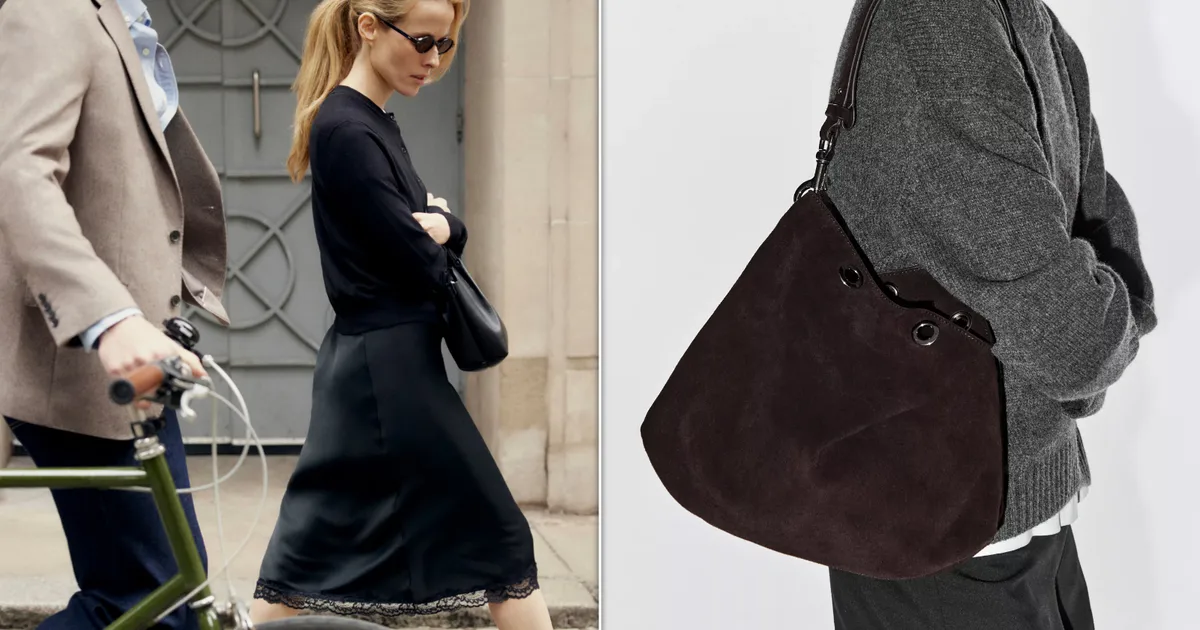
We hope you love the products we recommend! All of them were independently selected by our editors. Just so you know, HuffPost UK may collect a share of sales or other compensation from the links on this page if you decide to shop from them. Oh, and FYI — prices are accurate and items in stock as of time of publication.
There’s just something about the 90s that we can’t shake. Maybe it’s our obsession with Carolyn Bessette Kennedy after bingeing Ryan Murphy’s Love Story that’s fuelling our desire to embrace minimalism.
Either way, we have to give it to the 90s: the penchant for sleek monochrome looks is a timeless one.
So much so that the style defined by the likes of Jennifer Anniston, Gwyneth Paltrow, and Sarah Michelle Gellar has never really left us – it seems like every year we declare the fateful decade is back in fashion.
But if you, like the rest of our Instagram feed, are feeling the urge to jump on the nostalgia train, here are the best 90s-inspired dresses, jeans, shoes, and shirts to shop now.
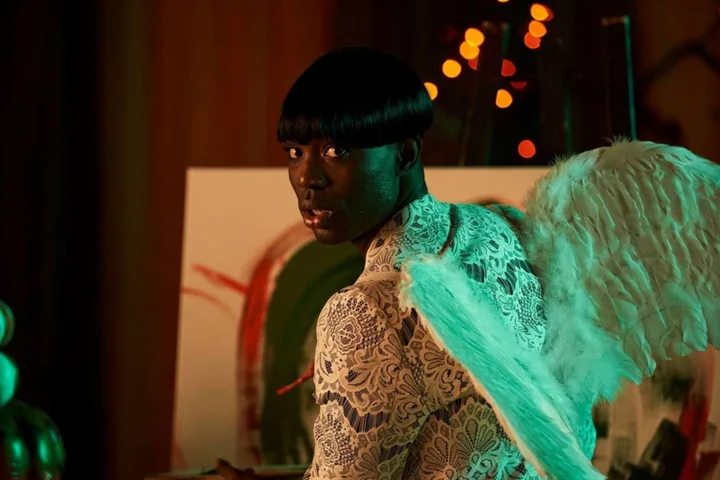
The new BBC drama Babies has been met with a wave of critical acclaim.
Directed by Stefan Golaszewski (the creator of hit shows like Him & Her and Marriage), the series has been described in early reviews as a “bittersweet” exploration of fertility struggles, weaving moments of humour throughout its more hard-to-watch sequences.
Babies primarily focusses on a couple in their 30s – played by Paapa Essiedu and Siobhán Cullen – who face repeated setbacks in their journey to become parents, with the show exploring how this affects their relationship and those around them.
It also features a cast of talented performers that you most likely recognise from a variety of film and TV projects.
Here’s a quick guide to where you’ve seen the stars before…
Paapa Essiedu

Paapa Essiedu first rose to prominence after appearing in Michela Coel’s I May Destroy You, which earned him an Emmy and Bafta nomination.
He also since appeared in in Gangs Of London, the Channel 5 miniseries Anne Boleyn and the Sky’s trippy sci-fi offering The Lazarus Project.
In 2023, he appeared as Gaap in the Demon 79 episode of Black Mirror, before starring opposite Keira Knightley in the crime drama Black Doves.
Most recently, he appeared in seasons two and three of The Capture as Isaac Tuner, an MP who is deepfaked on national television, and becomes embroiled in a news feed tampering conspiracy.
Later this year, he’s due to appear as Severus Snape in HBO’s new adaptation of the Harry Potter novels.
Siobhán Cullen

Irish actor Siobhán Cullen is probably best known for playing Caroline in ITV’s Irish comedy-drama The Dry, as well as her work in the 2024 Netflix comedy Bodkin.
Siobhán first found fame playing a supporting role in the BBC drama Paula, and appeared in two episodes of the divorce drama The Split.
Following this, she took the lead in the ITV crime drama The Long Call, and had a minor role in the Dalgliesh episode Shroud For A Nightingale.
Siobhán is currently filming the new Highlander movie, alongside Henry Cavill and Russell Crowe.
Charlotte Riley

Charlotte Riley has been on our screens for almost 20 years since making her debut in the BBC Three sitcom Grownups back in 2007.
She later made a splash when she appeared alongside her future husband Tom Hardy in ITV’s 2008 adaptation of Wuthering Heights, before going on to appear in three episodes of DCI Banks as the murdered Lucy Payne.
Following this, Charlotte starred in all eight episodes of Ken Follett’s adaptation World Without End and played Arabelle Strange in Jonathan Strange & Mr Norrell.
She has also appeared in seasons two and four of Peaky Blinders as the wealthy widow May Fitz Carleton, and starred in Danny Boyle’s John Paul Getty miniseries as lawyer Robina Lund.
On the big screen, you may recognise Charlotte from Edge Of Tomorrow, Swimming With Men or London Has Fallen.
More recently, Charlotte has had roles in Apple TV+’s comedy-drama Trying and in Amazon Prime’s thriller Malice.
You can next see her in Master Of The Universe alongside Nicholas Galitzine, where she’s set to play Queen Marlena Glenn.
Jack Bannon

Jack is most recognisable for playing Sam Thursday in Endeavour and taking the lead as Alfred in the recent Pennyworth TV show, based on the iconic DC Comics character.
His other TV credits include Medici, The Darkness and the recent Netflix medical drama Pulse.
In film, he played Alan Turing’s friend Christopher in the 2014 biopic The Imitation Game, appeared as a young tanker in Fury and starred as Felix in the 2016 British coming-of-age drama Kids In Love, alongside Cara Delevingne.
He is currently filming the upcoming Tomb Raider series alongside Sophie Turner, although his role has yet to be specified.
Nadine Marshall

Nadine Marshall, who plays Stephen’s mother, first captured viewers’ attention when she was cast as Sally in the sitcom The Smoking Room and has been a regular on our screens since the early 2000s.
Over her 25-year career, she has appeared in a variety of projects, from the sketch show Little Miss Jocelyn to the kids’ TV show Old Jack’s Boat alongside Bernard Cribbins and Robbie Coltrane, as well as the Channel 4 drama National Treasure.
In recent history, you might have seen Nadine as DS Shola O’Halloran in Sky drama Save Me, DSU Marianne Hamilton in Trigger Point or DI Sarah Torres in Silent Witness.
Gary Beadle

Gary appears in Babies as Stephen’s dad, but you’re most likely to know him for playing Paul Trueman in more than 300 episodes of EastEnders.
Although best recognised for the BBC soap, he has also appeared as Clem in Andor, Elyas Machera in Amazon Prime fantasy The Wheel Of Time and as Thick Rick in the Netflix spin-off The Gentleman.
Elizabeth Rider

Elizabeth Rider has been a television stalwart since the early 1980s.
As well as playing DCC Andrea Wise across five episodes of Line Of Duty, she has had minor roles in numerous TV shows, including Casualty, Heartbeat and Doctors.
Soap fans might also recognise for her playing Ashley Peacock’s biological mother in Coronation Street, or for her 10-episode EastEnders arc as nurse Jill Green.
Simona Brown

Simona Brown, who plays Bella in Babies, is best known for starring in the 2021 Netflix miniseries Behind Her Eyes.
She also had leading roles in the ITV series Him, the 2019 Florence Pugh BBC drama The Little Drummer Girl and the Channel 4 cyber thriller Kiss Me First.
Babies is currently available to stream in full on the BBC iPlayer, with episodes also airing weekly on Monday nights on BBC One.

When we look back at 2026 in the future, we’re probably going to be saying that the year belonged to Zendaya.
The woman of the hour has no fewer than three upcoming movies in the year ahead – not including one that’s in cinemas now – and she’s also set to reprise the TV role that put her on the map in the first place.
Outside of her work, she’s also been at the centre of rumours that she and her long-time partner Tom Holland quietly tied the knot in secret, after confirming last year that they were engaged.
Here’s your quick guide to everything Zendaya currently has in the pipeline, from her divisive new romantic drama to the return of Euphoria…
The Drama (in cinemas now)

Zendaya and Robert Pattinson play a couple about to celebrate their big day in The Drama.
However, the pair’s relationship slowly begins to unravel when a dark revelation about the bride-to-be’s past during a drinking game leads both of them to ask themselves some big questions.
The latest film from Sick Of Myself and Dream Scenario director Kristoffer Borgli, The Drama holds a big secret that is being kept under wraps for the time being to avoid spoilers – but the movie was already sparking backlash and debate before it had even been released, with early reviews suggesting the movie could be one of 2026’s most uncomfortable and controversial.
Euphoria (12 April)

It’s been a long time coming, but the third and final season of Euphoria is finally coming later this month.
In the final outing of Sam Levison’s acclaimed teen drama, its central characters are all grown up, but no matter how far they’ve come, there’s clearly only so far that any of them can run from their pasts.
Zendaya reprises her two-time Emmy-winning role as recovering drug addict Rue in the new episodes, which also see the return of cast members Sydney Sweeney, Hunter Schafer, Alexa Demie, Colman Domingo and recent Oscar nominee Jacob Elordi.
Meanwhile, the new season will be one of the final on-screen roles for Eric Dane, who died earlier this year at the age of 53.
The Odyssey (17 July)
Christopher Nolan is taking a big swing when it comes to his return to cinemas following the mammoth success of his Oscar-winning epic Oppenheimer.
For his latest ambitious project, he’s taking on the classic The Odyssey, marking his first time ever shooting an entire film with IMAX cameras.
The star-studded ensemble is led by Matt Damon as Odysseus, with a cast including Nolan regulars Anne Hathaway, Benny Safdie, Elliot Page and Robert Pattinson, as well as Mia Goth, Himesh Patel, Travis Scott and Oscar winners Charlize Theron and Lupita Nyong’o.
Reports have claimed that Zendaya will be playing the Greek goddess Athena, with her rumoured husband Tom Holland playing Matt Damon’s on-screen son Telemachus.
Spider-Man: Brand New Day (31 July)

Just two weeks after the long-awaited release of The Odyssey, Zendaya and Tom Holland will be reunited once again in the newest film in the Spider-Man canon Brand New Day.
Four years on from the events of No Way Home, the world has seemingly forgotten that Peter Parker ever existed, including his long-term girlfriend MJ, who a recently-released trailer revealed had moved on with someone new, much to our hero’s chagrin.
Joining Tom and Zendaya in their latest Marvel adventure will be Stranger Things star Sadie Sink, Severance favourite Tramell Tillman and MCU fixture Mark Ruffalo, playing Bruce Banner, the alias of The Incredible Hulk.
Dune: Part Three (18 December)

Rounding off a huge year for Zendaya will be the third (and final!) instalment in Denis Villeneuve’s Dune series.
Based on the novel Dune Messiah, the film will see Zendaya back with series regulars Timothée Chalamet, Florence Pugh, Javier Bardem and Rebecca Ferguson, alongside some exciting new additions.
Remarkably, Dune: Part Three will also be the Challengers star’s third time sharing the screen with Robert Pattinson in the space of a year, following The Drama and The Odyssey.

No parent wants to sit back and watch their child experience anxiety over any situation, whether it’s going to a new dance school, a football game, trying new food or meeting new kids at school.
And while most parents have the best intentions, many actually come to their child’s rescue during moments of distress – which can be hugely detrimental to their child now and as they grow up, therapists told HuffPost.
The best way to help your child grow through anxiety and learn to manage it isn’t exactly a natural instinct. Here’s what to know:
The number one way parents fuel anxiety, according to therapists
“I think, in particular with anxiety … the biggest mistake that we make as parents is that when we see anxiety in our kids, we jump straight into that ‘I want to protect this child from this experience.’ So, we go straight to protection mode,” said Cheryl Donaldson, a licensed marriage and family therapist.
Parents don’t want their kids to feel anxiety, of course, but swooping in to take them out of an anxious situation or fix it for them isn’t a way to empower kids, Donaldson noted. It’s actually doing the opposite.
Research suggests that accommodating anxiety makes it worse, said Hannah Scheuer, a licensed clinical social worker with Self Space in Washington state.
“I’m both a child and family therapist and a mom, and I’m just gonna say that watching our child struggle and suffer is one of the hardest things,” Scheuer said. “And if we accommodate and give in, we will make it worse. Accommodation is essentially allowing avoidance, and avoidance feels really, really good in the moment, even to adults.”
For instance, if your teenager is anxious about driving on the highway, avoiding it when teaching them to drive only makes the experience scarier and more stressful when they eventually have to do it.
“It just makes it worse and worse, it leads to long-term negative outcomes,” Scheuer said. “That accommodation, that saying, ‘Oh no, you don’t have to do this thing that you’re upset about or scared of,’ it does temporarily alleviate that child’s distress. Then, what it reinforces is this perception that the thing that they don’t want to do actually warrants their anxiety, and so that gives them more reason to feel the anxiety.”
“Anxiety is our body’s mechanism to tell us that we either need to act in some way … or, in the case of kids, anxiety is telling them, ‘This is a new skill I need. This is a new experience. I need more skills. I need to know how to manage this,’” Donaldson said.
It’s important to validate your child’s emotions while supporting them through anxiety
Supporting children through anxious moments takes a three-fold approach, said Laura Buscemi, a licensed professional counsellor at Thriveworks in Cherry Hill, New Jersey.
“We have to validate, we have to regulate and we have to mitigate,” she said.
Validation looks like normalising the anxiety and sharing that it’s something we all experience, Buscemi said. Regulation means helping your child learn to manage their anxiety through a variety of solutions, like breathing exercises and movement. Mitigation helps a child understand that temporary discomfort, such as facing the situation that makes them anxious, leads to long-term relief.
“Facing fears ultimately decreases them – and we prove to ourselves that things aren’t as scary as we’ve built up in our mind, or that maybe we’re just braver than it was scary,” Buscemi said.
“The research evidence does also show that what we need to do as parents is to provide support and confidence,” Scheuer noted. “What that looks like is supporting and validating the feelings while also showing confidence in their child’s ability to actually do the thing to cope with the anxiety.”
For example, if your child gets really anxious about going to football practice and has meltdowns in the car on the way to practice, a parent could say, “Wow, I hear you. I know you’re feeling really scared and upset right now, but I also know that you can do really hard things and you’re going to be OK,” Scheuer suggested.
“It’s that mix of validation of the feeling, without accommodating the anxiety and providing confidence that they can do it,” Scheuer explained. This one sentence isn’t going to erase your child’s anxiety and stop the meltdown, but as this encouragement comes up week after week, soccer will feel less and less hard for your child.
“And continuing to inspire that confidence … is going to really make a big impact, and that’s how we build resilient kids,” Scheuer said.

Justin Paget via Getty Images
Some kids (and parents) require professional support for anxiety management
Many parents will be able to manage their kids’ anxiety through different calming and exposure techniques, but some kids (and parents) may require additional support from a mental health professional – and that’s perfectly OK.
There are certain signs that a child’s anxiety requires support from a therapist or other professional.
“If the anxiety is getting in the way of them being able to be in a relationship with other kids, go to a friend’s house … being able to go to practices and do different things, you want to reach out for help,” Donaldson said.
If you notice your child frequently worrying or frequently in distress, those are also red flags.
“Also, with younger kids, they don’t really have the language to talk about anxiety, so sometimes we see it as like more physical symptoms,” Scheuer noted. This includes stomachaches, having trouble sleeping, and general restlessness.
“That is something that I would say, if that’s pretty common, maybe they need some extra support,” Scheuer said.
If therapy or counselling isn’t accessible, your child’s school should have a social worker or school counsellor who can provide support, Scheuer said. Talking to your paediatrician could also be a good idea.
Managing anxiety in kids often involves the parents, especially if the kids are younger.
“So, it’s not just saying, ‘Oh, fix the kid’s symptoms.’ It’s also … what strategies can we give to the parents to help really make sure that everybody has the tools to help this kid navigate these symptoms?” Scheuer said.
It’s also on the parents to consider how they react to anxious moments in their lives. Think about it: if mum or dad doesn’t know how to manage their own anxiety, they likely won’t be able to help their child, either.
Ask yourself what you feel when your child gets anxious. Does it make you anxious, too? If so, what do you do to calm down?
“Leading with your own leadership” is an important way to go about this, according to Donaldson. If you know deep breathing helps you feel less anxious, gently guide your child toward that. Or, if you know that getting out for a walk reduces your anxiety, gently encourage your child to try it.
“You want them to know that you’re partnering, that you have answers that are going to be really helpful for them,” Donaldson said.
If other techniques and interventions don’t work, “sometimes the kids need to go on medication,” Donaldson noted.
Watching your child experience anxiety isn’t a pleasant experience for anyone, but it helps build life skills and confidence that are tough to grow later in life. The ability to live with discomfort and manage anxiety is important throughout the lifespan, as someone takes a big test, gets their first job, experiences their first break-up, faces job rejection and more.
“I really like to emphasise with my clients that we’re trying to push through temporary discomfort to achieve long-term relief,” Buscemi said.
Help and support:
- Mind, open Monday to Friday, 9am-6pm on 0300 123 3393.
- Samaritans offers a listening service which is open 24 hours a day, on 116 123 (UK and ROI – this number is FREE to call and will not appear on your phone bill).
- CALM (the Campaign Against Living Miserably) offer a helpline open 5pm-midnight, 365 days a year, on 0800 58 58 58, and a webchat service.
- The Mix is a free support service for people under 25. Call 0808 808 4994 or email help@themix.org.uk
- Rethink Mental Illness offers practical help through its advice line which can be reached on 0808 801 0525 (Monday to Friday 10am-4pm). More info can be found on rethink.org.
Versamet acquires $360M gold stream on Eskay Creek project

Claude chatbot may resort to deception in stress tests, Anthropic says

Cooper Flagg scores 45 points as Dallas Mavericks beat Los Angeles Lakers


-

 NewsBeat4 days ago
Steven Gerrard disagrees with Gary Neville over ‘shock’ Chelsea and Arsenal claim | Football
-

 Business3 days ago
No Jackpot Winner and $194 Million Prize Rolls Over
-

 Fashion3 days ago
Weekend Open Thread: Spanx – Corporette.com
-
Entertainment7 days ago
Fans slam 'heartbreaking' Barbie Dream Fest convention debacle with 'cardboard cutout' experience
-

 Crypto World5 days ago
Gold Price Prediction: Worst Month in 17 Years fo Save Haven Rock
-

 Business9 hours ago
Three Gulf funds agree to back Paramount’s $81 billion takeover of Warner, WSJ reports
-
Crypto World6 days ago
Dems press CFTC, ethics board on prediction-market insider trades
-

 Sports1 day ago
India men’s 4x400m and mixed 4x100m relay teams register big progress | Other Sports News
-

 Business4 days ago
Login and Checkout Issues Spark Merchant Frustration
-

 Tech7 days ago
Apple will hide your email address from apps and websites, but not cops
-

 Tech6 days ago
EE TV is using AI to help you find something to watch
-

 Sports6 days ago
Tallest college basketball player ever, standing at 7-foot-9, entering transfer portal
-

 Politics7 days ago
Should Trump Be Scared Strait?
-
Tech6 days ago
Daily Deal: StackSkills Premium Annual Pass
-

 Tech6 days ago
Flipsnack and the shift toward motion-first business content with living visuals
-

 Fashion7 days ago
The Best Spring Trends of 2026
-

 Crypto World6 days ago
U.S. rule change may open trillions in 401(k) funds to crypto
-

 Sports6 days ago
Women’s hockey camp eyes fitness boost, tactics ahead of WC 2026 campaign | Other Sports News
-

 Politics7 days ago
BBC slammed for ignoring author of The Fraud
-

 Tech6 days ago
How to back up your iPhone & iPad to your Mac before something goes wrong
You must be logged in to post a comment Login