Politics
The House Article | How Parliament rediscovered the power of the humble address


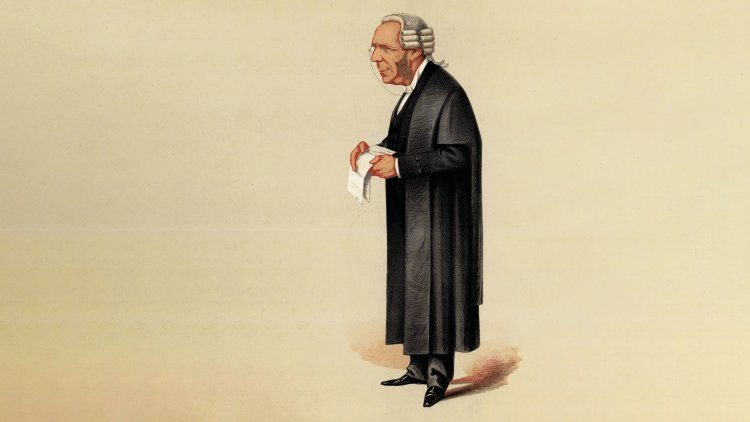
Erskine May


8 min read
It failed to break the Brexit deadlock but helped hasten the exit of Keir Starmer. Lord Lisvane explains how Parliament rediscovered the power of an humble address
That an humble address be presented to His Majesty, that he will be graciously pleased to give directions to require the government to lay before this House all papers relating to Lord Mandelson’s appointment as His Majesty’s ambassador to the United States of America, including but not confined to…
So begins the lengthy resolution come to by the House of Commons on 4 February 2026. In response, the government provided 1,000 pages of documents in two tranches, in March and June 2026. As a result of a manuscript amendment to the original motion, documents thought to raise issues of national security were first seen by the Intelligence and Security Committee.
These events can be seen as a welcome assertion of the power of Parliament over the executive. Certainly they have deep historical roots; but do they have quite the magical powers that many would wish to see?
The principle set out in Erskine May is that each House has the power to call for the production of papers by the government of the day, by a “motion for a return”. A return from the Privy Council or from a department headed by a secretary of state is called for by an humble (always “an” humble, not “a” humble) address to the sovereign; papers from any other body are sought simply by means of an Order of the House. The somewhat artificial distinction is based on the theory that secretaries of state are created by the King, and that the departments which they head are his property.
The power of each House to call for papers is in effect delegated to select committees, whose parent House has given them the power “to call for persons, papers and records” (known as PPR). This is of greater practical importance in the often adversarial surroundings of the House of Commons than in the calmer waters of the House of Lords. A select committee with PPR cannot exercise that power directly, as if it were the House itself. Rather, a select committee whose request is refused can report the matter to the House to take action (at which point, of course, the committee loses control of the process). It is sometimes suggested (but not by me) that such requests should be backed by a penal power, which would no doubt risk bringing the courts into the picture. In my experience, as a tussle over information is essentially a political struggle, witnesses come to realise quite quickly that continuing to refuse a select committee’s request may be much more damaging than giving in gracefully.
There remains a category of proceeding which is entirely at the initiative of ministers: “Motions for Unopposed Returns”. Some of these have become traditional: the Financial Statement and Budget Report and the accounts of the Contingencies Fund are two examples. The unopposed return is also used as a means of conferring the protection of privilege upon a document – typically the report of an inquiry – which otherwise might be the subject of legal proceedings.
Because a motion for an unopposed return (moved by a minister) is an indication that the document is about to be provided to the House, it is not in order to seek to oppose it (unlike a motion for an humble address, as we shall see).
The relationship between Crown and Parliament has proceeded in parallel since the very earliest days. Even after the Reform Act 1832 the procedure of the House of Commons, and the standing orders which regulated it, would have been easily recognisable to a Member in the Long Parliament of 1640. But the rapid development of the corporate state and government in the middle to late 19th century brought profound procedural change. Business became more complicated, and the standing orders proliferated to match it. Most important, the government took control of the agenda and the time of the House of Commons, a process completed – for the time being – by the ‘Balfour Reforms’ of 1902.
One type of proceeding that was profoundly changed by these developments was calling for papers. In earlier centuries, seeking the production of papers for the information of the House was fairly frequent, and often had a charming informality (as it were, “we’d like to know more about this, so we had better see some papers”). The establishment of co-ordinated machinery of government in the latter half of the 19th century meant that a great deal of information began to be routinely provided to Parliament, both in Command Papers (presented to Parliament “by command” of the sovereign) and Act Papers (where statutes required the submission of reports to Parliament). This meant that there was much less need to call for papers by motions for returns or humble addresses.
But the power of both Houses to call for papers remained unchanged, and as the Commons Procedure Committee noted in 2019, has never been challenged. There are no limits upon it in common law or statute.
The House of Commons must be able to instruct His Majesty’s ministers, and refusal to comply must in turn be an issue of privilege, and ultimately of confidence
Humble addresses went into near-hibernation for some years (although at the start of every parliamentary session each House has agreed a motion for an humble address to the sovereign for the Queen’s or King’s Speech from the throne). Motions for humble addresses are still frequently seen, as any attempt to have a statutory instrument annulled takes the form of a “prayer”; whereby an address would be presented to the sovereign, praying that the such-and-such statutory instrument be annulled. It is extremely rare for a motion of this sort to be agreed, so they are essentially vehicles for debate.
In the 2017-19 session, the issue emerged from hibernation, with 10 motions in the name of the leader of the opposition put down on opposition days. Four (seeking the submission of papers to a select committee) were agreed, and the others were negatived.
The profile of humble addresses seeking information was raised sharply in November 2018 when the House agreed a motion calling for legal advice given to ministers (contrary to the convention in the Ministerial Code). The government responded in general terms, only for the House, in December 2018, to find ministers in contempt for not providing the Attorney General’s advice as given. This prompted the inquiry by the Commons Procedure Committee
So, how effective is the humble address of the type relating to Lord Mandelson? The answer must, I think, be “fairly effective”. First, you need time on the floor of the House. If the government of the day is not going to provide this (and there may well be political reasons why any government might be reluctant to do so) then the obvious vehicle will be an opposition day.
Second, will an agreed motion be binding on the government? On 1 November 2017 the then-opposition tabled a motion for an humble address seeking impact assessments for a number of sectors following Brexit. The motion was agreed to, and the then-shadow secretary of state for exiting the European Union, Keir Starmer, asked the Speaker if the decision of the House would be binding on the government. In a somewhat rambling ruling, the Speaker said that “motions of this kind have been traditionally regarded as binding or effective”.
From first principles, this must be right. The House of Commons must be able to instruct His Majesty’s ministers, and refusal to comply must in turn be an issue of privilege, and ultimately of confidence.
Third, will you get what you asked for? The government response to the humble address relating to Lord Mandelson very helpfully sets out the process followed in assembling the material sought. It quotes the resolutions on ministerial accountability to Parliament, allowing non-disclosure when disclosure “would not be in the public interest”. Redactions were made to protect national security, international relations, junior staff or people peripherally involved, or to protect legal professional privilege.
Within these constraints, the humble address provided what was expected – although it must be remembered that in this case the government was a willing player.
There has been some unease about possible prodigal use of these motions. In 2019, the Commons Procedure Committee was pretty unsympathetic. It pointed out the options available to the government: simply vote against the motion (or amend it); negotiate over the material to be provided; or have the material submitted to a select committee for analysis and report.
So, two (or even two-and-a-half) cheers for the humble address. Like any procedural device, it should not be used too often; but in Parliament’s dealings with over-mighty executives (and executives are always over-mighty) it remains a weapon in the armoury.
Lord Lisvane is a crossbench peer and former clerk of the Commons

You must be logged in to post a comment Login