
Politics
The House Article | Inside The Battle For Labour’s Mainstream: Luke Akehurst Vs Luke Hurst

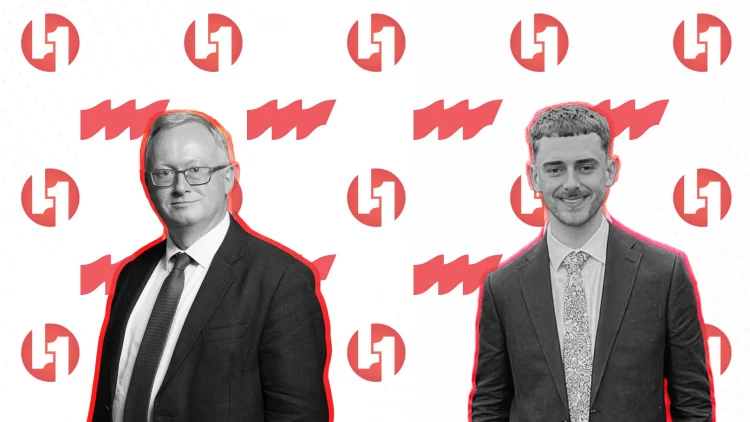
Labour First’s Luke Akehurst and Mainstream’s Luke Hurst (l-r)

12 min read
Two internal players called Luke are battling to claim Labour’s mainstream. The outcome of their rivalry will shape the future of the party – and possibly the country. Sienna Rodgers reports
On one side is Luke Akehurst. He is a veteran organiser within the party and has served as secretary of Labour First, the ‘old right’ Labour factional group, for 20 years. In recognition of his services, the 54-year-old became a Labour MP for the first time at the last general election, and now also runs a WhatsApp group of 198 MPs called “mainstream”.
On the other is Luke Hurst. He is the lesser-known Luke, having only involved himself in Labour during Jeremy Corbyn’s leadership years, via student politics. Today, the 27-year-old is national co-ordinator of new membership organisation Mainstream, which represents the soft left of the party and is best known for being close to Manchester mayor Andy Burnham.
As their respective brands suggest, both claim to stand for Labour’s mainstream. And both, behind the scenes, are doing the hard work of organising the networks of MPs and activists. Whoever proves most successful will determine where the party goes next.
‘Mainstream’ on WhatsApp
“It’s not some sort of den of hot political intrigue,” Akehurst says of his MPs’ WhatsApp group. Comprising almost half of the Parliamentary Labour Party (PLP), and open to ministers as well as backbenchers, the messages in it are not usually very political.
“I will occasionally put things in it like, ‘Here’s the details of the trigger process’ and, ‘Can you tell me who your constituency has elected to annual conference and where they stand politically?’” he explains. (The trigger process is the procedure by which Labour MPs are reselected, or deselected, by their local parties.)
“But really, the PLP, thankfully, hasn’t gone down the Tory path of online groups where there’s incredibly frank political discussions, because I think we’ve learnt the lesson of that getting leaked all the way through the last Tory government.”
It mostly consists, he says, of MPs asking colleagues for the basics – to help make their upcoming all-party parliamentary group meeting quorate, for example, or to share canvassing leaflets they can take inspiration from. Part of the reason is that the membership is so broad.
“My criteria was people who, at the start of this Parliament, I perceived to be broadly aligned with the leadership,” Akehurst says. “But some of the fault lines that we’ve had around policy, on welfare reform and stuff, would go right through the middle of that group. That’s just the political reality of where we are now.”
The Labour First parliamentary group – which has 104 MPs and peers in its own WhatsApp chat – is where MPs from that tradition can find more political intrigue. Its meetings, which take place at least monthly, do not focus on chatter about “who’s up, who’s down”, leadership contenders being floated, nor the latest controversial legislation going through Parliament – but instead on “healthy strategic discussions” about their role in the party, according to Akehurst.
Mainstream the organisation
When Hurst first encountered factional Labour politics at Leeds University, Nols – as the National Organisation of Labour Students was known – was being scrapped by the Corbyn leadership.
He says he belonged to neither side in that war: not the ‘Nolsies’ defending the body, nor Labour Students Left, which championed its abolition. But he backed the move to a one-member-one-vote system, so aligned himself with the latter. That positioning foreshadows Mainstream’s own: not Labour right, not fully left, but sitting in the soft middle.
Hurst later moved to Manchester, where he was a Unison rep in a hospital, then completed a master’s in philosophy at King’s College London, before working for Neal Lawson’s centre-left pressure group Compass. It is from there that he has been seconded to Mainstream, which had Compass and soft left group Open Labour contribute to its start-up costs when it launched last autumn.
He organised the Compass “CHANGE: HOW?” conference in May 2025, headlined by Burnham, Miatta Fahnbulleh and Louise Haigh. “That was a big moment for the soft left trying to reassert its politics and say it had a distinct Labour tradition and ideological basis,” Hurst says.
Labour’s 2026 internal elections
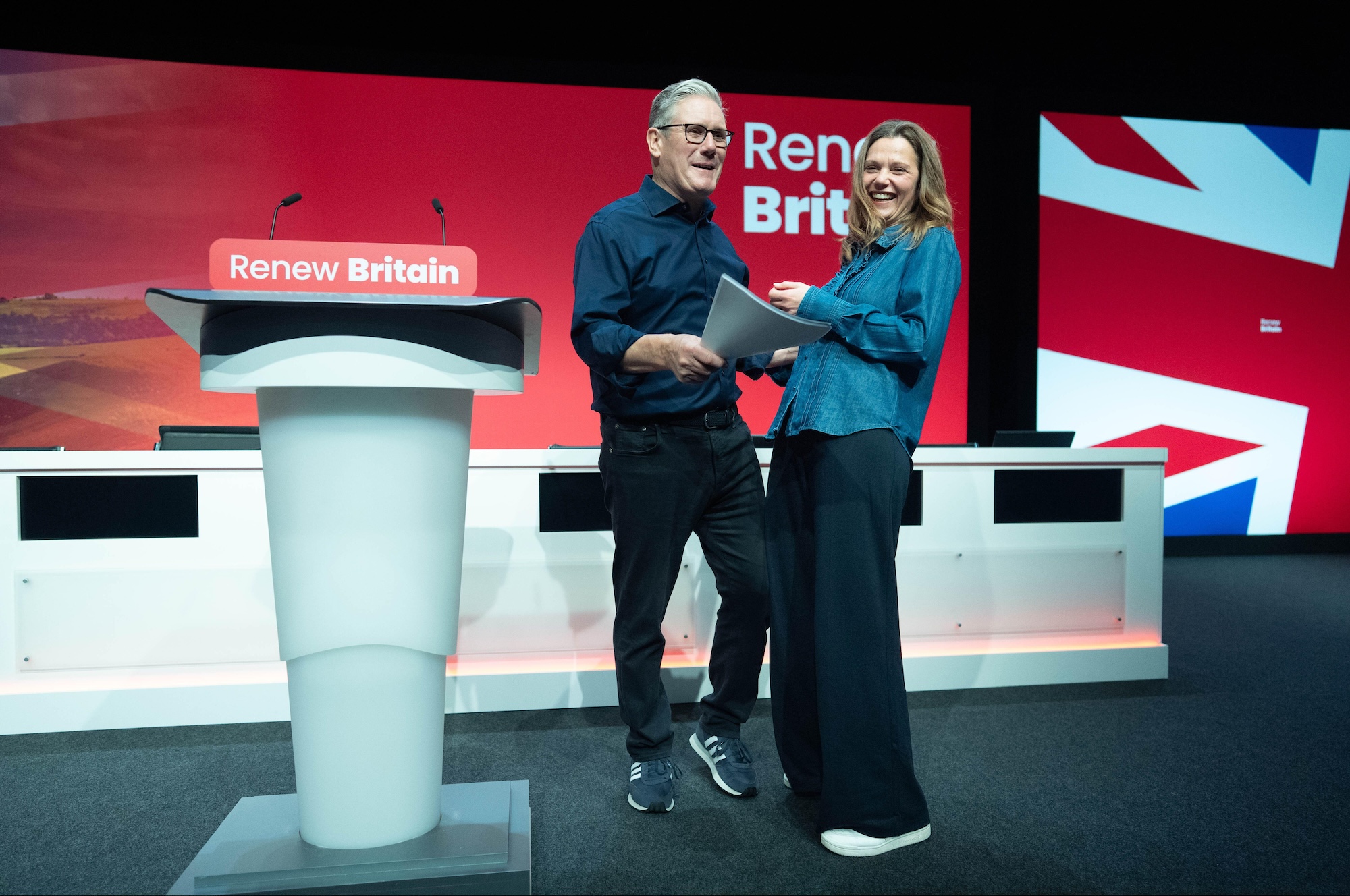
Labour First is squarely focused on organising ahead of September party conference and for Labour’s National Executive Committee (NEC) elections.
“Media can turn up at conference and go, ‘The mood of Labour Party Conference has changed’, as though it’s some random collection of people that turn up,” Akehurst observes. While speeches can make the weather – he cites Hugh Gaitskell in 1960 or Neil Kinnock in 1985 – the nine months of factional wrangling in the run-up to the event are far more likely to shape it.
This involves co-ordinating members in local parties to deliver a set of delegates on the conference floor who reflect a faction’s politics – for Akehurst, that means members who will be “cheering ministers to the rafters, not trying to undermine them in any way”.
“The constituency half is an aggregation of 650 local organisational battles,” the MP explains. (The other half of the conference floor is made up of trade unions and other affiliates.) “Fighting those battles is a machine that I’ve had some involvement in for decades, but really, we perfected that machinery on the defensive during the Corbyn years.”
Akehurst managed this alone until 2017, when Matt Pound – who went on to advise Rachel Reeves – joined Labour First. “I’ve had various extremely talented young organisers working for me since then.”
As for the race to win spots for the nine Constituency Labour Party (CLP) representatives on Labour’s ruling body, it was once hotly contested. Since Keir Starmer introduced a proportional voting system in 2020, however, the contests have been far less dramatic.
“Because it takes a six or seven per cent swing for a seat to move, I would not expect movements of seats of more than about one,” the Labour First secretary says of the looming battle to shape the NEC.
The Labour right is putting forward four candidates, the Momentum left is promoting three, and Mainstream has a slate of three. (New outfit Restoration has six candidates, which Akehurst points out is unwise – “you can risk perverse results if you run too many”.)
But the results will tell us a lot about the factional composition of the party membership.
“The number of members who are deserting the party because it has become hostile and hyper-factional means it’s quite hard to know how members will resonate with different NEC slates,” says Hurst.
“We’ve also noticed this year that, when CLPs are trying to nominate candidates, so many aren’t quorate because they just don’t have the members to come along to meetings.”
Akehurst, of course, sees things differently: “What always happens when we’re in government is that some of the difficult decisions in government lead to some grassroots activists becoming disillusioned with the leadership. It’s offset to a certain extent by the very far left having other forums in which they’re exercising their politics, and the internal elections will tell us which of those factors is larger.”
“My impression from talking to activists and other MPs is, weirdly, that a lot of the political heat is here inside the PLP over policy,” he adds.
The leadership question
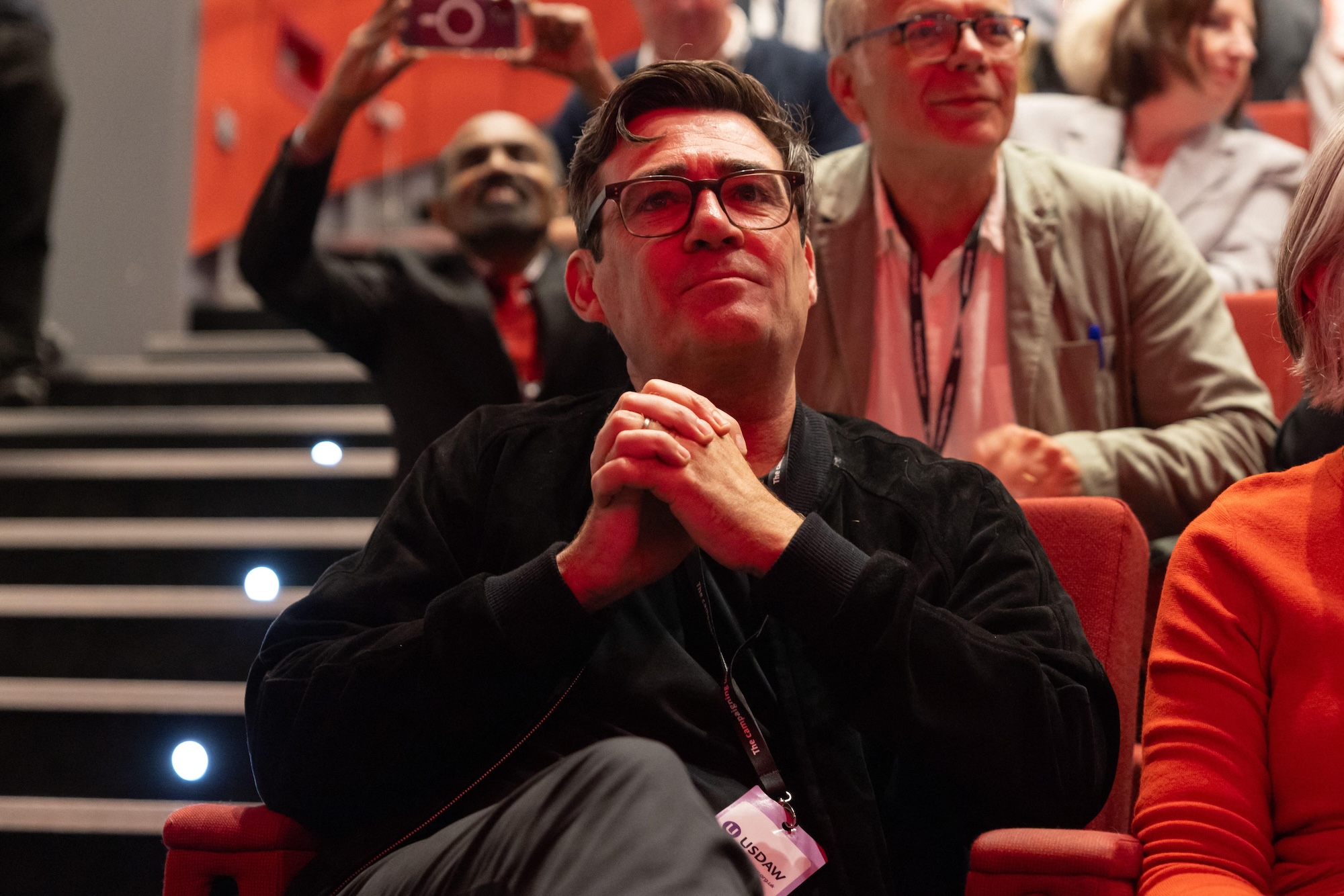
Akehurst is not covertly preparing Wes Streeting’s leadership bid as some on the left might assume. “People know that I’m very loyal to Keir. You can see, with the things going on in the Middle East, how good he is in a crisis, and the stature but also calmness he’s got on the global stage,” says the MP. He hopes “there’s not going to be a leadership contest in the Labour Party any time soon”.
What would Labour First do if the situation does arise? “It really depends on whether there’s one consensus candidate on the moderate wing of the party.” In 2020, it told supporters to vote for Starmer, Lisa Nandy or Jess Phillips; in 2015, Akehurst personally backed Yvette Cooper but again Labour First endorsed a selection – Cooper, Burnham and Liz Kendall – in its bid to stop Corbyn.
Akehurst employs a Game of Thrones analogy to make his point. “While the Seven Kingdoms are all biting chunks out of each other, the Night’s Watch has to protect the kingdom on the wall,” he says, casting Labour First as the Night’s Watch.
“Internecine warfare between people who should get on with each other – that’s sometimes a reality of politics. Our job is to sustain a broadly social democratic majority at conference and on the NEC, and make sure we don’t slip back into the politics of the Corbyn years.
“That we don’t do it immediately in one go, which I think is highly unlikely, but also that we don’t end up doing it in stages, where we end up with, say, a soft left leadership that reopens the door in terms of rule changes to the politics of the Corbyn years.”
That possibility is represented by Mainstream, which is closely linked to the Labour Party’s ‘King in the North’, Andy Burnham.
Despite having been founded just two weeks earlier, Mainstream endorsed Lucy Powell for the deputy leadership last year. “In the event of a leadership election, we would intervene in the same way. We’d ballot our members like we did for the deputy leadership and find out who they wanted to back, and we’d endorse a candidate,” confirms Hurst.
He insists that Mainstream’s focus right now is on developing a political programme, ready for any candidate that might emerge to succeed Starmer to take up. For too long, he says, the soft left has acted as kingmaker “without necessarily trying to assert a substantive politics in the process – that has to change this time”. The outline looks a lot like Burnham’s ‘Manchesterism’; a similar political economy, and an embrace of public ownership (not necessarily the top-down kind).
“There are other sections of the party that organise for the sake of organising, and then control becomes the end, and you end up in the situation where we are now. We have a government that’s done some good things, but has also made a huge litany of missteps, and there have been so many missed opportunities because it doesn’t have the political, moral, ideological roots to its project,” argues Hurst.
“We think it’s just as important to do that antecedent work of sketching out where you want the country to go, why you want power before – or alongside – trying to gain power.”
So, Mainstream is not just a front for the Burnham campaign? “If Andy were on the pitch, I think he would have a huge appeal to our members. But we work with people from all across the party… There are other talented Labour politicians in our orbit.”
At the group’s March reception in a Whitehall pub, Angela Rayner was the keynote speaker. She made headlines by warning that Labour “cannot just go through the motions in the face of decline” and by joining the growing group of Labour MPs urging a rethink of the government’s “un-British” immigration reforms.
“He won’t do deals – Andy does the personality and doesn’t feel the need to organise”
But if Rayner cannot overcome her own obstacles – most notably the stamp duty affair – to challenge Starmer after the May elections, Burnham backers reckon he still has a chance. The Prime Minister would be so weakened by terrible results, the theory goes, that he’d be forced to set a date for his departure; then, when another Greater Manchester seat popped up, Burnham could not be blocked.
Although Burnham has friends willing him to succeed in parts of Labour, including Mainstream, The House understands that he lacked internal organising nous ahead of the Gorton and Denton selection, declining to put calls in to union general secretaries or the key players on the NEC. “He won’t do deals – Andy does the personality and doesn’t feel the need to organise,” says one source who knows Burnham well. That does not bode well for such a plan.
So, could he be allowed to run next time a constituency is vacated? “I’ll be careful not to pre-judge that in case it comes to full NEC,” replies a sceptical Akehurst, a member of the NEC himself. “The last time around, it was a decision taken by the NEC officers.
“But I can’t see a reason why they would change their stance, given the argument was that we could not afford – in the literal sense of money – a by-election for the mayor of Greater Manchester, or afford in the political sense of potentially losing that, maybe to Reform, maybe to Green. It could be a tight three-way race.
“Once you get past the end of Andy’s term of office as mayor of Greater Manchester, why would we not want him in the PLP? He’d be an asset to the PLP. I would encourage him to make it clear that his motive in coming back to Parliament is to be a team player with Keir, or whoever is Prime Minister, but I do think he’s probably got to serve out his term as mayor.”


Lambeth council announced consultations on the potential closures of Effra, Triangle and Maytree nurseries in January. There had been no prior consultation with the nursery leadership, staff or parents.
Then in March, the Labour-run council announced it was withdrawing the consultations. It said this was due to new government proposals changing the “national policy and funding landscape”.
But local Greens say this is an “embarrassing u-turn” for Labour, even though it provides some respite for families and staff. They argue that continuing uncertainty over the future of the nurseries is leaving people “in limbo”.
Since the March announcement, nursery staff, green councillors and even a local Labour MP have tried and failed to engage with the council. So far it has refused meetings and blocked requests for information.
A petition launched by local parents calling for an end to the consultations had gained over 1,000 signatures. However, the Greens, along with other local campaigners, have criticised Labour. They say the ruling party is cynically putting off difficult decisions until after the May elections.
Lambeth Labour claims
Lambeth Labour claims the potential closures are due to a 38% drop in pupil numbers caused by falling birthrates and families leaving the borough, leading to a substantial budget deficit. However, there are still waiting lists for the nurseries, so these numbers do not reflect the full reality.
However, the Lambeth Nursery School Federation, which runs the three nurseries marked for closure, has said the council’s approach of three separate consultations on closures would not solve the issues facing the nurseries even if all three closed.
Senior nursery staff provided detailed proposals for restructures that could ease financial pressures back in November, but Labour ignored these. Parents are calling for a working group which includes staff, unions and parents to shape the future of the nurseries.
The Federation also highlighted that the council’s figures were different to its own. The council consultations stated the monthly deficit was £450,000 whereas its figures were far less at £101,000. The consultations conflated historic deficits and projected deficits, among other inconsistencies.
The decision to withdraw the consultations is a victory for local campaigners. But senior staff at the nurseries have said it is only a temporary one.
The Greens are demanding that, when decisions are made about the future of the nurseries, Lambeth Labour listens to parents, staff and nurseries, and “puts families first”.
Meanwhile, parents and staff remain in a state of anxiety and uncertainty about the future of the nurseries they rely on.
Paul Valentine, Green Party councillor for Herne Hill & Loughborough Junction, said:
This has been a shambles from the very start when Labour ambushed parents and staff by launching these consultations with no prior consultation. Labour have blocked all attempts at meaningful engagement from the nurseries, parents, unions and councillors.
Now, facing a furious backlash, they’ve been forced into an embarrassing u-turn. It’s a great relief to parents, but only a temporary reprieve. The future of the nurseries still isn’t clear and families remain in limbo while Labour prioritises doing damage control ahead of the elections in May.
These nurseries are loved by the community and provide irreplaceable specialist early years teaching. Yet Labour are treating them, along with the families who rely on them, with complete contempt. When it comes to deciding a way forward, Labour must learn from their mistakes and listen to the nurseries.
This mess perfectly sums up the defensive, unaccountable culture Labour have cultivated in Lambeth in the past 20 years. In May, Lambeth can vote Green and choose a new way of doing things.
Sarah Ahmed, a parent at Effra Nursery, said:
Effra, Triangle and Maytree nurseries are a lifeline for so many families. The experience and care of the staff, and the provision for SEND, are irreplaceable. We know the council stopped the consultation process because of parents and staff organising against it.
The consultations were inaccessible and full of misleading information. The council saw an opportunity to stop them using the new government’s additional funding for SEN as an excuse, but we know the real reason is they knew it would cost them seats at the local elections.
The community is determined to keep fighting against the closures. We know this is just a delay tactic and we want to make sure that whoever gets in will fight to keep those amazing nurseries and children centres open for the sake of our children and communities. We are sick and tired of Lambeth council and its cuts affecting the most disadvantaged in our communities.
The council should be fighting for us. We are grateful for the support we have received on this issue from Helen Hayes and from Green councillors. We will be approaching all prospective candidates ahead of the elections demanding that they commit to keeping the nurseries open and protecting the staff’s jobs and our children’s education.
Featured image via the Canary

!function(n){if(!window.cnx){window.cnx={},window.cnx.cmd=[];var t=n.createElement(‘iframe’);t.display=’none’,t.onload=function(){var n=t.contentWindow.document,c=n.createElement(‘script’);c.src=”//cd.connatix.com/connatix.player.js”,c.setAttribute(‘async’,’1′),c.setAttribute(‘type’,’text/javascript’),n.body.appendChild(c)},n.head.appendChild(t)}}(document);(new Image()).src=”https://capi.connatix.com/tr/si?token=19654b65-409c-4b38-90db-80cbdea02cf4″;cnx.cmd.push(function(){cnx({“playerId”:”19654b65-409c-4b38-90db-80cbdea02cf4″,”mediaId”:”4f977cde-102d-499d-af5f-36efff39e7ec”}).render(“69d8fd5be4b0ccb589ec7f35”);});

We hope you love the products we recommend! All of them were independently selected by our editors. Just so you know, HuffPost UK may collect a share of sales or other compensation from the links on this page if you decide to shop from them. Oh, and FYI — prices are accurate and items in stock as of time of publication.
I never thought I’d say this, but YouTube star Emma Chamberlain has created a home collection I actually love.
The vlogger turned multi-hyphenate coffee magnate/ fashionista/ podcaster/ actor launched her collaboration with West Elm online in the UK today, and it’s filled with home decor pieces to inject a little fantasy into your world.
That might sound like too much, but trust me, it’s somehow still tasteful and timeless. Given its extremely reasonable price point, it could be exactly the home upgrade you’ve been looking for in the supposed ‘year of whimsy’.
Whether you’re looking for a sweet home decor upgrade, fresh bed sheets, or even a new vanity, here are my top picks from the Emma Chamberlain x West Elm collab. Just be quick – the Pinterest girlies will be all over this!
Emma Chamberlain x West Elm is available online now and in stores from 17 April.

The sentiment is so often-repeated that it feels like common sense: the blue light from your phone tricks your brain into staying awake when you should be sleeping, and is more likely to suppress sleep hormone melatonin than, e.g., yellow light.
For that reason, some phones have a “night mode” which turns the colour of your screen warmer in the hours before your bedtime. Many sleep experts advise steering clear of screens at night altogether.
But this finding isn’t as consistent as you might think. The BBC recently published a report suggesting that it “isn’t ruining your sleep” at all.
The research around blue light is mixed
Yes, there are lots of papers which have found that blue light at night can mess up your Circadian rhythm, thus negatively impacting your sleep.
However, others found different results.
A 2023 study from the University of Basel in Switzerland and the Max Planck Institute for Biological Cybernetics in Germany exposed participants to three light conditions, including blue and yellow light, an hour and a half after their bedtimes.
All light forms seemed to negatively affect sleep. But the scientists found “no conclusive evidence” that blue light was any worse than others.
Other research has found that blue light from our screens probably doesn’t affect our melatonin levels as much as we might expect.
A systematic review published in Frontiers in Physiology reads, “in general, the specific effects of blue light exposure seem still to be a murky field and more investigations are needed before final firm and evidence-based conclusions can be drawn”.
And a review of studies involving blue-light blocking lenses found mixed results, noting that often, researchers didn’t compare the effect of blue light to that of other light on people’s sleep, even though “exposure to even moderate light levels, in addition to short-wavelength light, can acutely suppress melatonin”.
Does that mean screens before bed are A-OK?
There’s more to consider here than just blue light. Some screen activities, like games, may excite more activity in the brain than others.
Still, Dr Michael Gradisar, head of sleep science at Sleep Cycle, said that “We published a review of scientific investigations into the links between screens and sleep, and the data do not support the recommendation that people avoid screens in the hour before bed.”
Instead of avoiding them entirely, he added, it might be “more effective to encourage individuals to try less engaging, less disruptive devices before bed as a practical path to better sleep,” like TV.
Additionally, while researchers don’t agree on whether blue light is uniquely bad for us, any artificial light at night has the potential to mess with our body clock.
We do know that morning sunlight is especially good at keeping our internal rhythms on track, and that “zeitgebers,” or time markers like meals and exercise, can help too.
But if you’re happy with your sleep despite your nighttime scrolling, not everyone is convinced there’s enough evidence to give up the habit entirely.

Supporters of Sunderland AFC have launched a petition to keep Nigel Farage away from the football club.
Farage and Reform are predatory in working-class cities like Sunderland
The Reform UK leader was in Sunderland last month to launch the party’s local election campaign. For the first time all of Sunderland’s 75 council seats will be up for reelection. There are fears across the city that Reform could muscle in due to the working-class population’s dissatisfaction with Labour.
In 2024 Sunderland city centre came under attack during far-right riots. Reform denied any part in the riots, despite their voters massively supporting them.
Whilst in Sunderland for the local election launch, Farage told ITV News:
I am hoping to go to a home game there at some point before the end of the season.
He continued:
I have been talking to one of the directors and they would very much like to see me there for a home game. If I can make it, I will.
ITV reports that the director in question was Juan Sartori, whom Farage met at the World Economic Forum in Davos earlier this year.
In response, a petition has been launched to ‘keep Nigel Farage out of Sunderland AFC‘
The petition says:
We, the undersigned Sunderland supporters, call on the club and its directors not to extend any invitation to Nigel Farage, or any other politician, whether at the Stadium of Light or elsewhere.
Reform does not represent Sunderland or SAFC
It sets out many reasons why fans should oppose a potential visit. These include that Farage’s visit would be a publicity stunt to secure votes:
He doesn’t care about the club, has never mentioned it before, and has no real connection with it… Such behaviour is totally inappropriate for any politician, from any party. It’s also totally inappropriate for any football club to enable such actions.
The petition also lays out that it would reflect badly on the club, especially since it’s been actively involved in Show Racism the Red Card. It also highlights that many current and former players have experienced racism on and off the pitch.
The petition also points out that while you don’t need to belong to a particular political party to support Sunderland, Farage’s politics are in complete opposition to the club’s values and foundations:
The working-class, socialist history of the fan base, who often worked as shipbuilders or miners, still resonates. There’s a reason why Durham Miners’ Association banners are still paraded at the Stadium of Light. There’s a reason why the road next to the stadium is named after Keir Hardie. There’s a reason fans sing The Red Flag. Hosting Farage in particular is a slap in the face to the history of our club, what it stands for, and fans, past and present.
Ipswich Town have recently come under fire after Farage visited the club’s stadium ahead of a rally in Ipswich later that day. He posed for photos in the dressing room and on the pitch. The petition says the publicity stunt by Farage left Ipswich fans ashamed and that Farage:
seized on the chance for a photo opportunity and to pander to their fans for votes, then left.
The petition is calling on SAFC to:
1. Withdraw any existing invitations to Nigel Farage – or any other politician – to visit the club.
2. Affirm the club’s independence from party politics.
3. Affirm that the club will never allow itself to be exploited as a platform for shallow political stunts and promotion.
4. Explain to fans if an invitation was extended to Farage and, if so, when, by whom, and in what form and capacity.
5. Affirm that no one involved in running the club will unilaterally invite any politicians to the club or seek to use their position for personal gain.
If you are a Sunderland fan, live in Sunderland or want to show solidarity, you can support the petition here
Featured image via the Canary
Satellite imagery flagged by the @mhmiranusa account on X indicates that US & Israeli Zionist war criminals have been bombing Iranian pistachio warehouses. The account owner said:
The pistachio warehouses of Iranian Pistachio Company near Rafsanjan Airport were targeted by American/Israeli fighter jets in the first week of Farvardin.
The attached before and after images show clear differences, with many buildings seemingly no longer standing. The blog The Dissident suggests a reason for the destruction, saying it’s:
…likely a gift to Lynne and Stewart Resnick, the Zionist billionaires who own the California-based Wonderful company, the largest producer of pistachios in the world.
As the writer elaborates, the Resnicks have benefited from over four decades of brutal US sanctions on Iran:
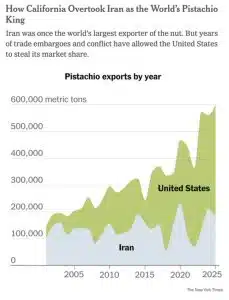
For as long as anyone can remember, Iran had been the world’s main supplier of pistachios. But Carter’s 1979 embargo on the country effectively cut off Iranian pistachio growers from the American market and created a need for alternative pistachio production, which was virtually nonexistent in the United States.
Over much of that period, the Resnicks have built up a farming empire in California, with:
…nearly 160 square miles…growing cotton, pistachios, almonds, oranges, lemons and grapefruit.
Sanctions on Iran boost US pistachio industry
A picture tells a thousand words, so this image best shows the effect Washington’s sanctions have had on the relative success of pistachio markets in the US and Iran.

This degrading of Iran’s capacity to produce the foodstuff gives the US – and the Resnicks in particular – an opening into a global market worth over $5 billion. Iran and California are two of only a few areas in the world where pistachios are grown.
The Zionist plutocrats have certainly contributed to the current shape of the market, with Mondoweiss documenting how:
…the Resnicks did what any smart and ruthless American would do: they made common cause with oil companies, Islamophobes, neocons and Likudniks, and began funneling money to think tanks and political advocacy groups that take a hardline approach with Iran. Economic sanctions, sabotage, vilification—all these things worked in the Resnicks’ interest. Bombing some of Iran’s pistachio fields wouldn’t be so bad, either.
The pair are:
…on the board of trustees of the highly influential Washington Institute for Near East Policy think tank, which was created as an AIPAC spin-off in the ’80s. In the realms of US government mid-east policy and media reporting about the region, the think tank is considered to be one of the most influential in the country. It is also ridiculously hawkish on Iran, calling for heavy sanctions and military strikes against the country.
Given so-called ‘Israel’ gleefully bombs schools, hospitals, mosques and even synagogues, it wouldn’t be a stretch for it to bomb a nut factory to help out one of their key advocates and financial backers. The terrorist land theft project has an entire military philosophy predicated on attacks against non-military targets, known as the Dahiya Doctrine.
Centuries of violent intervention to protect profits
It would also be entirely in line with centuries old corporation-backing imperial policy. It stretches back at least as far as Britain using its military might to back the East India Company which pillaged South Asia. Famously, the United States staged a coup in Guatemala in 1954 to overthrow the country’s legitimate president Jacobo Árbenz Guzmán. The illegal attack was done to help out the United Fruit Company, with Árbenz planning to redistribute their vast land holdings.
And of course, most relevant of all in the current context is what happened just one year earlier – Operation Ajax. This was the British-US plot in which they overthrew Iran’s elected prime minister Mohammad Mossadegh.
They acted after Mossadegh sought to put oil profits in the hands of Iranians, rather than imperial powers. He aimed to do this by nationalising the Anglo-Persian Oil Company, now known as BP. Iran has not had democratic governance since.
The Resnicks’ offences extend beyond backing Zionist war crimes. A documentary called Pistachio Wars highlights their hoarding of water in California:
As drought intensifies and communities struggle for access to water, this film exposes the hidden systems of power, greed, and corruption shaping the future of food, farming, and survival in the American West.
It is executive produced by Adam McKay, who directed Vice, the excellent skewering of mass murderer Dick Cheney.
The illegal attack on Iran has caused fuel prices to soar, and that will soon have a knock-on effect on the price of everything else. If you’re paying more for pistachios in particular, you now know why.
Featured image via the Canary
As all alert readers will know, this site likes to keep a watchful eye on the shady and disturbing activities of paedophilia-plagued charity LGBT Youth Scotland. So were were naturally intrigued to hear that they’d hired a new convenor last month.

And if you’re sitting there thinking, “Blimey, AI Christopher Walken looks very very ill”, well, stay tuned, because this story gets more and more interesting.
The image above comes from a story published on charities website Third Force News three weeks ago, but which had vanished when we tried to click on it this morning.

And the reason may be that there’s remarkably little verifiable evidence anywhere that Mr Westwood actually exists.


Wings has been unable to verify any of the claims made on LGBT Youth Scotland’s bio page for Westwood.

If you Google his name in connection with the British Red Cross, for example, the only results returned are the LGBTYS bio page.

The same thing happens with Amnesty International.

His supposed work with Citizens Advice draws an even bigger blank.

As does Pride In London.

The only way to get more results is to use “Tim” instead of “Timothy”, but then they’re all about (what we assume and hope is) a different person.


To be honest, readers, if we were taking up a senior position at an organisation with a horrific record of links to child rape, the very least we’d do would be supply them with a photo so that people would definitely know we weren’t THAT Tim Westwood.


(Charles Rennie, incidentally, was freed a few months ago.)

At a minimum, Mr Westwood’s ostensibly distinguished career seems to have made so little detectable impact anywhere that one wonders why he was headhunted for his new role in the troubled organisation which could probably do with some time away from media scrutiny and controversy for a change, but which the Scottish Government nevertheless continues to throw public money at with, er, gay abandon.


The SNP simply adores LGBTYS, which was once headed by former SNP MP Alyn “Daddy Bear” Smith, who is likely to be elected as an MSP at next month’s election. But even so, you might like to imagine they’d want a little more, er, transparency than this for their money.

We wait agog for Mr Westwood’s first public appearance, if indeed he is a real human. There are an awful lot of questions to be cleared up about his CV. But then in Scotland, questions about anything, and questions about LGBT Youth Scotland in particular, are rarely answered.

Mish Rahman is a former – and longstanding – member of the national executive committee (NEC) of the Labour party. He is now a member of the Greens. And he has outed the hypocrisy and racism of Labour’s desperate attempt to smear a London Green candidate as antisemitic.
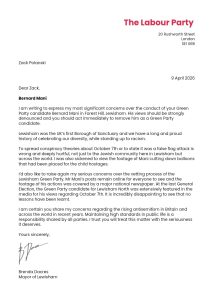
Labour is clearly still stung by its humiliating defeat in the Gorton and Denton parliamentary by-election and terrified of the outcome of May 2026’s local elections. It is just as clearly still desperate to propagate the Israel lobby’s attacks on the Greens for opposing Israel’s genocide. Hence the hollow arrogance of Lewisham mayor Brenda Dacre’s blatantly electioneering letter to Green leader Zack Polanski demanding the removal of Forest Hill candidate Bernard Mani:

Dacre’s pretext for her demand is that he has apparently questioned Israel’s atrocity narrative concerning 7 October 2023. The fact that the narrative has already been completely debunked seems to have escaped her notice – or at least her computer keyboard.
But according to Rahman, who has extensive experience of Dacre when she was a Labour party functionary, her ability to ignore facts has previously protected racists, rather than attack opponents of genocide. In a post on X, he recounted one such experience:
I chaired a disciplinary panel with Brenda Dacres and one other white bloke.
We interviewed a racist who called a Muslim female Cllr Jezbollah in public – refused to apologise and said he stands by his comments.
Brenda and Merton voted to reinstate him outvoting me 2-1 https://t.co/VBzn7MMaFp
— Mish Rahman (@mish_rahman) April 9, 2026
Labour and bigotry
Appalling. But Dacre is anything but an anomaly in her party, which has a long record of anti-Black, anti-Muslim, and anti-Roma racism.
The Labour Muslim Network published a damning report on the rampant Islamophobia among the Labour right. Keir Starmer and his sidekick David Evans promised to immediately implement all the LMN report’s recommendations, but two years later LMN had to report that the situation continued unabated and was so serious that most Muslim party members had no confidence in Starmer or his interest in tackling the issue. Three years later still, and Starmer is no better.
Anti-Black racism, meanwhile, has run riot among the Labour right, with whole swathes of Black councillors deselected – in at least one case, involving the removal of every Black councillor in a London borough. Unlike the Abbott suspension, the issue was ignored by the so-called ‘mainstream’ media. In 2026, Starmer’s party is busy trying to normalise it across UK society.
And MPs who made or propagated grossly racist comments against Gypsy Roma people went unpunished by the party and were even appointed to Starmer’s front bench. Those who hound left-wing Muslim and Black MP women MPs, by contrast, are enabled and protected.
So rampant was the issue and so uninterested was the leadership in doing anything about it that in 2021, Black party members went on campaign ‘strike’ in protest – and in 2022, black MPs and activists protested publicly against the leadership’s complete inaction over the racist abuses highlighted in the Forde report.
Even on the issue of antisemitism, Starmer and co are selective: while left-wingers including many Jews are thrown out of the party for legitimate criticism of Israel or even for wanting to discuss the so-called ‘IHRA working definition’, right-wingers who have made clearly antisemitic statements have been allowed to remain on the front bench or even promoted.
Polanski’s record of tackling Israel lobby smears head on suggests that he will tell – may already have told – the desperate Labour mayor to stick her demands somewhere sunlight doesn’t reach. He certainly should.
Featured image via the Canary

The US has been begging and pleading with Iran to open the Strait of Hormuz to nations attacking them. As the Canary noted, the strait is open to nations who are not bombing Iran. Evidently, the US is finally facing robust opposition to its previously unchecked hegemony.
Traditionally, the imperialist settler state of the USA have been able to dominate proceedings via two avenues:
- domination of aerospace which allows it to issue threats to smaller nations
- its ability to ransack global south resources and economies via bombs, sanctions, IMF/World Bank loans, and funding counterinsurgencies.
Iran’s refusal to capitulate to the US’ demands to open the Strait of Hormuz doesn’t mean that the world’s biggest military power has become powerless. However, it does mean that the gap between America’s geopolitical ambitions and its capabilities is widening.
Herein lies the opportunity for global south countries to widen this gap even further so they are never threatened with being turned into rubble again. And, the US’ domination of the globe is facing robust opposition from not just Iran, but also China.
Hormuz to China’s ascendency
The U.S. is well aware of its loss of productive capacity to China, especially on critical minerals.
At a recent Senate committee hearing, officials testified that the entire US military apparatus, from fifth-generation aircraft and precision-guided munitions to satellite constellations and naval vessels, depends on a reliable supply of rare earth elements (REE) and minerals, including gallium, antimony, germanium, and others.
Chinese hegemony of these REE and minerals is a “clear and present” danger, officials said. The Senate heard:
“Today, our primary strategic competitor, China, controls the global supply chain for numerous critical minerals. On heavy rare earths alone, China controls 95 percent of global output, with the United States importing almost 100 percent of what we use, 90 percent of that coming from China. This control provides Beijing with the ability to weaponize these supply chains, threatening to disrupt our Defense Industrial Base and compromise military readiness in a crisis.”
The beauty is that instead of taking ownership of the rabid post-1970s neoliberal era, which led to the hollowing out of the industry in the West, they blame China for “malign adversarial efforts to manipulate markets” and its efforts to “undermine” the US’s domestic market.
Accountability is not their competitive advantage, one can say!
USA’s inability to diagnose or treat internal contradictions
This is part of capitalism’s hubris. A part of the solution, according to them, lies in leveraging their “private capital markets, one of our few remaining comparative advantages against Beijing.”
In fact, as Costas Lapavitsas, Professor of Economics, SOAS University of London, explains, it was US multinationals that:
exported productive capital, established global production chains, outsourced labour-intensive processes upstream, and financialized their own operations through share buybacks rather than domestic investment.
He says that the hollowing out of the US industrial base was carried out largely by the very corporations Trump and his predecessor Biden are most aggressively defending.
Critical minerals through economic coercion
Another way US hubris gets in the way is the belief that countries are breaking Chinese ties.
The Senate heard that countries are:
poised to ditch the predatory debt trap diplomacy Beijing has foisted upon them in this area.
Not only is this self-aggrandizing claim wrong, but the opposite is true. Trump, in fact, boasts about the use of economic sanctions and coercion.
The list is endless of economic coercion being used by the USA for access to minerals. Just recently, Trump threatened to withhold HIV medication from Zambia to coerce access to minerals; his so-called peace deal between Congo and Rwanda is a guise for American corporations to “make a lot of money,” and then he is coercing Venezuela for access to its oil and critical minerals by the illegal kidnapping of President Maduro.
Or that in Indonesia, Trump used the threat of tariffs to sign the Agreement on Reciprocal Trade (ART) with Indonesia, which gives US investors the same access as domestic firms across the entire critical minerals value chain.
That the US’s World Bank sits on the Gaza Board of ‘Peace’ says everything about America’s economic and debt policy for the global south.
Meanwhile, between 2000 and 2019, China cancelled at least US$3.4 billion of debt in Africa, according to a study by Johns Hopkins University.
China holds important levers
In April and October 2025, China imposed export controls on heavy rare earths, expanded them to include any product containing Chinese-sourced materials or technology, and added five more elements to the restricted list. Worth noting, these restrictions were retaliatory – the US first imposed export restrictions on 140 Chinese semiconductor firms.
Trump and Xi were supposed to meet in China in March-April, and now he has postponed the meeting to May. White House has cited the war on Iran as the reason.
Economist Michael Hudson explained that Trump believed that the US could conquer Iran in two to four weeks.
He intended to use regime change in Iran as leverage to confront China, threatening to cut off its oil supply unless China agreed to export key raw materials such as gallium and tungsten, which the US military needed. Well – that didn’t work out!
Hormuz exposes dependency
U.S. Trade Representative Jamieson Greer was recently asked if the U.S. would need an extension on rare earth access by October. He said, “We’ll assess that down the road.” He admitted the process with China was working “fairly well” but noted, “a few things here and there where we didn’t feel like we were getting rare earths in a timely fashion.” Chinese counterparts, he said, “took note of that and have it under consideration.”
China – they can’t bomb countries into rubble without your magnets needed for jet engines – keep that in mind!
The USA’s handicaps on minerals should not be underestimated. Even at the height of the US-backed Ukraine and Russia’s war – US kept importing uranium from Russia. Yes, American exceptionalism is really something. Europe couldn’t buy Russian LNG, but the USA could buy Russian Uranium.
Worth adding that these were the two countries – China and Russia – that recently vetoed the US-backed Bahraini proposal to authorize defensive military action for securing commercial shipping in the Strait of Hormuz.
Brand America, dollar hegemony injured
China beat the United States in global approval ratings in 2025, with a median of 36% approving of China’s leadership, compared with 31% for the U.S., according to the latest Gallup polling.
Even the pro-American Economist published a cover of Chinese President Xi overshadowing Trump that read – “Never interrupt your enemy when he is making a mistake.”
Deutsche Bank has warned in a new report that the rise of the petroyuan poses a clear challenge to the U.S. currency. The petrodollar system, built on a 1974 agreement between the U.S. and Saudi Arabia, faces a “perfect storm” from the ongoing war on Iran initiated by the US/UK/Israel, the bank said.
Reduced global oil trade would also create more room for the pricing of goods and services to shift away from the dollar, the report said. Both petro (i.e., oil) and one of the US’s main exports, as well as the US dollar, the US’s currency, would be impacted adversely. Hormuz is evidently a central strategic point.
Bombing countries into rubble is still a viable threat
The US military budget is roughly $1 trillion annually. That is more than the next ten countries combined, including China, Russia, and every European power. The US operates 800-plus military bases worldwide.
American exceptionalism will be here for the near future despite losing industrial productive capacity to China. As Lapavitsas noted, the Federal Reserve’s balance sheet functions as “the ultimate collateral backstop for global markets.” The dollar remains the world’s currency; nearly 60 percent of global reserves and roughly half of all cross-border payments are settled in dollars.
Despite losing productive capacity, US banks and multinationals still dominate global finance and corporate control. As Lapavitsas notes, three large investment funds—BlackRock, Vanguard, and State Street control roughly 25 percent of all US corporate equity. These same firms are the largest shareholders in European, Japanese, and emerging market corporations.
Growth at any cost
This was the reason Starmer was proud of his photo op with BlackRock’s Larry Fink.
I’m determined to deliver growth, create wealth and put more money in people’s pockets.
This can only be achieved by working in partnership with leading businesses, like @BlackRock, to capitalise on the UK’s position as a world leading hub for investment. pic.twitter.com/qDPpEYEYAh
— Keir Starmer (@Keir_Starmer) November 21, 2024
Owning the elites like Starmer and NATO’s Mark Rutte across the globe is another card up the US’s sleeve. They have Modi, who is mentioned in the Epstein files, as well as his best friend Adani, facing an SEC indictment, giving the US blackmail leverage over India’s prime minister.
They have Pakistan’s elite on Trump’s Board of Peace and its crypto traders chasing the Americans cryto industry.
However, popular support in both India and Pakistan against Trump – another contradiction – is not in favor of the USA. Not dissimilar to what the popular masses want in the UK or other NATO countries like Italy.
Are the stacks in favor of the global majority? Or the elites with Trump as the head of the snake? The gap between American ambitions and its capabilities is certainly widening. As Iran’s closure of Hormuz shows, here lies the opportunity for global south countries to widen this gap even further – and not get bombed or sanctioned back to the Stone Age.
Featured image via the Canary
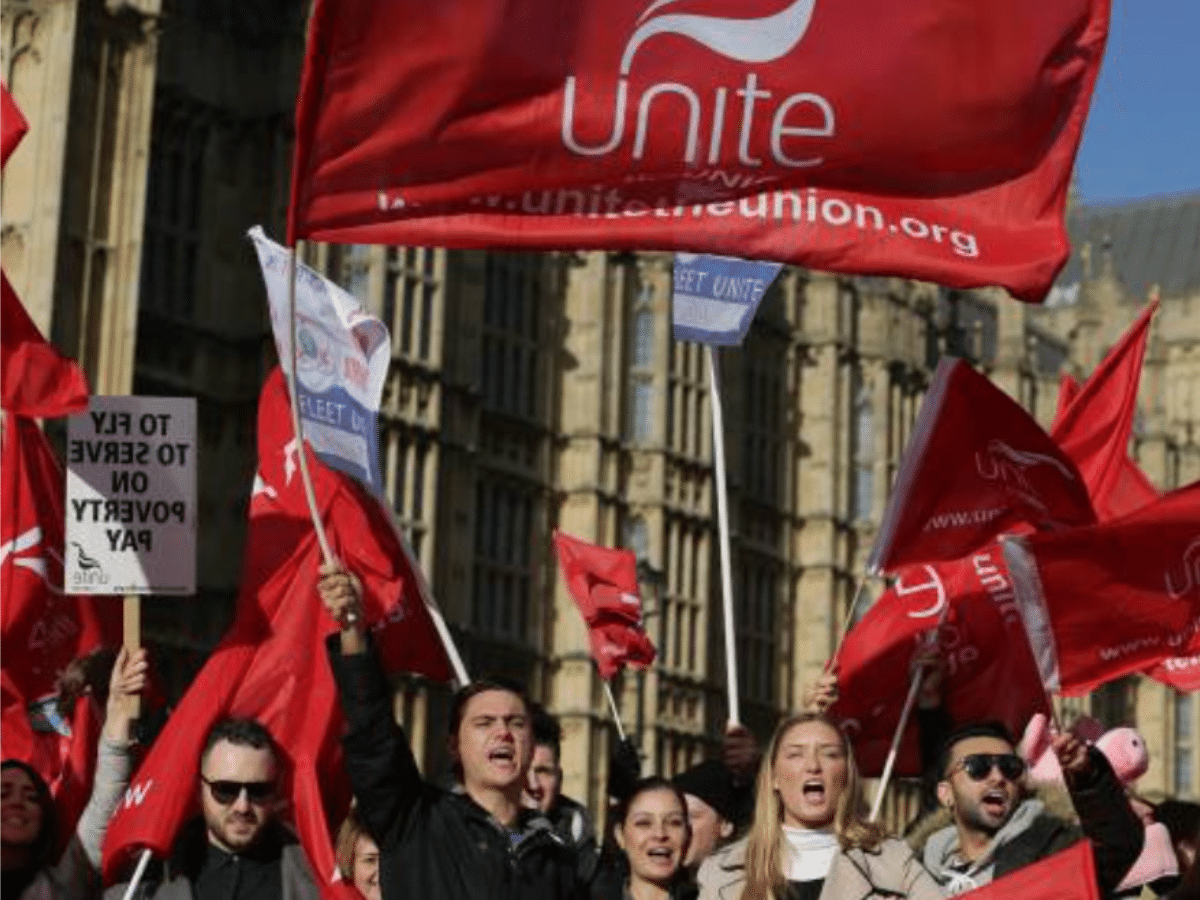
Unite the union have announced that 1,000 workers will stage a 24-hour walkout at Glasgow, Strathclyde and Edinburgh Napier universities. The industrial action will take place on 10 April 2026, as a demonstration against the universities’ imposed real-terms pay cut.
Most of Unite’s staff in Glasgow, Strathclyde and Edinburgh Napier are employed in non-academic roles, such as admin, estates and security.
The Strathclyde staff members also recently undertook seven days of strike action, lasting 16-22 March. This was motivated by the university’s failure to consult the workers over organisational change and proposed job cuts.
Alongside the announcement, Unite also took the opportunity to tout its vision for the future of the higher education sector. This is particularly timely, given that the Scottish parliamentary elections fall next month.
Unite tackle real-terms cuts
The higher education (HE) sector across the country has already suffered under 15 years of substandard pay awards. Compared to 2010, the below-inflation ‘rises’ have left most staff with a real-terms cut of around 30%.
Trade unions across the HE sector are already engaged in negotiations for the 2026/27 pay award. They’re demanding the higher of either RPI + 3%, or a £3,000 increase – this would be paid in full in August 2026. On top of that, they’re also arguing for a £15/hr minimum basic pay.
Now however, for Scottish university workers in 2025/26, the pay proposal stands at just 1.4% on average. For comparison, the current Retail Price Index (RPI) inflation level stands at 3.6%. On top of that, predictions hold that even higher rates are on the way due to the fallout of Trump/Netanyahu’s war on Iran.
As such, the proposal amounts to a 2.2% real-terms pay cut, along with the immanent promise of worse to come.
It’s unsurprising, then, that the union members plan to hold pickets at each university, between the hours of 08:00 and 11:00 on 10 April. These will take place at the Main Gate at Glasgow on University Avenue, Rottenrow Hill at Strathclyde, and Merchiston at Napier.
Sharon Graham, Unite’s general secretary, said:
University workers deserve far better than a real terms pay cut after over a decade of below-inflation pay rises. They are faced with rising energy, household, transport and food costs while their wages are being slashed.
University employers should be ashamed of treating hard working staff in this way which is why our members in Glasgow, Strathclyde and Edinburgh Napier will fight for better jobs, pay and conditions by taking a stand against this appalling treatment.
National Vision for Education
Alongside its current battles for Glasgow, Strathclyde and Edinburgh Napier university staff, Unite Scotland is also mounting an ongoing National Vision for Education campaign.
Alison MacLean, Unite’s lead officer for higher education, stated that:
Last year, university staff had one of the worst ever pay awards imposed upon them which is why our members have no option but to fight back. The 2025-26 budget for higher education represented a real-terms cut, failing to match inflation and leaving our institutions exposed. We are currently in pay negotiations for 2026/27 and our members will simply not accept another derisory pay award.
Unite’s members are being forced to pay the price for financial mismanagement through low-ball pay offers, attacks on terms and conditions, and increasing threats of compulsory redundancies. We will not accept this, and our members are prepared to fight for a better education sector for all.
Holyrood currently relies on a ‘frozen’ per-student funding model. As such, the real-terms funding for Scottish undergraduate teaching has fallen by 19% over the past 12 years. Worse still, college funding has also seen a 20% drop in real-terms funding in just 5 years.
In its campaign document, Unite stated that:
Our universities and colleges are not just businesses; they are hubs of cultural expression, research excellence, and social mobility. Unite will not stand by while they are managed into decline. We demand a sector that
provides security for its staff and remains open to all, underpinned by a sustainable funding model that ends the reliance on precarious international fees and student debt.
Given that the next Scottish parliament will be decided in the May 2026 elections, the next month could be crucial – both for Unite’s vision of a fully funded HE sector, and for the future of education in Scotland as a whole.
Featured image via the Canary

Bitcoin Heading to New Lows?

Tottenham: Roberto de Zerbi says he is ‘not better’ than Thomas Frank or Igor Tudor

Bitcoin Heads Toward New Local Highs As US CPI Brushes Off Gas-Price Surge


![[KLPGA 2026] iM Financial Group Open 2026 / Round 2 (ENG Commentary)](https://wordupnews.com/wp-content/uploads/2026/04/1775832050_maxresdefault-80x80.jpg)

-

 Fashion7 days ago
Weekend Open Thread: Spanx – Corporette.com
-

 Business5 days ago
Three Gulf funds agree to back Paramount’s $81 billion takeover of Warner, WSJ reports
-

 Sports6 days ago
India men’s 4x400m and mixed 4x100m relay teams register big progress | Other Sports News
-

 Business6 days ago
Expert Picks for Every Need
-

 Tech3 days ago
How Long Can You Drive With Expired Registration? What Florida Law Says
-

 Business5 days ago
No Jackpot Winner, Prize to Climb to $231 Million
-

 Fashion4 days ago
Massimo Dutti Offers Inspiration for Your Summer Mood Board
-

 Fashion3 days ago
Let’s Discuss: DEI in 2026
-

 Crypto World2 days ago
Bitcoin recovers as US and Iran Agree a Ceasefire Deal
-

 Business6 days ago
Akebia Therapeutics, Inc. (AKBA) Discusses Pipeline Progress and Strategic Focus on Kidney Disease Treatments at R&D Day – Slideshow
-

 Crypto World1 day ago
Canary Capital Files SEC Registration for PEPE ETF
-

 Politics6 days ago
The UK should not pay a penny in slavery reparations
-

 Tech4 days ago
Samsung just gave up on its own Messages app
-

 Tech4 days ago
Haier is betting big that your next TV purchase will be one of these
-

 Tech7 days ago
Flat tire? Dead battery? Speedy’s serves stranded Seattle riders as a quicker e-bike picker-upper
-

 Fashion7 days ago
Weekly News Update, 4.3.26 – Corporette.com
-
Sports7 days ago
A Kevin O’Connell Theory Can Now Be Retired
-

 NewsBeat7 days ago
Kemi Badenoch talks ‘spring cleaning’ Reform defections
-

 Tech4 days ago
Gamer Restores the Original PlayStation Portal From Two Decades Ago
-

 Tech4 days ago
The Xiaomi 17 Ultra has some impressive add-ons that make snapping photos really fun
You must be logged in to post a comment Login