Politics
The House Article | Inside The Battle For Labour’s Mainstream: Luke Akehurst Vs Luke Hurst


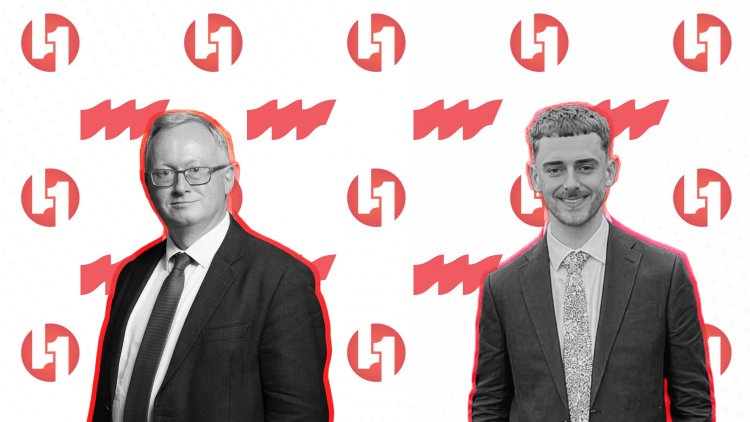
Labour First’s Luke Akehurst and Mainstream’s Luke Hurst (l-r)


12 min read
Two internal players called Luke are battling to claim Labour’s mainstream. The outcome of their rivalry will shape the future of the party – and possibly the country. Sienna Rodgers reports
On one side is Luke Akehurst. He is a veteran organiser within the party and has served as secretary of Labour First, the ‘old right’ Labour factional group, for 20 years. In recognition of his services, the 54-year-old became a Labour MP for the first time at the last general election, and now also runs a WhatsApp group of 198 MPs called “mainstream”.
On the other is Luke Hurst. He is the lesser-known Luke, having only involved himself in Labour during Jeremy Corbyn’s leadership years, via student politics. Today, the 27-year-old is national co-ordinator of new membership organisation Mainstream, which represents the soft left of the party and is best known for being close to Manchester mayor Andy Burnham.
As their respective brands suggest, both claim to stand for Labour’s mainstream. And both, behind the scenes, are doing the hard work of organising the networks of MPs and activists. Whoever proves most successful will determine where the party goes next.
‘Mainstream’ on WhatsApp
“It’s not some sort of den of hot political intrigue,” Akehurst says of his MPs’ WhatsApp group. Comprising almost half of the Parliamentary Labour Party (PLP), and open to ministers as well as backbenchers, the messages in it are not usually very political.
“I will occasionally put things in it like, ‘Here’s the details of the trigger process’ and, ‘Can you tell me who your constituency has elected to annual conference and where they stand politically?’” he explains. (The trigger process is the procedure by which Labour MPs are reselected, or deselected, by their local parties.)
“But really, the PLP, thankfully, hasn’t gone down the Tory path of online groups where there’s incredibly frank political discussions, because I think we’ve learnt the lesson of that getting leaked all the way through the last Tory government.”
It mostly consists, he says, of MPs asking colleagues for the basics – to help make their upcoming all-party parliamentary group meeting quorate, for example, or to share canvassing leaflets they can take inspiration from. Part of the reason is that the membership is so broad.
“My criteria was people who, at the start of this Parliament, I perceived to be broadly aligned with the leadership,” Akehurst says. “But some of the fault lines that we’ve had around policy, on welfare reform and stuff, would go right through the middle of that group. That’s just the political reality of where we are now.”
The Labour First parliamentary group – which has 104 MPs and peers in its own WhatsApp chat – is where MPs from that tradition can find more political intrigue. Its meetings, which take place at least monthly, do not focus on chatter about “who’s up, who’s down”, leadership contenders being floated, nor the latest controversial legislation going through Parliament – but instead on “healthy strategic discussions” about their role in the party, according to Akehurst.
Mainstream the organisation
When Hurst first encountered factional Labour politics at Leeds University, Nols – as the National Organisation of Labour Students was known – was being scrapped by the Corbyn leadership.
He says he belonged to neither side in that war: not the ‘Nolsies’ defending the body, nor Labour Students Left, which championed its abolition. But he backed the move to a one-member-one-vote system, so aligned himself with the latter. That positioning foreshadows Mainstream’s own: not Labour right, not fully left, but sitting in the soft middle.
Hurst later moved to Manchester, where he was a Unison rep in a hospital, then completed a master’s in philosophy at King’s College London, before working for Neal Lawson’s centre-left pressure group Compass. It is from there that he has been seconded to Mainstream, which had Compass and soft left group Open Labour contribute to its start-up costs when it launched last autumn.
He organised the Compass “CHANGE: HOW?” conference in May 2025, headlined by Burnham, Miatta Fahnbulleh and Louise Haigh. “That was a big moment for the soft left trying to reassert its politics and say it had a distinct Labour tradition and ideological basis,” Hurst says.

Labour’s 2026 internal elections
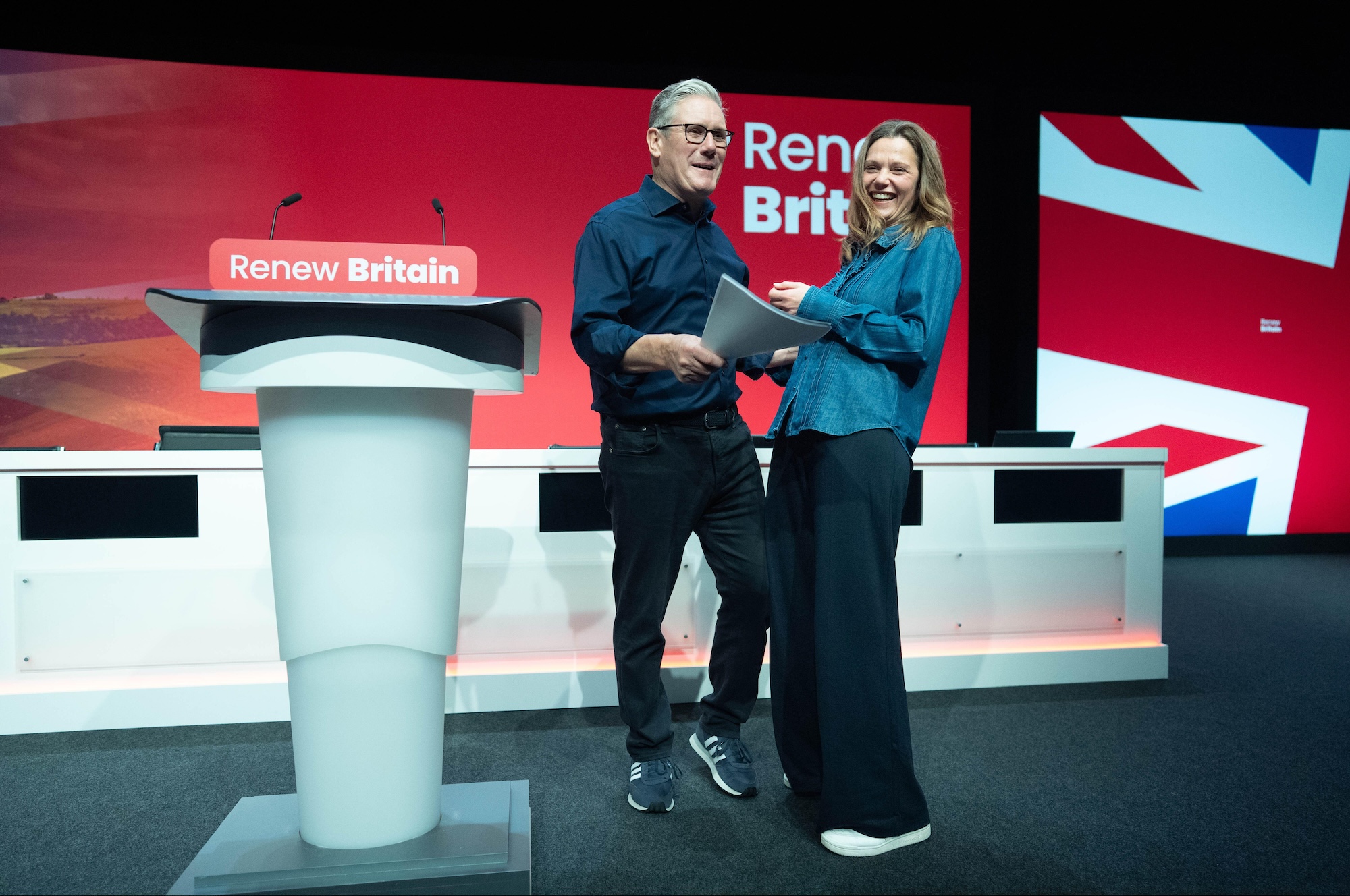
Labour First is squarely focused on organising ahead of September party conference and for Labour’s National Executive Committee (NEC) elections.
“Media can turn up at conference and go, ‘The mood of Labour Party Conference has changed’, as though it’s some random collection of people that turn up,” Akehurst observes. While speeches can make the weather – he cites Hugh Gaitskell in 1960 or Neil Kinnock in 1985 – the nine months of factional wrangling in the run-up to the event are far more likely to shape it.
This involves co-ordinating members in local parties to deliver a set of delegates on the conference floor who reflect a faction’s politics – for Akehurst, that means members who will be “cheering ministers to the rafters, not trying to undermine them in any way”.
“The constituency half is an aggregation of 650 local organisational battles,” the MP explains. (The other half of the conference floor is made up of trade unions and other affiliates.) “Fighting those battles is a machine that I’ve had some involvement in for decades, but really, we perfected that machinery on the defensive during the Corbyn years.”
Akehurst managed this alone until 2017, when Matt Pound – who went on to advise Rachel Reeves – joined Labour First. “I’ve had various extremely talented young organisers working for me since then.”
As for the race to win spots for the nine Constituency Labour Party (CLP) representatives on Labour’s ruling body, it was once hotly contested. Since Keir Starmer introduced a proportional voting system in 2020, however, the contests have been far less dramatic.
“Because it takes a six or seven per cent swing for a seat to move, I would not expect movements of seats of more than about one,” the Labour First secretary says of the looming battle to shape the NEC.
The Labour right is putting forward four candidates, the Momentum left is promoting three, and Mainstream has a slate of three. (New outfit Restoration has six candidates, which Akehurst points out is unwise – “you can risk perverse results if you run too many”.)
But the results will tell us a lot about the factional composition of the party membership.
“The number of members who are deserting the party because it has become hostile and hyper-factional means it’s quite hard to know how members will resonate with different NEC slates,” says Hurst.
“We’ve also noticed this year that, when CLPs are trying to nominate candidates, so many aren’t quorate because they just don’t have the members to come along to meetings.”
Akehurst, of course, sees things differently: “What always happens when we’re in government is that some of the difficult decisions in government lead to some grassroots activists becoming disillusioned with the leadership. It’s offset to a certain extent by the very far left having other forums in which they’re exercising their politics, and the internal elections will tell us which of those factors is larger.”
“My impression from talking to activists and other MPs is, weirdly, that a lot of the political heat is here inside the PLP over policy,” he adds.

The leadership question
Akehurst is not covertly preparing Wes Streeting’s leadership bid as some on the left might assume. “People know that I’m very loyal to Keir. You can see, with the things going on in the Middle East, how good he is in a crisis, and the stature but also calmness he’s got on the global stage,” says the MP. He hopes “there’s not going to be a leadership contest in the Labour Party any time soon”.
What would Labour First do if the situation does arise? “It really depends on whether there’s one consensus candidate on the moderate wing of the party.” In 2020, it told supporters to vote for Starmer, Lisa Nandy or Jess Phillips; in 2015, Akehurst personally backed Yvette Cooper but again Labour First endorsed a selection – Cooper, Burnham and Liz Kendall – in its bid to stop Corbyn.
Akehurst employs a Game of Thrones analogy to make his point. “While the Seven Kingdoms are all biting chunks out of each other, the Night’s Watch has to protect the kingdom on the wall,” he says, casting Labour First as the Night’s Watch.
“Internecine warfare between people who should get on with each other – that’s sometimes a reality of politics. Our job is to sustain a broadly social democratic majority at conference and on the NEC, and make sure we don’t slip back into the politics of the Corbyn years.
“That we don’t do it immediately in one go, which I think is highly unlikely, but also that we don’t end up doing it in stages, where we end up with, say, a soft left leadership that reopens the door in terms of rule changes to the politics of the Corbyn years.”
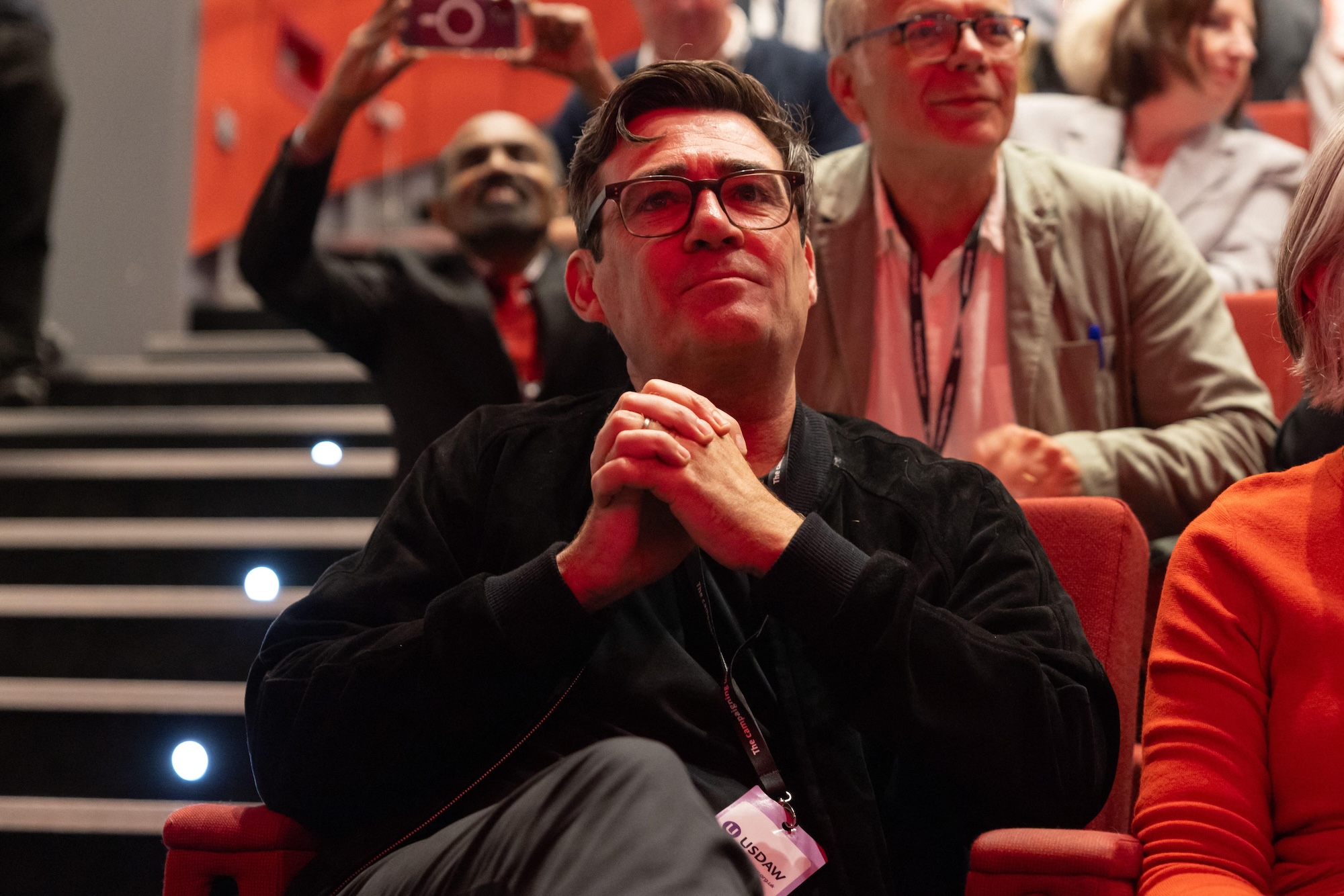
That possibility is represented by Mainstream, which is closely linked to the Labour Party’s ‘King in the North’, Andy Burnham.
Despite having been founded just two weeks earlier, Mainstream endorsed Lucy Powell for the deputy leadership last year. “In the event of a leadership election, we would intervene in the same way. We’d ballot our members like we did for the deputy leadership and find out who they wanted to back, and we’d endorse a candidate,” confirms Hurst.
He insists that Mainstream’s focus right now is on developing a political programme, ready for any candidate that might emerge to succeed Starmer to take up. For too long, he says, the soft left has acted as kingmaker “without necessarily trying to assert a substantive politics in the process – that has to change this time”. The outline looks a lot like Burnham’s ‘Manchesterism’; a similar political economy, and an embrace of public ownership (not necessarily the top-down kind).
“There are other sections of the party that organise for the sake of organising, and then control becomes the end, and you end up in the situation where we are now. We have a government that’s done some good things, but has also made a huge litany of missteps, and there have been so many missed opportunities because it doesn’t have the political, moral, ideological roots to its project,” argues Hurst.
“We think it’s just as important to do that antecedent work of sketching out where you want the country to go, why you want power before – or alongside – trying to gain power.”
So, Mainstream is not just a front for the Burnham campaign? “If Andy were on the pitch, I think he would have a huge appeal to our members. But we work with people from all across the party… There are other talented Labour politicians in our orbit.”
At the group’s March reception in a Whitehall pub, Angela Rayner was the keynote speaker. She made headlines by warning that Labour “cannot just go through the motions in the face of decline” and by joining the growing group of Labour MPs urging a rethink of the government’s “un-British” immigration reforms.
“He won’t do deals – Andy does the personality and doesn’t feel the need to organise”
But if Rayner cannot overcome her own obstacles – most notably the stamp duty affair – to challenge Starmer after the May elections, Burnham backers reckon he still has a chance. The Prime Minister would be so weakened by terrible results, the theory goes, that he’d be forced to set a date for his departure; then, when another Greater Manchester seat popped up, Burnham could not be blocked.
Although Burnham has friends willing him to succeed in parts of Labour, including Mainstream, The House understands that he lacked internal organising nous ahead of the Gorton and Denton selection, declining to put calls in to union general secretaries or the key players on the NEC. “He won’t do deals – Andy does the personality and doesn’t feel the need to organise,” says one source who knows Burnham well. That does not bode well for such a plan.
So, could he be allowed to run next time a constituency is vacated? “I’ll be careful not to pre-judge that in case it comes to full NEC,” replies a sceptical Akehurst, a member of the NEC himself. “The last time around, it was a decision taken by the NEC officers.
“But I can’t see a reason why they would change their stance, given the argument was that we could not afford – in the literal sense of money – a by-election for the mayor of Greater Manchester, or afford in the political sense of potentially losing that, maybe to Reform, maybe to Green. It could be a tight three-way race.
“Once you get past the end of Andy’s term of office as mayor of Greater Manchester, why would we not want him in the PLP? He’d be an asset to the PLP. I would encourage him to make it clear that his motive in coming back to Parliament is to be a team player with Keir, or whoever is Prime Minister, but I do think he’s probably got to serve out his term as mayor.”

You must be logged in to post a comment Login