

Politics
The House Article | Left wing and moderate voters are Burnham’s winning coalition


4 min read
Uniting the progressive bloc is key to the prime minister-in-waiting’s electoral prospects.
Unsurprisingly, people who describe themselves as left-wing are key to Andy Burnham’s support.
Between May and June, half of Britons (50 per cent) who said they were left-wing said they had a favourable opinion of him, while 13 per cent were unfavourable. This gives him a net rating of +37 among left-wingers.
Burnham’s strongest support comes from left-wingers who want moderate change, with a net rating of +45. Burnham is also well supported among left-wingers who want radical change (net +29) and the small group of left minimalists (net +26).
Comparing Burnham’s ratings among the left with those for the Labour Party and Keir Starmer, several patterns emerge:
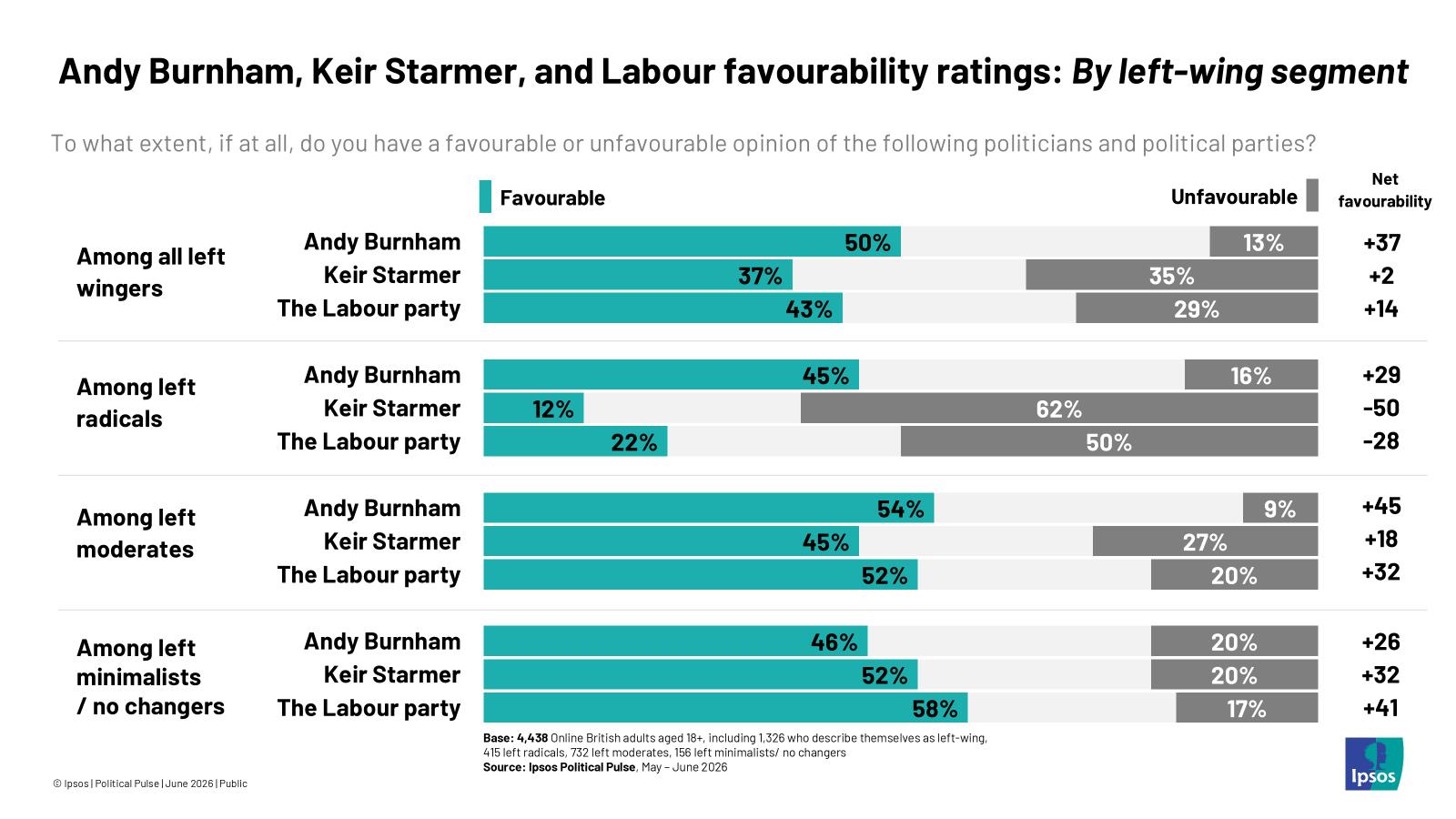
First, Burnham’s absolute favourability is highest among left moderates, suggesting this group could form a reliable core for a Burnham-led Labour. But second, Burnham outperforms Starmer and the Labour Party most dramatically with left radicals. Together, these groups represent the foundation of a potential Burnham coalition.
However, as Starmer’s contrasting favourability ratings among left radicals and left moderates demonstrate, satisfying both groups will not be easy.
Convincing left radicals to back Labour will be challenging given the prominence of the Greens among this segment. Nearly two-thirds (63 per cent) of left radicals are favourable towards the Greens, and 55 per cent are favourable towards leader Zack Polanski.
This means Burnham is much closer to Polanski’s favourability ratings than Starmer was among left radicals, and convincing these voters to back Labour will be crucial for the party’s electoral fortunes – especially in metropolitan areas.
But, on the other hand, the Greens will be hoping to capitalise upon any left radicals who feel let down by Labour and Burnham, if the change they want is not enacted.
The Greens are also just as popular as Labour among left-wingers hoping for moderate change, followed by the Liberal Democrats, which means Burnham cannot take his relative popularity anywhere among the left for granted.
Beyond the left
Burnham’s current performance among centrists is solid, if not spectacular.
The key distinction is between the moderate and more radical centre, although Burnham consistently outperforms both Labour and Starmer among both groups, largely because he is far less disliked.
Centre moderates are a key part of Burnham’s support coalition. Among centre moderates, 34 per cent are favourable towards Burnham, with 21 per cent unfavourable, giving him a net rating of +13. Although Burnham only has a slight lead over Starmer and the Labour Party on the percentage saying they have a favourable opinion, centre moderates are less likely to feel outright negatively towards him. The Lib Dems and Ed Davey are the key competitors who match Burnham’s popularity with this group.
Burnham will be hoping to improve his negative favourability rating among centrists wanting radical change, especially if he needs to convince centrist voters to back Labour at the next general election. With this group, he is currently net -11 (23 per cent favourable, 34 per cent unfavourable). Whilst Burnham’s rating among them is stronger than Starmer and Labour’s, this is a hotly contested group with Kemi Badenoch, the Conservatives, Nigel Farage and Reform UK, all performing well.
Can Burnham succeed where Starmer failed?
If Burnham becomes the next prime minister, his current ratings among the left and moderate centrist Britons give him a good foundation to first stabilise and then look to improve on Labour’s current poll ratings – if he can deliver what feels like significant change.
However, the test for Burnham will be pursuing a policy agenda that both satisfies the hopes of those wanting radical change on the left, whilst at the same time consolidating support from centrist and left-wing moderates. And Burnham must do this while facing different competitors looking to feed off Labour’s current unpopularity with each group.
As Starmer has found, finding an approach that both delivers noticeable change and is palatable to people across the political spectrum is a hard challenge – and one that could define Burnham’s legacy.
Ben Roff is a senior research executive at Ipsos focused on UK politics
Technical note:
Ipsos aggregate analysis of Political Pulse data: May – June 2026.
Ipsos interviewed a representative sample of 4,438 adults aged 18+ across Great Britain. Polling was conducted online between May – June 2026.
Data are weighted to match the profile of the population. All polls are subject to a wide range of potential sources of error.

Hundreds of school closures across England and Wales, train companies advising people not to travel, and businesses encouraging staff to work from home. Remind you of anything? It’s the Covid playbook, which is rapidly becoming the ‘new normal’ for how our supposedly advanced society responds to an unusual and difficult event. And given that in seasonal Britain, the weather can often be unpredictable and aggravating, the playbook now has plenty of opportunities for an airing.
The Covid playbook is not about taking sensible precautions to deal with challenging situations. Very hot weather, like that we experienced last week, is uncomfortable for many and dangerous for some. We might need to adapt some of our daily practices, and some infrastructure will struggle to cope. All this has happened in heatwaves past, too.
But since Covid, the response to both hot and cold weather – like the response to the occasional outbreaks of infectious disease – has followed a predictable formula. That is, a problem is quickly turned into a drama with dire warnings of a crisis. This is far worse for our collective health than a few days of intense sunshine.
The first step in the playbook is to exaggerate what’s new. With Covid, the clear danger posed by the emergence of a novel and highly infectious coronavirus was quickly escalated into the idea that a respiratory infection pandemic was itself ‘unprecedented’: something that made little sense, given the continual comparisons with the ‘Spanish flu’ pandemic of 1918-20. But because the Covid pandemic was seen to be unprecedented, this apparently justified the implementation of extraordinary and untested containment methods, from population-wide lockdowns to business closures and bizarre social-distancing rules and paraphernalia. The authorities didn’t draw on historical experience but on present-day panic. Those in power presumed that our society could not cope with this challenge, so we had better stop functioning as a society and send everyone home.
In the present heatwave, we’ve heard a lot about the Met Office issuing a rare ‘extreme heat warning’, and we’ve been treated to daily graphics of the regions under a red or amber blob. What we hear less is that extreme heat warnings were only introduced in the UK in July 2021, and one was issued as recently as 2022. We also find ourselves beset by severe weather warnings during the winter months, accompanied by the same demands: work from home, don’t travel, close the schools. This is another feature of the Covid playbook – the invention of a new metric designed to frame the current problem as more severe than anything that has happened to date.
The problem is not necessarily that these metrics are false – UK summer temperatures may well be higher than in the past, and Covid was very infectious. It’s that these techniques are used to simplify a complex situation and to promote measures that are fundamentally anti-social. Take the closure of schools and advice to stay at home and avoid travelling. Each of these decisions can make pragmatic sense on their own terms. We know that sweaty kids in overheated classrooms are unlikely to learn a great deal, and that it’s a bad time to be stuck in a traffic jam on the M1. But since Covid, the implementation of such measures has become uniform and routine, with little consideration of the knock-on effects for certain sections of society and for social life as a whole.
As we know from the pandemic, working and studying from home might be fine for those with particular jobs and nice airy houses – not so much for families crammed into stuffy city apartments with limited technology. The debate about whether WFH is good or bad for productivity is ongoing, but most of us know that in Britain today, very little seems to be getting done at the best of times. Whenever we have some adverse weather, we immediately enter a doom loop – employees are either encouraged to WFH or they demand the right to WFH, and even those who want to come into work may find themselves prevented from doing so because their kid’s school might close or the transport might break down. Air-conditioned trains, offices and cafes find themselves half empty, while families swelter in their over-insulated homes driving each other insane. Make it make sense!
There are some exceptions to this anti-social approach. In London, a ‘cool map’ has been produced to inform people about public spaces with shade and air-con. In Paris, as the authorities are trying to cope by banning alcohol in public places, residents are taking matters into their own hands by jumping into the canal. Still, it’s striking how these practical social measures for dealing with a heatwave have come to seem like a deviant afterthought, as if what people really should be doing is sweating it out alone, glued to their phones for news about when it all might end.
Predictably, the media has made itself into the story here. Rather than simply report on the facts about the weather and official advice that might be given, media outlets – particularly those ‘trusted’ sources such as the BBC, to which Keir Starmer wants to give an algorithmic boost to counter ‘disinformation’ – immediately create a cycle of competitive escalation. Right from the get-go, a suggestion of adverse weather leads to breathless reporting about what’s been closed, who’s died, who’s struggling to cope, where there’s a shortage of water, where public transport has gone down. And it’s all interspersed with inane bits of advice about ‘how to protect yourself’ and smug mini-commentaries about climate change.
All this contributes to the anti-social effect. Who, reading about disaster everywhere all at once, is inclined to schlep to the office or force their kids into school? It’s utterly sensationalist and irresponsible, and surely makes people feel worse than they would if they were just left to get on with working out how best to cool down and keep going with their lives.
For all the excitable protestations about unprecedented events, the Covid playbook is a response to a more mundane and depressing trend. While ordinary people are not trusted to make sensible decisions about their own health and wellbeing, social institutions and public infrastructure casually withdraw from their collective responsibilities.
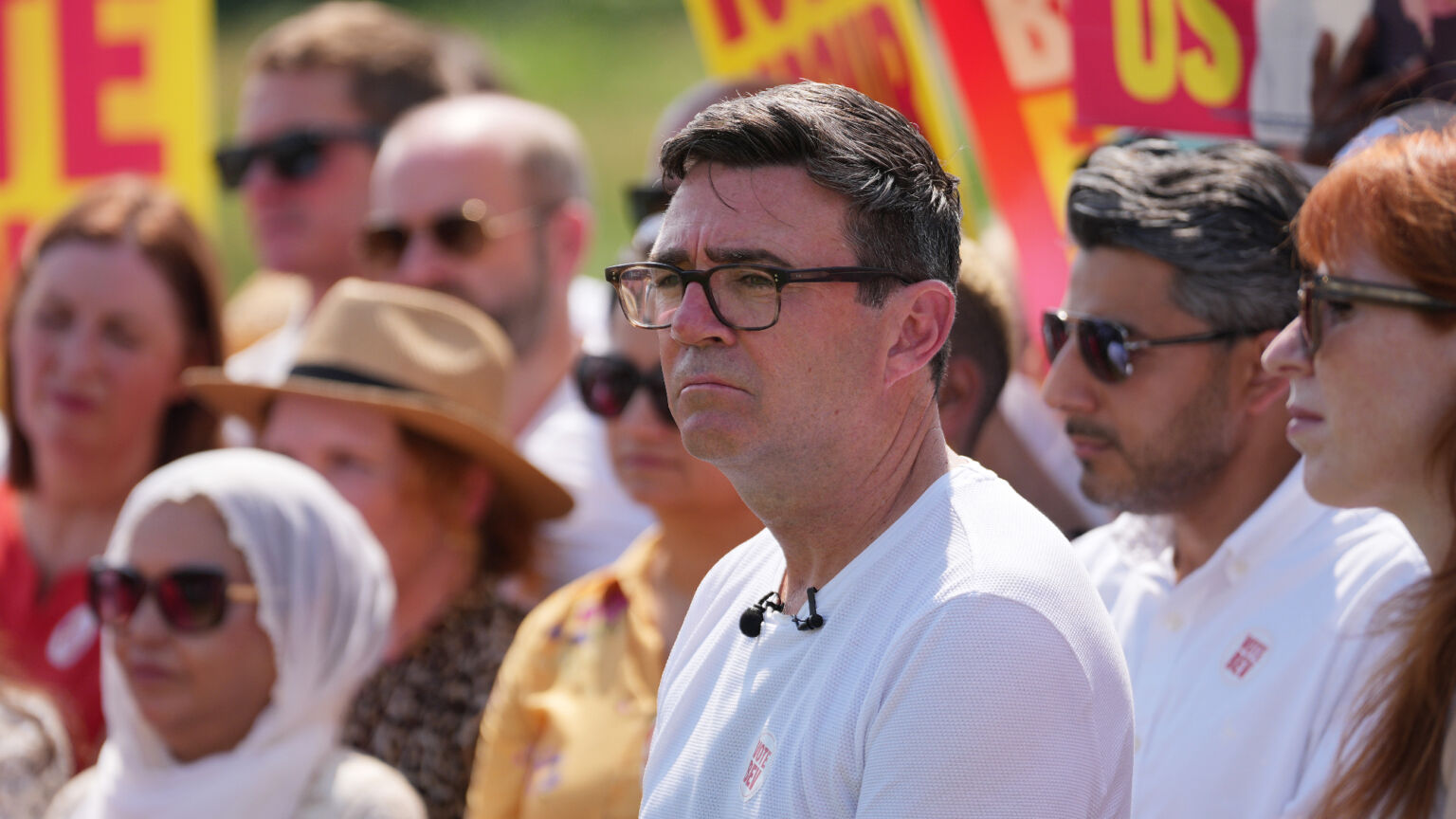
I really want the north of England to win. I’ve spent much of my life – including a stint as mayor of Middlesbrough between 2019 and 2023 – in the communities Westminster has abandoned. Which brings us to Andy Burnham and his plans, vaguely outlined in today’s ‘big’ policy speech, to devolve power throughout the UK, and even establish a ‘No10 North’ in Manchester.
I like Andy. He’s intelligent, a natural communicator and, most of all, he just seems like a good lad. After today’s speech, he’ll tour the country selling a fairytale about the growth he’s created as mayor of Greater Manchester. His grand thesis, dubbed ‘Manchesterism’, is that if you hand power and bags of cash to metro mayors, the North will magically boom.
There’s just one problem. It is absolute, total nonsense. Andy’s getting drunk on his own PR. If he continues to drink it and rolls out these devolution plans, the working class will suffer. Just as they have in Greater Manchester.
Burnham’s Manchesterism is just the latest iteration of age-old yearnings and dreams. Talk of rebalancing the North-South gap has been around since the Special Areas (Development and Improvement) Act of 1934. Yet so far, nothing has worked. Ninety years of political speeches have left us with the exact same maps and the exact same disappointment.
Burnham will no doubt claim over the coming weeks that Greater Manchester’s economy has grown by over three per cent a year during his mayorship, beating the national average. He boasts about this one a lot, as though it’s the result of mayoral genius.
But at best, it’s grossly misleading. The Greater Manchester economy did grow more than some places. This wasn’t because of Burnham’s economic nous. It is because Greater Manchester’s population has exploded over the past few years. Indeed, in the period since Burnham took charge in 2017, Greater Manchester’s population increased by over 250,000
Much of this growth has been driven by intensive international migration and high birth rates among these migrant communities. In less than a decade, Burnham’s patch essentially bolted on a whole new city the size of Southampton. That’s where much of his magical ‘growth’ comes from. It is demographic stuffing.
Another core source of the population explosion is the general ballooning of student numbers. Many of the city’s shiny new skyscrapers are actually 20- to 35-storey student blocks, built to cope with the 120,000 students crammed into the city centre. This isn’t high-quality economic regeneration.
Of course, there has been some genuine economic progress in Greater Manchester. It’s happened over 20 to 30 years, and some of it has been on his watch. But Burnham, and the mid-2010s regional devolution programme that created the metro mayors, aren’t responsible for this economic growth. The boom started long before Burnham became mayor in 2017. It is part of a global phenomenon of urban renaissance and big-city living. It’s happening across the world.
In fact, other British cities are doing just as well as Manchester. Despite lacking a slick PR machine and a metro mayor. The Glasgow city region is outperforming Manchester on certain key metrics. The Bristol city region also shows up the myth of Manchesterism. Despite the West of England metro mayor holding a fraction of Burnham’s devolved power, the Bristol area holds its own against Manchester’s ‘miracle’.
So, two city regions, without the Burnham sparkle, equalling Manchester’s achievement. The theory that growth requires massive PR and heavy devolution doesn’t hold up.
And look at the underlying stories that the Burnham PR machine keeps quiet about. Child poverty in Greater Manchester has skyrocketed during his mayoralty, far above the national average. Local wages have stagnated, stuck below the national average, and unemployment has risen. Similarly, Greater Manchester’s colossal homelessness crisis hasn’t improved at all. Visitors are quickly horrified by the sheer scale of rough sleeping and begging that confronts them.
I am from Middlesbrough, and I want to see England’s northern towns and cities thrive. I want everywhere else to thrive, too. But Manchesterism is clearly not the answer for the working class of the north or anywhere else.
Burnham has hastily manufactured this devolution crusade to create a veneer of purpose. It’s a very shallow start for our de facto prime minister.
Andy Preston was mayor of Middlesbrough from 2019 until 2023.
Politics
Politics Home | Lib Dems “Appalled” After Party Lifts Suspension From Peer Under Investigation For Sexual Harassment Claims

4 min read
Exclusive: A senior Liberal Democrat has told PoliticsHome that they and their colleagues are “astonished” and “pissed off” after news emerged that Lord Chris Rennard has had the whip restored while an investigation into claims he sexually harassed female members is still ongoing.
In February, Rennard, the party’s former director of campaigns and elections and chief executive, was suspended by the party after it launched a fresh investigation into allegations that the peer had sexually harassed four women.
He faced allegations of sexual harassment dating back to 2013 from four women.
An investigation at the time concluded the accounts were “broadly credible” but could not be proved beyond reasonable doubt. The inquiry by Alistair Webster QC, published in 2014, found that the evidence suggested that Lord Rennard’s behaviour had “caused distress to a number of women”. An investigation by the Metropolitan Police around the same time found there was “insufficient evidence” to prosecute the peer.
Rennard was suspended from the party in 2014 over comments he made in the media and on social media regarding the party’s handling of the complaints.
This suspension was lifted, but in February, Rennard was suspended from the Liberal Democrats once again, after the party said that it had “received legal advice” that the 2014 inquiry into the allegations “was flawed in several respects”.
Rennard has refuted the allegations, saying that he “never acted inappropriately and would certainly not want to cause anyone any embarrassment.” He went on to say: “If ever I have hurt, embarrassed or upset anyone, then it would never have been my intention and, of course, I regret that they may have felt any hurt, embarrassment or upset.”
Private Eye recently reported that Rennard had had the whip reinstated at the end of May, with a Lib Dem spokesperson telling the magazine: “The party’s independent complaints process took the decision to lift Chris Rennard’s suspension while their investigation is ongoing.”
Commenting on the whip being restored to Rennard, a senior Lib Dem source told PoliticsHome: “We’re all astonished and pretty pissed off that somehow for some unknown reason [Rennard’s] membership has been reinstated before the matter has been resolved. We just don’t understand that. It’s right that the process is independent, but it’s deeply frustrating.
“Other colleagues are annoyed too. It’s nonsensical. If there’s still an investigation, why would you reinstate someone’s membership?“
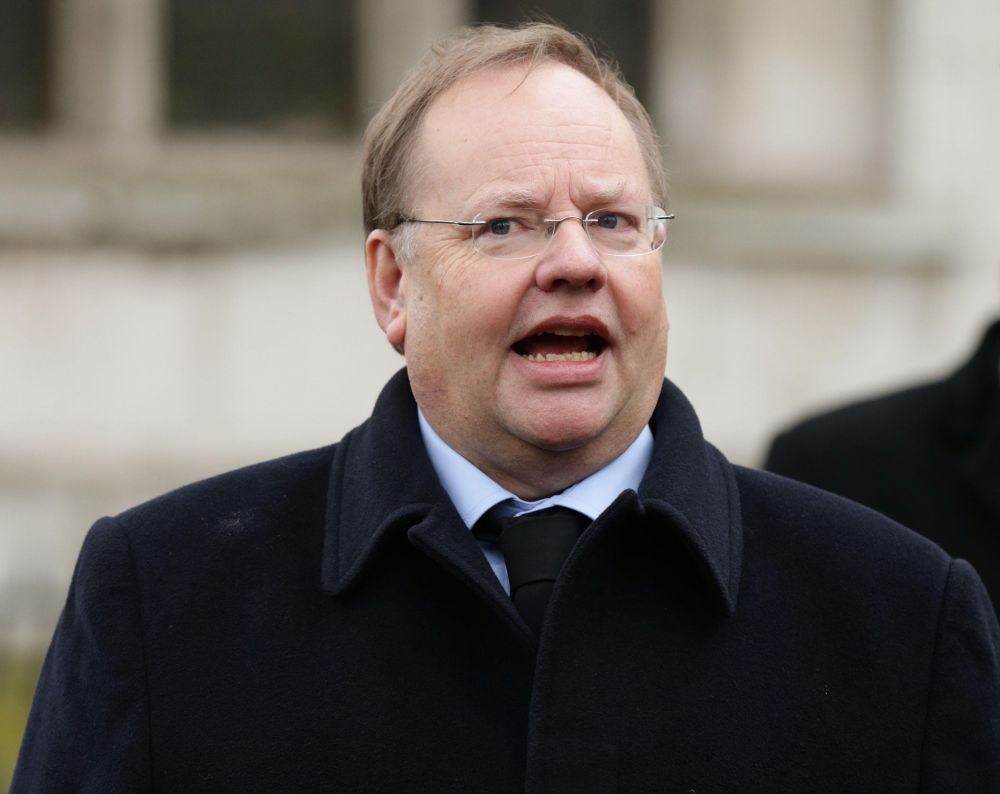
In February of this year, a Lib Dem spokesperson said that the party’s leader Ed Davey believed “Rennard should not be a member of the House of Lords” and “that it should be made easier for peers to be expelled from the Lords for serious misconduct”.
Another Lib Dem source told PoliticsHome that they were “appalled” at the reinstatement of Lord Rennard “before due process was completed”.
The source added: “I am incandescent that we have done this… we are trying to ‘manage the optics’ rather than protect our members.” The source added that if there was a legal reason that Rennard had to be reinstated, then the party should have been open about it.
“This reinstatement has been brushed under the carpet like these accusations were for so many years until our accusations about Peter Mandelson forced us to finally confront them.”
The source added that Rennard would now be allowed to “attend party functions and conferences before the process is complete and risk, if any, is quantified. This is an appalling state of affairs and made worse that the party hoped that no one would notice.”
Earlier this month, Lib Dem MP Cameron Thomas had the party whip suspended after he was arrested on suspicion of assault and controlling and coercive behaviour. Thomas denies all the allegations against him.
A spokesperson for the Liberal Democrats told PoliticsHome: “The party’s independent complaints process took the decision to lift Chris Rennard’s suspension while their investigation is ongoing. We will make further comment when this process has concluded.”
Lord Rennard was contacted for comment.
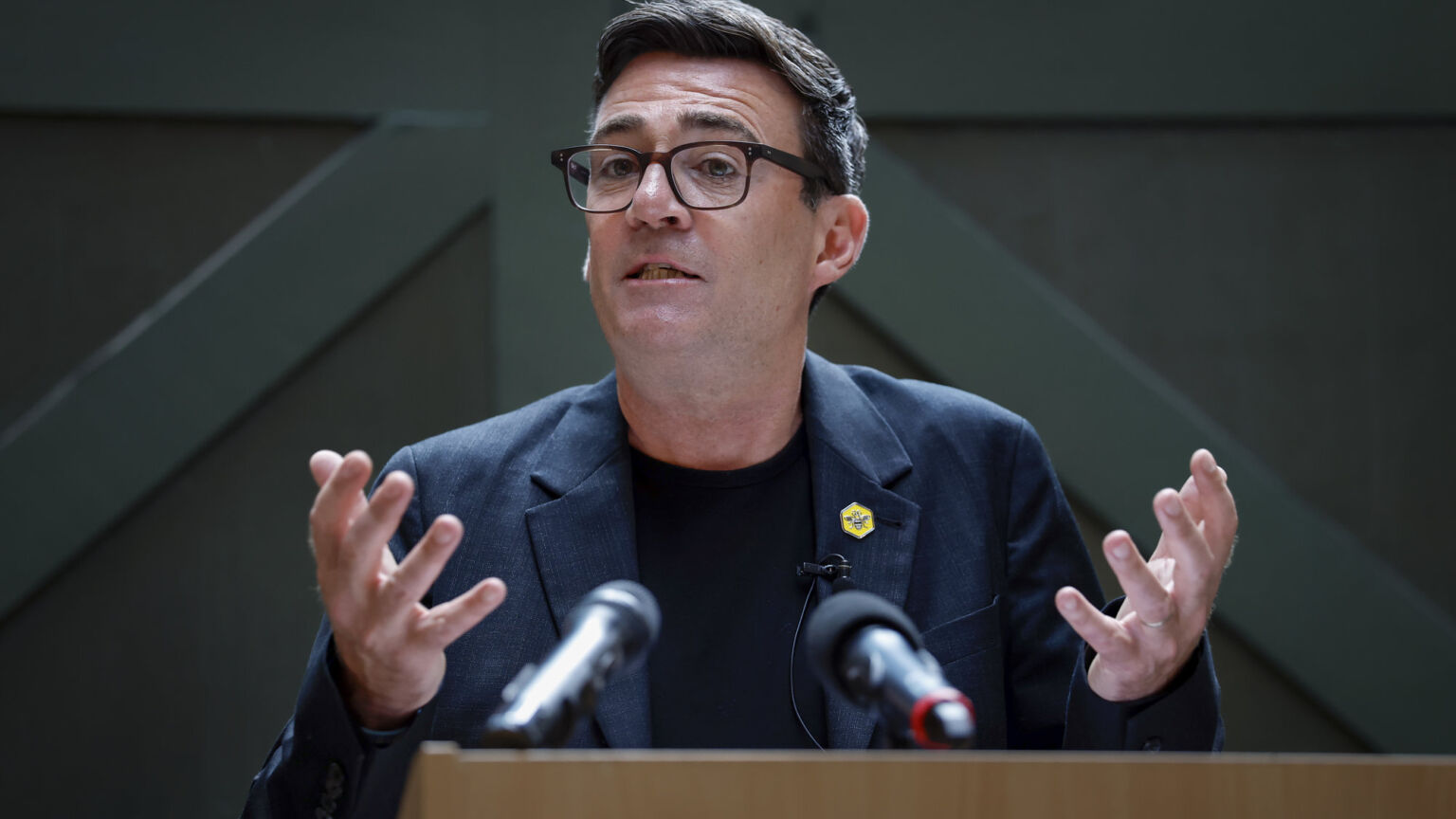
I always chuckle when media snobs say the little people are easy prey for demagogic trickery. Because no one is more likely to pant over a slick politician and his polished-turd slogans than these Oxbridge types. Witness their schoolgirl swooning over Andy Burnham this morning as he fluttered his famous eyelashes and spelt out his vision for a better, fairer Britain. His speech was a carousel of cliches, feelgood slogans, microwaved Blairism and what passes for leftism in the posher coffee houses of Manchester, and yet they lapped it up, all goggle-eyed and weak-kneed. I’m so embarrassed for them.
It was Burnham’s first major policy speech since he launched his bid to usurp Sir Keir and become PM. It’s been rolling news all day. As I write this my TV screen is split between a gurning Burnham getting a standing ovation from his assembled acolytes and a flushed Beth Rigby giving her ‘analysis’ (TLDR: it was fab, fab, fab). Reading the BBC’s coverage, you’d be forgiven for thinking it was a ‘fight them on the beaches’ moment for our knackered nation. His speech was ‘bold’ and ‘affectionate’ and best of all there was no ‘adverse reaction in the markets’. In fact, the Beeb gushed, there was a ‘small positive one’. Capitalism has spoken! King Andy may ascend to the throne!
They all need to turn up the air-con and cool down. His speech was deathlessly platitudinous. It was full of those technocrat-era cliches that evaporate upon the merest investigation. ‘Place first, not party first.’ ‘Problem solving, not point scoring.’ ‘Long term, not short term.’ Up not down, sun not rain, forwards not backwards. Starmer himself was a master of such fag-packet Boomerish bromides. ‘Look forward, not back’, he was fond of saying, leaving the rest of us wondering: look forward to what? Infinity ‘asylum seekers’ and more sly sabotaging of Brexit?
Under Starmer – and both Tory and Labour PMs before him – such PowerPoint drivel was a stand-in for actual policy. Will it be the same under Prime Minister Burnham? Everyone likes a bit of ‘problem-solving’, but what problems? Our broken borders? The cult of welfarism that indulges young people’s fever dreams about suffering from ADHD? Our refusal to frack for gas in order that we might appease the gods of weather and hold back ‘global boiling’? Will those problems be solved? I won’t hold my breath, especially if Net Zero nutter Ed Miliband becomes Burnham’s chancellor.
Even the more substantive-sounding parts of Burnham’s speech raise more questions than answers. His key focus was on restructuring public life. He desires nothing less than the ‘biggest rebalancing of power our country has seen’. I don’t know, the 17th-century revolutionaries who got shot of the king and abolished the Lords might have something to say about that. In Burnham’s ‘rewired Britain’, there will be oodles more devolution, meaning we will ‘take the power out of the centre’, he said, and disperse it across these isles. There’ll even be a ‘No10 North’ – a PM’s seat of power in Manchester to show that London isn’t the be-all and end-all of Blighty.
This is a continuation of the Blairite project of devolving ‘power’ to the nations and the regions. It sounds enticing – who wouldn’t want to loosen the political stranglehold of the SW1 wankerati? – but it is an illusion. Far from democratising the kingdom, the ironically top-down enforcement of devolution always ends up empowering the lanyard classes. Power is sold off not to everyday people but to the officious and the sharp-elbowed and the thirsty guzzlers of the Kool-Aid of woke. Look at Scotland, where the gift of Blairite semi-autonomy birthed not a new, democratic nation but a Tartan tinpot regime run by corrupt twats who put money in their banks and rapists in women’s prisons.
Far from ‘rebalancing power’, as Burnham dreams, devolution merely disperses it, and that can make it harder for we the people to hold the powerful to account. Power becomes more veiled, not more visible. There are untold problems of unearned power in 21st-century Britain. The imperious, bloated civil service is a law unto itself, frequently scuppering the democratic dreams of the electorate. Binding global treaties prevent us from behaving like a sovereign state and removing undesirables from our territories. Judges hubristically override policies drawn up by those we elect. The House of Lords remains a medieval pox on our liberties, elevating the ‘wisdom’ of the unaccountable over the wishes of the people. Anyone serious about ‘rewiring Britain’ would be addressing all of that, not empowering yet another Pride lanyard priggish they / them to become a micro-mayor of some northern town.
It seems Burnham wants to follow up his ‘Manchesterism’ – which no one can actually define – with Leicesterism, Sheffieldism, Glasgowism… breakaway mini-regimes that would further concentrate power in the hands of the credentialled classes. The result would not be a ‘rewired Britain’ but a fractured Britain, overseen by a thousand woke fiefdoms. Have you ever wondered why the graduate classes squeal with glee over devolution even as they wring their hands over the ‘low-information’ masses and our dumb votes for Brexit, Boris and all the rest? It’s because they know devolution empowers people like them, not riff-raff like us.
Burnham has a ‘10-year plan’ for Britain. Strewth. Even Stalin only went for a five-year plan. Upon whose authority will he ‘rewire Britain’? He won a vote in Makerfield, not the United Kingdom. Fancy talking about ‘rebalancing power’ even as you sweep to power in a coup that would make Pinochet blush. But the liberal media couldn’t give a toss about any of that. They’ve gone all mawkish for King Andy. They follow him around like tragic ducklings. They gasp with juvenile wonderment when he says ‘Long term, not short term’. They’ve succumbed to his cult and we know why: they pray he’ll hold back the tide of populism. Imagine bigging yourself up as a warrior for the democratisation of Britain when really you’re motored by a blind terror of the democratic anger of the masses. The arrogance. The duplicity. That’s Burnhamism.
Brendan O’Neill is spiked’s chief political writer and host of the spiked podcast, The Brendan O’Neill Show. Subscribe to the podcast here. His latest book – After the Pogrom: 7 October, Israel and the Crisis of Civilisation – is available to order on Amazon UK and Amazon US now. And find Brendan on Instagram: @burntoakboy.
The post ‘Without a border, we’re not a country’ appeared first on spiked.
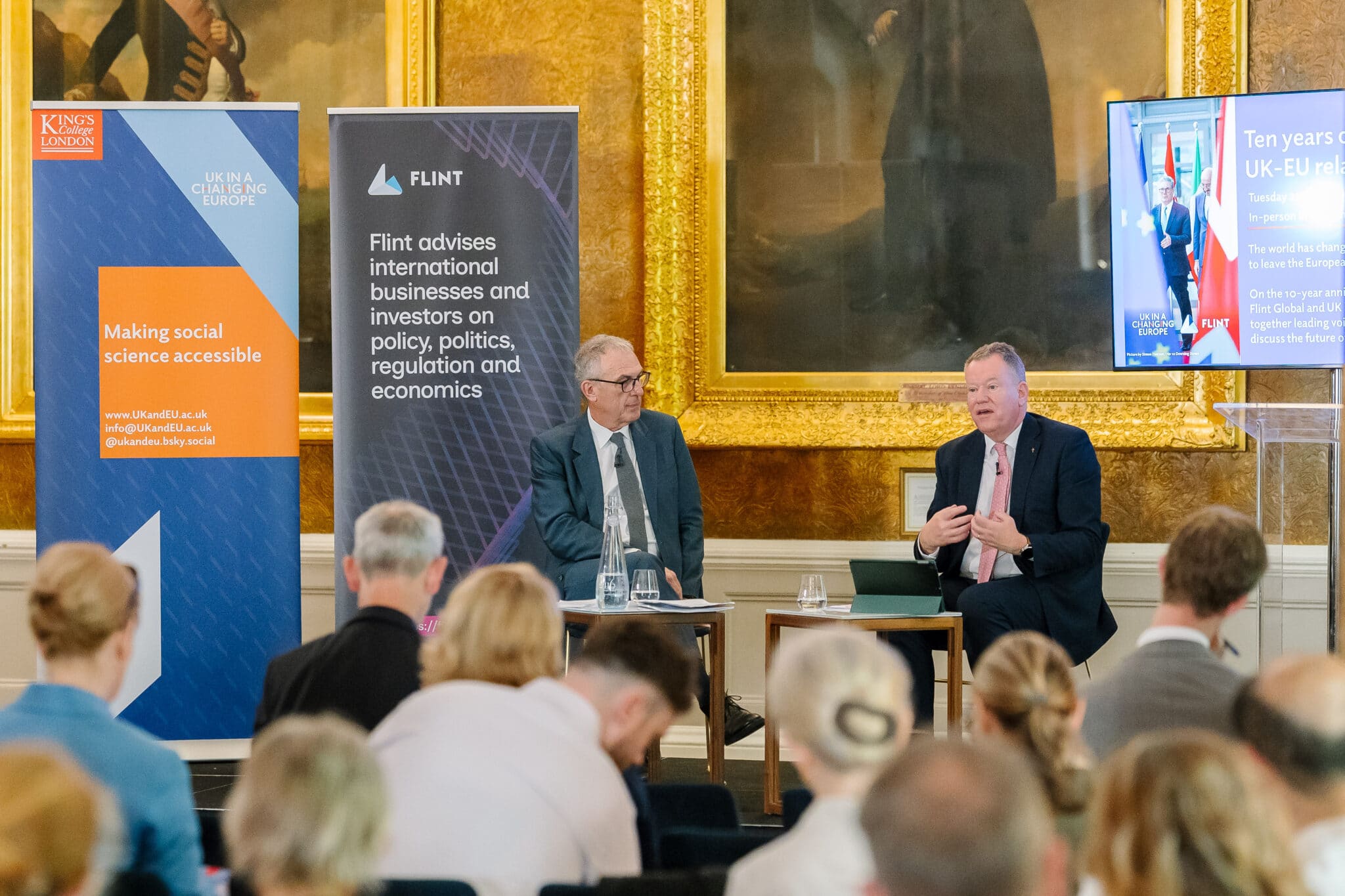
To mark the ten year anniversary of the EU referendum on Tuesday 23 June 2026, UK in a Changing Europe organised a major confernece with Flint Global. This is a shortened and edited version of a speech delivered by the Rt Hon. Lord David Frost.
Brexit did get done all those ten years ago – and a lot of people still seem very unhappy about it. It really is remarkable how much of the British governing class remains unreconciled to that decision ten years on: how angry they still feel, how badly they want to undo it. That’s why I want to make the best case I can for why the vote to Leave was the right one, why Britain can succeed outside the EU, and why the Rejoin movement would do better to make its peace with the result.
Let me preface this with an obvious truth: the case for Remain and the case for Leave were finely balanced. It comes down to where you stand on a set of trade-offs amounting overall to whether it is better to run your own affairs directly, or to hold a share in a larger unit. In British conditions, those trade-offs stack up in favour of national independence.
First comes the democratic reason – and it is the fundamental one. Within the EU, in important areas, the laws that govern European countries simply cannot, in practice, be changed at national elections. What a country pays into the EU budget; its trade and energy policy; who may become a citizen, and much, much more. Where laws are set at EU level, these can be changed only by cross-European agreement, not at the national ballot box.
This is a clear recipe for disenchantment. When people cannot change things at elections, they either switch off or vote for anti-system “populist” parties. That is what we have seen across the EU. The strongest case for Brexit is just this: that we now have a chance to escape that trap. We can now debate everything in our Parliament, and change it. British democracy is coming back.
The second reason is that we were never comfortable with the EU’s direction of travel. Britain never shared the project’s goals. There was never strong backing here for a federal destination, for an emotional European ideal. For more than twenty years, we were the awkward partner. Half-membership pleased no one.
The third advantage is that independence lets you adjust to circumstances – and correct your own mistakes. All governments make mistakes; the real question is how quickly you can put them right. We got the post-Brexit migration system badly wrong – but the point is that we can now change it. In foreign affairs, maybe many want to tilt to Europe now, but who knows what the future holds? Independence is optionality – and in an uncertain world, that is worth a great deal.
Fourth – and I know this is unfashionable – controlling who comes into your country really does matter. Borders, after all, are what make a country a country. Before 2020 we had no control at all over EU migration; now we do. Maintaining a country as a country – the shared identification with a history and a culture – is crucial to keeping it a meaningful democracy.
All these arguments together point to a larger truth: self-government restores responsibility. A country which knows that its own government is responsible for outcomes has every incentive to govern well – a healthier discipline than a system in which failure can always be blamed on someone else.
So: democracy, adaptability, control, choice and responsibility. These are what being outside the EU gives you, and nothing since 2016 has undermined them.
The economy is of course the great battleground of the moment, with ever more hysterical reports telling us that leaving has been a catastrophe. My argument is not that every consequence of Brexit has been cost-free. It is that the costs have been overstated and the benefits of policy freedom understated.
I see three fallacies in the current economic debate. The first involves the “doppelganger” studies. I just can’t take them seriously. It is plainly unsound to compare our economy chiefly with America’s, or with economies utterly unlike ours, such as Estonia’s. They tell us that, had we done what America has done, we would have grown faster. We know that. But we didn’t.
The second relates to the simpler approaches – the much-quoted costings from the OBR – which only ever look at one side of the ledger. I will concede a modest cost from leaving the customs union and the single market, around 1 to 1.5%. But these numbers take no account of the gains from policy freedom here in the UK – and especially of our independence from the EU’s heavy-handed regulation of AI and digital services, worth in my view that 1-1.5% on its own. Set the two side by side, and you arrive at a figure as close to zero as makes no difference.
The third fallacy is the assumption that, if you have paid a cost to leave, you must get it all back when you rejoin. But why should that be so, once the economy has begun to adjust? Rejoining simply involves another cost. Re-banning the plant-protection products now permitted in the UK would cost £500 to £800 million a year – which alone outweighs the Government’s claimed £600 million benefit from the SPS reset.
So I deny that you can point to any meaningful economic cost, overall, from having left. I worry much of the economics profession is engaged in motivated reasoning. They told us there would be a recession after we voted to leave – and there wasn’t. They have been relentlessly negative, and relentlessly wrong. I only wish they would stop obsessing about Brexit, not because it is annoying to me, but because it is crowding out the focus we so badly need on our real economic problems.
Still, all this noise is why I am unsurprised that the polls have drifted a little towards Rejoin. Everyone has had a hard decade, and Brexit makes a convenient culprit. But scratch the surface – ask people where they actually want power to sit – and the enthusiasm evaporates. A poll by Queen Mary University last autumn found that, of twenty major policy areas that had rested with the EU, people overwhelmingly wanted them kept in Britain. I am willing to believe people want better relations with the EU – but not that there is any majority for subjecting ourselves to EU law with no say in it.
I don’t blame the EU for the point we have reached. I blame our own leaders. What none of the current government seems to have considered is that the TCA might actually be a good deal – and that the best future for Britain is to accept being an independent country and to make it work: a friend and partner of the EU on defence and security, and a competitor, with a different economic model, in others.
So my message is simple. Stop trying to reopen the decision, stop pretending that partial dependence on the EU is a good outcome, and start doing what independent countries are supposed to do: govern themselves well. That, in the end, is the prize. Not isolation. Not nostalgia. Not hostility to Europe. But democratic self-government – and the confidence to make it work.
The Rt Hon Lord Frost CMG., former Minister of State and chief Brexit negotiator.
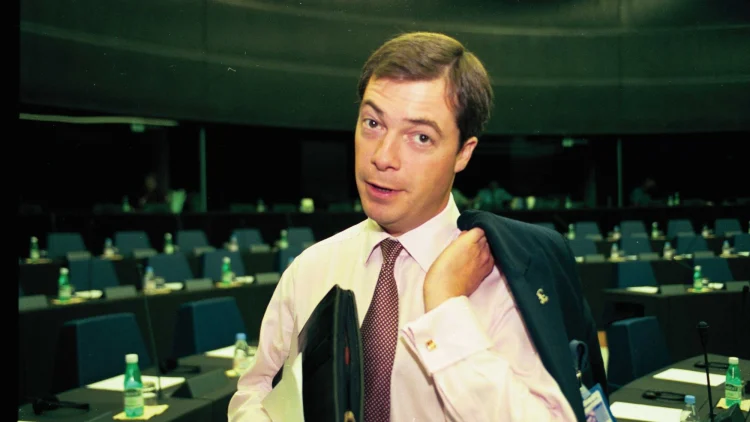

July 1999: Newly elected UKIP MEP, Nigel Farage | Image ©: Mark Lloyd/Daily Mail/Shutterstock

4 min read
Well-researched and easy to read, Lord Ashcroft’s biography probably won’t change any minds – but it does reveal that beneath the showmanship and carefree façade is a deeply patriotic man of duty
As I write, the fallout from the Makerfield by-election has begun. Once again, Reform UK is being dismissed as having peaked. Michael Ashcroft’s The Farage Factor takes on a new significance.
I know Nigel Farage well, having worked with him on the leave campaign, speaking at rallies around the UK. I had assumed I would know most of what was written about him in the book. I was wrong.
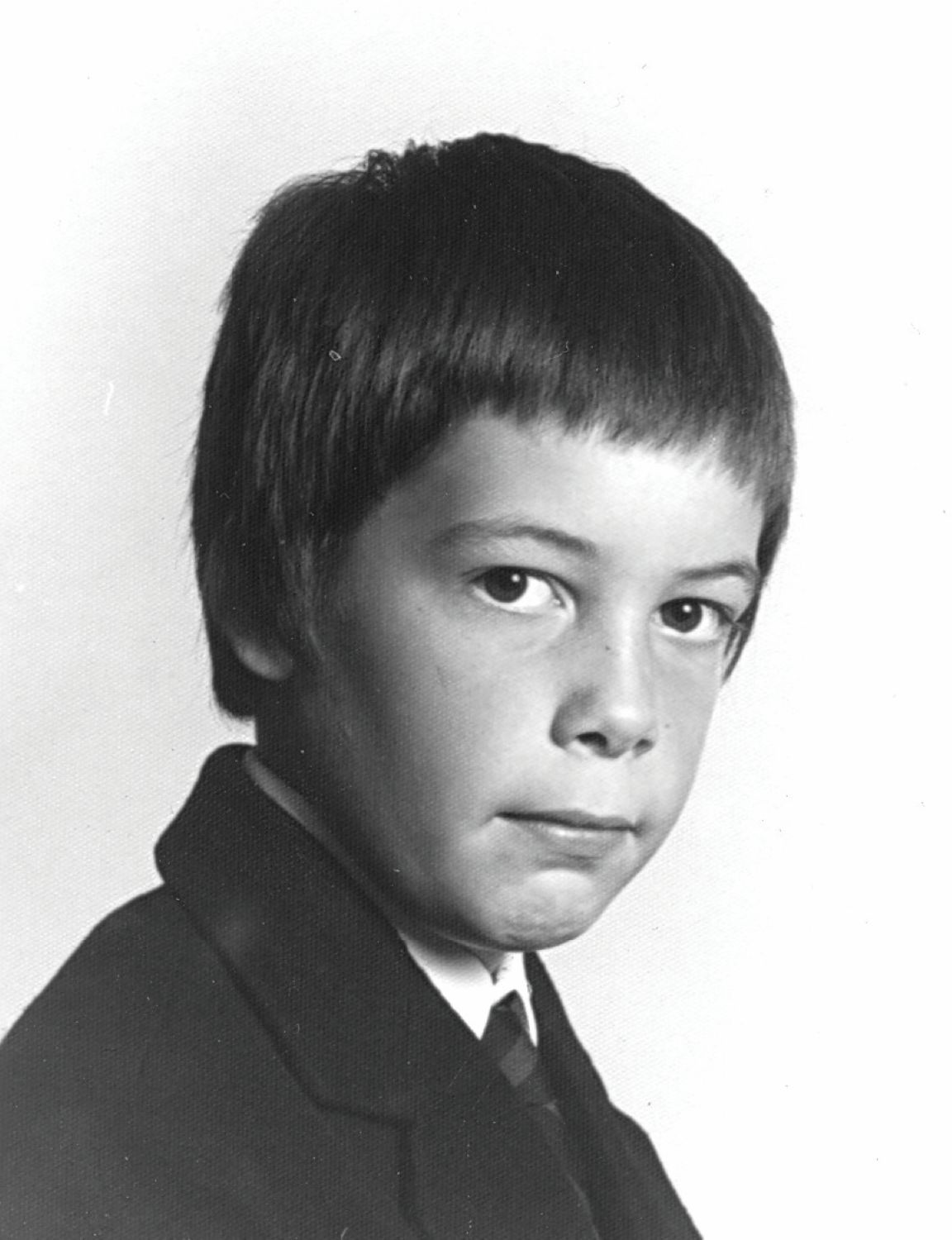
Ashcroft has managed to speak to many who knew the younger Farage and paints a picture of how, from an early age, he never followed the crowd. “He didn’t suffer fools gladly and he was never too worried about upsetting people,” according to one school friend. Even aged 11, in 1975, he opposed the Common Market in a school debate.
It was at Dulwich College that a history teacher fostered his passion for the First World War, which remains with him today. He had no interest in attending university but determinedly followed his father and grandfather into the City.
What really comes through so clearly in the book is how appallingly he has been treated by the political and media class throughout his career. All leading politicians have their lives dissected, but in Farage’s case so much of the denigration has been completely untrue.
I had assumed I would know most of what was written about him in the book. I was wrong
Ashcroft delves into many of the accusations against him. He takes great care via rigorous research and multiple interviews to acknowledge his personal failings but also to query these charges. Farage purged the BNP from UKIP, so why has he been labelled racist? In 2009, he voiced concern in an interview with the Jewish Chronicle about antisemitism in the EU, yet has been labelled antisemitic.
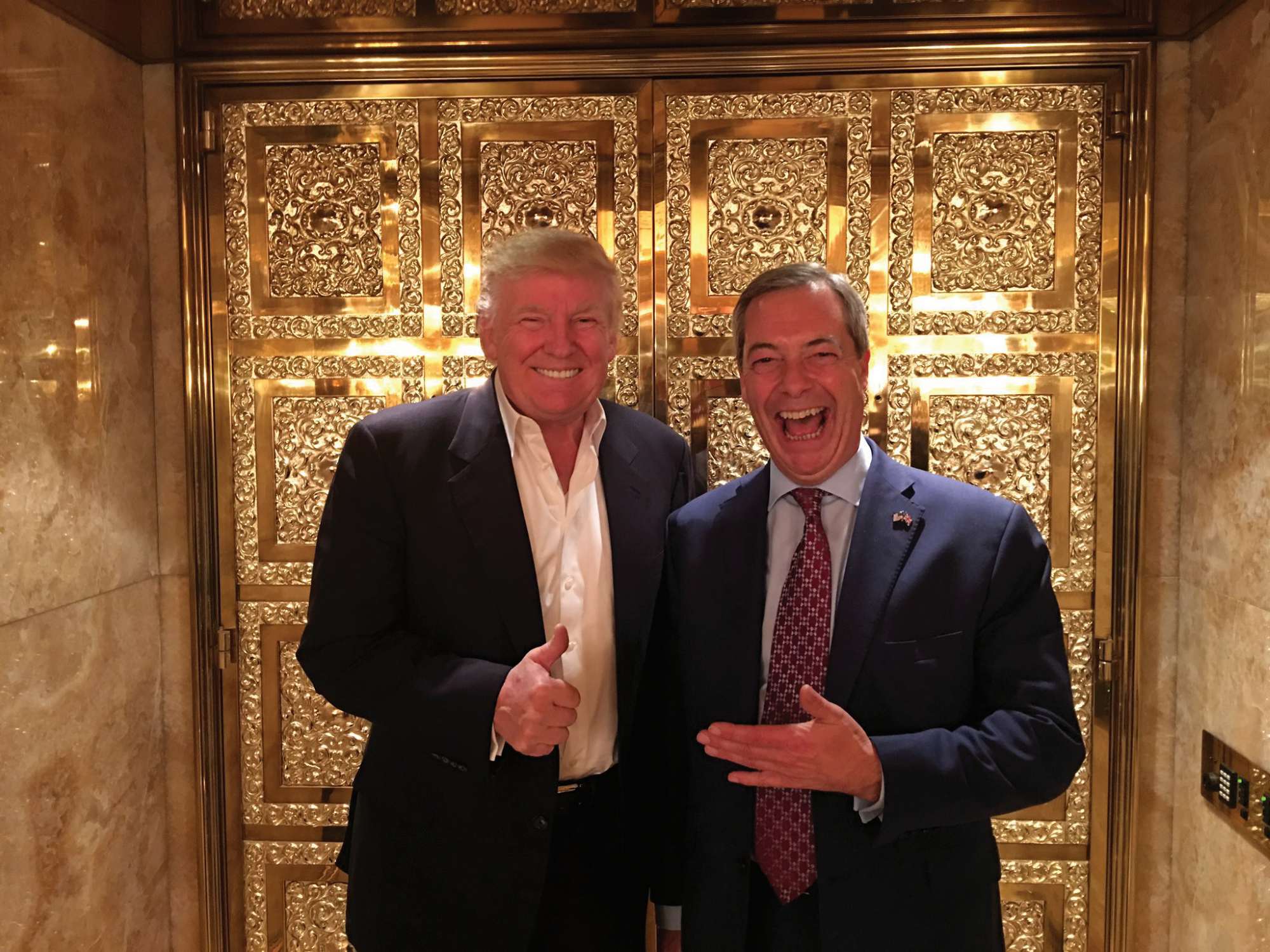
Image ©: Andy Wigmore
Ashcroft reminds us that some attacks have been vicious, such as when he was mocked by The Sunday Times for having one testicle after suffering cancer. Physical attacks have been part of his life for years, necessitating 24-hour security. Unlike other MPs, he is barracked and heckled whenever he rises to speak in the Commons, yet his support for free speech remains. Despite the vitriol, he still fights for his beliefs.
Labour peer Lord Glasman rates him as one of the two most consequential politicians of the past 40 years. “I respect Nigel for holding a position in the face of tremendous hate,” he says.
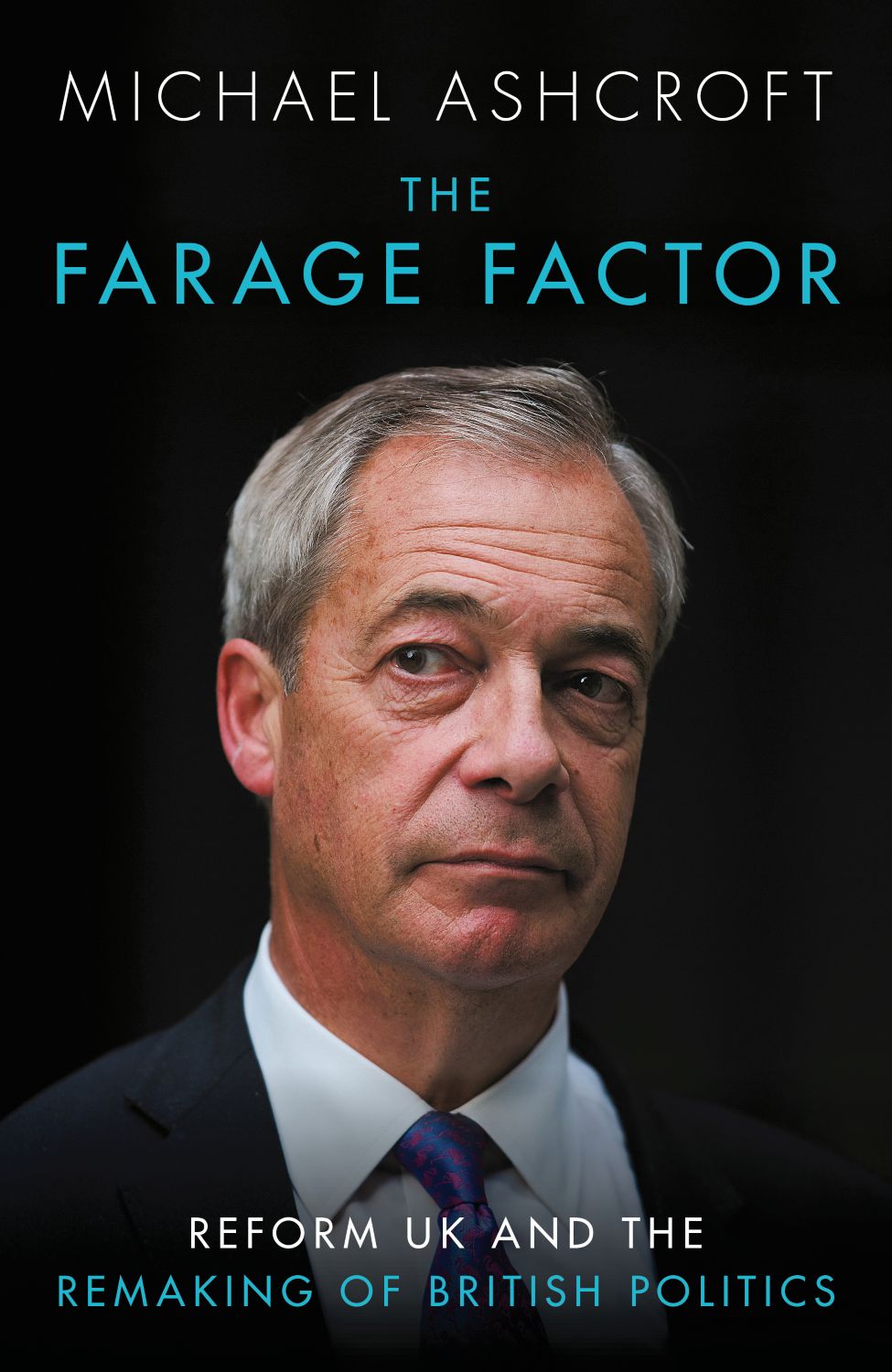 There is little on the Brexit campaign in the book, which is designed to show how since winning the referendum Farage has become even more visible and influential than he was in 2016. It outlines the challenges he faces in fashioning Reform into a mainstream party that does not have to depend on his charisma and political skills to thrive. This critical battle is still very much in progress.
This book is well-researched, well-written and easy to read. It won’t change the views of those who hate Farage – or fear him – but it might show some voters that beneath the showmanship and carefree façade is a deeply patriotic man whose sense of duty means he will not give up on his desire to remake the United Kingdom in a way which will set it back onto a path towards prosperity. Time will tell.
Baroness Hoey is a non-affiliated peer
The Farage Factor: Reform UK and the remaking of British Politics
By: Michael Ashcroft
Publisher: Biteback
I’ve just recorded an episode of the BBC ScotCast podcast, which should “drop”, as we say in the media biz, around teatime tonight. It focused largely on issues around Operation Branchform, and the fact that only one of the two crimes it concerned has been resolved.
Time always flies when you’re having fun, so I ended up not being able to fit in half the stuff I wanted to say in the 40 minutes I chatted with Martin Geissler (which will likely shrink to fit into the 30-minute broadcast slot by the time they’ve edited all the most libellous bits out).

And one of those things was the bewildering fact that the investigation into the SNP’s finances went on for two years before the police stumbled into the second crime, and the only one that’s actually concluded – Peter Murrell’s embezzlement from the SNP. Because the first crime ought to have been all but done and dusted in 24 hours max.
In the often-complex world of financial fraud, the amazing thing about the case of the missing fundraiser money is how absolutely straightforward it is. There’s almost no aspect of it that isn’t immediately empirically obviously proven.
Let’s walk it through.
—————————————————————-
STARTING POINT: You are the police, investigating a possible crime of fraud and/or embezzlement, on the grounds that money raised for a specific purpose has allegedly been unlawfully misappropriated and used for something else.
Now, if that had happened it would unarguably be a criminal offence, or the police obviously wouldn’t be investigating it in the first place.
Remember, nobody, at the time Sean Clerkin and others filed complaints on the basis of Wings’ revelations about the SNP accounts, had any inkling that Peter Murrell had been personally pickpocketing party pennies to spend on lah-di-dah bric-a-brac for the Murrell/Sturgeon kitchen cupboards.
Their complaint was specifically that the SNP had spent “ring-fenced” fundraiser money on other SNP stuff, and the only reason the police would open an investigation into that is that, if true, it would be a crime. They don’t investigate if you get too many of the horrible licorice ones in a bag of Midget Gems, no matter how upset you might be about it. (Don’t ask me how I know.)
The next question is which crime specifically. Either the money was raised with no intention of spending it on the advertised purpose, in which case it’s fraud, or it was raised in good faith but later spent on something else, whereby it’s embezzlement.
(Option 3 is that you discover the SNP still has the cash and everything’s fine, at which point you end the investigation.)
The number of facts you need to establish is therefore incredibly small:
(1) Did the SNP raise hundreds of thousands of pounds in 2017 and 2019 that they promised would be kept in reserve for a second independence referendum campaign, and explicitly NOT spent on normal SNP activities?
Answer: Yes. Simple, straightforward, yes.

TIME TAKEN TO ESTABLISH: One minute or less on Google.
(2) Had they in fact spent almost all of that money by the end of 2019?
Answer: Yes. Simple, straightforward, yes.

TIME TAKEN TO ESTABLISH: One minute or less on Google.
(3) Had there been a second independence referendum?
Answer: No. So the money hasn’t been spent on that, it’s been spent on something else, and either fraud or embezzlement has clearly occurred.
TIME TAKEN TO ESTABLISH: One second. No Googling needed.
That’s the “whether” already dealt with. Now there’s only the “who” left.
(4) Who was responsible for the decisions to raise the money and then to spend it on normal SNP activities?
Answer: Under the SNP constitution, the Leader (“leads election and other campaigns”, paragraph 26b), the National Treasurer (“ensures the sound management of the Party’s finances”, paragraph 29a, “convenes the Finance and Audit Committee”, paragraph 29b, “reports to the National Executive Committee and National Conference on the finances of the Party”, paragraph 29c) and the National Executive Committee (“ownership of the Party’s assets and management of the Party’s financial affairs”, paragraph 32.1h).


The Chief Executive (Peter Murrell) is not governed by – or indeed mentioned at all in – the Constitution, but is actually an employee of the party, appointed at the sole discretion of the Leader. The Chief Executive is constitutionally answerable to the Leader, the National Treasurer and the National Executive Committee. It is primarily their job to keep the CEO honest.
TIME TAKEN TO ESTABLISH: The SNP constitution is quite a lengthy document – a couple of hundred pages – and even though much of it is obviously not applicable, let’s be diligent and read it right through, carefully. One day.
(5) Are all of the above therefore culpable for the misappropriation of the “ringfenced” money, and therefore for the crimes of fraudulent solicitation, embezzlement, or both?
Answer: Yes. Simple, straightforward, yes. Who else?
(6) Should all of the above therefore be arrested and given the chance to explain their actions?
Answer: Yes. There’s no reason to wait. A crime has been clearly established on day one of the investigation, and we’ve already narrowed down the list of suspects to a handful of people, who should all be brought in for interview in order to find out which of them is responsible. If they’re not sufficiently co-operative they can be charged and a trial will sort it out in the fullness of time.
TIME TAKEN TO ESTABLISH: There are quite a few people on the NEC, but there aren’t actually many questions to be asked, so including the one day we’ve already spent, let’s allow a generous total of two weeks to get through everyone.
(7) How many pieces of evidence need to be examined to reach this conclusion?
Three.
(i) the fundraiser website and related statements from the SNP pledging that the “Independence Referendum Campaign Fund” (variously also called the “Referendum Appeal Fund” or “Referendum Campaign Fund”) was separate to, and ringfenced from, ordinary donations to the party


(Remarkably, in that last image Colin Beattie both claims that the SNP doesn’t separate out restricted funds in its accounts, and then in the very next sentence refers to a separated restricted fund called the Referendum Appeal Fund.)
(ii) the SNP’s constitution

(iii) the SNP’s accounts for 2017 and 2019

That’s it. We’ve linked them all there for you. That’s all you need to establish beyond doubt that a crime has been committed, and who perpetrated it. The only thing left to determine is whether it was fraud or embezzlement, which you do by arresting the suspects, questioning them and deciding which ones, if any, to charge with the crime/s.
————————————————————–
At the most generous possible estimate, including all the interviews, that investigation should have taken a fortnight. Either there should have been a trial or the matter should have been closed, and nobody would ever even have found out about Peter Murrell’s little peccadilloes. (We’re sure they’d have been diamond-encrusted ones.)
There was nothing left to be done. Indeed, every material fact was already in the public domain before they even started.
Instead, it seems that Police Scotland stalled for two years and then stumbled onto something they found a little juicier, at which point they just forgot about the initial complaints entirely.
And here’s the really funny part, gang – Peter Murrell’s crime was a thousand times more complicated than the original one. It involved fake receipts, moderately elaborate money-laundering, even lending the party back some of the money he’d stolen from it. It was a legitimately complex investigation, as many frauds are.
Yet the police tied it all up in a speedy nine months – far less than half the time they’d taken to completely FAIL to resolve a much, much easier case.
Operation Branchform opened on July 2021. The police first announced it had widened into an embezzlement investigation two years later – July 2023.


And as early as the following spring, Murrell was charged.

Why did a vastly harder inquiry move so much faster than an open-and-shut case that can essentially be solved in a single day by anyone with an iPhone?
Maybe there’s an inverse correlation between how complex something is and how long Police Scotland take to get to the bottom of it. That would certainly explain why we’re now well into the SIXTH year of a perjury investigation in which only ONE fact needs to be established – was Woman H in Bute House on the night she claims Alex Salmond tried to rape her there? – and that matter has already been determined by a jury, as well as being staggeringly easy to clear up using Bute House’s records. They don’t let just anyone wander into the First Minister’s digs off the street.

Oh, but wait a minute – that’s one’s not on Police Scotland at all, but the Crown Office and Procurator Fiscal Service. What a coincidence, eh readers?



4 min read
The urgency of the climate crisis is undeniable. The next 12 months are pivotal for advancing the global phase-out of fossil fuels and leaving a livable planet for future generations.
Once again, the British billpayer finds themself at the mercy of a geopolitical crisis. For many up and down the country, energy shocks and price hikes sadly feel like a ‘new normal’.
That’s no surprise – but it isn’t something we should accept as inevitable.
Britain is now more vulnerable to the volatile fossil fuel markets than any other G7 country – and it is political timidity that has led us here.
Your heating bill might not be at the front of your mind at the moment as we battle sweltering temperatures. But why is it we are a country that is simultaneously lying awake struggling to stay cool in yet another record-breaking heatwave, and unable to get a grip on soaring bills in freezing temperatures?
No matter what the weather, things feel broken. Last year, the UK had its hottest ever summer, as well as the driest spring in over a century. Record-breaking wildfires ravaged our countryside, and severe rainfall caused major flooding.
For those losing sleep, energy dependency and climate complacency are the same nightmare. Rising bills and a burning planet are both driven by our overreliance on imported fossil fuels. Yet it doesn’t have to be this way. Backing a transition to clean energy and ending our dependency on foreign oil and gas would cost the UK less than a single fossil fuel price spike on the scale of the 2022 crisis, driven by Putin’s invasion of Ukraine.
But if energy costs are your concern, why not let the drilling begin? This seems to be the only question the fossil fuel lobby wants us to ask. But while letting private companies drill for more oil in the North Sea sounds like an easy fix, the reality is it won’t cut bills or deliver energy security for British people.
This is a feature of geology, not a piece of political spin
The facts remain this: the hundreds of North Sea licenses granted by the Conservatives over 14 years have produced the equivalent of just 36 days of gas for the UK. The North Sea reserves have been in terminal decline for years. This is a feature of geology, not a piece of political spin.
Opening new oil and gas fields will barely make a dent in our projected dependency on oil and gas imports; we’ve been a net importer for two decades, and new drilling in the basin won’t change that.
Drilling can’t resurrect an industry in terminal decline. It won’t protect the jobs and livelihoods of North Sea communities for the long-term. A serious plan to accelerate the switch to renewables could. It could protect jobs and prosperity, delivering fair outcomes for workers most affected here in the UK.
If we close our eyes and pretend the North Sea basin has a long-term future, we’ll just be ushering in another nightmare; the chaos, division and devastation of mismanaged industrial decline, which ravages communities.
Clean energy can form the bedrock of the UK’s industrial base. Green technologies now provide more than a million jobs and nearly half a trillion pounds in investment. These jobs have consistently higher wages, and the industry delivers double-digit growth that far outstrips the wider economy. It’s vital that the UK sends the right signals and backs the industries of the future – because if we take the lead, we can set the agenda, making sure that our North Sea communities reap the benefits first.
There’s more good news: the public are on our side in this fight. Polling shows that voters want to see greater action on protecting our climate and building resilience to climate shocks, like fuel price shocks.
Fossil fuel giants and shareholders aren’t lying awake at night worrying about the cost of heating their homes, or tossing and turning, struggling to keep cool in extreme temperatures. The top 100 oil and gas producers made more than $30m in profits per hour in the first month of Trump’s war in Iran alone. They – not British billpayers – should be picking up the tab for climate chaos.
The next twelve months are a critical window for us to deliver energy security for voters, to show leadership on climate by doubling down on our domestic ambition with a fast and fair transition. We can also lead the charge at this year’s critical summits, with the possibility of propelling the global fossil fuel phaseout, whether it’s UN Tax Convention negotiations or COP30. Then, in December 2026, the UK takes on the G20 presidency for a full year, with the opportunity to put climate action front and centre.
The next year could be pivotal for advancing the global phase-out of fossil fuels. Let’s leave behind the zero-sum calculations and finally recognise what’s been right in front of us: energy insecurity and climate complacency are the same nightmare with one clear solution: ending our dependency on fossil fuels.
Uma Kumaran is Labour MP for Stratford and Bow
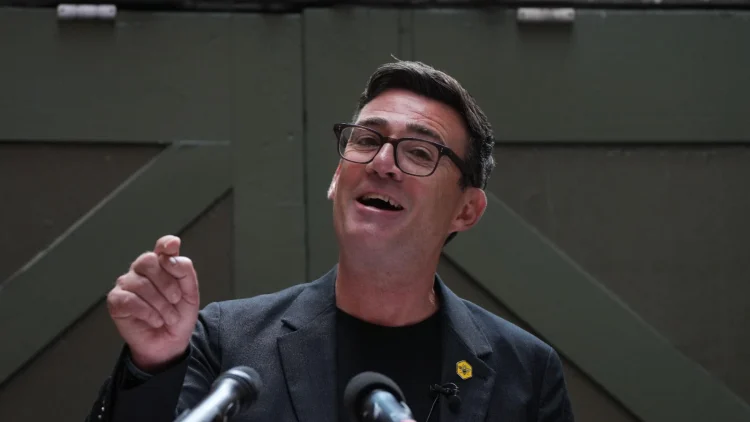

Andy Burnham gave a speech in Manchester on Monday morning (Alamy)

5 min read
Andy Burnham has said he would “do things differently” and lead a huge transfer of power out of Westminster in a speech setting out his vision for power.
On Monday morning, Burnham gave his first speech since announcing he would stand to become leader of the Labour Party and prime minister after Keir Starmer announced his resignation last week.
Burnham is widely expected to become PM this month, with the former Greater Manchester mayor backed by large numbers of Labour MPs.
Speaking at the People’s History Museum in Manchester, the city where he was mayor for nearly a decade before returning to the House of Commons, Burnham set out his central proposal of “taking power out of the centre” in Whitehall and transferring it to the regions and mayors.
He described a vision to have “good growth in every postcode” through a “bottom-up” approach, replacing a centralised, top-down model.
This would include expanding 10 Downing Street and putting part of it in Manchester.
“No 10 North will be the nerve centre of a rewired Britain,” Burnham said.
“It will be the conduit through which we redistribute power and resources across the UK. It will coordinate all parts of government at a national and local level to agree a long-term economic strategy and help all places set new growth ambitions. It will be given a mission to strive for equivalent living conditions in all parts of Britain, borrowing from the basic law.”
He said No 10 North will support the regions to reform essential utilities, lead on reindustrialisation and deliver the regeneration of places.
“True to the motto of this city, I am going to do things differently to break with the more of the same approach that has got us here,” Burnham said.
“I am going to give Britain the circuit breaker it needs by building a more collaborative politics in Westminster, by taking power out of the centre, and putting it in the hands of the people and places who can use it best, and in so doing creating a new sense of agency, possibility and hope flowing around the country. We will make politics work for you and the place where you live.”
He highlighted what he has learned from his experience as mayor of Greater Manchester, describing how when he started in that role in 2017, he had wanted to build a new approach: “A new politics based on the exact opposite of the Westminster approach, place first, not party first, problem solving, not point scoring, long term, not short term.”
Turning to the state of Westminster politics, Burnham said it was now a more “fragmented, disjointed place” than when he left as MP nearly 10 years ago, and pledged to “change that culture, leading from the front and showing how things can be different”.
He said he would reform the whip system so that it isn’t used to “create fear or close down debate” among Labour MPs, and make sure his government would draw on “the breadth and depth of talent and expertise our party has to offer”.
He also pledged to create a more cooperative culture in Westminster by reaching out to other political parties and building common ground.
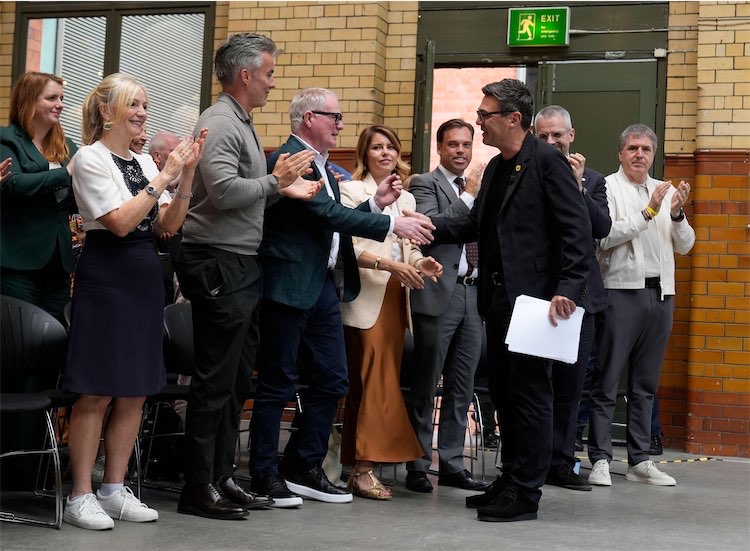
After winning the Makerfield by-election earlier this month and returning to Parliament as an MP, the former mayor is now widely expected to run unchallenged to be leader without a contest, as no other candidate has yet stepped forward to throw their hat in the ring.
Burnham won the Makerfield seat comfortably, despite it being a Reform target area where Nigel Farage’s party had been polling very well in the months preceding the contest. Burnham described the “Makerfield test” of his own by-election victory as being at the heart of decision-making in his future government.
Addressing speculation over who he would appoint to the top jobs in his cabinet, Burnham said he would not announce decisions until the leadership contest process was complete.
“So, until then, feel free to discount the wild speculation in circulation,” he said.
“While the political direction I set is not up for negotiation, I will build an inclusive team at the very highest level, so that all parts of the party and the country can see themselves reflected and represented in it.”
There is currently fevered speculation about who Burnham will choose to be his chancellor, with Energy Secretary Ed Miliband, Home Secretary Shabana Mahmood and former health secretary Wes Streeting all seen as candidates.
However, Burnham insisted he would stick to the government’s fiscal rules and not deviate from Labour’s 2024 election manifesto.
Burnham committed to a 10-year mission to raise living standards across the country through reindustrialisation, housing, infrastructure and reform of essential utilities.
Responding to the influential Alan Milburn report on youth unemployment, Burnham said the country needs a “complete rethink” of how we support the next generation to succeed, starting with the education system.
“A school system configured entirely around the university route will be brought to an end,” he said, adding that he would support calls from mayors for devolution of employment support, which he said would help to reduce the welfare bill.
He also pledged that No 10 would oversee the “biggest council house building program since the postwar period”, using vacant public land to reduce costs.
Burnham promised to reform business rates to support pubs and high street businesses that bring social and community benefits.
“Shouldn’t we make our high streets the new symbol of Britain’s Renaissance?” Burnham asked, to a round of applause in the room.
He added that there should be more devolved powers for London over education and housing, “so that London can do more for itself and remain the world’s greatest capital city”. Burnham will be seeking to reassure Labour colleagues in the capital, after some expressed nervousness over the weekend around his anti-London messaging.
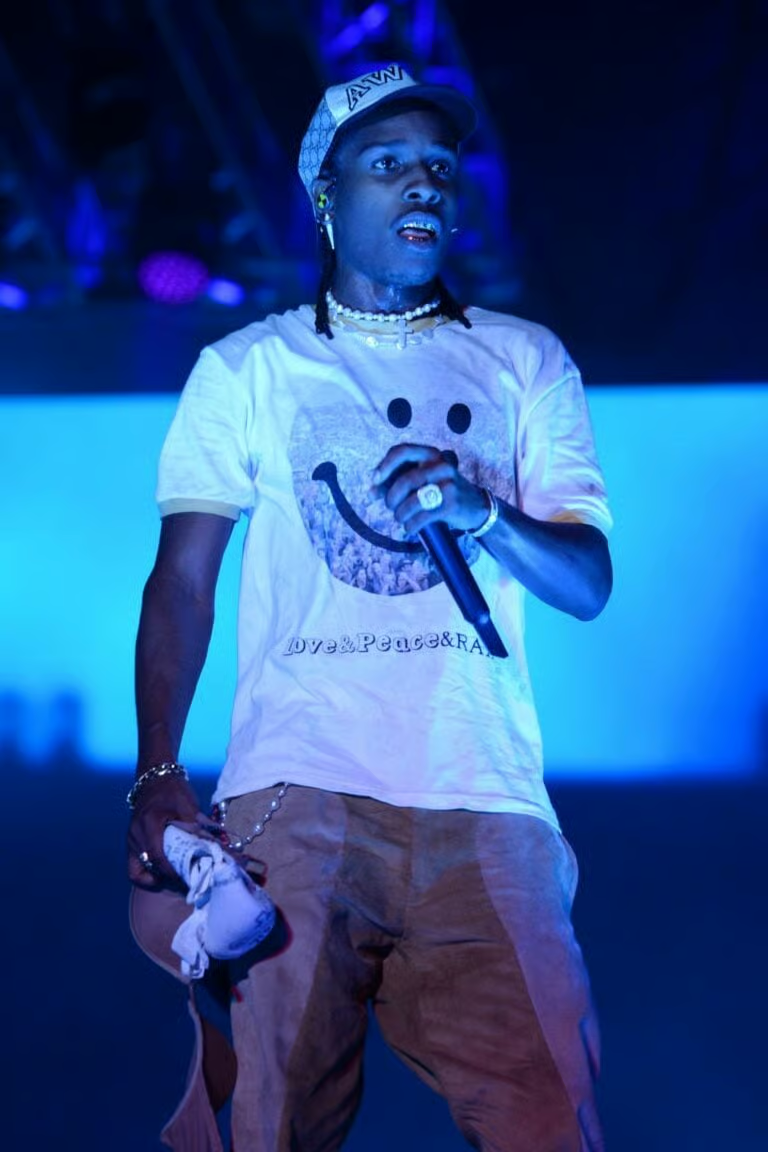
A$AP Rocky’s Aggressive Behavior Towards Fans Caught on Video

Maye Musk’s AI-Tagged Birthday Tribute to Elon Musk Sparks Fresh Online Speculation and Mixed Reactions

Bitcoin Trades Near $60K as US Stocks Rise on Iran Deal Hopes


-
 Sports6 days ago
Two goals and an assist by sheer aura: Cristiano Ronaldo just entered the World Cup chat
-

 Fashion3 days ago
Weekend Open Thread: Staud – Corporette.com
-

 Politics4 days ago
The House | Manchesterism won’t survive the painful trade-offs unless it gets citizens on board
-

 Politics4 days ago
Potential 2028er World Cup attendee leaderboard
-

 News Videos1 day ago
MAJOR BITCOIN & MARKET UPDATE!!!! (MUST WATCH ASAP!!!)
-

 Business3 days ago
Asia stock markets slide as tech shares slump
-

 Tech4 days ago
A Look At A Gaggle Of Transputer Boards
-
Crypto World6 days ago
Bitcoin (BTC) Dips Below $62K, Ethereum (ETH) Plunges 6% Daily: Market Watch
-
 Crypto World4 days ago
Dell (DELL) Shares Tumble Over 5% Following Analyst Downgrade to Hold
-

 Crypto World2 days ago
Coinbase, Circle Deepen Crypto Stock Losses Despite Resilient S&P 500
-

 Crypto World6 days ago
Securitize Wraps Roubini's SEC-Registered ETF as Dubai VARA Digital Security
-
Business6 days ago
Entergy settles forward sale agreements, raises $672 million in cash proceeds
-

 Crypto World3 days ago
Kraken's xStocks Opens Bending Spoons IPO Registration to EEA Retail
-

 Sports3 days ago
FIH Pro League: India defeat Pakistan 7-1, register biggest win of campaign | Other Sports News
-

 Tech2 days ago
Russian hackers now target Signal backup recovery keys
-

 Crypto World3 days ago
RTX holders must register wallets before token distribution begins
-

 Tech2 days ago
Bluekit phishing kit adopts browser-in-the-middle for login theft
-
 Crypto World3 days ago
Hyperliquid Named on Singapore MAS Investor Alert Register
-

 Crypto World4 days ago
Bitcoin Sparks $600M Hourly Liquidations With $65,000 Set To Become Resistance
-
 Crypto World4 days ago
AAVE price tests 9-month trendline after 17% rebound as breakout hopes build
You must be logged in to post a comment Login