

Politics
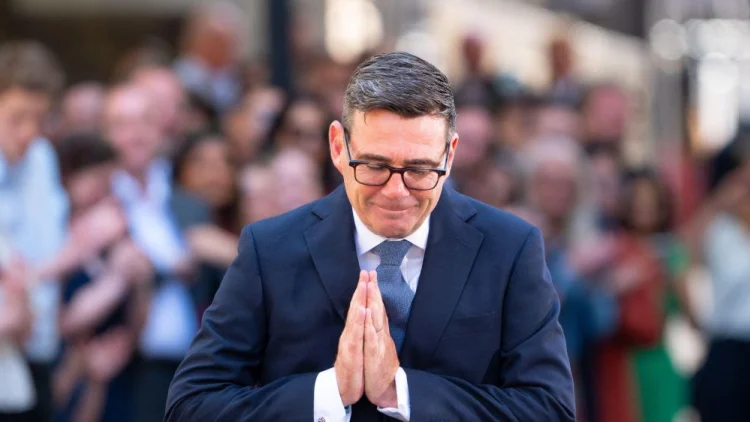
The House Article | The tone of Burnham’s first week has met voters where they are


4 min read
The new Prime Minister is wise to focus on the cost of living. That is the issue that will define his premiership.
I have seen six prime ministers since I ioined joined Ipsos in 2019. That turnover raises an obvious question: how confident should Andy Burnham be that he will last longer than those who came before him? And can he avoid the mistakes of his predecessor?
First impressions count
For now, the new Prime Minister appears focused on one thing above all else: demonstrating that his government really understands the pressures facing ordinary households. His first week has seen the announcement of a raft of measures aimed at easing the cost of living.
These include plans to scrap VAT on electricity bills, cap bus fares and raise a glass to much-loved pubs with an eye-catching reduction in business rates.
This focus makes sense.
Ipsos polling has consistently shown economic pessimism at historically high levels in recent years. Meanwhile, our new report, Understanding Society: From Walkmans to WiFi to What?, finds that only 53 per cent of Britons are satisfied with their standard of living today, compared with 72 per cent in 1989. At this year’s local elections, the cost of living was also the number one issue on the minds of English voters.
Burnham and his team will know that any PM promising change must persuade voters he “gets it”.
The importance of starting well
Anyone who follows Ipsos long-term trends will be conscious of the need to start well.
Recent Ipsos analysis of Keir Starmer’s premiership showed that his honeymoon period was remarkably short. Starmer began his premiership with a net favourability rating of +7 in July 2024 but by October had fallen to -26.
Early controversies, including the so-called freebies row and the backlash over means-testing winter fuel payments, proved politically damaging and created an impression of a government struggling to connect with public concerns. Burnham will be hoping to avoid a similar fate.
A pessimistic public
Yet he enters office facing a public that is arguably more pessimistic than at any point in recent decades. Our report shows that 83 per cent of people believe Britain is heading in the wrong direction today, compared with 55 per cent in 1989.
When people are asked what is bad about life in Britain, concerns about the cost of living and dissatisfaction with government feature prominently.
That dissatisfaction runs deep. Almost half of the public (47 per cent) now say the system of government in Britain needs a great deal of improvement – more than three times the proportion saying the same in the early 1970s. Trust in traditional politics has weakened significantly, helping to fuel the rise of challenger parties on both the left and right.
The electoral consequences have been profound. For much of the post-war era, more than seven in ten voters backed either Labour or the Conservatives.
Today, support for the two main parties combined is often closer to four in ten. The fragmentation of British politics means governments can no longer assume they will automatically be given the benefit of the doubt.
Meeting the challenge
That is the backdrop against which Burnham begins his premiership.
His instinct to focus on the cost of living appears politically sound. He is meeting the public where they are, with more than 7 in 10 concerned about the cost of living for them personally.
The issue matters to voters and offers a clear opportunity to demonstrate that his government can improve people’s lives. Starmer’s failure to establish a positive narrative early on proved difficult to reverse.
The challenge for Burnham is that he faces a public which is deeply sceptical not just about politicians, but about whether politics itself can deliver meaningful change.
But “the benefit of the doubt” clearly seems to be there for now. Exclusive data for PoliticsHome shows that a significant chunk of voters (42 per cent) has neither a positive nor negative view of him at present. And 54 per cent did not express a view on whether he would do a good job or a bad job on the cost of living specifically.
Whether it still exists in six months will depend on whether voters feel their lives are starting to improve.
That, more than any announcement made during his first week, is likely to determine whether Burnham’s premiership succeeds where Starmer’s ultimately failed.
Keiran Pedley is Director of Politics at Ipsos

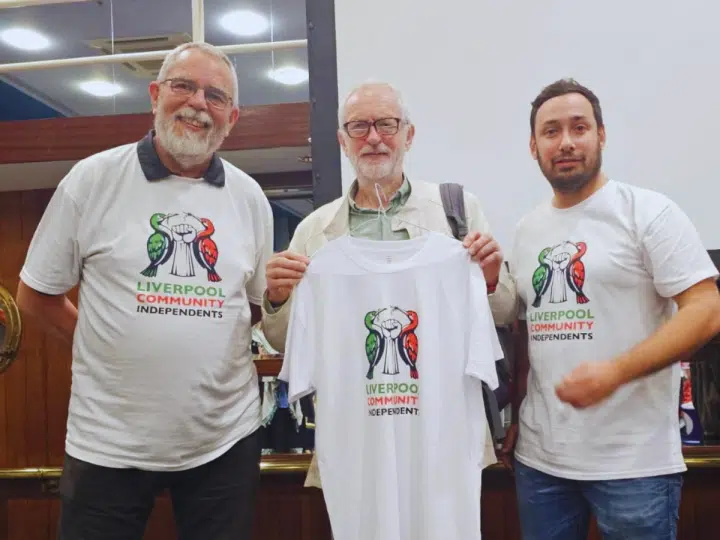
Your Party executive (CEC) member Sam Gorst is well known for his 2023 thrashing of Labour in the Garston local elections, and for being elected to the CEC as an independent.
But now he is an ex-CEC and Your Party (YP) member after resigning from both.
The resignation comes in the wake of outrage from the CEC, after the suspension of three Your Party executive members for attending a socialist event — leading to a unanimous no-confidence vote in the officials held responsible. YP parliamentary leader Jeremy Corbyn then controversially rejected the vote.
In a message to other CEC members shown to Skwawkbox by YP executive members, Gorst said that even the party’s handling of his resignation had let him down:
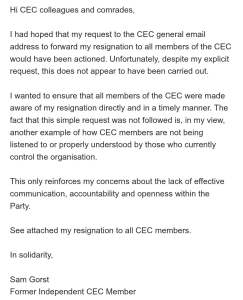
Resignation of Your Party and Central Executive Committee
The attached resignation letter explains Gorst’s disillusionment with the “lost opportunity” of YP and the manoeuvres of different factions within it:
Dear CEC colleagues,
It is with considerable sadness that I write to resign my membership of Your Party and step down from my position on the Central Executive Committee.
I joined Your Party with genuine optimism. Having been elected as a Liverpool Community Independent councillor for Garston and previously representing the now-defunct Cressington ward as a socialist Labour councillor, I believed this new political project had the potential to provide a credible, democratic and principled alternative for working-class people.
Sadly, I can no longer, in good faith, remain a member of Your Party or continue to serve on its Central Executive Committee.
This has not been an impulsive decision. It has been developing over many months. I drafted this resignation several days before any motion of no confidence in specific officers appeared on the agenda, while I was contemplating my future within Your Party and carefully considering whether I could continue as a member and serve on the Central Executive Committee. The events that followed formed part of that wider period of reflection but this decision has been reached only after giving the matter serious, careful and honest consideration.
When the party launched, there was genuine excitement and significant public interest. We were presented with a rare opportunity to build something meaningful and enduring. Regrettably, most of that momentum has now been lost.
Factionalism exists within most democratic political parties, particularly on the left, and some ideological debate can be healthy. However, what I have witnessed has gone far beyond legitimate political disagreement.
As the only genuinely independent left voice on the CEC, not aligned with or supported by any faction, I have experienced and observed repeated breaches of confidentiality, disrespect, unnecessary hostility, a siloed, obstructive culture and a persistent lack of openness and transparency. Those are not the foundations upon which a democratic socialist party should be built.
My political journey has taught me the personal cost of remaining within dysfunctional organisations. I joined the Labour Party on 28 July 2015, inspired by Jeremy Corbyn’s vision of a fairer and more compassionate society. Having recently become a father, I wanted to play a part in creating a better future for the next generation.
During my time in Labour, I was suspended on several occasions because of my political beliefs, my support for Palestine and my opposition to council cuts. Although I successfully challenged those suspensions, I was ultimately expelled under Keir Starmer’s leadership for having previously liked a Socialist Appeal Facebook post that was retrospectively proscribed. There was no right of appeal from a party led by a former human rights lawyer.
That experience had a profound impact on my mental health and wellbeing, and I have no intention of allowing history to repeat itself. I must protect both my wellbeing and the reputation I have spent many years building as a socialist, community councillor and campaigner.
I genuinely wanted Your Party to succeed and I still hope that those involved reflect honestly on how we arrived at this point.
I was equally disappointed by the conduct of elements of the slate that lost the internal elections. Rather than accepting the democratic outcome and working constructively, there appeared to be repeated attempts to delay, obstruct and filibuster proceedings. Internal loyalties and personal positioning too often took precedence over building the party and meeting members’ expectations.
Responsibility, however, does not rest solely with them. The governing slate also failed to improve communication, transparency and meaningful engagement across the whole CEC. Increasingly, I was left with the impression that preserving internal influence and managing dissent had become more important than listening to members or building the movement this country urgently needs.
On 12 July 2026, I supported the requisition of a Special Meeting of the Central Executive Committee for three reasons. Firstly, the continued lack of progress within the Party; secondly, information I had received from the Data Protection Officer which caused me significant concern; and thirdly, the increasing pattern of unilateral decision-making by a small number of individuals without consultation with the Central Executive Committee as a whole. Indeed, some members of the Officer Group themselves were unaware of decisions that had already been taken.
At that meeting, I voted in favour of the motions of no confidence in the Chair, the Secretary and the Membership Officer. Before those motions were considered, the Central Executive Committee voted to suspend the relevant Standing Order, allowing the motions to be heard outside of an Annual General Meeting.
The motions related solely to the Executive positions those individuals held and not to their membership of the Party. I supported these motions because I believe in upholding the Party’s constitution and democratic processes. In my view, changes to the Executive were necessary to strengthen governance, accountability, transparency, inclusivity, data protection, regulatory compliance and, most importantly, to provide the Party with the strongest possible foundations for long-term success.
The intention was never to remove individuals from Your Party’s CEC. Rather, it was to deliver root-and-branch reform of the Party’s culture, internal democracy and governance. I believed this could only be achieved by changing the composition of the Executive, as too many key decisions had been made without meaningful consultation with the wider CEC. Reform was needed to restore fairness and ensure every region and nation had an equal voice in the Party’s direction. Ultimately, the aim was to establish an Executive capable of working collaboratively, rebuilding trust within the CEC and restoring the confidence of the wider membership.
Unfortunately, I no longer believe those necessary reforms will be delivered after emails received tonight, to the contrary, I recognise without any doubt that each CEC member is not being treated with equity. Like Labour, a hierarchy of importance has been created. That is the kind of political organisation that I cannot be involved in. The pressure placed upon those of us advocating what I considered reasonable and proportionate changes, including by some within the Officers’ Group and by many members elected on the successful slate, demonstrated a reluctance to embrace meaningful reform. Offers to address concerns only after confidence had already been lost came too late.
Most concerning of all, despite the extraordinary commitment, goodwill and voluntary effort invested by members across the country, local elections are now approaching and, in my experience, nine out of ten residents in Liverpool still have no idea what Your Party is. That should concern every member of the organisation.
To put that into perspective, even Your Party’s own members appear to have little faith or confidence in the project. In Liverpool, my city with a well-known and very proud socialist tradition fewer than 50 members registered to attend the city-wide branch formation meeting. That alone was disappointing but what made it even worse was that only around half of those who registered actually attended.
This outcome should not have come as a surprise. Those in control chose to hold the branch launch online rather than face-to-face and scheduled it for a Sunday morning. It would have been difficult to design a format less likely to maximise attendance or engagement. The result speaks for itself.
This decision has not been made lightly. I would like both to thank and apologise to the members across the North West who placed their trust in me to represent them on the Central Executive Committee. I hope they understand that this decision follows many months of careful reflection.
My socialist values remain entirely unchanged. I continue to be an ardent supporter of Jeremy Corbyn and believe the time has come for him to drive meaningful change, swiftly and proportionately. Without decisive action, there is a real risk that other influential and principled socialists, such as Laura Smith, may also choose to resign.
My commitment remains steadfast: to equality, the fair redistribution of wealth, peace, social justice, and standing up for working-class communities and the most vulnerable in our society. These principles continue to guide my politics and will remain at the heart of everything I do.
I now believe my time and energy are best devoted to serving my community as a councillor with Liverpool Community Independents. It was this local party that supported me, enabled me to secure an election with a significant majority and demonstrated what genuine community politics can achieve.
Finally, I wish every ordinary member of Your Party well. They joined in good faith because they believed a different kind of politics was possible. They deserved an organisation worthy of their commitment, energy and optimism. I sincerely hope that one day it becomes one.
In solidarity,
Councillor Sam Gorst
Your Party
North West CEC Representative
Featured image via the Canary
By Skwawkbox
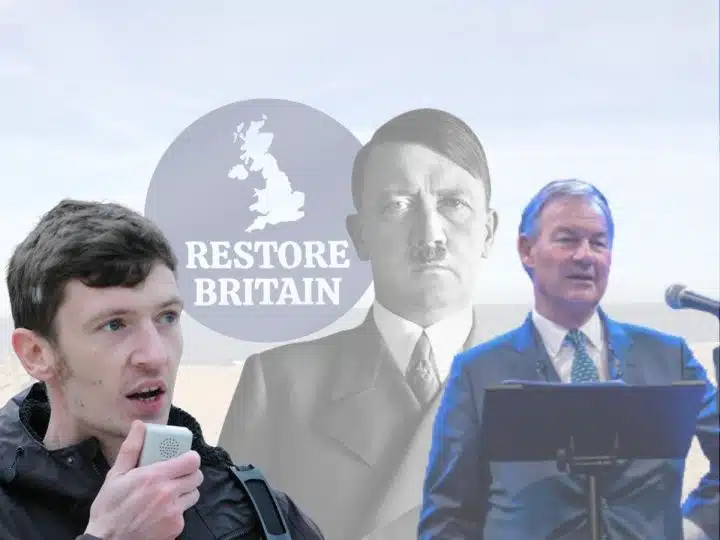
When you look under a rock, it’s common to find all manner of creepy crawlies. We mention this because HOPE not Hate just took a look at what’s going on in Restore Britain, and would you believe it their investigation points to “Hitler admirers”…
Is anyone actually surprised by this? They say it with their chests on here, and Rupert Lowe just ignores it.
They were calling his son a race traitor when he got married. https://t.co/IgurEodS55
— Mukhtar (@I_amMukhtar) July 17, 2026
Creepy crawlies
As HOPE not Hate report, activists from the far-right pro-ethnic cleansing group Remigration Now (RN) have taken root in Restore.
If you’re unfamiliar with ‘remigration’, it’s a pan-European movement that wants to deport what they call ‘non-native populations‘. If you think about this for two seconds, things become muddled. The writer of this piece, for example, is one quarter Irish, one quarter Austrian, and one half English. Am I an English native?
Even if I had four English grandparents, how native would that make me? Given that our country has been intermingling for centuries?
Are you native English if you have a Normal ancestor? An Anglo-Saxon ancestor? A Roman ancestor?
The reality is Remigration Now don’t want to protect ‘natives,’ they want to protect ‘white people’. And mostly, they’re pretty upfront about this now. Take this from far-right agitator Steve Laws:
We must secure the existence of our people and a future for White children.
— Steve Laws
 (@Steve_Laws_) November 19, 2025
Steve Laws is the leader of Remigration Now — the group which is said to be infiltrating Restore Britain. And like most white supremacists, he’s heavy on the ‘white’ and light on the ‘supreme.’ Here he is pictured on the right.
Members of Remigration Now, the pro-ethnic cleansing group run by Steve Laws, are embedded within Restore Britain, the party led by Rupert Lowe MP. This includes figures in positions of local influence. https://t.co/P8B3arJovj
— HOPE not hate (@hopenothate) July 17, 2026
Restore factionalism
If remigration sounds like something the Nazis would do, that’s not a coincidence. Laws has said he would have been “straight behind” the Nazis if he’d lived in 1930s Germany. And as HOPE not Hate have reported:
Many RN activists are former members of the fascist Homeland Party, Laws’s previous vehicle, while others have links to the neo-Nazi groups Patriotic Alternative (PA), White Vanguard, the Active Club network and more.
In a Telegram message sent on 25 February, Laws told his fell Remigration Now activists:
I would advise any of you not as damaging as myself to get in as branch officers, candidates etc. we can create a stronghold in [Restore] and really hold some weight over the direction.
Laws seems to have gotten what he wanted, because several Remigration Now activists are now “embedded” in Restore, according to HOPE not Hate. As they added:
This includes individuals who have praised Hitler and used extreme racial slurs. An RN member behind a Restore Croydon X account also ran a separate account dedicated to raping and cannibalising the corpses of ethnic minorities.
Restore leader Rupert Lowe has claimed he opposes “far right ethnonationalist or neo-Nazism”, and yet these people are in his party. According to Laws, several of the senior members of the party are of his mind too, and are in regular contact with him.
Decline
The Times picking up this story isn’t the first time that a national newspaper has noticed that Restore is stuffed full of fash. As we covered in June, the Telegraph published a very similar piece:
White supremacists with links to banned neo-Nazi groups are helping to fund Restore Britain
— The Telegraph (@Telegraph) June 18, 2026
 : https://t.co/WWj66S23KE pic.twitter.com/aQ9NIDdsvK
Outlets like the Times have increased their focus on Reform recently too. It seems that the establishment media have become uncomfortable with these new far-right parties which are filled with the far right and prone to endless financial scandals.
The Tories also had their fair share of far-right members and financial scandals, of course, but they roughly knew what they could get away with, and it wasn’t wishing Hitler happy birthday, as one Restore member literally did.
Featured image via the Canary
By Willem Moore
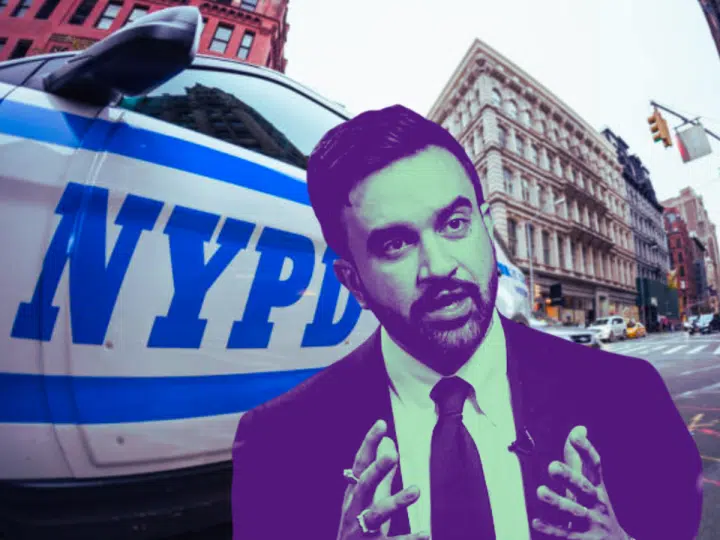

New York mayor Zohran Mamdani is in “active conversation” to see if he can seek an arrest warrant for Benjamin Netanyahu. The wanted Israeli war criminal will be visiting the big apple in September to attend a United Nations General Assembly.
Mamdani: ‘He belongs in the Hague’
Mamdani’s popularity continues to confound and irk the Israel lobby. He has rightly said Israel should not exist as an ethnostate. Both he and his family have been targeted by Israel’s lobbyists for daring to show solidarity with Palestinians against genocide.
He has also said that Netanyahu belongs in the International Criminal Court in the Hague and will be arrested, but only if US law allows. In an interview
I believe that Prime Minister Netanyahu belongs in the Hague. He’s a war criminal who has been charged by the International Criminal Court. And what you will find is that it is an opinion that is held by many, purely because of what his actions have wrought over these last many years.
Whatever the law allows me to do in New York City, that’s what we will do, but we won’t be writing our own laws to that end.
All too predictably, Netanyahu claimed that Mamdani ‘champions Hamas,’ and hates the US in an interview with a NY-based radio station:
I think he should look at who he’s condemning, who he’s praising. He’s condemning Israel… Who does he champion? Hamas, that calls openly to massacre every Jew on earth, that conducted that horrible massacre [on Oct. 7, 2023], the worst massacre on Jews since the Holocaust…
…And in fact I think secretly, he hates America.
International law is unequivocal that the UK has a legal obligation to arrest Netanyahu and other accused war criminals if they have the opportunity to do so.
While claiming to respect international law, the Starmer regime routinely gave special immunity to allow Israeli genociders to come to the UK with impunity. UK police forces have also refused even to investigate UK citizens accused of participating in Israel’s Gaza genocide.
At least Mamdani is making the right noises.
Featured image via the Canary
By Skwawkbox

The UK establishment continues to demonise and repress anti-genocide protest. But Jewish activists against genocide and apartheid were, as usual, at the forefront of the giant march for Palestine in London yesterday, 18 July 2026. All images are courtesy of activist photographer ‘BetterThanReal.’





Oi Burnham – be better!
Marchers celebrated the departure of now-ex PM Keir Starmer and challenged his successor Andy Burnham over his own links to the Israel lobby and whether he will be any better:



Genocide: ‘Bought and paid for’
Protesters carried giant banknotes linking Starmer’s ministers and advisers to Israel-linked donations, and the UK’s collaboration in Israel’s Gaza genocide:



Zionism is racism
They reminded onlookers of the fundamentally racist nature of an ideology that approves the theft and colonisation of a land from its indigenous people – and of the bloodshed it inevitably causes:



Collusion in Genocide
And they opposed UK collaboration in the illegal US-Israel war, while former Labour leader Jeremy Corbyn reminded the crowd of the extent of UK-Israel collusion:


Free Palestine. End Israel’s genocide and occupation.
Featured image via the Canary
By Skwawkbox


The Young Greens have led the way for their machine-hindered parent party by dumping the pro-Israel, pro-colonialism so-called ‘IHRA working definition of antisemitism‘.
Young Greens break ranks
The Israel lobby within the Green party succeeded in sabotaging a ‘Zionism is racism’ motion at the Greens’ conference. However, today – 19 July 2026 – the Young Greens have passed a new resolution dismissing the party’s existing, IHRA-framed guidance as “unfit for purpose” and that the Greens’ youth section:
Believes:
Antisemitism is a serious form of racism that must be actively identified, challenged, and addressed within the Young Greens and the wider Green movement.
A robust antisemitism framework must be both genuinely protective of Jewish members and genuinely protective of free political expression, including Palestinian solidarity, criticism of Israeli state policy, and anti-Zionist political analysis.
The existing reference to a now-inaccessible guidance document does not provide members or officers with the clear and usable framework they need.
The document originally adopted by reference is unfit for purpose and should not be reinstated: it cites politically loaded authorities as neutral scholars, frames anti-Zionism as presumptively suspicious, presents a definition of Zionism that makes no mention of the Palestinian Nakba, explicitly instructs disciplinary bodies to use it, and is now out of date with Green Party policy on Gaza.
This motion is not a policy statement on Israel/Palestine and does not alter the Young Greens’ existing policy positions on Israel, Palestine, or BDS; it is intended as an educative rather than legalistic document.
Resolves
1. To replace the existing 2020 RoOS entry titled “Guidance on Antisemitism” with the following guidance.
2. To adopt the following as the Young Greens’ guidance on antisemitism, for educational and organisational purposes:
‘Speaking through tears’
The Canary‘s Cameron Baillie celebrated and explained the decision:
Speaking through tears following the motion passing—which passed in [a] 16:1 ratio—proposer Jo Dowbor said:
“Leftist greens have tried to drop the IHRA for 20 years—we just made history”. That is palpably true.
One of its Jewish proposers was Noam, born in Israel, who moved to [the] UK.
— C.J.Mc. Baillie (@cjmbaillie) July 19, 2026
Noam’s speech stated that the IHRA definition of antisemitism is “not only inaccurate but dangerous”.
They stated that it is harmful to equate Jews with [the] project of Israel, although this is repeatedly done by politicians.
…make Greens the party “not to compromise on its values”
— C.J.Mc. Baillie (@cjmbaillie) July 19, 2026
Distinguishing between actual racism and antisemitism, and not: pic.twitter.com/VzJgImzrkx
— C.J.Mc. Baillie (@cjmbaillie) July 19, 2026
The IHRA is widely used to suppress free speech on Israel and has been rejected by legal experts and even by the man who wrote it. It continues, unsurprisingly, to be pushed by Israel lobby groups and Israel-allied politicians. The UK government and Israel lobby have used it to target anyone who dares to speak out against Israel’s genocide, or even to show solidarity with its victims.
Accordingly, the Israel lobby was in meltdown at even the prospect of the party’s youth wing voting on the motion. That will only intensify now it has passed resoundingly.
Now it’s time for the Greens’ as a whole to block the manoeuvres of its Israel front group, dump the ‘IHRA definition’ and declare officially that Zionism is — as it unquestionably is — racism.
Featured image via the Canary
By Skwawkbox

England’s 6–4 victory over France in the 2026 World Cup third-place play-off was already a memorable way to end their campaign. But thanks to Bukayo Saka, it became a historic night for English football.
The Arsenal winger stole the spotlight with a stunning hat-trick, helping England secure their first-ever World Cup bronze medal while becoming only the fourth English player to score three goals in a single World Cup match, following Geoff Hurst (1966), Gary Lineker (1986) and Harry Kane (2018).
Saka’s record-breaking night added another milestone to an already impressive international career. The 24-year-old took his England tally to 17 goals in 56 appearances. He also added a World Cup medal to the two European Championship silver medals he won in 2021 and 2024.
His hat-trick also moved him onto England’s all-time World Cup goal scoring list, with five goals at the tournament — matching the total of 1966 World Cup winner Geoff Hurst. Furthermore, he now sits behind only Jude Bellingham (7), Gary Lineker (10) and captain Harry Kane. Kane leads the way with 14 World Cup goals, including six in the 2026 tournament.
Hurst, Lineker and Kane all produced their World Cup hat-tricks during defining moments of their campaigns. Saka has now joined that group, becoming the fourth Englishman to score a World Cup hat-trick while helping England claim their first-ever bronze medal.
Featured image via the Canary
By Alaa Shamali
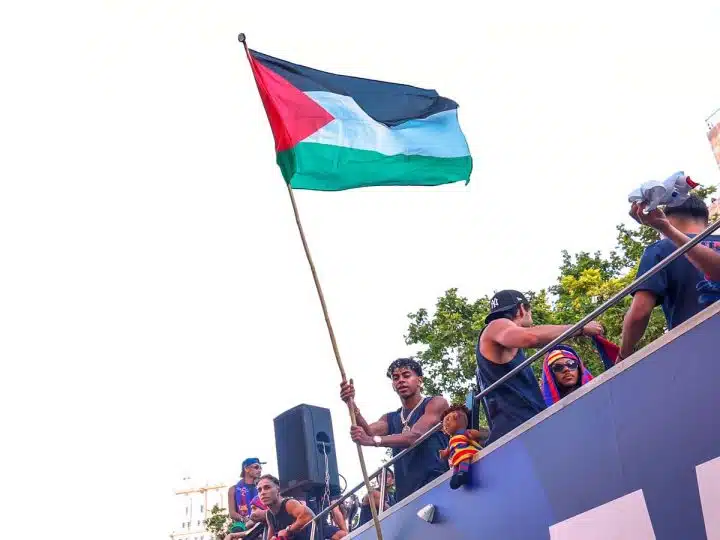

The race for the 2026 World Cup Best Young Player award is heating up, with four rising stars emerging as the leading contenders after standout performances throughout the tournament.
Spain’s Lamine Yamal is among the favourites after playing a key role in his country’s run to the final, further strengthening his reputation as one of world football’s brightest young talents. His teammate Pau Cubarsí has also entered the conversation, becoming a reliable presence in Spain’s defence during their title challenge.
Lamine Yamal’s impact on the 2026 World Cup beyond the statistics
The Spanish duo are not the only contenders, however. France’s Désiré Doué has impressed throughout Les Bleus’ run to the semi-finals, making a major impact with his attacking ability and decisive contributions during the knockout stages.
England’s nominee, defender Nico Aurélie, has also emerged as one of the tournament’s breakout stars under Thomas Tuchel. Having started most of England’s matches, the defender has impressed with his composure on the ball, recording a 93 per cent pass accuracy rate, while producing strong defensive displays — including a standout performance against Norway, where he helped contain striker Erling Haaland, according to FIFA statistics.
With the semi-finals and final still to come, the battle for the award remains wide open. These four young talents will have one final chance to strengthen their cases before FIFA decides who will be crowned the 2026 World Cup Best Young Player.
Featured image via the Canary
By Alaa Shamali

Spain not only claimed the 2026 World Cup title, but also dominated the tournament’s individual awards. Three of the four most prestigious honours went to Spanish players – a further testament to the excellence that led ‘La Roja’ to the pinnacle of world football.
Spain’s captain, Rodri, was crowned with the Golden Ball as the tournament’s best player, following his exceptional performances in midfield and his pivotal role in leading Spain to their second World Cup title, adding yet another achievement to his illustrious career.
Spain’s dominance did not stop at the Best Player award, as goalkeeper Unai Simón won the Golden Glove after an outstanding tournament, during which he conceded just one goal and was one of the key reasons for the Spanish side’s defensive solidity right through to the final.
Young defender Pau Cubarsí also continued to cement his place among the world’s most promising talents, having been crowned Best Young Player following his standout performances throughout the tournament, thereby confirming his status as one of the leading stars of football’s new generation.
World Cup sweep not total
The only exception to Spain’s dominance was the Golden Boot, which went to France’s Kylian Mbappé after he finished the tournament as top scorer with 10 goals, ahead of Argentina’s Lionel Messi with eight, thereby retaining the award for the second World Cup in a row.
The individual awards encapsulated the full picture of the 2026 World Cup, as Spain’s victory was not merely the result of a single final match, but the culmination of a complete tournament in which ‘La Roja’ established themselves as the best in both performance and results, securing both the World Cup trophy and three of the tournament’s most prestigious individual awards.
Featured image via the Canary
By Alaa Shamali
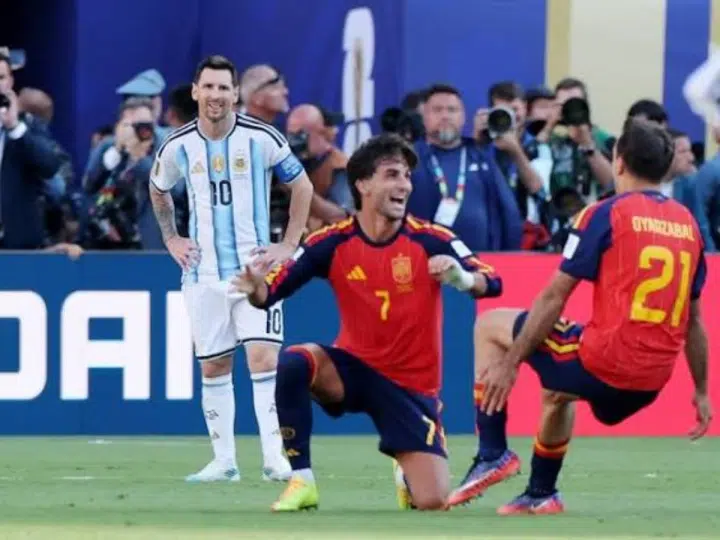
Spain’s second World Cup title did not arrive in a blaze of chaos or a flurry of goals. It came through something far more familiar, control. Luis de la Fuente’s side beat Argentina 1-0 in extra time in New Jersey. Ferran Torres delivered the decisive moment, but the story of this final was written long before the ball hit the net. Spain dominated every phase, every rhythm, every inch of the pitch. This was a victory for football philosophy.
Spain dominated
The match never resembled the dramatic, end‑to‑end final of 2022. It never threatened to. Spain imposed their game immediately, pinning Argentina back and suffocating any attempt to build through Lionel Messi or Julián Álvarez. Every attack flowed through red shirts. Every loose ball seemed to fall Spain’s way.
By the end of the night, Spain had taken 20 shots. Argentina had taken none. Not one. It was the most one‑sided a World Cup final as the competition has seen.
Spain completed 400 more passes than Argentina and spent almost the entire match in the opposition half. Even before Enzo Fernández’s dismissal, Argentina were chasing shadows. Messi, billed for a grand farewell, barely influenced the game. He drifted, he waited, he hoped, but he flopped because Spain never allowed him the oxygen to change anything.
Possession was a weapon
Spain’s commitment to possession football has been questioned at times over the past decade, but this tournament reaffirmed its value. They had more possession in all eight matches, including 74 per cent in their opening draw with Cape Verde. They conceded one goal all tournament.
Rodri, named player of the tournament, anchored everything. His control in midfield set the tempo, while Aymeric Laporte’s calm presence behind him ensured Spain were never exposed. But this was not a story of individuals. It was a collective machine.
When De la Fuente substituted both Rodri and Laporte at 0-0, it was very brave. Off came two of Spain’s most influential players. On came Eric García, Pau Cubarsí and Martin Zubimendi. The structure didn’t wobble. It tightened.
Unai Simón, winner of the Golden Glove, barely had anything to do. He made fewer saves across the entire tournament than Emi Martínez made in this final alone.
A new generation, same principles
Spain’s success is not a throwback to 2010. It is an evolution. Lamine Yamal and Nico Williams missed the opener but were central to Spain’s attacking threat throughout the tournament. Cubarsí, still a teenager, won the young player award. The depth is startling, but the identity is constant.
This is positional play at its purest: triangles, patience, circulation, control. It is football that demands technical excellence and tactical discipline. And Spain have it in abundance.
The reality is the team who was the best at possession based football has won this World Cup.
VARgentina overwhelmed
Argentina were never able to impose themselves. Their togetherness, their competitive edge, their emotional force, their dark arts all trademarks of Lionel Scaloni’s side. In this final those elements were irrelevant against Spain’s structure. They were outplayed, outpassed, outthought. To put it simply, they were outclassed.
Spain’s second World Cup title sits alongside their 2010 triumph and three European Championships in the last 18 years. It is a run of success built not on moments or individuals but on a belief in how football should be played.
De la Fuente’s appointment was a statement: the style stays. The principles stay. The identity stays.
This win is not just a trophy. It is validation. It is proof that, even in an era dominated by direct play, transitions and physicality, Spain’s way still works. Still wins. Still defines tournaments.
Spain: the best team won
Ferran Torres’ extra‑time finish will be remembered as the moment Spain claimed the World Cup. But the real story is the 120 minutes of control that preceded it. The passing sequences. The territorial dominance. The refusal to compromise.
Spain were the best team at this World Cup and in the final, and they played like it.
Football won, with FIFA and VARgentina humbled on the biggest of stages.
By Faz Ali
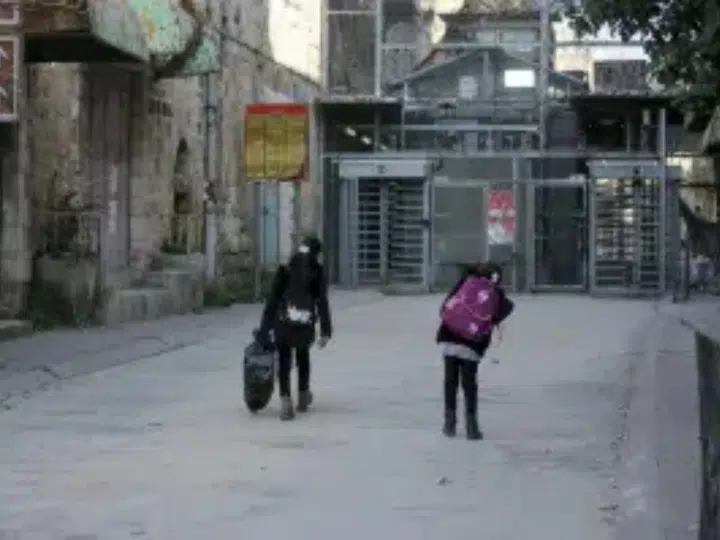
Education is a fundamental human right for everyone, but in the occupied West Bank, including East Jerusalem, access to safe and quality education for almost 835,000 school aged children has been undermined, severely threatening their futures.
West Bank education restricted
Movement restrictions, forced displacement, school demolitions, violence. and harassment by Israeli occupation forces (IOF) and Jewish colonial settlers are commonplace. So for many children, accessing education is a daily challenge. This story explores some of these difficulties.
Every morning, as the children go to school in the West Bank pic.twitter.com/DOFZ2OHNUr
— Johann Spischak (@SDGMasterglass) July 9, 2026
84 schools in the occupied West Bank remain under threat of demolition or subject to stop-work orders issued by “Israeli” authorities. This will affect around 13,000 children. At least 10 of these schools, serving 1000 students, are in the Masafer Yatta region, in the South Hebron Hills. These demolitions will deprive children of their education, a right under international law. They will also speed up the displacement of families from the area.
On 7 July, the occupation rejected an appeal against the demolition order targeting Al Rifaiyya School in Masafer Yatta. The school, which caters for 200 students, has now been given 14 days before demolition.
Khalil Hathaleen is head of the Village Council in Umm al Kheir, Masafer Yatta. He tells the Canary:
They claim the reason for the demolition is lack of a building permit, but they refuse these on the grounds that we live in a C rated area. In my village, Umm al Kheir, the settlers closed the road which the kids use to reach school. The school has now been closed for three months, with 55 students missing out on their right to education. This is an example of the settler violence we face on a daily basis.
Palestinian students from Umm al-Khair school protested the closure of the main road leading to their school after Israeli occupation forces and illegal settlers blocked it with a fence in Masafer Yatta, south of Hebron, in the occupied West Bank.
The closure prevented… pic.twitter.com/Uk44cCS6xb
— Palestine Info Center (@palinfoen) April 24, 2026
Schools demolished to prevent return
South of Nablus, violence by settlers backed by the IOF, emptied the village of Yanoun of its residents eight months ago. Now, these terrorists have demolished the village’s elementary school.
The demolition of the Yanoun Mixed Elementary School by settlers on Wednesday has intensified concerns over the future of the Palestinian village of Yanoun, east of Nablus, with local officials describing the incident as part of a broader effort to prevent displaced residents… pic.twitter.com/xguOTPsJCV
— Middle East Monitor (@MiddleEastMnt) July 10, 2026
In Area C, 10 schools have been abandoned, following the displacement of the communities they once served. By 6 July, 2026, eight of these were vandalised by settlers and two had been demolished.
“Israel” forcibly expelled thousands of Palestinians from the Northern refugee camps, in early 2025, during Operation Iron Wall, destroying homes and infrastructure. No one has been allowed to return, and six UNRWA schools in Nur Shams and Jenin refugee camps remain inaccessible. Then, in May 2025, the occupation’s armed police forcibly closed UNRWA’s six schools in occupied East Jerusalem. These include three in Shuafat Refugee Camp and one in Silwan. All remain shut today.
Students in al Mughayyir, Northeast of Ramallah, suffer daily attacks. In April 2026 two Palestinians, including 13 year old Aws Hamdi Naasan, were shot dead at the boy’s school by illegal settler Schmuel Wendy
Waheed Abu Naim, an English teacher and the principal’s assistant at al Mughayyir boy’s school, tells the Canary violence is directed against pupils on a daily basis, but usually comes from the IOF. And when students leave school, soldiers follow them home, throw tear gas at them, and scare them. The Ministry of Education told the school to continue with online lessons. But Abu Naim says the school does not want this to happen.
We need a proper solution. They want to scare the students and make us leave our teaching, so they can close the school. Parents are scared more than the children, and are talking about not sending their children to school. But we encourage them to continue, as education is the only thing we have to fight against our enemy.
Illegal settlers targeting children
Hebron is unusual in that several small settlement clusters are to be found in the centre of this West Bank city. After the Oslo Agreement, Hebron was divided into H1 and H2. H2 is under the control of the occupation’s military and encompasses the Old City and the holy sites.
Around 700 illegal settlers live amongst 7000 Palestinians in part of H2, so the occupation imposes strict movement regulations on Palestinians in this area. Out of the 925 movement obstacles in the West Bank, more than 100 are in Hebron’s H2 area. 34 out of the 89 checkpoints are also in this area. Palestinians living in the Restricted Areas near these settlements face many difficulties, including accessing education.
Hebron Community Peacemaker Teams (CPT) monitors checkpoints, maintains a protective presence, and documents human rights violations, especially in H2. Since 2002, it has also escorted Palestinian children and teachers through military checkpoints to school.
A CPT Hebron Team member, who wished to remain anonymous, told the Canary:
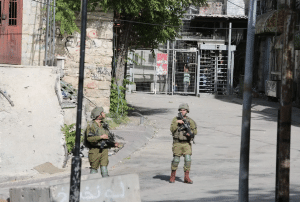
Since 7 October 2023, restrictions have intensified for Palestinians living in these areas, especially students. One of the restricted areas is Wadi al-Hussin, where Ziad Jaber School is located. Students living in this area must cross a checkpoint next to the school. They are often searched and sometimes detained by soldiers. There have also been multiple incidents where soldiers entered the school due to allegations of stone-throwing. Another restricted area is near the Ibrahimi Mosque, where two schools are located: Al-Ibrahimi School for boys and Al-Faihaa School for girls. Students must cross three checkpoints to reach these schools. The main checkpoint is Al-Salaimiya, known as Checkpoint 160.
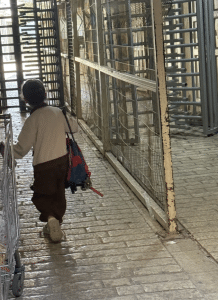
According to the UN, movement restrictions since October 2023 have reduced school attendance in H2 by about 25 percent. Since July 2025, a new checkpoint at Yasser Amr girl’s secondary school in H2, has resulted in more than 100 students leaving the school. Initially a gate and two concrete blocks formed the checkpoint, but this later expanded to include caravans, an IOF cabin, and surveillance cameras pointing in all directions.
Parents in Tel Rumeida, a Restricted Area in Hebron, tell the Canary they fear for their child’s safety while on their way to attend school. This is not only because of likely harassment and intimidation from the IOF at checkpoints, but also the ever increasing possibility of settler violence.
Persistent danger
Yasser’s son, Abdulrahman, must cross a frequently closed military checkpoint to reach school, leaving him vulnerable to delays and attacks. This makes his father feel extremely anxious. And a mother tells us she worries for her daughter, who walks through isolated areas where settlers have previously attacked her. She often escorts her and checks on her during the school day. Both parents describe a persistent sense of danger affecting their children’s daily routines and well-being.
West Bank children traumatised
For many years, children attending schools in the H2 area of Hebron near Israeli occupation settlements have experienced intimidation, threats and violence. According to CPT, the daily harassment, access delays, school closures, and invasive security measures by “Israel” disrupt learning and create fear. This affects academic achievements and psychological wellbeing, and leads to less children registering to attend these schools.
Some of the occupation’s systematic violations documented by CPT at these schools include:
- A female settler entered al- Ibrahimi School under military protection, and attempted to identify and detain students. She then waited at the school gate. Students had to be protected, some changed clothing for safety.
- During morning assembly, drones hovered over Ziad Jaber school, causing fear, anxiety, and disturbance among students.
- On the first day of exams at both Qurtoba School and al Faihaa School, students were physically and verbally assaulted by settlers.
The above are not isolated incidents, but an integral part of life for schoolchildren in Hebron’s H2 area.
UNICEF’s global spokesperson, James Elder, warns the impact of recurring, targeted attacks on education “follows children out of the classroom.”
If these children are Palestinian, the consequences are measured not only in lost lessons, but in the lasting psychological toll of growing up where schools, teachers, and classmates are never beyond the reach of violence.
Featured images via Hebron Community Peacemaker Teams
By Charlie Jaay
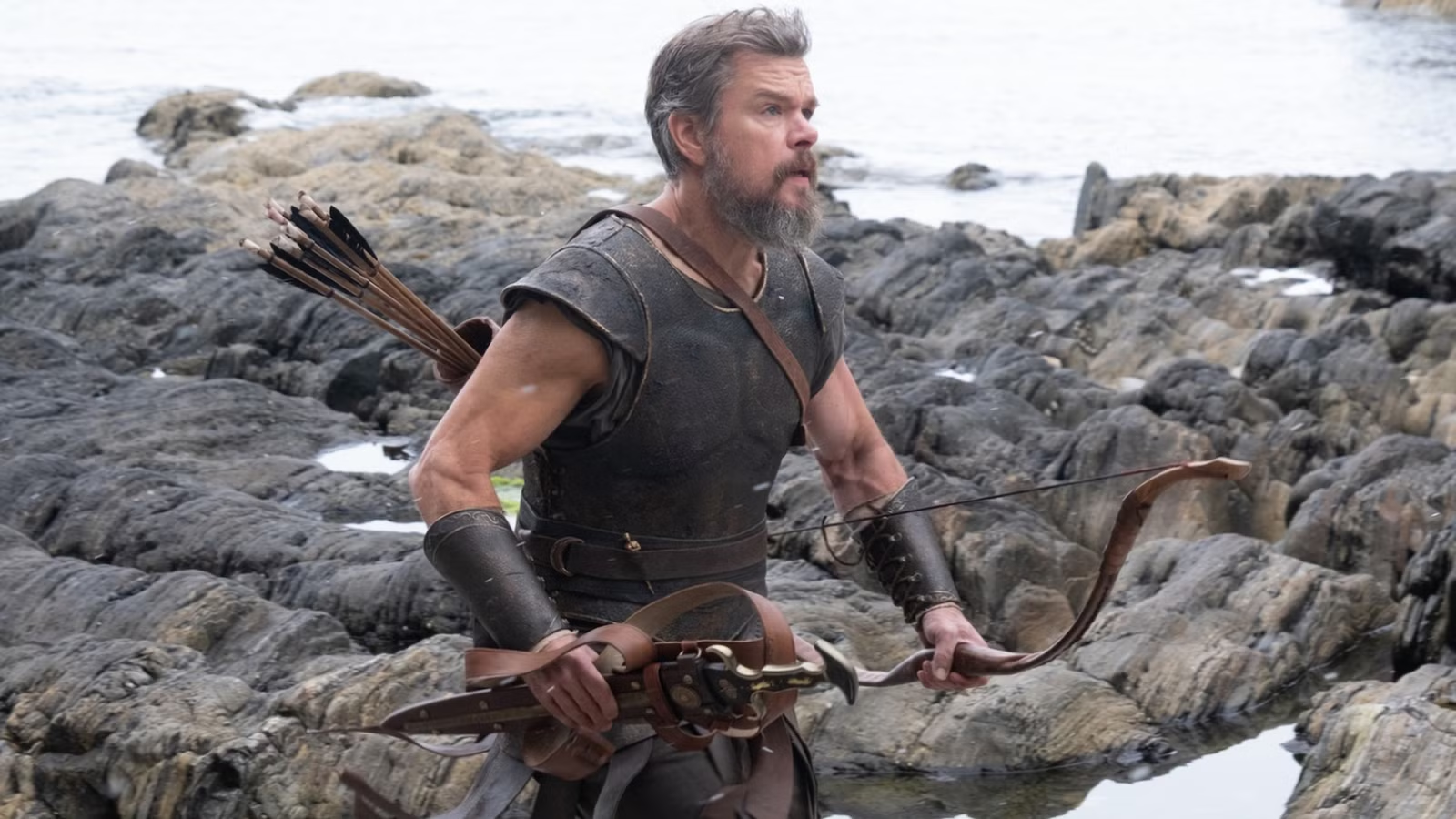
‘The Odyssey’ Officially Slays Ridley Scott’s Historical Epics at the Box Office in Just 10 Days

The Institutional Adoption Signal DTCC Just Sent XRP
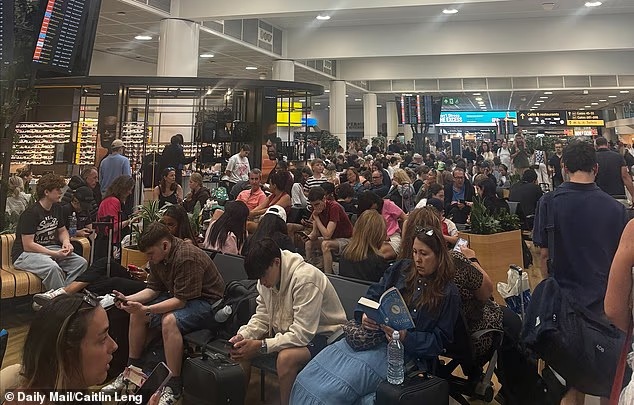
Chaos at Gatwick airport as water outage leaves huge queues and passengers unable to flush toilets or wash hands


-

 Fashion2 days ago
Weekend Open Thread: Brooks Brothers
-

 News Videos7 days ago
Big Money Is Entering XRP
-

 Crypto World5 days ago
Grayscale Files For Worldcoin ETF, WLD Registers Sharp Rise
-

 Tech6 days ago
Sail Virtually Aboard The “Itanic” With IA-64 Emulator
-
 Tech5 days ago
Turtle Beach Command Series KB7 review: a nifty screen-equipped gaming keyboard
-

 NewsBeat6 days ago
Unregistered fitter used Gas Safe logo on business flyers
-
 Business4 days ago
New Jersey voter registration controversy explained: How 6,600 noncitizens got on the rolls, and what happens next
-
 Entertainment5 days ago
Johnny Depp’s R-Rated Gothic Cult Classic Gets New Release Ahead of Sydney Sweeney Remake
-

 Crypto World4 days ago
Ethics, other provisions in crypto Clarity Act to be further discussed
-

 Tech6 days ago
Watch Flock Safety CEO Garrett Langley discuss the future of surveillance at TechCrunch Disrupt 2026
-
 NewsBeat6 days ago
Shanghai science forum photos show China’s AI and robotics advances in rivalry with US
-

 Crypto World6 days ago
Circle’s President Sold Over 360,000 Shares, The Filings Explain Why
-

 Tech6 days ago
Subway Sandwich Computers Get a Second Life as Gaming Machines
-

 Sports3 days ago
2026 3M Open leaderboard: Scottie Scheffler finds putter in Round 1, sits three back
-

 News Videos3 days ago
The Peugeot Family: How 200 Years of an “Old Money” Dynasty Died in A Boardroom
-

 Fashion2 days ago
16 Dresses for the High Summer Event
-

 Tech7 days ago
How To Use Claude’s Reflect Dashboard And Learn When It’s Time To Touch Grass
-

 Tech6 days ago
The 35 Best Board Games for Family Game Night
-

 Entertainment6 days ago
Stephen Colbert Returns to Social Media After Late Show End
-

 Crypto World6 days ago
Andrew Cuomo joins OKX board as crypto exchange expands in U.S.
You must be logged in to post a comment Login