Politics
The House Article | Women’s bodies are a front in the fight for the future


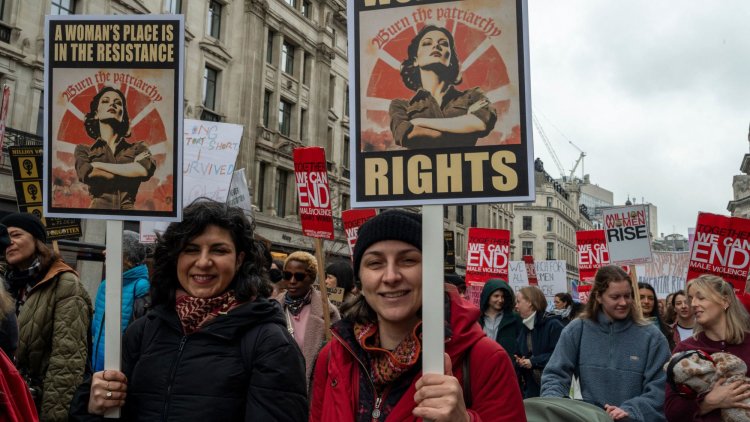
(Alamy)
4 min read
This International Women’s Day there is much to celebrate.
We are proud to serve alongside an unprecedented number of women in Parliament. We are proud to do so as part of a government with ambitious plans to advance women’s equality, from halving violence against women and girls to transforming women’s experiences of maternity care.
But there is also much to make us uneasy. Because the reality is that a battle for control over women and our bodies is part of the contest for power in our unstable world. This is playing out locally, nationally in the UK and internationally.
We see egregious examples of this every day. In Iran, where the regime has been desperate to prevent women from dressing the way that they want to, and despite the war there is no guarantee that will change. In Afghanistan, where the Taliban have already tested the limits of whether the world would stop them from enforcing gender apartheid; forcing women out of schools and workplaces and into the home. They found the answer: that indeed the world does not care enough to stop it. In Sudan, the world’s worst humanitarian crisis, where rape is a common tactic for the warring parties. Our Foreign Secretary Yvette Cooper spelled this out in powerful detail on the main stage at the Munich Security Conference, which we attended recently, as she recalled her recent visit to meet Sudanese refugees and heard of the rape of girls as young as 8 years old.
There is an increasing subtext of a need to control women’s bodies in the talk of the shifting global order. We have both worked with the United Nations and it will benefit from some ongoing reforms. However, at Munich there was a contention that the UN, as a trusted and neutral multilateral body owned by all of us, has spent too much time and effort feeding starving people; giving an elementary education to refugee girls who have fled war to rudimentary camps; or providing contraception to women for some basic control over their bodies in situations where they have control over almost nothing else.
But this is not just a point about the world away from home. Matt Goodwin, the Reform candidate in the Gorton and Denton by-election, said that women who don’t have children should be taxed more, and that young women need an education in fertility. As if The Handmaid’s Tale were something to aspire to and women who choose not to have children – or cannot – are somehow failing in their duties. See also Reform Danny Kruger MP’s comments about the ‘unregulated sexual economy’. Reform have said that under a Reform government, the Equality Act – the basis for much of the progress that we’ve made on women’s rights in the UK – would be repealed.
So this is happening here in the UK, in the context of Grok weaponising women’s bodies through nudification apps, which our government is right to crack down on. Our colleague Jess Asato MP had the dreadful experience of someone using this technology to make a fake video of her being chloroformed and ‘prepared for rape.’
This is not done just to be vile and misogynist, although of course it is that. It is done to frighten us and let us know that violent men believe that they should have the right to assert their will over us. You can draw a line from the ‘family-focussed’ organisations which believe in ‘trad wives’ – the idea that women should be back in the home and that we should all take our fulfilment from cooking meals for our husbands and rearing children – through to the words and actions of the likes of Andrew Tate and the late Charlie Kirk. A new global survey finds that younger men increasingly believe that a wife should obey her husband and that men are expected to do too much to support equality.
This is not an accident; it is done with organisation and with intent. The European Parliamentary Forum for Sexual and Reproductive Rights has mapped the money behind the anti-rights and anti-women movement, finding that between 2019 and 2023, a total of US$1.18 billion was pumped into Europe for anti-women initiatives, from 275 different actors including church-run NGOs and far-right populist parties. More funding came from Russia than from anywhere else; the second biggest source of funding was the US. This now includes US Government funding; the Trump administration has set aside $200 million to support ‘MAGA-friendly’ think tanks in Europe, with the goal of spreading their ideology.
When we face the far right in our own communities, we are facing the local branch of a growing international movement to roll back women’s rights. The stakes could not be higher.
We must give voice to what is taking place, we must take it on and we must win.
