Politics
The House | Britain must join efforts to boost European space capabilities if it is to lead Nato in the High North


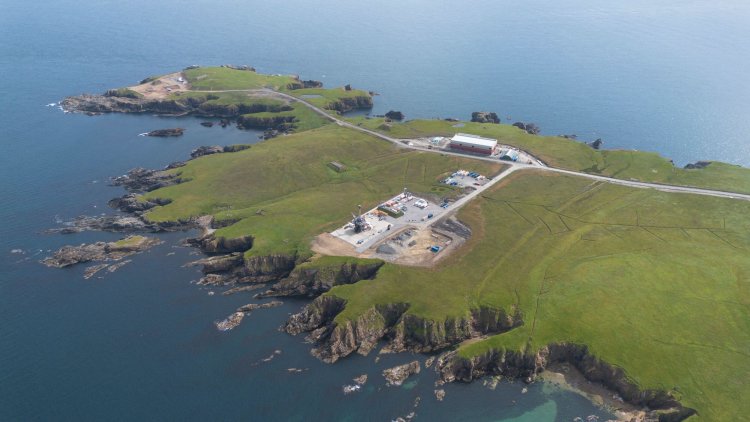
SaxaVord Spaceport, Unst, Shetland (Kevin Lunham/ Alamy)
3 min read
That Nato operations in the High North (the Arctic, North Atlantic and northern Europe) are to be led by a British, rather than American, military commander is a welcome step that aligns with the government’s “Nato First” approach.
But it also highlights how Britain’s ambitions in the region are not yet matched by the capabilities needed to sustain them.
Crucially, that capability includes space, the invisible infrastructure upon which modern military power depends. Communications, intelligence, navigation and targeting all rely on satellites and especially so in the High North. There, sparse infrastructure, vast distances and extreme environmental conditions render terrestrial alternatives unreliable or, in many cases, simply unavailable.
The UK is not alone in this challenge – other European allies continue to rely on the US for space capabilities. While transatlantic co-operation remains essential, this dependence is increasingly untenable.
Europe’s response has so far followed a familiar pattern: more funding, more satellites and more initiatives, but largely as national efforts rather than genuinely collective capability. Integration as well as aggregation is required, ensuring that the smorgasbord of national capabilities operate synergistically. This is where the UK has both the opportunity and the responsibility to lead.
Britain has significant strengths: global leadership in small satellite design; advanced manufacturing and testing; the sovereign Skynet military communications constellation; and “golden shares” in commercial operators. It is also home to a growing space finance and insurance market in the City and to Europe’s first licensed vertical-launch spaceport, SaxaVord in the Shetlands, which is ideally positioned for polar orbits. Yet these assets are underutilised within allied frameworks. A striking example is the UK’s absence from Nato’s Arctic satellite communications programme, Northlink.
Northlink tackles the central challenge of providing secure, persistent connectivity above 65° latitude. It blends near-term reliance on commercial providers with longer-term development of anti-jammable, military-grade communications. Importantly it is also structured to allow participating countries to pool demand, share costs and integrate capabilities in a flexible and scalable way.
For a country seeking to lead in the High North, staying outside such an initiative is increasingly hard to justify. Not only that, Skynet’s own functionality begins to degrade above 70°.
A parallel and closely related challenge exists in launch. Here, the UK is already engaged through Nato’s Starlift initiative, which seeks assured access to space by co-ordinating spaceport capacity across the alliance. This matters because Nato’s dependence on satellites makes it a prime target from the outset of a conflict; the ability to rapidly replace damaged or destroyed ones is essential to combat operations.
While transatlantic co-operation remains essential, this dependence is increasingly untenable
Here again is a clear opportunity for the UK to exercise greater leadership. UK spaceports offer valuable access to polar orbits. As the Lords’ Committee on UK Engagement with Space has noted, the security case for sovereign launch capability is compelling.
These two areas – launch and communications – are not separate challenges but interdependent parts of a single system. Without assured launch, satellite constellations cannot be sustained. Without effective communications between them, those constellations cannot deliver operational value. Integration of both is crucial.
Through Northlink and Starlift, Britain should act as a convening force, turning fragmented national efforts across the alliance into a sustainable capability.
Timing is critical. In 2027, Nato will begin the next cycle of its Defence Planning Process, which will set national capability targets for years to come. This coincides with the deadline reportedly set by American officials for when Europe should assume primary responsibility for its conventional defence. The next 12 months, therefore, will be decisive in shaping what “Nato First” looks like in practice.
If the UK intends to honour its responsibilities in the High North, now is the moment to act.
Lord Stirrup is a crossbench peer and former chief of the defence staff
Arun Dawson is researcher at the Freeman Air and Space Institute, KCL

You must be logged in to post a comment Login