
Politics
The House | Britain risks reducing its trade diplomacy capacity in Africa at exactly the wrong time

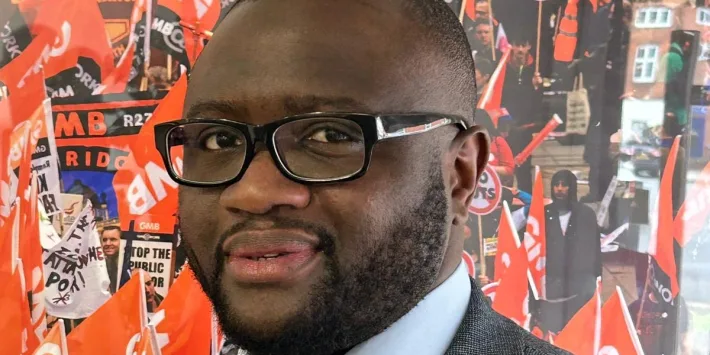

Ernest Ambe
2 min read
As Labour redefines Britain’s place in the world, economic diplomacy must match rhetoric with reach. Nowhere is that test more urgent than in Africa.
Britain is quietly redrawing the map of its global engagement. The Department for Business and Trade (DBT) is slimming down its overseas footprint, while the Foreign, Commonwealth & Development Office (FCDO) is stepping up with a new “business-first” diplomatic culture and a promise to make economic statecraft central to foreign policy.
It’s the right instinct and one that sits firmly within Labour’s international agenda: rebuilding trust, renewing partnerships, and putting prosperity and fairness at the heart of foreign policy. But instincts need infrastructure. If Britain thins its trade presence without a hard replacement plan, it risks having less capability in the field just as global competition for deals intensifies.
The contraction is significant. Reports suggest DBT’s workforce across Africa could be reduced by up to 70 per cent. That’s precisely where commercial diplomacy, regulatory engagement, and investor aftercare have the greatest multiplier effect. When that presence fades, so does the everyday influence that converts goodwill into growth.
The FCDO’s pivot to economic diplomacy could offset this if it’s properly operationalised. The then Foreign Secretary’s March pledge of a “business-first” culture and a new Geopolitical Impact Unit are welcome. Yet for posts to deliver, Whitehall needs a joined-up playbook: clear division of labour, shared data, measurable outcomes, and empowered local teams. Civil servants abroad must have both the authority and the tools to turn opportunity into investment.
Trade and diplomacy have always been two sides of the same coin. Ambassadors and High Commissioners can open doors; only trade specialists know which ones lead to viable contracts. Labour’s growth mission depends on aligning both the handshake and the follow-through.
For Africa, this is not an abstract debate but a strategic test. The continent’s economic transformation anchored in digital infrastructure, green minerals, logistics, and creative industries is one of the defining stories of the next decade. Britain’s peers are already moving: the EU and US are expanding commercial attaché networks; China, India, and Turkey are embedding trade attachés across regional blocs. The UK cannot afford to shrink its footprint in the very markets shaping future growth.

Politics
Jonathan Guttentag: When soldiers guard synagogues, something has already gone deeply wrong

Rabbi Jonathan Guttentag is a UK representative of the Coalition for Jewish Values and a communal rabbi based in Manchester.
When a European government sends soldiers onto its streets to protect synagogues and Jewish schools, it is tempting to describe the move as a tough law-and-order response.
It is not.
It marks a more serious shift: from policing a society to defending it.
That distinction matters.
Police operate within a functioning civic order. Their presence assumes that public life, however imperfect, is broadly governed by law, consent, and deterrence.
Soldiers are different. Armies are not instruments of civic management; they are instruments of defence. They are deployed when the threat is no longer simply criminal, but organised, ideological, and resistant to the normal authority of the law.
When soldiers stand guard outside synagogues, a line has already been crossed.
I have seen this before.
In France, following the attacks on a kosher supermarket and the murders at a Jewish school in Toulouse, troops were deployed to protect Jewish institutions. I encountered this directly a year later, attending a gathering of the Conference of European Rabbis in Toulouse. The synagogue and community buildings were guarded by young soldiers, barely out of training, cradling automatic weapons.
It was, in one sense, reassuring.
But it also raised a more troubling question: how had things reached the point where even armed police were no longer sufficient, and the state had to reach for the army?
For decades, attending such gatherings across Europe, security had always been present — police outriders on motorcycles, flashing blue lights, traffic briefly halted, the visible choreography of the state in control. But that was policing. This is something else.
For years, rising antisemitism across Europe has been treated as a social problem to be managed rather than a threat to be confronted. The response has been familiar: statements of concern, educational initiatives, intermittent enforcement — accompanied by a marked reluctance to address the sources of hostility directly.
The result is a recognisable pattern: hesitation, escalation, and then emergency measures.
We are now seeing elements of this closer to home.
In recent days, even Hatzola ambulances — volunteer emergency responders whose sole purpose is to save life — have come under attack. When those providing medical assistance become targets, it is no longer credible to describe the problem as marginal.
Last Yom Kippur in Manchester, my colleague Rabbi Daniel Walker was forced to defend his synagogue from a violent attacker. The outer gates had already been rammed and breached before the confrontation reached the entrance itself. This was not a distant or abstract threat. It was immediate and physical.
In the days that followed, King Charles III visited the site and later became patron of the Community Security Trust — a welcome and important signal of national support.
But it also reflects a harder truth: that protection is increasingly required where once it was assumed.
The lesson for policymakers should be clear.
If threats of this kind are treated merely as issues of community relations or low-level disorder, the response will always lag behind reality. By the time soldiers are required, the failure has already occurred.
The task is not only to respond at the point of crisis, but to restore the conditions in which ordinary policing is sufficient.
That means:
- enforcing the law decisively
- confronting sources of incitement without hesitation
- and reasserting that public space in Britain is governed by law, not intimidation
A society in which people can worship freely without armed protection is not a luxury. It is a basic test of civic health.
Once that assumption begins to fail, restoring it is far harder than preserving it.

For the second time in four years, Britain is staring down the barrel of a major energy crisis. Since America and Israel began bombarding Iran, the prices of oil and gas have soared across the world, and Britain is especially exposed. This week, even as talk of a potential ceasefire has calmed the markets somewhat, global oil prices remain 45 per cent higher than before the war began, and 60 per cent up on the start of the year. Whatever happens next between Trump and the ayatollahs, whether the US ‘unleashes hell’ or ceases fire, the UK is in for a very rough ride.
The outlook is beyond bleak. The typical household energy bill in the UK is expected to climb by 20 per cent in July, when a new energy price cap comes into effect. Industry is already feeling the strain, with input prices for British factories surging at the fastest pace since the Black Wednesday market crash in 1992 – thanks to the soaring costs of energy, transport and oil- and gas-derived products. Investment bank Morgan Stanley has warned of a ‘pronounced recession’ later in the year.
Of course, there is no scenario in which modern Britain could have been immune from such seismic events in the Middle East. Iran has effectively closed the Strait of Hormuz, through which 20 per cent of the world’s oil flows. For every day the strait is closed, more barrels of oil are being taken out of circulation than in the 1973 and 1979 oil crises combined. Added to that has been the Islamic Republic’s attacks on LNG (liquified natural gas) facilities across the Gulf. Iranian strikes on Qatar’s Ras Laffan gas facility have wiped out 17 per cent of Qatari LNG exports. All in all, the Iran War has prompted what the International Energy Agency considers to be the single ‘largest supply disruption’ to the world’s energy supplies in history.
So no, Britain was never going to escape the headwinds of this crisis. But it could have been far better prepared for weathering the storm. It could – and should – have learned at least some lessons from the last energy-price crisis in 2022, when Russia’s invasion of Ukraine sent gas prices soaring. Not least as Britain is blessed with abundant oil and gas reserves of its own, in both the North Sea and as frackable shale gas beneath the ground. Yet unless Keir Starmer and his energy secretary, Ed Miliband, radically change course on decades of perverse policies, the UK is only set to become even more vulnerable to future external shocks beyond our control.
The Labour government insists the crisis underlines the need for Britain to ‘get off’ oil and gas, and switch to ‘clean power’. According to Miliband, fossil fuels cannot be produced domestically at scale. And even if they could, he claims, we would still be prisoners of a volatile global energy market.
The energy secretary is wrong on all fronts. Catastrophically so. As a new report by Offshore Energy UK (OEUK) confirms, North Sea oil and gas drilling has indeed fallen sharply in recent years. But this has been driven by government policy, not the supplies in reserve beneath the sea. Miliband’s ban on new North Sea oil exploration, and his continuation of the Tories’ windfall tax on the sector, are by far the greatest constraint on domestic drilling. As a result, according to OEUK, imports of LNG – which currently account for 14 per cent of the UK gas supply – are set to soar to 46 per cent by 2035. Under Miliband’s North Sea shutdown, Britain will become more dependent on suppliers like Qatar, and thus more vulnerable to external energy shocks.
And what might domestic protection mean for the price of energy? While nobody expects reopening the North Sea to instantly rescue the UK from the current price hikes, more domestic drilling could indeed lower costs in the long run. Miliband’s insistence that prices are set ‘internationally’, and so domestic production would ‘not take a penny off energy bills’, is straightforwardly untrue. If prices really were set globally, the UK would not be paying six times more for gas than energy-rich America.
It is, however, true that Britain buys and sells gas on a European market, but this doesn’t mean exploiting the North Sea would be a fruitless endeavour. For one thing, more domestic production would mean fewer LNG imports – avoiding the costs of liquefaction, shipping and regasification that shipping gas around the world entails. This is also why it is unlikely that all new oil and gas produced in the UK would simply be sold abroad, as foreign markets pay a premium for transport costs. In any case, as energy expert Dieter Helm explains, there is no reason why, with enough ‘imagination’, the UK government could not secure favourable treatment from North Sea firms as a condition for granting new drilling licences.
Even if Miliband were somehow correct, that any new oil and gas would immediately leave the country, keeping the North Sea alive would still be a no-brainer. It would provide billions in tax revenue at a time of fiscal crisis. It would vastly improve the balance of payments, at a time when Britain is importing far more goods and services than it exports. And it would keep alive an industry that supports hundreds of thousands of mostly well-paid, unionised jobs. There is simply no rational, let alone progressive, argument for throttling the North Sea.
For the past decade or so, the big bet made by the establishment has been that renewables can replace energy derived from fossil fuels. Wind and solar, they claim, are not only cheaper, but offer more security of supply, too. Again, these are sheer delusions. The only time British consumers have ever paid less for wind power than for gas was when the gas price went into the stratosphere at the start of the Ukraine war. After 2030, should Miliband hit his target for a ‘clean-powered’, renewables-heavy grid, energy supplier Centrica expects prices to be higher than at the peak of the Ukraine energy crisis. Britain is set to exit what Miliband calls the ‘rollercoaster of fossil fuels’, only to lock in crisis-level energy costs in the longer run.
As well as being exorbitantly expensive, renewables are inherently insecure. Wind and solar are intermittent sources, as they can only provide electricity when the wind blows and the Sun shines. When the weather is unfavourable, gas needs to be purchased (at an inflated price) as a backup, or there is a risk of blackouts. What’s more, renewables can’t even mitigate against geopolitical risks. Several large offshore wind projects are facing delays, as components made in the United Arab Emirates are also stuck behind the blockade of the Strait of Hormuz.
Britain’s energy policies are nothing short of suicidal. Blinded by Net Zero zealotry, Miliband and his predecessors have made our energy supplies more costly, less secure and more reliant on foreign imports. The result is an almost permanent energy crisis that will long outlast the current conflict in the Middle East. If the economic pain of the next few months doesn’t change the establishment’s thinking then perhaps nothing ever will. It will confirm, beyond any shadow of a doubt, that our current trajectory of deindustrialisation and decline will have been actively chosen by our rulers.
Fraser Myers is deputy editor at spiked and host of the spiked podcast. Follow him on X: @FraserMyers.
4 min read
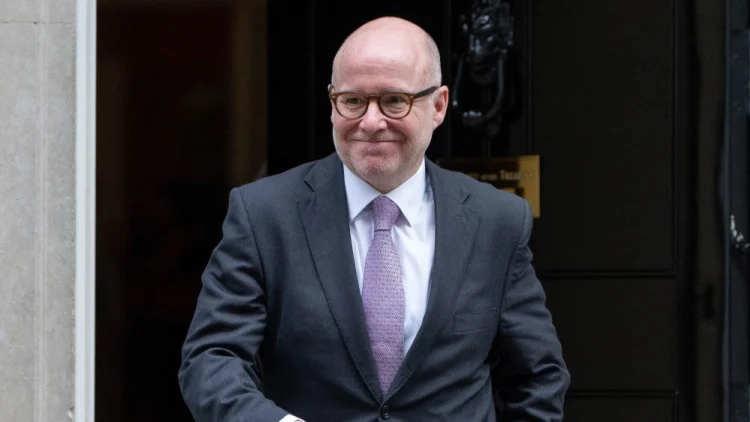
Done well, consultations are vital. Done badly, however, which happens too much in Whitehall, they cease to be tools of democracy and instead become obstacles to it.
In 2018, there was a consultation on whether a handful of walkers could pass through a small ground in Lancashire for two hours every Sunday. In 2023, it was decided there was a need for the same consultation again.
The full machinery of government was marshalled in a similar way as it would for policies worth billions.
If you log on to GOV.UK right now, you will find a never-ending list of other government consultations. Many of these are a great way to gather feedback and the views of the public on important issues affecting them and their communities.
Some of them are more questionable.
Taken in the round, they tell a compelling but concerning story. Of good intentions, probably sound individual decisions, spiralling into something else. Layers of bureaucracy that successive governments have allowed to accumulate, each intended to safeguard fairness, yet have instead created a jungle of delay, confusion, and frustration.
And not just from ministers. The civil service is full of dynamic, committed people driven by a deep sense of public service. But they are being slowly suffocated by the system around them, causing stagnation. The previous government introduced an eyewatering number of new legal duties, regulations, and statutory requirements – ironically under the banner of deregulation.
That is absurd, but what is worse is that this absurdity has real consequences: ordinary people feeling that the state is distant, immovable, or worse, not serving their interests.
I came into law not because I thought its purpose was to preserve the status quo, but because I have seen how it can enable change. I came into government to drive forward that work. And I know the Prime Minister did so, too.
We cannot leave the defence of effective government to those who would dismantle it
That is why Nick Thomas Symonds and I have been tasked with helping create a more modern, agile state, working with the new Cabinet Secretary, Antonia Romeo, whom the Prime Minister has tasked with rewiring the state to turbocharge delivery.
Nick and I are lawyers by training, recognising that governing through the law does not mean blindly following endless procedures. Governing through the law means assessing these duties, asking whether they still serve us, and, where they don’t, changing them.
The reforms we are announcing today (Thursday) are about doing exactly that. About ensuring we properly rationalise how government works, and for whom.
We cannot leave the defence of effective government to those who would dismantle it. Those who have a vested interest in talking down the state’s ability to change people’s lives for the better, who want to tear away safeguards for working people.
Good governance is about delivering for the public because the public elected us on a mandate for change.
So, part of this is ending the culture of automatic consultations. Since the start of this year, 122 consultations have been launched – around two a day. Consultations are vital when they are genuine exercises in engagement: testing assumptions, gathering evidence, shaping policy. At their best, they save the public purse, but at their worst, deployed without thought or proportionality, they cease to be tools of democracy and instead become obstacles to it.
We have repeatedly seen the consequences; process overwhelms purpose, and momentum is lost. It’s like setting out to mow the lawn, only to find yourself hacking through a jungle.
We are using the latest advances in AI to assist with identifying and reviewing legal consultation requirements that clog up the system.
But there are many other areas where we will be taking this approach.
Decision-making will be modernised and reviewed to see where routine decisions can be made without excessively burdensome processes that take weeks. New accountability measures for Permanent Secretaries will be introduced to focus on delivering the PM’s priorities, hold civil servants to account for doing so, and ensure change is lasting.
Ultimately, the machinery of government should help ministers make good, effective decisions. Sometimes that means deliberation; sometimes it means acting quickly, within the law, to deliver what people need.
The state must not be slowed by its own procedures. Its purpose is to make decisions that matter for the public we serve.
If trust depends on delivery, and delivery depends on action, then our priority is clear:
cut through the unnecessary thickets, restore the capacity to act, and ensure the state can uphold principle without suffocating under its own processes.
This isn’t the sum of our ambition — it is barely base camp — but it is the first step in a radical climb to rewire the state.
Lord Hermer is the Attorney General
Politics
Chico Khan-Gandapur: Why policy isn’t enough – a behavioural blueprint for Conservative renewal

Chico Khan-Gandapur is a managing partner at Metrica Consulting.
In the 2019 U.K. general election “Big Dog” Boris Johnson won by a landslide: 365 seats, an 80 seat majority, with 43.6 per cent of the votes cast.
Fast forward to today, and despite Kemi Badenoch’s regular excoriation of Keir Starmer at weekly PMQ’s, a great Conference, and a policy suite that is Conservative through and through, the Party’s vote share is anchored at just 16 -18 per cent (Politico’s Poll of Polls). 13.96 million voted Conservative in 2019, yet current polling would suggest just 5.4 million voters would now, nothing short of a collapse.
I addressed this in an earlier article for ConservativeHome, The Conservative Party Brand Must Shift With Behavioural Science, back in December:
“…The wholesale abandonment and ongoing voter indifference to the Conservative brand is not simply a, ‘we are fed up’ moment, or a ‘protest’ vote; rather, it reflects deeper, more structural issues. Traditional attempts to understand this challenge and turn it around have floundered. The breakthrough lies in analysing this situation through the lens of behavioural science…”
This second essay expands on these themes, and encouragingly finds the Party employing several of the strategies needed to improve its standings, but it still needs to go much further and deeper.
The subject Behavioural Political Science distinguishes between Policy‑Based support, agreement with specific positions, and Affective Partisanship, the sense of emotional loyalty or identification with a specific Party. Extensive research shows these two dimensions of support, while related, are actually distinct psychologically. Individuals may like a party’s ideas but without feeling it represents their group identity, and similarly, may stick with a party they feel close to despite disagreeing with several of its policies.
Neuroscientific studies of political engagement reinforce this distinction, demonstrating that perceptions of leaders and party brands activate emotional and social‑cognitive circuits, not just rational policy evaluation. This evidence supports the view that voters respond to cues about Trust, Competence and Identity at least as much as they do to detailed policy platforms. Indeed, some studies argue Trust, Respect and Like together drive 75 per cent of voter intentions, leaving just 25 per cent for policy evaluation – a huge relative difference.
Analysis of the 2024 election suggests Conservatives lost its 2019 voters over perceptions of incompetence, and a loss of trust in the Party as a consequence. But where these voters subsequently went to was shaped by their values. Many of those defecting to Labour cited a desire for stability, integrity and competent management of public services (which has obviously backfired) while those moving to Reform placed greater weight on immigration, cultural issues and a sense of voice for People Like Us. The latter is classic affective politics: voters searching for a party that feels like it’s on their side.
For the Conservatives to turn these challenges around, Behavioural Analysis suggests three interlocking approaches.
First, they must re‑establish visible competence and reliability. Voters frequently use heuristics (mental short-cuts) and simple stories to cope with political complexity, such as, ‘they’re useless, they never do what they say’. Once these negative labels are attached to a party, they are hard to shake-off and negatively impact subsequent information with voters discounting new promises.
The party therefore needs a period of disciplined, almost boring delivery on a small number of salient promises, chosen to be easily observable and personally relevant. The aim is to replace the prevailing dominant heuristic with a different one: this party now does what it says, consistently and competently. This requires internal restraint – fewer headline‑grabbing but undelivered pledges, and quieter follow‑through, highlighting a distinction and contrast between those in office. The Stronger Economy, Stronger Country promises to align with this approach
Second, the Conservatives must rebuild Identity and Belonging. Behavioural research shows people are strongly motivated by social identity and group attachment. When voters feel that a party comprises people like me, they are more willing to engage, forgive missteps and tolerate policy disagreements. When they feel looked down on, ignored or taken for granted, they become open to alternatives which recognise their status and concerns.
For Conservatives this means addressing messages and local engagement that underpin we are for people like you to distinct groups of electorates: older homeowners anxious about crime and disorder; younger families worrying about housing and childcare; small‑business owners struggling with regulation and costs; aspirational working‑class voters who care about order, fairness and tangible opportunities. Recent messaging from Harrogate, the Party of Common Sense and the Common Ground, acknowledges this requirement.
But it also implies investing in local presence – councillors, associations, community campaigns – as attachment is often and more effectively forged through repeated, face‑to‑face interactions rather than national broadcasts alone. This is an area which Conservatives need to expand significantly in their attempts to reconnect with nearly 8.5mln lost voters.
Third, they must restore Stable Narratives and Messengers. Frequent leadership changes and visible factional conflict have repeatedly broken this vital attachment process by resetting and changing cues about what being a Conservative actually means. Each change of leader and slogan has required voters to ask whether the party has truly changed, or whether it remains the same fractious organisation, but just behind new branding. In this respect, several defections from the Conservatives to Reform will likely prove beneficial, and might even work to pollute the reputation of the destination Party.
Behavioural and neuroscientific work emphasises the importance of the perceptions of the leader. Images serve as powerful proxies for party brands, with voters responding to the characteristics they perceive in a leader – steady or chaotic, sincere or cynical, like them or out of touch – and then generalise that to the party. Conservatives therefore need leaders and local representatives who embody a coherent story about order, opportunity and stewardship over time, rather than a sequence of conflicting personas and narratives. This breadth of leadership, especially locally, is wanting currently.
Taken together, these behavioural insights point to the need for a broader strategic shift. The party should approach politics less as a marketplace for policy products and more as a long‑term relationship in which attachment is built through Reliability, Respect and Recognition.
Intellectual policy work remains necessary, but is not by itself sufficient: it must be accompanied by a deliberate attachment strategy that treats trust, identity and emotional resonance as core design prerequisites rather than as optional extras. Conservatives must demonstrate visible delivery alongside competence in everyday, tangible ways, re‑anchoring the party in the lived identities of key voter groups.
While progress has been made, there is still much more work to be done, especially at the local level. Upcoming local authority elections in May will be the acid test of just how far the Party has progressed.

Ryan Gosling might not be fussed about keeping up with Gen Alpha slang, but that doesn’t mean the rest of us aren’t out here trying to decode what our kids are saying on a daily basis.
One of the terms you might’ve overheard them exclaiming in conversation, or perhaps while gaming, in recent times is gyatt.
What does gyatt (sometimes spelt gyat) mean?
Gyat or gyatt is a phonetic abbreviation for “god” or “goddamn”, which originates from African American Vernacular English (AAVE), dating back as far as the 1700s, according to Parents.
It’s usually used as an exclamation to express excitement or admiration, however it’s increasingly being used by Gen Alpha and Z to refer to someone they find extremely attractive.
Or, more specifically, their posterior.
Nowadays, according to Merriam-Webster dictionary, it’s evolved into slang for “a nice behind” or, per Cambridge Dictionary, “an attractively large bottom”.
In some instances, younger kids might simply refer to their bum as a gyatt, without realising the more sexualised meaning behind it.
It’s clearly pretty popular as some primary schools have even taken to banning its use.
As the word is largely rooted in sexual objectification, it’s worth pulling up your child or teen on their use of it – especially if they’re not using it in a respectful way.
Sexual harassment can include sexual comments, remarks, jokes and online sexual harassment. Government research suggests the issue is widespread in schools in England.
Gabb also noted that if your kids are coming out with gyatt it might flag they’re watching content online intended for older audiences – in which case, a review of their social media use might be helpful.
What else are teens saying?
Glad you asked… Here goes!
Mid
When Gen Alpha uses it, “mid” means mediocre or of disappointing quality. According to Merriam-Webster, “mid” serves to express that something falls short of expectations, or isn’t impressive.
Unc
This is short for “uncle” – and, per Merriam-Webster, it’s “often used humorously to indicate old age” and may imply “someone is old, getting old, or acting older than their age”.
Lowkenuinely
A combination of ‘lowkey’ and ‘genuinely’, which describes expressing something sincere in a casual, laid-back way, according to experts at language platform Preply.
Chopped
In Gen Z and Gen Alpha speak, it means ugly.
Choppelganger
Choppelganger is a portmanteau of ‘chopped’ (aka ugly), and ‘doppelganger’, which is a person who resembles someone else. So basically, it’s calling someone a less-attractive lookalike of someone else.
Chat
According to Gabb’s guide to teen slang, chat is quite simply used “to refer to a group of people, like friends or people in their class”.
Politics
Politics Home | If Labour Doesn’t Revamp The Civil Service, Reform UK Will Dismantle It, Warns Hermer

3 min read
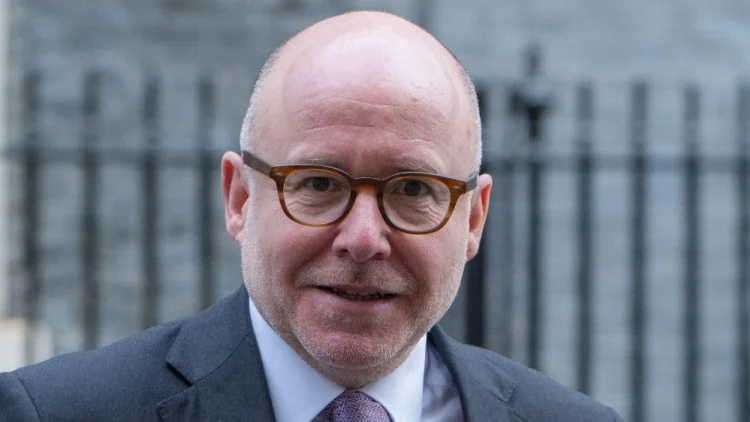
Attorney General Richard Hermer has warned that failure by the Labour government to improve Whitehall delivery will pave the way for Reform UK to “dismantle” the civil service.
Writing for The House on Thursday, Hermer, a close ally of Prime Minister Keir Starmer, said: “We cannot leave the defence of effective government to those who would dismantle it.
“Those who have a vested interest in talking down the state’s ability to change people’s lives for the better, who want to tear away safeguards for working people.”
The Attorney General’s warning comes after the Labour government on Thursday announced a series of reforms designed to speed up government decision-making and tackle what it described as a “consultation culture” in Whitehall.
In addition to reducing the number of consultations, the government will use AI to identify red tape, as well as streamline the ‘write-round’ process, which ministers use to reach collective decisions. PoliticsHome revealed in November that write-rounds, which involve written correspondence between ministers, were frustrating government figures, who felt that the procedure was creating unnecessary delays.
Ministers will also implement a new accountability framework for permanent secretaries to ensure departments are focused on delivering the Prime Minister’s priorities.
Nigel Farage’s Reform UK has been highly critical of the civil service, arguing that it is too large and not fit for purpose.
The Observer recently reported that the party plans to sack the current cohort of permanent secretaries, who lead departments, and replace them in some cases with outsider political appointees. The newspaper reported a senior Reform figure as pointing to Donald Trump’s current administration as Farage’s inspiration.
While work on the reforms announced today started months ago, government sources told PoliticsHome that Cabinet Secretary Antonia Romeo had injected a sense of urgency. Paymaster General Nick Thomas-Symonds is also heavily involved in the work.
In his piece for The House, Hermer said that 122 consultations had been launched on the government website since January, the equivalent of two a day.
“Consultations are vital when they are genuine exercises in engagement: testing assumptions, gathering evidence, shaping policy. At their best, they save the public purse, but at their worst, deployed without thought or proportionality, they cease to be tools of democracy and instead become obstacles to it,” the Attorney General wrote.
Pointing to a “never-ending list” of consultations currently on GOV.UK, he said that while many were “a great way to gather feedback and the views of the public,” some are “more questionable”.
“Of good intentions, probably sound individual decisions, spiralling into something else.
“Layers of bureaucracy that government after government have allowed to accumulate, each intended to safeguard fairness, yet instead creating a jungle of delay, confusion, and frustration.”
He said that the civil service “is full of dynamic, committed people driven by a deep sense of public service” who are being “slowly suffocated by the system around them”.
“The state must not be slowed by its own procedures. Its purpose is to make decisions that matter for the public we serve,” the cabinet minister wrote.
“If trust depends on delivery, and delivery depends on action, then our priority is clear:
cut through the unnecessary thickets, restore the capacity to act, and ensure the state can uphold principle without suffocating under its own processes.”
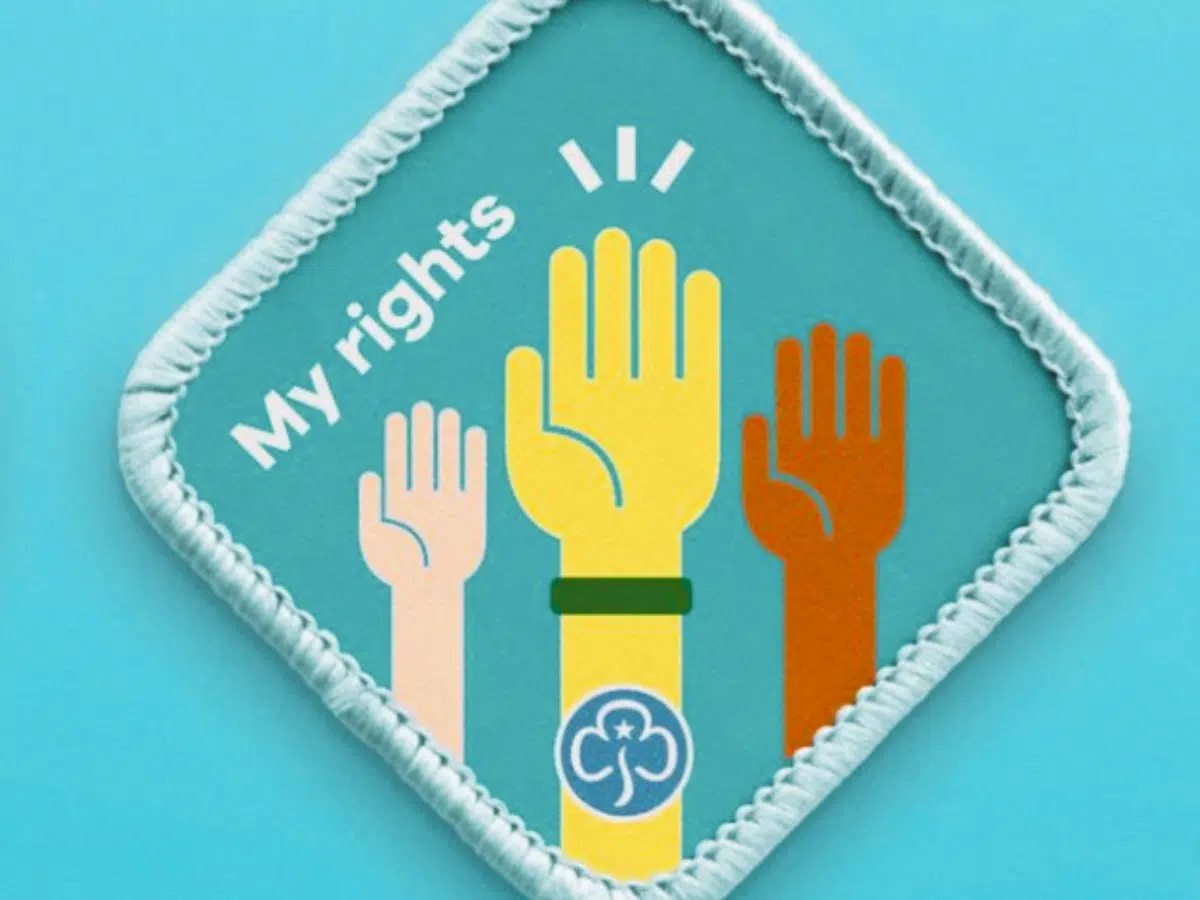
Sky News recently reported that trans girls have been told to leave the Guides by 6 September 2026.
BREAKING: Transgender girls have been given until September 6 to leave the Guides.
🔗 Read more https://t.co/LhwTga7pDi
— Sky News (@SkyNews) March 24, 2026
Following the Supreme Court’s ruling that biological sex determines gender, individuals and groups have intensified anti-trans rhetoric and increasingly isolated trans women and girls, citing the decision as justification.
This latest move by the Guides will cause significant anxiety and distress for young trans girls. The deadline signifies a reversal of their previous position. Many of us remember their 2018 statement which showed refreshing compassion towards this vulnerable group.
As the Canary has previously reported, in 2018, their guidance explicitly welcomed trans women and girls.
This makes clear how far anti-trans rhetoric has gone in the UK. The far right have deliberately portrayed trans people as a dangerous threat. Their narrative has lost any moral grounding it seeks to depend upon.
Trans girls, after all, are just that: children.
Trans children demonised: guides have lost their backbone
This decision reflects a troubling pattern of institutions cowing to billionaire-backed, far-right groups that are targeting and scapegoating trans people. Even more concerning is the impact on young trans girls—now excluded from the very spaces that welcomed them. This ostracises and isolates them from their peers.
This X account drew attention to the Guide’s statement on trans policy in 2018 under former Chief Exec Julie Bentley:
Contrast this with what the Guides said in 2018, from their now-deleted page:
“It’s been really disappointing to read and hear comments that suggest the inclusion of trans children and young people in Girlguiding somehow puts our other members at risk.”
“It is quite frankly… https://t.co/UospLiDYtz pic.twitter.com/uUdWWzEGcW
— Adam Smith (@adamndsmith) March 24, 2026
Back in 2018, the group rightfully raised the alarm over the way in which trans girls were being demonised in far-right public discourse.
At the time, the Guides expressed disappointment with the suggestion that the inclusion of trans children “puts” others at risk of harm. In their words:
It is quite frankly disturbing that people assume that a trans child is a threat to others or that they would want to harm their Girlguiding friends.
But we do also recognise that there are legitimate concerns and queries around the practicalities of self-identifying girls sharing sleeping and bathroom facilities, and that’s why we offer bespoke guidance for any leader who is looking to run an activity, like a camp, that’s going to involve a trans child.
“They are simply children”
One X account commenting on these past statements, said the group’s change of tack is likely a response to:
the threat of litigation by middle class middle aged bigots who have media sway is too much for charities.
It is also worth noting that their 2018 statement was based around a survey of girls and young women which showed 86% in support of trans-inclusive policies.
In an expression of solidarity, another X user said:
Well done for publishing this. It’s a sad day for the trans community.
All this hate they are getting, now that transphobes have been given ammunition against them.
A lot can change in eight years. In 2023, the guides appointed a new Chief Executive, Felicity Oswald. Since then, new initiatives aimed at growing membership have been introduced, under the motto “Girls Can Do Anything.”
Notwithstanding this new direction, they have failed to protect all children, and abandoned principles of equality.
Discrimination was bound to happen
The Supreme Court’s ruling worked to roll back trans rights by two decades, as we wrote last year:
By prioritising a gender normative definition of sex over legal gender recognition, the court’s decision disregards the lived experiences and identities of trans women. It raises questions about their access to single-sex spaces, participation in public life, and protection against discrimination.
The Supreme Court’s decision reflects a troubling trend within politics and justice to favour a narrow, right-wing view of gender, ignoring the complexities of gender identity and trampling over the rights of trans people.
This approach fails to consider the social and legal realities and plays right into the hands of the anti-trans lobby, the far-right, and bigots.
The Women’s Institute (WI) almost immediately banned trans women from their events following this shortsighted and extremely damaging ruling. Of course, this has caused significant distress for trans communities who are being pushed out of public life.
Abandoning children is a choice
However, the Charity Commission even intervened to say that no charities were under any pressure to rush to change policies after the controversial ruling, suggesting they are:
within their rights to wait for statutory guidance before abandoning their trans-inclusive policies.
The decision from Girlguiding is a result of capitulation to far-right bigots who are attempting to demonise trans people. Choosing to further isolate already marginalised children from their peers is a sickening decision.
The fact that the group in 2018 had no problem including trans children speaks volumes about the UK’s gigantic swerve towards openly transphobic politics in recent years. One of the Girlguiding mottos is:
We help girls know they can do anything
As long as they’re the right kind of girls.
Featured image via the Canary
Politics
Richard Osman Teases House Of Games Will Be Getting A Big Rebrand When Michael Sheen Takes Over

 Richard Osman in his iconic House Of Games big red chair
Richard Osman has shed some more light on how things are going to work over at House Of Games when he steps down as host.
Earlier this month, the Bafta nominee announced he would be leaving Richard Osman’s House Of Games after nine years and around 800 episodes at the helm.
He insisted at the time that House Of Games would remain on the air with a new presenter, later revealed to be the actor Michael Sheen.
But given that Richard’s face is quite literally plastered all over his celebrity game show – and many of its prizes – some may have had questions about whether this would remain in place after his departure.
In fact, as he told listeners on the latest episode of his podcast The Rest Is Entertainment, the show will be getting a big rebrand after he’s left.
“One of the things they’re currently doing is producing prizes with his face on. So it will be called Michael Sheen’s House of Games,” he explained, joking that he “lobbied” to try and stick around in spirit even if he wasn’t hosting the show anymore.
To most of us, Richard rose to fame as Alexander Armstrong’s right-hand man on the daytime quiz Pointless.
Nowadays, he’s as well known for his literary output as he is for his on-screen work, having penned the best-selling mystery novel The Thursday Murder Club, which was adapted for the big screen by Netflix last year.
Since the first book was published, The Thursday Murder Club has spawned four sequels, the most recent of which, The Impossible Fortune, came out in late 2025.
During his time as the host of House Of Games, Richard has welcomed a slew of celebrity guests and put them through their paces, including his now-wife Ingrid Oliver, who he met when she was a contestant on his show.
MORE TV NEWS:




Israel says it will invade Lebanon and enforce a ‘defensive buffer’ zone up to the Litani river. Or, in plain English, the settler-colonial state means to colonise Lebanon’s south – probably permanently.
In theory, Hezbollah breached a US-brokered ‘ceasefire’ with Israel in early March which had held up since their last war in 2024. In practice, the US gave Israel carte blanche to strike Lebanon, which it has done constantly since the deal was struck. During the intervening period, Israel attacked southern Lebanon about 15,400 times.
Now senior Israeli officials say they have destroyed many of the bridges on the Litani river, largely cutting off the south from the rest of the country.
The Guardian reported on 25 March:
During a meeting with the military chief of staff, Israel defence minister Israel Katz said Israeli forces would “control the remaining bridges and the security zone up to the Litani”, a river in Lebanon that meets the Mediterranean about 30km (20 miles) north of Israel’s border.
Adding:
Katz added all bridges over the Litani river, which he said had been used by Hezbollah to move operatives and weapons into southern Lebanon, “have been blown up and the IDF will control the remaining bridges”.
Far-right minister Bezalel Smotrich said on 23 March that the war:
needs to end with a different reality entirely, both with the Hezbollah decision but also with the change of Israel’s borders.
I say here definitively…in every room and in every discussion, too: the new Israeli border must be the Litani.
However:
He nevertheless represents a widely and deeply-held expansionist desire at the heart of Israel’s settler colonial polity. In Zionism’s ethno-nationalist fever-dream, Lebanon—and even lands far beyond it—are already part of Israel.
Israel aggression gathers steam
Israel attacked 92 villages in the south in 24 March:
The Israeli military attacked 92 villages and towns across Lebanon on Tuesday. A journalist on the ground recorded a new strike today while reporting from the town of Al-Burghuliyah, a coastal municipality in the Tyre district of southern Lebanon, near the Mediterranean. https://t.co/9Uun7KDNwG
— Drop Site (@DropSiteNews) March 25, 2026
Channel 4 News attended the funeral of another two paramedics killed by Israeli strikes on 25 March. the youngest was 16 years old:
Awful, heartbreaking, unacceptable
We’ve just been at the funeral of two young volunteer paramedics in southern Lebanon – killed in a direct Israeli strike… one was only 16 years old
They were killed whilst wearing their full kit according to witnesses – returning from the… pic.twitter.com/K5rtw0WwHO
— Secunder Kermani (@SecKermani) March 25, 2026
The Israeli assault has displaced one in five Lebanese people. The World Health Organisation (WHO) reported that massive surges of displacement were placing pressure on hospitals:
A #WHO team visited Siblin Governmental Hospital to assess capacity amid a surge in displacement. Over 130,000 people in the area are placing growing pressure on health services. pic.twitter.com/CeuYpAKKOa
— WHO Lebanon (@WHOLebanon) March 25, 2026
Al Jazeera reported that the war had caused food prices to inflate. While Hezbollah – a Shia political party and paramilitary force in the south – called for unity.
Hezbollah chief Naim Qassem said:
Negotiating with the Israeli enemy under fire amounts to imposing surrender and stripping Lebanon of its capabilities, especially since negotiations are fundamentally rejected with an enemy that occupies land and continues daily aggression.
We call for national unity against the Israeli-American enemy under one title at this stage: stopping the aggression to liberate the land and the people. All other issues can be discussed afterward.
Israel has had its sights on southern Lebanon for years. It’s desire to drive all the way through to the Litani has nothing to do with ‘defence’ or establishing ‘buffers’. This new outrage is driven by the same nakedly colonialist ambition which has driven Israel’s genocide against Palestinians, its attack on Iran, and its sundry other atrocities in the region.
Featured image via the Canary
Politics
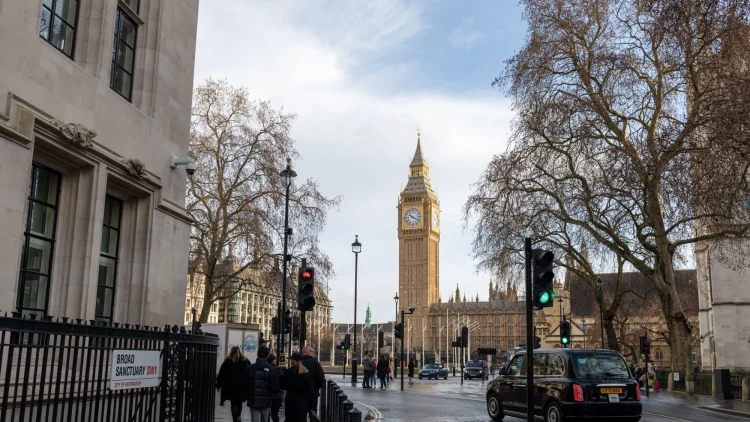
The House | Parliament must lead by example in creating a Commons more open, effective and accessible for all


3 min read
Since being appointed Leader of the House last September, I’ve enjoyed chairing the cross-party Modernisation Committee.
It’s been rewarding to act on testimony from MPs, Peers, staff, academics and members of the public on how we can make the Commons more accessible, effective and open.
During the last Labour government, Modernisation Committee reports led to key changes that are now established parts of our parliamentary week, including Westminster Hall debates, topical questions and expanded educational and visitor facilities.
At the end of last year, we published our report into accessibility in the Commons. This year, we are examining the key topics in today’s parliamentary landscape.
Following our inquiry into accessibility, during which the committee heard from disabled MPs, Peers, House and Members’ staff as well as academics and senior officials, it was made clear that accessibility needs to become a major priority for the Commons, and be woven into the fabric of what it does.
Our report made a series of recommendations, including:
• Where reasonable adjustments are required for disabled MPs to contribute in the Chamber and committees, it should be made as clear as possible how they can be accessed.
• Visitors should be asked upon entry if they have a disability or access need and offered support accordingly.
• Senior leaders should establish an External Accessibility Advisory Group, allowing organisations representing disabled people the opportunity to provide feedback on accessibility challenges in Parliament.
• The Commons should lead by example and inspire other public sector bodies by ensuring as much as possible of its communication and engagement activities are delivered in accessible formats such as British Sign Language, Easy Read and audio file.
• Line managers should receive mandatory training on how to support disabled and neurodiverse individuals.
If you haven’t yet read our report, I would encourage you to do so, and we’ll continue following up on this important issue to ensure our recommendations are implemented and progress towards making the Commons more accessible continues at pace.
As a committee, we’re committed to regular engagement with the wider parliamentary community, including smaller parties, the Speaker and his deputies and all those who work here as well as the public.
So far this year, we’ve been working closely with the Liaison Committee on remote access to committee hearings to ensure the resilience of parliamentary proceedings, and we’ve discussed the recommendations from the independent review into Parliament’s Independent Complaints and Grievance Scheme (ICGS).
We’re also interested in how Parliament can use time as effectively as possible, enabling MPs to scrutinise legislation and raise issues of importance to their constituents.
This is a topic that came up in our call for views at the beginning of the parliament and one we will return to this year. We’ll explore practical ways to provide MPs with more certainty about upcoming business and on-the-day changes, ensuring the Commons remains the crucible of national debate.
There is still much to do if we’re to make Parliament a more accessible and open institution which best serves the interests of our constituents. I’m committed to continuing to work with all MPs to achieve consensus in this important work.

Jonathan Guttentag: When soldiers guard synagogues, something has already gone deeply wrong

Darius Acuff Jr. is dominating March but NBA Draft questions remain

12 Clever Gadgets Under $100 To Upgrade Your Smart Home


-
 Crypto World6 days ago
NIO (NIO) Stock Plunges 6.5% as Shelf Registration Sparks Dilution Worries
-

 Fashion6 days ago
Weekend Open Thread: Adidas – Corporette.com
-
 NewsBeat1 day ago
Manchester United reach agreement with Casemiro over contract clause amid transfer speculation
-

 Politics6 days ago
Jenni Murray, Long-Serving Woman’s Hour Presenter, Dies Aged 75
-

 Crypto World5 days ago
Best Crypto to Buy Now: Strategy Just Spent $1.57 Billion on Bitcoin During Fear While Early Investors Quietly Enter Pepeto for 150x Potential
-

 Crypto World5 days ago
Bitcoin Price News: Bhutan Sells $72 Million in BTC Under Fiscal Pressure, but the Smart Money Entering Pepeto Sees What the Market Does Not
-

 Tech6 days ago
inKONBINI Lets You Spend Summer Days Behind the Register
-

 News Videos13 hours ago
Parliament publishes latest register of MPs’ financial interests
-

 Sports3 days ago
Remo Stars and Kano Pillars Strengthen Survival Hopes in NPFL
-

 Politics7 days ago
Gender equality discussions at UN face pushbacks and US resistance
-

 Business4 days ago
No Winner in March 21 Drawing as Prize Rolls to $133 Million for Next
-

 Sports3 days ago
Gary Kirsten Accuses Pakistan Cricket Board Of ‘Interference’, Mohsin Naqvi Responds
-

 Tech4 days ago
Give Your Phone a Huge (and Free) Upgrade by Switching to Another Keyboard
-

 Sports6 days ago
2026 Kentucky Derby horses, odds, futures, preview, date: Expert who nailed 12 Derby-Oaks Doubles enters picks
-

 Tech4 days ago
AI enters the chat: New Seattle dating app relies on tech to facilitate meaningful human connections
-

 Politics7 days ago
Scotland’s rejection of assisted dying is a victory for humanity
-

 Business7 days ago
DLocal: Entering 2026 At Escape Velocity
-
Business6 days ago
Columbia Sportswear enters $500 million credit agreement with JPMorgan Chase
-

 NewsBeat7 days ago
Missile lands next to presenter during live report
-

 Tech5 days ago
Today’s NYT Connections Hints, Answers for March 22 #1015
You must be logged in to post a comment Login