Politics
The House | Emily Thornberry: “I Wanted Keir To Have More Of An Opportunity To Be Himself”


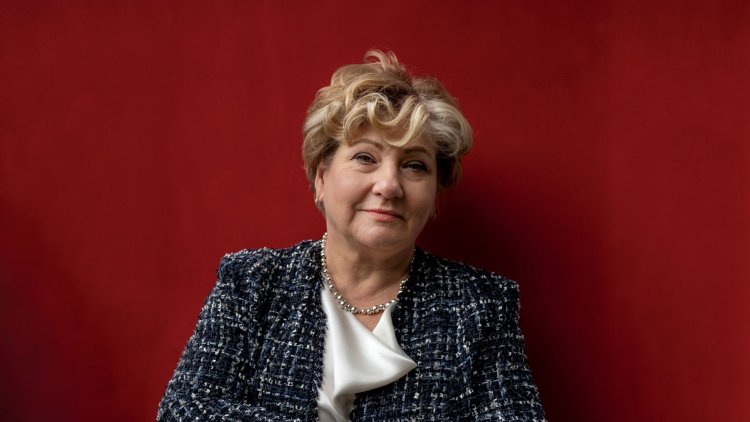
Emily Thornberry (Photography by Tom Pilston)


13 min read
Foreign Affairs Committee chair Emily Thornberry tells Sienna Rodgers Labour needs ‘bold and brave and open leadership’ – from radicalism at home to the EU reset and British soft power around the world
It would be hard to find anybody in Westminster who still believes Keir Starmer will lead Labour in the next general election. Yet many in the party are fearful of rushed conclusions about the way forward; worried that the real lessons will not be learnt or that their particular view of where to go next may not emerge as the winning one.
Emily Thornberry strongly believes that any transition must be handled thoughtfully. She has no enthusiasm for a quick and dirty leadership election allowing one faction or another to claim victory. While the Makerfield by-election may have granted Starmer a stay of execution, the circus around Andy Burnham’s candidacy followed by the potential for a coronation may not be conducive to the “proper postmortem” desired by this Labour dame.
She wants Labour to have a deep think about what went wrong in the May elections, while also maintaining that efforts to sharpen – and expand – the party’s policy offer to the country should not wait.
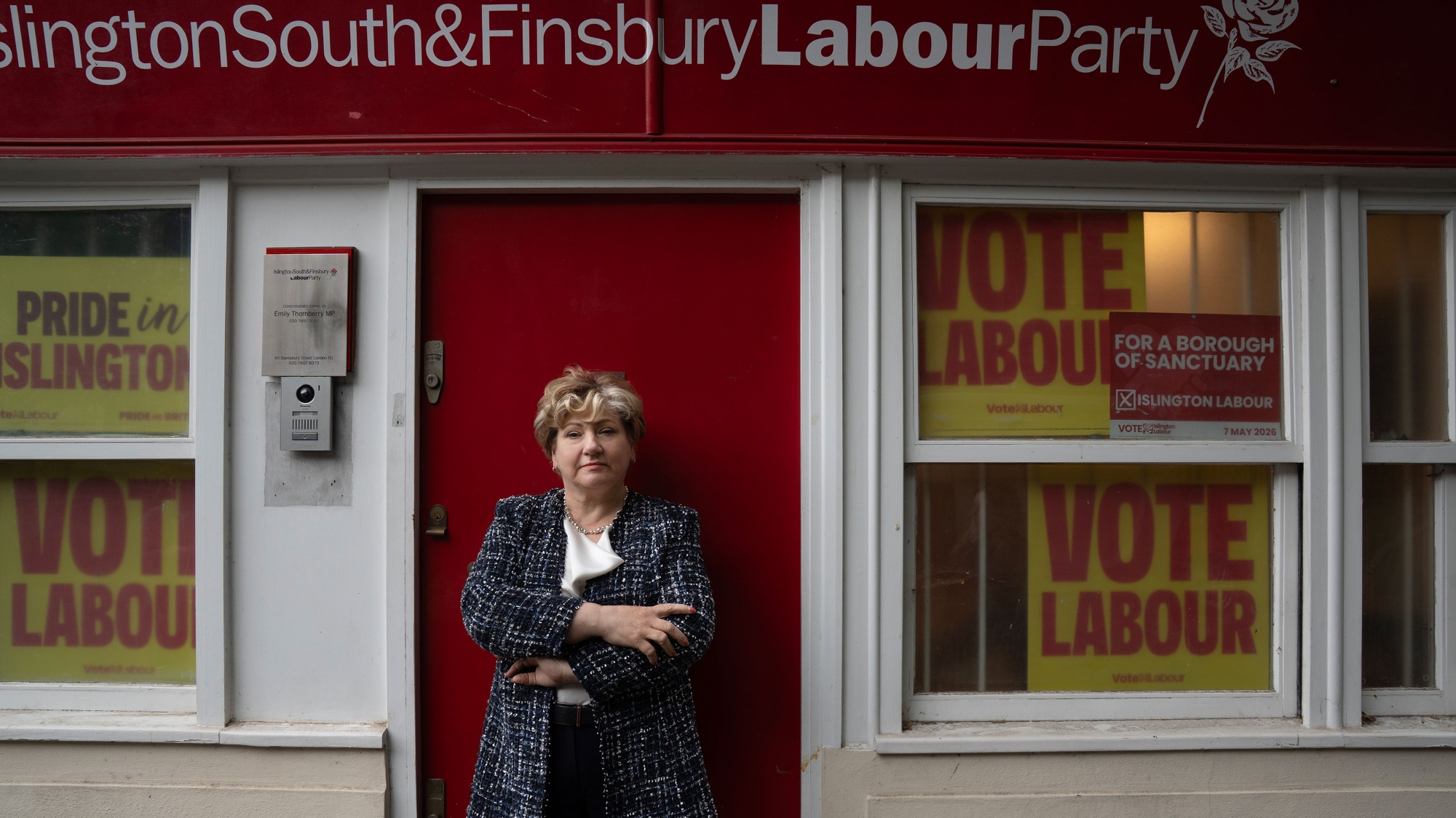
When The House first speaks to Thornberry for this interview, it is in her constituency office, and the Prime Minister has just stepped away from the podium after delivering a ‘make-or-break’ speech that neither made nor immediately broke him. She looks unimpressed.
“We’ve come from a really difficult place, and we had to say that. But what we didn’t say was, ‘We’ve come from a really difficult place, but we have a plan to get out of it. Come with us. Trust us. We know where we’re going and why we’re doing it.’
“Having a series of examples of what illustrates our philosophy is not clear enough. That’s my criticism of Keir’s speech.”
The way forward, she suggests, is not just an analysis of the problem with a few solutions but a “bigger narrative”. A focus on young people, say, which brings together everything from a youth mobility scheme to first-time buyers, social housing and youth employment.
But is it possible to get this level of storytelling from a Starmer leadership? Perhaps he cannot change who he is: an awkward communicator with no clear governing vision.
“Well, look, the work needs doing,” she replies.
For her, the original sin was Labour’s approach to the general election. “We needed to have the plan. We do have it in some things, so on green energy Ed Miliband had a plan. But he was given the latitude to be able to develop that.
“I know that there were other people, including myself, frankly, who had other things that we wanted to put into a plan, but it was held back because it was like, ‘Hang on a minute, it’s probably better to leave it vague so that we don’t alienate people’,” she says.
“We’ve all got ideas. I’ve got a list. Everybody’s got a list. There’s more that we could do. And then we need to pull it together. Whoever is the leader, we have to have a plan.”
Was the lack of a plan Starmer’s fault? “It doesn’t matter whose fault it was. It’s what happened.” Can he survive? “We just need to take stock, talk to each other, work out what the best way forward is.” Nor will she express a view, before Starmer is forced to give in and drop the threat of another blocking, on whether Andy Burnham should be allowed to run for Parliament.
They say those who you kick on your way up to the top will be there to kick you when you fall. One might expect Thornberry, the shadow attorney general brutally sacked when Labour got into government, to do some hard kicking now – yet she insists on staying above the fray. “I am a Labour Party loyalist,” is her only explanation.
“Morgan took it as a personal campaign, as a personal crusade, to get [Mandelson] in”
There is also the fact that Labour in her patch fared far better than others in the local elections, losing just three council seats to the Greens. She believes that is thanks to the party in Islington staying true to itself: “fairer, greener, safer” was its message in this borough, which she says has rehoused more refugees than any other in the country. It offers universal free school meals; helps those struggling to pay council tax; builds social housing.
“We do mean it – we are a Labour borough with a Labour council,” she says. “A lot of those values are ones that we should always stick to, abide by, as a national government too. It works in Islington, and I think it would work elsewhere.”
The feedback she received from voters on the doorstep was divided: half not wanting instability; the other “fed up” of Starmer and demanding change. “That’s why I can’t give you an answer at this stage. I need to think this through; about what the best way forward is. But, for me, I know this much: we need to have a more radical offer.”
Would she consider going for the top job herself? “No, no, no. I’ve done it before, and it was really difficult and a horrible experience,” she replies quickly.
Thornberry’s bruising run in 2020 ended early when no trade unions backed her and she fell one short of the local party nominations required to secure a place on the ballot.
“I found it a struggle to get sufficient MPs to nominate me, because Keir was out in front of me early on, and lots of people who I thought were going to support me changed their minds, and I found it difficult. It is personal.”
More recently, she ran briefly for the deputy leadership that Lucy Powell ultimately won. Thornberry did so out of a sense of duty, she says.
“I thought, ‘I don’t actually want to do this, but I feel like I have an obligation’, because I felt I had sufficient standing to be able to use the position to speak truth to power,” she explains.
“It’s no skin off my nose. I’m old enough to say what I think, mean what I say, and I thought it would have been helpful. But the party didn’t. So, I’ve sort of done it twice.”


Chairing the Foreign Affairs Select Committee is where she has found more success, most notably as a tour guide through the scandal surrounding the appointment of Peter Mandelson as US ambassador after attention was drawn to the depth of his friendship with sex offender Jeffrey Epstein. Scrutiny intensified following the Prime Minister’s decision to sack Sir Olly Robbins.
Thornberry does not claim to have been prescient about the appointment’s disastrous nature: “I hadn’t realised about the Epstein thing”, she says, and at first the hire “seemed to be quite inspired”.
“But if I’d known…” she adds. “It’s a sign of great character to stand by somebody who’s in trouble, but once they have been convicted of an offence like that, you don’t stand by them.”
She is clear that in future any political appointments should come before the committee before they are hired. She is also confident of where blame should lie for Mandelson.
The former trade commissioner was linked with Epstein, already applying to be chancellor of Oxford, and disliked by the Foreign Office as well as Starmer and indeed Trump, she points out. “So, what was in his favour? In his favour was that he’s always been quite pushy, and he had a champion in Morgan McSweeney. I think Morgan took it as a personal campaign, as a personal crusade, to get him in,” Thornberry continues.
“I think Keir delegated that, because he had a lot to do, and said, ‘Well, you look into it, you sort this out,’ and trusted Morgan. It’s Keir’s fault to give him that much power without more oversight, but I don’t think it’s Keir’s fault more directly than that.”
Does she believe McSweeney was betrayed? He and Starmer knew what was in the due diligence, which included Mandelson’s post-conviction friendship with Epstein. Wasn’t that enough, as she suggests, not to appoint?
“Yeah, I think so,” she says. “He’s supposed to have written three questions in order to get three written answers, which we haven’t seen because the police have got it. But I think that’s a little bit of a red herring, because the due diligence shows that the reports were there.
“One presumes that he was asked, ‘What were you doing staying in his house?’, and Mandelson gave some sort of answer that in some way satisfied them, but I don’t know how it could have…
“That wasn’t good advice for Keir. If he was being advised properly, that wouldn’t have happened. So, I don’t think Morgan was betrayed by Mandelson.”
Although Thornberry was unlike many of her MP colleagues in that she had personally known McSweeney for years, she was as pleased as they were when he left No 10.
“Yes. Yes, I was. Because I wanted Keir to have more of an opportunity to be himself. I’ve known Keir since the mid-1980s and I thought some of the decisions being made, he wouldn’t have been comfortable with, and I thought that this was more to do with Morgan’s influence than something that came directly from Keir.”
Isn’t it a little late for ‘let Keir be Keir’? “I think it’s important though.” Days after our interview, it is reported that McSweeney has been helping Starmer’s team navigate the current crisis.
“What we need is… clear leadership on [the EU reset], which we’ve not really had”
In his latest and possibly final reset speech, the Prime Minister promised to put Britain “at the heart of Europe”; this, he said, would be “the Labour choice”. Very little detail was offered, however; merely reference to a youth mobility scheme that everyone knew about already.
Labour’s EU reset plans so far have not been ambitious enough for MPs like Thornberry.
“What we need is a clear push as to what it is that we want to achieve, and clear leadership on it, which we’ve not really had. Bold and brave and open leadership on what it is that we want. But it’s been so mousy, which it shouldn’t really be,” she says.
The problem was not going into the reset early and with clear demands: “If we had started the negotiations when we had just been elected, when everybody assumed that we would be going in for two terms… we could’ve said to the EU, ‘We’ve tasked all the government departments on how it is that they could work better if we had a closer relationship with the EU on…’ and then have a massive shopping list.”
Is free movement off the table forever, or should Labour be considering it? “I wouldn’t start there. I would end there, in many ways.”
There is no need to break the red lines around customs union and single market membership that were set out in the manifesto just yet, Thornberry believes, though they should not necessarily be kept beyond this term.
“I, personally – surprise, surprise – would like us to be in the European Union, and the majority of the British public would. But if you were to say to the British public, ‘Would you like another two years of debate and another referendum and a lot more fighting in Parliament to get back into the European Union?’, they might not be so keen.
“We have to take it one step at a time. We have to be strategic. We need to get as close as we can, then make a decision about whether we want to get ourselves back into that. We also can’t take for granted that the European Union would want us.”
The priority, she says, is taking each step as it comes and making the argument to the public throughout – this way, “Nigel Farage – if he were, God forbid, to be prime minister – couldn’t unpick it, because the British public would be behind it”.
Her theme of “too little, too late” continues as we explore foreign policy further afield.
British influence in the Middle East is “underrated”, although our influence on Israel is admittedly “pretty minimal these days”: “This is a far-right government that only listens to Donald Trump.”

The government could do more on Gaza, however: Thornberry recommends going back to the group of countries that formally recognised Palestine alongside us last year for further action.
“What we should do is go back to that group and say, ‘The Palestinian state that we recognise is not going to exist unless the Israelis are stopped from what they’re doing at the moment – the aggressive settlers, the building of settlements, the cutting of the West Bank in half. All of this is just completely unacceptable, and we must do something about it, and we have to do it collectively.’”
Which measures would she recommend? “We should not allow banks to finance developments on the West Bank. We should not allow insurance companies to be involved in the West Bank. We should not be buying anything from the West Bank. We should have sanctions against any individual who’s involved in developments on the West Bank, or any settlements on the West Bank.”
“We are losing influence in Africa,” she warns next, making the case that British involvement is welcomed but we have failed to take sufficient interest. As a result, “they are going elsewhere – they’re going to China”.
Gordon Brown’s much-mocked appointment as global finance adviser was good news, she says, “because this is the time to be more imaginative about how we help the developing world”.
“It is time that we massively invested in the World Service,” for example. “Not putting up their funding by 20 per cent, which is welcome, but by doubling it, trebling it. Now is the time to be using the World Service as an oracle of truth around the world.”
Thornberry was passed over for the attorney general job in favour of another lawyer friend of Starmer, Richard (who became Lord) Hermer. He is perhaps best-known for playing a central role in the Chagos deal, now a zombie, indefinitely paused after Trump branded it “an act of great stupidity”. Would it be best, at this point, to put the agreement out of its misery entirely?
“I do think there were people who were genuinely concerned that we were on the wrong side of the law when it came to Chagos, and wanted to get it sorted out,” she begins. “A lot of grief has been gone through in order to try to get something negotiated and get it cleared up, and now the Americans don’t want it. Well, fine. In my view, fine. There’s a limit to what one could do, really.”
She has raised concerns before about the environmental “catastrophe” that handing the Chagos islands back to Mauritius could inflict. Would she, as AG, have pursued the deal?
“I would have thought about the fish much more than I think they have,” she laughs heartily.
Although she keeps her powder more or less dry, Thornberry sounds less like a defender of the government than an impatient witness to it. She repeatedly returns to the same complaint: there has been no plan, no narrative, no driving mission.
“I need to talk to my colleagues about it. We need to work out what we’re going to do next,” she concludes.
“We are in power. We have a large majority. What are we going to do with that? Because people are impatient for change. Whoever the leader is, what’s important is what we do.”

You must be logged in to post a comment Login