Politics
The House | Fit For Service? Royal Navy Fitness Test Pass Rates Fall Sharply Over Last Decade


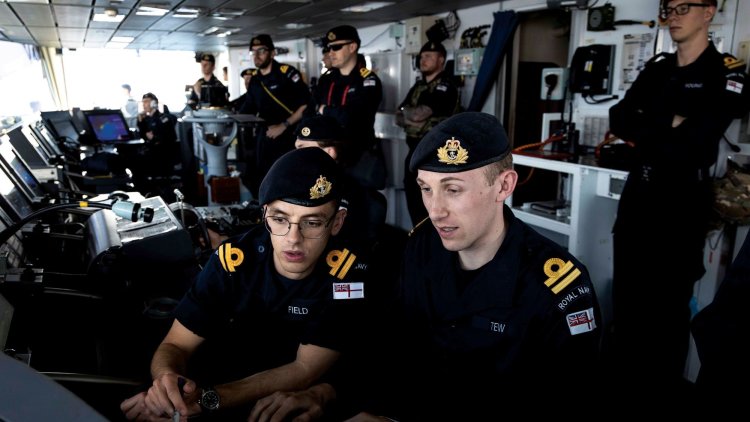
Officers at work on the bridge of HMS Dragon as it sails into Limassol, Cyprus, 27 April 2026 (Photography, LPhot Helayna Birkett. UK MOD © Crown copyright 2026)
6 min read
The Iran conflict has drawn attention to gaps in Royal Navy capability but, as Tom Scotson finds, it’s not just its ships that need to get into better shape
In the early days of the Iran conflict, as UK allies in the Gulf – and even Cyprus – were being hit by drones and missiles, Keir Starmer pledged to send a warship to help defend them.
The only problem was the only available vessel, HMS Dragon, was undergoing a refit in Portsmouth. The effort to get the ship ready was extraordinary but there was no escaping the embarrassment.
The Royal Navy has been the object of ridicule from US secretary of war Pete Hegseth and, repeatedly, Donald Trump himself. It is widely acknowledged that the UK has an inadequate number of warships currently available, with new frigates only coming into service at the end of the decade.
But a navy is about more than its vessels – and data uncovered by The House suggests that not all is well with its personnel.
On the face of it, the health of the Royal Navy is improving after decades of cuts. By January 2026, it was reported that there had been a 14.5 per cent uptick in the numbers of people joining the navy, with the fleet boasting a strength of around 32,160 personnel.
But according to a Freedom of Information request made by The House, the number of personnel who passed their fitness tests between 2014 and 2024 fell dramatically.
Between 2014 and 2015, 96.6 per cent of both men and women in the fleet passed their fitness tests on first attempt. However, 10 years later only 77 per cent of people passed the exams initially – a drop of almost 20 percentage points.
The number of Royal Navy personnel who failed their fitness tests at the first time of asking but passed within a year increased from 21 people to 1,219, 10 years later. Meanwhile, the same data found that Royal Navy personnel who failed their fitness tests on their first attempt then passed more than a year later rose from six people in 2014 to 86 a decade later.
As the navy grapples with falling standards and recruitment shortfalls, how can it restore and improve standards within its ranks?
Fred Thomas, Labour MP for Plymouth Moor View and a former Royal Marines officer, tells The House why he believes the numbers have declined.
“The overall offer was eroded year by year under the Conservative Party when they heavily cut funding,” he says. “The combined total of: how enjoyable is the job, what does it pay, what perks do you get including housing and medical benefits, how much status does it confer in society? How proud are you of your work for the navy and what sacrifices are you willing to make for the job?
“This will sound political but they hollowed out the military and it’s in a bad place now. It’ll take many years to turn it around. And at the same time we desperately need to modernise our capabilities.”
Many of the navy’s problems do not emanate from just cash flow problems either. Experts argue that in an increasingly competitive job market there are more careers out there which attract people’s interest – whether they be easier or more glamorous.
Commodore (Ret’d) Steve Prest, Rusi associate fellow, says people join the navy for one reason and that is it is better than the alternatives.
He adds: “Now it is different because young people, especially, often don’t want to be away and disconnected. A recent patrol had submariners away for 205 days under water, where they don’t have the ability to send information off the submarine. In the modern era, people expect to remain connected; when they see a blue tick, they expect a response instantaneously.
“It’s not to say a career in the Royal Navy is not rewarding. I know of people who were recently on that trip and thought it was one of the best things they ever did. It’s just harder to persuade people to go into the navy when everywhere else is so connected.”
Prest admits numbers have gone up a little, as recruitment has improved – despite the trained strength in the fleet having dropped. This means that the overall experience in the navy has reduced, with experienced staff leaving faster than the experience which can be grown in newcomers.
This will sound political but they hollowed out the military and it’s in a bad place now. It’ll take many years to turn it around
“With limited opportunities for people to gain sea experience, owing to the paucity of seagoing vessels, this is a real concern,” Prest tells The House.
“It means the ships’ companies bringing the new-build frigates into service will be vastly less experienced than their predecessors.
“We need a more balanced pipeline. The new recruits all need time at sea and interesting places to visit. There are no shortcuts to learning under those who know the ropes.”
The navy has also been affected by falling wages, which have cut across the public sector.
From day one, new officer recruits earn £34,676 per year. This will increase to £41,456 after their first promotion, followed by £52,815 as a lieutenant. The highest captain within the fleet will earn £122,849.
With a healthy pension and access to subsidised accommodation, the offer on the face of it looks good. Yet the problem is two-fold: talented people can earn far more in the private sector, in blossoming careers such as software engineering and coding; secondly, experts say demand is still depressed from cuts inflicted during austerity.
Admiral Lord West, former first sea lord and chief of the Naval Staff from 2002 to 2006, says: “Part of the problem is there was no pressure to recruit more people, the manpower was cut. When you depress something it’s difficult to try and bring it up to the same level again.”
He tells The House that the bottom line is that there is not enough money for the MoD – like most government departments.
And without greater investment, existing naval talent is going to waste, warns Prest: “If we don’t have enough ships to get them out on missions, then we can lose some of the best recruits as they idle ashore – that’s not what they joined to do.”

You must be logged in to post a comment Login