Politics
The House | For electoral success, Burnham must ensure more Labour voters feel comfortably off


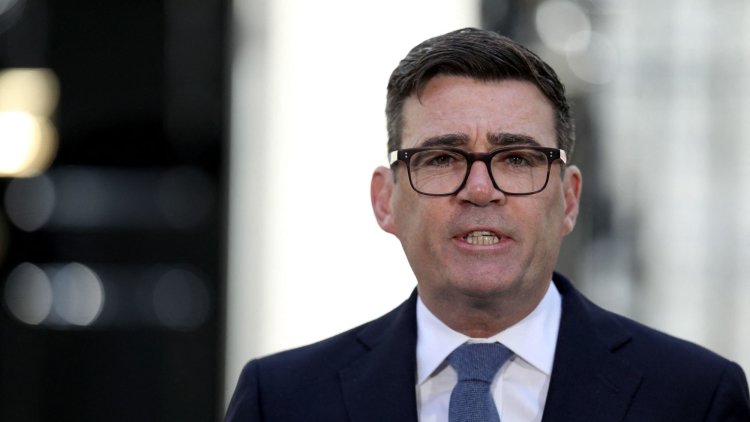
Andy Burnham delivers his first speech as Prime Minister (Xinhua/Alamy)


4 min read
Andy Burnham’s premiership is expected to mark a serious refocusing by the Labour government on the cost of living: doing whatever it takes to help people feel better off.
That responds to one of the biggest challenges Sir Keir Starmer’s government faced. But the voters who put Labour into office do not feel they have benefited greatly during its two years in power. Delivering serious economic change – and ensuring that its own voters actually feel the benefits – will therefore have to be at the heart of Burnham’s premiership.
One of the key benchmarks we track at Opinium is how people describe their own financial situation. This measure is fundamental to understanding the cost of living crisis: do people feel comfortably off, are they coping, or are they struggling financially? Before the crisis, more than half the public described themselves as comfortably off, with the figure reaching 57 per cent in one poll in 2021.
The spike in inflation was the catalyst for the crisis. But lower inflation does not reverse the damage or return prices to where they were. It is therefore no longer a particularly useful measure of whether the crisis is over. It is over when people feel it is over, and that is when people feel comfortable again.
The real nadir in our polling came in March 2023, when just 24 per cent said they were comfortably off. The story since then has been one of painfully slow improvement, leaving us nowhere near the days when most people felt things were going OK.
By August 2024, shortly after the general election, the proportion comfortably off had edged up to 29 per cent. In our latest polling, it has reached 36 per cent. But set against the 57 per cent recorded five years ago, it also means that roughly 10 million people who once felt they were doing OK no longer do.
The particular problem for Starmer’s government was that the improvement did not especially benefit its own voters. Economic performance is a key measure of government success, and most people experience ‘the economy’ through their own financial situation.
Just after the election, 32 per cent of Labour voters felt comfortably off. That has edged up to 37 per cent: an improvement of five points, but one that has not even kept pace with the national recovery, which is itself already slow.
Contrast that with other parts of the electorate. Among people who voted Conservative in 2024, 51 per cent now feel comfortably off, up 12 points since the election. Among Liberal Democrat voters, the figure is 48 per cent, up 13 points. Even 2024 Green voters – who started as the least comfortable group – have seen a 12-point rise, to 35 per cent.
Labour therefore ended up in a strange position: Conservative, Liberal Democrat and Green voters have seen faster improvements, while the Labour voters who put the government into office have seen much less progress, and have been leaving the party since the election.
Labour voters who put the government into office have seen much less progress
The only voters faring worse are those who voted Reform in 2024: just 35 per cent now feel comfortably off, down one point since the general election. This makes them the only group to have seen no improvement and reinforces Reform as a repository of anti-Labour sentiment.
That is the real challenge for Burnham. His pledge to deliver “good growth in every postcode and hope in every heart” suggests that he gets it. It is a political narrative that fits the scale of the problem and, crucially, recognises that national economic progress alone will not be enough.
The test is whether the government can turn that pledge into improvements in people’s disposable income. Voters will judge it through their wages, housing costs, energy bills, food prices, childcare and taxation – the things that determine what is actually left in their bank accounts at the end of each month. Growth may be part of the answer, but abstract economic growth (even regionally rebalanced) will mean very little politically if the households who put Labour into office continue to feel stuck.
Burnham will therefore be judged on whether he can do more than tell the right story. He will have to improve the day-to-day lives of the people who put Labour into office in the first place. The cost of living crisis will not be over because inflation has fallen or a national growth statistic says so. It will be over when those voters feel the recovery themselves.
James Crouch is head of policy and public affairs research at Opinium

You must be logged in to post a comment Login