Politics
The House | From ‘Workington Man’ To Clubs On The Brink: Rugby League’s Fight To Survive


12 min read
Rugby league is cherished by many of the ‘left behind’ towns that become central to Britain’s electoral politics. But now community clubs are fighting to stay afloat, reports Adam Payne
In the run-up to Boris Johnson’s red wall landslide in 2019, rugby league found itself in a peculiar position. Its fans, based mostly in northern England, generally regard the London class, its politicians and media, as having little interest in their sport.
To generations of supporters, it is an ignored and underappreciated game, played a long way from the corridors of Westminster in mileage and in mind, in the towns of Yorkshire, Lancashire and Cumbria.
“Rugby union has always been the sport of the establishment, the media, Westminster, big businesses, even the Royal Family. Rugby league, like most things in the North, it had to fight just to be heard,” says Anthony Broxton, author of Hope and Glory: Rugby League in Thatcher’s Britain.
Naturally, then, there was some bemusement when, in autumn 2019, the spotlight of British politics landed on the Cumbrian coast. Onward, the centre-right think tank with close links to the Conservative Party, had declared rugby league towns to be pivotal to that year’s general election. A new voter archetype had been born: Workington Man.
Will Tanner, one of the brains behind the analysis, who was later chief of staff to Rishi Sunak in No 10, recalls when he and Onward colleague Nick Faith realised that rugby league towns were where key swing voters were hiding.
“When I was listing constituencies we thought would be most important, [Faith] was the one who said nearly all of them are rugby league towns. That was the common denominator, and it was something incredibly resonant and powerful,” Tanner tells The House.
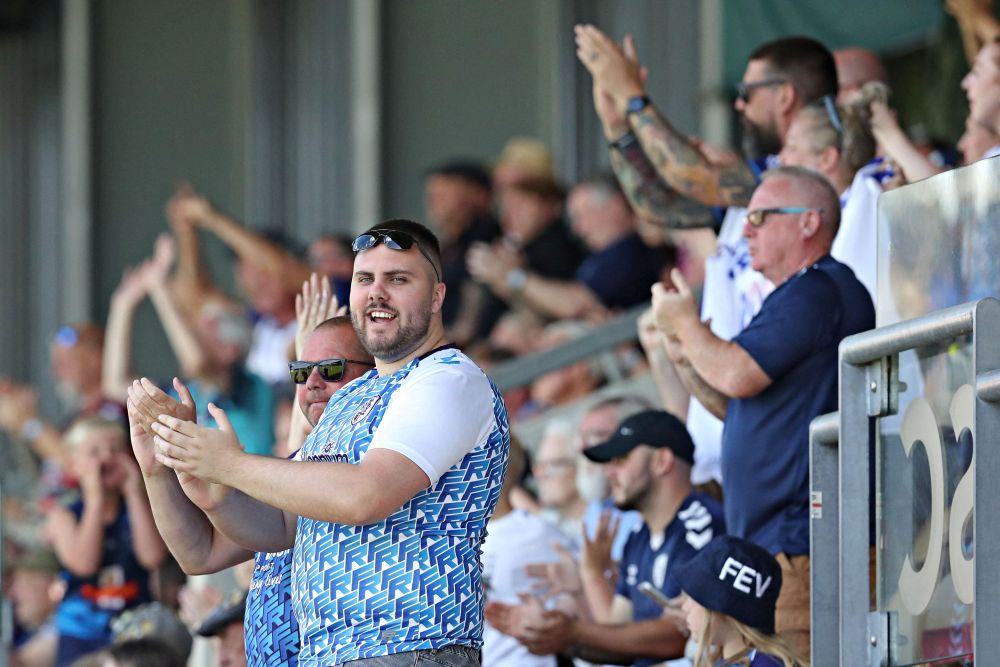

Workington Man, set out in Onward’s subsequent report, The Politics of Belonging, was, generally speaking, a retired, non-university-educated male who backed Brexit and valued local pride and security in a fast-changing world. Johnson went on to turn swathes of rugby league towns from Labour red to Conservative blue. Trudy Harrison, the then newly elected Tory MP for Workington’s local rival, Whitehaven, was made his parliamentary private secretary.
Fast forward a few years, and rugby league certainly feels more relevant in Westminster. In Culture Secretary Lisa Nandy, the game has a genuine fan in Keir Starmer’s Cabinet; the Wigan MP tells The House it is “very close to my heart”. The same is true of Commons Speaker Lindsay Hoyle.
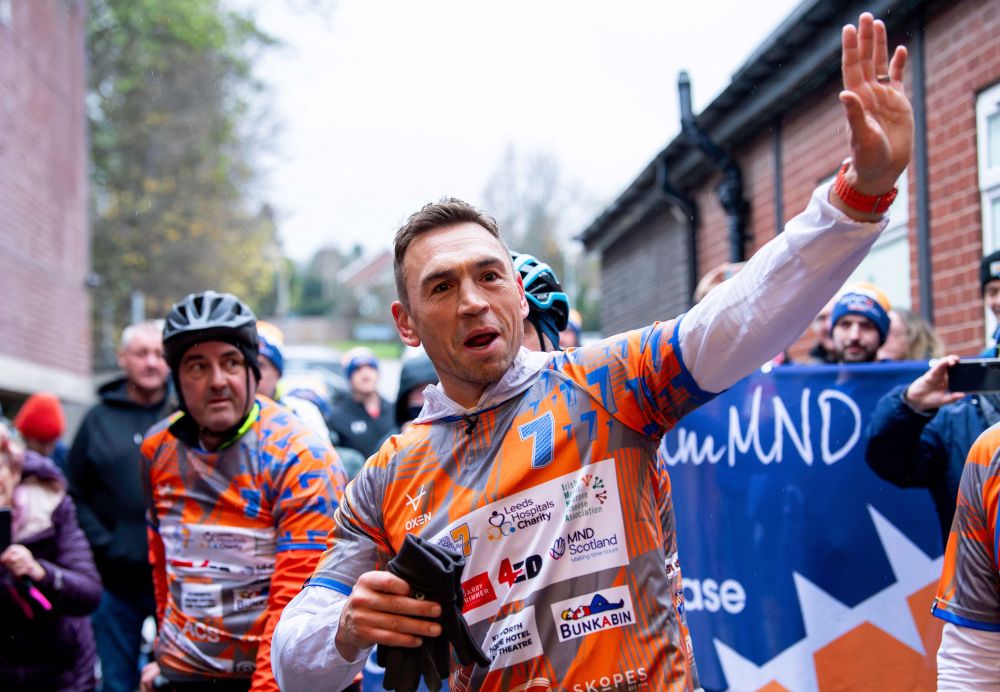
The knighting last year of legend Sir Billy Boston sparked tentative hope within the game that rugby league would finally play a bigger part in the national story, and there is optimism that Kevin Sinfield will soon be a knight of the realm after raising millions for Motor Neurone Disease research in memory of his former teammate, Rob Burrow. At Labour Conference in Liverpool in September, MPs and ex-players booted up for a tag war of the roses.
Community and belonging, through those rugby league clubs, was fundamental to how people were thinking
But up in the sport’s traditional heartlands, all is not well.
At the heart of the Workington Man analysis was voters in rugby league towns feeling that their local areas were crumbling – their high streets, post offices, pubs – leaving them feeling disheartened and disconnected. And perhaps nothing better captures that sense of community identity than the local rugby league club.
“Community and belonging, through those rugby league clubs, were fundamental to how people were thinking,” reflects Tanner.
The liquidation of Halifax in February stunned the town and disturbed the wider game. How could a 153-year-old club, a cherished community asset, simply cease to exist?
“There was so much shock across the community,” says Kate Dearden, Labour MP for Halifax. “To not have rugby in the town was unthinkable for lots of people.”
Halifax has since returned to the second division under new ownership, albeit with a 12-point deduction, after two weeks of frantic negotiations. It was a “huge, huge relief”, adds Dearden, who says people “travelled miles” to be at the club’s return to the pitch at the start of March.
“It made us sit back and reflect on the importance of rugby league to the town. When you’re so close to losing it – the emotional impact of that on people.”
the town has lost a part of its soul
Lower league sides like your author’s hometown club, Barrow, have recently been forced to crowdfund to stay afloat due to a lack of home fixtures, while Featherstone has been blocked from entering this season’s competition after falling into administration, leaving the West Yorkshire town without a rugby league team until at least 2027.
“The closure of the club has been really, really bad for morale in the area. Even people who don’t necessarily go to watch the match still think Featherstone Rovers is part of their identity,” says Jon Trickett, Labour MP for Normanton and Hemsworth. “At the moment, the town has lost a part of its soul.”
A local crowdfunding effort, led by the True Blue Revival Group, has raised thousands of pounds in a bid to put the club in a position to enter next season under new ownership. “For some people, [the club] is their whole life,” organisers Gareth Dyas and Jock Higgins recently told the BBC.
Why are heartlands club struggling? David Baines, Labour MP for St Helens North and chair of the Rugby League All-Party Parliamentary Group, says falling crowd numbers, driven in part by cost-of-living pressures, are an important factor.
“The communities that they represent, smaller towns in the North of England, are struggling areas. They have less money in their pockets to spend,” he explains.
“People have got difficult choices about where their money goes,” he continues. “Twenty years ago, Netflix didn’t exist, Amazon Prime didn’t exist, Apple TV didn’t exist. Plus WiFi, mobile phone costs…. entertainment that isn’t sport, that isn’t leaving the house. Traditional sports, like rugby league, are competing with that.”
Baines also believes the game has struggled in the face of football, which “dominates absolutely everything”, particularly for younger generations.

The Labour MP hopes that the government will be persuaded to look again at loans that were granted to rugby league clubs via the Rugby Football League (RFL) to help them survive the pandemic. Of the near £3m owed by Featherstone when it was put into administration, reportedly around £320,000 was Covid loan repayments owed to the Treasury.
“It’s something I’ve heard from clubs and raised with ministers, with Lisa Nandy and Steph Peacock. The APPG has discussed it. It’s something I’d definitely like the government to look at,” he says, floating the idea, for example, of extending the repayment period to ease the financial strain on clubs.
The RFL’s interim chief executive, Abi Ekoku, says the body was “fully committed to its fiscal responsibility to government” but had suggested to ministers ways “of how best we might balance Covid loan repayment obligations with the need to preserve and upgrade rugby league’s vital community infrastructure”.
He tells The House: “Grassroots rugby league plays a significant anchoring role in many of the UK’s most economically challenged areas. The sport’s social dividend is a very well-known and highly regarded part of Northern England’s social fabric. As such, we are keen to see Covid loan repayments redirected into facilities that help to deliver stability and purpose for the volunteer-led and resource-poor community game”.
Nandy acknowledges that the debt is adding to the problems facing rugby league clubs on “multiple fronts” but says that writing it off altogether is “off the agenda” as government would “have to do it” for other sports. “Forgiving the debt would open the floodgates for other stressed sports,” she says.
In terms of where ministers can help rugby league, Nandy says it must ensure it has “proper systems and governance in place going forwards, that they can act as a cohesive unit and that they can maximise the broadcast revenue that is available”.
She adds that she has been “working closely with a number of the clubs” and talking regularly to the figures in the game to support a plan to “pool their resources so that they get better broadcasters”. The amount of Sky TV money that goes to rugby league clubs has fallen significantly in recent years.
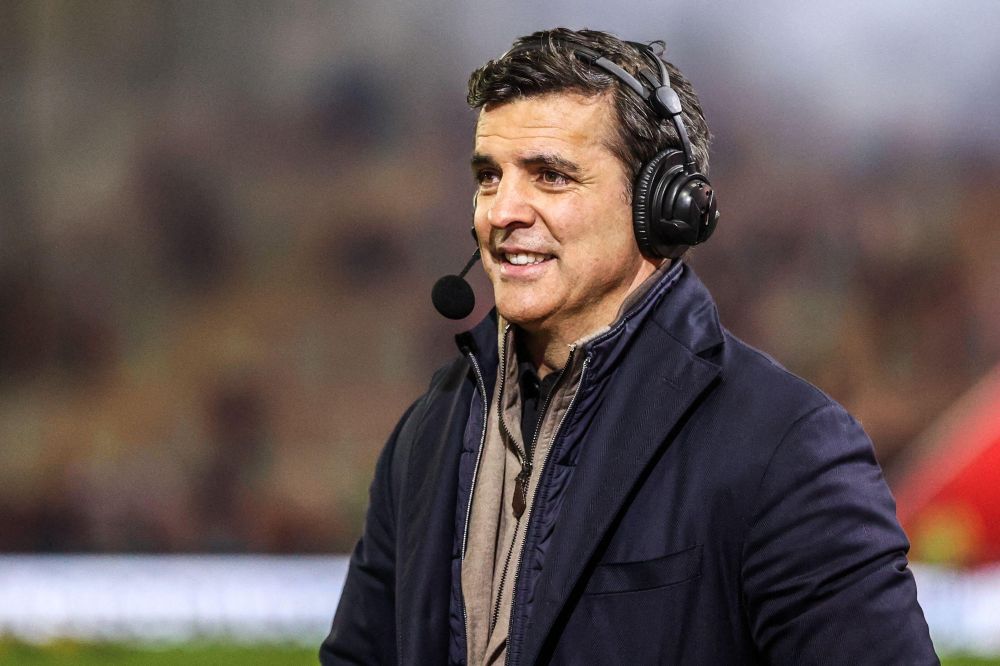

Brian Carney, TV pundit and former player, is one of the game’s most vocal proponents of reform. Speaking to The House in a personal capacity, he says the RFL governing body ought to shoulder blame for not stepping in earlier to stop “avoidable” club disasters.
“What I’d like to see is them [the RFL] getting ahead of these problems, because some of them you can see galloping at you, clear as day,” he says, pointing to players being paid salaries that clubs cannot afford.
Salford recently had to be revived under a new name after being wound up late last year with debts of over £700,000. Carney argues there needs to be stronger checks and balances, whether it be a more proactive RFL or greater government involvement, to address problems before they escalate rather than “after the fact”.
He suggests that English rugby league may ultimately require oversight like the new football regulator to protect the long-term sustainability of clubs. Reckless owners must take some blame when clubs fall into crisis, he says, but “they needed to have harnesses put on them as, otherwise, as in any other sport, they’ll just run amok, and true fans will be left to pick up the pieces”.
I’ve lived through a dozen or so so-called apocalypses facing the game
Despite the challenges, the rugby league community is defiant. “Featherstone will rise again,” declares Trickett.
Baines says: “I’ve lived through a dozen or so so-called apocalypses facing the game. These headlines have been written a lot since 1895 [when rugby league was founded] by people who want to see the game fail… It is facing challenges, but so does every sport in this country.”
He adds: “Rugby league will still be here in 50 years, 100 years. It will always survive because it’s a great sport to watch, to play, and it’s embedded in communities and loved by hundreds of thousands of people up and down the country.”
Dearden says the speed at which her local community was able to bring Halifax back to life demonstrated the resilience of rugby league fans: “From the get-go, as soon as the news was announced, it was, ‘How do we save our club?’”
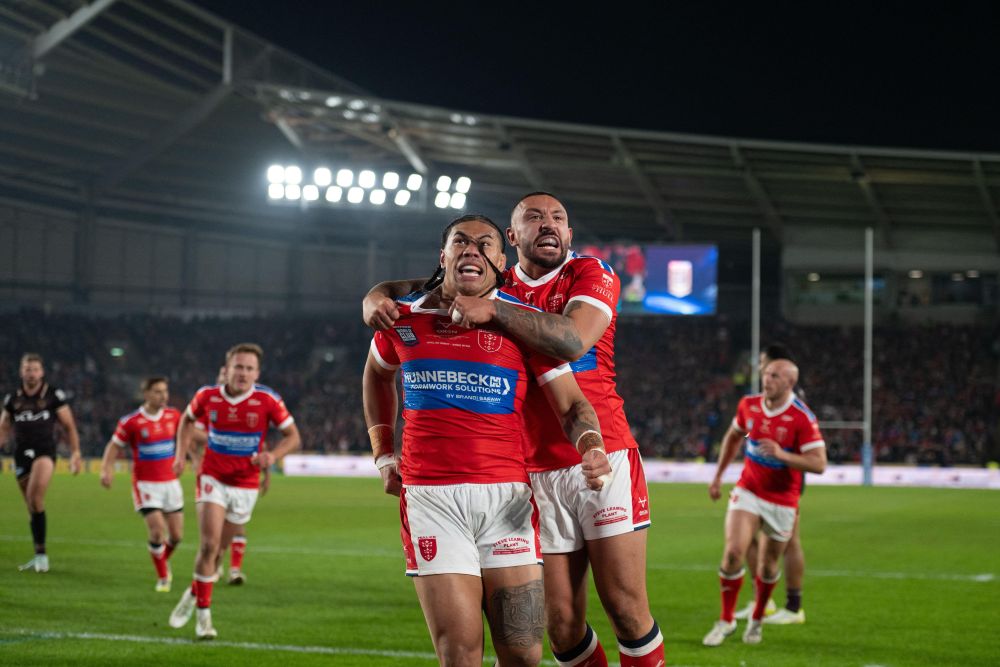
There are other reasons for optimism. Crowds are up in the game’s premier division, the Super League, and the early success of York, Bradford and Toulouse’s admission to the league suggests that the contentious franchise model, which determines who plays in the game’s highest bracket, may be starting to bear fruit. Hull, home to the league and world champions, Hull KR, is a fervent rugby league city. KR, Leeds, Warrington and Wigan have played to large crowds in Las Vegas this year and last.
But there is also widespread recognition that if the game is to survive at its lower echelons, then things cannot continue as they are. “There needs to be some deep thinking about how we build community clubs that have a sustainable future. Government should be thinking about this,” says Trickett.
Does the answer lie overseas? There are talks over Australian investment in the English game, which advocates in the northern hemisphere say would bring not just desperately needed cash but expertise that is sorely lacking. While rugby league struggles for national profile in Britain, it is one of the biggest sports in Australia, centred on the National Rugby League (NRL) – brutally demonstrated in Australia’s demolition of England last year.
Peter V’landys, NRL head, has claimed in rather Trumpian terms that the English game is “heading for a train crash” without new money. “The answers don’t presently lie within,” says Carney. He believes that, ultimately, rugby league heartlands will only be lifted out of their struggles when the sport as a whole is more popular.
“It’s not relevant enough for enough people,” he puts it bluntly. “You can send development officers into schools anywhere in the world to promote a particular sport, but unless those kids are seeing it week in, week out, day in, day out, on TV, on billboards, on magazines, online, [players] modelling clothes or boots, it’s irrelevant. If we can raise the profile of the elite-level competition, all those people working at the grassroots level have an easier job selling the game.”
Baines says the English game would “be daft not to want to explore how we can work together” with Australia, but stresses that it would have to be for “the whole health of the game, from the community game upwards”. According to Broxton, rugby league must be better at telling its story: resistance, survival, “doing things differently”.
“In an age where authenticity is everything, rugby league already has the most powerful asset in sport – a genuine story. All it has to do is own it.”

You must be logged in to post a comment Login