

Politics
The House | Jacqui Smith: “A Million Young People Not Earning Or Learning Is A Moral Outrage”

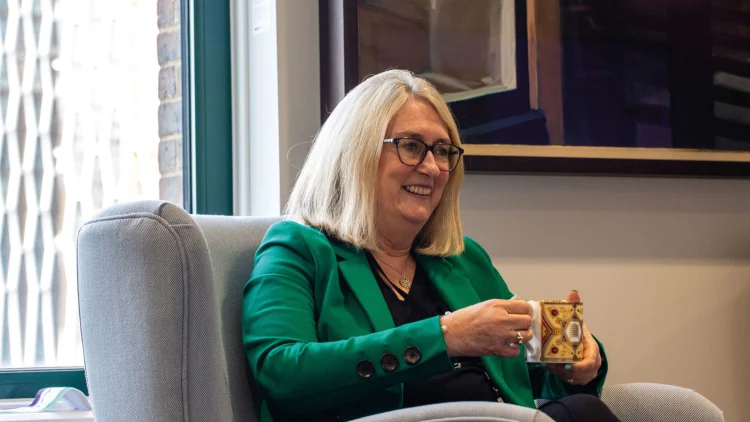
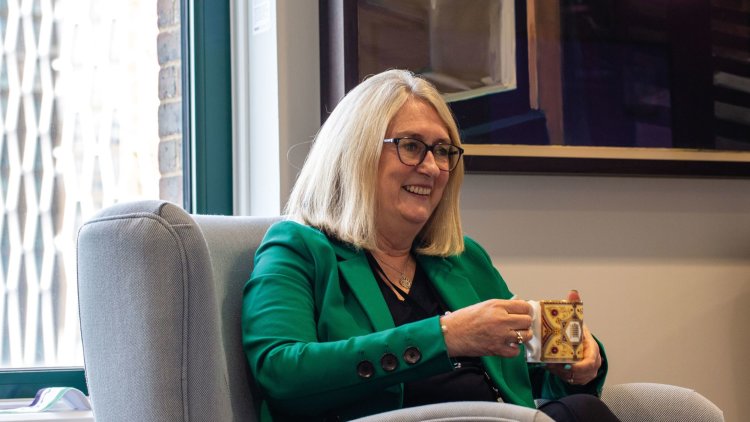
Photography by Louise Haywood-Schiefer
10 min read
Skills minister and Labour veteran Baroness Smith talks to Matilda Martin about her party’s leadership troubles then and now, plus what can be learned from the Milburn review of young people and work
Jacqui Smith was the first serving minister to use the past tense when talking on the record about Keir Starmer’s premiership. “I would have been very happy for him to continue,” she said on that Monday morning before the podium appeared outside No 10. It was the final confirmation, if any were needed, that the Prime Minister would soon be confirming he was on his way out.
This is far from the first time Baroness Smith of Malvern, 63, has borne witness to serious political turbulence. Having first been elected to Parliament in Tony Blair’s 1997 landslide, it fell to her as his chief whip in 2006 to tell the prime minister he had a problem: the party’s demands for a ‘timetable’ were growing.
Sitting down with The House hours before Andy Burnham’s Makerfield victory, the education minister – now forming part of a Labour government from the House of Lords – reflects on this familiar territory.
“I’m now in my 12th year as a minister,” she says, adding up time served under both New Labour and Starmer. “I’ve been around the block a bit, and I have seen turbulence. I understand that governments go through difficult times.
“In those cases, usually the best thing to do is to focus on the change that brought you both into politics and into government, to get on with delivering it, and to spend less time worrying about the personalities involved.”
Perhaps unrealistic but not surprising from a minister described first and foremost as “loyal” by those who have worked with her over the years. She was immediately appointed as Gordon Brown’s home secretary when he took office, for example, despite having been labelled as one of “Blair’s babes”.
Asked what she makes of the recent intervention by her former boss, she shoots back: “Which one of my former bosses?” Tony Blair inspired a summer of essays when in May he published a 5,000-word thesis offering advice to the party he once led.
“Tony’s interventions are always welcome from me. He is, and was, both a phenomenal boss and an era-defining prime minister. But… this is probably a time to buckle down, get on with changing the country and spend less time writing essays.”
Smith left government in 2009 amid the expenses scandal, which included the revelation that she had – in error, she said – claimed back money for two pornographic films bought by her (now former) husband. “I had some high-profile problems in the last government, both personally and politically,” Smith admits at one point, unprompted.
In 2010, she lost her Commons seat to the Conservatives but went on to rebuild her reputation outside the Palace walls, co-hosting a weekly LBC show and – following a path well-trodden by former politicians – competing in Strictly Come Dancing in 2020.
When Smith became skills minister in July 2024, she was returning to the department where her ministerial career first began back in 1999.
She recalls bringing her sons with her, who were tiny at the time, and how the glass-walled offices were a playground of sorts for them. Her boys are now more than six feet tall.
Much has changed over the decades, not least the lives of young people like Smith’s sons. The recently published review of another former New Labour minister, Alan Milburn, exposes the depth of the crisis of Britain’s almost one million young people not in education, employment or training. If these “Neets” were to form a city, he writes, it would be larger than Leeds, Glasgow or Cardiff.
“The fact that we’ve now got a million young people who are not earning or learning is a moral outrage and it’s also an enormous waste of economic talent,” says Smith.
The report observes that the rise of AI is likely to create further pressure at the bottom end of the labour market. What is this government’s plan to protect young people from the harms of the AI revolution?
Smith points to the work of the government’s ‘AI alliance’ and ‘AI champions’ who are looking at entry-level jobs and identifying “where those challenges might be and what more we need to do in order to support young people into them”.
“If you hollow out your entry-level jobs in any area of employment, you’re building up problems for the future, because then you don’t have the pipeline that you need,” she says, adding that this is something employers “get”.
Does it worry her that companies are cutting jobs for young people because of AI? While Smith is careful to point out that there are a range of factors contributing to the changing labour market, she adds: “I know it worries young people, because I talk to them about it…
“That’s why it’s quite important for us to keep saying: whatever the challenge is, your opportunities are likely to be better if you’ve been able to go through high-quality courses, whether higher education, apprenticeships, or other skills routes.”
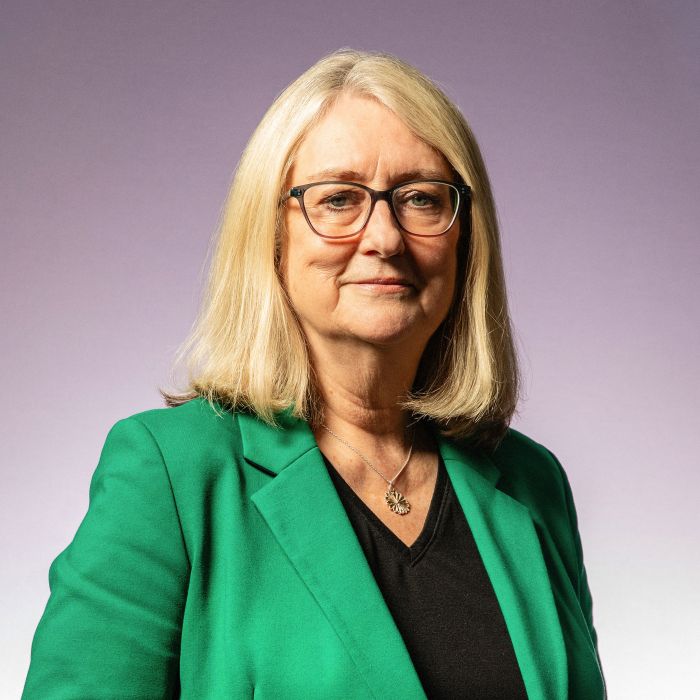
The Neet generation is also, Milburn highlights, generally unhappy. “Young people lead complicated lives,” Smith says. “There is a lot going on in the world with which they have to put up.”
She takes the opportunity to lay the blame at the door of her predecessors: there is less for young people to do and enjoy, she claims, “partly because of the way that some of the things that we previously put around education got hollowed out by the last government”.
When Labour took power in 2024, it was braced for a host of problems. One of those it did not anticipate, or perhaps want to deal with, was the financial crisis inherited in the university sector.
Universities have often found themselves on the front lines since 2024. The proposal of a levy on international students in the immigration white paper blindsided the sector, although sources stress that the alternatives available were far worse.
The narrative that some universities run courses that offer no benefits to their students is also one that has permeated all major parties. At Labour conference in 2025, Starmer announced that the party’s old ambition for half of young people to go to university was being decisively abandoned – “I don’t think that’s right for our times,” he declared – and the government sought to push apprenticeships and other vocational courses.
“I’ve been around the block a bit, and I have seen turbulence. I understand that governments go through difficult times”
The question of apprenticeships versus universities is one that has played out in many governments, and Smith finds herself jostling with a higher education (HE) sector that often questions whether she even likes them. Smith, of course, would contest this characterisation of her approach.
Whitehall has reportedly considered introducing new national minimum standards, such as a pass in GCSE English, to access student loans – a move that would lock some people out of the opportunity to enrol in higher education. Smith refuses to comment directly on the reports but says she wants those accessing higher education to “genuinely benefit from it”.
She also stands by decisions not to tackle the Plan 2 student loan system, taking the party line that there are other priorities within government that had to take precedent. She insists, however, that she has been “continuing to think about what more we can do to make that system of repayment better and fairer for those who are in it”.
Another high-profile story in the HE sector has been the debate around free speech. In April, the University of Sussex won a case against the regulator Office for Students (OfS) in the High Court, overturning a £585,000 fine handed down last year for failing to uphold free speech. Among other things, the judge found that the OfS decision to issue the fine was biased against Sussex.
Two months later, Smith is adamant that she supports the OfS and its operation. She is also clear universities should not interpret the ruling as a sign all is well on the free speech front: “It’s important that that court case isn’t seen as a suggestion that there is nothing that universities need to be thinking about when it comes to freedom of speech.”
When The House speaks to Smith, Starmer has not yet resigned but Labour MPs are already contemplating life under Andy Burnham’s leadership.
“I sat in the cabinet with Andy Burnham,” the minister says. “I’ve known Andy for a long time. I know what a talented politician he is. He’s been on a journey, and I’m glad he’s coming back to Westminster.” She does not approve of him instigating a leadership change, however.
While numerous names have been thrown around as potential successors to Starmer in recent months, none of those considered frontrunners have been women. Infamously, Labour is yet to elect a female leader. Is Smith, the first female home secretary and currently an equalities minister, embarrassed by that?
“No, I’m not embarrassed,” she claims. “We’ve got an enormously strong team, of which, frankly, quite a lot of the best performers are women.”
Many of her female colleagues in the party are embarrassed, and were furious about the Peter Mandelson revelations, which some said typified a deep-rooted misogyny in Labour. Does she believe Starmer did enough to tackle the so-called ‘boys’ club’ in No 10?
Smith pauses before answering. “I don’t think, while we’ve got the sorts of inequality that we have across society and in politics, anybody’s ever taken enough action. A lot of my political life, and one of the elements of my role now, is about how we tackle that in politics. I’ve been around long enough to see quite a lot of improvements in the way that women are treated in politics, but there’s still more that needs to change.”
Predictably, she is clearer when it comes to Reform UK’s shortcomings on women’s rights. Nigel Farage’s party has explicitly pledged to repeal the Equality Act 2010 on “day one”, which Smith says “scares” her.
“It would be a massively backward step but I’m afraid it sums up the approach of Reform, which is to identify a problem and decide who’s to blame for it, rather than to identify a problem and think about how you solve it.”
Does she think working in politics as a woman has become easier over the last two decades? It’s a question Smith seems keen to reflect on: “There are more women in Parliament, far more than when I was first elected in 1997… There are more women doing a wide range of jobs. Those are all really important developments.
“But what I also note is, I had some high-profile jobs in the last government, [but] both personally and politically, I never faced the level of abuse and intimidation that politicians face now, and in the week when we’re remembering…” she breaks off.
“Sorry,” she says, pausing to gather herself. “When we’re remembering the death of Jo Cox, who was a good friend of mine… that is something that worries me about the environment in which, all politicians actually – but the evidence suggests particularly women and particularly women of colour – now have to try and operate in the public sphere and in elected democracy.
“There are women who think twice about coming into a political career,” Smith continues, “and that’s a terrible loss of their talent – but it’s an undermining of our democracy as well.”



4 min read
The urgency of the climate crisis is undeniable. The next 12 months are pivotal for advancing the global phase-out of fossil fuels and leaving a livable planet for future generations.
Once again, the British billpayer finds themself at the mercy of a geopolitical crisis. For many up and down the country, energy shocks and price hikes sadly feel like a ‘new normal’.
That’s no surprise – but it isn’t something we should accept as inevitable.
Britain is now more vulnerable to the volatile fossil fuel markets than any other G7 country – and it is political timidity that has led us here.
Your heating bill might not be at the front of your mind at the moment as we battle sweltering temperatures. But why is it we are a country that is simultaneously lying awake struggling to stay cool in yet another record-breaking heatwave, and unable to get a grip on soaring bills in freezing temperatures?
No matter what the weather, things feel broken. Last year, the UK had its hottest ever summer, as well as the driest spring in over a century. Record-breaking wildfires ravaged our countryside, and severe rainfall caused major flooding.
For those losing sleep, energy dependency and climate complacency are the same nightmare. Rising bills and a burning planet are both driven by our overreliance on imported fossil fuels. Yet it doesn’t have to be this way. Backing a transition to clean energy and ending our dependency on foreign oil and gas would cost the UK less than a single fossil fuel price spike on the scale of the 2022 crisis, driven by Putin’s invasion of Ukraine.
But if energy costs are your concern, why not let the drilling begin? This seems to be the only question the fossil fuel lobby wants us to ask. But while letting private companies drill for more oil in the North Sea sounds like an easy fix, the reality is it won’t cut bills or deliver energy security for British people.
This is a feature of geology, not a piece of political spin
The facts remain this: the hundreds of North Sea licenses granted by the Conservatives over 14 years have produced the equivalent of just 36 days of gas for the UK. The North Sea reserves have been in terminal decline for years. This is a feature of geology, not a piece of political spin.
Opening new oil and gas fields will barely make a dent in our projected dependency on oil and gas imports; we’ve been a net importer for two decades, and new drilling in the basin won’t change that.
Drilling can’t resurrect an industry in terminal decline. It won’t protect the jobs and livelihoods of North Sea communities for the long-term. A serious plan to accelerate the switch to renewables could. It could protect jobs and prosperity, delivering fair outcomes for workers most affected here in the UK.
If we close our eyes and pretend the North Sea basin has a long-term future, we’ll just be ushering in another nightmare; the chaos, division and devastation of mismanaged industrial decline, which ravages communities.
Clean energy can form the bedrock of the UK’s industrial base. Green technologies now provide more than a million jobs and nearly half a trillion pounds in investment. These jobs have consistently higher wages, and the industry delivers double-digit growth that far outstrips the wider economy. It’s vital that the UK sends the right signals and backs the industries of the future – because if we take the lead, we can set the agenda, making sure that our North Sea communities reap the benefits first.
There’s more good news: the public are on our side in this fight. Polling shows that voters want to see greater action on protecting our climate and building resilience to climate shocks, like fuel price shocks.
Fossil fuel giants and shareholders aren’t lying awake at night worrying about the cost of heating their homes, or tossing and turning, struggling to keep cool in extreme temperatures. The top 100 oil and gas producers made more than $30m in profits per hour in the first month of Trump’s war in Iran alone. They – not British billpayers – should be picking up the tab for climate chaos.
The next twelve months are a critical window for us to deliver energy security for voters, to show leadership on climate by doubling down on our domestic ambition with a fast and fair transition. We can also lead the charge at this year’s critical summits, with the possibility of propelling the global fossil fuel phaseout, whether it’s UN Tax Convention negotiations or COP30. Then, in December 2026, the UK takes on the G20 presidency for a full year, with the opportunity to put climate action front and centre.
The next year could be pivotal for advancing the global phase-out of fossil fuels. Let’s leave behind the zero-sum calculations and finally recognise what’s been right in front of us: energy insecurity and climate complacency are the same nightmare with one clear solution: ending our dependency on fossil fuels.
Uma Kumaran is Labour MP for Stratford and Bow
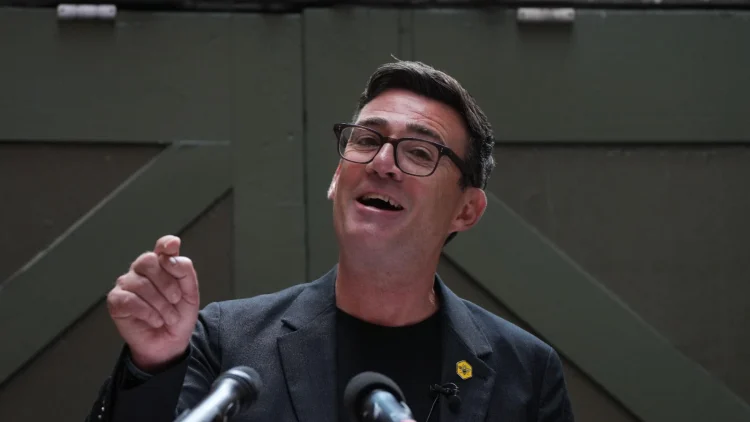

Andy Burnham gave a speech in Manchester on Monday morning (Alamy)

5 min read
Andy Burnham has said he would “do things differently” and lead a huge transfer of power out of Westminster in a speech setting out his vision for power.
On Monday morning, Burnham gave his first speech since announcing he would stand to become leader of the Labour Party and prime minister after Keir Starmer announced his resignation last week.
Burnham is widely expected to become PM this month, with the former Greater Manchester mayor backed by large numbers of Labour MPs.
Speaking at the People’s History Museum in Manchester, the city where he was mayor for nearly a decade before returning to the House of Commons, Burnham set out his central proposal of “taking power out of the centre” in Whitehall and transferring it to the regions and mayors.
He described a vision to have “good growth in every postcode” through a “bottom-up” approach, replacing a centralised, top-down model.
This would include expanding 10 Downing Street and putting part of it in Manchester.
“No 10 North will be the nerve centre of a rewired Britain,” Burnham said.
“It will be the conduit through which we redistribute power and resources across the UK. It will coordinate all parts of government at a national and local level to agree a long-term economic strategy and help all places set new growth ambitions. It will be given a mission to strive for equivalent living conditions in all parts of Britain, borrowing from the basic law.”
He said No 10 North will support the regions to reform essential utilities, lead on reindustrialisation and deliver the regeneration of places.
“True to the motto of this city, I am going to do things differently to break with the more of the same approach that has got us here,” Burnham said.
“I am going to give Britain the circuit breaker it needs by building a more collaborative politics in Westminster, by taking power out of the centre, and putting it in the hands of the people and places who can use it best, and in so doing creating a new sense of agency, possibility and hope flowing around the country. We will make politics work for you and the place where you live.”
He highlighted what he has learned from his experience as mayor of Greater Manchester, describing how when he started in that role in 2017, he had wanted to build a new approach: “A new politics based on the exact opposite of the Westminster approach, place first, not party first, problem solving, not point scoring, long term, not short term.”
Turning to the state of Westminster politics, Burnham said it was now a more “fragmented, disjointed place” than when he left as MP nearly 10 years ago, and pledged to “change that culture, leading from the front and showing how things can be different”.
He said he would reform the whip system so that it isn’t used to “create fear or close down debate” among Labour MPs, and make sure his government would draw on “the breadth and depth of talent and expertise our party has to offer”.
He also pledged to create a more cooperative culture in Westminster by reaching out to other political parties and building common ground.

After winning the Makerfield by-election earlier this month and returning to Parliament as an MP, the former mayor is now widely expected to run unchallenged to be leader without a contest, as no other candidate has yet stepped forward to throw their hat in the ring.
Burnham won the Makerfield seat comfortably, despite it being a Reform target area where Nigel Farage’s party had been polling very well in the months preceding the contest. Burnham described the “Makerfield test” of his own by-election victory as being at the heart of decision-making in his future government.
Addressing speculation over who he would appoint to the top jobs in his cabinet, Burnham said he would not announce decisions until the leadership contest process was complete.
“So, until then, feel free to discount the wild speculation in circulation,” he said.
“While the political direction I set is not up for negotiation, I will build an inclusive team at the very highest level, so that all parts of the party and the country can see themselves reflected and represented in it.”
There is currently fevered speculation about who Burnham will choose to be his chancellor, with Energy Secretary Ed Miliband, Home Secretary Shabana Mahmood and former health secretary Wes Streeting all seen as candidates.
However, Burnham insisted he would stick to the government’s fiscal rules and not deviate from Labour’s 2024 election manifesto.
Burnham committed to a 10-year mission to raise living standards across the country through reindustrialisation, housing, infrastructure and reform of essential utilities.
Responding to the influential Alan Milburn report on youth unemployment, Burnham said the country needs a “complete rethink” of how we support the next generation to succeed, starting with the education system.
“A school system configured entirely around the university route will be brought to an end,” he said, adding that he would support calls from mayors for devolution of employment support, which he said would help to reduce the welfare bill.
He also pledged that No 10 would oversee the “biggest council house building program since the postwar period”, using vacant public land to reduce costs.
Burnham promised to reform business rates to support pubs and high street businesses that bring social and community benefits.
“Shouldn’t we make our high streets the new symbol of Britain’s Renaissance?” Burnham asked, to a round of applause in the room.
He added that there should be more devolved powers for London over education and housing, “so that London can do more for itself and remain the world’s greatest capital city”. Burnham will be seeking to reassure Labour colleagues in the capital, after some expressed nervousness over the weekend around his anti-London messaging.
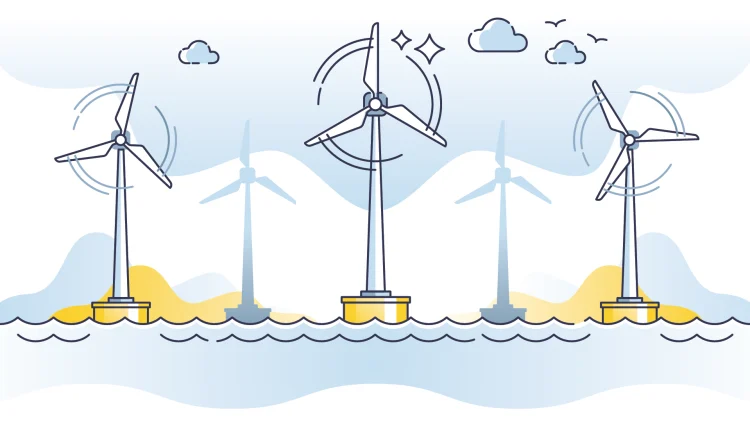

Credit: Adobe Stock

Taking radical action on offshore wind consenting can deliver a cleaner, cheaper energy system faster, giving the government a clear win on delivery. Tim Harding, Head of Government Relations and Public Affairs at the Offshore Renewable Energy Catapult, states the Energy Independence Bill is the perfect platform to do it
The announcement of the Energy Independence Bill in the King’s Speech comes at a precarious time for this government. Without getting sidetracked by the febrile drama of Westminster, it is clear that what people want from the Prime Minister and his Cabinet is radical action and recognisable delivery.
Nowhere is this more evident than the energy sector. Consumers feeling the pinch at the meter, small businesses and large manufacturers struggling with their energy consumption, and bids to attract power-hungry AI data centre investments all pile pressure on the government to take action on an energy system buffeted for the past few years by Russia’s invasion of Ukraine, and now exacerbated by the US-Iran war and closure of the Strait of Hormuz.
One country that has fared much better during this period of energy-price spikes is Spain, and it has done so not in spite of its roll out of renewable energy but because of it. As shown in Ember’s report last October, the Spanish capacity to break the link between gas and energy prices using renewables deployment at pace has led to some of the lowest wholesale electricity prices in Europe.1
Secretary of State Ed Miliband has obviously heard this message loud and clear, and the government’s latest tweaks to the Contract for Difference (CfD) auction process and nudging of producers from the Renewables Obligation towards CfDs is welcome. Indeed, breaking the link between gas prices and the electricity wholesale market is of paramount importance and the 8.4GW of offshore wind procured through Allocation Round 7 is a huge boost towards meeting 2030 Clean Power targets. But bolder action is still needed, both politically and economically.
Where the system still lags is getting these offshore wind turbines consented, built and operational. In fact, consenting is the single-most time consuming aspect of the offshore wind pipeline, taking up to 10 years compared to around 2 years for oil and gas, not to mention the huge costs involved. This must be where the government now focuses its attention.
ORE Catapult, the UK’s leading technology innovation and research centre for offshore renewable energy, has considered this at length, and has responded with the Accelerating Consenting for Offshore Renewables Deployment (ACORD) programme.
Through use of existing and innovative technologies (drones, at-sea sensors, autonomous and remote operated vessels, for example) we can speed up consenting and simultaneously make it cheaper. Taking this a step further, ORE Catapult’s Regional Environmental Monitoring Programme (REMP) demonstrates that creating a regional-scale consenting programme will produce better environmental outcomes as well as faster deployment. Through implementing an enhanced consenting process, it is estimated that timelines for offshore wind consenting could be reduced by 40 per cent and produce cost savings of between 30 – 50 per cent.
Given that provisions within the Energy Independence Bill aim to accelerate clean-power deployment and strengthen long-term energy-system resilience, it provides the ideal platform for putting these new systems in place and would represent a quick and easy win for the government in what is becoming a more contested political environment around climate and energy security messaging.
Getting more turbines operating in faster time could be just the sort of action that this government can shout about to show it is getting things done, and all it takes is a little radical thinking.
Read ORE Catapult’s report; Accelerating Offshore Wind.
Reference
- Ember; Decoupled: how Spain cut the link between gas and power prices using renewables. https://ember-energy.org/latest-insights/decoupled-how-spain-cut-the-link-between-gas-and-power-prices-using-renewables/



4 min read
The energy transition should mean secure jobs, lower bills and greater local control over energy. Kim McGuinness, Mayor of North East England, calls for a place-based approach that turns net-zero into economic opportunity
For me, the transition to clean energy is about three things. Secure jobs. Lower bills. And more control over our own energy. That’s what a just transition looks like. Not something that happens to us, but something that puts money back in people’s pockets and gives the region a stronger footing.
When I speak to government about a just transition, I always stress that it has to be place-based. Decisions about how we power our homes, create jobs and grow our economy should not be made from a distance. They need to be shaped here, by the places and people they affect. In the North East, we know what our strengths are and where the opportunities sit. It is our job to act on them.
We have set a simple mission as a Mayoral Strategic Authority. We want the North East to be the home of the green energy revolution. That is not about branding. It is about making sure the shift to clean power translates into something real – something people can see making a difference to their everyday lives. Clean energy and the wider energy transition sit at the centre of our Local Growth Plan because they give us a clear route to jobs, investment and long-term stability.
Local leadership matters most when it comes to jobs. My Plan for Green Jobs sets out how we will double the number of green jobs in the North East to 50,000 by 2035. That includes major growth in offshore wind, heating systems, low-carbon housing and the supply chains behind electric vehicles. These are real opportunities that will create skilled jobs that people can build a life around, and they sit at the centre of how we grow our economy.
But those jobs will only materialise if we build the pathways into them. That is where local leadership makes the difference. Our job is to join up the opportunities and move at pace. Industry, colleges, universities and government pulling in the same direction. Moving faster. Making sure investment lands here, and that local people see the benefit.
We are investing in skills and facilities, from the Energy Academy in Newcastle to the Energy Central Institute in Blyth, because we know what our employers need and where the gaps are. We are also focused on making these jobs accessible to all. This transition has to open doors to people who have been overlooked in the past, including women and others underrepresented in these industries.
In the North East, we know what it means to power the country. We have done it for generations. From shipbuilding and rail to the first hydropower at Cragside, this region has always been part of how Britain keeps the lights on. Clean energy is the next chapter, and we are in a strong position to lead.
Offshore wind will play a major role. We have some of the strongest offshore wind resources in the country, and new leasing off our coast could provide a large share of the country’s electricity. If we secure that investment, it means jobs in our ports, our supply chain and our communities. Jobs that work for traditional communities along the banks of the Blyth, Tyne and Wear.
That is why local leadership matters so much in this space. It is about taking control where we can, backing our strengths and making sure the benefits of this transition stay here.
We are already putting that into practice. In Gateshead, mine water is being used to heat buildings at scale, drawing on our industrial past to deliver a practical answer to today’s challenge of heating homes at lower cost. Our universities are pushing forward on geothermal energy, which could provide reliable heat for years to come. These projects show what local leadership can do when it connects ideas, investment and delivery.
There is a wider issue behind all of this. In recent years, we have seen how quickly global events can push up energy prices. Families feel that straight away. Businesses feel it too. If we produce more of our own clean energy here in the North East, we protect people from those shocks, and that is when net-zero makes sense.
Green growth, done properly, means secure jobs, homes that cost less to heat and energy produced close to home. That is the future we are working towards in the North East, and we are getting on with delivering it.
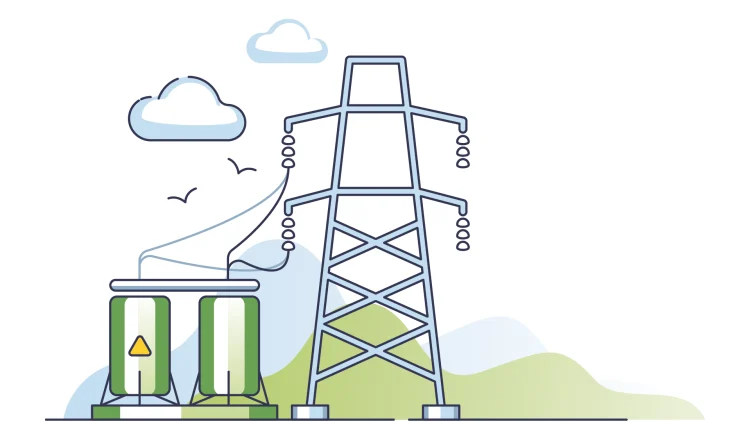


4 min read
Cheaper bills must lead Britain’s energy debate. Chair of the Energy Security and Net Zero Committee, Bill Esterson, reiterates energy security and electrification are the route to growth and net-zero
Economy, security and environment. We must be unapologetic that our priorities lie in that order.
Increasingly electrification has replaced energy transition as the objective because it’s cheaper, more efficient and more secure to rely on electricity rather than imports of oil and gas. Decarbonisation as climate action will follow as an objective, but it increasingly does not lead this debate.
The priority for policymakers should be cutting bills for the British public. Energy security is our path to doing so. If we succeed, the carbon reductions our climate needs will follow. As Net Zero Week 2026 starts this week, a 13 per cent increase in the energy price cap has arrived. Higher energy costs is unwelcome news for families and businesses already under pressure. But this reality is helping forge a new consensus.
Not so long ago, news like this would have prompted a familiar argument: that climate action and net-zero policies were making energy more expensive. Instead, it has prompted a new argument, championed by my party’s former prime minister, Tony Blair, in his article about the future of our country. You may have to whisper it in some quarters, but Blair is right about at least one thing. Electrification.
In my constituency, electrification has already demonstrated huge benefits. The Merseyrail network now run battery-operated units without the need for infrastructure. They use about 20 per cent less energy than the old fleet, and up to 80 per cent less than diesel units. Across rail, electrification is roughly 50 per cent cheaper to run and maintain.
The central challenge facing Britain is not how to reach net-zero, but how to make energy, particularly electricity, cheaper.
Decarbonisation depends on electrifying transport, heating and industry. But electrification will only succeed if electricity is affordable. Businesses will invest if it improves competitiveness. Households will switch if it lowers bills. UK consumers pay the highest electricity prices in Europe, and industry struggles to compete as a result, while millions of people are in energy poverty.
So, it’s right that our priorities are in the right order. We should not pursue the policies of clean power because of ideological zealotry, but as obligations to the British people, who urgently need cheaper energy bills.
This is not an environmental argument. It’s one of economy and security. Once we have achieved greater security in our energy supply and broken the historic link between the price of electricity and gas, then we will be able to bring bills down over the long term.
The modernisation of our energy infrastructure is the path the government must follow, with a conviction and drive many are yet to see.
But what does that mean to those who see their energy bills increasing year upon year?
It means bills coming down. It means new jobs in every corner of the country. It means building the infrastructure that will power generations to come. A demonstration that government still has the vision, the ideas and the long-term strategy to make a difference to people’s lives. Delivering what should be our only priority, bringing down energy bills.
The select committee visited Canada and learnt that Prime Minister Mark Carney has adopted a pragmatic approach to enable the country to benefit from cheaper energy as a priority. His Build Canada Strong strategy has much to commend it, with an energy policy that focuses on the delivery of what Canadians need in an uncertain international situation.
Over the past year, my committee has examined public attitudes towards the energy transition. People want lower bills, stronger growth, cleaner air and greater energy security. Increasingly, they recognise these goals point in the same direction.
New polling reinforces this picture. Asked about Britain’s future energy needs, people place greater emphasis on competitiveness, jobs and reducing pollution than on the visual impact of new infrastructure. The public understands energy infrastructure is a means to an end: a stronger and more resilient economy.
Of course, oil and gas will remain part of our energy mix for some time. The question is not whether they have a role, but what the right balance is between fossil fuels and renewables, and how domestic production can support energy security, jobs, communities and the energy transition.
Britain will not achieve lower bills without cheaper electricity. Nor will it achieve stronger growth, greater competitiveness or lasting energy security. It’s the pragmatic approach, as seen in Canada, with recognition of the proper role of oil and gas that will secure our energy future.
Our mission, cheaper bills. Energy security as our means. Net-zero follows; it does not lead this debate.


(Mickey Lee/Alamy)

4 min read
The Jewish Labour Movement was founded in 1902 and affiliated to the Labour Party in 1920.
We are one of the party’s oldest, largest and most active affiliates, perhaps most well-known for taking the Labour Party to the Equality and Human Rights Commission, which found the party responsible for unlawful acts of harassment and discrimination while under the leadership of Jeremy Corbyn. We represent the Jewish community within the Labour Party, and the Labour Party within the Jewish community.
When Keir Starmer won the Labour leadership in 2020, the first thing he did was apologise to the Jewish community and the country for the antisemitism that had been allowed to flourish under his predecessor’s leadership. He changed the Labour Party from the top down. From his clear and unambiguous understanding of both the scourge of antisemitism and his role as leader, the change was swift and decisive. It enabled a changed Labour Party to face the country, morally whole and serious about the communities we serve.
The past few years have come with their fair share of challenges to the Jewish community. A global tidal wave of antisemitism since 7 October 2023. Jews murdered in a synagogue and stabbed in the street. Community ambulances set on fire and petrol bombs thrown over the already high walls the Jewish community has been forced to build around itself.
Important steps have included record funding for the Community Security Trust for the protection of Jewish buildings, a well-received community cohesion strategy and policies to tackle antisemitism in the NHS and educational settings.
Andy Burnham, at the time of writing, is the only leadership contender and has a longstanding relationship with Manchester’s Jewish community. His response to the antisemitic terror attack at Heaton Park was empathetic and genuine. As Starmer’s potential successor, Burnham needs to hold the line on antisemitism, both as prime minister and Labour leader. We cannot rehash old, damaging arguments about whether those accused of antisemitism belong in the Labour Party. They do not.
The Jewish community needs reassurance that the politics of the Middle East doesn’t get imported to our shores
Within Westminster, the National Security (State Threats) Bill going through Parliament is an important step and needs to be followed by the swift proscription of the IRGC. The strong community cohesion strategy needs amplification. Antisemitism needs calling out and the number of incidents needs to fall. The police need the resources to keep British Jews safe.
The Jewish community needs reassurance that the politics of the Middle East doesn’t get imported to our shores, and that Israel and Palestine do not become a political wedge. Every time that happens, antisemitism skyrockets in the UK. That leadership starts from the top – setting clear boundaries about language that is and isn’t acceptable.
The next prime minister needs to surround himself with people who understand the issues facing our tiny, minority community, and not those who wish to push an agenda which may cause us harm. Keir Starmer did a good job with this, pushing policy forward on Israel and Palestine in a way that was considered, measured and had foreign policy, not prejudice, at its heart.
The Jewish community has always known that populism looks for scapegoats, and those scapegoats are often Jews. The Green Party and Reform UK are each pushing their own brand of radical populism that promises easy answers to complex and difficult challenges. The politics around Israel and Palestine are seen as a sop to the left but have real-world consequences for the Jewish community in the UK.
The Jewish Labour Movement’s ask is simple. We have been the Jewish affiliate of the Labour Party for over 100 years. We know our community and what we need. We will work with the next Labour prime minister for the betterment of our community. The challenges that the Jewish community faces are immense. Just as much as the Jewish community is looking at what the next prime minister, potentially Andy Burnham, will do in government, it will look at how they lead the Labour Party. Stand with us, work with us, and govern in the interests of all of us.
Ella Rose-Jacobs is national chair of the Jewish Labour Movement
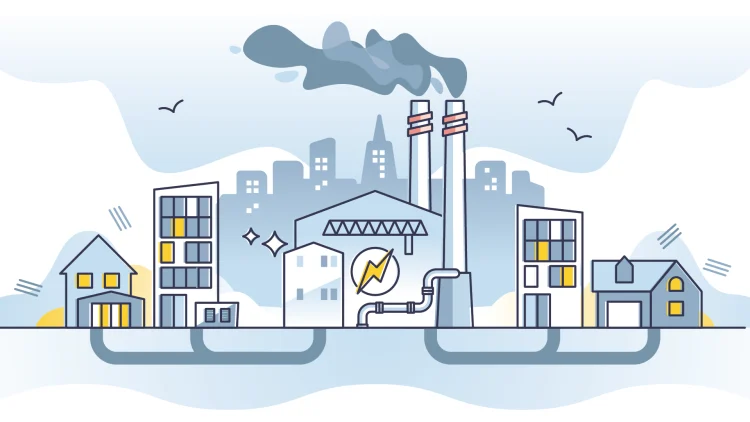


3 min read
The UK’s energy laws focus narrowly on cutting emissions, not boosting growth or living standards. Claire Coutinho, Shadow Energy Secretary, argues for a shift toward nuclear power, cheaper electricity for electrification, scrapping the carbon tax and continued North Sea development
What was the purpose of net-zero? It was to reduce our carbon emissions and ensure Britain plays its part in a global challenge.
However, net-zero had a fatal flaw. Its myopic focus on domestic emissions does not punish us for the emissions that are offshored. Yet for every business or industry that leaves the country and sets up elsewhere, we are increasing global emissions. That’s because the UK has one of the cleanest energy systems in the world.
For every chemicals plant or manufacturer we lose, it is almost certainly going to a country with a dirtier energy system. If those products – whether it be steel or glass or ammonia – are imported back into this country, then they will also have the additional emissions of being shipped back to this country, likely in a diesel-chugging tanker.
This is exactly what is happening in Britain. We are losing refineries hand over fist because we impose carbon taxes on our own industry that are not imposed in Asia, the Middle East or India. The result? Our reliance on imported fuel with twice the emissions is rising.
In the North Sea, every drop of gas that we don’t get from our own supply increases our reliance on imports of liquefied natural gas, with up to four times the emissions. Our chemicals industry is facing a similar decline. Who has been helped by the closure of the cleanest ammonia factory in Europe, weighed down by our unilateral taxes? Certainly not Britain, which now relies on countries with much lower environmental standards for a vital product.
We must reject decarbonisation by deindustrialisation
This will keep happening because our legislative framework mandates one objective – domestic decarbonisation – but not a stronger economy or improved living standards. That means the hand on the tiller will always tilt towards decarbonisation, even when there are egregious trade-offs to the quality of life.
We can see that too in our electricity prices. The net-zero mindset insists we must race to renewables even though increasingly respected voices, like the Institute for Fiscal Studies, are pointing out that this has been adding huge expense to the electricity system through subsidies and grid balancing costs. As much as Ed Miliband likes to say a wind farm is cheaper than a new gas power plant, what he can’t get away from is that in his system, you have to build all of those gas plants as backup anyway. A system with more and more parts that are used less and less often will be less productive and more expensive. That much is clear.
And here’s the problem. If we deindustrialise, if we keep making our electricity more expensive, if we block AI, if we keep making ourselves poorer and weaker in the name of net-zero, we will not be an example of ‘climate leadership’, we will be held up for decades as an example of a country that committed economic suicide. We have already become a warning to the rest of the world. As our politicians talk about going further and faster, Asia is piling on ever more coal power stations – desperate to avoid our fate. It is time for a reset that puts growth and living standards first, with decarbonisation only when it doesn’t harm the country.
That means we should double down on nuclear, make electricity cheap for electrification, axe the carbon tax and back the North Sea. We must reject decarbonisation by deindustrialisation.
Under Kemi Badenoch’s and my leadership, our approach would be better for the environment and for our economy. That is how we strengthen our economy, secure our energy future and deliver a serious energy policy for the world as it actually is, not as we wish it to be.
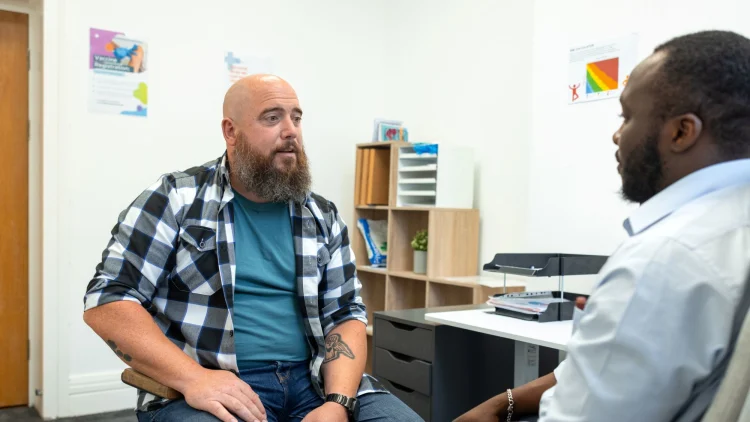

SolStock via Getty Images
If we want to improve people’s health outcomes, prevention must move “from aspiration to delivery”, says new University of Manchester report
The NHS could make huge gains in efficiency by preventing illnesses, rather than simply treating them.
From encouraging people to monitor their blood pressure at home to tailoring breast and prostate cancer screening to individuals’ risk profiles, early action can reduce avoidable disease, improve people’s health and deliver better value for the public purse.
That’s the verdict of Planning for Prevention, a new report produced by experts at the University of Manchester and supported by Policy@Manchester, the university’s policy engagement unit.
The report uses cutting-edge research to give policymakers a range of evidence-based insights and recommendations on delivering preventative healthcare measures.
This week marks one year since the government’s 10-Year Health Plan for England established “sickness to prevention” as one of its three core pillars. As well as tackling deeply embedded health inequalities, a prevention-focused health service would significantly reduce costs. Every £1 spent on prevention yields an £8 return in direct healthcare savings and wider economic and productivity gains.
Manchester experts outline where health policy needs to go next in preventing long-term conditions such as cancer, diabetes and cardiovascular disease. They say that robust analysis and immediate interventions are vital to transform our healthcare system and improve patient experiences.
Writing in the report’s foreword, Professor Tracy Daszkiewicz, President of the Faculty of Public Health, said: “Cancer, cardiovascular disease, diabetes and chronic respiratory disease account for the majority of premature mortality and disability in this country, much of which is preventable, yet too often our collective response remains focused on treating illness rather than preventing it.
“If we are serious about improving health outcomes, reducing inequalities and securing the sustainability of our health and care system, prevention must move from aspiration to delivery. This publication shows us how.”
Genetic insights, for example, could enhance risk-based cancer prevention and detection strategies, particularly for breast and prostate cancer, two of the most dominant types of cancer. But while the 10-Year Health Plan for England and the National Cancer Plan signalled a shift towards personalised medicine, including the integration of genomic insights into screening and prevention strategies, the report’s authors point out that representation, equality and equity concerns must be addressed to ensure that it works for everyone.
“Disparities in screening uptake are already high,” said Dr Sam Merriel, Dr Lorna McWilliams and Professor Gareth Evans, who contributed to the report. “Women from deprived areas, some UK minority ethnic groups and rural communities may face barriers to access, including limited health literacy, cultural factors and logistical constraints.”
Similarly, while the NHS Diabetes Prevention Programme is a successful example of how prevention programmes can operate, the report emphasises that improvements are needed in engaging with underserved communities.
Previous University of Manchester research revealed that patients from ethnic minority backgrounds were over-represented in initial referrals to the programme but were less likely to complete it. Meanwhile, people living in deprived areas were under-represented, showing that if prevention programmes are not properly targeted, they risk widening health inequalities, as opposed to reducing them.
Tom Gordon, Liberal Democrat MP and Chair of the All-Party Parliamentary Group on Diabetes, agrees. He told PoliticsHome that diabetes prevention must serve all communities, especially those that have been overlooked.
“The Diabetes Prevention Programme is a genuine success story, a proof of concept that prevention works at scale.
“Now we need to build on that success by ensuring it reaches everyone who could benefit, particularly those in underserved communities where the need is greatest.
“As we mark one year of the 10 Year Health Plan, the task is to take what works and make it work for all – systematic, equitable, and properly resourced.”
The Planning for Prevention report also focuses on social prescribing – an invaluable way to connect primary care patients to non-medical activities and services to improve their health and wellbeing, particularly those who are lonely or socially isolated, living with long-term conditions, or requiring mental health support. In 2025, there were around 3,350 funded social prescribing link workers in England, but disadvantaged areas have disproportionately fewer numbers – even though patients in these areas benefit more.
High blood pressure, often called “the silent killer”, is another concern. It affects around a third of adults, but most have no idea that their blood vessels, heart and brain are under sustained stress. The Manchester experts’ recommendations include encouraging home and remote monitoring and launching a national campaign to explain the links between blood pressure control and vascular dementia prevention. Action on high blood pressure could help to reduce the future burden of dementia, with significant savings to the NHS and the wider economy.
A further article in the publication explains that social determinants of health remain a major driver of sickness. University of Manchester research has found that victims of abuse may suffer serious health consequences as a result of engaging with private family court proceedings, such as cases to determine child access arrangements between parents or carers.
“Family court systems are producing life-limiting, long-term conditions among women and children,” said Dr Elizabeth Dalgarno and Professor Arpana Verma, who want the Children Act 1989 in England to be revised and updated, a Family Justice Bill to be advanced, and court and perpetrator-induced trauma to be recognised as a public health issue.
“Addressing this requires treating court-related trauma not only as a legal failure but as a driver of chronic disease. Without urgent reform, these systems will continue to generate preventable illness, disability and premature mortality.”
The report highlights the huge gains in efficiency that could be made by preventing illnesses. However, Professor Matthew Sperrin and Dr Glen Martin argue that doing this “efficiently and well” requires better use of data and building models using statistics, machine learning and AI to predict who is at risk.
Dr Simon Opher, Chair of the Health All-Party Parliamentary Group, spent 30 years as a GP before becoming an MP and welcomed the report’s insights.
“We have to get better at preventing illness,” he said. “When people become patients, we have left things too late. Treating a patient is almost inevitably the most expensive option. We must ensure that commercial interests do not get in the way of us reducing obesity, and similar unhealthy outcomes. This report helps us re-think healthcare and begin to map out the next stage of this important journey.”
Shadow Health Secretary Stuart Andrew stressed the importance of prevention but says that NHS reforms must be deliverable.
“Prevention must be central to NHS reform to improve patient outcomes and ensure cost efficiency,” he said. “However, extending regulation on lifestyle choices without clear evidence of benefit risks undermining personal responsibility for health.”
He adds, “Real change must focus on what works, backed by local leadership and respect for individual choice.”
Read Planning for Prevention here.
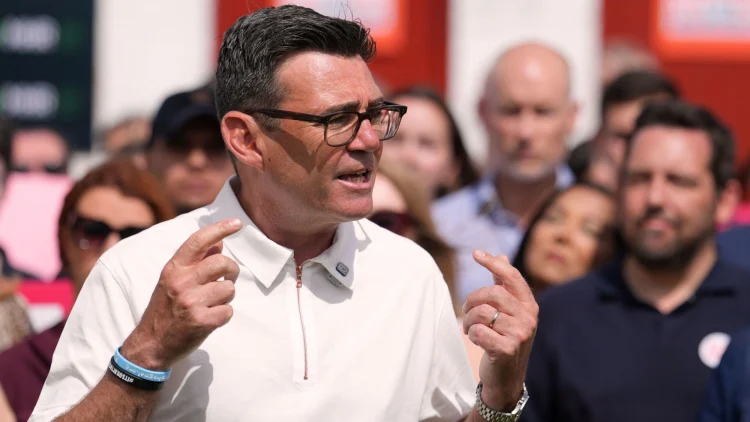

Burnham speaking to supporters after the Makerfield by-election (Associated Press/Alamy)

4 min read
During months of speculation about his return to Westminster, the presumptive prime-minister-in-waiting, Andy Burnham, has made comments that have raised concerns about how his programme would fare with the bond markets.
In particular, his explicit diagnosis of privatisation (of essential utilities above all else) as one of the “four horsemen” of UK economic decline and his more ambiguous comments about how he would remedy it. So, what would a fiscally responsible approach to public ownership actually look like?
Before answering that question, it’s worth noting some fiscally relevant aspects of the set-up we already have. First, the UK’s infrastructure investment needs are immense, and will be funded by billpayers and taxpayers regardless of ownership status. Private ownership may keep spending off the government’s books in the short term, because consumers pay exclusively through their bills. But these high bills squeeze the spending power of those customers and restrict economic production, reducing taxable economic activity. The public purse is affected either way.
Secondly, Britain’s privatised utilities already depend heavily on public support (directly to companies or indirectly through their trading partners or households; explicitly or implicitly through bailout provisions). The £2.7bn cost of the 2021to 2022 energy “supplier of last resort” bailout programme is one example. Another is the nearly half of rail and bus operating expenditure funded by public subsidy. If the state is expected to absorb losses when things go wrong, there is a strong case for it sharing in the profits when things go right – socialising the upside, not just the risk. That is fairer, fiscally safer and creates better incentives.
Finally, public ownership is not inherently a threat to the government’s finances. Borrowing to buy or build productive assets that generate reliable revenues is not obviously riskier than relying on private owners to do the same.
The biggest potential savings come from the fact that governments can borrow more cheaply than private companies. This can have outsized benefits in highly capital-intensive industries like water or energy networks, and this is not speculative – existing policy already revolves around minimising this key parameter. A rough calculation suggests that bringing National Grid Electricity Transmission’s cost of capital much closer to the risk-free rate could lead to savings in the region of 20 per cent. Water is even more capital-intensive. Public ownership could close a large part of this gap, turning savings into lower bills, fiscal consolidation or greater investment than otherwise.
The bigger obstacle is not economics but the government’s fiscal rules. These dictate that “public sector net financial liabilities” (known as PSNFL) must be forecast to fall – something Burnham will likely keep to avoid any penalty from constant rule changes.
If the state is expected to absorb losses when things go wrong, there is a strong case for it sharing in the profits when things go right
Unlike the previous “public sector net debt” rule, this one allows debt to rise as long as it is offset by rising financial assets. However, publicly owned commercial enterprises like Transport for London and their assets are treated as non-financial assets in the accounts, and thus cannot be accounted for in terms of their net value for the purpose of the rules around borrowing to invest. A strategic approach is needed – carefully targeted and sequenced.
The priority should be finding parts of the system where public ownership can expand at low cost. The renationalisation of expiring train operating franchises and the National Energy System Operator are illustrative. The former acquired bargaining power against the real money pit in the rail system – the rolling stock leasing companies – by making the state the sole buyer of trains and carriages, while the latter’s control over co-ordinating the grid has untapped potential. Special administration or routine renewals of licensing, franchises and price controls also provide natural opportunities to minimise legal complication and fiscal expense.
Importantly, the debt rule permits bond-financed stakes up to the ownership threshold that separates public from private sector, and financing lending through bonds to any such private entity. This allows borrowing to acquire (minority) stakes in or lend to companies as long as they remain in the private sector.
The government should look at ways of using cheap public finance to build up ownership stakes over time, and at how payback periods for publicly acquiring shares can be accelerated through refinancing debts. Given the importance of sound commercial governance, these stakes should sit within a public corporation, not within Whitehall. Designated public financial institutions like the National Wealth Fund can be enlisted to support the process.
There is no one-size-fits-all approach, and the larger policy package in which it sits also matters. But clearly Britain’s current model of privatised essential services is not protecting the public finances. In many cases, it is actually jeopardising our fiscal sustainability. Any programme of public ownership will start from that fundamental reality.
Chris Hayes is chief economist at Common Wealth think tank


3 min read
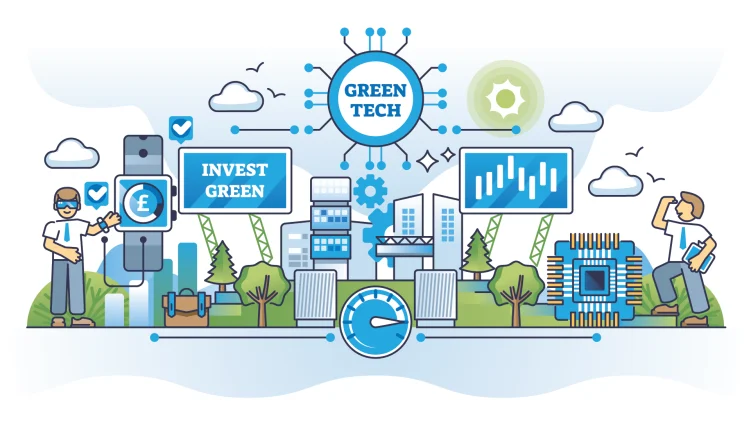
Britain can lead the world in climate technology. However, Edward Morello, Chair of the ClimateTech APPG, highlights that without faster policy action and better access to fi nance, promising CleanTech fi rms will continue to grow elsewhere
Climate change is an issue I feel very strongly about, prior to being elected I spent nearly a decade in renewable energy finance. While I am deeply alarmed by the potential devastating consequences of inaction; I am at my heart an optimist. I believe that with concerted effort we can avoid the worst ravages caused by global temperature increases. I also believe that British innovation can be at the forefront of tackling the threat.
The UK is blessed with a thriving and vibrant clean technology sector that spans data, AI, greenhouse gas removal, solar, wind, heat, geothermal, tidal and many more areas. We have world-class universities spawning cutting-end spin-outs, a huge wealth of talent and genius, as well as expertise in manufacturing and engineering.
We should be the go-to place for other countries that want the next generation of climate technology
We should be world-leaders in the industry of the future, and best in class in a range of subject areas. We should be the go-to place for other countries that want the next generation of climate technology, and the model they aspire to in their own domestic industries.
Yet all is not well in the sector. In meeting after meeting UK businesses tell me they are struggling to attract funding at the startup stage, and finance for the scale-up phase is almost non-existent. Increasingly those companies are looking to become US or EU firms in order to grow.
The issues are not the lack of capital in the market. Investors are sitting on more money than ever before. But speed of deployment and of achieving returns is faster in other markets. Money goes where it can make money fastest. And right now, the investment environment is more attractive in the US and Europe.
The problem is political. Time and again investors reference policy and regulatory uncertainty in the UK, the speed of government decision making, and the lack of support for vital sectors or particular technologies as reasons not to back British businesses.
Carbon removal companies and their investors are still awaiting the government’s response to its own Independent Review of Greenhouse Gas Removals report. The Net Zero Innovation Portfolio, which distributed £1.3bn in innovation grants and delivered £3 in follow-on funding for every £1 invested, was abolished at the last spending review. Its significantly smaller replacement, the CleanTech Innovation Challenge, is yet to award any money. The British Business Bank seemingly only backs businesses in this space that are already established and perfectly capable of raising private finance.
To rebuild investor confidence the government should start by speaking more about the potential for British CleanTech startups, follow up warm words with rapid action on regulatory frameworks and standards, and earmark easy-to-access funding streams for British businesses looking to start and scale in Britian.
As Chair of the ClimateTech APPG I want to shine a light on these issues because it is not just important for the sector, but for the future of the UK. These are the businesses and industries of tomorrow. They have huge employment potential and will deliver significant returns for the Exchequer. Even for those not motivated by a desire to save the planet, that should be reason enough to support British climate technology.

EBC12 Brings Europe’s Leading Digital Asset Leaders Together in Barcelona This September

After Warner Bros., Another Legacy Studio Is Officially on the Chopping Block

Man ‘exposes himself’ to group at York Racecourse – police


-
 Sports6 days ago
Two goals and an assist by sheer aura: Cristiano Ronaldo just entered the World Cup chat
-

 Fashion3 days ago
Weekend Open Thread: Staud – Corporette.com
-

 Politics3 days ago
The House | Manchesterism won’t survive the painful trade-offs unless it gets citizens on board
-

 Politics3 days ago
Potential 2028er World Cup attendee leaderboard
-

 Business3 days ago
Asia stock markets slide as tech shares slump
-

 Tech4 days ago
A Look At A Gaggle Of Transputer Boards
-
Crypto World5 days ago
Bitcoin (BTC) Dips Below $62K, Ethereum (ETH) Plunges 6% Daily: Market Watch
-

 News Videos18 hours ago
MAJOR BITCOIN & MARKET UPDATE!!!! (MUST WATCH ASAP!!!)
-
 Crypto World4 days ago
Dell (DELL) Shares Tumble Over 5% Following Analyst Downgrade to Hold
-

 Crypto World5 days ago
Securitize Wraps Roubini's SEC-Registered ETF as Dubai VARA Digital Security
-
Business6 days ago
Entergy settles forward sale agreements, raises $672 million in cash proceeds
-

 Crypto World2 days ago
Kraken's xStocks Opens Bending Spoons IPO Registration to EEA Retail
-

 Crypto World2 days ago
Coinbase, Circle Deepen Crypto Stock Losses Despite Resilient S&P 500
-

 Sports3 days ago
FIH Pro League: India defeat Pakistan 7-1, register biggest win of campaign | Other Sports News
-
 Crypto World3 days ago
Hyperliquid Named on Singapore MAS Investor Alert Register
-

 Crypto World3 days ago
RTX holders must register wallets before token distribution begins
-

 Tech2 days ago
Bluekit phishing kit adopts browser-in-the-middle for login theft
-

 Tech2 days ago
Russian hackers now target Signal backup recovery keys
-

 Sports4 days ago
India vs Bangladesh LIVE Score, Women’s T20 World Cup: Bangladesh Opt To Bat; India Enter ‘Do-Or-Die’ Stage As Semi-Final Race Heats Up
-
Crypto World3 days ago
The DATA Foundation Launches to Tackle AI’s Multi-Billion Dollar Training Data Bottleneck
You must be logged in to post a comment Login