Politics
The House | “Never afraid to speak or to change his mind”: tribute to Lord Skidelsky


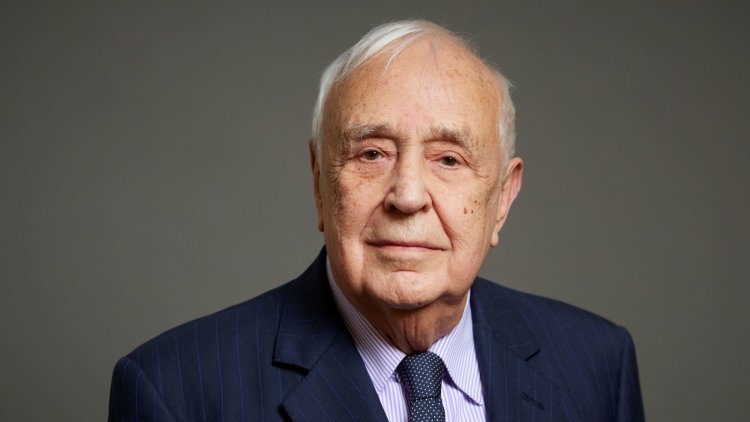
Lord Skidelsky of Tilton: 25 April 1939 – 15 April 2026 | Image courtesy of UK Parliament


4 min read
A towering economic historian with a nomadic political career, and author of acclaimed studies of Keynes, what set Robert Skidelsky apart was not just his sense of mischief or his clarity of thought but his insistence on an ethical approach to economics
Robert Skidelsky who died on 15 April 2026 will be remembered as a towering economic historian, a public intellectual, and a politician who was never afraid to speak or to change his mind.
In his political career he was something of a nomad, apparently uncomfortable with the constraints of politics. He left Labour in 1981 to become a founding member of the SDP. Appointed a life peer in 1991, he took the Conservative whip from 1992, briefly becoming a shadow culture, then Treasury, minister. In 2001 he crossed the floor to become a formidable crossbench peer from where he would interrogate ministers for their dependence on Treasury orthodoxy – whether applied to budgets, or the fallacies of austerity. In recent years he became a more controversial figure for his views on the Russia-Ukraine conflict.
Robert was born in Harbin, China, shortly before the start of the Second World War, the son of wealthy British citizens of Russian ancestry. Interned by the Japanese but released during a prisoner exchange, the family came to Britain where he was educated. (Brighton College and then Jesus College, Oxford.) He remained engaged in the teaching and learning of history and economics and related controversies all his life, including a memorable spat with the revised GCSE history syllabus in 1990. In 2006 he retired from the University of Warwick after 28 years as professor, first of international studies and then of political economy.
His intellectual life was much more consistent than his political journey and more celebrated. His magisterial biography of John Maynard Keynes, without doubt one of the greatest biographies of the last century, was originally intended for publication in 1972 as a modest volume. The first volume was published in 1983. The last of the trilogy was published – to enormous public acclaim – in 2000. It was described by then-chancellor Gordon Brown, himself a man of ideas, as “masterful”.
Most biographers grow to loath their subject. Even the keenest biographers draw the line at moving in with them. Robert revelled in it. He, Augusta, his beloved wife of over 55 years, and their three children, lived for many years In Tilton, where Keynes himself had lived from 1925-46, a stone’s throw from the Bells at Charleston Farmhouse where, in 1919, Keynes had written much of The Economic Consequences of the Peace.
His intellectual life was much more consistent than his political journey and more celebrated
Even fewer biographers go on to apply their subject’s special subject to solve the problems of a contemporary world. Robert did. He re-introduced Keynes to a new generation facing a global economic challenge in 2008 and showed how when financial crises occur, Keynesian economics, as now prime minister Gordon Brown was to prove, would be critical to restoring economic stability in the place of free market chaos.
Robert drew all the lessons from this. His brilliant analysis of the credit crunch in Keynes: The Return of the Master (2009) was described as “righteous in [its] thunder”.
Robert was no abstract academic. What set him apart was not just clarity of thought and language (woe betide the sloppy generalisation or the misplaced allusion) and his sense of mischief, but also his insistence on the ethical foundations of economics and its human impacts. He was a cartographer of shifting ideas as much as a biographer. In his book How Much is Enough?,
co-authored with his son Edward in 2012 and which decried the obsession with growth, he described his own discipline – economics – as “absurdly narrow”.
His final speech in the House of Lords, on 17 March, railed against youth unemployment. Ending with a 1933 quote from Keynes, it serves as Robert’s valedictory: “‘Look after unemployment, and the budget will look after itself.’ That may be too bold for our rulers today, but I say to the Chancellor that if one wishes to gain anything then one needs to dare in order to gain something.”
Robert dared to think and dared others to do so as well. That is his legacy.
Baroness Andrews is a Labour peer

You must be logged in to post a comment Login