Politics
The House Opinion Article | Drax’s retreat is good news for net zero


4 min read
The future of the power station need not be a headache for Ed Miliband.
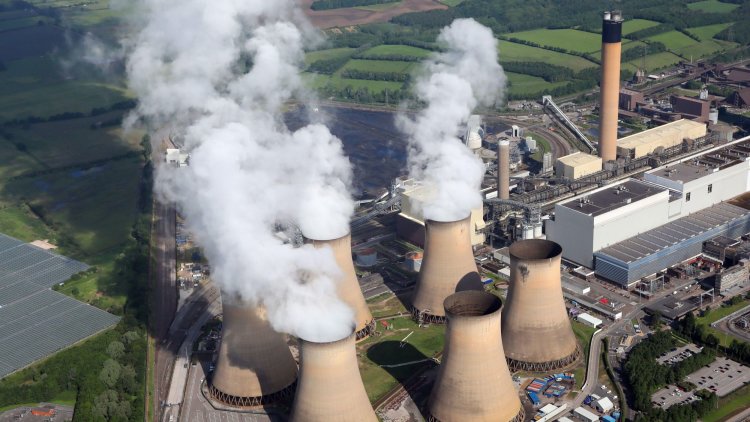
Drax’s story has long been contentious. The power plant in Yorkshire was once home to one of Europe’s largest coal furnaces, but since 2012 has burned millions of tonnes of wood pellets, mostly shipped from North American forests. It generates around four percent of the UK’s electricity, and because trees regrow, this form of generation is classed as renewable.
Successive Conservative administrations backed the project to the tune of £7bn in subsidies since it began burning wood, funded by UK billpayers. This despite a litany of concerns, ranging from unsustainable sourcing of wood and profiteering to health impacts on the communities near its US pellet mills. In the UK, the company is also under investigation by the Financial Conduct Authority, while ten lawsuits have been filed after cases of occupational asthma.
In that context, Ed Miliband deserves credit for beginning to reset the framework he inherited. His decision last February to cap subsidies for large biomass plants and limit Drax’s run-time from 2027 was welcome.
For years, Drax has pointed to Bioenergy with Carbon Capture and Storage (BECCS) to justify its long-term role. The proposition is straightforward: continue generating power from biomass, but capture and store the emissions, allowing Drax, in theory, to remove carbon from the atmosphere and position itself as essential to net zero.
It’s an appealing idea, but it has always raised difficult questions.
Scientific studies raise serious doubts that a model built on burning imported wood could ever deliver genuine climate benefits, given how long it takes for forests to regrow.
Then there’s the cost. Estimates suggest BECCS at Drax could require up to £43bn in public money over 25 years, a substantial sum to place on a single, unproven approach while billpayers struggle with the rising cost of living.
It’s no surprise that this is an issue of rare political consensus. It has united the Greens and Reform UK. Ed Davey – who signed off the scheme at Drax in the first place in the coalition government – has turned against the company. Even Claire Coutinho, the former Conservative energy secretary, has warned that “we cannot go green by burning trees at huge cost to the public” despite backing Drax whilst in office.
This reflects a broader shift, with the government’s own climate advisors scaling back expectations for BECCS and warning against relying on imported wood.
Crucially, Drax now appears to be responding. As reported in Politico, the company will commit only limited resources to BECCS in the near term and instead focus on renewables, battery storage, and a controversial data centre project.
That has been framed as a headache for Miliband, but in reality, it frees ministers from over-reliance on a costly and uncertain single project. The key question is not how to revive one project, but how to ensure the UK’s net zero plans are not beholden to a single company.
For years, BECCS at Drax has played an outsized role in official net-zero plans, a convenient way to balance the carbon books. But as Alan Whitehead recently argued in his independent Review of Greenhouse Gas Removals, relying too heavily on a single pathway, particularly on imported biomass, carries risks.
A stronger approach is to back a mix of solutions: speeding up proven clean power such as wind and solar, investing in a range of carbon removal options, and ensuring public money goes to schemes that are both credible and good value. Analysis from the Green Alliance suggests that it is achievable.
Drax’s change in direction should be seen in that light. It creates space for a more practical and flexible strategy. Moving away from a one-furnace future towards a broader mix of solutions is not a setback for government, but a step towards a more credible and deliverable plan.
Alex Mackaness is Programme Manager at the Labour Climate and Environment Forum

You must be logged in to post a comment Login