Politics
The House Opinion Article | Recipes for disaster: Mrs Thatcher’s larder


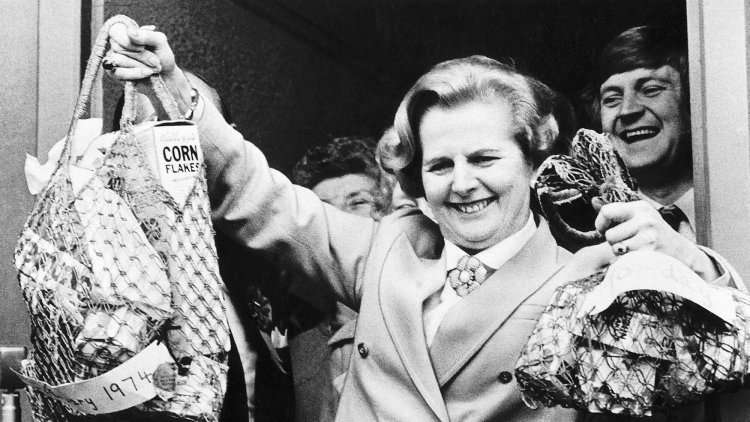
(Trinity Mirror / Mirrorpix/Alamy)


3 min read
Politicians making a meal of it. This week: “You call it stockpiling. I call it being a prudent housewife.”
“Eight pounds of granulated sugar… six jars of jam… six jars of marmalade… four one-pound cans of corned beef… two one-pound jars of Bovril.” It was November 1974, the Conservatives were out of office, and the Daily Express was going through Margaret Thatcher’s larder.
Though the formal contest wouldn’t start until the following year, Thatcher was in the process of challenging Ted Heath for the party leadership, and Heath’s team was keen for any ammunition they could find to use against her. They found it in an interview she’d given two months earlier, in which she’d described how, with inflation roaring away, she was “for the first time in my life”, stocking up on tinned goods. In particular, she was buying “the expensive proteins: ham, tongue, salmon, mackerel, sardines. They will last for years”. Money, she warned, would lose its value as inflation persisted, “but a tin of ham is still a tin of ham”.
What to Thatcher seemed like prudence – she enjoyed writing what she’d paid on the tin, so she could see how much the price had gone up – could also be seen as the terrible wartime crime of “hoarding”. It was time for some dirty tricks. The chairman of Harrods, a former Tory chief whip, was sent on TV to denounce Thatcher. The Daily Telegraph was damning. Suddenly it seemed that her nascent campaign might be under threat. “All her team said this was a disaster,” says her biographer Charles Moore. “They urged her to get away from the story.”
Thatcher was herself mortified to be accused of such a crime, something that she took much more seriously than her male colleagues, few of whom will have had much idea how their dinners got onto their plates, or what was stored in their pantries. She saw how female politicians were treated differently from men. But she also saw an opportunity.
“She invited the press to come and see what was in her larder,” says Moore. The Express helpfully printed a complete inventory which also included two cans of tongue and 20 tins of fruit. “You call it stockpiling,” she told the BBC. “I call it being a prudent housewife.” Women agreed, and it turned out Thatcher had found a way to emphasise how different she was from the men around her. When Labour’s Denis Healey made a joke about the story in the Commons, she had a reply ready, referring to his homes: “I am not as successful as the chancellor at hoarding houses.”
“Housewife” was, Moore says, “a word she used without embarrassment. She didn’t believe in the equality of the sexes. She believed in the superiority of women.” He summarised her view: “All these men have been failing, but they don’t understand the reality, particularly the reality of inflation.”
Thatcher’s enemies had hoped to make her tins of sardines and salmon – though not vegetables, because “we don’t really like them from a tin” – into a weapon against her. Instead, she’d seen that they were a point of contact with the general public.
To Moore, it’s an example of how Thatcher was far ahead of her colleagues in understanding how to shape a narrative and tell a story. “She was preaching,” he says, using her own larder to illustrate her message. “She was the first British politician to understand the photo-opportunity.”
In some ways, the story flattered Thatcher, who generally took a functional approach to her larder. “She was not a good cook and she wasn’t at all interested in food,” says Moore. “But she recognised its importance.”

You must be logged in to post a comment Login