Politics
The House Opinion Article | Recipes for disaster: the Granita pact


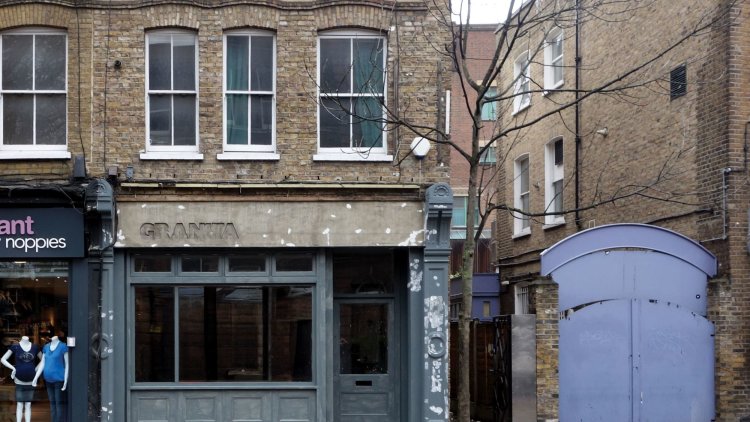
Granita restaurant facade


4 min read
Politicians making a meal of it. This week: a fateful dinner in Islington
The only thing that everyone agrees about the Granita pact is that, whatever it was, it wasn’t negotiated at Granita. In May 1994, the Islington restaurant was the site of one of the most famous, and disputed, meals in British politics. Two and a half weeks earlier the Labour Party’s leader, John Smith, had died of a heart attack. Now two of the favourite candidates to succeed him, shadow home secretary Tony Blair and shadow chancellor Gordon Brown, were meeting to decide which of them would stand aside in favour of the other.
The deal had two outcomes: first, Blair went on to lead his party to three election victories, while Brown became a chancellor who would dominate domestic policy for a decade; more dangerously for their partnership, it left a festering sore between the two men about what exactly each had promised the other.
The Granita restaurant, which served theatregoers and north Londoners who fancied a bit of Eastern Mediterranean sophistication, has now closed, and even its Wikipedia page has been deleted. But the bitterness over what happened that night remains, certainly if Brown’s memoirs are anything to go by.
The meeting in the restaurant was actually the last of a series of conversations between the pair in London and Edinburgh. They’d long agreed that only one of them should stand for any leadership vacancy, to avoid splitting the modernising vote. For all of that time, Brown had assumed that the one would be him, and for much of that time Blair had agreed. In the years before Smith’s death, his view had changed, but he’d seen no point in mentioning this to Brown, his closest friend in politics.
If the Brownite narrative is one of scheming and betrayal, the Blairite one is of a man trying to let his friend down easily. Blair didn’t just want Brown to step aside, he wanted him to be able to do it with dignity. In this telling, the meetings were about helping Brown to understand that he lacked the support to win. If Brown accepted that then, he certainly doesn’t now, as his memoirs make clear. Published in 2017, they show he still believes he was outmanoeuvred by Blair and cheated of the top job that was rightfully his. Nevertheless, he’d already told his team that he wouldn’t stand when he walked into the restaurant.
With him that evening was Ed Balls. “I could tell from the moment we walked in that it was not his type of place,” he wrote in his own memoir. “‘What exactly is polenta?’ he asked me gruffly.” It’s not clear what Balls’ function was there beyond explaining the menu, and he left when the starters arrived. Brown clearly didn’t eat much: afterwards he returned to Westminster for steak and chips.
The bitterness over what happened that night remains, certainly if Brown’s memoirs are anything to go by
With him he took an agreement about the shape of policy under the government that the pair would form, but he took something else, too: the belief that Blair had promised to step aside after two terms and endorse Brown as his successor. Blair’s account of this is cloudy. Certainly it doesn’t dispel the idea that just as he’d allowed Brown to believe things about which of them would run for leader, he now allowed him to believe things about the future.
The Granita dinner exposed flaws in both its participants. Brown comes out of it as a man who misunderstood his own position and bears deep grudges. But he would not, by some distance, be the last person to leave a meeting with Blair under the impression that they’d been promised something they hadn’t.

You must be logged in to post a comment Login