

Politics
The House Opinion Article | The Professor Will See You Now: Waka



Illustration by Tracy Worrall
4 min read
Lessons in political science. This week: waka
A few years ago, a reviewer of a book I’d edited complained that it was not so much full of conversation starters but conversation stoppers. When this was reported back to the academic contributors, it was not taken as criticism. “We are,” one of the authors said, with a little too much enthusiasm, “the sort of people who like to say: ‘It’s a bit more complicated than that’.”
This exchange came to mind as the petition calling for automatic by-elections whenever an MP changes party sailed past 100,000 signatures; it is now scheduled for debate later this month. On the face of it, it seems fair enough – if an MP is elected under one party but then changes affiliation, why shouldn’t voters get a say? – but it is, yes, a bit more complicated than that, involving some fundamental questions about the role of an MP, and ones that could easily have unintended consequences if we are not careful.
There have been two Private Members’ Bills on this issue in recent decades, in 2011 and 2020. Both attempted to introduce a recall petition if an MP voluntarily changed affiliation. The voluntary bit is important, else we could be giving the party whips the sort of disciplinary tool of which they can currently only dream.
“If you don’t vote with us on the Murder of the First Born (No 2) Bill, then we will remove the whip, and you will have to fight a by-election.”
“Ah, well, yes, I wasn’t in favour initially, but I do now see the wisdom of the government’s position.”
Yet I am not sure this voluntary/involuntary distinction works. It is always worth asking: how might someone – someone who was perhaps a bit sneaky – use this to their advantage? In this case, what is to stop an MP staying within their party but behaving differently? You don’t need to defect from the Conservatives; you just start wearing turquoise, telling people to vote Reform, voting the Reform line and so on.
New Zealand offers an interesting lesson. It passed laws against party-hopping in both 2001 and 2018. They have a great term for it: ‘waka-jumping’, after the Māori word for canoe. The creators of the 2001 law were rightly suspicious that not all MPs would voluntarily announce they were defecting – so they created a system by which the party leadership could also report an MP as having de facto left their party, subject to some procedural hoop-jumping and the support of two-thirds of the parliamentary group.
As Andrew Geddis notes in his account of the legislation, this effectively changes the ownership of the seat from the MP to the party. Even if it is not the intention, it is easy enough to see how such rules lead to a tightening of party discipline. Indeed, one of the many curiosities of this issue is that there are many people who feel negatively about defections but positively about rebellious MPs. Yet many of the arguments used against allowing MPs to defect can easily be deployed against MPs being allowed to vote against their party whip. In India, MPs are barred from both.
Debates on this are not helped by the hypocrisy frequently involved. If you have a spare five minutes, look at the supporters of those two previous Private Members’ Bills. You might note that several were later to switch parties; you might also note that not one of them then resigned their seat. Rules for thee, not for me.
A final note: don’t call it crossing the floor, unless they actually cross the floor. Most changes of party label take place on the same side of the House; they are much less consequential.
Further reading: A Geddis, Proportional Representation, ‘Party Hopping’ and the Limits of Electoral Regulation: A Cautionary Tale from New Zealand, Common Law World Review (2006) and his Standards of MP Behaviour and Aotearoa New Zealand’s ‘Party Hopping’ Law, Public Law Review (2025)

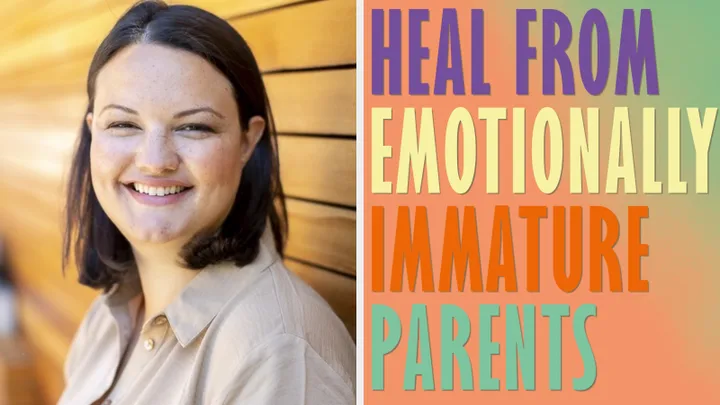
This article features advice from Sian Morgan-Crossley, psychotherapist and author of How to Heal From Emotionally Immature Parents, and Lianne Terry, a psychotherapist and counsellor.
We often hear of how today’s parents are cycle-breakers – choosing to bring up their kids in completely different ways to how they were parented, often to prevent patterns of trauma from repeating.
In fact, a recent Kiddie Academy survey of 2,000 parents revealed 41% of Gen Z parents are favouring “cycle-breaking” parenting.
As this conversation grows in popularity, terms are becoming popularised describing certain ways of parenting that can impact children far into adulthood – and one of these is ‘emotionally immature parenting’.
What is an emotionally immature parent?
“An emotionally immature parent is someone whose emotional awareness and capacity are limited in the parent-child relationship,” says Sian Morgan-Crossley, psychotherapist and author of How to Heal From Emotionally Immature Parents (Hay House, £14.99).
Emotionally immature parents might struggle in areas such as self-reflection, emotional regulation, and empathy under stress. “Many are practically supportive and physically present; but emotionally absent. The difficulty lies less in intention and more in emotional capacity,” she explains.
An emotionally immature parent, then, might struggle to deal with their child’s anger, distress, rejection, or growing independence. “When challenged, they may become defensive, take their child’s behaviour personally, or expect their child to adjust to their moods,” says the therapist.
“Because accountability can feel threatening, conflict often leads to withdrawal, criticism, denial, or blaming rather than to repair.”
These parents might also find it difficult to see their child as a separate individual and so “the parents’ own unresolved needs, sensitivities, or insecurities shape the emotional climate of the relationship”.

The impact of growing up with an emotionally immature parent
Counselling Directory member and psychotherapist Lianne Terry says children who grow up with an emotionally immature parent might struggle with emotional confusion (“struggling to understand or trust in their own emotions”) because their feelings were dismissed or criticised, or they had to prioritise a parent’s feelings over their own.
“These children may also be hyper-vigilant, so watching people’s moods carefully, trying to avoid conflict and feeling responsible for keeping others calm,” she explains.
Children can end up becoming their parent’s emotional caretaker; offering comfort, mediation and feeling responsible for adult problems, which can make them seem mature beyond their years.
“They may however find it very difficult to express their own needs, as this may lead to rejection, criticism or anger, and so they suppress them instead,” says Terry, which she warns can lead to high stress levels and undeveloped emotional regulation skills.
Once children reach adulthood, they might struggle with people pleasing, chronic self-doubt, fearing disappointing others, difficulties setting boundaries, and prioritising others’ needs over their own.
“They may have difficulty with trusting in their relationships, so being overly independent or conversely anxious about being abandoned,” continues Terry.
It’s not uncommon for people who grew up with this type of parent to find themselves in repeating relationship patterns, gravitating to emotionally unavailable partners or taking on the caretaker role, too.
They might also find it difficult to identify or express their own emotions.
Signs of emotionally immature parents, according to experts:
- You often feel triggered and overwhelmed by your child’s emotions.
- You take your child’s behaviour personally.
- You need you child to behave a certain way to feel okay.
- You have difficulty regulating your own emotions (Terry notes: “In general, you may find that you shut down, withdraw or explode instead of expressing your feelings constructively”).
- You struggle to repair with your children after conflict or admit when you’re wrong.
- You feel threatened by your child’s independence or criticism of them.
- You avoid difficult emotions – you might say “you’re fine” or “stop being silly”, or feel uncomfortable when they’re sad, angry or anxious.
- You think in a very black and white way, seeing behaviour as “good” or “bad” rather than developmental.
- You struggle with boundaries – either being too rigid or controlling, or being too permissive, because conflict feels too difficult to manage.
“The key question isn’t: ‘am I emotionally immature?’,” Morgan-Crossley, explains, “but rather, ‘can I stay emotionally present when my child is distressed, angry, or different from me?’
“Emotional maturity is not the absence of triggers; it is the ability to take responsibility for them.”
I think I’m an emotionally immature parent – what can I do?
If you recognise some of the above signs in yourself, take a deep breath. The work begins here. Morgan-Crossley suggests the most constructive response is self-reflection and working through your own childhood experiences.
“Taking responsibility for their own emotional responses and finding ways to work through their own childhood issues – whether through therapy, reading or psychoeducation – can all greatly improve their parenting relationship with their child,” she explains.
Terry says a great first step for parents who identify in this way is to work on developing emotional awareness.
“Learning to identify how you feel is a great foundation. Some things that might help with this include: journalling, emotion wheels, mindfulness or just simply asking yourself ‘What am I feeling right now?’,” she says.
Then, once you recognise your emotions, you can start to regulate them, says the therapist, and the key here is to calm the nervous system. Things that will help with this include: breathing techniques, somatic awareness and pausing before reacting, she says.
Another key part of navigating emotionally mature relationships is repairing after conflict – so this might look like apologising, acknowledging feelings, admitting when you’re wrong, and reconnecting with your child.
“Therapy can be really helpful in allowing individuals to process childhood experience, understand triggers and build healthier relationship patterns,” Terry ends.

NHS leaders must make flexible working the norm to deliver better patient care and help resolve the staffing crisis, say unions.
A coalition of 18 unions representing every part of the NHS workforce has launched a new initiative to promote more choice for staff over how, when and where they work.
The Get Ahead on Flex pledge aims to get employers to speed up their progress on working arrangements that allow more freedom. This can include team-rostering and ‘any-hours’ contracts, offering staff the hours they want to work from the outset.
Flexible working in every job
Those who sign up will commit to highlighting flexible working in every job advert. They’ll set targets to increase the number of approved requests, publish data (such as the number of requests staff make) and train all managers on how to champion choice for workers.
Sussex Community NHS Foundation Trust and Milton Keynes University Hospital have already signed up to the pledge. It’s also got backing from equality campaigners including Kate Jarman, who champions flexible working the NHS, and Professor Alison Leary from London South Bank University.
At present, all NHS workers have the right to request flexible working from day one of employment and to make unlimited requests without providing a reason.
However, health unions say all too often accessing the flexibility they need is a struggle for staff, including those with childcare and other family commitments. The inconsistent approach by employers has created a postcode lottery across the NHS.
Some staff are having to accept less favourable contracts – or bank shifts, which are lower paid – in return for gaining flexible working. Employers often reject applications from workers who want to determine their own schedule and instead insist they must fit in with rigid shift patterns.
One health worker, who cares for her mother, said:
I applied for flexible working twice, but it was declined both times. I used all my annual leave to have weekends off [to care for her mother]. It meant I had no holidays or time away for me for several years until we got a different manager.
Raising standards
The health unions say flexible working should become the standard, to help attract and retain experienced staff. Tens of thousands of workers have already left the health service due to poor work-life balance, according to data.
Get Ahead on Flex is also aiming to ensure managers know how to handle requests in a way that benefits individual staff. The campaign encourages them to take the initiative to redesign jobs and services to better meet the needs of staff and patients.
The benefits of flexible working, such as increased performance and higher quality care for patients, are well-understood at the policy level. But the unions say financial and other pressures on the health service get in the way of real change.
In England, a new standard on flexible working is expected to be introduced for NHS employers in April as part of the government’s 10-year workforce plan.
Trusts who sign up and meet the commitments of the Get Ahead on Flex pledge will already have a head start on implementing the new standards, say the unions.
And in 2027, tougher statutory requirements on flexible working are due to come into force for all employers.
Chair of the NHS unions and UNISON head of health Helga Pile said:
Too many NHS staff are struggling to balance work with other parts of their life including caring commitments. This affects their health and well-being, and forces many to consider jobs elsewhere.
The NHS has long talked about the importance of improving flexible working options. However, old-fashioned attitudes and rigid one-size-fits all shift patterns are still getting in the way.
This pledge provides a real opportunity to improve working life for staff and give patients a better service.
Campaign lead for the NHS unions on flexible working and Society of Radiographers head of industrial relations Leandre Archer said:
Flexible working shouldn’t depend on which employer you work for or who your manager happens to be.
NHS staff deserve fair, consistent access to flexibility so they can deliver the best possible care without sacrificing their own wellbeing.
The Get Ahead on Flex pledge is a vital step towards ending the postcode lottery and making flexible working a genuine reality across the NHS.
Featured image via the Canary

January was the month of many storms (Goretti feels like it happened a year ago, but hey). Then came the long, wet February, which saw incessant rain across the UK.
“Blood rain” aside, March so far has provided a brief sunny respite. But in this year’s signature whiplash fashion, some parts of the UK might see snow this week, the BBC said.
When might it snow?
The Met Office said “wintry” conditions will begin to affect parts of the UK this Thursday to Saturday (12-14 March).
It comes with “unsettled,” windy conditions.
Friday is expected to be the coldest day.
And the crisp spell will likely wrap up by the end of the week.
Why are the conditions changing so quickly?
The jet stream is “ramping up”, the BBC reports, bringing with it a series of increasingly cold and wet weather fronts.
The conditions are expected to be very windy, which could prevent overnight frost from forming, but during lulls, some especially “prone” areas could dip below freezing.
Where might snow fall?
Because strong winds are expected to bring sleet and cold showers to the North of the UK (including in Scotland, where gales are predicted later in the week), snow might fall on high ground in the North, though it’s not expected to settle.
And hailstorms are possible across the country, even in the south.
Why is it so hard to predict snow in the UK?
It’s hard to say for sure whether this week’s weather conditions will definitely lead to snow.
It’s generally hard to tell when snow will fall in the UK.
The wind that blows in cold air and the wind that blows in wet air come from different directions, meaning very chilly precipitation, which is needed for snow, is a relatively rare occurrence.
Even when it does happen, “A lot of the rain that we see in the UK, at all times of year, was snow when it started falling, but has fallen into air that is warmer than 0⁰C and melted,” the University of Reading wrote.

Since premiering on the platform last week, Netflix’s new documentary The Dinosaurs has become a huge hit with viewers.
A sequel of sorts to the nature series Life On Our Planet, the new venture was co-produced by EGOT recipient Steven Spielberg and features narration from the unmistakable Morgan Freeman.
The four-parter tells “the story of the rise and fall of the dinosaurs — where they came from, why they mattered, how they evolved and how they met their ultimate fate” using cutting-edge visual effects from Industrial Light & Magic, the team behind the sensational ABBA Voyage.
So far, The Dinosaurs has gone down a storm, earning a rare 100% critical score on Rotten Tomatoes (based on seven positive reviews) and at the time of writing, it’s still the number one show on Netflix UK, ahead of the likes of Bridgerton, The Night Agent and Vladimir.
But what’s the reaction been like within the community of dinosaur experts?
Over the last few days, a Reddit thread inviting paleontologists to weigh in has been popping off, with a mix of reactions.
One of the most popular answers came from user u/Maip_macrothorax, who has described it as a somewhat “shallow” watch, albeit not a “terrible” one.
“While it suffers from similar issues to Life On Our Planet (like the ‘evolutionary superiority’ framing), it’s to a much lesser degree,” they wrote. “The pacing here is also a lot better.
“I just wish they explained some things better,” they added, while criticising some of the information for being on the “misleading” side.
Fellow dino expert u/mmcjawa_reborn had a similarly mixed reaction, hailing the show for featuring “a lot of critters” who don’t always get a moment to shine – specifically naming “Procompsognathus, Rhynchosaurs, Marasuchus [and] Tanystropheus” – and praising the use of visual effects to bring the dinosaurs to life.
However, they agreed that the narration had “varying accuracy” while some character designs veered towards “dull”.
“Worth a watch… just wish the script for the narration was better,” they surmised.

Another viewer, u/endmaga2028, admitted they were “disappointed” at certain mispronunciations early on in the series, though others were less critical on this subject.
Meanwhile, u/Practical_Reveal9477 was even less impressed, calling the show “overly dramatic” and with “little educational value”, suggesting that “all signs pointing to a simple and quick cash grab”.
On the other hand, u/GuessBrilliant9167 admitted they were moved to tears by the final episode, even if they conceded the show on the whole was “a bit more of the same”.
“The bird/dinosaur montage and comparing behaviours made me very emotional and reminded me how resilient and successful dinosaurs were and still are today,” they enthused.
Director Nick Shoolingin‑Jordan previously told Netflix’s Tudum outlet that he wanted to “tell the full chronology all the way through and take the audience on a rip‑roaring adventure” with The Dinosaurs.
Showrunner Dan Tapster added: “We had eight 50-minute episodes to tell the entire story of life on Earth [in Life On Our Planet], so there were lots of things where we could only scratch the surface – and the dinosaur story was absolutely one of them.
“With The Dinosaurs, we finally get to tell that story in full and celebrate it like no one has ever done before.”
The Dinosaurs is now streaming on Netflix.

Quentin Tarantino has responded to Pulp Fiction star Rosanna Arquette’s recent comments lamenting that the film industry had given the Oscar winner a “hall-pass” to include racial slurs in his movies.
On Monday evening, Tarantino issued a response to remarks made by Arquette in an interview with The Times published over the weekend.”
“Personally I am over the use of the N-word – I hate it. I cannot stand that he has been given a hall pass,” she said, referring to the fact that the racist slur has featured in Tarantino movies like 2012’s Django Unchained and 2015’s The Hateful Eight.
She insisted: “It’s not art, it’s just racist and creepy.”

Following this, Tarantino said (as reported by TheWrap): “I hope the publicity you’re getting from 132 different media outlets writing your name and printing your picture was worth disrespecting me and a film I remember quite clearly you were thrilled to be a part of? Do you feel this way now? Very possibly.
“But after I gave you a job, and you took the money, to trash it for what I suspect is very cynical reasons, shows a decided lack of class, no less honour.”
Elsewhere in her Times interview, Arquette spoke favourably about other aspects of Pulp Fiction, describing it as “iconic” and “a great film on a lot of levels”.

Tarantino’s latest film Once Upon A Time In Hollywood was released in 2019, with reports claiming last year that he’d scrapped plans for his next big-screen offering, The Movie Critic, because of its similarities with his previous project.
In the last few years, Tarantino has also written a novelisation of Once Upon A Time In Hollywood, as well as a spin-off, The Adventures Of Cliff Booth, slated for release later this year, with David Fincher on directing duties.
He has also turned his hand to writing for the stage, with a play he’s also poised to direct on London’s West End.
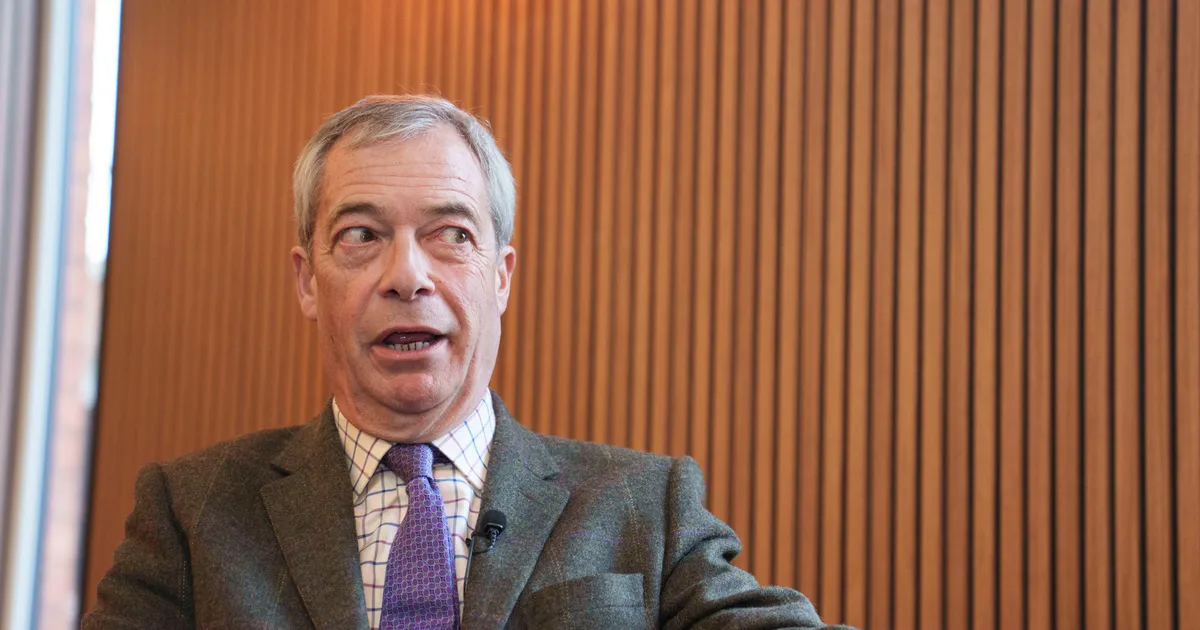
Reform UK has been accused of backpedalling “in panic” over its previous enthusiasm for the UK to back the US and Israel bombing Iran.
Senior figures in the party vocally supported the military action after it was launched just over a week ago.
Nadhim Zahawi, the former Tory chancellor who defected to Reform earlier this year, even said: “We should join the bombing if needed.”
Last week, party leader Nigel Farage said: “We should do all we can to support the operation. I make that perfectly, perfectly clear.”
He added: ”“The gloves need to come off, we need to accept that we are part of this with the Americans and the Israelis. We have to take the gloves off. We have to get rid of this regime.”
Deputy leader Richard Tice also urged Britain to be “responsible” and support our allies on X last week.
Responding to a social media critic, he wrote: “What is your plan? Wait til the Iranian regime commits another terrorist outrage in the UK, directly or via proxy, then wring your hands? Or just rely on US to protect us?
But in a major U-turn, Farage told a press conference on Tuesday: “If we can’t even defend Cyprus, let’s not get ourselves involved in another foreign war.”
His change of heart comes after a spike in global oil prices led to warnings of higher mortgage rates, petrol prices and inflation.
A Labour source said: “Nigel Farage and Reform spent the past week saying they would bomb Iran.
“Now they’re backtracking as petrol prices rise, leaving their foreign policy in chaos. That’s not serious leadership, that’s panic.”
British voters are becoming increasingly opposed to the conflict, with 59% of voters now saying it’s a bad idea compared to 49% last week.
Pollsters at YouGov say support remains steady at 25%.

We hope you love the products we recommend! All of them were independently selected by our editors. Just so you know, HuffPost UK may collect a share of sales or other compensation from the links on this page if you decide to shop from them. Oh, and FYI – prices are accurate and items in stock as of time of publication.
Skin confidence is worth its weight in gold, and when you find a product that can give it to you? There’s no feeling quite like it.
This Mother’s Day, you could be the one to give your mum that very feeling with the help of 47 Skin.
This multi-award-winning range of skincare is powered by Silver Chitoderm®, a unique ingredient that’s designed to help clear your skin of spots and reduce the appearance of stubborn marks.

Skin47
So how does it work? The silver and chitoderm bond together, resulting in an invisible barrier on your skin that kills 99.9% of the bacteria that cause acne.
While that might sound like code for “these products are harsh” to shoppers used to reading between the lines, this range is also designed to calm inflammation and redness, and leave your skin super hydrated, too, instead of stripping your face of important moisture.
Think that sounds too good to be true?
Well, 47 Skin products have a very impressive number of glowing reviews, like the best-selling 47 Skin Serum (50ml), which has got nigh on 2,300 5-star ratings under its belt.

47 Skin
Boots reviewers say it’s “amazing”, with one writing that it’s helped improve their acne scars, and another saying that “it has been the only product that has actually reduced my spots and kept my face clear.”
And the gentle 47 Skin Everyday Cleanser (150ml) has over 350 5-star reviews to its name.
One happy customer said their skin “really started to suffer” during perimenopause, and the cleanser is “the only thing that has truly helped”.

47 Skin
Yes, stubborn acne can hit at any age, and it’s never too late to try something new to reduce the appearance of old scars.
For Mother’s Day, you can get 10% off all 47 Skin bundles, like the 4 Step Skin Repair Bundle that’s been selected to repair, soothe, and protect your skin, which is marked down from £116 to £104.
And the 3 Step Moisture Bundle, a routine for calmer, more hydrated skin that’s down to £83 from £92.
So what are you waiting for?

47 Skin

Labour is in deep trouble with Black voters. Operation Black Vote (OBV) chair David Weaver warns the party is ‘accepting the normalisation of racism’. This isn’t just a polling dip, it is a fundamental collapse of trust from its voters.
Weaver highlights how to government’s plans to restrict jury trials will ‘heighten, normalise and embed’ racial disproportionality. This is not a new concern for those watching the party’s trajectory. We’ve long been aware of how the current leadership has prioritised pro-business optics over the safety of marginalised communities.
Labour have a hierarchy of racism
We’ve all long known of the hierarchy of racism within Labour. In the 2022 Forde Report, commissioned by the party itself, confirmed this toxic culture. It found that Labour was failing to treat all forms of racism with equal seriousness.
Martin Forde KC detailed how Black and Asian MPs and members faced specific, targeted abuse which was often ignored or downplayed by Labour’s own bureaucracy. The reported stated that antisemitism was being used as a factional weapon while other forms of racism – specifically anti-Black racism and Islamophobia – were being systemically ignored.
The Labour Files and subsequent investigations revealed a judiciary as well as a party structure which often treats Black and Brown voices as disposable when they conflict with the party’s central narratives. This hierarchy means that whilst some forms of prejudice are rightly tackled, others are normalised, creating an environment where Black voters feel increasingly ignored and alienated.
Juries are out on justice
Restricting juries means moving the UK towards judge-only trials, removing a massive safety net for Black people. In England and Wales, only 1% of judges are Black and removing the public oversight of a jury hands total power to an overwhelmingly white judiciary.
In drug offenses the odds of getting a custodial sentence are 140% higher for Black people than for white offenders with similar histories. Juries act as a filter for prejudice that single judges simply do not provide.
This reform ignores the racial reality of the UK justice system. Juries often act as the last line of defence for Black people against state overreach. By gutting this right, the Labour party is intensifying this systematic bias that already sees Black people given longer sentences.
We are not protecting Black people from the prejudices of biased white judges. A University of Manchester study, Racial Bias and the Bench found that 95% of legal professionals believe racial bias plays a role in the justice system. Furthermore, 56% of those professionals reported witnessing a judge show racial bias towards a defendant.
At a time when racial tensions are growing and white supremacy is on the rise in the UK, it’s fucked up to think that Labour thinks removing juries is going to be a good idea.
The Race Equality Act betrayal
Confidence is also eroding because of the lack of urgency surrounding the Race Equality Act. Labour promised a landmark Race Equality Act to mandate ethnicity pay gap reporting for large employers. However, the legislation has faced repeated delays.
Campaigners have accused Labour of stalling out of a fear of political pushback, with the party’s promises being nothing more than performative bollocks. Labour seems to love using Black struggles for campaign photo-ops but slows the actual legislation progression behind the scenes.
This stalling is a material failure. Closing the ethnicity pay gap could add £37bn to the UK’s annual GDP. Labour is failing to act on these promised protections whilst simultaneously fast-tracking racist jury reforms, sending a clear message about whose safety and financial stability it actually values.
The marginal seat risk
Black voters backed Labour more than any other group in 2024, yet that loyalty is not reflected in the party leadership. Weaver warns that support is now wavering in key marginal seats.
We saw how the 2024 elections produced a surge in marginal seats, with 115 being won by a margin of 5% or less. In constituencies such as Hendon, where the winning margin was a tiny 0.04% – just 15 votes – a small shift in Black voter turnout is enough to change the result. Especially when the white population of places such as Hendon only equate to 50%. So why the fuck are Labour spitting in the face of their most loyal voter demographic?
By betraying Black voters, Labour risk putting marginal seats on the line.
Labour’s strategy of putting people of colour in high positions without changing the underlying systems is failing. It gives legitimacy to institutional racism rather than dismantling it. If Labour continues to ignore these warnings it will lose more than just votes. It will lose its moral authority to stand for equality.
Will the party finally stop taking Black people’s votes for granted? Or will it let its most loyal voter demographic walk away?
Featured image via National Diversity Awards

Dr Emmanuel Igwe is lead economist at the Prosperity Institute.
One may be forgiven for being fatigued by Liz Truss’ repeated assertion that ‘the Blob’ derailed her short-lived premiership in 2022.
Yet, in a recent appearance on the Daily T, she made a thought-provoking comment amidst her usual diatribes. When Tim Stanley challenged her about recent criticisms levelled by broadcast media and colleagues in the Conservative party which described her proposed tax cuts as “unfunded”, and thereby fiscally reckless, Truss dismissed the entire framing. “Unfunded tax cuts” she said, “are just a left-wing attack line”.
This may seem like merely another bellicose remark, attempting to wave away a substantive criticism with mere rhetoric. But, placing any reservations readers may have about Mrs. Truss to one side, we are faced with a serious point: is the idea of ‘unfunded tax cuts’ one we should accept without question?
Accepting the idea of “unfunded tax cuts” implies that the current level of taxation is the natural baseline, and that people holding onto more of their money is an extravagance that needs to be justified. Such framing, championed by the Treasury and associated independent bodies, is now unanimously shared across the political spectrum. Even Reform Party’s new shadow chancellor, Robert Jenrick proposed that a Reform Government would only cut taxes if there is sufficient fiscal headroom to do so.
At what point did tax cuts cease to be a distinctive feature of the British economic Right? Somewhere between kowtowing to the bean counters at the Treasury and the need to court votes from a public made allergic to wealth it has lost its way. The policy objective that defined the Thatcher years, Reaganomics, New Zealand’s Rogernomics, and Australia’s Hawke-Keating administration is now derided as inherently fiscally irresponsible by many Tories, as well as their flagship newspaper.
Granted, there are clear reasons to criticise the ill-fated 2022 mini-budget, though not the ones so often touted. The Energy Price Guarantee, for instance, a £40 billion subsidy which capped household bills at £2,500 distorting price signals, was an interventionist policy which command economies would envy. These errors were compounded by the institutional warfare unleashed in response to Truss dismissing the Permanent Secretary to the Treasury and disregarding the OBR forecast, damaging market confidence in the process.
Nonetheless, as the Bank of England admitted in 2024, the mini-budget only accounted for nearly 50 per cent of the turbulence that led to the fall in gilt prices, with the remaining 50 per cent attributed to its lacklustre regulations on liability-driven investment strategies used in pension funds at the time. In other words, although the mini-budget catalysed the fall in gilt prices (for which Truss and Kwasi Kwarteng deserve the blame), the Bank had created the underlying conditions which made such a fall highly likely anyway.
The distinction between the catastrophic execution of the mini-budget and the core principles of tax-cutting supported in supply-side economics matters. There has never been a pre-requisite for spending cuts to be identified before tax cuts are made, because the tax base is expanded through tax reductions.
What follows from tax cuts is economic growth stimulated by capital formation and a smaller state. This is what was witnessed in the United States during the Reagan years, in the Hawke-Keating administration in Australia, in New Zealand’s Rogernomics and in Britain during the Thatcher government. Across the board, drastic tax cuts resulted in economic growth, all of whom justified their premise on the fact that higher taxes in the 1960s and 70s stifled economic growth, and cutting taxes enabled enterprise, that engine of economic growth.
Demanding that tax cuts need to be supposedly “funded” suggests that the money people earn is the property of the State. To believe this is to accept the baseline assumptions of communism and Liz Truss is right to point that out. It should be noted here that the other side of the Left-wing position—that is the Modern Monetary Theorists (i.e. heterodox Left)—would posit that governments with sovereign control of their currencies only need taxation to control inflation, stating that there should be no limit to government spending.
By contrast, the conservative position recognises peoples’ income as theirs, with taxes being only a necessary contribution to the maintenance of certain common assets, which has broad consent and ought to be clearly justified and constantly reviewed by those who wish to take it. Economic growth, therefore, is achieved when there is a healthy relationship between private enterprise, individual incentives, and the State — with productivity and capital formation being stimulated rather than the private sector being continuously crowded out by the public sector.
Thus, the OBR was right to be questioned about its reach and its poor methodology, as I have suggested elsewhere. Regarding its modelling on taxation, its static approach fails to account for both the changes which lower taxes cause in consumer and market behaviour and the dynamic supply-side responses (e.g. growth in productivity, labour supply, and investment). Thereby, the OBR perpetuates an institutional narrative that favours higher taxes, undermining long-term economic growth in the process.
The error of the Truss mini-budget was not tax cuts. Rather, it was the accompanying subsidies which posed distortionary effects as well as the absolute disregard for fiscal institutions. The lesson learned here should not be that tax cuts are risky. Instead, it should be that the relationship between the government and the OBR needs reform such that the government is neither beholden to its opinion, nor totally dismissive of any commentary it may have on the state of the economy.
In a period where government spending continues to expand, the calamity of the Truss mini-budget has emboldened critics of a major tenet of supply-side economics that was central to economic growth in Britain, the United States, New Zealand and Australia in the 80s and mid-90s. Hence, we are stuck in a bind where the reigning viewpoint is that government spending is at the heart of the economy, with each state spending priority a sacred cow that must not be desecrated.
For the Right to show it has not bought into the narrative of unfunded tax cuts it needs to be emphatic on the benefits of lower taxation as a vehicle for both collective and individual economic freedom and audacious in its pursuit to achieve it.

Brandon To is a Politics graduate from UCL and a Hong Kong BN(O) immigrant settled in Harrow.
I am writing this from Japan, where I have spent the past week rediscovering what it means to be unmistakably in someone else’s country.
The cultural signals are relentless. Bowing — so much that my back may never recover. Escalator etiquette (standing on the left, how deeply unsettling for a Briton). The absolute silence on public transport. The choreography of politeness in even the most mundane transactions.
Japan has an unshakeable confidence in its own way of doing things.
But something else struck me this time. Compared to my last visit over a decade ago, there are far more foreign faces. Not just tourists, but immigrants.
In Tokyo, I found myself speaking to a bank manager from Denmark in an izakaya (the Japanese equivalent of a pub), who was heading to his weekly onsen retreat. In Kyoto, I chatted with two Malaysian exchange students in a tea house. Convenience store workers, hotel staff, restaurant servers… many were from South or Southeast Asia.
Yet what surprised me was not their presence.
It was how unmistakably Japanese they were.
They spoke fluent Japanese (at least according to my Japanese friend). They bowed instinctively. They navigated the rituals of politeness with ease. They did not appear to be living adjacent to Japanese society; they were part of it.
And it made me reflect on a simple truth about immigration that Britain has spent years avoiding.
There is a spectrum, from tourist to student to worker to permanent resident to citizen. The duration differs. The legal status differs. But the core principle is the same: when you enter another country, adapt to it.
Integration is not an optional extra that begins after settlement. It is the starting condition of being a guest, be it two weeks or two decades.
Japan is unapologetic about this. If you wish to live and work there, you are expected to learn the language properly, respect public order, and internalise their etiquette. That expectation is not framed as hostility. It is framed as respect — both for the host country and for those who came before you.
It is, in effect, a country with faith in its own culture.
Britain once had that confidence too. We are a country famous for etiquette, from holding doors open to queuing instinctively. But more importantly, we are defined by deeper civic habits: respect for the rule of law, free speech, fairness in public life, and tolerance rooted in shared norms.
Where we faltered was not in allowing immigration. It was in losing clarity about the need for integration.
For too long, governments of different stripes treated migration primarily as an economic instrument. Integration was assumed to happen organically. Cultural cohesion was dismissed as either automatic or irrelevant. And don’t forget there’s the liberal flank that always confuse integration with “ assimilation “, framing any discussion of it as racist and xenophobic.
The result, in some areas, has been parallel lives rather than shared ones. When any group, especially religious ones, begins to “ claim “ certain neighbourhoods, and behave as if British freedoms such as free speech apply selectively, integration has clearly failed.
That failure has fuelled understandable public frustration. It has also created space for parties like Reform UK to argue that the only solution is a blanket hostility towards immigration.
But here is where we must think carefully.
Reform’s instinct is blunt. It risks suggesting that if you do not look British, you may never truly be British. That is not a confident nationalism; it is a brittle one.
A country unsure of itself excludes by default. A country secure in its identity integrates by expectation.
The Conservative answer should not be a return to liberal complacency. Nor should it be a race to outflank Reform on rhetorical hardness, a competition we will never win, because they can always go further.
In this immigration debate, the Conservative answer should be integration.
If you come to Britain, whether as a student, a worker, or a permanent migrant, you are expected to adapt. Learn English properly. Obey the law. Respect social norms. Participate in civic life. Contribute economically.
Those who refuse should not remain.
But those who do integrate should be more than welcome. They should be recognised as strengthening the country, and as Conservatives, we should actively speak up for them.
This is not “weakness in the face of the immigration crisis”. It is the ability to distinguish. To welcome the contributors, and stop the disturbers.
Japan’s lesson is not that it has no immigration. It is that it manages immigration with cultural clarity.
Britain does not need to become Japan. Our history, our diversity, and our institutions are different. But we do need to recover the confidence to say that British norms matter, and that adapting to them is the price of entry. That is the middle path between open-door policy and blanket hostility, and if the Conservative Party wishes to win again, it must articulate that difference clearly.
Welcome to those who adapt. Exit for those who refuse. It is just common sense, and it is long overdue.

Death Valley blanketed in wildflowers in best bloom since 2016
Cantor Fitzgerald raises Neurocrine Bio price target on Ingrezza outlook

Pi Network (PI) News Today: March 10th


-
Business4 days ago
Form 8K Entergy Mississippi LLC For: 6 March
-

 Fashion4 days ago
Weekend Open Thread: Ann Taylor
-

 News Videos1 day ago
10th Algebra | Financial Planning | Question Bank Solution | Board Exam 2026
-

 Crypto World23 hours ago
Paradigm, a16z, Winklevoss Capital, Balaji Srinivasan among investors in ZODL
-

 Tech5 days ago
Bitwarden adds support for passkey login on Windows 11
-
 Sports5 days ago
499 runs and 34 sixes later, India beat England to enter T20 World Cup final | Cricket News
-

 Sports3 days ago
Three share 2-shot lead entering final round in Hong Kong
-

 Sports2 days ago
Braveheart Lakshya downs Lai in epic battle to enter All England Open final | Other Sports News
-

 Business7 days ago
Guthrie Disappearance Enters Fifth Week as Family Visits Memorial
-

 Politics4 days ago
Top Mamdani aide takes progressive project to the UK
-

 NewsBeat5 days ago
Piccadilly Circus just unveiled ‘London’s newest tourist attraction’ and it only costs 80p to enter
-

 Entertainment3 days ago
Hailey Bieber Poses For Sexy Selfies In New Luscious Lip Thirst Traps
-

 Business2 days ago
Search for Nancy Guthrie Enters 37th Day as FBI Probes Wi-Fi Jammer Theory
-
 NewsBeat14 hours ago
Pagazzi Lighting enters administration as 70 jobs lost and 11 stores close across Scotland
-

 Tech24 hours ago
Despite challenges, Ireland sixth in EU for board gender diversity
-

 Crypto World6 days ago
New Crypto Mutuum Finance (MUTM) Reports V1 Protocol Progress as Roadmap Enters Phase 3
-

 Tech5 days ago
ACIP To Discuss COVID ‘Vaccine Injuries’ Next Month, Despite That Not Being In Its Purview
-
Entertainment6 days ago
Harry Styles Has ‘Struggled’ to Discuss Liam Payne’s Death
-

 Business18 hours ago
Search Enters 39th Day with FBI Tip Line Developments and No Major Breakthroughs
-
 NewsBeat5 days ago
Good Morning Britain fans delighted as Welsh presenter returns to host ITV show