Politics
The House | Turning The Tide: Can Digital Nomads Breathe New Life Into Seaside Towns?



8 min read
Britain’s seaside towns are often emblematic of economic ill-health, but Zoe Crowther finds hope that digital entrepreneurs will breathe new life into coastal economies
Angela Hicks knows what people think about Weston-super-Mare – her parents once ran hotels in the seaside town near Bristol.
The businesswoman saw its postcard charm curdle into ugly deprivation, until by 2009 the town was home to around 11 per cent of the UK’s drug rehabilitation places.
But today, although still struggling to cling on to declining numbers of tourists, Hicks detects a small but growing renaissance as so-called ‘digital nomads’ start new ventures in the town.
The House recently visited The Hive, a business support centre on the edge of Weston that has become a focal point for the town’s small-business community. More than 25 entrepreneurs gathered there for a roundtable hosted by the Startup Coalition and the town’s Labour MP, Daniel Aldridge. Arriving at the centre’s car park, young founders stepping out of Range Rovers and Porsches seemed a far cry from the stereotypical image of Weston as a town of pensioners on mobility scooters.
It was the first roundtable of its kind in the constituency, with businesses including a technology company designing electronics and firmware, a cybersecurity and IT consultancy, a firm that designs and builds conversational AI systems and chatbots, and many more.
Hicks, who runs The Hive, says more startups are now betting on Weston as the place to set up. The centre brings together two not-for-profit organisations offering free, impartial business support and office space for micro-businesses, supporting tech startups alongside health, wellness and hospitality brands. Success stories include an R&D firm outfit now working with GCHQ and the Ministry of Defence.
“It’s a very different dynamic now,” Hicks says. “Over the last 10 to 15 years, a lot of people, because of house prices, have moved down here.”
She traces the rise in entrepreneurship to changes in working patterns since the start of the Covid pandemic in 2020, when large numbers of people realised their jobs could be done from anywhere with a laptop. Across the UK, coastal towns saw a surge in interest. By March 2021, Rightmove data showed Cornwall had overtaken London as the most searched-for area on its website, while fewer than half of London homebuyers were looking to stay put.
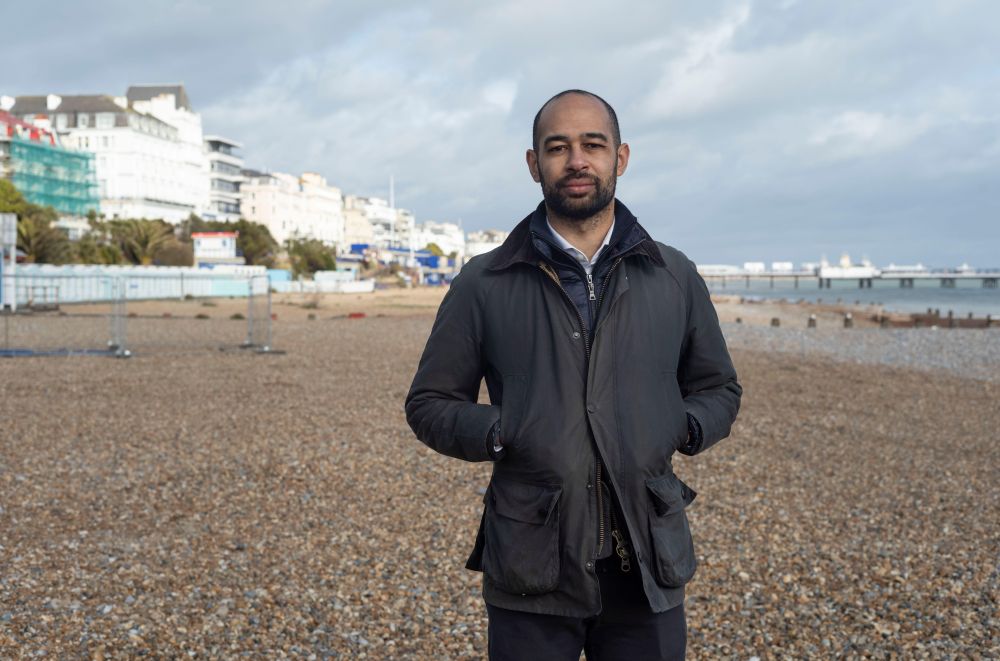
Weston is not alone in seeing its demographics and economy change rapidly. Along the southern coastline in Eastbourne, Liberal Democrat MP Josh Babarinde argues that coastal stereotypes are being challenged. “People have associated seaside towns with being sleepy,” he says. “Those stereotypes are being busted by new energy and innovation.” He has backed co-working spaces and a digital festival he describes as the largest in the South East.

But evidence suggests this revival is uneven across the country. Research by Venture Forward in 2024, which analysed data from more than half a million online microbusinesses, found strong growth in southern coastal areas such as Suffolk, Bournemouth, East Devon, the Isle of Wight and St Austell and Newquay. However, northern coastal towns, including Blackpool South, Scarborough and Whitby, showed far slower growth.
Proximity to large, booming cities matters, with many successful southern coastal towns benefiting from gaining residents priced out of London or Bristol.
Back in Weston, roundtable attendees compare notes on why they chose the town. Mike Turner, 34, left school at 16 and set up an IT support business that later evolved into software development. He describes Weston as a “natural fit” for his company, thanks to lower housing costs, proximity to Bristol and an unexpected niche which he was able to tap into: addiction treatment software for the many rehabilitation centres that once clustered in the town.
Neil Criddle, 42, set up his financial and business consultancy after losing his job during the pandemic. “It makes sense to be based in Weston from an office perspective because it’s cheaper,” he says. “And the talent, in my opinion, is probably just as good.”
Hazel McPherson, founder of an information and cybersecurity consultancy, wanted to challenge the assumption that serious tech conversations must happen in major cities. “My business model is cybersecurity, and very often we have to go to places like Bristol or London,” she says. “But that is money and time which small business owners can’t really afford.”
Her response was to create CSIDES, the UK’s first cybersecurity event built by and for a coastal community. “Why don’t we do it in Weston? Why don’t we do it on the pier?” she recalls. “We wanted to prove that it was possible to do it in Weston or a coastal community and raise the profile of the town.”
One of the challenges we have is convincing them and getting them to recognise that they can spend their money in the town rather than just get back on the motorway and go up to Bristol
More than 300 people attended the inaugural event last year. Still, McPherson worries that Weston risks becoming a dormitory town, where people live but spend their working lives and money elsewhere. “We’ve got an awful lot of housing springing up… as that grows, is that going to become just another suburb of Bristol?”
However, if there was one point of agreement among founders at the roundtable, it was that starting and running a business has become harder in recent years. Entrepreneurs cited rising National Insurance contributions, increases to the minimum wage and expanding digital tax reporting requirements, which have pushed up accountancy costs for sole traders and small firms.
Turner also sees the town’s social challenges through his work with a Somerset mental health charity. “Lots of the issues are around employment, and a lack of understanding of what to do about education,” he says.
Talent remains a concern. Despite diversification, Weston still struggles to retain enough young people with the skills new businesses need. Yet the benefits of a small coastal town are clear. “The best thing about being in Weston is probably that there is quite a nice little business community here,” Turner says. “We all work with each other.”
Labour MP Aldridge agrees that opportunities in the town since he grew up there have “absolutely been transformed”, with thousands of professionals moving in over the past decade. “But one of the challenges we have is convincing them and getting them to recognise that they can spend their money in the town rather than just get back on the motorway and go up to Bristol,” he says. “But we are seeing that change.”
Most of Weston’s growth has come from organisations with up to four employees, as remote working has enabled people to work from anywhere on their laptop. However, this then limits these businesses’ ability to grow.
“They could have way more office space,” Aldridge argues. “One of the things that I will knock on the door of No 11 for is investment in those office blocks. We do not have the scale-up infrastructure in the same way.”
One workaround has been the use of empty retail units as flexible workspaces. “Locals didn’t particularly like it at first,” Aldridge admits. “But I think locals are starting to see it as really positive, because those people are spending the day there. They’re buying their lunches in town.”
Transport connectivity remains a constraint for the town’s businesses. Cheaper housing attracts commuters from Bristol, but congested roads underline the need for transport investment.
The economic and political stakes are high for the mission of spreading this growth more evenly across the country. Coastal constituencies have become fertile ground for Reform UK, with four of the five seats won by the party in the 2024 general election located along the coast.
Ministers appear alert to the risk. In September 2025, the government announced a £1.1bn coastal investment package, backed by the private sector and academia, aimed at boosting jobs and skills in maritime and tech-aligned sectors, including clean energy and innovation.
For Aldridge and other Labour MPs, regenerating coastal economies is central to pushing back against populist politics.
Coastal tech startups will not, on their own, undo decades of deprivation. They face real challenges: weak infrastructure, limited finance, talent shortages and the risk that new wealth is imported but not embedded locally.
But in Weston-super-Mare and towns like it – from Margate to Eastbourne to the Isle of Wight – these ventures are starting to offer something that has long been missing: a reason to stay, to invest and to imagine a future beyond a fading tourism industry.

You must be logged in to post a comment Login