Politics
The House | We are failing to provide vital relationships and sex education to teenagers who need it the most


(Stephen Frost / Alamy)


4 min read
The arrival of the government’s long-awaited violence against women and girls (Vawg) strategy just before Christmas was very welcome.
The focus on prevention is right and it is good to see the commitment that “the minister for skills is exploring the most effective route to make relationships and sex education mandatory for young people under 18 in further education colleges”.
After years of campaigning – and, following the delivery of a petition of over 100,000 signatures, cross-party support in the Lords, and the endorsement of over 55 organisations spanning Vawg, safeguarding and sexual health – I commend ministers for accepting that all 16- to 18-year-olds should benefit from this topic.
Unknown to many – and extraordinarily – hundreds of thousands of young people aged 16 and over are currently excluded from the benefits of relationships and sex education (RSE) if they happen to be in further education (FE) colleges. This is despite the fact that this group experiences the highest rates of domestic abuse.
An estimated 608,000 students aged 16 to 18 study in either FE or sixth-form colleges in England. While FE colleges can deliver RSE on a voluntary basis, this provision is inconsistent, unmonitored and with scant training for college tutors.
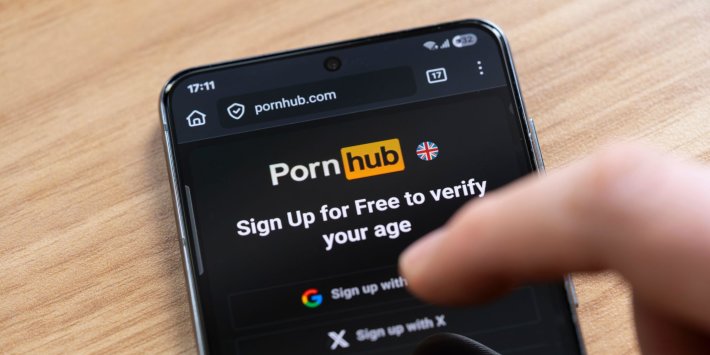
A year after Netflix drama Adolescence gripped the nation, we are all well aware of the reach of harmful online content for young people. Not only that, but recent research from the Institute for Addressing Strangulation shows that almost half (43 per cent) of sexually active 16- to 17-year-olds have been strangled during sex, and 70 per cent of young people surveyed by the Children’s Commissioner have seen porn – routinely featuring rape, strangulation and incest. I expect the government to act now, not later, to ensure young people have the space and skills to challenge these ideas and messaging.
In the House of Lords, I and others have been making the case that RSE should be made available to all 16- to 18-year-olds in education. I am supporting the efforts of Faustine Petron of Make it Mandatory, a survivor and formidable campaigner, who identified the gap in education for this age group, having been unsupported during her own experience of relationship abuse.
I tabled an amendment to extend mandatory RSE to all 16- to 18-year-olds, including those in further education colleges, earlier this month when the Children’s Wellbeing and Schools Bill returned to the Lords for its Report Stage. We will be urging the government to deliver this change rapidly – because every term that goes by, and every year in college that passes, is another moment lost.
During my time as secretary of state for education, I was delighted to work towards the introduction of mandatory relationships, sex and health education in the Children and Social Work Act 2017.
I am pleased to say that, in the last five years, the evidence of its positive impact is near indisputable. We know that its implementation is already making a real difference for a generation of young people, with 52 per cent of 16- to 17-year-olds surveyed by the Sex Education Forum in 2025 now rating their RSE at school as ‘good’ or ‘very good’ – an increase of 12 percentage points compared to the 2022 poll, and the highest percentage since this polling began.
Parliament is rightly introducing, discussing and amending legislation on issues such as nudification apps, violent online pornography, harmful and abusive content spread across social media and the non-consensual sharing of intimate images. At the same time, we must support the creation of spaces in the curriculum for all 16- to 18-year-olds to hear about, consider, debate and think through their exposure to these modern-day damaging issues.
The over 600,000 young people in FE colleges have as much right to that curriculum as the rest of their peers.
Baroness Morgan of Cotes is a non-affiliated peer

You must be logged in to post a comment Login