Politics
The House | Who does the public think should be allowed to come to work in the UK? Let’s ask them


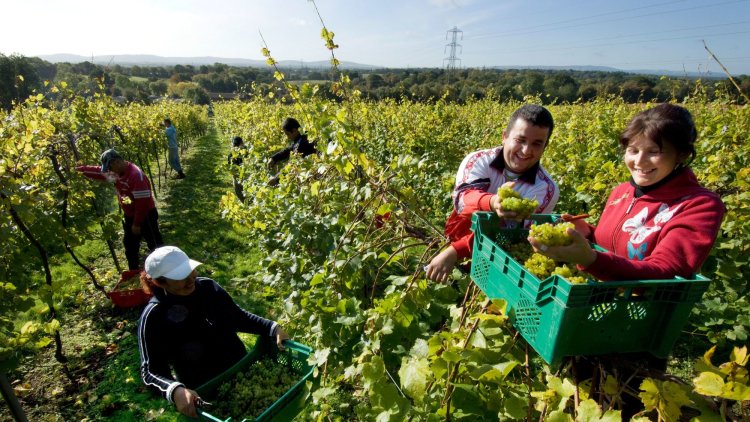
Romanian workers harvest the grape crop in an English vineyard in Sussex (Alamy)


3 min read
Immigration is one of the major policy challenges facing the government and a core strand of the scrutiny work we undertake on the Home Affairs Committee.
It is also something that the people we represent as MPs really care about. Wanting to explore new ways to engage with the public to ensure that these voices were included in our work, we went outside of Westminster and into communities to really get to grips with how immigration questions were perceived and experienced.
Working with partners at Demos and Kings College London, we have set up a programme of deliberative engagement events across the country. At each one, around 30 people come together, reflecting the make-up of the local area, including different political opinions and backgrounds. Experts on immigration then highlight the various factors that need to be weighed up and answer any questions people may have. Participants discuss the issues together before developing and agreeing on the principles that they think should underpin government priorities and policies.
Of course, it’s impossible to cover every element of immigration over the course of one weekend. So we asked, in light of the government’s commitment to cut net migration, how should work-related immigration be reduced? This policy not only determines who can come here to live and work but also has wider impacts – on public services, the economy and social cohesion.
We are going into this with an open mind. We want to understand where there are points of consensus and where there may be disagreement. Do different areas of the country have different concerns or are there common themes nationwide? Are we getting it right in understanding what is really important to our voters and how we explain and manage the difficult policy trade-offs?
The first event took place last month in Seaton Delaval, in the North East of England, and I want to sincerely thank all those who took part. There was possibly some initial scepticism about how the discussion would go. It can be a daunting prospect to come into a new environment and discuss such a potentially heated topic with people you have only just met. The main concern was whether their voices would be heard – would this just be a day of discussion in Seaton Delaval or would it have an impact in Westminster? On the Home Affairs Committee we will be taking note of what we learn and making sure it is central to how we continue scrutiny of the government’s approach to work-based immigration.
But the value isn’t just in what we as politicians can gain from it. There was a real sense that those who took part had gained new perspectives and improved understanding of the complex factors that go in to deciding the UK’s approach to work visas. This came not only from understanding the range of potential consequences of immigration decisions, but in engaging with and learning from each other. There was a real willingness to understand things from someone else’s viewpoint, to listen and discuss.
We will be holding further sessions in the coming months, in Scotland and the East Midlands, ahead of publishing our findings in September.
Robbie Moore is Conservative MP for Keighley and Ilkley, and a member of the Home Affairs Committee

You must be logged in to post a comment Login