Politics
The House | Will Milton Keynes be the nation’s bellwether again in the local elections?


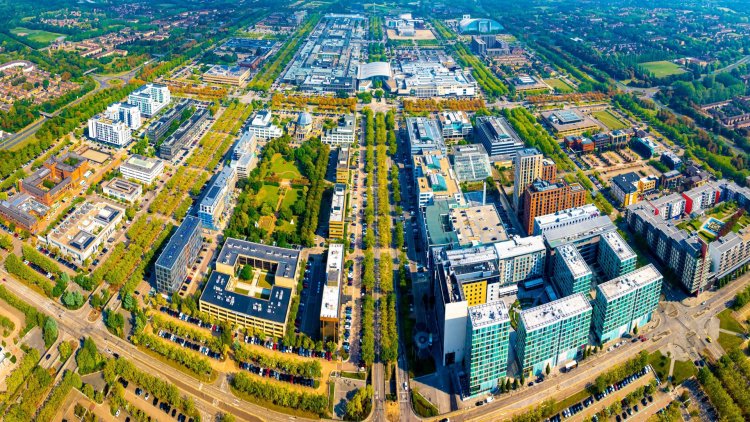
Aerial view of Milton Keynes (Alexey Fedorenko/Alamy)
5 min read
As a teenager, she couldn’t wait to get out. Now Lucia Hodgson has come to love Milton Keynes, the everyman city that is the perfect backdrop for every political offer
Over the course of a few weeks, my hometown hosted Nigel Farage, Keir Starmer and Kemi Badenoch. Zack Polanski and Ed Davey are surely on their way.
Growing up in Milton Keynes, I couldn’t wait to head in the opposite direction. Teenage afternoons in the shopping centre were spent hanging round a large tree, known as ‘the tree’.
It was roughly 250 years older than Milton Keynes itself and sadly died about a decade ago.
The tree may be gone, but memories of languorous weekends hanging out with all the other ‘treebos’ (greebos) remain. If you liked Pizza Hut and had the money to go indoor skiing, you were in luck. But 16-year-old me wanted it to give us something more – a bit more edge, cachet, culture. I actually used to tell people I was from Buckinghamshire.
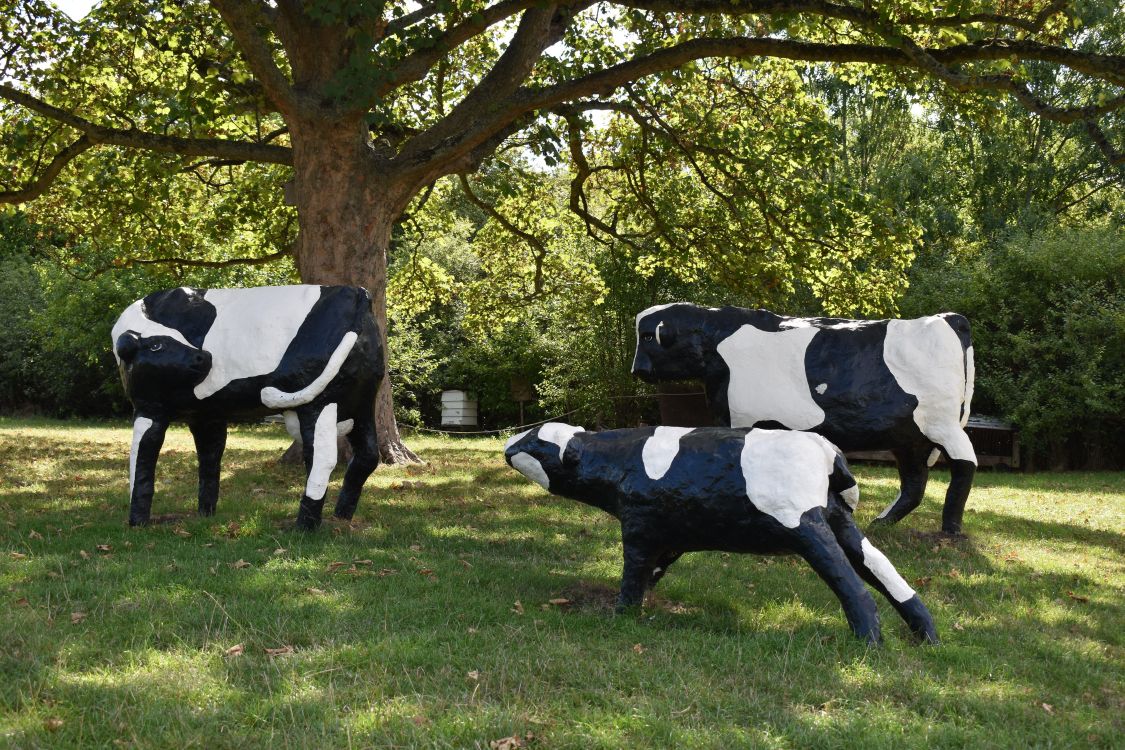
So, what exactly is it about the city of roundabouts that politicians have been so much keener on? The boring answer is that MK is – literally – Middle England and stuffed with bellwether seats. It’s the perfect ‘everyman’ – somewhere without deep political roots or class identity, where voters are unencumbered by an expectation to vote a certain way. The visiting day-trippers know that success in MK is likely to reverberate far beyond the concrete cows. Each of them has seen something that is worth exploiting for political gain.
Serving up fish and chips, Farage used his visit to lament rising crime in the area – a particularly sensitive topic following the recent murder of a security guard in the city centre.
Badenoch launched her regional local campaign with a focus on high streets, with the manifesto describing MK as ‘shabby’. For Starmer, his visit frankly could have taken place anywhere – it was particularly low-key and his local media interview focused on Iran and the cost of living. But, so persuaded by the success of MK as a new town, his government has announced it as one of the ‘renewed towns’ where 40,000 new homes will be built.
Reducing crime, renewing high streets, building houses – whatever your political ambition, MK is the tabula rasa to lay out your plans and policies. Its bellwether history bears that out.
When a party has won or lost in MK, it has pretty much done the same everywhere else. MK voted Labour during New Labour, Tory under the Cameron and Johnson years, and swung back to Labour under Starmer’s 2024 landslide. It also voted to leave the EU by a slim margin. Like carefully choreographed footwork, MK election results have always been in sync with the national picture.

Ahead of May’s council elections, then, Labour knows it has a lot to lose. This is the only patch of red amidst a sea of blue, turquoise, orange and grey. It took the party 18 years to wrestle it from no overall control, in a battleground area for both Lib Dems and Tories. In 2024, the Greens polled a respectable 4,900 votes in MK. With two Reform-controlled councils to its north in Northampton, both Green and Reform will undoubtedly want to see just how much they can tempt Middle England away from the status quo and towards change.
It’s the perfect ‘everyman’ – somewhere without deep political roots or class identity, where voters are unencumbered by an expectation to vote a certain way
YouGov’s last MRP poll showed every seat with an MK postcode (five, just one less than seats with a Manchester postcode) turning turquoise. In 2024, Reform UK came third in all of those seats. The question for the party is whether its primary electoral pitch will work here – a place built on domestic and foreign migration. Like thousands of other families, my parents moved out of London for a back garden. Others, from India and Japan, moved with tech and services companies with aspirations to live in a futuristic town designed to “attract young men with bright ideas”. When Jeremy Corbyn attracted a huge crowd to his Milton Keynes rally, 10 years ago, he declared it the largest ever political meeting in the town’s history. Perhaps the Greens will look to pick up his mantle.
The test for either of the fringe parties is whether their appeal can extend to an ordinary place like Milton Keynes – somewhere that doesn’t do radical, or different, the things I so badly wanted from it as a teenager. I have, however, learned to love Milton Keynes more over the years. When I go back, which I frequently do, I love the open green spaces, the decent charity shop hauls, and watching the Starship delivery robots pootling around the red-ways. I’m now quick to defend it: “That’s my place to ridicule, not yours.” It will be genuinely cool to watch it become more of a political kingmaker – because whichever party does well at a local level in MK will know national success is not far away.

You must be logged in to post a comment Login