Politics
The House | Zack Polanski: “There’s A Lot Of Inauthenticity In Politics, But It’s Not Coming From Me”


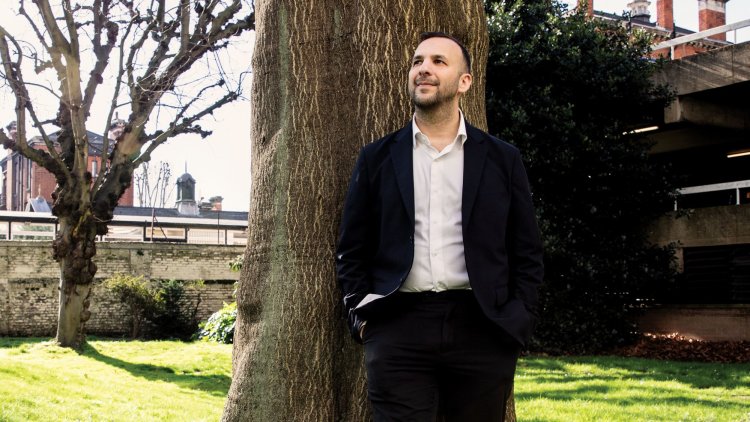
Zack Polanski (Photography by Louise Haywood-Schiefer)


12 min read
Green Party leader Zack Polanski talks to Sienna Rodgers about his by-election success, potential Labour defectors, and how his upbringing shapes his views on Zionism
Zack Polanski is still revelling in a historic by-election victory in Gorton and Denton, where plumber Hannah Spencer won over 40 per cent of the vote, when he visits The House offices.
The Greens’ unquestionable triumph in Manchester and corresponding jump in the national polls have been quickly overshadowed, however, by events abroad as Israel and the US launched attacks on Iran.
Polanski’s deputy, Mothin Ali, reacted to the strikes by joining a protest that critics characterised as supportive of the Iranian regime but the Greens describe simply as anti-war.
“I can’t guarantee that I’ve never been on a march where someone hasn’t said something I disagree with,” the leader says, confirming that he would attend these protests himself, even though attendees were flying pro-regime flags and mourning Ayatollah Ali Khamenei. “It’s cynical when people seek to smear people who are being voices of peace by finding one poster or one line that someone said in a speech.”
What is his message to those who will look to use this opportunity to escape a theocratic regime that executes gay people and oppresses women?
“We need absolute solidarity with the Iranian people, and I’ve been consistent on this for years,” he replies, resolute in his warning that the UK could be “dragged into another illegal war”. He supports sanctions on Iran but says they must be “handled very carefully” or they risk hitting the poorest.
Polanski contends that Britain cannot rely on President Trump – who is a “real threat” and not an ally – being out of office in a few years. “We might get something worse than Donald Trump. It’s really important that we have our own sovereignty here, we stand on our own two feet, and we recognise, thankfully, we’re not an empire any more. We’re a small island.”
He would like to rejoin the EU at some point (“we are stronger together”). But for now, does he recognise that British security is deeply reliant on the US, which is something that cannot be changed quickly?
“Yes, in the short term, it’s very difficult to disentangle our military from the US,” he acknowledges. “I think the important thing to do, in the short term, is to look at: ‘What does the plan look like in the longer term?’ and then to begin to execute it. To make sure that, ultimately, we’re protecting this country.”
As we turn to coastal communities, Polanski’s prescription is much the same: difficult problems simply require clear leadership.
When local residents protest the new infrastructure needed to reach net-zero targets, who wins – democracy or the environment? “I think you can have both,” he says. “You have to show leadership. Far too often, consultation actually means notification.”
His description of this ideal might sound like notification with more communication. “What’s really powerful is when a politician turns up in the community and says: ‘This is what we need to get done. This is why I’m taking you on that journey. Let’s work out how we can do it together.’” But he insists this approach can build trust.
Polanski characterises Keir Starmer, by contrast, as having a “worrying authoritarian edge to him”.
“I don’t think this is what Labour MPs stand for at all. So many of them are so deeply frustrated and disappointed right now. In fact, I know they are because I speak to them,” he continues. “I know many of them are just hanging on in there, and I get that – they’re waiting for another leadership contest.”
Andy Burnham is often regarded as the Labour politician with the charisma to counteract the Polanski effect, but he was blocked by the leadership from entering Parliament.
While Polanski does not believe the Greater Manchester mayor would have held Gorton and Denton for Labour, he admits: “When he wasn’t selected, I’ll be completely honest, I was really happy about it, because it would’ve been really tricky.”
The Green leader claims to hope that dissenting Labour MPs will “increasingly find their voice”, yet he doubts their ability to do so: “The Prime Minister far too often holds them in contempt.”
How many is he discussing defection with? “If you speak to some Labour MPs, some days it seems like it’s going to be their last day in the party, and other days they’ve seen a glimmer of light and think everything’s going to be OK.”
Pushed for a number of potential defectors, he says it has reached “a handful”.
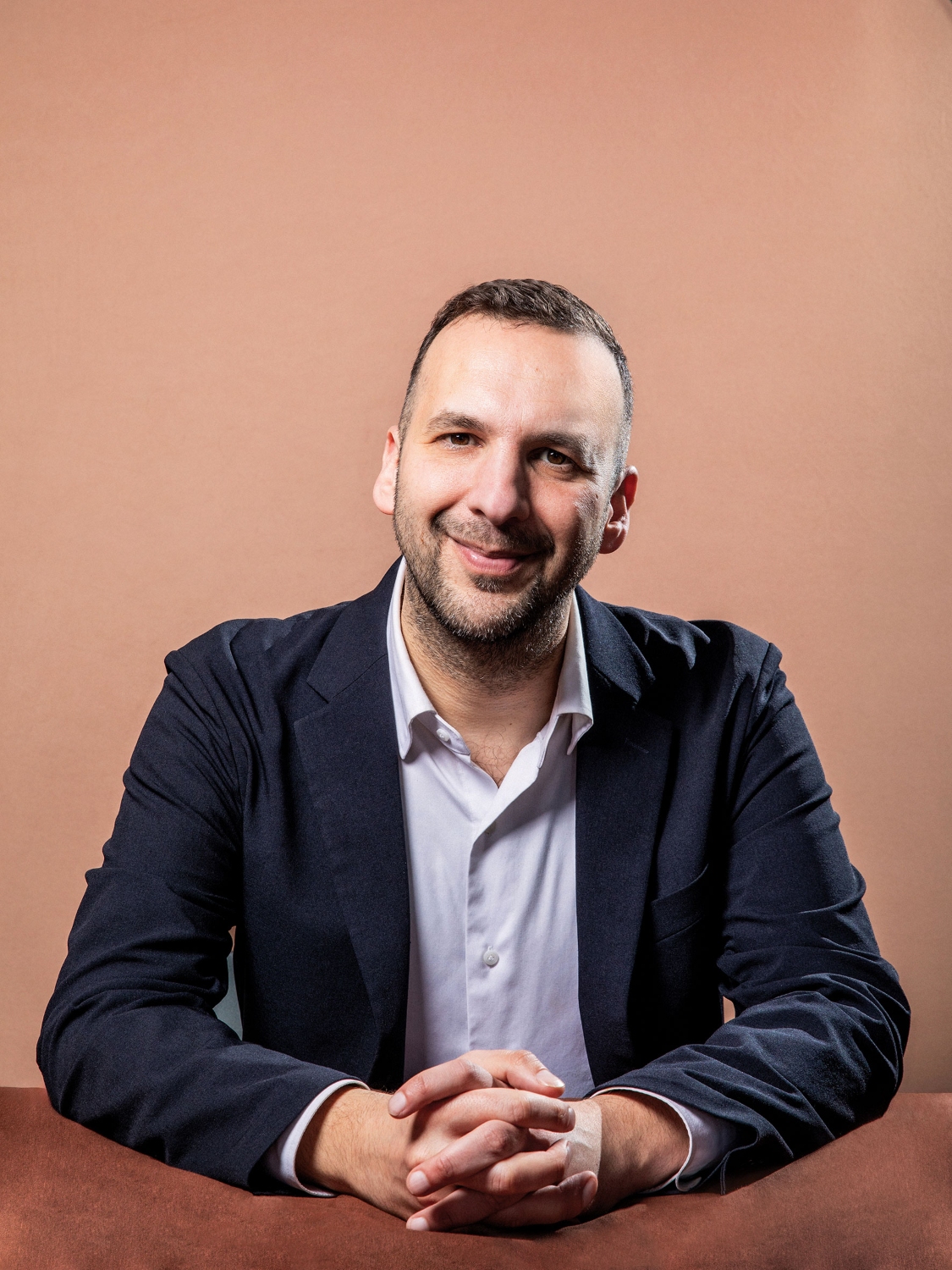

The Green leader, who listens to political podcasts at three times the normal speed, is a fast talker.
Although his favourite content comes from Twitch and YouTube streamers, he refers to “the cesspit that is online”, where it feels like “everyone in the world hates each other”. He suspects that bots were used to target him during the by-election campaign because the level of abuse dropped off as soon as it ended.
“When you look at my posts during that campaign – which would have comment after comment about my teeth, about politics, about all sorts of things – that went from, like, 95 per cent of the comments to five per cent almost overnight.”
Polanski, 43, was shy as a child and drew further into himself when his parents divorced. He credits drama classes at school for building his confidence. He later became an actor and, more controversially, a hypnotherapist. (In 2013 he was persuaded by a reporter to boost her cup size with the power of the mind, as an experiment. He has apologised for the incident while saying it was misrepresented by the Sun.)
He became a London Assembly member in 2021, deputy leader of the Greens the following year, and six months ago easily won the top job with 85 per cent of party member votes.
“If I didn’t have those drama classes when I was 11, I certainly wouldn’t be doing what I’m doing now,” he says. “I felt so insecure about who I was and my place in the world and what was going on about my family. Like so many young people at that age, if their parents divorce, I felt like it was my fault and I’d done something wrong.”
After attending a Jewish school that he enjoyed, he moved at secondary age to Stockport grammar, a private school, on a scholarship. Bullied for being Jewish and more so for being gay, he “absolutely hated every second of it”.
As the eldest of his father’s children, the youngest of his mother’s, and the only child of both parents, he “fit every category” of siblinghood, which one imagines must have felt like fitting none of the categories.
While his dad worked in a DIY shop and his mum did lots of jobs – in theatres, as a make-up artist – he cannot easily define himself in terms of class either: “I was one of the poorer children at school but, still, my story is not a story of poverty.”
Do his parents support the Greens now? “I don’t talk about my parents – just because I’m in public life, but they’re not,” he replies, though the Guardian reported last year that they were Green voters. He is more guarded than one might expect from a politician pitching themselves as a straight talker.
Apart from inhaling the chocolatey fumes of the nearby McVitie’s factory via his bedroom window, the only positive childhood memory he recalls is being part of the Jewish community in northern Manchester, including cheder on Sundays.
Being raised in a pro-Israel family must complicate his feelings about the Jewish state. What did Zionism mean to him at that time?
“When I was growing up, the story of Israel was always ever-present in the family home and in the school,” he says. “As I got older, though, I was always really aware of socialist Zionism, a small group of people that were always against the eviction of the Palestinians from their homeland, and [non-Zionist Jewish socialist movement] Bundism as well.
“So, there’s lots of different aspects of what a Jewish homeland would look like. It is a complicated, sensitive and nuanced conversation. What is clear to me, though, is what Zionism is under Benjamin Netanyahu – a genocidal regime.”
“Zionism is racism” is the title of a motion that is being sent to the next Green Party Conference and that Polanski has not opposed. Would that statement not flatten the nuance he speaks of? “If we’re talking about Benjamin Netanyahu and the genocidal regime, then that is obviously racist,” he replies.
But “Zionism is racism” would be labelling as racist those he grew up alongside – family, friends – who consider themselves Zionist.
“I think all statements and slogans are complicated because there’s always more nuance behind a sentence, and so that’s why I think the sentence needs qualifying to talk about the present day and what’s happening right now.”
He would not consider them racists for being Zionists, though, would he? “Who, sorry?” Zionists he grew up around, for example. “I think if someone supports Benjamin Netanyahu’s genocide, then I think there’s no other definition of that than racist.”
But he has mentioned different kinds, such as socialist Zionism? “Yeah, and so that’s for that person to define what their Zionism is. That’s why I’m defining the Zionism that I’m talking about. And that’s the problem with labels, right?”
In the Gorton and Denton campaign, critics opposed the Green Party’s use of videos in Urdu. Would he do one in Hebrew? “Yes.”
He was born David Paulden before he changed his name (Zack after the Jewish character in Goodnight Mister Tom; Polanski to restore his familial name). Together with his professional background as an actor, and his past as a Liberal Democrat who so opposed Jeremy Corbyn’s Labour leadership that he heckled him at a rally, the rebranding has led to charges of inauthenticity from some. How does he respond?
“I’d laugh in their face. I think there’s a lot of inauthenticity in politics, but it’s not coming from me.”
Asked when his thinking changed on Corbyn, who endorsed the Greens in the by-election, Polanski explains: “Lots of people have been on this journey… I really bought the fairytale that a national economy was anything like a household budget.”
Citing Extinction Rebellion and becoming a vegan as contributing factors to his political journey, he argues that openly changing his mind helps to connect with people. “I’m almost more suspicious of politicians who have a fixed mindset about everything,” he says.
Many would say Corbyn is one of those politicians. “Me and Jeremy Corbyn are very different people. He’s said so. He wouldn’t mind me saying that,” he replies.
When Corbyn was opposition leader in 2018, Polanski tweeted that as “a pro-European Jew”, these were “two reasons I couldn’t vote for Labour under Jeremy Corbyn”.
“Since then, we’ve had a book by Paul Holden, The Fraud, which I think has laid out the cynical and systemic deliberate obfuscation of a really serious issue like antisemitism. I believe that I believed what I was reading and what I was seeing,” he explains today.
“I’m a Jewish leader of a political party who regularly gets accused of antisemitism. I think we need to take antisemitism really seriously, and I don’t believe a political weaponisation of it is the way to do it.”
So, what next for Zack Polanski?
He is not interested in the London mayoralty for himself – “I’m more focused on Parliament” – but reckons New York’s Zohran Mamdani offers a blueprint for Green success. (The pair are liaising on their shared love of video-based comms.) Nor would he run in any non-London by-election: “What I will be doing is looking for the future Hannah Spencers.”
Polanski has made it clear that he would not stand against Diane Abbott in her Hackney North and Stoke Newington seat, where he currently rents with his partner Richie. Opposing a “national treasure” is a “non-starter”, he stresses. Yet the idea, The House understands, is that he could be her successor.
“I don’t think anyone should be rushing her for an answer,” says the Green leader. “It’s definitely not up to me to decide when Diane Abbott is going to retire.” Yet he does not reject the concept: “Hackney North and Stoke Newington is one seat that is definitely in consideration.”
And, where for the Green Party? In pushing Labour into third place in a previously safe seat, they have put a serious dent – if not altogether destroyed – the argument that Labour is the only left alternative to Reform UK.
“My target is to be an MP within a much bigger group of Green MPs. Whether that is having a confidence and supply deal, or any government relationship, really depends on what the voters decide, who the leader of the biggest party is, what they’re offering,” Polanski says.
He rules out any kind of partnership with Starmer: “I think that relationship is broken. There are plenty of Labour MPs that I would very happily work with, such as Nadia Whittome, Clive Lewis, but I think the chances of them leading the Labour Party, with no disrespect to them, are about as likely as me leading the Labour Party.”
A progressive alliance is similarly dismissed, now that the Greens are “confident in our own ability to win” – even if the Tories and Reform unite the right.
“Gorton and Denton was our 127th target seat, which now means there’s no no-go areas for the Green Party in the country. What we’ve absolutely smashed out the park now is that idea of a wasted vote. That line was holding us back for decades, and I cannot wait to see how much faster we can move now.”
As we leave Millbank Tower, an office worker spots the Green leader and begins waving excitedly from inside. By the time Polanski is explaining that he now receives Nigel Farage levels of attention, she has abandoned her desk and come out to praise him in person. He looks faintly self-conscious – but does not miss his cue.
