
Politics
The uglification of Britain – spiked

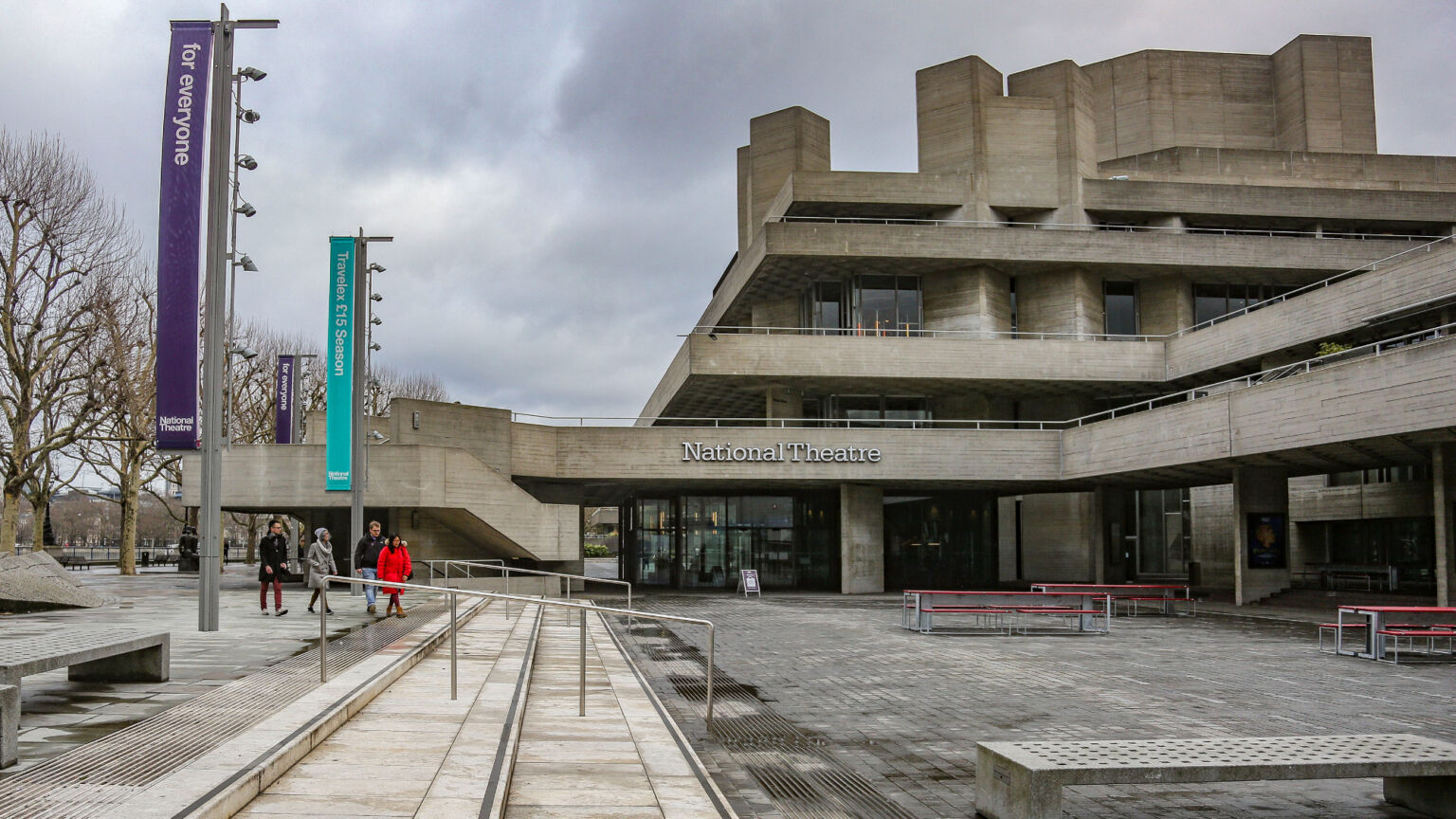
I live in Glasgow now, but I grew up in London. And I remember, as a teenager studying for my GCSE in drama, going to see Alun Armstrong’s barnstorming performance as Francisco Pizarro in Peter Shaffer’s The Royal Hunt of the Sun at the Royal National Theatre. It was a sumptuous affair, all vibrant, elegant staging and costumes, starkly contrasting with the dark themes inherent to Shaffer’s exquisitely harrowing narrative. But staring up at the National at 16 years old, I had a similar experience to thousands of people down the years looking up at the building, the gopping eyesore that it is.
‘Is this the best we can do?’, I wondered. We house the best of our national artistic endeavour in a multistorey carpark. And, if I had my way, not even our carparks would look like that.
These days, planners seem to promote ugliness as some kind of quasi-political message. Any British town will show it clearly enough: housing estates are poured in grey concrete, new towers go up that could be anywhere in the world, and ring roads – like the one encircling my own home in Glasgow – hem us in with an almost defiant lack of charm. It’s a truly soulless business, modern British urban planning, and has been since the middle of the 20th century.
These are not places designed to be loved. They don’t inspire numinous awe, like cathedrals of old; nor do they suggest elegant restraint, like a nice Georgian mews. They function, and we are increasingly told that that is enough.
I’ve come to think that ugly architecture and town planning aren’t neutral things – rather, they are symptoms of a spreading disease. We no longer assume that the environments we inhabit should uplift us, or delight us, or make us feel big, or make us feel small, or do anything other than contain us in concrete.
Architects and certain graduates will tell you of brutalism’s many benefits, of post-modernism’s philosophical elegance. But the desire for proportion, elegance, colour and harmony – for something that helps us to transcend the humdrum, rather than forcing us to give in to it – is not learned in privileged educational establishments. It’s inherent, a part of being human.
Our willingness as a society to provide beauty is waning. And when it disappears, it is the working classes who feel its absence most acutely. Ask anyone who grew up on a 20th-century council estate. It is ordinary people, stuck in modern housing, using those ugly carparks and civic buildings every day, who are left with the consequences of a political choice to uglify the human world.
Brutalism was no accident. It emerged through mid-20th-century planning regimes implemented by postwar governments, often influenced by left-leaning ideals. After the Second World War, many European governments were expanding the welfare state. We were doing so in Britain. There was a deep political commitment to provide mass housing, public institutions and civic infrastructure quickly and affordably. Fair enough – I applaud the postwar consensus as a moment of national pride.
But efficiency, uniformity and mass provision were social and economic priorities, not a recipe for something beautiful. Brutalism, with its exposed concrete, modular forms and minimal ornament, suits those goals. It was efficient, scalable and rejected what was seen as the decorative excess of earlier, class-bound architecture. Functional design could engineer a fairer society, they told us, and we’re still getting shafted by their sensibilities.
A similar pattern seems to have got its fingers into our broader culture, though this time perhaps led by tech bros and Silicon Valley types. Art and literature, and the magnificent inner worlds they mirror and enhance, are giving way to TikTok and all that rubbish. As a children’s author, I see this played out particularly harshly. Fewer children read for pleasure, and fewer families pass on the habit of sustained attention to language. I recently ran a creative writing workshop for a school. Many of the 11-year-olds that I was teaching had a reading age of six. Because reading, once a shining portal into other worlds, is increasingly shunned.
Something vital is lost as we lose the ability to delight in words and stories, to engage with philosophy and learn our histories. As with architecture, we are no longer uplifted, but are instead dragged down. And just as with architecture, the consequences are uneven. Some children, surrounded by books, will still find their way into that richer world. Others will not, through a lack of exposure, largely through their parents’ ambivalence.
These twin declines, intentionally uglier environments and less literary engagement, reflect a similar drift – a loss of confidence that ordinary life should be elevated. A well-built civic building and a well-turned sentence both signal care, intention and something beyond mere utility. They both brighten your day, and let’s not underestimate the importance of that. When we abandon any of it, we diminish.
Beauty, in all its forms, is not expendable. It is part of a life well lived. A society that stops offering it will soon forget how to recognise it, and, in time, stop demanding it altogether. It will be poorer for it.
If we house Shaffer’s work in a brutalist slab, we run the risk of undermining what Shaffer had to say for himself. We will stop being uplifted and challenged by great literature, theatre and art, and will instead be happy to slop around in online swill. This is surely not the world we want to live in, or pass on to our children.
James Dixon is a Glasgow-based novelist, poet and playwright.



Former German international and Arsenal player Mesut Ozil has revealed that his public stance on the issue of Uighur Muslims in China was one of the factors that negatively affected his career at the London club, confirming that he was aware beforehand that this stance might cause him trouble, but that he nevertheless has no regrets about what he said.
According to comments reported by the British media, including The Sun, Ozil explained that his public comments in 2019 regarding abuses against the Uighurs in the Xinjiang region had professional repercussions, noting that “after that, certain doors were closed to him and he no longer enjoyed the same opportunities within the team”.
The former German international added that he knew that getting involved in sensitive political or humanitarian issues might put him under significant pressure, but he felt that using his fame to express his stance was necessary for him, even if it came at a professional cost.
The story dates back to December 2019, when Ozil posted a message on his social media accounts criticising the situation of the Uighurs in China, prompting Arsenal at the time to distance themselves from his comments and emphasise that the club does not interfere in political issues, before his appearances for the team gradually declined, culminating in his departure in 2021.
Media reports, including The Guardian, suggest that the controversy following his remarks marked a turning point in his relationship with the club, given the political and commercial sensitivity of the issue.
Featured image via UEFA
By Alaa Shamali


The Ministry of Defence just released a new video of UK troops sheltering from Iranian missiles somewhere in the Middle East. What’s that I hear you say? British troops aren’t officially involved in a war. Wrong again, as it turns out.
Here’s the video published on 30 April that shows gunners from the RAF Regiment hiding as Iranian missiles come in:
Raw, unfiltered footage captured on the ground as our troops take cover from an aerial threat in The Middle East.
In the past few months, RAF Counter Uncrewed Aerial System teams, operating Rapid Sentry, have been actively shooting down drone threats using Lightweight… pic.twitter.com/w2syFQZNHf — Ministry of Defence
 (@DefenceHQ) April 30, 2026
They are there because of their ‘expertise’ at shooting down drones. And you’ll see that the images look suspiciously like a group of men at war. They paint a very different picture to the official UK government line about Iran. For example only days ago, on 28 April, Defence Minister Luke Pollard said:
The Iran war is not our war but I’m very proud of the way our UK forces have protected British bases, British citizens and British allies and partners.
Pollard was echoing the official, ridiculous and widely debunked British position that the UK was only involved in ‘defensive action’.
It’s hard to know if the soldiers under fire feel the same way…
UK stance — a mass of contradictions
Pollard’s comments also contradicted his own boss, Defence Secretary John Healey. Healey said on 11 April:
Even in this current conflict, the basing permissions that we in the UK have agreed with the US have been invaluable to their military operations.
At the core of this bizarre situation is PM Keir Starmer’s patently false claim that the UK is only involved in ‘defensive’ action against Iran. Because whichever way you spin it, this bit of wordplay still means the UK is at war with Iran.
Also on 28 April, a different Defence Minister refused to acknowledge that US flights from British bases at home and from Diego Garcia were striking Iran.
Al Carns answered a question from Your Party leader Jeremy Corbyn:
For operational security reasons, we do not offer comment or information relating to foreign nations’ military operations.
Permissions to utilise UK military bases by foreign partners are considered on a case-by-case basis. All UK operational support to allies and partners is considered in terms of legality.
Again, this is despite UK support for the US-Israel war on Iran being public knowledge — to the degree that it has even become a tourist attraction for families who want to watch US bombers take off.
It cannot be claimed that the UK is not at war, or is only at war in some limited sense Starmer has dreamed up. And certainly not at the same time as a government department is literally posting video evidence to the contrary. This patronising charade has gone on long enough.
Featured image via the Canary
By Joe Glenton


DAYS THE BUDGET IS LATE: 30
ICE WATCH: Gov. Kathy Hochul wants assurances from President Donald Trump’s administration that a very specific federal immigration officer isn’t operating in New York: The ICE agent who fatally shot Renee Good.
The Democratic governor sent a letter this week to Trump border czar Tom Homan insisting he confirm whether the reportedly redeployed agent, Jonathan Ross, is now working in the Empire State.
“If Jonathan Ross has been reassigned to work in New York, I demand that he be immediately removed and not redeployed unless cleared after a full, independent investigation,” Hochul wrote in the previously unreported letter. “I have no confidence that Ross can be trusted to safely interact with the public. Nor should you.”
The White House did not immediately respond to a request for comment.
The notice is the latest effort by Hochul to place guardrails around Trump’s sweeping deportation policies — a push that includes direct White House outreach and expected legislative action to limit the reach of federal immigration agencies like ICE.
The two-track approach underscores how New York officials, including the governor, have been desperate to avoid a potentially destabilizing surge of federal immigration officers in the five boroughs, home to an estimated 560,000 undocumented immigrants.
The push also highlights how Hochul stands to benefit politically from taking an assertive posture against Trump’s immigration policies as she runs for reelection. The president rode back to the White House pledging to remove millions of people living illegally in the United States, only for voter support to quickly erode following the deaths of Good and Alex Pretti during January’s Minnesota crackdown.
A Siena University poll in February found 67 percent of New York voters believe federal immigration tactics had gone too far. The same survey found 59 percent of voters did not want to see more ICE agents flow into New York City.
Trump has dialed back the publicly aggressive deportation effort, but that’s done little to assuage the Hochul administration. The February death of Nurul Amin Shah Alam, a blind refugee who was left in front of a Buffalo coffee shop by federal agents, further inflamed New York officials.
“I have repeatedly stated that any agents involved in these types of incidents must be properly investigated and held accountable to the fullest extent of the law — not simply reassigned to administrative or investigative duties or shuffled to other states,” Hochul wrote in the letter.
Homan, who has become the Trump administration’s blue state ambassador following the deadly unrest in Minneapolis, met privately with her in Albany last month, and the governor urged him to not conduct a similar operation in the Big Apple.
To that end, Hochul and Democratic state lawmakers are also on the verge of approving a package of sanctuary-like measures meant to erect legal barriers around federal immigration enforcement in New York.
The measures would prohibit federal authorities from carrying out civil deportation warrants in sensitive locations like education facilities and houses of worship. It would also ban formal agreements between agencies like ICE and local police departments from coordinating operations and sharing equipment. And New York is poised to make it easier to sue federal officers if a person believes their constitutional rights have been violated.
The expected package of protections amounts to a sweeping blue state rebuke of Trump’s immigration and deportation policies. It also marks a change for Hochul, a moderate who as a local official two decades ago opposed allowing undocumented immigrants to obtain state driver’s licenses.
Yet some left-leaning state lawmakers worry that Hochul’s opposition to a strict ban on local police communicating with federal immigration authorities will leave undocumented immigrants exposed even as existing sanctuary protections will remain in place.
One legislator, granted anonymity to speak frankly, said the likely agreement is “really inadequate, arguably harmful, because her proposal would create an illusion of legal protections while still proactively permitting law enforcement to share info.” — Nick Reisman
FROM CITY HALL

FARE-LY AUTOMATIC: A majority of City Council members are pushing Mayor Zohran Mamdani’s administration to automatically enroll low-income New Yorkers in the city’s transit discount program.
Currently, New Yorkers need to furnish proof of identity, age, residence and taxable income to enroll in Fair Fares, which offers a 50 percent discount on subway, bus and paratransit rides for those at or below 150 percent of the federal poverty level.
In a Wednesday letter to Erin Dalton, Mamdani’s social services commissioner, 28 of the Council’s 51 members wrote that the application requirements needlessly keep people out of the program.
The letter, obtained by Playbook, says only about 370,000 of the city’s 1.4 million eligible residents benefit from Fair Faires, largely because many don’t know of its existence.
The city lawmakers, led by progressive Council Member Crystal Hudson, wrote to Dalton that the disparity can be fixed by automatically enrolling all eligible residents by using application information they’ve already provided while applying for SNAP, Cash Assistance, Medicaid and other city-administered public benefits.
“The City of New York has the information on hand and could easily enact automatic enrollment,” wrote the Council members, who included democratic socialist allies of the mayor like Tiffany Cabán and more moderate colleagues like Eric Dinowitz.
“Affordability is a top concern for New York City residents, and one in five New Yorkers struggles to pay the fare,” the lawmakers also wrote. “In short, we can help lower costs for New Yorkers by making it easier to enroll in the Fair Fares program.”
Asked about the letter, Mamdani spokesperson Dora Pekec said Thursday that the administration is “reviewing the automatic Fair Fares enrollment proposal.”
“The mayor remains deeply committed to collaborating with our city and state partners to make transit more affordable for all New Yorkers,” Pekec said.
Mamdani campaigned last year on a promise to eliminate fares on city buses so riding them would become completely free. But he acknowledged in an interview with POLITICO earlier this month that he won’t be able to make good on that pledge this year.
In the meantime, transportation advocates are ramping up pressure on him to find other ways to make transit more affordable. The letter from the Council members comes after a coalition of transit advocates earlier this month called on the mayor to usher in automatic Fair Fares enrollment.
Such a measure would likely come with a cost increase for the city-funded program. And that could prove tricky for Mamdani, who’s scrambling to address a multibillion-dollar city budget deficit.
Council Speaker Julie Menin, who’s in negotiations with Mamdani on the budget, did not sign Wednesday’s letter. “She doesn’t always sign on to colleague letters as speaker, but she is on record supporting automatic enrollment for Fair Fares,” her spokesperson Henry Robins said. — Chris Sommerfeldt
PIED-À-TERREABLE MATH: City Comptroller Mark Levine released a reality check for the mayor and governor, who are hoping to raise $500 million annually through a pied-à-terre tax to help the city’s ailing budget.
Levine found by using past proposals as a rubric that the tax would only reach those heights under the most ideal of scenarios. When factoring in otherwise eligible properties that are rentals — meaning they would be exempt — and pied-à-terre owners who would either sell or rent to avoid the tax, the yearly take-home for the city would be between $340 million to $380 million.
“As we continue to work toward budget agreements at the City and State levels, it’s imperative that government leaders, advocates and New Yorkers know how major new revenue proposals might reliably impact our budget,” Levine said in a statement.
The mayor’s office countered that the proposal is not yet fully baked, and that it will be designed in concert with the governor in a way that ensures it nets at least $500 million.
“The Comptroller’s report makes one thing very clear: thoughtfully crafting and implementing this legislation will do exactly that,” a spokesperson said. — Joe Anuta
VOUCHER FIGHT: Menin is playing to both sides of the debate over the costly rental subsidy known as CityFHEPS.
She joined advocates and Council members at a rally Thursday morning to urge Mamdani to drop a lawsuit fighting a voucher expansion — which the mayor pledged to do on the campaign trail. But Menin also agreed the costs “are not sustainable” and said a settlement the council has offered will contain them, while still expanding the program in some form.
“We have come in, with the leadership of Council member [Pierina] Sanchez and the advocates, with a responsible, reasonable settlement,” Menin said at the rally, where Council members and advocates chanted, “Mayor Mamdani, keep your promise!”
Menin declined to elaborate on the specifics of the settlement proposal since talks are ongoing.
The vouchers are already growing in cost at a rate of 4 percent per month, and the laws to expand eligibility — which the Council approved in 2023 — are estimated to increase costs further by somewhere between $6 and $22 billion over five years, according to the city comptroller’s office.
“We do agree that there has to be a change to the cost structure,” Menin told reporters at a press conference later Thursday. “We have been working very closely with the advocates on that. We have put forward a reasonable settlement, which is why we believe that continuing to litigate delays our ability to reach the settlement.”
Hochul has reportedly asked the mayor to look at the rental subsidies as one place where the city can find savings. Asked whether she’s spoken to the governor about the program, Menin said “she and I both agree we need to have cost containment.”
“We recognize the cost has grown exponentially,” Menin said. “I think we’re in a very good place on cost containment that literally contains the cost but also protects vulnerable New Yorkers.”
Mamdani has argued that if the city were to drop its appeal, it would be on the hook for billions in additional costs over just the next few years.
“Mayor Mamdani has been clear that CityFHEPS is an invaluable tool to prevent homelessness and support homeless New Yorkers,” City Hall spokesperson Matt Rauschenbach said in a statement on Thursday’s rally. “That is why our team is working hard to ensure that it is fiscally sound and sustainable for the long-term.” — Janaki Chadha and Gelila Negesse
IN OTHER NEWS
— COMMUNITY SAFETY: Advocates are worried Mamdani’s police reform efforts in cases involving mentally ill people may sideline the anti-domestic violence office at City Hall. (The New York Times)
— BOARD OF REJECTIONS: A candidate for an Albany assembly district seat is contesting the state election board’s decision to reject his bid after he was disqualified for allegedly failing to meet residency and party enrollment requirements. (Times Union)
— BEHIND THE BARS: New York state prisons are seeing a sharp rise in violence with staff and incarcerated people both sounding the alarm of increased assault rates. (NY 1)
Missed this morning’s New York Playbook? We forgive you. Read it here.
Politics
The Palestinian Football Association appeals to the Court of Arbitration for Sport against FIFA’s decision not to sanction Israel


The Palestinian Football Association lodged a formal appeal with the Court of Arbitration for Sport (CAS) on the 20th of this month, having exhausted all available legal avenues within FIFA.
This comes as an escalatory move against FIFA’s decision not to impose any sanctions on the Israeli Football Association or its affiliated clubs in the West Bank settlements.
Suzan Shalabi, vice-president of the Palestinian Football Association, told the Canary that the Palestinian Association adheres to international laws and regulations, but considers FIFA’s decision to be completely unfair.
She added that the decision to appeal to the Court of Arbitration for Sport came after exhausting all procedures within the international football system.
Shalabi explained that the issue centres on the participation of clubs operating in illegal Israeli settlements in the West Bank in Israeli domestic competitions, at a time when Palestinians consider these territories part of a future state, emphasising that the Palestinian Football Association is demanding an end to this football representation in Israeli Football Association tournaments.
FIFA — ‘unresolved legal status’
Last month, FIFA announced that it would not take any action against the Israeli Football Association or the clubs concerned, justifying this by what it described as the “unresolved legal status” of the West Bank under international law. This of course is not true. Israeli settlements’ legal status is ‘fully resolved.’ They are illegal under international law.
In a related context, Shalabi noted that Palestinian football faces a “dire situation”, particularly in the Gaza Strip, with the continued suspension of many domestic leagues, alongside growing organisational difficulties due to the fallout from the war in Gaza and the occupation’s violations in the West Bank.
In her remarks, Shalabi also noted that the visa issues faced by several sports delegations ahead of the FIFA Annual Congress in Canada had contributed to heightened tensions surrounding the international football scene in recent times.
This is the first time the Palestinian Football Association delegation has been barred from participating in the FIFA Congress simply because it was denied visas, reinforcing the theory that this is backed by Israel and with the approval of FIFA, which does not wish to be embarrassed once again before the international community regarding Israel’s flagrant violations against Palestinian sport.
Shalabi revealed that the Palestinian delegation had recently obtained Canadian visas to attend the FIFA Congress, and that the Federation’s President, Jibril Rajoub, would deliver a speech during the event in which he would outline all the aforementioned facts to the member associations.
Featured image via Amnesty
By Alaa Shamali


The famously smart and efficient Met Police took it on themselves to amplify a Tommy Robinson tweet for no reason anyone can discern. Far-right grifter Robinson (real name Stephen Yaxley-Lennon) was waffling about the horrific Golders Green attack at the time.
The Met, in their infinite wisdom, decided to comment on 29 April. And in doing so they dignified Tiny Tel Aviv Tommy’s far-right rant.
The Met Police posted:
Our brave officers confronted a man they believed to be a terrorist, who refused to show his hands, who was violent, and who continued to pose a clear threat. Using only their training, courage and tasers, they detained him while he continued to try to attack and stab them. This took true courage.
Our brave officers confronted a man they believed to be a terrorist, who refused to show his hands, who was violent, and who continued to pose a clear threat. Using only their training, courage and tasers, they detained him while he continued to try to attack and stab them. This…
— Metropolitan Police (@metpoliceuk) April 29, 2026
Maybe it did “take courage”, as the Met said. But the question remains… why is an arm of the British state amplifying arguably the most prominent fascist in the land?
The move left many people stumped. Some people thought it was down to a similar far-right ideological lens:
The fact that @metpoliceuk is responding to a Nazi, racist, white supremacist Tommy Robinson shows how NAZI of an organization the Met Police actually is https://t.co/43MUisxwnw
— Tired Millennial (@_me_I_am_) April 30, 2026
Academic and campaigner Phil Proudfoot was similarly flabbergasted:
Sorry why is the Met replying to, and amplifying, Tommy Robinson!? https://t.co/zLqnIQAFjn
— Philip Proudfoot (@PhilipProudfoot) April 29, 2026
Other X users reported that the Met were replying to other far-right accounts — like @inevitablewest — which had been commenting on Golders Green:
The Met Police are now replying to every extreme hard right account on Twitter X to gain support for the questionable restraint tactics of their officers on the offender in the Golders Green stabbings
They’ve also responded to Tommy Robinson
I asked them directly – no reply https://t.co/7pfF2aByJW
— Stop The Bollocks with Mirabel (@MirabelTweets1) April 29, 2026
Another speculated that there might be a Tommy supporter on the comms team:
Sorry what the fuck is happening? Some social media manager is clearly a lover of the car right and wants to give em some attention https://t.co/qpz1sEdPn3
— solman (@ChatzSol) April 29, 2026
A ‘disturbing’ decision from the Met Police
Green Party candidate Jamie Strudwick called the move “disturbing”:
Why in the fuck is the Metropolitan Police amplifying a known criminal and far-right agitator? This is insanely disturbing and needs to be looked into. https://t.co/WiU20IoIRg
— Jamie Strudwick

 (@JamieStrud) April 29, 2026
One X user pointed out Tommy’s thugs regularly fight the police. Usually at protests, when the fash can’t get hold of members of, for example, the marginalised groups they loathe:
@metpoliceuk why are you replying to a repeat offender whose ‘boys’ are regularly involved in violent attacks against the police? https://t.co/gYiDTtSCnC
— Greg Herriett (@greg_herriett) April 30, 2026
For the record, Tommy Robinson’s relationship to the police goes back a long way. He seems to spend half his time in a cell… As fact-checkers from Factually put it, he has a:
long, well-documented history of criminal convictions across violent, fraud, immigration and contempt-of-court offences, and his legal troubles have repeatedly intersected with his activism and media activities; these cases have produced both criminal sentences and political controversies at home and abroad.
All in all, not a bad day’s work for the Met. They’ve managed to alienate even more people than they usually do in the day-to-day grind of protecting property, harassing innocent people and generally hanging around the city like a bad smell.
Featured image via Novara
By Joe Glenton


E-commerce in the UK did not simply move shopping from the high street to the browser. It changed how often payments were made, the amount of customer data that was shared, and the number of places where criminals can hide.
The stats provide ever-conspicuous proof of the change. According to an Office for National Statistics report from March 2026, spending on the web increased by 2.4% with respect to the preceding month and by 10.5% with respect to March 2025. It is not a minor shopping trail anymore. This, rather, is the very pulse of British shopping.
E-commerce made fraud faster and more scalable
The traditional understanding of retail fraud had limitations. To commit a crime, one needed a physical card-and-entered a shop-or person talking to the cashier in person. Also, one needed tricks and schemes to dupe the person from whom they mean to steal. Online shopping has made this easier. Stolen card details can be tested automatically, fake accounts can be created in batches, and scam listings can reach thousands of buyers before a platform reacts.
That is why fraud in the UK is more about multiple smaller moves and less about one bigger theft. Total fraud losses applied to UK Finance statistics do not show the largest increase to £1.17 billion from 2023 as before. At the same time, the confirmed cases totaled 3.31 million, the highest in the entire series of comparable statistics. More incidents take place, but the magnitude on the lower end in some categories. It’s a slower burn and not a sudden field of play.
Remote purchase fraud became the pressure point
The clearest link between online shopping growth and financial crime is buying things on the internet without using cash. This covers purchases made online, by phone or by mail order using stolen card details. In the world of retail, this is the type of fraud that is most often linked to online shopping.
UK Finance said that losses from online shopping scams went up by 11% in 2024 to £399.6 million, and the number of cases increased by 22% to 2,586,217. Most of these cases were related to online shopping, and most of these were either approved or not approved transactions. The last point is important. Even security layers can be tricked by criminals. They trick customers into sharing one-time passcodes or approving wallet registration.
The numbers show how sharply online retail has changed the fraud picture. Small individual attacks may look manageable, but at national scale they create a serious financial burden.
| Fraud indicator in the UK | 2024 figure | What it shows |
| Total fraud losses | £1.17 billion | Fraud remains a major cost across the financial system |
| Remote purchase fraud losses | £399.6 million | Online and card-not-present fraud are central pressure points |
| Remote purchase fraud cases | 2,586,217 | High-volume attacks are becoming more common |
| Share linked to e-commerce | Around four-fifths | Digital shopping is now a key fraud channel |
This is why remote purchase fraud is no longer just a payment issue. It connects customer behaviour, merchant controls, authentication, delivery flows, and post-purchase support.
Marketplaces changed the fraud surface
Large marketplaces gave small sellers access to national demand. Useful, no question. They also created new openings for impersonation, fake goods, fake refunds, triangulation fraud, and seller account takeover.
In triangulation fraud, a criminal lists an item, takes payment from a real buyer, then uses stolen card details to buy that item from a legitimate merchant and ship it to the buyer. Everyone sees part of the truth. The buyer receives goods. The merchant sees an order. The cardholder sees fraud later.
Marketplaces also make trust harder to judge. A polished product image, a few reviews, a discount, and a familiar checkout flow can make a fraudulent seller look credible. The speed of e-commerce works beautifully for honest trade. The same speed helps bad actors disappear.
From stolen cards to stolen identities
E-commerce fraud is not only about payment cards anymore. Customer accounts have become assets. A shopping account may contain saved cards, delivery addresses, loyalty points, order history, refund options, and sometimes buy-now-pay-later access.
If criminals take over an account, they don’t always spend money straight away. They may change an email address, add a new delivery location, test a small order, or see how the platform responds. A clumsy system misses that slow preparation.
This is where a modern fraud prevention solution becomes more valuable than a single payment check. The better approach is to connect signals: login behaviour, device history, transaction value, address changes, refund patterns, velocity, and customer history. One signal can be innocent. Several together start to tell a story.
Social engineering moved closer to checkout
The growth of e-commerce has trained people to trust messages about orders, refunds, parcels, and failed payments. Criminals know this. A fake courier text no longer feels unusual because real courier texts arrive all the time.
UK Finance has warned that online services and telecommunications sectors often see fraud signals before banks do, because the psychological manipulation can begin long before a payment is attempted. In other words, the checkout is sometimes the last scene, not the start of the crime.
This matters for retailers. A shopper who enters stolen details at checkout is one problem. A genuine shopper tricked into approving a fraudulent transaction is another. The technical event may look clean. The story behind it is not.
What businesses now need to monitor
E-commerce fraud prevention used to focus heavily on card checks. Those still matter, but they are not enough. The modern risk picture is wider, and businesses need to treat checkout as only one part of the customer journey.
Key signals now include:
- Repeated failed payment attempts from the same device or IP address;
- New delivery addresses added just before high-value orders;
- Sudden login from unfamiliar devices or locations;
- Rapid low-value purchases that test stolen cards;
- Refund requests that follow the same wording or timing;
- Multiple accounts linked by device, address, or payment method;
- One-time passcode compromise or suspicious wallet registration;
- Customer behaviour that changes sharply after account recovery.
A list like this is not a fraud verdict. It is a map. The real work is deciding which combinations deserve friction and which customers should be allowed through smoothly.
Regulation and reimbursement changed expectations
The UK fraud environment is also shaped by regulation and reimbursement expectations. Banks, payment firms, merchants, telecoms providers, and online platforms are under growing pressure to share responsibility. Nobody wants to be seen as the weak link.
The government estimated the economic and social cost of fraud against individuals and businesses in England and Wales at £14.4 billion for the year ending March 2024. It also estimated £5.2 billion of that cost related to fraud against businesses. Fraud is a problem for everyone, not just consumers and banks.
Conclusion
E-commerce has made UK retail faster, broader, and more convenient. It has also made financial fraud easier to do on a large scale, automated, and harder to spot with the old rules. At a UK Finance event, one of the speakers said: “Nobody grows up wanting to fight fraud; most of us fall into it.” That line was successful. It explained how fraud teams have had to react quickly, and why it’s finally becoming more common to spot fraud earlier.
Fraud is evolving rapidly in most cases, faster than the industry or banks can go about managing it. It’s developed as a business, and we must close the gap in the same manner. Else it will grow wider. Luckily, though, speech is beginning to change. The situation is grave and all that matters now is action-early signals, equipping teams correctly, and constructing systems not just to react, but to be prepared.


The Starmer government has raised the ‘UK National Threat Level‘ from ‘substantial’ to ‘severe’. The change means the government and security services claim a terror attack in the next six months is ‘highly likely’.
The move comes after the 29 April 2026 stabbing incident in Golders Green, in which a man with known mental health issues and a history of violence, was declared to be a terrorist incident. The stabbing attack by supporters of Israel on a Muslim man last week failed to move the dial – or even get much attention from the government or state-corporate media:
View this post on Instagram
In fact, the only appearance of the Islamophobic attack by Zionists on the front page of search results specifically looking for it is by Iran’s Press TV:

The government’s Joint Terrorism Analysis Centre (JTAC) claimed the rise was driven by “an increase in the broader Islamist [threat]”, adding a nod to the “extreme right-wing terrorist threat”, though police and government show no concern about right-wing extremism in practice. It is certain to be used by the Starmer regime to intensify its pro-Israel war on anti-genocide protest and UK citizens’ rights.
Featured image via the Canary
By Skwawkbox


Meta is allowing illegal Israeli settler groups to monetise content on its platforms, whilst banning Palestinian accounts, including journalists.
Meta is allowing sanctioned Israeli settler groups to monetise content while banning Palestinian accounts, including journalists.
Al Jazeera’s @Nour_Odeh reports. pic.twitter.com/AAQKb2lHIT
— Al Jazeera English (@AJEnglish) April 29, 2026
A report by 7amleh, the Arab Center for the Advancement of Social Media, reports that Meta has allowed settler-affiliated accounts and “extremist media outlets” to generate revenue on its platforms. This is despite the content clearly violating its own policies, and:
publishing violent, racist, and inciting content against Palestinians, and despite many being directly linked to promoting illegal settlement expansion, as well as widespread violence and attacks against Palestinians in the West Bank.
The report found that the tech giant:
not only tolerates violent and inciting speech but actively incentivizes its production and spread”, in violation of its own monetisation and content policies.
One rule for them
Certain content is supposed to be ineligible for monetisation on Meta platforms. This includes promoting illegal outposts, justifying settler violence, mocking Palestinians, calling for forced displacement, genocidal rhetoric and celebrating the destruction in Gaza.
Beyond internal policies, Meta is subject to internationally recognised human rights obligations. These apply to business enterprises, including in situations of armed conflict and military occupation.
These obligations are articulated in the UN Guiding Principles on Business and Human Rights, which establish that companies have an “independent responsibility” to respect human rights irrespective of a state’s conduct or failure to comply with its own international obligations.
The report added that allowing such content:
undermines Meta’s responsibilities under UN principles, international humanitarian law and international human rights law.
In contrast, the report found that Palestinian voices:
remain structurally excluded from monetization tools solely because they are based in Palestine, regardless of the quality or legality of their content.
Of course, this produces a system where Meta is not only suppressing Palestinian economic and journalistic participation online, but actively incentivises the very actors contributing to the human rights violations against them.
The report added:
These findings reflect a governance model in which monetization decisions are shaped by political power and geography rather than by harm, legality, or policy compliance. By monetizing content linked to settlement illegal expansion, state violence, and incitement, Meta risks contributing to and benefiting from conduct that violates international humanitarian and human rights law.
Meta: complicit in genocide
Previously, Meta whistleblowers revealed that Israel was leading a global “censorship campaign” which targeted pro-Palestinian speech. But now, it appears that the company is helping to put money directly in the pockets of violent settlers.
They are all complicit in the genocide. https://t.co/xdFeia1CpB
— Maawèh ® (@Maaweh_mR) April 29, 2026
Additionally, the New Humanitarian reported that both Google and Meta have run over 100,000 advertisements for businesses that the UN says are facilitating illegal Israeli settlements in the occupied West Bank.
Illegal Zionist settlers do not need any more help, whether that is promotional content or financial. But as long as Western governments, companies and tech giants continue enabling their war crimes, they will not stop.
The rules of social media sites should be the same for everyone. As if Israel’s system of apartheid was not bad enough, Meta is making that system digital.
Feature image via Al Jazeera English/YouTube
By HG


The Greens have followed up on their letter to Keir Starmer earlier today, 30 April 2026, with a video demanding Starmer take action to protect the humanitarian Gaza flotilla under attack from Israel.
Gaza flotilla: political pressure from the Greens
The video features Green leader Zack Polanski as well as parliamentarians and both his deputies. They say that “Enough is enough” and remind Starmer that civilians shouldn’t have to risk their lives to get aid to Palestinians that Israel is deliberately starving:
View this post on Instagram
But the craven Starmer is in the pocket of the Israel lobby and too busy waging war on anti-genocide protest to even speak out against Israel’s crimes and piracy, let alone act on what it has done to the Gaza flotilla and its passengers.
Featured image via the Canary
By Skwawkbox
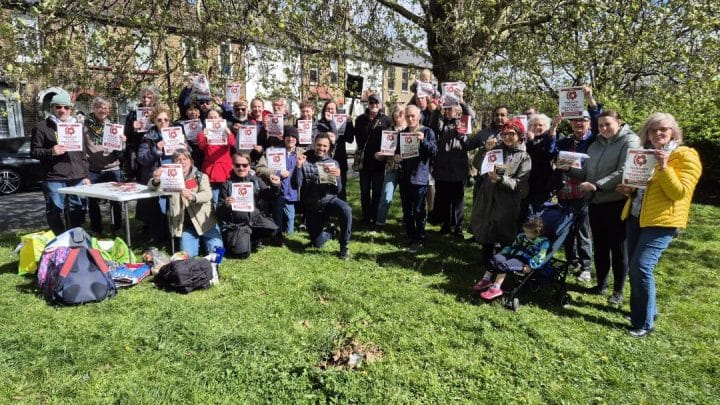

Cathall, London — A week and a half until local elections on 7 May, and communities across the country are seeing the widest array of candidates from across the political spectrum. With protest votes, apathy and anger becoming the main opposition to getting engagement from local voters, independent groups are making it clear they stand ready and committed to fill this void of neglect in their local communities.
One of those groups is Waltham Forest Independent Socialists, borne from the Your Party movement, who have been hard at work trying to bring people together and heal local divisions.
The Canary spoke to Connor Rosoman and Susan Catten who are standing for Cathall Ward. They told us about how it has been on the doors and how local people are feeling in light of the area’s traditional Labour heritage.
View this post on Instagram
Cathall candidate Catten: ‘A woman said, ‘at last, a party I can vote for”
First, Susan Catten told us how local people are feeling about politics and how engaged they are ahead of the locals:
Well, actually, I have found it quite invigorating. We’ve had a lot of support. People resonate with the issues, for example, over housing, about stronger licensing laws for landlords, the issue about the lack of council tax support.
These things resonate with people on the doorstep so actually, although we are quite a new organisation and we have to explain ourselves. I think one of the turning points for me was when we knocked on a door and a woman said, ‘at last a party I can vote for’, because it represented all the things that she felt needed doing.
It’s been quite exciting.
Rosoman added:
Yeah, that’s right. The campaign has been really positive at this stage. So, I mean, the context of it really is that, you know, In Cathall, previously, Labour won 70 plus percent of the vote. It’s a very, very strong Labour ward. But the mood on the doors has been, as you’d expect, one where loads of people are really questioning who they want to vote for this time around.
A lot of people that have voted Labour and been very, very disappointed in the current government. And there’s a bit of soul searching going on. There’s a lot of apathy. I think, especially because, like Cathall, it’s worth kind of saying, it’s pretty much the poorest ward in Waltham Forest.
Waltham Forest is an area with some of the highest wage inequality in London, so it’s an area of extremes, and Cathall’s definitely on the poorer end and it has a lot of social housing. So, there’s a lot of people that are very disappointed, very angry and are either looking for something different or they’re just kind of like ‘oh well they’re all the same, it’s not going to change anything’.
Sometimes it’s hard to break through that a lot of the time. But then we’ve been able to come along and we’ve been able to say ‘we’re very different that’s the whole reason we’re here and we’re also trying to build something that’s rooted in ordinary people standing up for what we see that we need around here’.
That’s really broken through with people and it’s meant that we’ve been able to have some really good conversations and the response has been really positive so far.

Cathall candidate Rosoman: ‘Even if people haven’t heard of us, they’re open to us’
We asked both Rosoman and Catten whether Reform are a threat in Cathall. They then told us how people are feeling on the doors about the prospect of a Reform councillor getting elected, with Rosoman saying:
We’ve not had a lot of opposition, Reform want, i think, they want to think that a ward like this is the sort of place that they could stand and win, but they’ve not really got any ground. It’s a very diverse kind of community, lots of immigrants and so on who can see right through that so the response that we’ve had if it’s not being just like ‘oh well you know, i don’t care they’re all the same i don’t want to talk’
It’s been really positive I would say that if you know even if people haven’t heard of us, they’re open to us and they’re following what we’re saying.
Catten agreed, telling us:
Some people might be looking at Reform, some people might be deadly afraid of them. Actually, some people have said they’ve had some Reform leaflets, and they’ve just torn them up or put them in the bin. I don’t think I’ve actually encountered anyone who admitted to saying they would vote reform.
I think, you know, when people open the door and you’re engaging with them, yeah, they might say they’re voting green, but they certainly are not saying they’re voting Reform.
That’s not to say they won’t get some votes. Of course they’ll pick up some votes. But, you know, I don’t get the feeling there’s a groundswell of support for them. So, I don’t see them as a real threat.
And to be quite honest, on the doorstep, I’d much rather concentrate on talking about what we can do in Cathall should we be elected.
View this post on Instagram
Catten: ‘People are tired of the same old, same old’
Discussing the appetite amongst voters for a different way of doing local politics, Catten told us:
It is a new way of doing politics because, you know, it’s not the same old, same old, is it? The thing is, people are tired of the same old, same old. And so our leaflets, our approach on the doorstep is about, look, give us a chance. You know, we’re a fresh organisation and we are committed.
And we’ve actually committed a policy of not taking the councillors’ allowances. That’s something no other party has done.
But actually, when we’ve had engagements with people, I think people are turning around. At the end of the day, we are a new organisation, but we are enthusiastic, we are committed, and I think that comes across well on the doorstep.
Going further, Rosoman also informed:
We’re registered as Waltham Forest Independent Socialists. What we’ve been saying is that we’re a new local political party. We’re rooted in these different community campaigns and local trade unionists and renters. And that does resonate with people.
I’ll use an example from yesterday that I was, like, so energised by. We were talking to this South Asian family who’d been clearly politicised over Palestine. We mentioned Starmer’s support for genocide as just an offhand thing. Their kids started chanting ‘free, free Palestine’. You could tell that they’d been out on the marches and stuff. And I think this is something that gets missed sometimes. Their politics didn’t end at Palestine. Even if Palestine was one of the things that was on their mind, they would be political people.
And I think that it’s hard not to, you know, look at what’s going on in the Middle East, in Gaza, and not draw, like, conclusions about everything else. And so, you know, they started then asking all these questions about, like, what would we do about, like, social behaviour and crime, homelessness, and housing and all of these sorts of things.
I think that people do join those dots. People see it from various starting points, don’t they? People are pissed off.

Rosoman then told us about how, like many across the country, local residents feel like they’ve been continually lied to and let down:
They build affordable housing which everyone knows is totally unaffordable, it’s only affordable to those with money, and the people that need affordable housing can’t get it. People really resonate on what we’ve said about the housing crisis, and it connects them to these issues of community as well. Like, people struggle to stay in the area, they struggle to stay around people they know, all of these things.
And we’ve connected that to two local community centres that have been closed in recent years. One of them just stands empty. There not being used for anything, and we’ve been talking about, well, why not reopen that, so that we can actually use it and it can be part of the community and it can keep people together and kind of re-establish some of that social life that’s just been kind of crushed and atomized over the last few years.
These sorts of points i think really resonate because we’re connected to the local area, we’re able to talk about these issues that directly connect to people’s lives, i think that has helped.
Rosoman: ‘They really bloody hate Kier Starmer’
Labour will undoubtedly face a kicking due to their cruel policies and continuation of Tory austerity across working class areas. Moreover, Rosoman has encountered considerable hostility towards Starmer specifically within the local community. This can only underscore how unhappy people in London are with the Westminster political elite:
A lot of people are going to vote against Labour not just because of the local council but because they really bloody hate Kier Starmer, and that is also perfectly valid and it’s important.
If we want to send a message to Labour you know on the national level well, seeing them lose all these seats in the council elections is one of the ways that we can do that. That’s been something that’s really connected with people, so I wouldn’t say that it’s like just the local thing, but I think that we’re very well placed being the ‘new kids on the block’, as independent socialists, that are able to really connect to that.
Speaking of Your Party and local engagement in active campaigning, Rosoman told us:
We’ve been a really strong proto-branch, I think, from the beginning. And our election launch campaign, even, you know, a few months ago, had, like, 65 people present. And then, since then, last weekend, just as a standard weekend canvassing session, we had 11 people come out. A couple of weeks before that we did this mega canvas and we had 30 plus people come out so you know we’ve had a real groundswell of people that are keen on doing this.
We’ve got like a real base of people on the ground that are really outstanding local activists and that want to build something and are seeing this election as a chance to kind of plant this flag you know and so it’s not just because of the hard work of a few I mean it’s been hard work I don’t want to understate that but it’s definitely been this huge collective effort and the fact that we’ve really had something like fireball on the ground that has allowed us to really get around.
You know, we’ve hit every door in the ward now going back over roads and trying to get people that didn’t answer last time and that sort of thing.
And locally, there’s like a really strong tradition of organising. Rothenstone in 2024 was, you know, the site of those like famous pictures, right, when the far right racist riots were happening. 10,000 people from the local community turned out on Walthamstow High Street to prevent them showing up and that was just an out of the woodwork, groundswell of people.
Those are the traditions that I think we have in this local area and so, people will show up and they will fight.

The left vote is at risk of a split due to the Green Party’s national pledge to stand in every ward. Subsequently, this led to backsliding on electoral agreements made with the local Green party in Cathall. However, Catten emphasised how local people seem to have had enough of political parties and are particularly resonating with independent politics:
There are a couple of Green Party candidates, but they’re only paper candidates. They’re not really standing with any policies.
I think when we’ve gone out, our leaflets have been very well received because they’re quite solid. They talk about what we want to do, what we’re aiming for and what we stand for, and that’s what I think is doing us favours on the doorstep. People are actually responding.
Yeah, there are some people who say, ‘oh, well, you know. you’re all the same’, or ‘I’m going to spoil my ballot paper’.
Nevertheless, Waltham Forest Independent Socialists continue to push forward, as Rosoman explains while describing his conversations with local voters:
The point that we’ve been making on the doors is that the Greens are basically letting us have this ward. They’re not doing a campaign. We’re knocking, you know, we’re doing this big campaign, knocking the doors. You know, the main place to put your vote, if you want to stick it to Labour, is with us. If you’re in Cathall, in many other places, even our supporters are going to be working for Greens.
But here in Cathall, the only place that we are standing in the borough, we’re the campaign on the ground, and that actually really do care.
‘I’m looking forward to having some tense conversations with Calvin Bailey, if I win’
If elected on May 7th, Rosoman outlined his first priorities and areas he intends to specifically focus on in Cathall:
Yeah, well, I mean… I think I’ve mentioned a couple of these things – community centres and the Queen Elizabeth Jubilee Centre. It’s one of the things we’ve really tried to point out. But also, as I say, this rent issue is hugely important. And we’ve got this specific issue in Walthamstow, where the council has announced a £30 million overspend – they’re looking to raise council tax and cut services. It’s the same picture you see everywhere, right?
I think that because we’ve been able to build a groundswell of support on the ground and so on, we’ll be in a good position, if we win, to come in and start speaking up about that immediately. That’s not something you can solve overnight, obviously, but the point we’ve been making is that every time you’re faced with a cut, you’re faced with a choice: do you just implement it, or do you try and fight it? And you can’t just fight it on your own – councils themselves have limited powers to do that – but we’re not coming at it as just me and Susan Katz and the other person standing in the ward. We’re coming at it with connections to local trade unions behind us.
Because we’ve got all of that behind us, I think we’re really in a position to speak against that, to connect with other people throughout London who are facing the same sorts of things, and to try and build a movement around it. And Starmer is going to be in such a weak position, if he even survives these local elections, so there’s a time to put demands on the national government for things like funding to councils. The government nationally will be in the weakest position they’ve been in yet coming out of these local elections, and that’s the time to keep up the fight, rather than say, ‘we’ve just been elected, so we can take a breather.’
Yeah, I’m looking forward to having some tough conversations with Calvin Bailey, if I win.
We at the Canary recognise that growing appetite for a new way of doing politics in our communities. After all, it is surely the only way to ensure that local people are truly at the heart of local policy.
We wish both Susan Catten and Connor Rosoman the best of luck for 7 May and urge local voters to choose candidates who actively show their commitment to really challenge the status quo.
Featured image provided via author

Concerns for future of staff as smart meters to be rolled out

Integer Holdings Corporation (ITGR) Q1 2026 Earnings Call Transcript

Crypto Markets Catch a Breath After Three-Day Slide

Manchester United reach agreement with Casemiro over contract clause amid transfer speculation

US brings back mandatory military draft registration

Steven Gerrard disagrees with Gary Neville over ‘shock’ Chelsea and Arsenal claim | Football


-

 Tech3 days ago
Register Renaming | Hackaday
-

 Fashion6 days ago
Weekend Open Thread – Corporette.com
-
 Crypto World5 days ago
Hyperliquid $HYPE Rally Builds Momentum as AI Sector Enters Prove-It Phase
-
 Business7 days ago
Patterson-UTI Energy, Inc. (PTEN) Q1 2026 Earnings Call Transcript
-

 Politics3 days ago
Drax board avoid their own AGM, accused of greenwashing & environmental racism
-
 Sports4 days ago
IPL 2026: Ruturaj Gaikwad registers slowest fifty of the season, enters all-time unwanted list | Cricket News
-

 NewsBeat5 days ago
LK Bennett closes all stores after entering administration
-

 Crypto World6 days ago
Michael Saylor says BTC winter is over. Market analyst disagrees, says bitcoin was in a pullback
-

 Fashion2 days ago
Kylie Jenner’s KHY Enters a New Era with ‘Born in LA’
-

 Tech4 days ago
Why Blue Badges Disappeared From Toyota Hybrids
-

 Tech3 days ago
Images of Samsung’s rumored smart glasses have leaked
-
 Entertainment5 days ago
Mariah Carey Slams Deposition Claims In Brother’s Lawsuit
-
Crypto World7 days ago
Is Algorand One of the Few Quantum-Resistant Blockchains? Here’s What the Data Shows
-

 Business2 days ago
Most Commercial Energy Audits Miss the Real Losses
-
 NewsBeat7 days ago
Trump threatens to review UK’s claim to Falkland Islands and punish Nato allies over Iran war disagreement
-

 Business6 days ago
Jeanine Pirro announces closure of Federal Reserve building cost probe
-

 Business3 days ago
(VIDEO) Charlize Theron Climbs Times Square Billboard to Promote New Netflix Thriller ‘Apex’
-

 Tech5 days ago
Microsoft to roll out Entra passkeys on Windows in late April
-

 Crypto World2 days ago
CFTC’s AI will review U.S. crypto registration applications, chairman tells CoinDesk
-
 Crypto World6 days ago
Nvidia (NVDA) Stock Jumps 5% as Intel Earnings Ignite Semiconductor Rally
You must be logged in to post a comment Login