

Politics
Therapists Warn Of Red Flag Signs You’ll Clash With Your In-Laws

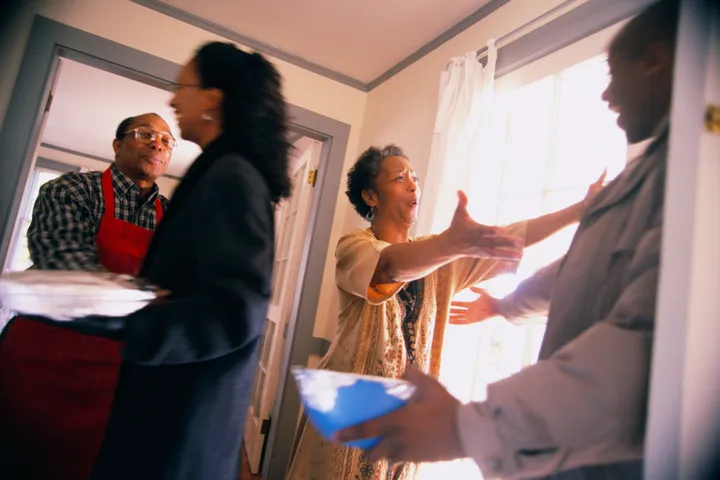
When it comes to managing life with future in-laws, it’s not always easy to determine what those dynamics will look like.
Various circumstances, from the introduction of grandchildren to the equation or geographic location (and proximity), can also play a role in the dynamics you have.
Relationships can change over time, and behaviours can totally evolve as people grow more comfortable with one another.
That said, there are a few factors to consider when trying to determine whether or not your relationships with your in-laws might pose a challenge for you and your partner down the line.
We turned to family therapists to find out what some of the red flags might be, how to navigate them with your partner and how to cope with any lingering negative feelings.

Tom Stewart via Getty Images
Here are three major signs that might predict you’ll have tense relationships with your in-laws.
Boundary violations that add up over time
Challenges with boundaries are a common complaint that people have regarding in-laws, and it’s one that family therapists see often as well.
“I often see boundary issues as an early warning sign,” Amanda E. White, LPC, licensed therapist and CEO of Therapy for Women Center, told HuffPost. “If someone’s partner would never let a friend drop by unannounced, but thinks it’s fine when their mother does, that inconsistency [could be] a problem.”
When boundary issues come into play early on in the form of unexpected visits or overreaching, it could be an indicator that these challenges might worsen over time, particularly if grandchildren become involved.
According to therapists, it helps if couples are aligned on what their boundaries are and how they’d like them to be respected. “If one partner takes over leading all the boundary conversations with the in-laws, it creates triangulation and scapegoating,” White said, adding that it can be helpful for the person whose direct family is involved to take the first line of communication.
Additionally, it’s worth remembering that setting a boundary doesn’t have to be combative.
“A boundary is not punitive; it simply shows where the line is,” Caitlin Slavens, registered psychologist and clinical director at Couples to Cradles Counselling, told HuffPost.
When your partner can’t separate their needs from their parents’
Similar to boundary issues, there can sometimes be challenges when a partner can’t separate their own life or identity from those of their parents. “This often looks like a partner who struggles to prioritise their relationship over keeping their parents happy,” White said.
In this case, it can also help to talk with your partner, but the key is to approach the conversation with compassion and empathy. “It is important to recognise that your partner has had a lifetime of experiences with their family before you entered the picture,” Slavens said, advising people to focus on how certain behaviors make them feel as opposed to being accusatory.
“Instead of saying, ’Your mom is overbearing,’ try, ‘I feel uneasy after your mom questions our parenting decisions every time we go there. It can be hard to relax when I am there,” Slavens continued. “What can we do to be on the same page the next time your mom comments on our parenting choices?’”
Ultimately, this is another area where being aligned as a couple is important, and in order to reach alignment, communication is imperative.
“What therapists see over and over again are the consequences of putting off addressing these issues rather than moving towards the challenge,” Matt Lundquist, psychotherapist, founder and clinical director of Tribeca Therapy, told HuffPost.
“The counsel here is for the concerned partner to state their sincere desire to have the best relationship possible with future in-laws. While it may be harder in the short term, it’s better to talk openly about concerns.”

Plan Shooting 2 / Imazins via Getty Images
When your partner’s family just avoids conflict completely
We tend to think of problems with in-laws as arguments, tension-driven conversations, or full-on fights, but one of the biggest signs that there could be challenges down the line is if everyone avoids conflict altogether.
“In most cases there’s incentive to avoid conflict because the relationship [with the in-laws] isn’t optional and because open conflict can strain a relationship with one’s spouse,” Lundquist said. “Therefore, much of this conflict stays hidden.”
Even if conflict is avoided, you might still feel the tension simmering. This can lead to feeling like you have to walk on eggshells around your partner’s family, or that a fight could be brewing at any moment. Oftentimes, this dynamic arises when your partner grew up in a conflict-avoidant household.
“I [would] pay attention to how conflict gets handled in their family system,” White agreed. “If disagreements are avoided or swept under the rug, those patterns will show up in the relationship with in-laws.”
Therapists agree that even though having conversations about boundaries and relationships can be uncomfortable, avoiding those conversations can make things far worse over time.
“The conversation may be uncomfortable, but that is why it is important to have it,” Slavens said. “Being uncomfortable usually means it is worth discussing further.”
How to cope with negative feelings about in-laws
Sometimes, even after communication, you may still have lingering negative feelings surrounding your in-laws. It can help to remember that this is very normal and common, and you certainly aren’t the first person to feel this way.
“Having these feelings does not make you unkind,” said Slavens, adding that it can be valuable to reflect on your emotions, either through journalling or talking with a friend, family member or therapist.
“Remember, joining another family can be complicated, especially when roles, boundaries, expectations, and values differ. It can help to reframe negative self-talk, such as reminding yourself, ‘I can be both a loving person and not allow others to disrespect me.’”
White suggested finding ways to self-regulate before and after your interactions with future in-laws. “For example, [consider] taking a walk before gatherings, debriefing with their partner afterward, or setting time limits on visits,” White said, encouraging people to recognise what they can and can’t control.
“They cannot control their in-laws’ behaviour or opinions. They can control how much time they spend with them, what information they share, and how they respond.”
When to seek help from a counsellor
It’s important to recognise that there are times when outside help may be essential. According to therapists, counselling can be helpful when a couple cannot seem to get on the same page.
“Part of what makes these relationships so difficult is that they exist for the adult child at the intersection of two families, what we call the ‘family-of-origin’ and the new family they’re building with their spouse,” Lundquist said, pointing out that this person is now in the middle and may feel pulled in two directions. In those instances, talking to a counsellor or therapist may be beneficial.
Further, it’s worth remembering that you don’t have to wait until the conflict has reached an impossible level in order to seek out counselling.
“Consulting a counsellor or family therapist can be a preventative step in navigating family dynamics in a healthy way,” Slavens said. “If stress around in-laws is causing anxiety, self-doubt, or affecting your relationships, those are signs to seek professional support.”

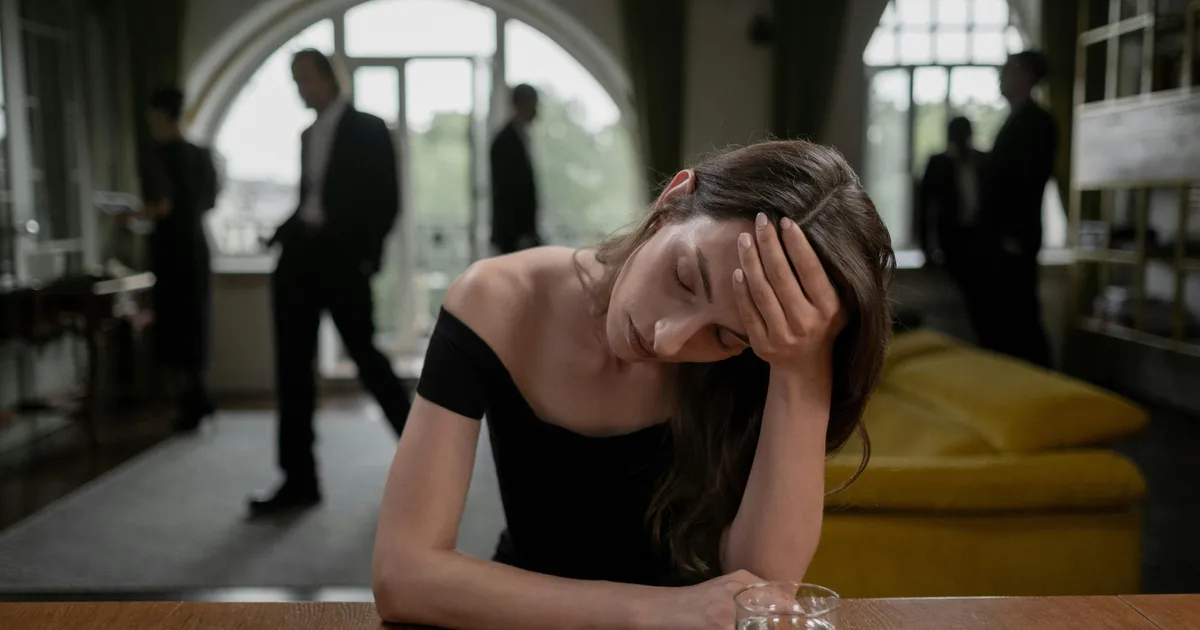
According to the UK’s National Institute for Health and Care Excellence (NICE), around 12 per cent of people will experience social anxiety disorder at some point in their lives, making it the most prevalent form of anxiety.
If you’re not familiar with the condition, the NHS describes it as: “a long-term and overwhelming fear of social situations.” They add that it usually starts during teenage years and can be very distressing and impact your day-to-day life.
Now, researchers have revealed that the condition which was always thought to be something purely in our minds, it may actually be related to our gut health and changes in our brains, too.
What social anxiety is and how it relates to the gut
While introversion and social anxiety may sometimes crossover, there is a key difference and it’s perfectly explained by NICE guidelines. NICE says: “Social anxiety disorder (also known as ‘social phobia’) is an overwhelming fear of social
situations…
“Although everyone worries from time to time about coping with a social situation, for people with social anxiety disorder the worry or fear can last a long time and severely affect their lives. They are afraid of doing or saying something that will result in embarrassment, humiliation or rejection by others.”
When it comes to introversion, Psychology Today explains: “Introverts do not fear or dislike others, and they are neither shy nor plagued by loneliness. A crowded cocktail party may be torture for introverts, but they enjoy one-on-one engagement in calm environments, which is more suited to the make-up of their nervous system.”
What’s key to remember here is that social anxiety isn’t about preferring solitude but instead, the brain responding to perceived threat.
So, what is the link between gut health and social anxiety?
Studies as far back as 2016 revealed distinct microbiome profiles in people with depression, suggesting that our mental health may be shaped in part by the organisms living inside us.
With this in mind, Dr Mary Butler at University College Cork, in Ireland, and colleagues analysed the faeces of 31 people with the social anxiety, and 18 without. They found clear differences in the gut bacteria of the two that suggested there may be some weight behind this theory.
Writing for BBC Science Focus, science writer David Robson explains: “To determine whether those differences could have a meaningful impact on people, the team transplanted some of the participants’ faeces into the stomachs of laboratory mice, before putting them through a series of behavioural tests.
“One test analysing ‘social fear conditioning’ proved especially revealing. Here, mice were given a small electric shock whenever they approached another mouse, causing them to learn that social contact led to pain.”
They found that the mice who received faecal transplants from people with social anxiety were more susceptible to the condition and were slower to ‘unlearn’ the association when electric shocks stopped.
Most notably, the mice didn’t experience generalised anxiety but specifically social anxiety around other mice.
“The striking part of our work was the specificity of the transferred phenotype,” said Butler speaking to BBC Science Focus
“The microbiota from donors with social anxiety disorder produced a social-fear-selective effect in otherwise behaviourally normal mice.”
There’s still a long way to go before we fully understand this, but the news is hopeful for future treatment of the condition.
What to do if you have social anxiety
The NHS says: “It’s a good idea to see a GP if you think you have social anxiety, especially if it’s having a big impact on your life. It’s a common problem and there are treatments that can help.
“Asking for help can be difficult, but a GP will be aware that many people struggle with social anxiety and will try to put you at ease. They’ll ask you about your feelings, behaviours and symptoms to find out about your anxiety in social situations.”
You may then be referred to a mental health specialist for treatment and support.
Help and support:
- Mind, open Monday to Friday, 9am-6pm on 0300 123 3393.
- Samaritans offers a listening service which is open 24 hours a day, on 116 123 (UK and ROI – this number is FREE to call and will not appear on your phone bill).
- CALM (the Campaign Against Living Miserably) offer a helpline open 5pm-midnight, 365 days a year, on 0800 58 58 58, and a webchat service.
- The Mix is a free support service for people under 25. Call 0808 808 4994 or email help@themix.org.uk
- Rethink Mental Illness offers practical help through its advice line which can be reached on 0808 801 0525 (Monday to Friday 10am-4pm). More info can be found on rethink.org.



As Chief Executive of Ofcom, Dame Melanie Dawes is responsible for one of the most ambitious regulatory agendas in a generation. As part of our Women in Westminster series, we sat down with Dawes to discuss stepping into contested space, holding global tech companies to account, and being the public’s champion
Regulation is sometimes seen as an exercise that takes place quietly in the background, far away from the headlines. But that is not how Dame Melanie Dawes, Chief Executive of Ofcom, views it.
“Everything Ofcom does touches people’s lives in ways they really care about,” Dawes told Women in Westminster during our sit-down conversation. “What we do has that connection with people’s lives in a way that is quite special.”
From telecoms to television to social media, the sheer breadth of Ofcom’s remit means that Dawes occupies one of the most complex regulatory roles in the UK. Throughout our conversation, Dawes is clear that regulating the communications services that we all use and rely on each day is something that matters immensely to the UK public.
The former Permanent Secretary also finds herself in an increasingly visible role. Following the passing of the Online Safety Act, Dawes has been at the centre of some of the most contested public debates of our times, having to balance competing interests between safety and free speech, innovation and harm, and freedom and responsibility.
Dawes tells us that despite that complexity, Ofcom’s core job remains very clear. It is to act in the public interest with clarity and determination, even if that places the regulator squarely in conflict with some large and powerful organisations. That is, she promises, something that she and her staff will never shy away from.
“Everybody who works at Ofcom on online safety feels a huge sense of purpose,” she tells us. “We are doing it because our parliament has tasked us with this really important job, and we know that we have the public on our side and that they want to see results.”
The complexity of Ofcom’s regulatory role has grown in recent years as new technologies have challenged traditional models of how information is viewed and shared. Online safety, media standards, and the power of global technology platforms have shifted regulation into the foreground of public life.
Ofcom retains a very broad range of responsibilities, but Dawes acknowledges that the Online Safety Act “gets a lot of the oxygen” in current discussions.
“It’s not a system that any other country has set up,” Dawes says of the Act. “No one has regulated these companies in this way to try to achieve such an important increase in safety for the public.”
Dawes believes that the challenges in regulating large technology companies are cultural as much as they are technical, describing an industry “where there has been no regulation for 20-25 years.” It is also a sector where the entire culture has been built on moving fast and fixing problems later, if at all. In the wake of the Online Safety Act, Dawes tells us that this is something that must now change.
“The culture in Silicon Valley is not where we need it to be,” she says. “There isn’t a culture of safety testing, of testing things in advance before you launch them to the public. So, the scale of the challenge is huge.”
At the heart of the Online Safety Act, Dawes tells us, is a desire to hardwire safety into product design at an earlier stage. She urges platforms to “think like perpetrators”, anticipate abuse, and build protections in from the start.
“What we’re really trying to do here is to get the platforms to take a level of responsibility that they’ve not taken before,” she says. “They’ve got to stop just launching services on the public without having done a risk assessment. You don’t launch a toy on children without testing it properly. You don’t launch a new car. It should be the same for online services.”
Dawes acknowledges that both parents and children are “frankly really scared” at the moment. She also points out that online harms are not evenly distributed. Dawes highlights the gendered nature of online abuse, pointing to evidence that it is often women and girls who experience some of the worst problems online.
“We saw that it was women who were overwhelmingly targeted by that undressing functionality on Grok that was launched on Christmas Eve,” she reminds us. “In November last year, Ofcom launched its own guidance for tech platforms to better protect women and girls online”.
Ofcom opened an investigation into X early in the new year, making the UK the first country to do so. For Dawes, this demonstrates the willingness of the regulator to robustly intervene in high-profile cases.
Progress has also been tangible elsewhere. Dawes tells us that in less than a year of enforcement, 86 per cent of visitors to the top 100 porn sites are now covered by age checks. “Nobody really thought we were going to be able to do that a couple of years ago,” she adds.
Still, Dawes is careful not to oversell what regulation alone can achieve. The accountability for change, she insists, ultimately lies with industry. “They are the ones that run the services,” she says. Regulation can draw lines and create incentives, but it cannot replace platforms’ responsibility. Nor can it address every underlying cause of online harms.
“Behind every abusive post is a person,” she reflects. “And I think there’s something about the conversation that we have in our communities and our families and in schools about the way that we behave online in ways that we wouldn’t do if we were sitting face to face with somebody. That’s got to be about leadership everywhere across our society.”
However, despite the challenges, Dawes remains confident that regulation can make a real difference to safety.
“I am very optimistic, because we’ve shown that we can achieve change,” she says. “We’re very conscious of the expectations on us, and we’re constantly challenging ourselves about where we can move faster and move further.”
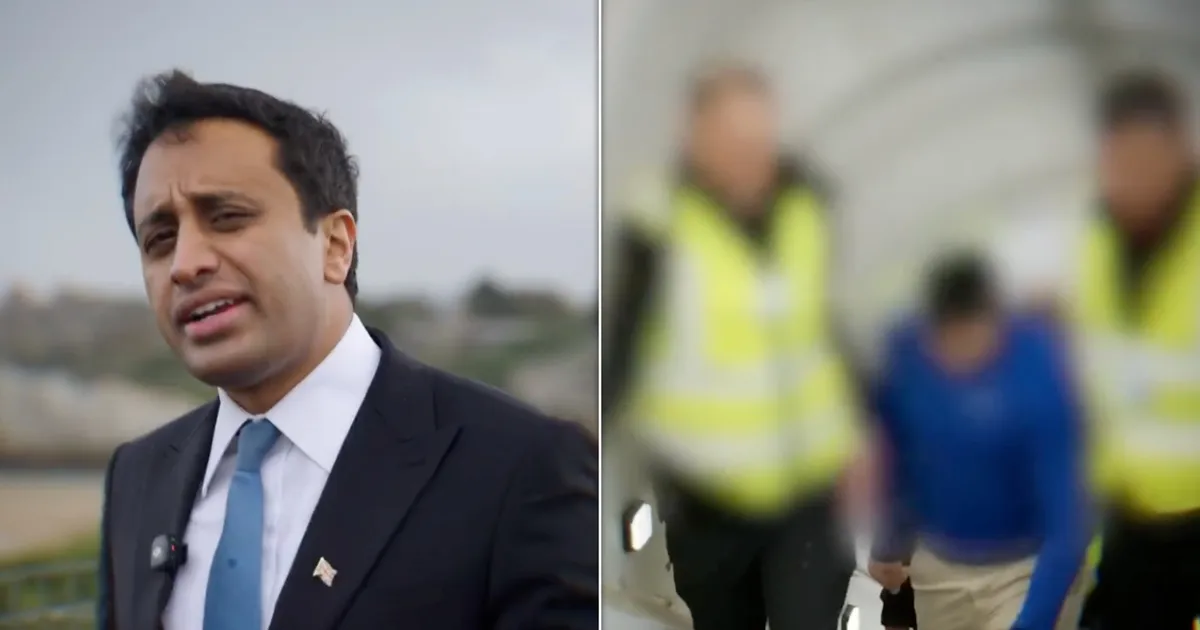
Reform UK has been accused of “extraordinary hypocrisy” after Zia Yusuf criticised the government for a lack of deportations – while using Home Office footage of its recent deportations.
Yusuf, who calls himself “Reform’s Shadow Home Secretary” but is actually the party’s Home Office spokesperson, released a social media video on his “promise to the country” this week.
While emotive music played in the background, Yusuf can be seen pacing around the British countryside while claiming Britain has been “overwhelmed by immigration, both legal and illegal”.
At one point, Yusuf – who is not currently an MP – pledges that a government under Reform would “stop the boats” and embark on a “mass deportation programme”.
The video then switches to footage of “illegal” migrants being deported.
The only problem is that footage was released by the Home Office last year when the government announced it had sent 19,000 people back to their origin countries in a crackdown on irregular migration.
Anna Turley, chair of the Labour Party, denounced the use of the government’s own clips.
She said: “This is extraordinary hypocrisy from Zia Yusuf.
“He has spent months throwing stones at the government over illegal migration, yet is now using footage of us taking tough action to remove people, for his campaign video.
“You can’t claim the government is doing nothing while broadcasting clear proof that we are. Unlike Reform, this Labour government is getting on with the job of securing our borders – and the footage he’s chosen to use proves it.”
This is not the first time Reform has come under fire for its immigration pledges.
The right-wing party has taken a hardline approach, vowing to abolish indefinite leave to remain, meaning immigrants could potentially have to renew their immigration status every five years, indefinitely.
Yusuf has previously claimed indefinite leave to remain could be “rescinded retrospectively” too, meaning those previously granted it could be deported.
Even if they are allowed to stay in the UK, they would no longer be allowed to claim any benefits.
An estimated 430,000 people had ILR status at the end of 2024.
National secretary of the GMB union, Rachel Harrison, said last year that the plans are “morally repugnant”.
She said: “Our public services – especially the NHS – and our care sector are utterly reliant on migrant workers. Without them our care and health sectors would collapse.
“This is yet more performative politics from a bunch of millionaires and their pals who do not live in the real world.”

On Question Time last night Reform’s Shadow Chancellor confronted centrist dad Sopel over his gushing support for a) Peter Mandelson’s initial appointment and b) Huw Edwards. Sopel was not pleased…

Patrick Dempsey has paid an emotional tribute to his former Grey’s Anatomy co-star Eric Dane.
During an interview on Friday’s edition of The Chris Evans Breakfast Show on Virgin Radio UK, Patrick shared his memories of working with Eric, who died on Thursday around one year after sharing that he’d been diagnosed with ALS.
“I just woke up this morning and it was very sad to read the news,” he began. “It’s hard to put into words. I feel really so sad for his children.”
Patrick continued: “He was the funniest man – he was such a joy to work with and I want to just remember him in that spirit because any time he was on set, he brought so much fun to it. He had a great sense of humour.
“He was easy to work with, we got along instantly. [His] first scene was him, you know, in all his glory, coming out of the bathroom with the towel on looking amazing, making you feel completely out of shape and insignificant…”
“We hit it off because [there] was never really any competition,” Patrick added. “There was just this wonderful mutual respect. [He was] wickedly intelligent and I’m always going to remember those moments of fun that we had together and celebrate the joy that he did bring to people’s lives and the real loss is for us who don’t have them anymore.
“He did an incredible job at bringing awareness to this horrible disease and those remaining days and it just reminds us that we all have to celebrate every day like it’s our last day…
“It’s something that we have to remember and certainly in a world where there is just so much crisis and there is so much tragedy that we really need to be grateful for every moment that we have, spend time with our families, do things that are better, that benefit of other people to be of service to be kind, to be loving.
Patrick then lamented: “With our leadership, unfortunately that we’re seeing around the world – and certainly in America with this horrible, you know, corrupt government that is currently running America – we have to remember to treat our neighbours and our friends with the right values.”

Other members of the Grey’s Anatomy cast have also been paying tribute to Eric since the news of his death broke in the early hours of Friday morning.
In addition to his work in Grey’s Anatomy, Eric played Jason Dean in Charmed, and Jacob Elordi’s on-screen dad Cal Jacobs in Euphoria.

Andrew arrested – and it’s revealed Mandelson pushed for him to be trade envoy against King’s wishes
“Lord Mandelson helped secure the job of UK trade envoy for Andrew Mountbatten-Windsor against the wishes of the King. The then Prince Charles expressed concerns about his brother’s suitability for the role, but the late Queen Elizabeth II overruled him with backing from the former trade secretary. Mr Mountbatten-Windsor succeeded the Duke of Kent, his second cousin, as special representative for international trade and investment in 2001. The move was highly controversial because the former prince already had a reputation for using his status to travel the world playing golf and was considered an unreliable playboy by many critics. One newspaper headline at the time described the appointment as “another royal accident waiting to happen”. Lord Mandelson, though, intervened, saying the then duke was “well qualified” for the role. The two men knew each other by then, having both worked on an NSPCC campaign. Both of them also knew Ghislaine Maxwell and were friends with Evelyn de Rothschild, the City financier, and his wife Lynn, who in turn were friends with Epstein. Maxwell, who is serving a jail sentence for child sex trafficking for Epstein, was photographed with Mr Mountbatten-Windsor at a “hookers and pimps” Halloween party in New York before he was given the trade role. She was also friends with Lord Mandelson, who had worked as a consultant for her father Robert, the one time owner of the Daily Mirror.” – Daily Telegraph
- Andrew Mountbatten-Windsor arrested for misconduct in public office – The Times
- Andrew’s top aide struck secret deal with Chinese state – Daily Telegraph
- Former PM Gordon Brown submits ‘new and additional info’ to police – Sky News
- Police search of Royal Lodge continues as Andrew released under investigation – The Guardian
Comment:
- Whatever the outcome of Andrew’s arrest, the whole monarchy is in the dock – and British people are both judge and jury – Julia Hartley-Brewer, The Sun
- As Andrew sits alone in a police cell, Charles and William will be secretly relieved – Jennie Bond, The i
- A grave threat that the Monarchy must survive – Daily Mail Comment
- Wider wall of royal secrecy must come down in wake of Andrew arrest – The Times View
> Yesterday:
Starmer’s Chagos deal in crisis
“A dramatic late intervention by a judge has thrown Sir Keir Starmer’s beleaguered plans to hand over the Chagos Islands to Mauritius further into chaos. Justice James Lewis ruled from a flight at around 25,000ft in the air on Thursday to temporarily block an order removing the islanders, who had landed earlier this week. The decision adds to the prime minister’s growing nightmare over the islands after US president Donald Trump declared this week that he was opposed to the deal in a move which could veto Sir Keir’s plans. The judgment comes after four Chagos islanders landed on one of the Indian Ocean archipelago’s islands on Tuesday to establish what they say will be a permanent settlement, in a move they hope will complicate a British plan to transfer the territory to Mauritius. The “advance party” was led by Misley Mandarin, the elected Chagossian first minister who has pledged to establish a permanent resettlement on Île du Coin, part of the coral atoll of Peros Banhos. “We, the people of the Chagos Islands, stand today on the soil of our homeland,” the party announced in a “Declaration of Return”, adding: “We are the advance party. Hundreds more are following. We have come home.”” – The Independent
- Why is the island of Diego Garcia important? – The Times
- Chagossians now CANNOT be evicted from homeland as vital last-minute intervention hands Keir Starmer crushing blow – GBNews
- Chagos Islanders fear British patrol boats will block vital supplies – Daily Telegraph
- Trump anger as UK blocks raid on Iran: President ‘may sink Chagos deal’ as PM refuses use of our airbases – Daily Mail
- UK blocking Trump from using RAF bases for strikes on Iran – The Times
Comment:
- Why has the most vacillating PM in a lifetime decided that the ‘Chagos Surrender’ is the one policy he won’t U-turn on? – Mark Almond, Daily Mail
- Trump’s opposition to misguided Chagos deal should kill it – The Times View
- The Prime Minister’s legalistic Chagossian mistakes – Telegraph View
> Today:
Benefits anger as migrant households pocket ‘more than £15billion in benefits’ in just 18 months
“Migrant households have pocketed more than £15billion in benefits in just 18 months, according to a new study. Homes containing at least one unemployed foreign national accounted for 70 per cent of that staggering bill, the research suggests. The Centre for Migration Control think tank, which obtained the data, claimed hardworking Brits are being “walloped with tax rises” to fund billions in welfare handed to households with foreign-born claimants. Its research director Robert Bates said: “t is a no-brainer that we should be ending benefit payments to foreign nationals, especially those who are unemployed.” The FOI documents show £9.5bn of Universal Credit was paid out in 2024, with another £5.6bn in the first half of 2025. But the figures are household-level, meaning some of the cash can go to British partners or children, and that some foreign-national claimants listed as unemployed may actually be self-employed with low or irregular earnings. Of the 2024 total, £6.7bn went to households where the foreign-national claimant was not in work. Home Secretary Shabana Mahmood has pledged that migrants will only qualify for benefits and social housing once they become British citizens, while the Tories and Reform UK want even tougher limits.” – The Sun
- Jobless-migrant households receive more than £10bn in benefits – Daily Telegraph
- Fury as jobless-migrant households receive benefits worth £10bn – ‘we need to end this’ – Daily Express
- Benefits bill balloons as over £15BILLION handed to migrant households in 18 months, according to DWP figures – GB News
Comment:
- Labour has learnt nothing from Denmark’s immigration success – but neither has Reform – Sherelle Jacobs, Daily Telegraph
- Nigel Farage and I will defuse the benefits bomb that could bankrupt Britain – Robert Jenrick, Daily Telegraph
News in brief:
- Death by lawyers: How excessive legalism can ruin a political system – Daniel Eloff, The Critic
- Why Starmer must raise defence spending fast – Eliot Wilson, The Spectator
- How to fix student loans – Shimeon Lee, CapX
- Don’t abolish the OBR – George Eaton, The New Statesman

If you’ve still not checked out Netflix’s hit thriller The Night Agent, reviews for its recently-released third season might make you reconsider.
While the hit spy series – led by Gabriel Basso as FBI agent Peter Sutherland – doesn’t quite have the profile of Netflix originals like Stranger Things, Squid Game or Wednesday, its first season remains one of the most-watched in the platform’s history, so the following is clearly there.
On Thursday, The Night Agent returned for its third outing, and impressively, the reviews at the time of writing are unanimously positive, with a rare 100% score on Rotten Tomatoes.
When we last caught up with Peter Sutherland, he was being given a new mission to act as a double agent to crime boss Jacob Monroe, with the new season picking up one year on.
Here’s a quick snapshot of what critics have been saying about the new batch of episodes so far…
“The Night Agent takes a big gamble with season three – and it mostly pays off […] Brasso still pulls his weight in the fight scenes, which feel refreshingly brutal and grounded. As unrealistic as they can be sometimes, they’re still more visceral than most, committed to showing the toll of this line of work. The emotional toll takes precedence though, and therein lies the key to making this series work.”

CHRISTOPHER SAUNDERS/NETFLIX
“The Night Agent doesn’t break new ground, but not every show needs to do that. If The Pitt has taught us anything, it’s that there’s an appetite for old-fashioned dramatic structures that are done well. This one doesn’t rise to the levels of that HBO hit, but it does what it sets out to do remarkably well. It values escapist entertainment above all else.”
“The Night Agent season three is the show’s best instalment yet, thanks to a tighter narrative, compelling characters, solid action, and great twists […] For a while, the show knew what it was: a Netflix thriller that did not need to be much more than what it promised to be, which is fun and binge-worthy. As of The Night Agent season three’s ending, the show still isn’t on the level of other quality TV shows, but it certainly keeps improving [and] season three is the best of the bunch.”
“While there were certainly solid moments in Season 2, it sometimes felt overpacked, juggling so many moving pieces that the plot grew convoluted and the emotional throughline occasionally got lost. With its return, however, The Night Agent returns to its roots, delivering a tighter, more focused season that feels completely sure of itself — and easily the strongest the series has produced so far.”
“Is season three The Night Agent’s best outing, then? I think you could make a case, certainly. It has tighter storytelling and a strong sense of character, and there’s no sign of things neatly wrapping up any time soon.
“That desire to keep the show going may prove its undoing down the line, but for now, at least, I don’t think we’ve exhausted everything it has to offer just yet.”

“One of the biggest changes for the third season of Netflix’s The Night Agent is that Luciane Buchanan’s character Rose Larkin isn’t a part of it.
“Both Buchanan and creator Shawn Ryan are on record saying [this absence] was only because the story that Ryan and his writers broke for season three didn’t include Rose, and that she could come back in future seasons. Still, it’s a big loss for the show, and that loss is evident in the first episode of season three […] The Night Agent is still perfectly good ‘watch while doing laundry’ TV but it feels like the third season is even more lunkheaded than the first two, and the absence of Buchanan is huge.”
All three seasons of The Night Agent are now streaming on Netflix. Watch the trailer for season three below:
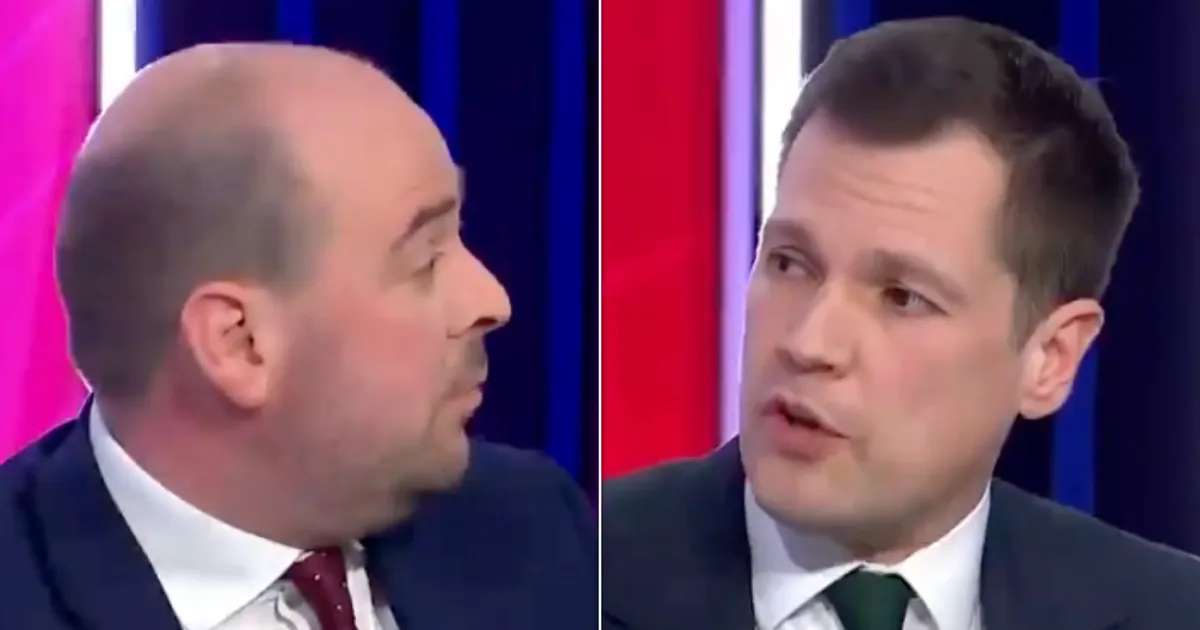
Richard Holden accused ex-Conservative Robert Jenrick of “jumping into bed with the first people who would have him” in a scathing BBC Question Time takedown.
Jenrick was kicked out of the Conservative shadow cabinet in January after leader Kemi Badenoch unearthed his plans to defect.
Hours later, Reform leader Nigel Farage announced that his party had acquired yet another ex-Conservative.
Jenrick was announced as Reform’s “shadow chancellor” – or Treasury spokesperson – this week.
On BBC Question Time, the Newark MP tried to justify his decision by slating the Conservatives.
Despite serving as the cabinet-attending immigration minister under Rishi Sunak, health minister under Liz Truss and housing secretary under Boris Johnson, Jenrick said: “I want to have a good government running this country for once, which we haven’t had for along time.”
“Obviously, that is a government you were a part of,” host Fiona Bruce pointed out.
“Yeah and I resigned from that government,” he insisted. “In the last parliament, I was the only person to resign on a matter of principle.”
Jenrick resigned from Sunak’s cabinet after complaining the Rwanda deportation scheme did not go far enough.
He claimed: “It was failing on immigration. It was making promises and consistently breaking them.”
Bruce then pivoted to Holden, who currently sits as Tory shadow transport secretary – and who was supposedly “sighing” a lot while Jenrick talked.
Holden said: “Look, Robert says it was a principled decision. Robert got kicked out of the Conservative Party. That’s what actually happened.
“People remember what happened when Kemi got rid of him.”
He continued: “I supported Robert in the leadership election so to see him go was a really tough thing for me. Robert and I have known each other for a very long period of time and I’d like to think that there was a friendship there as well.
“A lot of those decisions Robert painted as about the good of the country, and things like that. I’m not convinced of that.
“I think he got kicked out and then he jumped into bed with the first people who would have him – Nigel Farage and co.”
When reminded that Jenrick was only kicked out because of his plans to join Reform, Holden said: “Well, Nigel Farage didn’t seem to think that on the day.”
Jenrick insisted: “I was obviously about to do this, I made it my decision and I was convinced it was the right one.”
He claimed Holden was “pretending everything was sweetness and light” in the Tory Party right now, but claimed his former colleague shares Jenrick’s concerns over its “massive mistakes” in the past.
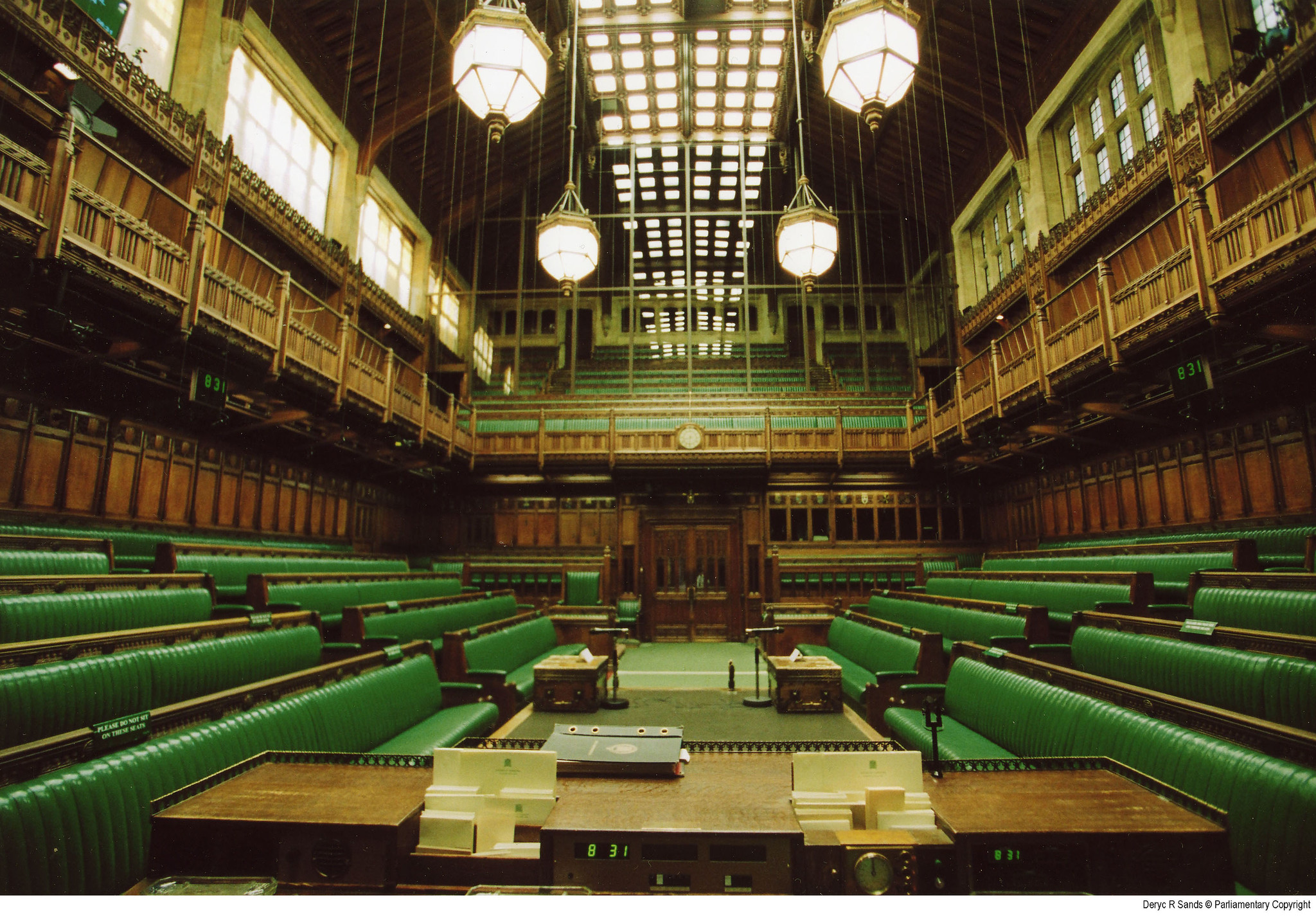
How do you solve the problem of following Henry Hill’s final ToryDiary? You probably can’t (it was a fantastic read). But you can at least pick at a theme he touched on in his piece yesterday: the hollowing out of politics by short-termism, performance and the absence of a governing project. So I’ll give it a go.
Let’s start with a small but telling statistic. In 1938, a speech in Parliament typically ran to almost 1,000 words. As late as 1970, the average was still close to 900. In 2024 it was only 460. The most dramatic decline came after 2015 – the year video arrived on Westminster’s favourite app, Twitter (now X). Draw your own conclusions.
The academic evidence is not exhaustive, but what exists points the same way. In the United States, studies of state legislatures suggest that the arrival of television cameras coincided with greater polarisation. In Turkey, when their parliament switched cameras on for certain sittings, MPs behaved differently on broadcast days. It would be peculiar if Westminster were immune to incentives that operate everywhere else.
The problem today is not just that speeches are shorter in the Commons. It is that they are trending to be thinner, unquestioning, uncurious and unreflective. A changed audience on social media (one for clips, a question that may not even contain the answer) has changed the output (designed with that target in mind rather than engaging with a person or policy area).
We have seen what a tendency to these qualities does in government. Labour has been providing a clear example of what it is like when you are unable to articulate a clear mission or purpose – having been uncurious and unreflective – drifting in intention and chucking legislation in the bin as it goes. Is it any wonder we saw Sir Keir Starmer’s 14th U-turn at the beginning of the week restoring local elections and are now potentially looking at his 15th at the end of the week with Chagos?
But this is a wider problem, affecting more than just those in No.10. That temptation for ease and short-termism, without taking the time to think, build and reflect, is something that has seeped into our politics. It has actually become inbuilt, with structural incentives for this decline, which brings me to a controversial opinion: the cameras in Parliament should go.
Hansard is essential. Audio recording is fine. Photographers should remain. But the live video feed, paired with social media, has transformed the Commons into a personal broadcast studio. Interventions are less calibrated for the colleague opposite than they are for the constituency Facebook page. There is a lack of engagement and persuasion in the chamber than there is video harvesting.
It leads to ‘debates’ on contentious issues where there have been, in truth, almost no debate at all. One after another, MPs asking almost exactly the same question that you know is for their social media accounts – no engagement with the previous speaker, no attempt to grapple with the counter-argument. Barely anyone listening. The chamber half-empty, those present glued to their phones, perhaps watching their previous efforts that have just been posted on X. It can be a depressing watch, to see distraction overtake discussion.
“Think in ink” was the phrase that Michael Gove claims to have lived by in government. The idea that by writing a speech down, it forces you to be logical; makes you assess exactly what you are about to say and the beliefs behind it. In essence, not directing yourself for a quick social media hit.
There is an awful lot going on in this country that requires that kind of real reflection, and we are not getting it. Henry’s point was that without a proper governing project there is nothing to counteract the pull to that easy, short-term decision – and he is right.
I would say the Tories have recently benefited from the beginning of their rethink or ‘renewal’ as Badenoch would put it; actually taking some time to work out their own thesis and drawing some sensible policy interventions from it. MPs more generally would benefit from doing the same, but we could help them by removing the reward for a quick hit over a considered argument, and getting rid of the temptation to perform for the camera.
Removing cameras would not magically restore golden-age oratory, where MPs didn’t read from notes, let alone their phone or iPad. But it might change the incentive. If an MP knew their words would be heard, transcribed and reported – but not instantly packaged for personal distribution – they might speak differently, listen differently, even prepare, reflect and think differently.
It might make the Commons a place for thoughtful, logical contributions, rather than clickable ones.
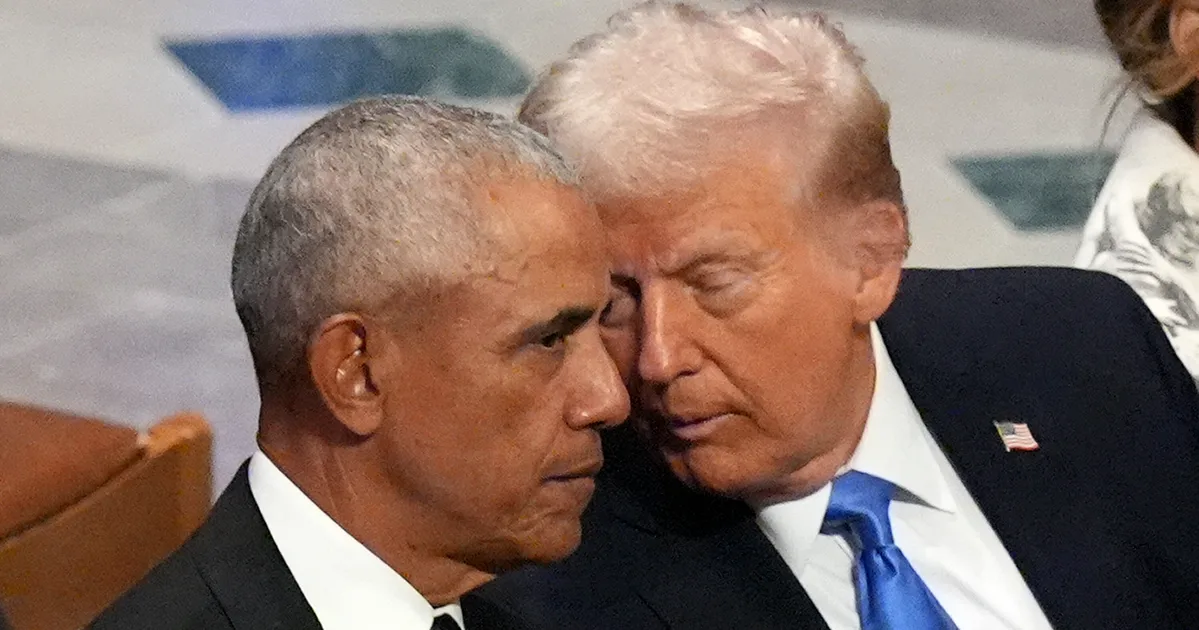
US president Donald Trump isn’t too happy about former President Barack Obama’s recent comments about the existence of extraterrestrials.
In fact, he says the former president’s assertion on a podcast that aliens from outer space are “real” was a “big mistake.”
Obama recently told podcaster Brian Tyler Cohen that ETs are “real, but I haven’t seen them, and they’re not being kept in Area 51. There’s no underground facility unless there’s this enormous conspiracy, and they hid it from the president of the United States.”
In addition, presidential daughter-in-law Lara Trump claimed Trump already has a speech about the existence of extraterrestrials ready to engage during a podcast interview on Wednesday.
But White House press secretary Karoline Leavitt said the same day that “a speech on aliens would be news to me,” while admitting it “sounds very exciting, though.”
Donald Trump didn’t seem very interested in discussing ETs when reporters questioned him on the topic Thursday.
In fact, he turned a question by Fox News’ Steve Doocy about Obama’s alienating remarks into an attack on the former president.
After Doocy asked, “Barack Obama said that aliens are real. Have you seen any evidence of non-human visitors to earth?” Trump fired back, “Well, he gave classified information. He’s not supposed to be doing that.”
Doocy then asked the obvious follow-up question, “So aliens are real?” but Trump did not address the question directly.
“I don’t know if they’re real or not,” Trump said. ”[Obama] made a big mistake.”
Trump’s seeming lack of interest in extraterrestrials sets him apart from other presidents.
Bill Clinton reportedly tried to get answers about Area 51 when he was in office, while Jimmy Carter and Ronald Reagan both reported actually seeing UFOs, according to Politico.

NI council’s new vegetable oil fuel costs kept hidden from ratepayers

NSW Announces Plans to Introduce Minimum Age Requirement for E-Bike Riders

What Causes Social Anxiety And What Can Help Sufferers


-

 Video4 days ago
Bitcoin: We’re Entering The Most Dangerous Phase
-

 Tech5 days ago
Luxman Enters Its Second Century with the D-100 SACD Player and L-100 Integrated Amplifier
-

 Crypto World3 days ago
Can XRP Price Successfully Register a 33% Breakout Past $2?
-

 Sports3 days ago
GB's semi-final hopes hang by thread after loss to Switzerland
-

 Video8 hours ago
XRP News: XRP Just Entered a New Phase (Almost Nobody Noticed)
-

 Video7 days ago
The Final Warning: XRP Is Entering The Chaos Zone
-
 Tech3 days ago
The Music Industry Enters Its Less-Is-More Era
-

 Business2 days ago
Infosys Limited (INFY) Discusses Tech Transitions and the Unique Aspects of the AI Era Transcript
-

 Entertainment2 days ago
Kunal Nayyar’s Secret Acts Of Kindness Sparks Online Discussion
-

 Video3 days ago
Financial Statement Analysis | Complete Chapter Revision in 10 Minutes | Class 12 Board exam 2026
-

 Tech2 days ago
Retro Rover: LT6502 Laptop Packs 8-Bit Power On The Go
-

 Crypto World6 days ago
Bhutan’s Bitcoin sales enter third straight week with $6.7M BTC offload
-
 Sports1 day ago
Clearing the boundary, crossing into history: J&K end 67-year wait, enter maiden Ranji Trophy final | Cricket News
-

 Crypto World7 days ago
Kalshi enters $9B sports insurance market with new brokerage deal
-

 Entertainment2 days ago
Dolores Catania Blasts Rob Rausch For Turning On ‘Housewives’ On ‘Traitors’
-

 Business2 days ago
Tesla avoids California suspension after ending ‘autopilot’ marketing
-
 NewsBeat5 days ago
The strange Cambridgeshire cemetery that forbade church rectors from entering
-

 Crypto World2 days ago
WLFI Crypto Surges Toward $0.12 as Whale Buys $2.75M Before Trump-Linked Forum
-
 NewsBeat5 days ago
Man dies after entering floodwater during police pursuit
-

 Crypto World13 hours ago
83% of Altcoins Enter Bear Trend as Liquidity Crunch Tightens Grip on Crypto Market