

Politics
This week proved wokeness ain’t dead yet


Rather than being dead, or in the process of dying, wokery remains very much alive. In fact, the corrosive politics of identity is in rude health.
We saw this in evidence this week with the news that the authorities refused to detain the Nottingham triple killer Valdo Calocane because they were fearful of the ‘over-representation of young black men’ in custody. We saw it in the pious and hysterical response to the Tourette’s activist who uttered the n-word at the BAFTAs. The politics of identity were openly weaponised by the Greens at the Gorton and Denton by-election, who in releasing a campaign video in Urdu, both stoked and helped to entrench sectarian divisions in this country. And it arrived with the news that rather than being a fading presence, the rule of diversity, equity and inclusion (DEI) in the workplace is a more imposing behemoth than ever.
According to a report by the Policy Exchange think tank, the human-resources industry – that chief purveyor of DEI doctrine – now costs businesses an estimated £10 billion a year, having swelled its numbers in the UK by over 80 per cent between 2011 and 2023. Arguing that measures such as diversity-hiring targets ‘reduce productivity’ and ‘create division’, Policy Exchange calls for the government to repeal the ‘positive action’ provisions in the Equality Act, which permit programmes aimed exclusively at minority groups.
The fact that DEI still wields such power in Britain, abetted and enforced by state legislation, goes against the accepted narrative. Ever since the beginning of last year, when Donald Trump opened his new presidency with an assault on DEI measures in government, many have felt confident to declare that woke is over. Yet headline after headline continues to remind us that this is not the case.
Woke is not dying because the society that spawned it has not changed sufficiently. Hyperliberalism was the fruit of a culture in which vaunting one’s compassionate politics towards the downtrodden was a surefire means to achieve higher status, a society which valorised the plight of minorities, feelings and victimhood.
Showing empathy for victims, speaking on behalf of them, or aspiring to be a victim oneself: this remains a core virtue. Whether you are seeking to ally yourself with ethnic minorities, the colonised, the Global South, women, trans people, the disabled, or the neurodiverse, the currency of victimhood is just as valuable as ever. This fundamental ethos of Western culture has scarcely changed since the 1990s, the decade when people started to notice the new prestige attached to victimhood.
Victimhood has never gone out of fashion because it’s so personally advantageous. To be a victim or to cosplay as one allows one the luxury of self-righteousness. The outrage goblins crying racism over the BAFTAs incident are little different to the guests on Kilroy back in the 1990s who used to holler: ‘How would you like it if you were raped?’ Having fortified oneself with bullet-proof sanctimoniousness, victimhood status grants the possessor the liberty to behave in whatever fashion they please, no matter how awful or unpleasant that might be.
To be a victim gives the holder of this position permission to forever talk about themselves with melodramatic self-pity. To be a victim is to be in touch with one’s feelings, to be governed by feelings and to seek to legislate through feelings – to oppose ‘hate’ and ‘hurt’, ‘fascists’ and ‘racists’. To be a victim is to be on the right side of the cosmic battle between good and evil.
That’s why DEI programmes remain, and elite ‘anti-racism’ has never been more sinister. Wokery is not going away, because being the victim allows you to get away with so much.
The fury of the London diaspora
The interminable debate as to whether London has become a hellhole may not be to everyone’s interest. But it does matter, because London is one of the most important cities in the world, and because it has undoubtedly changed in recent decades.
Whether you think the place has improved or deteriorated often depends on your politics. Those who retain a sunny perspective on its fortunes tend to be more progressive, and live in its affluent, unchanged and mostly white enclaves. Those who are inclined to see it as having become a crime-ridden and Balkanised basket case tend to lean to the right and tend to live outside of it.
This polarity broadly holds true. Yet the quarrel over London’s decline is often less one between the capital and the periphery, between left and right, and more between resentful ex-Londoners and current London residents.
The rancour directed at London these days doesn’t so much come from Yorkshire or Newcastle, from places that have never cared much for the capital anyway. It emanates from places such as Kent and Essex, from those adjacent places inhabited by millions of those who have departed the capital in the past two decades, many having upped and left owing to the now exorbitant price of living there. Their resentment at having felt pushed out of their hometown is aggravated by the huge number of outsiders who now live where they once did – either wealthy incomers from the provinces, financial types from the global elite or the unprecedented number of migrants.
To understand why they are sometimes given to exaggerate London’s downfall, or are liable to be rosy-eyed about its recent past, you have to understand where this resentment is coming from. They believe their home has been taken from them. That’s what rankles.
Why the far left is turning to violence
The brutal killing of a far-right activist in Lyon by far-left street-fighters earlier this month has sent France into a period of grim introspection. Many are now asking the question: why are ‘anti-fascists’, who purport to be the good guys, so fond of violence?
One French eco-feminist politician has an explanation. She blames the killing on a culture of ‘virility’ within the left. Writing in Libération at the weekend, Sandrine Rousseau of the French Greens called upon her country’s left to recognise and condemn the ‘white masculinity’ systemic in French politics, exhorting the left to become more feminised as a counterpose.
Blaming masculinity for a political murder is a predictably trite response for our times. But there’s a more obvious diagnosis. The far left today loves violence because those with righteousness on their side think anything is permissible, if it’s done for the right reason.
Patrick West is a columnist for spiked and author of Get Over Yourself: Nietzsche For Our Times (Societas, 2017). Contact him on X at @patrickxwest.

The only stat she needs to remember is Labour came third…


DALLAS — When President Donald Trump pops up in Texas for an event at the Port of Corpus Christi on Friday, he’s not expected to put his finger on the scale in the closely watched Republican Senate primary between incumbent John Cornyn, state Attorney General Ken Paxton and Rep. Wesley Hunt — all of whom will be in attendance.
But Trump’s 2024 presidential campaign team’s involvement with Cornyn’s reelect is opening a fresh wound for some pro-Paxton MAGA types.
Tony Fabrizio, Trump’s top pollster, is working for Cornyn’s campaign, and Chris LaCivita, one of Trump’s top campaign hands, works as a senior adviser for the pro-Cornyn super PAC Texans for a Conservative Majority. Steve Bannon, the longtime MAGA torchbearer, has taken issue with Fabrizio and LaCivita’s involvement.
“My belief is the Trump team should have stayed out of this race, absolutely,” Bannon told POLITICO from a rented ranch in North Texas, where he’s been broadcasting his “War Room” show.
Asked about Bannon’s criticism of their involvement with Cornyn’s reelection efforts, Fabrizio did not respond — but LaCivita texted POLITICO a fiery reply: “Associating with Senator Cornyn is better than being a lacky [sic] for Epstein,” he said, an apparent reference to Bannon’s newly surfaced ties to the late convicted sex offender Jeffrey Epstein.
The Justice Department’s release of documents in January revealed extensive exchanges that Epstein had with Bannon as he mounted a political influence campaign across Europe. Bannon has said little publicly about his relationship with Epstein, but he did previously call for an independent investigation into the files. Bannon didn’t respond to a request for comment on LaCivita’s response.
The intraparty conflict also foreshadows what’s likely to be an increasing number of such battles for the future of the Republican Party. Bannon, who’s all in for Paxton, is portraying the expected runoff between Paxton and Cornyn as nothing less than the battle for the soul of MAGA.
“The Paxton situation is critical, because he has been the MAGA guy since Day One,” Bannon told Playbook. Paxton, Bannon said, is more than just a candidate in a contested GOP primary. “He is a symbol of the heart of the grassroots MAGA movement.”
A White House official told POLITICO “the president is neutral until he’s not,” and added that “John Cornyn votes with the President.”
LaCivita declined to share the backstory of how he and Fabrizio ended up working with Cornyn.
But the White House doesn’t seem bothered. “We don’t regulate the business/political choices of private individuals — if they are a part of our world — in a race where the President is neutral,” the White House official said.
Like this content? Consider signing up for POLITICO’s Playbook newsletter.
Politics
Adrian Lee: The Origins of political insider trading – the Marconi share scandal of 1912-1913
Adrian Lee is a solicitor-advocate in London, specialising in criminal defence, and was twice a Conservative parliamentary candidate.
The past two months has seen the Epstein scandal from across the Atlantic start to impact upon U.K. politics.
Despite media focus on the mysterious Jeffrey Epstein for the past seven years, until now, the scandal had principally touched British public life via speculation regarding the former Prince Andrew’s relationship with a young lady called Virginia Roberts (later Giuffre) in 2001. What changed matters in January 2026 was the publication of a series of emails allegedly showing Peter Mandelson, when serving as a Cabinet Minister in Gordon Brown’s government, contacting his then friend Epstein and informing him of sensitive financial information regarding the British government’s tax plans and their intention to sell £20 billion in assets. A few days later, more emails to Epstein emerged, this time sent by the former Prince Andrew, then acting as a trade envoy, allegedly attaching confidential reports regarding “high value commercial opportunities” in Afghanistan.
The clear implication is that Epstein was being tipped the wink so that he could adjust his investments portfolio accordingly. Within days, this potential “insider trading” affair was being described as the greatest British political scandal of our lifetimes, worse than Stonehouse, Thorpe or even Profumo. Few, however, mentioned that insider trading scandals have a long pedigree in this country, and virtually no commentator referenced the infamous Marconi Shares Scandal of 1912-1913.
To give some political context to the Marconi Scandal, it is worth reminding the reader of the difficulties faced by H. H. Asquith’s Liberal Government at the time this furore broke. In 1906, under Sir Henry Campbell-Bannerman’s leadership, the Liberal Party had won a colossal landslide in the General Election. With over 400 Liberal M.P.s returned and the Conservative Party (leaderless after Balfour had lost his constituency) reduced to just 129, there seemed to be no prospect of curtailing their radical agenda. However, times change. Within two years, Campbell-Bannerman had retired and, shortly after, died, to be replaced by Asquith. The People’s Budget had split the country down the middle, as did the subsequent plan for House of Lords reform.
The two General Elections of 1910 destroyed the Liberal’s majority and left the government dependent upon Irish Nationalists’ support in the Commons. This in turn led to the Liberals proposing their Third Irish Home Rule Bill, with the resulting debate taking the Kingdom to the brink of civil war. By 1912, with Bonar Law’s Conservatives enjoying a renaissance, the women’s suffrage campaign becoming increasingly militant and the Ulster Unionists preparing for the fray, the heady days of 1906 were but a distant memory. Unsurprisingly, the Marconi Scandal was perceived as the final straw for the government, but let’s return to the beginning of the affair.
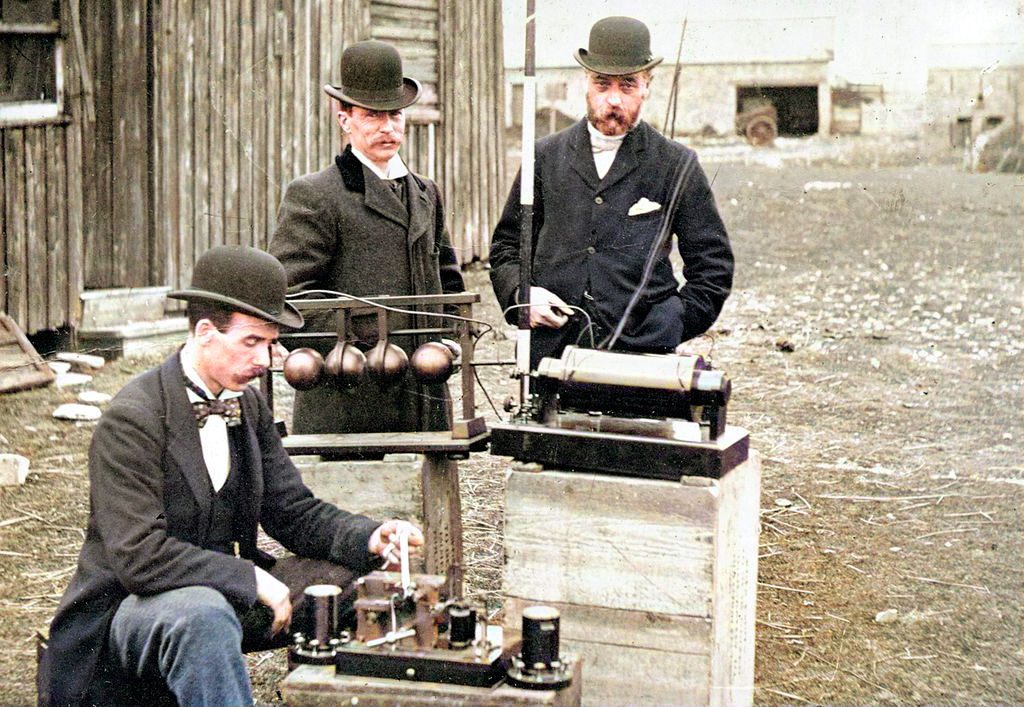
Guglielmo Marconi was a brilliant Italian entrepreneur and inventor who in 1894, at his family’s estate in Bologna, started working on the creation of a communications system based upon the transmission of Morse code signals without connecting wires. Just 18 months later, Marconi had transmitted messages over a one-mile distance. Flushed with success, Marconi approached the Italian government to apply for funding to develop his invention, but he never received a response. Frustrated, he then approached the British government, who immediately showed interest and invited him to visit. In early 1896, a 21-year-old Marconi arrived in London in the company of his mother. The British General Post Office (G.P.O.) expressed a keen interest in wireless communications, and so a series of tests were conducted throughout the Summer of that year. A year later, in 1897, he was granted a U.K patent for a new system “…for transmitting telegraph signals via electromagnetic waves using grounded antennas and receivers tuned to specific frequencies.” For the next fifteen years, Marconi concentrated on improving the quality of his invention, extending transmission range and building the company that bore his name.
The British made full use of Marconi’s wireless system, but with an Empire encompassing a quarter of the Earth’s surface, they required even better methods of communication. With war looming between Britain and Germany, there was an increased sense of urgency. Responding to this, in March 1910 the Marconi company formally proposed to the British government that they construct a chain of high-powered transmitters in 18 British Empire territories, thus linking Britain with outposts as far afield as South Africa, India, Canada, Australia and New Zealand. The Committee of Imperial Defence endorsed the idea, and after a very brief and perfunctory tendering process on 7th March 1912, the G.P.O. accepted Marconi’s bid. On 19th July, Herbert Samuel, Postmaster General, announced the full agreement between the government and Marconi in the House of Commons, but something seemed to be amiss.
Members of Parliament were curious as to why full competitive tendering for the contract was by-passed by the Liberal government. Initially, these questions were brushed away by Ministers declaring that Marconi was “the company best qualified to do the job”, but Conservative M.P.s started raising doubts and pointed to the proficiency of competitor companies. Then, in early 1913, all hell broke loose.
It emerged in the press that some British government Ministers had purchased shares in the American Marconi company, a subsidiary of its British parent in early 1912. This was exactly the period in which Marconi share prices soared world-wide, following leaks of the forthcoming award of the British government contract. The Attorney General, Rufus Isaacs, bought 10,000 shares in American Marconi, Alexander Murray, Liberal Chief Whip, invested in 2,500 shares and, most significantly, David Lloyd George, the Chancellor of the Exchequer and future Prime Minister, bought 1,000 shares. Herbert Samuel, the Postmaster General was also alleged to have bought shares in American Marconi, but after an extensive investigation this was proven to be false. However, the press made much of the fact that the Chairman of the British Marconi Company was one Godfrey Isaacs, brother of the Attorney General, Rufus. Finally, a junior Minister, Charles Masterman, Under-Secretary at the Home Office, confessed to purchasing shares in American Marconi. He said that he did so in full knowledge that the government were highly likely to award the construction contract to Marconi.
In October 1912, the House of Commons appointed a Select Committee to investigate the award of the Imperial Wireless Chain contract to the Marconi Wireless and Telegraph Company. With the press revelations regarding share ownership by government Ministers breaking the following year, the inquiry extended its remit to examine conflicts of interest and inside trading. The hearing ran for months and profoundly undermined the Liberal Party’s standing in the country. During this period, the government was trounced in two by-elections, and historians have argued that Marconi contributed to the declining electoral fortunes of the Liberals generally.
When the Select Committee issued its final report on 17th June 1913, it absolved Lloyd George, Isaacs and Samuel of any wrongdoing. The report stated that “…no Minister had been influenced in the discharge of his public duties by any interest he might have had in any of the Marconi companies” and no Minister had engaged in “improper use of any information which came to him in his official capacity.” How did they come to these conclusions? Well, at the time, many pointed to the Select Committee’s composition. The Chairman was Sir Albert Spicer, a Liberal M.P., and six committee members were also Liberals. Interestingly, the report was described as “a majority finding”, supported by seven committee members, but opposed by the rest.
A minority report, drafted by Conservative members Lord Robert Cecil and Leo Amery and issued on 30th June 1913, condemned the lax procurement process and stated that Lloyd George and Isaacs acted with “grave impropriety”. Lloyd George lived to fight another day, but his reputation was now linked in the public mind with corruption. When nine years later he became embroiled in the 1922 Sale of Honours Scandal, it led to the collapse of his coalition government and the termination of his premiership.
The Epstein scandal is likely to rumble on for some time. In this age of electronic communications, the Police will take months forensically examining Mandelson’s old computers and defunct mobile phones. In the end, the Crown Prosecution Service will make an assessment as to whether they have enough evidence to charge.
The matter may disappear from the headlines for a while, but it will return, and it is possible that it will enter Court in 2029, just in time for the next General Election.
Politics
Politics Home | Rayner Says Labour’s Gorton And Denton Collapse Must Be “Wake Up Call” For Party

3 min read
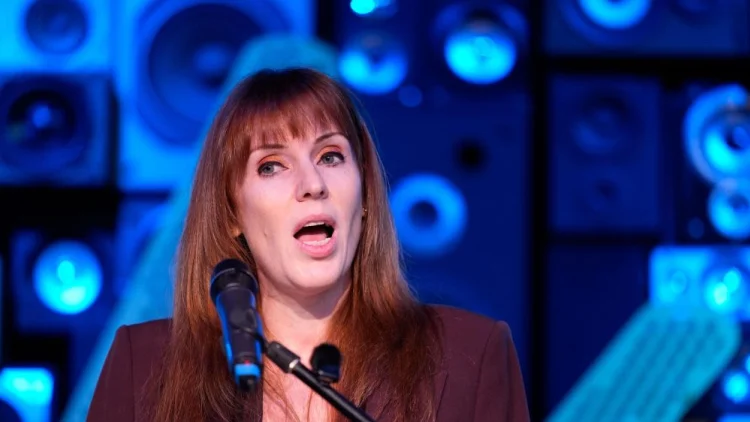
Former deputy prime minister Angela Rayner has said Labour must “really listen” and “reflect” after the party suffered a seismic defeat to the Greens in the Gorton and Denton by-election.
Posting on X on Friday morning, Rayner said the defeat in Greater Manchester “must be a wake-up call”.
Keir Starmer’s party is today reeling after suffering a collapse in a seat that it had controlled for over 100 years.
Labour fell to third place in Gorton and Denton after winning the constituency with over 50 per cent of the vote at the 2024 general election. This time around, the party’s candidate Angeliki Stogia received around 25 per cent of the vote.
The victor was the Green candidate Hannah Spencer, who won around 40 per cent of the vote, further demonstrating the threat to Labour’s left flank posed by Zack Polanski’s “eco-populist” party.
Reform UK candidate, former academic Matt Goodwin, came second.
The scale of the Labour defeat will put renewed pressure on the Prime Minister, and could be a sign of things to come when elections are held in Scotland, Wales and in councils across England in May.
Rayner, who is seen as the current frontrunner to succeed Starmer, posted: “This result must be a wake-up call. It’s time to really listen — and to reflect.
“Voters want the change that we promised — and they voted for.
“If we want to unrig the system, if we want to make the change we were sent into government to make, we have to be braver. A labour agenda that puts people first. That’s what all of us across our movement need to rededicate ourselves to this morning.”
Several union leaders and Labour left MPs have publicly called on the Starmer government to shift further to the left after losing a significant amount of support to the Greens.
Steve Wright, general secretary of the Fire Brigades Union, said: “Labour’s entire strategy of framing politics as ‘it’s us v Reform’ is in tatters after its very first electoral test.
“That approach was rooted in a cabinet pursuing a politically rightward agenda and telling voters they only needed to be marginally less bad than the alternative. That has now been exposed as a fundamentally flawed and unserious strategy.”
The Prime Minister is also facing criticism over the decision taken by him and other senior Labour figures not to let Greater Manchester Mayor Andy Burnham be the party’s candidate in Gorton and Denton.
Burnham said he wanted to stand, but was blocked on the basis that it would mean Labour having to fund a Manchester mayoral election campaign.
Reacting to the by-election result, Mainstream, a soft left Labour group with close links to Burnham, said blocking his candidacy “now looks like a catastrophic error”.
Mainstream’s Interim Council said: “The Gorton and Denton result is an absolute disaster for Labour. Clearly, we now risk no longer being seen as the natural home for progressive voters.
“This loss was avoidable. Angeliki, members and our party staff worked tirelessly, but our leader and sections of the NEC blocked the one candidate who could have won it for us. That decision now looks like a catastrophic error.
“We need an immediate and fundamental reset now.”

Medical signs are signals sent by the body when something is wrong. Unlike symptoms, which we can feel ourselves, signs are usually seen or measured by a doctor. Together, they help us understand what is happening in the body and, if necessary, start treatment in time.
Medical signs are external and internal manifestations of changes in health status.
The female reproductive system consists of internal and external organs. The external organs are collectively called the vulva, and the internal organs are the vagina, uterus, fallopian tubes, and ovaries. Signs of organ dysfunction can manifest both externally and internally. External signs include redness of the skin, swelling, or fever. Internal signs are changes in organ function that cause significant discomfort, such as bleeding. By paying attention to these signals, you can get tested in time and prevent serious problems from developing.Medical signs are reflected in some of our most famous symbols and signs.
Signs related to the female reproductive system
It is especially important for women to monitor the condition of their reproductive system. Any changes, even minor ones, may be a sign that the body needs help or additional examination. These signals help to notice in time that something unusual is happening in the body and requires attention.
These signs include:
- Menstrual cycle disorders: too frequent or, conversely, infrequent menstruation. Sudden changes in the cycle and pain during menstruation indicate a problem.
- Unusual discharge. If vaginal discharge has a strange smell, colour or consistency, for example, if it has become too thick or watery, this may be a sign of infection or other disorders.
- Pain in the lower abdomen. Constant or acute pain in the lower abdomen may signal problems with the ovaries, uterus or other reproductive organs. Sometimes the pain is related to menstruation, but if it recurs frequently or intensifies, it is advisable to see a doctor and get tested.
- Difficulties with conception. If a woman is unable to conceive for a long time despite regular sexual intercourse without contraception, this may be a sign of reproductive system disorders. In such cases, it is also important to consult a specialist to understand the causes and, if necessary, begin treatment.
- Changes in the breasts. Pain, lumps or changes in the shape of the mammary glands can be associated with both the menstrual cycle and more serious diseases such as mastitis or cancer.
The above signs should not be ignored, as they are signals that something is wrong in the body. Regular check-ups with a gynaecologist and self-monitoring of your condition will help you notice changes in time and stay healthy.
Any type of pain (sharp, dull, aching) in the lower abdomen and lower back is a reason to see a doctor. Medical attention is required for uterine bleeding not related to menstruation, bloody discharge in the middle of the cycle, pain or discomfort during intercourse.
If your menstrual cycle has become too long or too short, the amount or consistency of your discharge has changed, or you have itching and burning in the genital area, make an appointment with your doctor. The sooner you get tested and diagnosed, the better your chances of preventing the development of serious diseases.
Medical signs in cancer prevention
Medical signs allow cancer to be diagnosed in women at the earliest stages, when treatment is most effective. Preventive visits to a gynaecologist, mammologist and other specialists allow for the timely detection of breast lumps and atypical changes in the cervix, as well as determining the nature of unusual discharge or bleeding, which can lead to more serious consequences.
Early detection of these signs often saves lives, because in the early stages, many types of cancer have virtually no symptoms. It is important not to ignore the slightest changes and to undergo regular examinations, even if everything seems to be fine.
Important! Ideally, every woman should have an annual check-up with a gynaecologist, or even better, visit this specialist every six months. Following this recommendation helps to diagnose and treat vaginal infections, inflammatory diseases and endometriosis in a timely manner.
Mental well-being and response to stress
Stress and psychological state also affect a woman’s health, including her risk of developing cancer. Chronic stress can disrupt hormonal balance, weaken the immune system and affect the reproductive system.
Medical signs are a kind of ‘signal’ from the body. Sometimes they manifest directly, and sometimes indirectly: for example, through menstrual cycle disorders, constant fatigue, frequent infections, or skin and hair problems. Pay attention to the signals your body sends you. Learn to take care of your mental health, notice problems in a timely manner, and reduce health risks.
Carefully monitor the condition of your reproductive system, which often signals possible disorders in the early stages, including serious diseases. Regular visits to the doctor for preventive examinations, attentive care for yourself, and timely response to any unusual changes significantly increase your chances of staying healthy. Don’t forget about your mental health: stress, fatigue and emotional tension have a negative effect on the body and can manifest themselves in different ways. Simply paying attention to yourself and taking a comprehensive approach to your health will help you live a full life and feel good.

We hope you love the products we recommend! All of them were independently selected by our editors. Just so you know, HuffPost UK may collect a share of sales or other compensation from the links on this page if you decide to shop from them. Oh, and FYI – prices are accurate and items in stock as of time of publication.
It’ll ensure movement is as simple as possible, too; it offers three ergonomic carrying positions, with adjusting sliders for the perfect mixture of flexibility and support.
Aside from being supremely comfortable and easy to use, the Easy Vol. 2 is also great-looking (who said you need to sacrifice style at the altar of practicality?).
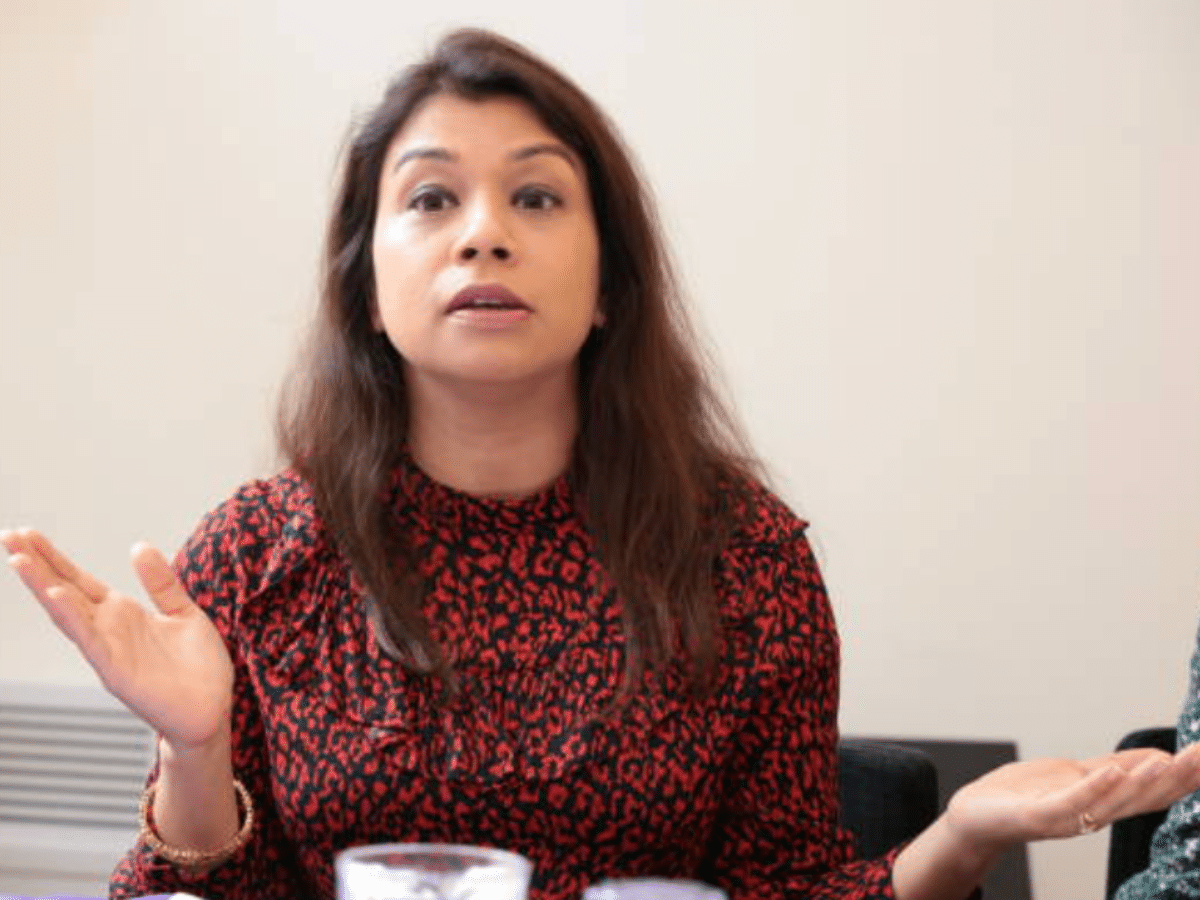
In yet another Labour scandal, MP Tulip Siddiq is facing an Interpol red notice request from Bangladesh. A court has ordered authorities to seek her arrest on corruption charges related to a real estate project.
This follows three previous convictions in absentia sentencing her to six years in prison for separate corruption cases involving her aunt, former Prime Minister Sheikh Hasina.
The Guardian reported that:
Bangladesh’s anti-corruption commission has alleged Siddiq used her relationship with her aunt, the former prime minister Sheikh Hasina, to influence the allocation of a plot of state-owned land in Dhaka’s Gulshan district to a private company. Siddiq has rejected the claim as baseless and politically motivated.
Tulip Siddiq: web of deceit
Of course, Tulip Siddiq is another one of the many considered to be in Peter Mandelson’s circle. Siddiq received a donation of £35,835 from Global Counsel in November 2023.
Mandelson co-owned Global Counsel, a lobbying company that helped corporations “see opportunities in politics, regulation and public policy.” It built “a lucrative business from his political contacts built up while a minister under Tony Blair and Gordon Brown.”
Global Counsel went into administration following the latest Epstein revelations as host of household names — including Tesco, Bank of America, and Barclays fled the “Britain’s most influential public affairs agencies.”
Sharmen Rahman, Green Party spokesperson for Equalities & Diversity, shared the news quipping “Mandelson approved Quality candidates update.”
Mandelson approved Quality candidates update: https://t.co/INBYXjh3My
— Sharmen Rahman (@sharmen_r) February 26, 2026
Seems like Mandelson’s clique can’t catch a break.
Greens have previously also questioned how much Starmer has known about the crimes of colleagues associated with Mandelson:
Questions about Mandelson, his heinous crimes and how much Starmer knew.
Dan Norris, elected as Lab MP, arrested – 2 counts of rape.
Tulip Siddiq sentenced to 4 years.
I wonder why Labour have made 3 attack videos about me in the last 24 hours?
They’re done. Finished. Toast. pic.twitter.com/ZolFdugJyX
— Zack Polanski (@ZackPolanski) February 2, 2026
Bubbling scandal
Siddiq resigned as Treasury minister in January 2025 after Bangladesh’s anti-corruption commission filed a case against her and her family, investigating corruption and embezzlement under her aunt Sheikh Hasina’s ousted regime.
She also referred herself to the independent adviser on ministerial standards, Laurie Magnus, who found she had not breached the ministerial code. As it happens, Magnus is also the man Keir Starmer is calling on to “fast-track” an investigation into Josh Simons, who accidentally leaked to a WhatsApp group that he’s already been told he’s in the clear. Whoops.
So yes, Laurie Magnus will likely be back once again to ahem clear another Labour figure of wrongdoing.
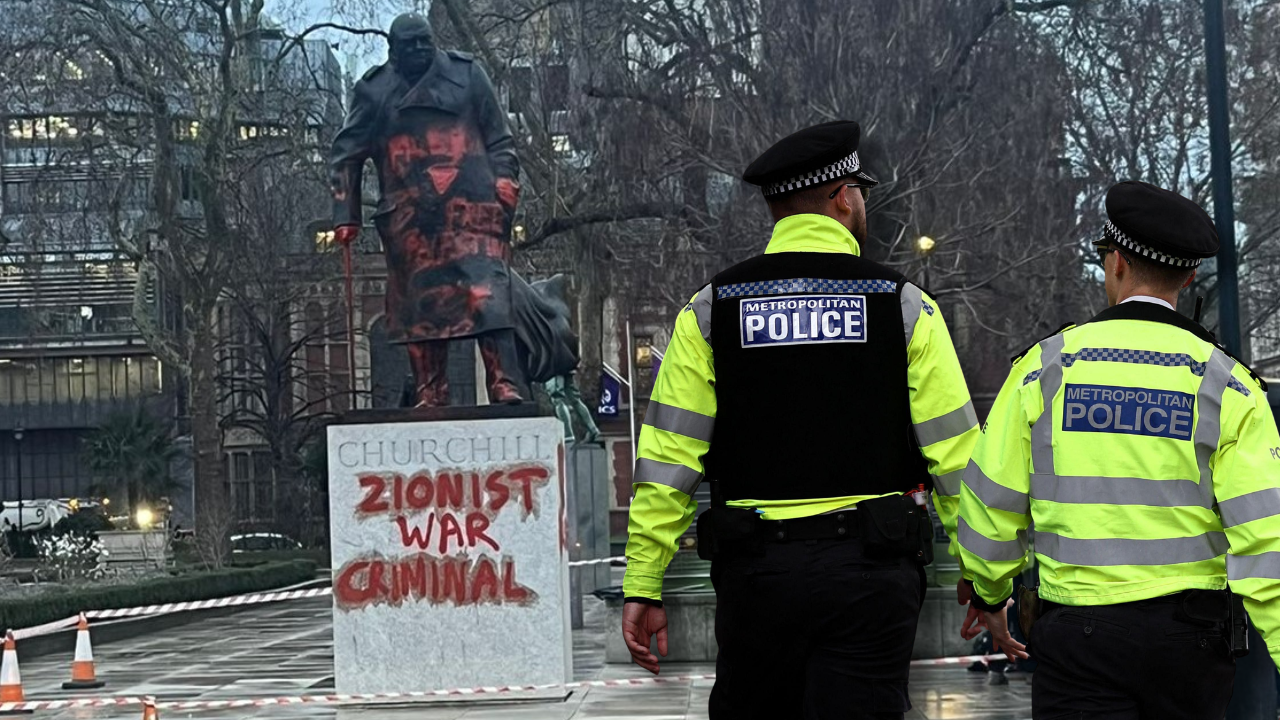
The Met Police has just announced a 38-year-old man has been arrested on suspicion of racially aggravated criminal damage after graffiti was sprayed on the statue of Winston Churchill in Parliament Square.
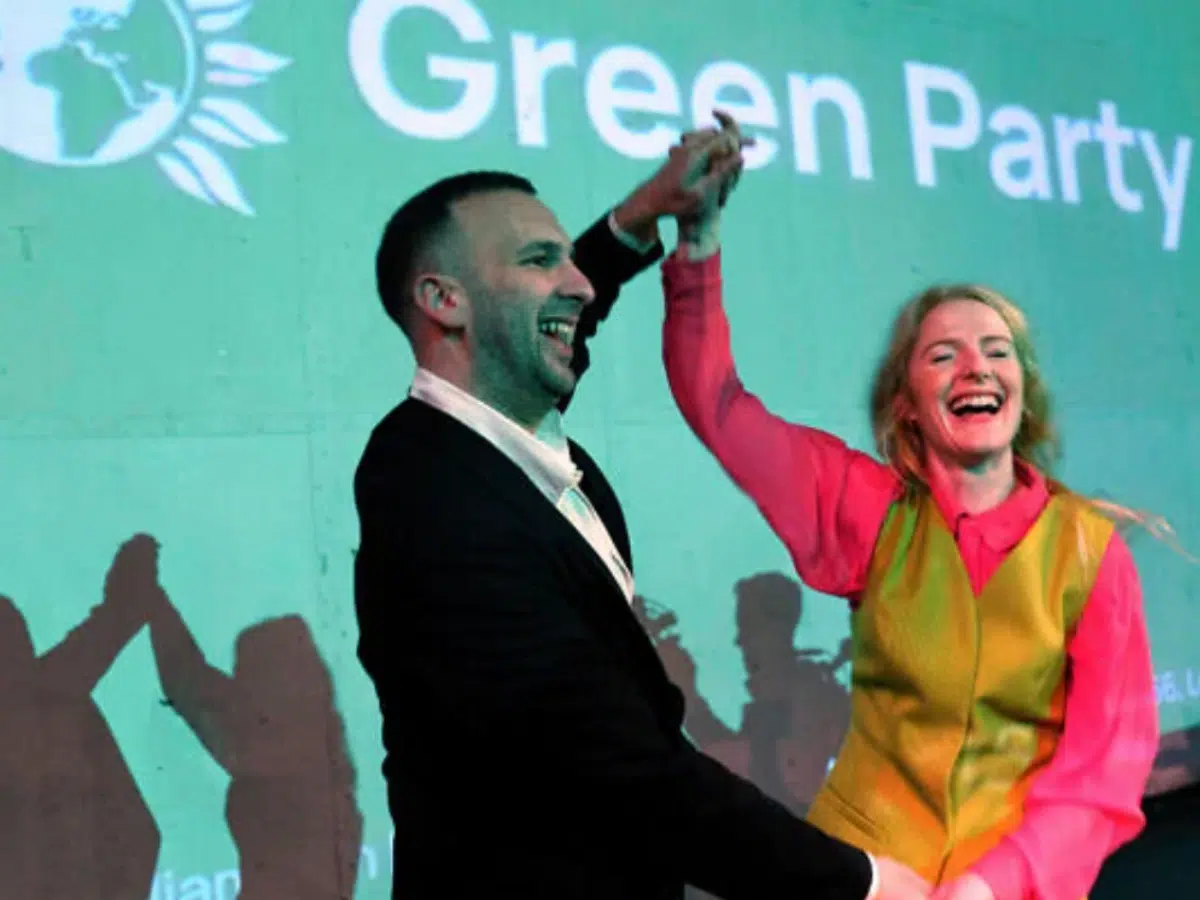
Reform UK’s chairman, David Bull, stated on Newsnight last night, 26 February, that Labour would have won the Gorton and Denton by-election, if only they fielded Andy Burnham in the first place.
Now, that looks a little odd, doesn’t it? The second-place party is giving tips to the third-place party on how to beat them. The Canary has written a great deal about Labour being Reform-lite, but surely giving each other a leg-up is a bit much?
Only, if you were to consider it from Reform’s perspective, it makes complete sense. See, in order for the left vote to split, Labour would actually have to field someone, you know… on the left (yeah yeah, disclaimers to come).
Reform knows that; Reform needs that. It can’t survive the immigrant-bashing right vote being shared between itself, Labour, the Conservatives, and whatever the fuck Rupert Lowe is doing at the time. Or, to put it another way:
Starmer can’t even gift a seat to the far-right on a silver platter without fucking it up.
‘You would have won’
After a by-election that even frothing lefty indie outlets thought was going to be a close-run thing, the Greens ended up taking it by a wide margin.
On Newsnight the night of the by-election, Reform UK’s David Bull said:
Having spoken to lots of Labour voters, if you had fielded Andy Burnham, you would have won. Full stop. But Kier Starmer didn’t want him on the pitch. This is all about the preservation of Kier Starmer. It was a very bad mistake by the Labour Party.
Burnham, the popular Labour mayor of Greater Manchester, announced his intention to run in Gorton and Denton back in January. However, he was swiftly blocked by his party’s ruling body.
Burnham is frequently perceived as a viable left-wing alternative to Starmer for the head of the Labour Party. However, his road to the top would be much easier with a seat in the Commons, rather than the mayorship.
As such, Starmer couldn’t allow him the opportunity of a win. Even, that is, if it meant potentially handing the seat to Reform. Better the far-right than the near-left, ay?
Caveat time
I promised you caveats, and there are of course caveats. Burnham’s credentials as ‘actually left wing’ are severely questionable. Your Party’s Zarah Sultana recently pointed out that:
Andy Burnham played a key role in privatising our NHS while serving as Health Secretary.
Andy Burnham voted for the 2003 Iraq War — an illegal invasion that led to the deaths of over a million Iraqis.
Andy Burnham was a member of Labour Friends of Israel, an apartheid state that has committed genocide against the Palestinian people.
Gorton and Denton deserves a genuinely socialist MP — one who doesn’t vote for illegal wars, stands in solidarity with Palestine and is proudly anti-Zionist.
It’s a mark of how far Labour has fallen that Burnham now represents the leftward section of the increasingly right-wing party. But hey ho.
By contrast, Starmer’s Gorton and Denton pick was councillor Angeliki Stogia. Stogia supports NHS privatisation through ‘Private Finance Initiatives’, and has acted as a corporate lobbyist. Plus, she had Starmer’s backing — basically the right-of-center’s kiss of death.
Stogia won just 25.4% of the vote, in what was once a Labour safe-seat.
‘People are sick of them’
When Newsnight’s presenter Paddy O’Connell asked Zack Polanski if he agreed with Bull’s assessment, the Green leader replied:
No I don’t agree, actually. I think Andy Burnham is still a Labour Party politician, and I think people are sick of them.
Some polling has indeed suggested that Burnham would have won the seat, if he was permitted to run. We can never know precisely how that would have shaken out in real life, because Starmer would clearly rather cut off his own nose than allow the Labour right to lose its stranglehold on the party.
I wrote this piece somewhat tongue-in-cheek, talking about Starmer trying to gift the seat to Reform.
However, on a more serious note, the Green’s Hannah Spencer ran a fantastic campaign, taking an incredible 40.7% of the vote. She deserved the win on her own merit, Burnham or no Burnham. And now, Gorton and Denton has the left-wing MP it deserves.
Meanwhile, as their chairman demonstrated, Reform has been left rattled by Labour’s competition on the right. Personally speaking, they can fucking eat each other as far as I care.
Featured image via the Canary

Yerin Ha has explained why one of fans’ most-anticipated scenes in Bridgerton’s fourth season wasn’t nearly as sexy to film as it was to watch.
The moment in question sees Yerin’s character, Sophie, enjoying a steamy encounter with Benedict, played by Luke Thompson, in a bathtub.
However when it came to filming this sequence, it turns out that languishing in warm water for hours on end to achieve the perfect sex scene comes with occupational hazards.
“Basically I put baby powder all on me because I was told it would help dry my skin to put the intimacy wear on with the tape,” Yerin recently told Capital Breakfast.
“And then basically the next day after the bathtub, I got hives all over my body, and I got folliculitis, so I needed steroid cream.”
She joked: “But I blame myself, because I think it was a combination of baby powder and the bath water. So it’s me, I’m a sensitive gal!”
Benedict chipped in to reveal that the scene took seven whole hours to film. Let it never be said that actors don’t suffer for their art…

The bathtub scene in question was included in the second batch of episodes for Bridgerton season four, which arrived on Netflix earlier this week to mixed reviews from the critics.
Part two follows the developing romance between second eldest Bridgerton son Benedict and maid Sophie, after a complicated road including a masquerade ball, a wicked stepmother, and an absolute misfire when Benedict asked Sophie to be his mistress during a pivotal cliffhanger.
While that’s it for season four, there are at least a couple more series of Bridgerton in the pipeline, as we wait to see which of the remaining siblings’ love story is next.
Showrunner Jess Brownell previously teased who will step up to the plate in seasons five and six of the Netflix Regency drama, leaving fans to guess between Eloise and Francesca, played by Claudia Jessie and Hannah Dodd, respectively.
Bridgerton season four is streaming on Netflix now.

How Newly Released Documents Reveal JPMorgan Bankers’ Ongoing Ties to Jeffrey Epstein

Bitcoin price recovery falters, drops to $67k as popular analyst predicts major crash

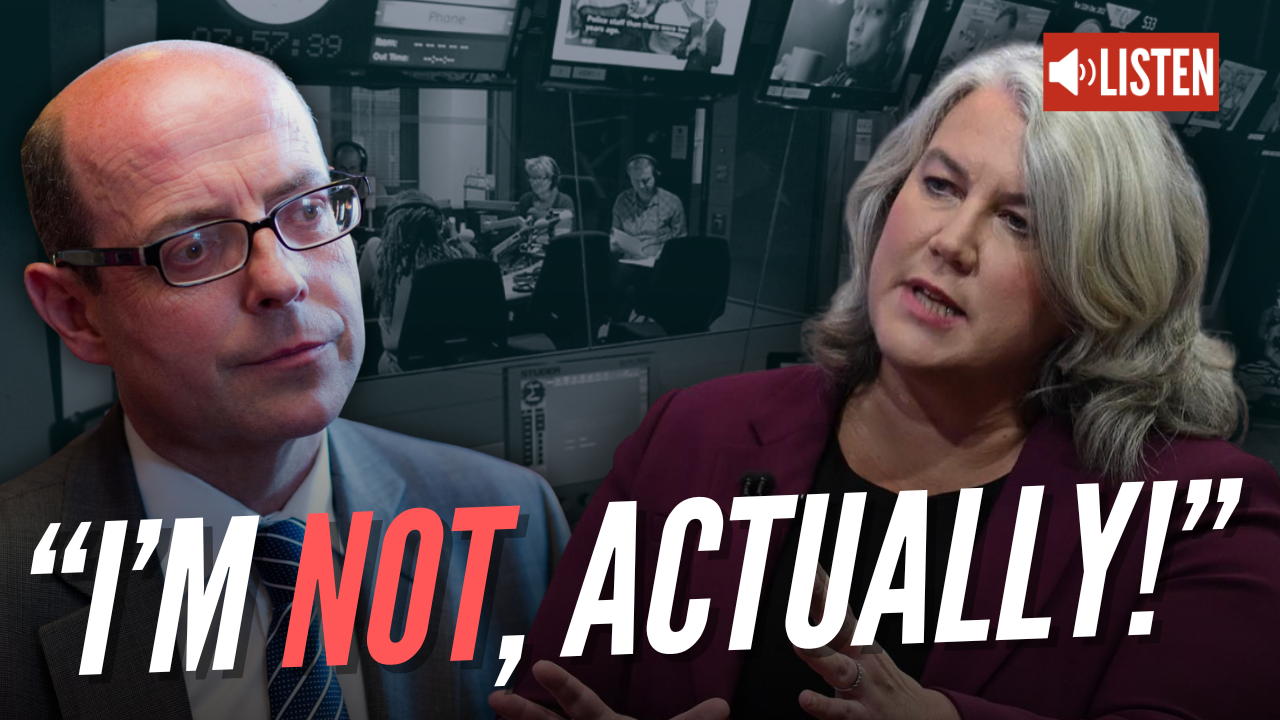
LISTEN: Nick Robinson Accuses Heidi Alexander of Reading Script in Car-Crash Interview


-

 Politics5 days ago
Baftas 2026: Awards Nominations, Presenters And Performers
-

 Fashion7 days ago
Weekend Open Thread: Boden – Corporette.com
-

 Sports4 days ago
Women’s college basketball rankings: Iowa reenters top 10, Auriemma makes history
-

 Politics4 days ago
Nick Reiner Enters Plea In Deaths Of Parents Rob And Michele
-

 Business3 days ago
True Citrus debuts functional drink mix collection
-

 Politics11 hours ago
ITV enters Gaza with IDF amid ongoing genocide
-

 Crypto World3 days ago
XRP price enters “dead zone” as Binance leverage hits lows
-

 Business5 days ago
Mattel’s American Girl brand turns 40, dolls enter a new era
-

 Business5 days ago
Law enforcement kills armed man seeking to enter Trump’s Mar-a-Lago resort, officials say
-

 Tech3 days ago
Unsurprisingly, Apple's board gets what it wants in 2026 shareholder meeting
-
 NewsBeat2 days ago
Manchester Central Mosque issues statement as it imposes new measures ‘with immediate effect’ after armed men enter
-

 NewsBeat1 day ago
Cuba says its forces have killed four on US-registered speedboat | World News
-
 NewsBeat4 days ago
‘Hourly’ method from gastroenterologist ‘helps reduce air travel bloating’
-

 Tech5 days ago
Anthropic-Backed Group Enters NY-12 AI PAC Fight
-

 NewsBeat5 days ago
Armed man killed after entering secure perimeter of Mar-a-Lago, Secret Service says
-

 Politics5 days ago
Maine has a long track record of electing moderates. Enter Graham Platner.
-
 NewsBeat3 days ago
Police latest as search for missing woman enters day nine
-

 Business1 day ago
Discord Pushes Implementation of Global Age Checks to Second Half of 2026
-

 Crypto World3 days ago
Entering new markets without increasing payment costs
-

 Business14 hours ago
Only 4% of women globally reside in countries that offer almost complete legal equality