
Politics
Trump always lets his friends and allies down, and has now doomed himself


“You always knew precisely where you stood with him because he always let you down.” Friends and allies of Donald Trump have ample cause to echo David Niven’s remark about Errol Flynn.
By far the most important of those friends and allies are the American people. They have twice elected Trump their President. To his supporters he offered an irresistible chance to humiliate the condescending liberals who neither knew nor cared what unfashionable Americans thought.
Trump also appealed to the isolationism which has always been a powerful current in American opinion, often the dominant one, expressed not only by the refusal of the American people to go to war in 1914 and 1939, but by no less a figure than George Washington in his tremendous Farewell Address in 1796:
“Why, by interweaving our destiny with that of any part of Europe, entangle our peace and prosperity in the toils of European Ambition, Rivalship, Interest, Humour or Caprice?”
Trump promised to put America First, never to sacrifice American lives and treasure in foreign wars, and in a primary debate in 2016 described George W Bush’s Iraq War as “a big fat mistake”.
By attacking Iran, Trump has broken this promise and betrayed his supporters. As the conservative American commentator Christopher Caldwell observes in a piece for The Spectator,
“The attack on Iran is so wildly inconsistent with the wishes of his own base, so diametrically opposed to their reading of the national interest, that it is likely to mark the end of Trumpism as a project.”
The price of petrol has shot up, bringing the war to the attention of American voters every time they fill up their cars, and this sharp rise in the cost of living is something the President cannot justify to them.
Nor can he justify the war to the wider world. No clear war aims were worked out before embarking on this adventure, so no clear war aims can now be stated, especially as the war itself is full of complications which an informed observer might have foreseen, but which were not dreamed of in Mar-a-Lago.
Were the claim by some that he acted at the behest of the Israelis true, this would in no way exculpate him. The responsibility for American involvement plainly rests with the President. The buck stops with Trump.
The President attempts to distract us from questions about morality and responsibility by playing to his undoubted strengths as a reality TV performer.
To go on winning at that tawdry game you have to go on being more disgusting than the other performers, again and again outdoing them in bad taste, and you also need at frequent intervals to change the subject, or the viewers will get bored and switch over to another channel.
Trump needs to find a quick end to the war or else American voters will switch over, and at the mid-term elections in November will turn him into the lamest of lame ducks.
The Iranian regime knows this, and can play for time.
Nobody can be certain how the war will end. How delighted one would be if the present regime in Tehran were to be overthrown and replaced with a constitutional monarchy which is on good terms with its neighbours.
But even Trump holds back from promising such a happy outcome. Much more likely, at the best, is an unhappy deal which restores freedom of navigation in the Gulf, gets a certain amount of oil and gas flowing once more through the Strait of Hormuz, but leaves open the danger of further disruption.
Freedom of navigation is and always has been in Britain’s interest, and we ought to be willing to play a full, long-term part in restoring and maintaining it in the Gulf.
We need to remember that Trump is not eternal, and that our policy should not be distorted by vain attempts to conciliate him. Channel 4 has just broadcast a three-part series, The Tony Blair Story, which recounted that Prime Minister’s energetic and in the short term triumphant campaign after the attack on the World Trade Center on 11th September 2001 to get closer than any other foreign leader to President George W Bush.
From that flowed Blair’s decision to deploy British troops alongside the Americans in the invasion of Iraq, followed by the discovery that no plans had been drawn up for the country once Saddam Hussein had been overthrown.
The Channel 4 programmes show a vulnerable old man who longs to convince us that a quarter of a century ago he did the right thing, but instead demonstrates that an air of moral seriousness, though much less vulgar than Trump’s antics, does not necessarily lead to wise decisions.
Sir Keir Starmer began by getting on surprisingly well with Trump, and hoped to follow up this success by sending Peter Mandelson to Washington.
It is curious to reflect that this manoeuvre may instead precipitate Starmer’s downfall.
Nor is his relationship with Trump as good as it was. The President now says, “Keir was willing to send two aircraft carriers after we’ve won,” and adds, “Unfortunately Keir is not Winston Churchill.”
Which prompts the thought that Trump is not Franklin D Roosevelt.

On 8 April, the Nursing and Midwifery Council announced plans to embed “anti-racism principles” in midwifery teaching across UK universities. The move forms part of an effort to tackle the health crisis among Black and brown individuals during childbirth.
As part of its announcement, the Nursing and Midwifery Council acknowledged recent, shocking figures from campaign group Mothers and Babies: Reducing Risk through Audits and Confidential Enquiries across the UK (MBRRACE-UK). They stated that:
Black women are three times more likely to die during pregnancy or in the immediate postnatal period, and maternal mortality rates for Asian women are 1.3 times as high compared with White women. The figures also show that Black babies are over twice as likely to be stillborn as white babies – with Asian babies 50% more likely to be stillborn.
Interim Amos report
These results were further supported by similar findings from the Health and Social Care Committee, Five x More and Birthrights. Likewise, back in June 2025, the government announced an independent, national investigation into NHS maternity and neonatal services.
Valerie Amos, a Labour member and baroness of the House of Lords, is chairing the inquiry. Amos’ interim report, published in February, was damning in terms of structural racism, discrimination, and inequalities, causing a “notably higher risk of adverse outcomes” for Black and Asian parents.
This discrimination against racialised parents is hardly new information. However, Amos shed light on just how little improvement there has been in this regard, reporting that:
Babies of Black ethnicity are more than twice as likely to be stillborn, and are at increased risk of preterm birth and neonatal admission at term when compared with White babies. Neonatal mortality rates are also higher for Black and Asian babies compared with White babies, and there is variation in neonatal care delivery between ethnic groups.
Stereotyping from clinical staff was also a frequent issue. Black patients reported being treated as though they were tolerant to pain due to their “tough skin”. Meanwhile, Asians were stereotyped as “princesses” who were too demanding and unable to handle pain.
‘A national emergency’
Paul Rees, the Nursing and Midwifery Council’s interim CEO and registrar, explained:
Black and Asian women are more likely to die during pregnancy or in the immediate postnatal period, and their babies are more likely to be stillborn.
The situation is totally unacceptable and is a national emergency.
To help tackle the Black maternal health crisis we’re calling on our education partners to embed the new principles which will enable us to embed anti-racism, bias awareness and cultural curiosity, safety and respect across all midwifery education in the four countries of the UK.
We hope that this initiative will make a real difference, meaning that Black, Asian and minority ethnic mothers, babies and families have a far better experience of maternity care across the four countries of the UK.
Although individual universities design their own curricula for midwifery, they have to conform to the Nursing and Midwifery Council’s standards. As such, the council approves and keeps watch on training programs across the UK.
As part of its new push to improve outcomes for Black and Brown people during childbirth, the Nursing and Midwifery Council has stated that it will:
work with all universities delivering midwifery education, to make anti-racism, bias awareness and cultural curiosity, safety and respect more explicit in their curricula.
The council plans to publish the final version of its new guidance later in the spring. Over the coming weeks, it will workshop the document with the help of Black and Brown people with “lived experience of poor outcomes” in maternity services.
‘An urgent priority’ for the Nursing and Midwifery Council
The Royal College of Midwives (RCM) Nursing and Midwifery Council is also supporting the in its endeavor, alongside running its own ‘Race Matters’ campaign. The initiative’s stated aim is to “dismantle systematic racism within the midwifery profession”.
Gill Walton, chief executive of the RCM, said:
That Black, Asian and minority ethnic women continue to face such stark inequalities in maternity care is a disgrace and tackling this must be an urgent priority for the whole profession. The NMC’s new anti-racism principles are a vital step in the right direction.
This initiative builds on work the RCM has already been doing. In 2023 we launched our Decolonising Midwifery Education Toolkit – the first of its kind, co-created with educators, students and service users – to address the continuing legacy of colonialism within midwifery training. We subsequently developed our Decolonising Midwifery Practice position paper, setting out clear asks for government, NHS Trusts and Health Boards and individual practitioners.
Whilst the Nursing and Midwifery Council’s move toward actively anti-racist teaching is a welcome one, the findings of the interim Amos report show starkly and clearly that midwifery has a long way to go to correct its shocking racial biases.
This must form the foundation for a revolution in the practice, to avoid further prolonging the scandal of Black and Brown peoples’ deaths and serious harm during childbirth.
Featured image via the Canary
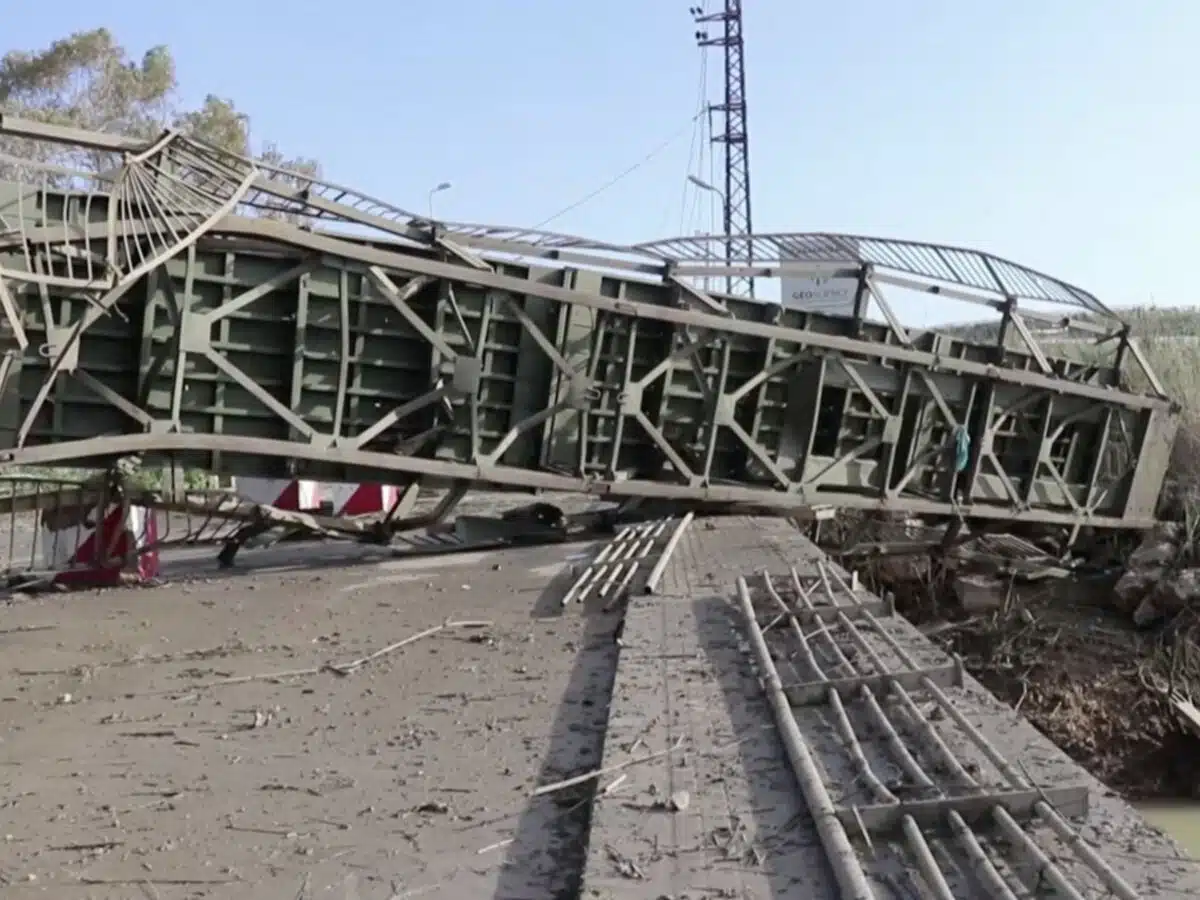
Israel has bombed the Qasmiyeh bridge over the Litani River in Lebanon, in an attempt to cut off a key route between Tyre and Sidon.
The Israeli army has bombed the Qasmiyeh bridge, which connects the cities of Tyre and Saida. The south is now almost completely cut off from the rest of the country. This will cause a humanitarian disaster.
— courtneybonneauimages (@cbonneauimages) April 8, 2026
Israel failed to destroy the bridge. This would have further disconnected Southern Lebanon from Beirut and the rest of the country.
🌲 – 🇱🇧 Lebanese Army reopened traffic on the Qasmiyeh coastal bridge after clearing debris caused by last night’s Israeli strikes.
Families south of the Litani River appeal for evacuation after the area was effectively isolated following its destruction. pic.twitter.com/bjhVxrHXht
— Lebanon News & OSINT (@LebOSINT) April 9, 2026
آثار الغارة التي استهدفت جسر القاسمية البحري ليل أمس.
ــــــــــ pic.twitter.com/DNemSzqWAu— ألأحداث ألإيرانية بالعربية (@iranin_arabic) April 9, 2026
Now, Israel is threatening to bomb the bridge again. Its destruction would cause an even greater humanitarian disaster.
🌲 – 🇱🇧🇮🇱 Mayor of Tyre: Israel is threatening to strike what remains of the Al-Qasmiyeh Bridge, which was attacked and partially damaged last night. https://t.co/uyChoPKGo0
— Lebanon News & OSINT (@LebOSINT) April 9, 2026
War crimes by Israel again
The Qasmiyeh bridge is the last bridge linking the north and south of the Litani River in the Tyre area. Despite Israeli warnings to evacuate, thousands of families are still in the area.
There’s no way to explain the suffering the destruction of this bridge will cause without sounding hyperbolic and the fact that it was intentional should lead to an indictment of war crimes for everyone involved. https://t.co/e1uTlapZfd
— Shane Proteus (@shaneproteus) April 8, 2026
Complete destruction of the bridge would isolate huge parts of southern Lebanon from the capital and the rest of the country. This would make it much more difficult for Lebanon to deliver humanitarian aid to the south. It would also undermine resistance fighters’ ability to travel and defend their sovereign territory.
Of course, this is part of the Israeli Occupation Forces’ (IOF) illegal plan to occupy and depopulate the south.
Northern and southern Lebanon are almost completely disconnected as part of the Israeli military’s plan to occupy and depopulate the south. https://t.co/L5sah174Zj
— Nicola Perugini (@PeruginiNic) April 8, 2026
As always, the end goal is ‘Greater Israel‘, which Israel first mentioned as far back as 1967.
Israel’s goal is the creation of Greater-Israel. They will not stop until they have achieved this goal. They are going to ethnically cleans and occupy whole of Lebanon. This is not about Hezbollah or security, it’s about murdering, expelling people and conquering more land for… https://t.co/UB1pWz3wYq
— Burim Bajrami (@BurimBajrami) April 8, 2026
It is used to refer to the territories Israel illegally stole in 1967: the Palestinian territories, the Golan Heights in Syria, and Egypt’s Sinai Peninsula.
However, Zionists have also referred to it as including all of Palestine, Lebanon and Jordan, along with significant parts of Syria, Iraq, Egypt and Saudi Arabia.
How many genocides does Israel want to add to its scorecard?
They’re about to commit a 2nd genocide. https://t.co/u25ufE1rvX
— Mack V. 실험ᵥᵢᵢᵢ 🟡⚙️ VTuber (@TheMackV) April 8, 2026
What does the international community expect when it has allowed Israel to systematically carpet-bomb Gaza, without repercussions?
I fear we are about to witness another genocide.
Israel has not been held accountable for Gaza, and now we might be witnessing a repeat in Southern Lebanon. https://t.co/aUvVOZ7ezn— Constantine Valdor -The King in Yellow (@Griffinstreaks) April 8, 2026
You have to sanction Israel @UN
It doesn’t matter if USA vetoes – every country must commit. USA can’t punish everyone. https://t.co/6eCkmVPNCL— aharring (@aharring) April 9, 2026
Israel has already displaced over 1.1m people in Southern Lebanon, and killed thousands. But humanitarian disasters are its speciality, and just like in Gaza, it has now created another one in Lebanon.
Israel is a US-backed colonialist project that gets off on killing brown people. Meanwhile, the majority of Western governments continue to whitewash their war crimes in the name of ‘defeating terrorists’. We all know it’s bullshit, but unfortunately, until the international community grows a collective backbone, Israel will continue to get away with committing multiple genocides at the same time.
Feature image via AFP News Agency/ YouTube
Exercise seems to help to manage some of the symptoms of menopause. One study found that women with high and moderate levels of physical activity tended to experience less severe signs than their inactive peers; yoga appears to be one of many great options.
And some research from the University of Exeter has found that Pvolve, an exercise routine that partnered with Friends star Jenifer Aniston in 2023, is linked to better hip function, lower body strength, lean muscle mass, full-body flexibility, balance, mobility, and stability (phew).
That’s key for those facing menopause as these often wane during this life stage.
What is Pvolve?
It’s a form of low-impact resistance training. It uses tools like resistance bands, gliders, ankle weights, and light dumbbells to apply force without straining joints.
These are combined with stability training, including single-leg balances, and bodyweight exercises, like hip hinges and planks.
Sessions last about 35 minutes each.
Resistance training is linked to better bone health, which is crucial for menopausal women, as the changes to their hormones can decrease their bone density.
That leaves you at greater risk of falls and broken bones.
What did the researchers find?
The University of Exeter study involved 72 pre-, peri-, and post-menopausal women. They were all active.
Half of them completed 150 minutes of exercise per week, while the others completed a 12-week Pvolve training plan which increased in intensity over time.
Afterwards, they found that those who did the Pvolve Method had the following advantages over the people doing 150 minutes of exercise:
- 19% increase in hip function and lower body strength
- 21% increase in full-body flexibility
- 10% increase in dynamic balance, mobility, and stability
- Increase in lean muscle.
Speaking to the University of Exeter, the study’s lead author, Professor Francis Stephens, said: “Women often see a decline in their muscle strength and balance shortly before, during and after the menopause. This ultimately increases the risk of falls and fractures later in life, particularly of the hip, which is why it’s so important to find a way for women to maintain that strength and balance as they get older.
“The great thing about these simple resistance exercises is they can easily be performed at home, and we’ve now shown they’re effective at improving strength and balance in women during and post-menopause. In fact, some measures of balance appeared to increase to a greater degree in post-menopausal women, suggesting that these exercises are not hindered by the menopause transition.”

2 min read
Years of decline can’t be undone overnight. But we are making progress.
Before entering Parliament, I worked for the Crown Prosecution Service, building cases against those who had committed serious crimes.
In that role, I saw first-hand the impact crime has on victims, families and communities, but also how much of that harm could have been prevented if the right policing had been in place earlier.
It’s something I hear about constantly from my constituents in Amber Valley, people frustrated by shop theft, anti-social behaviour, and the sense that too often nothing is done. That’s why neighbourhood policing matters so much.
Under the Tories, it was hollowed out. Officers were taken off the streets, neighbourhood teams were cut back, and communities were left to deal with the consequences.
We have all felt the impact of these policy decisions. Shop theft has surged, anti-social behaviour has become a daily frustration, and phone snatching and street crime are increasingly common.
That is the reality this government inherited, and it’s why rebuilding neighbourhood policing has been a clear priority for this government from day one.
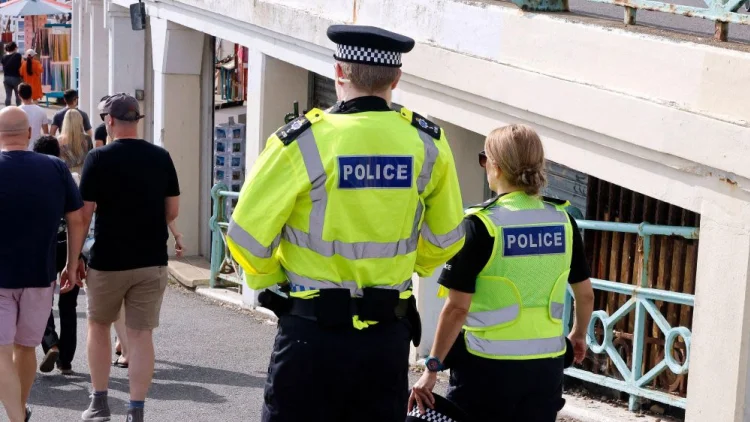
This week’s milestone shows what that looks like in practice. More than 3,000 additional neighbourhood police officers and PCSOs are now in place — two months ahead of schedule — and we’re on track to deliver 13,000 more by the end of this Parliament.
Crucially, we’re already seeing the difference this makes.
I’ve been out on patrol with our safer neighbourhood teams in all three of my towns in Amber Valley and I know many of my colleagues have done the same in their constituencies. I saw the value of the relationships the officers and PCSOs have built up with members of our community. It reminded me of so many cases I prosecuted throughout my career where the offender had only been identified and subsequently brought to justice because people had the confidence to speak to their local police teams about what had happened.
Over just two months this winter, increased patrols led to nearly 18,000 arrests across more than 600 towns and cities. Many of those arrests were for the kinds of crimes people deal with every day: retail theft, street crime, anti-social behaviour. Offences that might not always make headlines but have a huge impact on how safe people feel.
I know that none of this is a quick fix. Years of decline can’t be undone overnight. But after 14 years of neglect, we are finally turning things around.
Linsey Farnsworth is Labour MP for Amber Valley

Donald Trump declared “complete victory” over Iran on Wednesday, five weeks after he joined Israel in bombing Tehran.
He claimed the regime had agreed to a two-week ceasefire in a “big day for world peace”.
The news was met with relief around the world, not least because the US president had sworn to wipe out the whole of Iranian civilisation if the regime did not agree to end the war.
Acting on that genocidal threat would have been a war crime.
Trump had already given Tehran an ultimatum: open the major oil shipping lane, the Strait of Hormuz, by 1am Wednesday (UK time) or the States would take out civilian infrastructure.
Luckily, that moment never arrived after a flurry of diplomacy.
But is it accurate to say these horrifying warnings – after an ill-thought-out and chaotic war – led to a win for the White House?
Or was the president simply desperate for an off-ramp as the global economy went into shock?
Trump claimed just 90 minutes before his deadline was up that Iran had presented him with a “workable” 10-point plan.
Iran said it would be willing to open Hormuz up – an announcement which immediately helped steady fuel prices – but it also proposed charging ships $2 million to travel through the waterway which was previously free.
Trump bizarrely suggested this could be a joint venture, though it seems unlikely the two rivals would partner up.
Plenty of reports claim vessels are still struggling to get through, too, and Iran has threatened “destroy” any ships passing through without permission.
That hardly sounds like a victory.
The White House said at one stage it was pushing for regime change as well, having killed the Supreme Leader, the Ayatollah Ali Khamenei.
But Iran has since installed his son Mojtaba Khamenei as his successor.
Trump also wanted to destroy Iran’s nuclear capabilities so the hostile regime could never build a nuclear bomb with enriched uranium.
However, he already claimed to have wiped out their nuclear capacities in a series of attacks last summer.
Even after this five-week war, Iran still has access to those uranium stockpiles.
Israel is still attacking Lebanon in its war against Hezbollah militants as well, even though Tehran has requested all regional attacks on its allies end.
And, to make matters even worse for Trump, his fury towards Nato – and Keir Starmer in particular – over their refusal to get involved in his Middle East offensive has put US relations under major strain.
During this week’s episode of Commons People, we look at who the real winner of the Iran war seems to be (so far) and what we can expect to happen next.
Listen to find out more below…
And for more context on why the Iran war matters, listen back to our Commons People episode from March 20:
Politics
Politics Home Article | Polanski Says Greens Should Be Braced For Candidate Vetting Problems

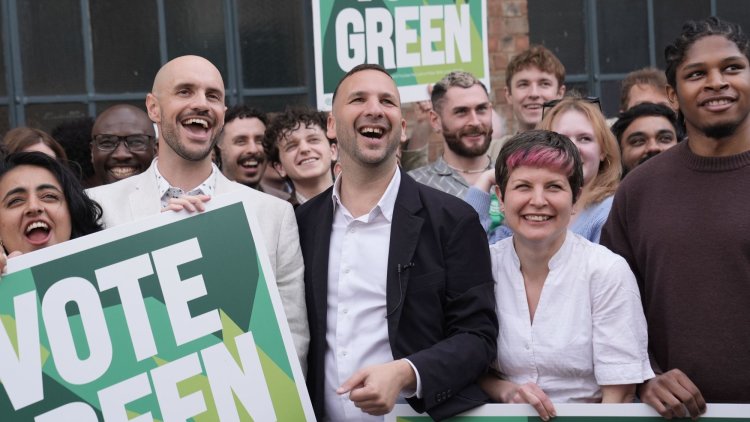
(Alamy)
4 min read
Zack Polanski has acknowledged that the Greens may face issues when it comes to vetting candidates due to the speed of the party’s growth.
Speaking to PoliticsHome at the party’s local elections campaign launch on Thursday, Polanski said that the party was dealing with an “immense amount of people very quickly” in its bid to field candidates in Scotland, Wales and council areas across England next month, adding: “I won’t be surprised if we have the odd candidate where we have to distance from them.”
The Greens launched their local elections campaign in London, where the party is expected to make significant gains next month, particularly at the expense of Keir Starmer’s Labour.
After dealing a seismic electoral blow to Labour by winning the Gorton and Denton by-election in February, the Greens are hopeful of seizing control of Lambeth, Islington, Southwark and Hackney councils when voters go to the polls on Thursday, 7 May.
The Greens have surged in the opinion polls since Polanski became leader in September, and now the party is tasked with finding people to stand as candidates across the country.
In an interview with PoliticsHome, the Green leader admitted that vetting such a large number of people in a matter of weeks was a “real challenge”.
“I also recognise we’re dealing with an immense amount of people very quickly, and so I won’t be surprised if we have the odd candidate where we have to distance [ourselves] from them,” he said.
The London Assembly Member continued: “I’m not planning to do that. But also, I’m recognising up front that it is a challenge that you suddenly accept thousands of people and you say, ‘okay, we’re putting your name on a ballot paper’.
“So we’re doing everything we can to make sure we’re doing due diligence. We’ll continue to do that. We’re not being complacent about it for a second and recognise the scale of the task that’s in front of us.”
Polanski predicted that his party would record its best-ever local elections results next month.
As well as winning councils in London, the Greens are expected to make gains across the country, and could be in a position to form a government with Plaid Cymru in Wales.
In his speech this morning, Polanski sought to focus on the affordability of London housing, telling reporters that he would be happy for Green councillors to block developments if they deemed them to be luxury properties, rather than affordable homes.
“We do have a housing crisis, but what we also have is an affordability crisis, and it’s about making sure we build the right homes, at the right price, [in] the right place.
“And what we see far too often with Labour councils is building luxury, unaffordable buildings that no one’s ever going to live in, often knock down communities or destroy communities that are already there in the name of regeneration, but don’t actually replace the homes with affordable homes or council homes.”
Labour has accused Polanski of blocking necessary house building. A van parked outside his press conference this morning, organised by Starmer’s party, accused the Greens of opposing over 40,000 homes.
The Green leader also used his speech to reiterate his criticism of the US and Israel in their war with Iran and Israeli strikes on Lebanon.
“Israel are behaving in a completely uncontrolled way, in a way that they seem to believe they have complete immunity to any kind of sanction or any kind of criticism,” he said, urging the government to completely withdraw the UK from its trade deal with the country.
He asked what Israel would “actually have to do” for the UK to say it is “a country that is behaving like a rogue state”.
“Any community that cares about international law needs to come together and say, ‘this is not acceptable’. We need to do everything we can to stop it. And of course, that relies on pulling every sanction, every arms embargo that we could make, to make sure that Israel can’t continue to murder innocent people.”
Foreign Secretary Yvette Cooper and Defence Secretary John Healey today both urged Israel to stop attacking Lebanon as the UK and other countries try to bring peace to the Middle East and the resumption of vital traffic through the Strait of Hormuz.
Alert readers will have noticed something of a furore in recent days around a boneheaded Scottish Greens candidate (as if there were any other kind) calling for the complete abolition of prisons.
So far Kate Nevens – who on the latest polling has a reasonable chance of being elected on the list – has resisted calls to step down, which is probably for the best as, incredibly, her replacement would be even worse.

With the implosion of Your Party concentrating the nutter vote firmly in Green hands, the next term of the Scottish Parliament is set to feature the worst array of MSPs in Holyrood’s history, with almost everyone in the SNP with any sort of ability or experience resigning to be replaced by hyper-obedient young party drones, while the opposition are mostly putting forward the same old faces who’ve been such utter failures for the last 20 years.
It’s a grim prospect, but we do have a solution to propose.

No, wait, hear us out. The current election will usher in dozens of useless candidates nobody likes, largely by default for want of any better alternatives. We know nothing about most of these people. The Greens may get two list MSPs per region, but see what you can find out about most of their second-placed list candidates – it’s nothing.
Here, for example, is the entirety of the Greens’ web page for their #2 list candidate in Central And Lothians West, Claire Williams.

And here’s pretty much everything we could find out about her:


As far as we can tell she has no personal site and no social media presence except a Facebook page, which mostly contains notifications about upcoming roadworks.
This is the most substantive or personal statement we’ve been able to find from Cllr Williams on any subject:

Good luck with your informed voting decision. We’re using Cllr Williams purely as a typical example of a list candidate, not picking on her particularly, because there’s nothing to pick on, other than the basic assumption that she supports all the repulsive policies of her party in general.
So we’re about to elect a whole herd of pigs in pokes without the slightest notion of whether any of them might be capable MSPs. (And let’s face it, the odds aren’t good.) If we had a Squid Game parliament we’d at least know that they were good at SOMETHING.

The 129 survivors would have demonstrated intelligence, co-operation, adaptability and strength under pressure – all fine traits for anyone, let alone politicians, a job for which there are no qualifications. (Indeed, most of the things that qualify someone as a good and useful human being, like the ability to think for yourself, are an active hindrance in politics.)
And it’s not a brute-force contest either. To win at Squid Game requires a wide and diverse range of skills, as well as the bravery to enter in the first place. You’d know your representatives REALLY wanted that seat, not just because they lacked the talent to get any other job. (There’d be no financial prize other than their normal wages, of course.)
We already know that Squid Game is box-office, compared to the current election which most people already desperately wish would just be over. Voters would actually care. Put it on pay-per-view and you could generate many millions of pounds for hard-pressed public services, as well as improving the quality of your public servants a thousand-fold.
There are no downsides. Convince us we’re wrong.

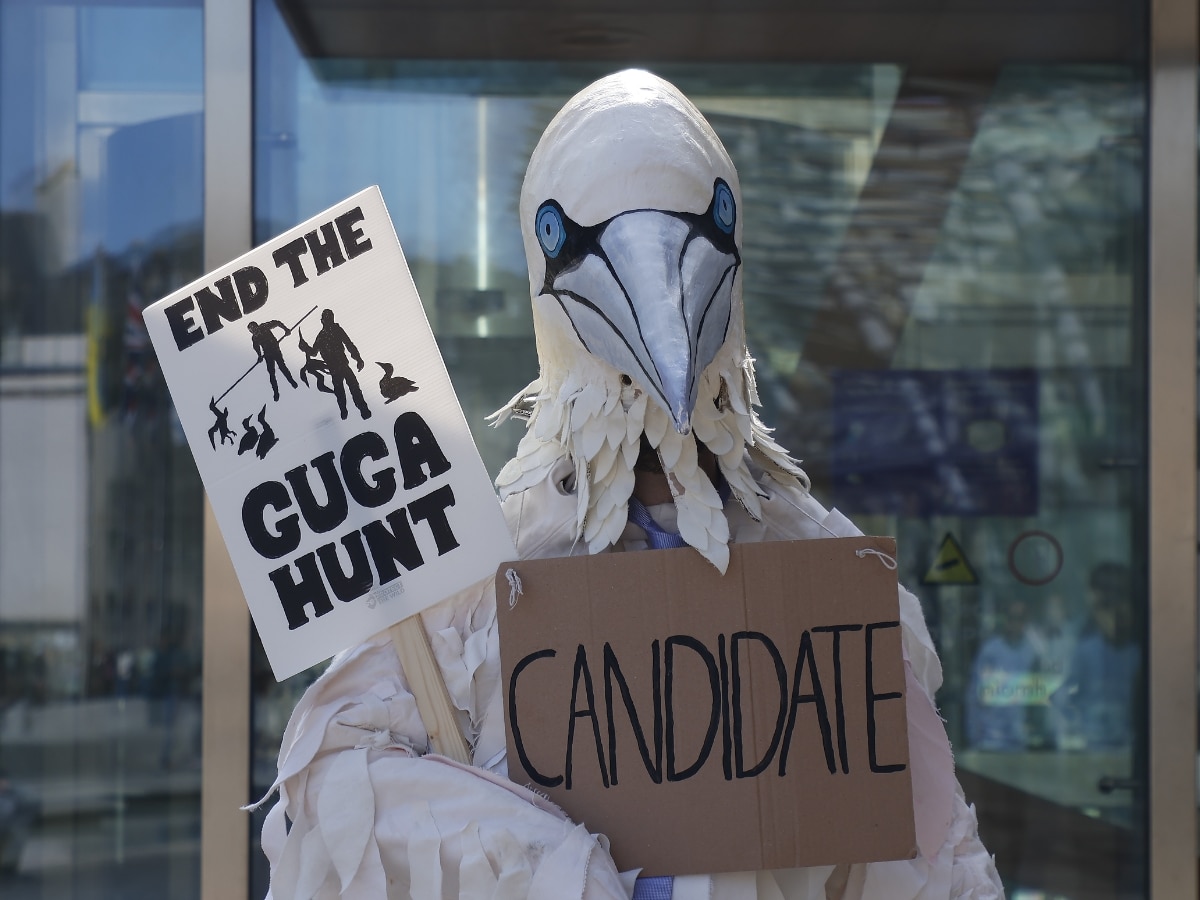
An Edinburgh Central MSP candidate dressed as a giant gannet seabird has attempted to gatecrash the Scottish Conservatives’ manifesto launch. He was calling for an end to the UK’s last legal seabird hunt.
Scottish parliament hopeful Robert Pownall turned up in full costume at an Edinburgh press event on Tuesday 7 April. He attempted to present his own “Ganifesto”. This is a single-issue campaign calling for an end to the guga hunt.
Footage shows Pownall holding the oversized gannet head under his arm as he speaks with security at the entrance. Staff refuse him entry and decline to confirm the nature of the event.
In the video, Pownall calls on:
the Conservative Party… and all parties, and the future government to end the guga hunt for good.
He adds:
This is meant to be a protected species. It’s about time they were properly protected.
The guga hunt, which takes place annually on the remote island of Sula Sgeir, involves the killing of young gannet chicks. They’re taken from their nests, bludgeoned to death, and eaten as a local delicacy on the Isle of Lewis.
It remains legal due to an exemption under Section 16 of the Wildlife and Countryside Act.
Pownall says his election campaign has just one demand: end the guga hunt by removing the exemption that allows it to continue:
This isn’t complicated. This isn’t controversial. This is about whether we think it’s acceptable to kill wild animals for tradition alone.
My Ganifesto has one line: end it.
The stunt comes as Pownall, founder of non-profit organisation Protect the Wild, launched his campaign for the Edinburgh Central seat. He’ll be standing against the likes of the SNP’s Angus Robertson and the Scottish Conservatives’ Jo Mowat.
Pownall says he is aiming to force the issue of wildlife protection onto the political agenda ahead of May’s election:
Gannet chicks are being snatched from their nests and bludgeoned to death for nothing more than a tradition. You don’t need a 50-page manifesto to know this is wrong.
If political parties won’t talk about the Guga hunt, then I’ll bring it to their doorstep, dressed as the bird they’re failing to protect.
The candidate says he will continue using “creative disruption” to force political attention onto the issue throughout the election campaign.
Featured image via Protect the Wild
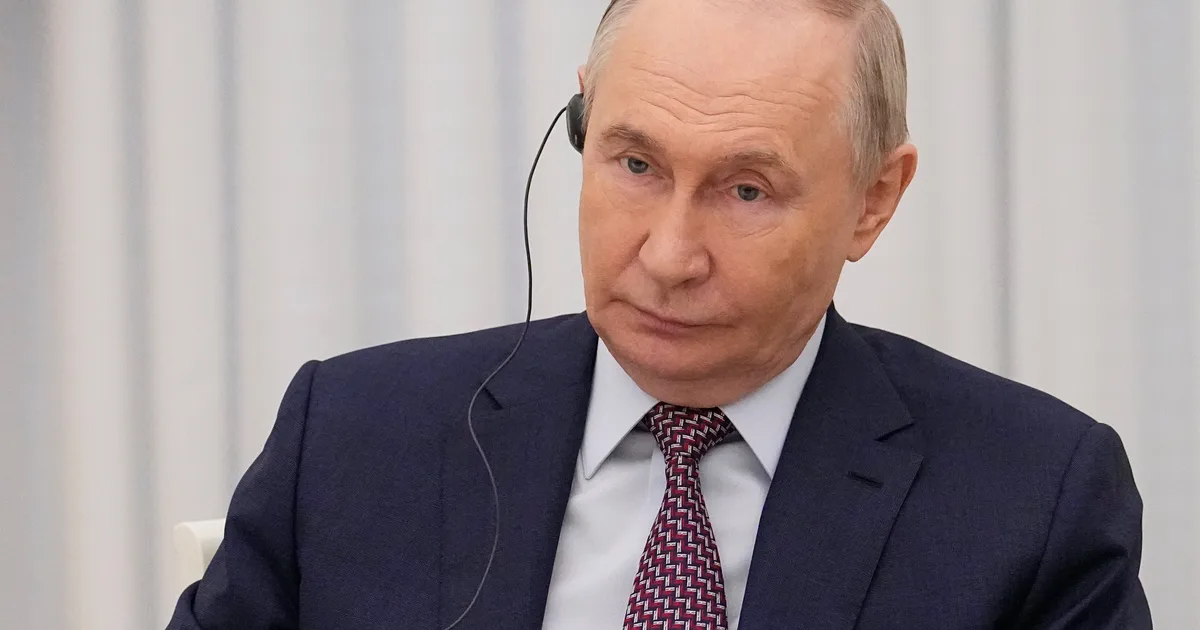
Vladimir Putin wants the UK to be distracted by the ongoing tensions in the Middle East, according to the British defence secretary.
John Healey revealed how British forces have uncovered “increased Russian activity in the Atlantic, north of the UK” while giving a statement from Downing Street.
He said a nuclear-powered attack submarine and two specialist submarines from Russia’s main directorate for deep sea research were detected in the Atlantic Ocean.
These ships were in the UK’s exclusive economic zone. It’s not clear what they were threatening to do, but Healey pointed out that Britain has undersea fibre optic cables which are key for the UK’s digital communications.
He claimed these vessels were all directed by the Russian president to “conduct hybrid activities against the UK and our allies, specifically around critical undersea infrastructure”.
He said the submarines are meant to survey underwater infrastructure “during peacetime and sabotage it in conflict”.
The UK military has been tracking these vessels by sea and air in a month-long mission with allies.
The attack submarine – since discovered to have been a distraction from the Russian forces to shift focus from the other vessels – has since “retreated home”, while the specialist submarines are still being monitored.
The defence secretary said there was no evidence the submarines caused any damage to UK pipelines or cables.
“We wanted to ensure that we could warn them that their covert operation had been exposed and reduce the risk that they made to attempt any action that could damage our pipelines or our cables,” he said.
When asked if the timing of these Russian operations was deliberately timed in line with the Iran war, Healey said: “I’m pretty clear that Putin would want us to be distracted by the Middle East.
“What I’m setting out today demonstrates that we are not just exposing his covert operation, but we are saying to him that we recognise Russia as the primary threat to the UK and to Nato, and that we will not take our eyes off Putin, whilst at the same time we act to protect our British interests and our British allies in the Middle East.”
Putin is a known ally to Iran, and according to Ukrainian president Volodymyr Zelenskyy, helping Tehran target US bases in the Middle East.
When asked about the reports that Russian shadow fleet ships escorted sanctioned tankers through the English Channel, Healey said the UK stands “ready to take action” and to “interdict shadow fleet vessels”.
“Any attempt to damage [undersea cables] will not be tolerated and will have serious consequences,” he said.
“Our message to Putin, it’s deliberate and it’s clear: We see you. We see your activity over our pipelines and our cables. And we will not tolerate any attempt to damage what our way of life and our modern way of life depends on so much.”
The UK has seen a 30% increase in Russian vessels posing a threat to British waters over the last two years.
Keir Starmer reacted to the update saying: “We will not shy away from taking action and exposing Russia’s destabilising activity that seeks to test our resolve.
“Our armed forces are among the best in the world, and the British public should be in no doubt that this government will do whatever it takes to defend our national and economic security, wherever in the world that is needed.”
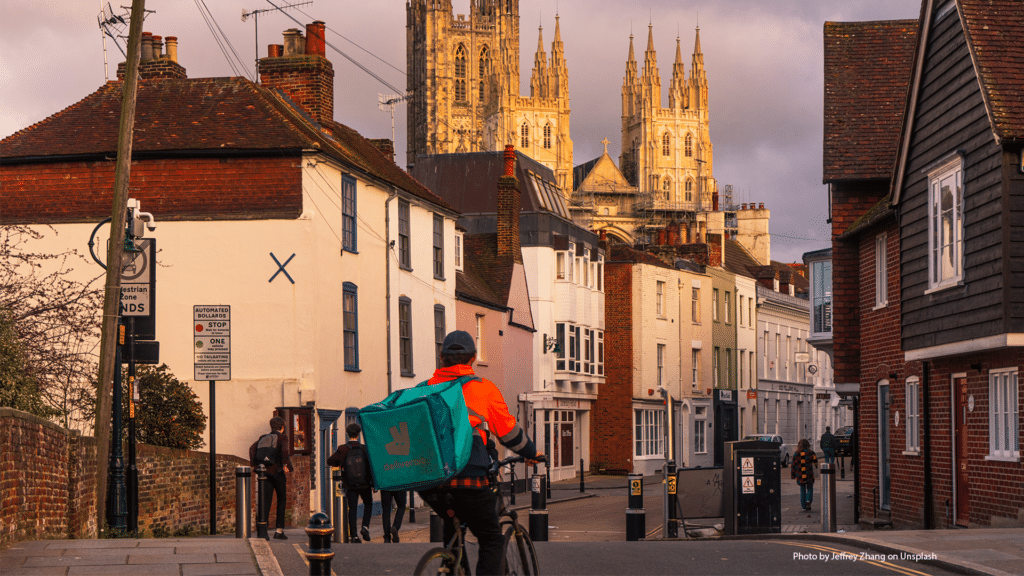
Ali Ahmadi, Catherine Barnard and Fiona Costello argue that while the UK’s restrictions on employment for asylum seekers do not act as a strong deterrent, they do drive up asylum costs, risk pushing asylum seekers into exploitative working conditions and harm their wellbeing and integration.
The UK has one of the strictest systems in Europe concerning the right to work for asylum seekers. This blog considers why this is the case and the consequences for asylum seekers, the Home Office, and the economy as a whole.
Most European countries allow asylum seekers to work immediately or within six months of making an asylum application. In the UK, most asylum seekers are not allowed to work while their claim is being decided. This has been the case since 2002, when the Labour government removed the previous rule allowing asylum seekers to apply for permission to work after waiting six months for an initial decision. Today, asylum seekers can apply for permission to work but only if they have been waiting 12 months or more, and the delay is not the claimant’s fault. Even then, they are restricted to jobs on the Immigration Salary List of skilled occupations and, from 26 March, RQF level 6 or above (i.e. degree level roles). They cannot be self-employed or take most entry-level jobs.
The government says that allowing asylum seekers to start working early would not only undermine local labour markets but also act as a ‘pull factor’, encouraging economic migrants to abuse the asylum route. However, as we have discussed before, there is little evidence that labour market access has any significant impact on the number of arrivals.
Yet not allowing asylum seekers to work brings its own costs. While waiting for a decision on their asylum application (and not working), those who would otherwise be destitute are entitled to asylum support under section 95 of Immigration and Asylum Act 1999. This includes accommodation and/or a weekly payment for essentials, currently £49.18 (approx. £7 per day). For those living in hotels that provide meals the rate is £9.95 per week. For many, this support is not enough and they are often forced to rely on food banks and charities to meet their basic needs. As of June 2025, over 106,000 people were receiving asylum support.
Home Office spending on asylum support is increasing significantly: from £739m in 2019-20, to £4.7bn in 2023-4 (and £4bn in 2024-5). The growing costs are largely due not only to an increase in the number of asylum seekers but also to backlogs in decision-making. In 2014, 25% of asylum seekers (11,629 people) waited six months or more for a decision. In 2024, 59% (73,866 people) waited that long. A study from the National Institute of Economic and Social Research (NIESR) shows that allowing earlier permission to work could significantly reduce these costs.
So not allowing asylum seekers to work is an expensive policy. Allowing asylum seekers to work would also bring benefits to the UK economy. Analysis by the Lift the Ban coalition suggests that if one in two adults among the 73,866 people waiting an initial decision for longer than six months found employment at the average UK salary, the benefit from tax, national insurance contributions, and savings in asylum support, could be over £280m. Based on the Home Office data from 2022, NIESR calculate that allowing asylum seekers to work would increase tax revenue by £1.3bn, reduce government expenditure by £6.7bn, and increase GDP by £1.6bn, annually.
Instead, a ban on employment pushes some asylum seekers into ‘survival-related’ illegal and exploitative employment where, studies show, they work for well below the minimum wage, ‘cash in hand’ (from which the government does not benefit in terms of tax take), and in unacceptable work conditions. The exploitation is more severe for vulnerable asylum seekers. For instance, one study showed that some female asylum seekers had been pushed into ‘abusive situations’ and/or ‘sex work’ because they had no legal means of income. There is also evidence that those working lawfully as delivery riders ‘rent’ their passes to those who cannot work legally, taking a cut off the top. Likewise, organised crime networks help failed and/or limbo asylum seekers run or work illegally in mini-marts, barbershops, and car washes by faking paperwork and providing ‘ghost directors’.
It is not just the economic costs: preventing asylum seekers from working affects their mental health, with longer term consequences for them and the NHS if they subsequently get refugee status. Asylum seekers in the UK are five to six times more likely than the general population to have mental health needs, and 61% will experience severe mental illness. A systematic review studying the impact of asylum processes on mental health found that policies restricting work or meaningful activities contributed to psychological distress and social exclusion. The Mental Health Foundation reported that not being allowed to work leads to ‘loss of self-esteem, loneliness, and an increased risk of depression’ for asylum seekers. Employment has been shown to reduce psychological distress and depression in this population.
A ban on working also affects the long-term economic integration of refugees. Research consistently shows that being unable to work causes de-skilling, reducing employment prospects even after refugee status is granted, creating what researchers call an ‘economic scarring effect’. A study from Germany found that those who waited longer for permission to work were less likely to find employment within 5 years, and it took nearly 10 years for this gap to close.
In conclusion, the UK’s restrictions on asylum seekers’ right to work do not appear to act as a strong deterrent, yet they drive up asylum costs, risk pushing asylum seekers into exploitative working conditions, and harm their wellbeing and integration. You Gov polling, albeit somewhat dated, has shown that the British public are largely in favour of lifting the ban on asylum seekers working, with 81% in favour of asylum seekers being able to work after 6 months of submitting their application (as suggested by the Commission on the Integration of Refugees). Allowing employment in all types of jobs would reduce asylum costs, bring in tax revenue, and treat people with dignity. It would also help those granted refugee status to rebuild their lives faster and is likely to cost taxpayers less in the long run.
By Ali Ahmadi, Research Associate, University of Cambridge and PhD student at Anglia Ruskin University, Catherine Barnard, Senior Fellow, UK in a Changing Europe & Professor of EU Law and Employment Law, University of Cambridge and Fiona Costello, Assistant Professor, University of Birmingham.
Nicole Kidman Gets Advice From Actor About Dating Again

Nursing and Midwifery Council to embed ‘anti-racism principles’

McLaughlin: Can Pac-12 Regain its Former Power 5 Status?


-

 NewsBeat7 days ago
Steven Gerrard disagrees with Gary Neville over ‘shock’ Chelsea and Arsenal claim | Football
-

 Business7 days ago
No Jackpot Winner and $194 Million Prize Rolls Over
-

 Fashion6 days ago
Weekend Open Thread: Spanx – Corporette.com
-

 Business5 days ago
Expert Picks for Every Need
-

 Business4 days ago
Three Gulf funds agree to back Paramount’s $81 billion takeover of Warner, WSJ reports
-

 Sports5 days ago
India men’s 4x400m and mixed 4x100m relay teams register big progress | Other Sports News
-

 Tech2 days ago
How Long Can You Drive With Expired Registration? What Florida Law Says
-
Business4 days ago
No Jackpot Winner, Prize to Climb to $231 Million
-

 Fashion3 days ago
Massimo Dutti Offers Inspiration for Your Summer Mood Board
-

 Fashion2 days ago
Let’s Discuss: DEI in 2026
-
Politics6 days ago
Wings Over Scotland | The quality of mercy
-

 Business5 days ago
Akebia Therapeutics, Inc. (AKBA) Discusses Pipeline Progress and Strategic Focus on Kidney Disease Treatments at R&D Day – Slideshow
-

 Fashion7 days ago
Statement Sunglasses: The Accessory Shaping Modern Fashion
-

 Crypto World1 day ago
Bitcoin recovers as US and Iran Agree a Ceasefire Deal
-

 Politics7 days ago
East Jerusalem Palestinian families eviction orders
-

 Fashion7 days ago
For Love & Lemons’ Spring 2026 Line is for the Romantics
-

 Politics6 days ago
Why so many children are now classified as ‘disabled’
-

 Fashion7 days ago
Coffee Break: Santa Croce Tote
-

 Politics6 days ago
Nuclear rockets, moon bases and NASA’s Mars plan
-
 Tech6 days ago
The Threadless Ball Screw Never Took Off, But Don’t Write It Off
You must be logged in to post a comment Login