
Politics
Trump Faces MAGA Backlash Over Iran War

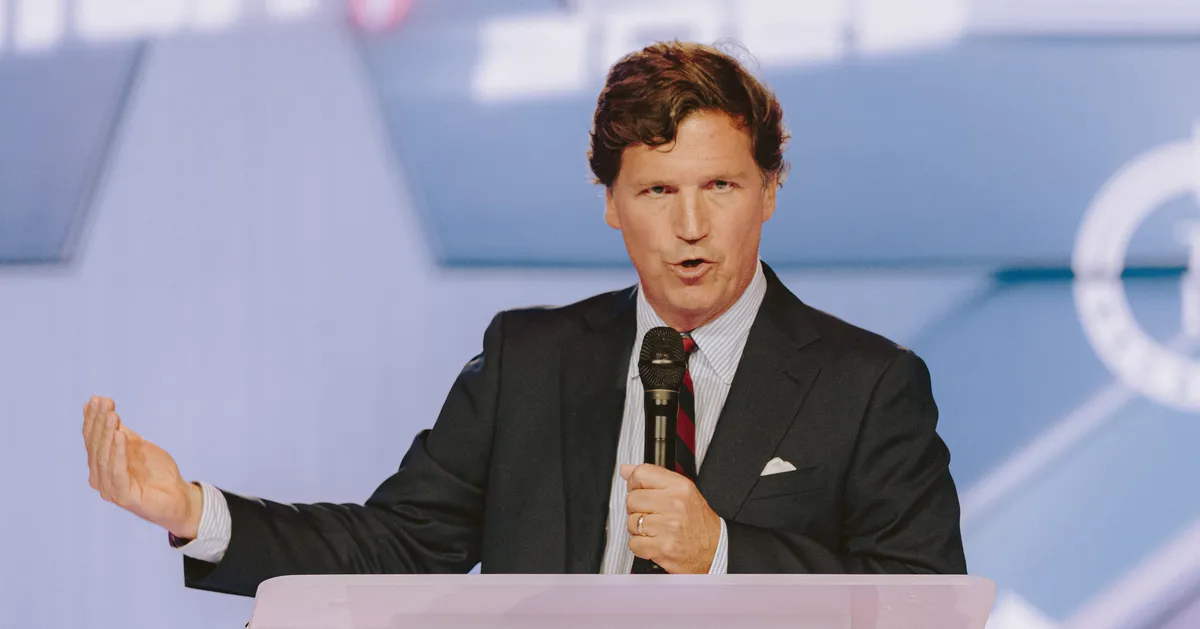
Prominent conservatives and MAGA influencers normally allied with President Donald Trump are publicly questioning his war on Iran, prompting aggressive pushback from the president and his administration.
Right-wing luminaries including Tucker Carlson, Matt Walsh, Megyn Kelly and former congresswoman Marjorie Taylor Greene have criticised the war or noted the president’s shifting justifications. Elected Republicans have taken notice.
“The president did a masterful job of creating an eclectic coalition, but I can see where this is a wedge for some of them,” Republican Senator Thom Tillis told HuffPost.
The Iran war is an obvious betrayal of Trump’s campaign pledge for “no new wars.”
Carlson called the war “absolutely disgusting and evil” and said Trump could lose support from his most loyal voters.
Sean Davis, CEO of the Trump-friendly news website The Federalist, said it wasn’t clear if the goal was to “free the Iranian people or degrade their nuclear capability or degrade the conventional weapons capability or eliminate their regional hegemony or to cut off their oil supply to China or to help Israel.”
“The lack of any coherent message seems to suggest the lack of any coherent objective,” Davis said on X.
Podcaster Matt Walsh also noted some contradictions in the administration’s messaging.
“So far we’ve heard that although we killed the whole Iranian regime, this was not a regime change war. And although we obliterated their nuclear programme, we had to do this because of their nuclear program,” Walsh wrote. “And although Iran was not planning any attacks on the US, they also might have been, depending on who you ask.”
Some Republican lawmakers acknowledged these criticisms are reasonable, even if they ultimately disagree.
“They don’t want another Iraq. Nor do I. I don’t think that’s where we’re headed,” Republican Senator John Kennedy told HuffPost.
“But I see their point of view, and it’s a valid point of view. But I just don’t believe this is a repeat of the mistakes, if any, that we made in Iraq.”
Asked by HuffPost if Trump had adequately explained the reasons for the war, Republican Senator Roger Wicker, chairman of the Senate Armed Services Committee, went silent.
Most Republicans, however, didn’t hesitate to recite some of the justifications the White House has offered for the new war in the Middle East.
“It’s been explained for 47 years, hasn’t it? No regime has killed more Americans than the regime that we’ve now wiped out,” Senator Bernie Moreno told HuffPost.
“The predicate for action has been pretty clear: They can’t have a nuclear weapon.”
Even before the war, the MAGA coalition had splintered somewhat, most notably with Greene’s resignation from Congress after Trump turned against her for supporting the release of the Epstein files. The early reviews of the Iran war suggest an even more dramatic break is possible.
The White House has responded somewhat aggressively to its MAGA war sceptics.
Asked about Clarkson and Kelly in particular, Trump said the pair don’t define the Make America Great Again movement. “I think that MAGA is Trump,” the president told independent journalist Rachel Bade.
In response to Walsh’s criticisms on X, White House press secretary Karoline Leavitt responded that the goal was to end the nuclear programme and generally destroy the Iranian regime’s military capabilities.
“Their brutal attacks and threats will finally end under President Trump,” Leavitt said in her own post. “America will win – the terrorists will be defeated.”
Walsh was not swayed, calling it “gaslighting” to argue, as Leavitt and other pro-war conservatives have done, that Iran has been “waging war” on the US for 47 years.
“You and I both know that almost every conservative influencer in the business was opposed to war with Iran until just now,” Walsh said.
A handful of Republicans in Congress, meanwhile, are also sceptical of the war.
Senator Rand Paul labelled it “yet another preemptive war” in the Middle East, and Representative Thomas Massie indicated he’d vote for a War Powers resolution to stop the conflict.
More surprisingly, Representative Warren Davidson, who is less prone to bucking the party than Massie or Paul, suggested President Trump had wrongly dragged the US into war without congressional authorisation.
“Congress declares war. America is at war. Congress did not declare war,” Davidson wrote. He did not signal that he would vote for a resolution ending the war.

Politics
Politics Home | Sellafield Ltd backs groundbreaking digital hub to inspire West Cumbria’s next generation

Sellafield Ltd joins forces with local partners and supply chain to fund the creation of LEVELS – a state-of-the-art digital centre in Whitehaven, West Cumbria.
Sellafield Ltd, through its SiX (social impact, multiplied) programme, has announced a major investment in LEVELS, a ground-breaking £4.6 million redevelopment of the former Whittles department store in Whitehaven, West Cumbria into a state-of-the-art immersive entertainment and education centre.
Delivered and developed by social impact property developers BEC, LEVELS has transformed a Grade II-listed building into a cutting-edge hub for digital creativity, learning, and interactive experiences.
Across 4 floors, the centre features immersive digital and gaming experiences, an esports arena, interactive learning spaces, and a café—creating a vibrant space for education and creativity in the heart of Whitehaven.
By equipping young people with the skills needed for a digital-first future, the project aims to engage young people, their families, and educators, inspiring the next generation to explore careers in digital and creative technology.
Funding for the project includes £3.3 million from Sellafield Ltd through its SiX programme, alongside £800,000 in funding, equipment, and logistical support from BT, Atos, and Openreach—as part of their social impact commitments through Information and Communications Technology contracts with Sellafield Ltd.
BEC has also contributed £500,000, demonstrating the power of partnership to multiply impact.
Tracey West, Sellafield Ltd’s head of social impact, said:
“LEVELS represents exactly what our SiX programme is about—creating lasting social impact by investing in skills, innovation, and opportunity. By collaborating with partners like BEC and our supply chain, we’re helping West Cumbria’s young people prepare for a digital future.
This investment builds on our long-standing commitment to improving education provision in West Cumbria, following projects such as West Lakes Academy, the Whitehaven Campus, the National College for Nuclear, and the Well programme.”

In an incident that has rocked Czech football, police arrested dozens of people in connection with fraud, betting and match-fixing on the morning of 24 March. These raids have been described as one of the biggest security operation targeted sports gambling in the country.
The iSport.cz website was the first to report the news, revealing that both sports players and referees were among those arrested. They also highlighted the involvement of top-division football clubs. This underscores the depth and breadth of corruption in the domestic football industry.
At a press conference held on the same day, Czech Football Association (CFA) President David Tronda delivered the following message:
The integrity of competitions is absolutely essential for us and represents one of the fundamental pillars of professional football. Any behavior that contradicts these principles is completely unacceptable for us. We will do our utmost to ensure that those found guilty are severely and exemplary punished.
Multi-agency cooperation
The latest raid was no spur-of-the-moment effort, but the result of a three-year investigation. It was a collaborative initiative involving international agencies, Europol, Interpol, and local authorities with experience in tackling organised criminal networks.
Trondo conceded in an internal memo that the raid may be the largest in the history of Czech football. He also confirmed the key role the Czech Football Association (CFA) played in the investigation, revealing that they had been working in close coordination with the police to expose years of corrupt betting and match-fixing practices.
According to the Czech News Agency (CTK), the National Center for Combating Organised Crime is overseeing criminal proceedings in the case. This is happening amidst a media blackout. Furthermore, spokesperson Jaroslav Ibehič clarified that the release of information is being handled exclusively by the Olomouc Prosecutor’s Office.
The rot runs deeper than suspected
There are 47 people now facing disciplinary investigation so far, Trunda said, on suspicion of betting fraud and match rigging.
This shows just how deep the corruption runs in a case that not only implicates first-division teams but also youth clubs—covering the full gamut.
Despite the seriousness of these developments, the federation emphasised that none of its officials have been found to be involved. They also confirmed that UEFA has been kept informed of the case’s progress.
Reputational blowback
The case, which is still unfolding, represents a significant blow to the reputation of Czech football. It marks the beginning of a critical and more difficult phase of rooting out the betting mafia. However, the lost trust in the sport could take years to rebuild.
As the investigation continues, questions loom over the scale of the network involved and the full extent of the sporting figures tied to it. With uncertainty surrounding the names that may be implicated.
This is shaping up to be one of the most explosive match-fixing scandals Europe has seen in recent years.
Featured image via the Canary

With depressing predictability, politicians are using the antisemitic Golders Green arson as an excuse to roll out Islamophobic rhetoric. Never mind the fact that we have no idea who carried out the attack – the knee-jerk bigotry is already in full swing.
Early in the morning of Monday 23 March, arsonists set fire to four ambulances owned by Jewish charity Hatzola. The Met issued a statement confirming that they’re treating the attack as an antisemitic hate crime.
The attack, which occurred in Golders Green, North London, caused several explosions when the fire hit the vehicles’ gas canisters. However, no casualties have been recorded as a consequence of the blasts.
Golders Green: Al Jazeera told to ‘go home’
Politicians and the general public alike have pivoted to Islamophobic and anti-Arab rhetoric almost immediately after the attack.
As a case in point, an Al Jazeera news crew had to leave the scene of the Golders Green attack after a crowd started chanting “go home” at them. Reuters footage shows one individual telling an Al Jazeera staffer:
Go take your briefcase, go take your Al Jazeera equipment and go. No one wants Al Jazeera here.
Alarming footage of the incident showed reporters being harassed out of the area:
Al Jazeera reporter and crew were harassed for covering the incident in Golders Green. pic.twitter.com/K7uZXjzSh4
— Mukhtar (@I_amMukhtar) March 23, 2026
The crowd later chanted “Al Jazeera off our streets”, “go home”, and “terrorists”.
After a police officer stated that “They’re reporting the news”, an onlooker said:
We feel threatened by Al Jazeera being here. We feel threatened. We don’t feel safe.
The reporting is going to go to potential terrorists. That’s why we don’t want to see that on our streets. For our safety, please remove them from our streets.
Of course, Al Jazeera also provides in-depth coverage of the frontline conflict in Gaza. At one point, the IDF closed Al Jazeera’s offices in Israel, alleging they were being used “to support terrorist activities.” Al Jazeera flatly denied the accusations, calling them:
an affront to press freedom and the very principles of journalism.
A number of journalists from Al Jazeera have been murdered during Israel’s concerted campaign to eliminate journalists reporting on their genocide.
What’s ‘intifada’ got to do with it?
And, in the House of Commons, right-wing politicians took the opportunity to conflate the attack with Islam and support for Palestine.
Chris Philp, the shadow home secretary, asked his counterpart Shabana Mahmood whether she believes that:
calls on our streets at marches for Jihad and Intifada are calls for violence, which fuel antisemitism, and does she agree they should no longer be allowed?
Note Philip’s attempt to conflate ‘jihad’ with ‘intifada’, the Arabic word for ‘uprising’. After the Bondi Beach attacks in Australia, Zionists around the world called for bans on the use of ‘intifada’, to varying success. At the time, the Canary wrote:
To decry the terrorist assault on Bondi beach as a manifestation of a globalised intifada is nothing short of a heinous smear.
It is a smear against anti-Zionist protesters across the world who use the phrase ‘globalise the intifada’ as a call to action against Israel’s genocide. That action is non-violent, and often carried out by anti-Zionist Jewish protestors. And yet still, it is conflated with terrorism at every turn.
Predictably, and despite the complete lack of any evidence, Philp also got in a call for more deportations:
And finally, will she ensure that all antisemites and extremists who are not British citizens get deported?
Because why stop at Islamophobia when you could also chuck in some anti-migrant sentiment?
‘Terror cell embedded in North London’
Following suit, far-right leader Nigel Farage took to social media to whip up fear:
What I want to hear, what the whole country wants to hear, given we now have a terror cell embedded in North London, what I want to hear is that you are proscribing as a terrorist organisation the IRGC.
The IRGC refers to the Islamic Revolutionary Guard Corps, part of the Iranian military. Again, note that Farage is doing precisely what counter-terror police have warned against, pinning the attack on Iran.
Likewise, he’s calling for the proscription of the military of a country currently being attacked illegally by his mate Trump. And, notably, the IRCG is not the group that claimed responsibility for the attack in Golders Green.
It’s also worth bearing in mind that Farage only cares about antisemitism when it can be used to attack Islam and the Arab world. He has repeatedly denied claiming that “Hitler was right”, in spite of multiple witnesses coming forwards. Likewise, he later made thousands selling videos to neo-Nazis.
Now, none of this is to say that HAYI wasn’t responsible for the Golders Green attacks. This claim hasn’t been confirmed; it isn’t something we know one way or the other. Likewise, authorities have also stated that they aren’t yet convinced of the Iranian state’s responsibility or involvement.
However, it’s a depressingly common occurrence that any antisemitic attack in the UK is immediately weaponised by cynical, bigoted politicians. In one breath, they condemn antisemitism and then immediately employ dog-whistle Islamophobic, anti-Arab and anti-migrant rhetoric.
We see them, we know what they’re doing, and we won’t stand for their weaponisation of hatred.
Featured image via the Canary
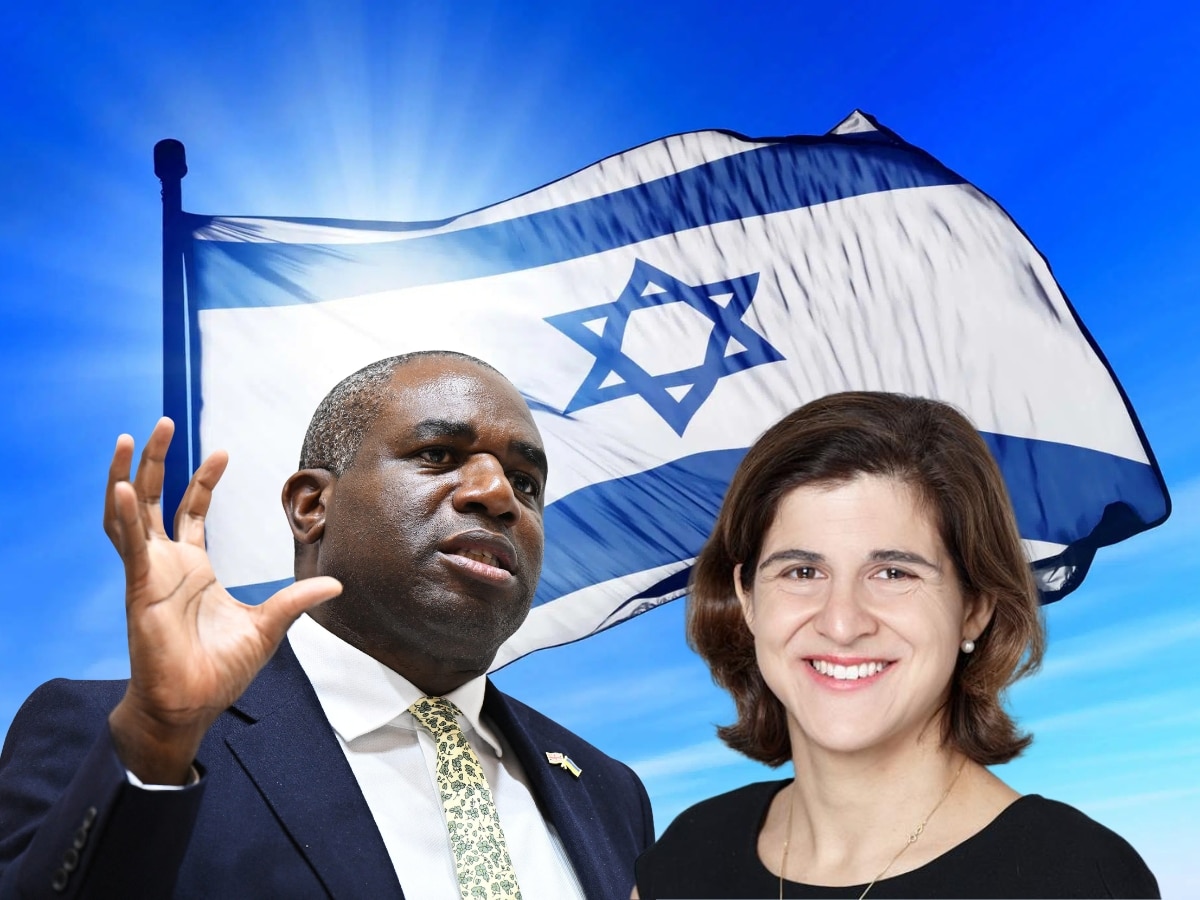
On 10 March, the Labour government’s bill to restrict access to jury trials, a right enjoyed by English citizens for over 800 years, successfully passed its first reading in the houses of parliament.
As previously reported, the Minister for Courts, Sarah Sackman, announced plans for many criminal cases to be heard by only a judge and a magistrate, in order to reduce a backlog of ten of thousands of cases.
This is despite that fact that, in 2017, now justice secretary David Lammy concluded that juries “act as a filter for prejudice”, following an independent review commissioned by then prime minister David Cameron. In 2020, he said:
Jury trials are a fundamental part of our democratic settlement. Criminal trials without juries are a bad idea… The government needs to pull their finger out and acquire empty buildings across the country to make sure these [trials] can happen in a way that is safe … you don’t fix the backlog with trials that are widely perceived as unfair.
Now, Lammy wants to get rid of them.
My investigations reveal that this erosion of democracy has been shaped by Lammy and Sackman, two pro-Israeli lawyers-turned-politicians, who have both been captured by lobbyists and arms traders.
Jury trials and Sarah Sackman
Keir Starmer initially appointed Sarah Sackman as solicitor-general. Now, she is Labour’s minister of state for courts and legal services. But Sackman previously worked as a judicial clerk in the Israeli Supreme Court. She has also stated that she “travels to Israel on a yearly basis”.
From 2015-2024, Sackman was the vice-chair of the pro-Israeli Jewish Labour Movement. Indeed, the Jewish Labour Movement, which was known as “Poale Zion” until 2004, openly declares that one of its aims is “to promote the centrality of Israel in Jewish life”. In 2015, Sackman said:
The issue of Israel is something that is deeply personal and emotional.
In May 2024, Sackman opposed International Criminal Court arrest warrants for Israeli prime minister Benjamin Netanyahu and defence minister Yoav Gallant, saying:
I trust the Israeli people to hold their leaders to account.
Just three months later, a poll revealed that 65% of Jewish Israelis opposed criminal prosecution for IDF soldiers suspected of gang rape. Israeli society responded to the Sde Teiman abuse scandal by holding “right to rape” protests, and the Israeli state responded by arresting the chief military advocate who had leaked the video of the abuse.
On 12 March, all remaining charges of “aggravated abuse” and “causing aggravated injury” against the five soldiers (charges of rape were never brought) were dropped. This is the society that Sackman trusts to “hold their leaders to account”.
Sackman has received tens of thousands of pounds from lobbyists Jonathan Mendelsohn, Stephen Grabiner, Michael Sternberg, Jonathan Kestenbaum and Trevor Chinn. She was also funded by Labour Together, the corrupt outfit of Morgan McSweeney fame. Labour MP Luke Akehurst called McSweeney a “pivotal figure” and “solid supporter of Israel”.
Lammy is in Zionist pockets
Like Starmer, Lammy is a parliamentary supporter of Labour Friends of Israel and has a long history of promoting the pro-Israeli lobby in Britain.
In February 2025, Lammy had an “off-the-record” meeting with former Labour Together director and life-long Israel lobbyist Trevor Chinn. In 2012, they travelled together on a Labour Friends of Israel-funded trip. The Israeli Ministry of Foreign Affairs also chipped in with £90 towards expenses.
In 2014, Chinn donated £30,000 to Lammy’s failed London mayoral campaign. The campaign was led by David Mencer, a former Labour Friends of Israel director who later became a spokesperson for the Israeli government, a veritable rent-a-mouth defending the most heinous of crimes.
Lammy’s mayoral campaign was also bankrolled by Jonathan Goldstein, a Chelsea FC co-owner who personally hosted Starmer in a Stamford Bridge box.
Financial backers
Goldstein travelled to occupied Palestine and met with Israeli state ministers, including Gilad Erdan. After becoming head of the Jewish Leadership Council that same year, Goldstein stated his intent to “make the community louder and prouder on Israel”. He describes convicted criminal Gerald Ronson as “a very strong influence” on him, admiringly noting that the Ronsons are:
driven for the cause of the Jewish people in Britain and in Israel.
Other financial backers include Sue Woodford-Hollick, the wife of Labour peer Clive Hollick. Hollick contributed £50,000 to Starmer’s 2020 leadership campaign and was another funder of McSweeney’s Labour Together outfit. He previously served as a special adviser to both Epstein-associate Mandelson and long-standing Labour Friend of Israel Margaret Beckett. Hollick is also a director of Honeywell, a US conglomerate that claims to provide “battle-tested technologies” to “the most advanced defence forces in the world”.
Jury trials are not a filter for prejudice
Lammy’s previous claim that juries “act as a filter for prejudice” is now in conflict with the biases of his backers. It is also clear that Sackman’s trust in Israeli society’s ability to hold its leaders to account is not extended to UK citizens. It is far from a coincidence that this assault on the right to trial by jury is accompanied by the fact that juries have repeatedly refused to convict pro-Palestine actionists, who have done more than the UK government to stop a genocide. Clearly, the Labour party is entirely in the pockets of Zionist lobbyists whose undue interference in our democratic processes is extremely troubling, to say the least.
Lammy and his co-conspirators are determined to undermine our right to a trial by a jury of our peers nonetheless. By examining the political ideology – Zionism – that underpins Starmer’s cabinet, we can begin to understand why.
Featured image via the Canary
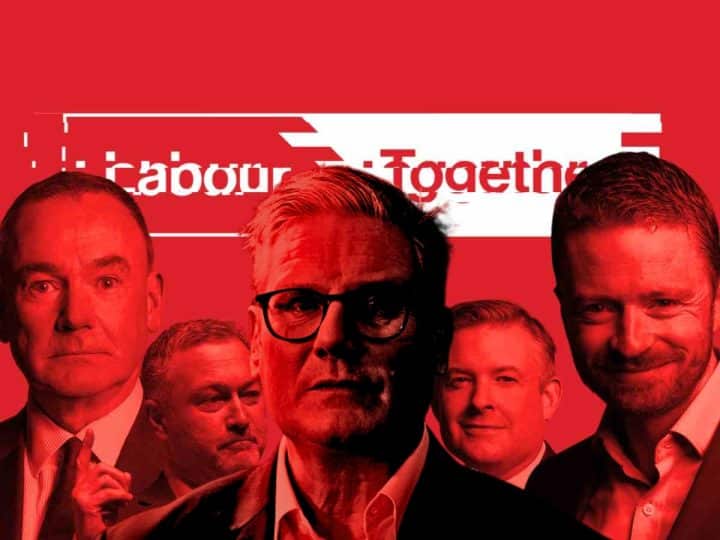

As Labour Together has been in the news a lot in recent months, here’s a breakdown of who’s been funding it.
We focused on Electoral Commission data for donations to Labour Together over the value of £40,000. And the following individuals have given the biggest donations:
Labour Together itself has donated over £1.1m in total to Keir Starmer’s Labour Party since late 2023.
1. Martin Taylor (£4m+)
The data shows that key Labour Together donor Martin Taylor has given over £4m to the organisation since 2015. The biggest donation was £800,000, which the Electoral Commission noted as “accepted” on 28/03/2024.
Taylor also donated an extra £3.5m to Keir Starmer’s Labour Party in early 2024. And he had already given Starmer himself a direct donation of £95,000 on 10/03/2020.
MPs that Taylor has given significant donations to include former Labour Together secretary Josh Simons (£47,000 on 21/11/2024), Dan Jarvis, Angela Rayner, Shabana Mahmood, and Lucy Powell. And he’s donated significant sums to the following Constituency Labour Parties (CLPs):
- Streatham and Croydon North, the CLP of former Labour Together director Steve Reed.
- Finchley and Golders Green, whose MP is Sarah Sackman. She has also received thousands of pounds of donations from Labour Together itself and Labour Together donors Trevor Chinn and Richard Greer (who, along with Labour Together and fellow donors, has also backed David Lammy and Angela Rayner).
- Chipping Barnet, whose MP is Dan Tomlinson. He has received thousands of pounds from Labour Together and its donors, including Chinn and Lubner.
- Aldershot, whose MP is Alex Baker. She also got £10,000 from Labour Together.
- Greenwich and Woolwich, whose MP is Matthew Pennycook.
The Electoral Commission has recorded over £9.3m worth of political donations from Taylor in total. These include £591,800 that he gave the Labour Party under Ed Miliband’s leadership.
2. Gary Lubner (£1.8m+)
Gary Lubner has given Labour Together over £1.8m since 2023. The biggest donation of £250,000 came on 06/10/2023.
Lubner gave Starmer’s Labour £4.5m before the 2024 election, including a massive single payment of £2.2m on 30/05/2023.
Lubner’s biggest donation to a specific politician seems to have been £28,500 on 30/01/2026 for new MP Miatta Fahnbulleh. Fahnbulleh had previously been of interest to Labour Together, serving as a “Policy Fellow” there. Lubner had already given her £5,000 back in 2024 too.
Lubner has also joined Labour Together and fellow donor Stuart Roden in donating thousands of pounds to new MP Mike Tapp.
In total, Lubner has made over £9.9m worth of political donations, according to the Electoral Commission.
3. David Sainsbury (£1.2m+) and Francesca Perrin
A political donor of over £47m in total, David Sainsbury has given more than £1.2m to Labour Together since 2024. Having donated a massive single sum of £8m to the Liberal Democrats in 2019, his biggest donation to the Labour Party – of £3m – came on 06/04/2023.
Sainsbury gave his biggest individual donation of £44,000 to MP Darren Jones on 26/09/2025. Labour Together had previously given Jones over £50,000 in early 2024.
Sainsbury’s daughter Francesca Perrin became a director of Labour Together Limited in 2024. She has given the organisation at least £310,000 since 2023. She also gave Starmer’s Labour a massive donation of £1m on 01/12/2023, following three more donations to the party totalling another £1m between 2021 and 2022.
Perrin’s biggest donations to individual MPs went to Shabana Mahmood and Wes Streeting, who each got £50,000 donations from her in late 2025.
4. Trevor Chinn (£400,000+)
While Trevor Chinn’s biggest individual donation to Labour Together was £50,000 on 29/01/2021, he also consistently sent it donations of over £10,000. In total, he has donated well over £400,000 to the organisation over the years. And all his political donations to date easily surpass £1m.
Chinn was a director of Labour Together Limited from 2016 to 2024. As the Canary has reported, he also:
made donations to Tony Blair (while MP), Ruth Smeeth, Tom Watson, Rachel Reeves, Ian Austin, and Wes Streeting
Fellow directors during Chinn’s tenure included MPs Lisa Nandy, Steve Reed, and Jon Cruddas.
Nandy has received thousands from Chinn and fellow Labour Together donor Simon Tuttle. Reed, meanwhile, has received thousands from Taylor, Chinn, Labour Together, along with massive support from major Labour and Tory donor Lisbet Rausing (also a key backer of Ed Miliband). Cruddas also got thousands from Chinn and Taylor.
By 2024, Labour MPs had received around £200,000 from Chinn, including £50,000 for Keir Starmer’s 2020 leadership campaign. After Starmer, Rachel Reeves and Angela Rayner are the next biggest recipients of Chinn’s cash, receiving at least £25,000 each.
Chinn has also funded new MP Damien Egan (as has Gary Lubner).
5. Stuart Roden (£100,000+)
Stuart Roden gave Labour Together £100,000 on 31/01/2025. He has made over £1.6m of political donations since 2023, primarily to Starmer’s Labour Party.
In 2024, he gave four CLPs £5,000 each. These were:
- Peterborough CLP, whose new MP since 2024 has been Andrew Pakes. Also in 2024, Pakes received £15,000 from Gary Lubner and £10,000 from Labour Together.
- John Mann‘s former CLP of Bassetlaw, where his wife Jo White has been an MP since 2024. Trevor Chinn also donated over £3,000 to Bassetlaw CLP between 2023 and 2024, with White declaring £8,350. Chinn had previously donated thousands to Mann when he was an MP too.
- The North East Somerset and Hanham constituency of Dan Norris. Chinn donated to his campaign too, as did fellow Labour Together donor Ecotricity Group Ltd. Other big donations for Norris came from former Tony Blair and Gordon Brown adviser Jonathan Mendelsohn (owner of Red Capital) and former David Miliband backer David Claydon. Norris remains an MP despite his 2025 suspension from Labour.
- Midlothian North and Musselburgh CLP, which also got a £5,000 donation from Labour Together Limited in 2024 and £3,000 from Trevor Chinn between 2023 and 2024. Kirsty McNeill has been the Midlothian MP since 2024. Other donations to McNeill included £15,000 from Gary Lubner and £3,000 from fellow Labour Together donor William Reeves.
Other Labour Together donors
William Reeves has given Labour Together at least £90,000 since 2024. He has also given the Liberal Democrats over £200,000 since 2023, along with just £25,000 to Starmer’s Labour.
Smaller donors have included Fiona Mactaggart, Ian Laming, William Perrin, Daniel Luhde-Thompson, Nick Marple, Ecotricity Group Ltd, Clive Hollick, Simon Tuttle, Paul Myners, Richard Greer, and Sean Wadsworth.
Current or former Labour MPs mentioned in this article
In this article, we have mentioned the following current or former Labour MPs who have received significant funding from Labour Together or its donors.
Government ministers
- Dan Jarvis
- Darren Jones
- David Lammy
- Shabana Mahmood
- Kirsty McNeill
- Ed Miliband
- Lisa Nandy
- Matthew Pennycook
- Lucy Powell
- Angela Rayner
- Steve Reed
- Rachel Reeves
- Sarah Sackman
- Keir Starmer
- Wes Streeting
- Mike Tapp
- Dan Tomlinson
Current Labour MPs
- Alex Baker
- Damien Egan
- Miatta Fahnbulleh
- Andrew Pakes
- Jo White
Current Lords
- Ian Austin
- John Mann
- Ruth Smeeth
- Tom Watson
Former Labour MPs
- Jon Cruddas
- Dan Norris
By Ed Sykes

Christian Climate Action, a nonviolent climate protest group, received a blessing from Sarah Mullally, the new Archbishop of Canterbury.
Members of the group met the Archbishop in Chartham, Kent, on the final day of her pilgrimage to Canterbury. They asked her to bless their work to protect the climate and nature, which includes acts of protest and civil disobedience.
As part of its Stop Crucifying Creation campaign, Christian Climate Action (CCA) is calling on the Church of England to speak out publicly against the forces driving the climate crisis.
Exchange of blessings
Rev Sue Parfitt asked the Archbishop to stop and to bless the group. Archbishop Mullally did so, using the Old Testament blessing from the book of Numbers:
May the Lord bless you and keep you, may the Lord make his face shine upon you and be gracious to you and grant you peace.
Rev Parfitt, then gave a blessing to Archbishop Sarah, saying:
We pray for you, Sarah, as Archbishop; that you will know the love of God, the company of the Spirit and the light of Christ as you meet him, crucified and risen, in people and places along your pilgrim way. Amen.
Christian Climate Action continue to mobilise
Members of CCA will be on the streets on Wednesday 25 March, when the Archbishop will be officially installed at the cathedral.
Rev Parfitt said:
We were delighted to take part in lining the route as Archbishop Sarah ended her pilgrimage to Canterbury on Passion Sunday. Christian Climate Action received a blessing from her on their continuing work to have the Church prioritise the Climate and Nature Emergency.
Rev James Grote, who was also present, said:
We wanted Bishop Sarah to bless Christian Climate Action in its work of giving voice to all those who struggle hard and painfully for justice in the climate and nature emergency where people are losing their lives, homes, communities and work because of flood, drought and fire.
We pray that, under the leadership of the new Archbishop of Canterbury, the Church of England will speak out and set things right as it calls the government to act, challenges the fossil fuel industry and the banks which fund it, and the media which is complicit.
More than 70 members of CCA have also written to the Archbishop urging her to back Stop Crucifying Creation. Action proposed in the document includes a switch to ethical investments and banking, re-wilding Church land, lobbying for positive climate and nature action, and caring for victims of the crisis.
Featured image via Christian Climate Action
Powered systems that controlled airflow and ventilation through the two reactors at Wylfa nuclear power station, Anglesey have been permanently switched off.
The systems were fundamental to maintaining dry air flow and humidity levels to support the safe conditions needed for fuel transfer and the removal of the 87,890 fuel elements during the site’s defueling phase.
As the systems are no longer required, turning them off brings environmental benefits and delivers efficiencies in energy costs.
All 22 of the first-generation Magnox nuclear reactors in the current Nuclear Restoration Services (NRS) decommissioning programme are breathing naturally – marking a pivotal point in the Nuclear Decommissioning Authority (NDA) group’s mission.
Wylfa Site Director, Stuart Law, said:
“This is a great achievement for NRS and the NDA. It reflects years of careful planning and collaboration with our regulators to ensure compliance while delivering real benefits for the site and the environment.”
This success has simplified long term operational processes, enhanced environmental safety by eliminating the use of hazardous substances such as glycol and refrigerant gases and saved around £130,000 in annual energy costs.
Ross McAllister, NDA Group Environment Health Safety and Wellbeing Director, said:
“This is an important milestone for Wylfa and the wider NRS estate. These systems have been vital for many years and switching them marks tangible progress towards simpler, more sustainable and cost-effective operations on site.
It also demonstrates how collaboration supports progress across the NDA group as we deliver on our mission to leave a positive legacy for generations to come.”
Approximately 1 tonne of the associated steelwork, pipework and cabling removed was recycled. A further 1.4 tonnes of scrap metal from the four dehumidifier units will be recycled when the hazardous components inside have been removed and treated by waste management specialists Robert Hopkins Environmental.
The completed breathing reactors project paves the way for the installation a new electrical system that will disconnect Wylfa from its aging 132kV transformer and connect it to a smaller, more efficient electrical supply from a neighbouring village.

Iran appears to be asserting its power over the Straits of Hormuz, a key maritime route which carries a fifth of the world’s oil and gas shipments.
The US-Israeli war against Iran—as the Canary previously reported and predicted—saw Tehran lock down the narrow channel.
The conflict began with unprovoked US-Israeli strikes on 28 February. It has been since been reported by the Pentagon, its European allies, and the UN atomic watchdog, that there was no imminent threat from Iran, nor evidence to suggest it was developing a nuclear weapon.
If it wasn’t clear from Trump’s fuzzy comments, the war has been going terribly from the get-go. Donald Trump is still searching for off-ramps while threatening to strike Iran if it obstructs vessels passing through the narrow strait.
And as the war of words continues, the US still appears to be sending thousands of US troops to the region.
While Trump says he’s holding talks with Iran, the U.S. is still deploying thousands of troops against Iran.
— USS Boxer ARG + 11th MEU (~2,500 Marines).
— USS Tripoli ARG + 31st MEU (~2,200 Marines).
Total in region: 50,000+ US troops
82nd Airborne Division (paratroopers):…
— Clash Report (@clashreport) March 23, 2026
And Trump has even suggested that the US and Iran could control the straits jointly.
Iran’s approach has been much less erratic. The country has locked in for a long war and turned off a key tap in the global energy economy.
Iran’s new power
The Straits of Hormuz is a narrow channel between the Persian Gulf and the Gulf of Oman. They are natural chokepoint. Like the English channel, they are only 21 miles wide at their narrowest point. 20% of the world’s oil supply passes through annually.
Shipping experts reported on 23 March that China has paid Iran $2m to let a ship through a new ‘safe route’. This may suggest China has at least tacitly accepted Iranian sovereignty over the strait.
So the first confirmed mainland Chinese vessel just paid Iran $2 million to transit Hormuz. This is the moment Beijing effectively recognized Tehran’s de facto control over the strait. Every Chinese ship that follows legitimizes the toll a little more, and that $2 million per…
— Supply Signal (@SupplySignalAI) March 23, 2026
As one supply intelligence account noted this could mark a major shift in global economic power:
So the first confirmed mainland Chinese vessel just paid Iran $2 million to transit Hormuz. This is the moment Beijing effectively recognized Tehran’s de facto control over the strait.
Adding:
Every Chinese ship that follows legitimizes the toll a little more, and that $2 million per crossing gets baked into global freight rates before you can say “supply chain costs.” The question isn’t whether more Chinese vessels pay. It’s how long before this becomes just another line item in shipping contracts.
Ship tracking website Marine Traffic said Iran was using its control of the straits to selectively signal its newfound power:
Hormuz traffic sends mixed signals
Iran appears to be pursuing a calibrated strategy in the Strait of Hormuz, using selective vessel passage as strategic signalling rather than imposing full disruption. According to #MarineTraffic data, some activity may be resuming, with nine… pic.twitter.com/fKjlPhdHYx
— MarineTraffic (@MarineTraffic) March 24, 2026
The Financial Times wrote on 23 March, as Trump appeared to signal he wanted negotiations, that Tehran’s leverage was formidable:
Iran has for years threatened to shut down the strait, through which a fifth of the world’s oil and gas passes. And now they have done so, Iranian officials have indicated, it will no longer be business as usual.
Tehran’s ability to slow the flow of traffic to a near halt through attacks and threats has been its main point of leverage over Trump and the global economy, pushing energy prices to multiyear highs.
The FT added that:
An Iranian MP said that would be the new normal, suggesting Iran would extract a toll from vessels.
The Strait of Hormuz is no longer closed. It is no longer open. It is something the world has never seen before: a permissioned corridor run by the Islamic Revolutionary Guard Corps, priced at $2 million per vessel, payable in yuan.
the pace of vessel transits across the Strait of Hormuz picked up over the weekend with at least 16 vessels crossing the chokepoint since Friday. Twelve of those vessels sailed through the new route that transits Iranian territorial waters.
The US and Israeli attacks have not panned out as the aggressors planned. Apart from widespread destruction across the region, one result has been to hand Iran greater control of a vital energy corridor.
Whether or not the US and Iran return to talks, the terrain of global economic power seems to be being re-shaped before our eyes.
Featured image via the Canary

Financial Times Stock Exchange 100 Index — otherwise known as FTSE 100—shows that the share value of the top 100 UK companies has leapt by 20% in a year. Meanwhile, overall UK growth has stagnated at 1.3% in 2025 and real terms worker pay is largely lower than in 2008.
Economic inequality
The FTSE 100 is a corporate oligarchy because it’s largely remained the same over the past decade. Only an average of 125 companies have rotated in and out of the FTSE 100 over this period.
Since the index was launched in the 1980s, only 500 companies have had a place in it. That’s despite massive advancement in tech and other sectors.
The UK economy could be made up of a healthy blend of small-medium businesses. Meanwhile, the government could take strategic public ownership of essentials— including pharmaceuticals—and provide housing at cost price. If that were the situation, the fluctuation in the FTSE 100 would be much higher.
Instead, it has long been dominated by a revolving door of the same profiteering companies. And it’s stock market value has leapt by 55% in the past five years.
Increase in bosses pay
The top executives of FTSE 100 companies have been substantially and vertically rewarded for the increase in stock price. Last year, the boss of Lloyds Bank received a 20% pay increase, while the boss of NatWest had a 35% pay increase.
It is worth noting that due to the economic shocks of the unlawful US-Israel war against Iran, some of the largest multinational oil companies like BP and Shell—part of the top FTSE 100—may stand to benefit from rising oil prices. Meanwhile, average citizens are left to foot the bill of rising energy bills.
Wealth concentration
Corporate capitalism is about maintenance of existing wealth and power rather than a truly competitive and diverse economy. Small and medium size enterprises receive between just 2% and 5% of lending from banks, despite making up 60% of private sector jobs.
With that in mind, a mixed economy of common and private ownership could be much more fruitful than the dominance of a few large corporations. The government can strategically invest in the economy and, to a degree, plan what resources and expertise will become necessary. It’s clear that AI and automation (the fourth industrial revolution) would be highly beneficial.
Featured image via the Canary/Unsplash

Campaign group 350.org has responded to the World Meteorological Organisation’s (WMO) latest report. It sounds the alarm on a global climate “state of emergency”, saying that the crisis will worsen the humanitarian toll of soaring oil and gas prices driven by the Iran war. 350.org urged countries to protect their citizens from climate harm and rising costs, and to start urgently transitioning their economies away from fossil fuels.
The World Meteorological Organisation’s State of the Global Climate 2025 pronounced 2015-2025 as the hottest 11 years on record. And it warns that weather has become more extreme on a day-to-day basis, impacting millions of people and causing billions in economic losses.
The report also said that the increase in the annual carbon dioxide concentration in 2024 was the largest annual increase recorded, driven by continued fossil fuel emissions. Amid an energy crisis described by the International Energy Agency as the ‘worst’ in decades, United Nations secretary-general Antonio Guterres points to “our addiction to fossil fuels” as destabilising both the climate and global security.
The UN’s World Food Programme has warned that if the Iran conflict continues, 45 million more people could face acute hunger due to rising prices. Meanwhile, scientists warn of the possibility of El Niño pushing heat records to record highs and causing severe heatwaves, droughts and floods this year.
Anne Jellema, 350.org executive director said:
Soaring prices for fuel, fertiliser and food could be the last straw for millions of families in the global South already pushed into poverty by climate change.
Governments must act now to stop oil and gas companies profiting from the war— by taxing their windfall profits to finance protections for ordinary people. Some of the revenues should be used to fund wider access to rooftop and balcony solar and other renewable solutions that will immediately reduce families’ bills while also strengthening national energy security.
If governments care about their people, the time is now to end our addiction to crisis-ridden and planet-destroying fossil fuels.
On 24-29 April, the first conference on transitioning away from fossil fuels will take place in Santa Marta, co-hosted by the governments of Colombia and the Netherlands. 350.org urges all governments to join this momentous gathering of countries to plan a fossil fuel phaseout, pursuing a global commitment first made at the COP28 UN climate talks.
Featured image via the Canary
Sony is reportedly shutting down Dark Outlaw Games, run by former Call of Duty director

Nvidia’s one of the fastest growing companies with one of the lowest valuations, says Jim Cramer

Showing shoppers the ‘cost per wear’ of their clothing choices could make fashion greener

Smart energy pays enters the US market, targeting scalable financial infrastructure

Why Israel is blocking foreign journalists from entering

Bitcoin: We’re Entering The Most Dangerous Phase
Nvidia’s one of the fastest growing companies with one of the lowest valuations, says Jim Cramer

How to Generate Income with Gold and Money Received During Marriage | Financial Tips for Women

This Financial Mistake Is Ruining You
-
 Crypto World4 days ago
NIO (NIO) Stock Plunges 6.5% as Shelf Registration Sparks Dilution Worries
-

 Fashion4 days ago
Weekend Open Thread: Adidas – Corporette.com
-

 Politics4 days ago
Jenni Murray, Long-Serving Woman’s Hour Presenter, Dies Aged 75
-

 Crypto World3 days ago
Best Crypto to Buy Now: Strategy Just Spent $1.57 Billion on Bitcoin During Fear While Early Investors Quietly Enter Pepeto for 150x Potential
-

 News Videos6 days ago
RBA board divided on rate cut, unusually buoyant share market | Finance Report | ABC NEWS
-

 Crypto World3 days ago
Bitcoin Price News: Bhutan Sells $72 Million in BTC Under Fiscal Pressure, but the Smart Money Entering Pepeto Sees What the Market Does Not
-

 Politics7 days ago
The House | The new register to protect children from their abusers shows Parliament at its best
-

 Tech5 days ago
inKONBINI Lets You Spend Summer Days Behind the Register
-

 Crypto World6 days ago
Canada’s FINTRAC revokes registrations of 23 crypto MSBs in AML crackdown
-

 Sports1 day ago
Remo Stars and Kano Pillars Strengthen Survival Hopes in NPFL
-
 NewsBeat6 days ago
Residents in North Lanarkshire reminded to register to vote in Scottish Parliament Election
-

 News Videos6 days ago
PARLIAMENT OF MALAWI – PAC MEETING WITH REGISTRAR OF FINANCIAL ON AMARYLLIS HOTEL – INQUIRY LIVE
-

 Politics5 days ago
Gender equality discussions at UN face pushbacks and US resistance
-

 Business2 days ago
No Winner in March 21 Drawing as Prize Rolls to $133 Million for Next
-

 Business6 days ago
Who Was Alex Pretti? 5 Key Facts About the ICU Nurse Killed by Federal Agents in Minneapolis
-

 Sports1 day ago
Gary Kirsten Accuses Pakistan Cricket Board Of ‘Interference’, Mohsin Naqvi Responds
-

 Tech2 days ago
Give Your Phone a Huge (and Free) Upgrade by Switching to Another Keyboard
-

 Sports4 days ago
2026 Kentucky Derby horses, odds, futures, preview, date: Expert who nailed 12 Derby-Oaks Doubles enters picks
-
Sports6 days ago
Vikings Free Agency Enters Phase 2 with Key Questions
-

 Tech7 days ago
Subnautica 2 might finally be entering early access in May
You must be logged in to post a comment Login