On 10 March, the Labour government’s bill to restrict access to jury trials, a right enjoyed by English citizens for over 800 years, successfully passed its first reading in the houses of parliament.
As previously reported, the Minister for Courts, Sarah Sackman, announced plans for many criminal cases to be heard by only a judge and a magistrate, in order to reduce a backlog of ten of thousands of cases.
This is despite that fact that, in 2017, now justice secretary David Lammy concluded that juries “act as a filter for prejudice”, following an independent review commissioned by then prime minister David Cameron. In 2020, he said:
Jury trials are a fundamental part of our democratic settlement. Criminal trials without juries are a bad idea… The government needs to pull their finger out and acquire empty buildings across the country to make sure these [trials] can happen in a way that is safe … you don’t fix the backlog with trials that are widely perceived as unfair.
Now, Lammy wants to get rid of them.
Advertisement
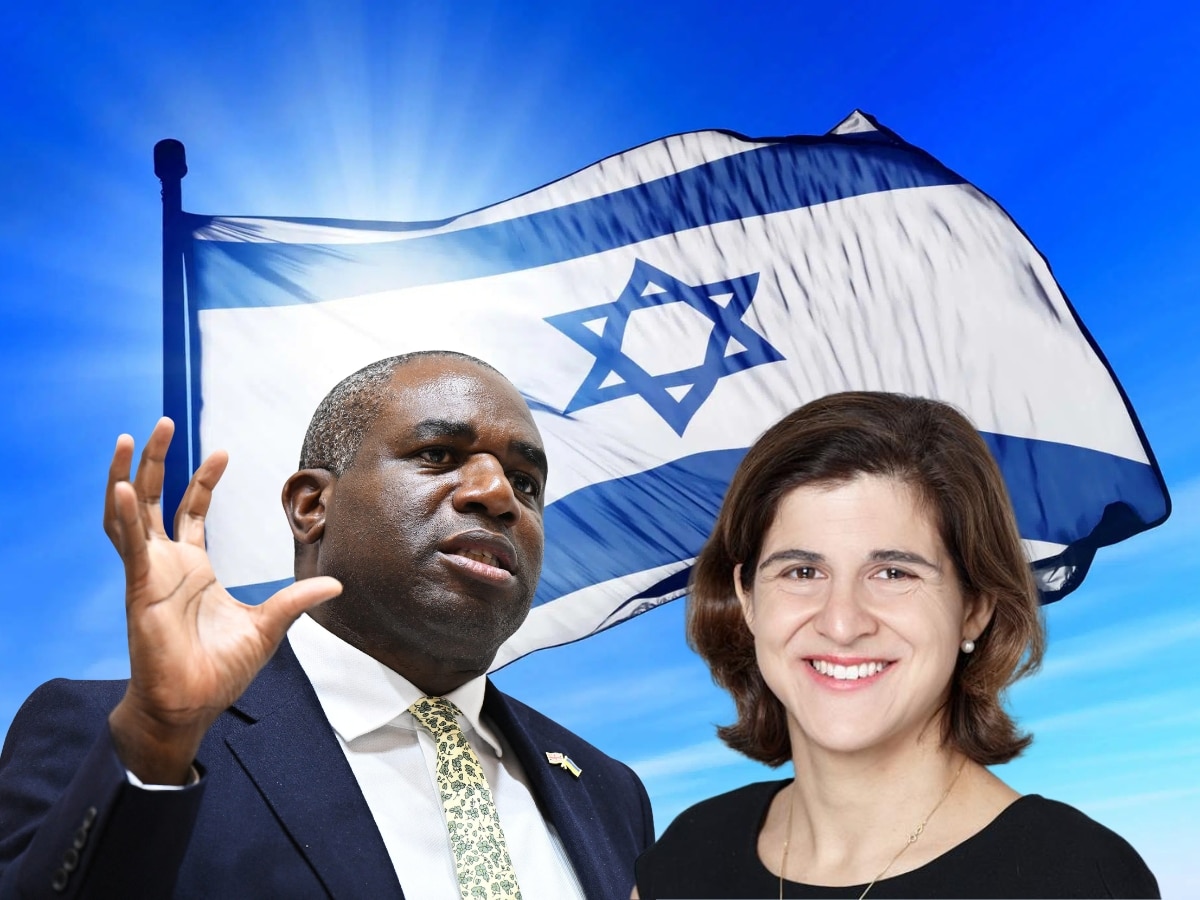
My investigations reveal that this erosion of democracy has been shaped by Lammy and Sackman, two pro-Israeli lawyers-turned-politicians, who have both been captured by lobbyists and arms traders.
Jury trials and Sarah Sackman
Keir Starmer initially appointed Sarah Sackman as solicitor-general. Now, she is Labour’s minister of state for courts and legal services. But Sackman previously worked as a judicial clerk in the Israeli Supreme Court. She has also stated that she “travels to Israel on a yearly basis”.
From 2015-2024, Sackman was the vice-chair of the pro-Israeli Jewish Labour Movement. Indeed, the Jewish Labour Movement, which was known as “Poale Zion” until 2004, openly declares that one of its aims is “to promote the centrality of Israel in Jewish life”. In 2015, Sackman said:
The issue of Israel is something that is deeply personal and emotional.
In May 2024, Sackman opposed International Criminal Court arrest warrants for Israeli prime minister Benjamin Netanyahu and defence minister Yoav Gallant, saying:
Advertisement
I trust the Israeli people to hold their leaders to account.
Just three months later, a poll revealed that 65% of Jewish Israelis opposed criminal prosecution for IDF soldiers suspected of gang rape. Israeli society responded to the Sde Teiman abuse scandal by holding “right to rape” protests, and the Israeli state responded by arresting the chief military advocate who had leaked the video of the abuse.
On 12 March, all remaining charges of “aggravated abuse” and “causing aggravated injury” against the five soldiers (charges of rape were never brought) were dropped. This is the society that Sackman trusts to “hold their leaders to account”.
driven for the cause of the Jewish people in Britain and in Israel.
Other financial backers include Sue Woodford-Hollick, the wife of Labour peer Clive Hollick. Hollick contributed £50,000 to Starmer’s 2020 leadership campaign and was another funder of McSweeney’s Labour Together outfit. He previously served as a special adviser to both Epstein-associate Mandelson and long-standing Labour Friend of Israel Margaret Beckett. Hollick is also a director of Honeywell, a US conglomerate that claims to provide “battle-tested technologies” to “the most advanced defence forces in the world”.
Jury trials are not a filter for prejudice
Lammy’s previous claim that juries “act as a filter for prejudice” is now in conflict with the biases of his backers. It is also clear that Sackman’s trust in Israeli society’s ability to hold its leaders to account is not extended to UK citizens. It is far from a coincidence that this assault on the right to trial by jury is accompanied by the fact that juries have repeatedly refused to convict pro-Palestine actionists, who have done more than the UK government to stop a genocide. Clearly, the Labour party is entirely in the pockets of Zionist lobbyists whose undue interference in our democratic processes is extremely troubling, to say the least.
Lammy and his co-conspirators are determined to undermine our right to a trial by a jury of our peers nonetheless. By examining the political ideology – Zionism – that underpins Starmer’s cabinet, we can begin to understand why.
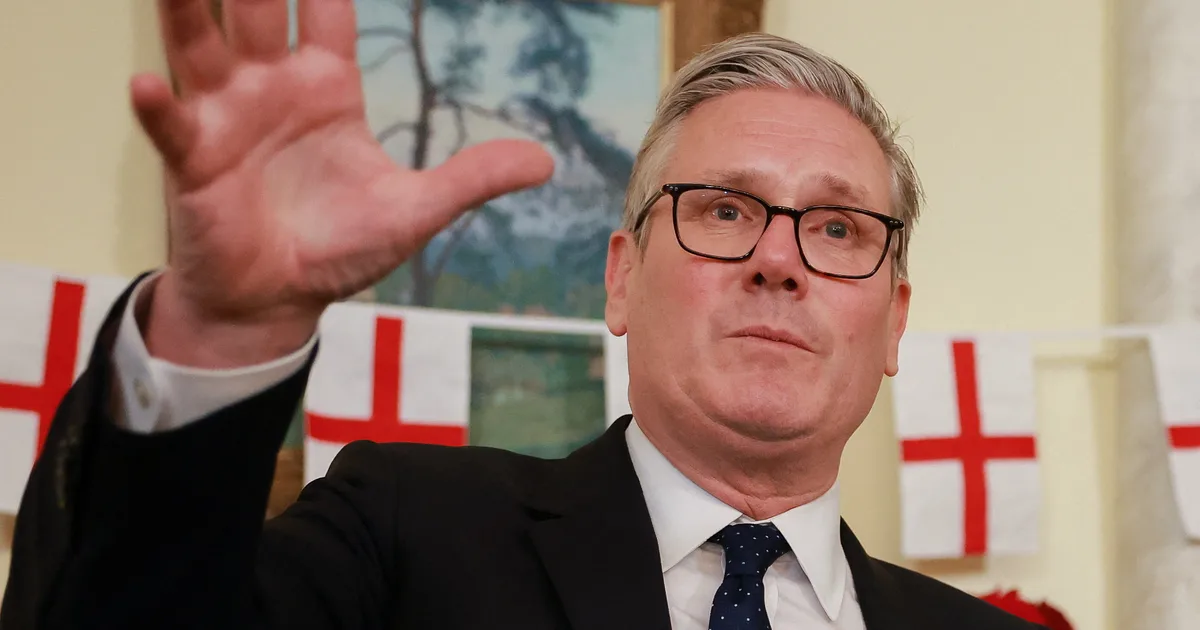
On Sky News this morning, Phillips said: “The smart money says the prime minister won’t be winkled out of Downing Street, but the vultures are circling.”
Advertisement
In a powerful monologue, Phillips added: “On May 7 the British people spoke, and they were brutal. They gave Nigel Farage a fighting force of nearly 1,500 councillors. They boosted [Green Party leader] Zack Polanski’s ranks by getting on for another 500.
“They put leaders in Edinburgh and Cardiff who ultimately want to break up the UK.
“What they said to Sir Keir Starmer was unambiguous: we think your government is a massive letdown, we really can’t see the point of your party and what’s more we really don’t like you very much either.
“The Labour Party is in chaos, with a backbencher threatening to trigger a leadership contest, and several of Starmer’s cabinet members jostling to replace him.
Advertisement
“The prime minister is going to respond tomorrow in what we are promised is a major speech. To rescue his leadership he’ll need something a bit more persuasive than his initial response on Friday morning, which amounted to ‘yes I made mistakes, the biggest of which is not to tell people frequently enough and loudly enough that everything I’ve done is right’.
“It’s quite hard to imagine voters in Barnsley or Hartlepool or Thurrock, where Labour were swept away by Reform, turning to their friends and crying ’if only I’d known they’d bring back Gordon Brown and Harriet Harman, I’d definitely have voted for Keir instead of Nigel.
“The prime minister is signalling frantically that he plans to keep going. He talked about being set for a 10 year run. But for all the stirring words and the bravado, this weekend he seems to me, and to many others, to be a man who is not waving, but drowning.”
Subscribe to Commons People, the podcast that makes politics easy. Every week, Kevin Schofield and Kate Nicholson unpack the week’s biggest stories to keep you informed. Join us for straightforward analysis of what’s going on at Westminster.
And now, gardener and author Simon Akeroyd has shared that when it comes time to water your soil – especially if it has seedlings or freshly-sown seeds – a spoon could be your secret weapon.
How can a spoon help me to water my plants better?
In an Instagram post, he said that watering soil can help new seeds germinate, but doing so over a large area can be tiring “if you only have a watering can with no attachment”.
Advertisement
Removable heads that attach to the nozzle of your watering can, like “rose” style sprinkler heads, can make the process faster and ensure the even distribution of water.
You can get similar results with various hose attachments, the gardener added.
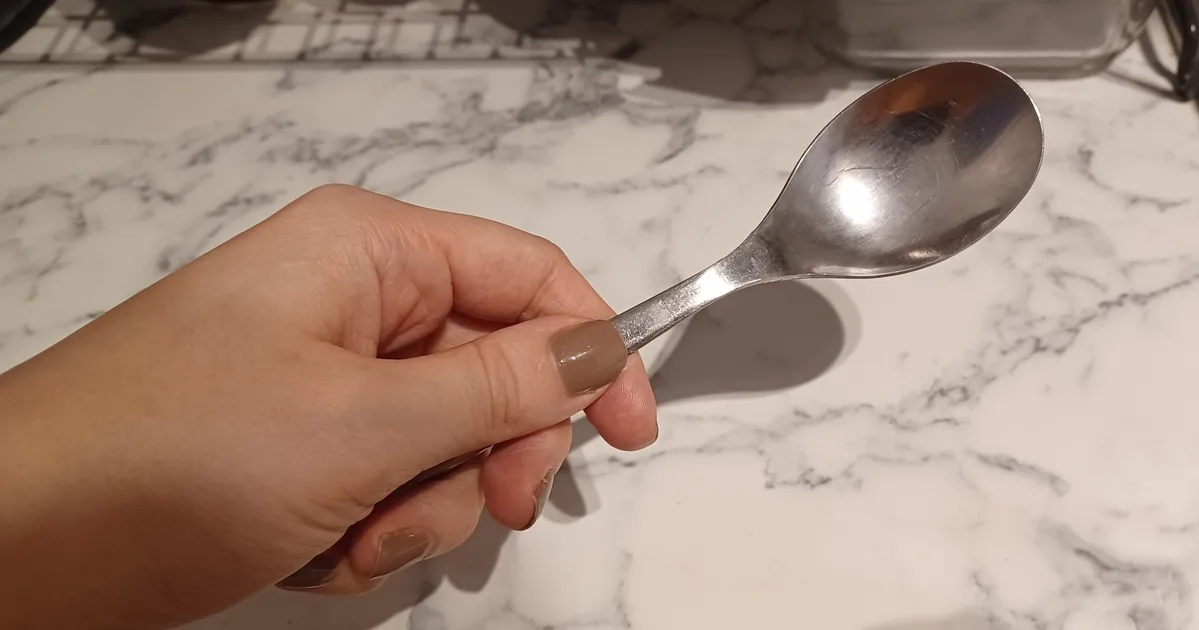
But, Akeroyd continued, “my tip for a wider distribution of watering is to attach a spoon to the end of your nozzle”.
That way, when you tip the can forward, water fans out from the bowl of the spoon rather than streaming in a straight line.
This is especially useful for “broadcast sowing”, Akeroyd continued, stating that “Seeds that you might broadcast sow include mustard, green manures, lawn seed, wildflowers, etc.”
Any other tips?
Yes. Akeroyd said in his clip that if you live in the UK, another way to water pre-seed soil is to simply wait for the rain to come.
Advertisement
Even if you’re using a watering can, this may still be sage advice.
Rainwater is significantly better for your plants than water from the tap, partly because its slightly acidic nature allows it and its nutrients to reach your plants’ roots sooner.
It is a little dirtier, but that’s no bad thing. The Ecological Landscape Alliance (ELA) said that a bit of grime in your water works “like a light application of fertiliser”.
Per experts from Berkeley Psychiatrists, that’s partly because signs of ADHD often go missed or misdiagnosed in adults, “especially women”.
They added, “In practice, many women are labelled as anxious, overwhelmed or disorganised, rather than their experiences being recognised as ADHD. There’s also pressure to appear organised and in control, so people develop ways of coping that can mask the condition”.
Advertisement
Whatever your gender, they shared some possible ADHD-related patterns that can go under the radar, “particularly when symptoms don’t match traditional expectations”:
1) Seeming to “cope well”, despite being burnt out
This can look like “high-achievers relying on rigid systems or overworking,” the experts said.
Speaking to HuffPost UK previously, consultant psychiatrist Dr Stefan Ivantu of the ADHD specialist said: “signs of ADHD are frequently misinterpreted as burnout in undiagnosed adults… The exhaustion often comes from the immense effort required to fit in and function in a neurotypical environment, [like] the average workplace.”
Advertisement
2) Less visible hyperactivity
Not all hyperactivity involves physical fidgeting, the experts said. It can include an “overactive mind rather than physical restlessness”.
“One of the main issues we see is over-reliance on symptom checklists,” the psychiatrists said. “ADHD can’t be diagnosed from a questionnaire alone; many traits overlap with anxiety, trauma or burnout.”
4) ADHD that’s been “masked” by other conditions
Meanwhile, sometimes ADHD really does occur alongside other conditions. For instance, autistic people are more likely than those without autism to have ADHD. When the two co-occur, it’s called AuDHD.
Advertisement
And, the psychiatrists told us, “Difficulties like inattention or restlessness can stem from anxiety, depression or environmental stress, not just ADHD.”
That might mean that an existing condition leads to ADHD going undiagnosed.
5) Only getting a diagnosis when at breaking point
We’ve written before about how menopausal women are increasingly being diagnosed with ADHD, in part because symptoms they’d been able to mask for years seem to come to the surface during the life stage.
Advertisement
“We often see ADHD become more noticeable during periods of hormonal change, when coping strategies are no longer as effective. For many women, this is when they seek support or receive a diagnosis for the first time,” the experts said.
What if I think I may have ADHD?
The psychiatrists said that you need to see an expert to get a diagnosis.
“There’s been a clear rise in awareness, which is positive,” the clinicians said. “But some online narratives oversimplify what a complex condition is.
Advertisement
“A thorough assessment looks at the full picture. That includes developmental history, current functioning, and whether there may be other factors contributing to those experiences. Without that level of depth, there’s a risk of both missing ADHD where it is present and identifying it where it isn’t.”
We hope you love the products we recommend! All of them were independently selected by our editors. Just so you know, HuffPost UK may collect a share of sales or other compensation from the links on this page if you decide to shop from them. Oh, and FYI — prices are accurate and items in stock as of time of publication.
Every year, I’m buzzing for summer to roll around so I can frolic around in meadows and lie in the sun.
But then the reality of hay fever hits me around March time, and I lose all fantasies of an idyllic pastoral life in an instant.
The pollen count seems to get worse each year, too. It’s not just me: thanks to climate change messing with the weather, pollen season now lasts one to two weeks longer than it did less than three decades ago.
Advertisement
You know what that means: extra days of sneezing, itchy eyes, a runny nose, and dry throat. Joy of joys!
If, like me, you’re looking for something, anything, to help minimise the effects of hay fever, we’ve found 14 products that aren’t antihistamines to help deal with pesky pollen allergies.
For many of us, there is no greater comfort than rewatching our favourite shows – to the point that those familiar characters can begin to feel like close friends.
Because of this, it can be near impossible to imagine anyone else but the line-up of actors we know and love appearing in these series.
However, what you might not know, no matter how many times you have binge-watched them, is that some of the most popular shows in TV history almost had a very different cast.
With that in mind, we’ve rounded up 17 hit shows that almost had completely different A-list stars in their casts…
Advertisement
Elizabeth Olsen, Millie Bobby Brown, Sam Heughan and Mahershala Ali all didn’t make the cut for Game Of Thrones
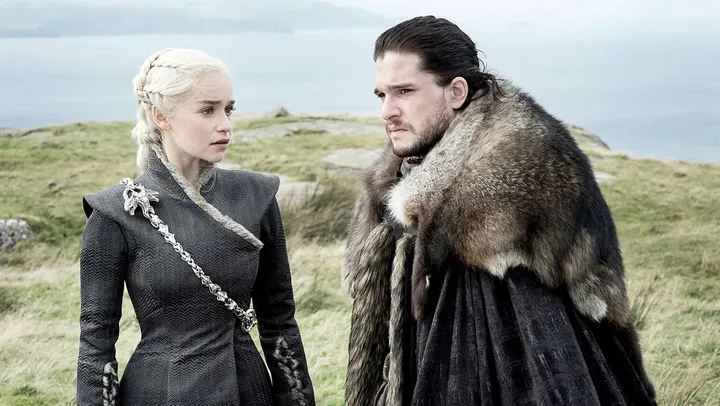
Emilia Clarke and Kit Harington in Game Of Thrones
It sometimes felt like every actor in the world was in Game Of Thrones, but there are a few famous faces who didn’t make the cut, after auditioning for roles in the fantasy drama.
“I auditioned for, like, the assistant to the casting director in a small room in New York with just a camera on me and them reading the script,” she claimed. “I was doing the Khaleesi speech when she comes out of the fire. It was awful.”
Another A-lister who claims they “blew” their Game Of Thrones was Mahershala Ali. The two-time Oscar winner auditioned for the part of Xaro Xhoan Daxos, a merchant in Qarth, during season two, telling Jimmy Kimmel that it was the “worst audition of his life”.
Advertisement
Outlander star Sam Heughan, meanwhile, had multiple chances to appear on Game Of Thrones, auditioning to play Loras Tyrell, Renly Baratheon and several members of the Night’s Watch, but never landing any of them.
“I’d always get so close! I’d be like, ‘Guys, just give me a sword!’,” he told Vulture in 2014, lamenting: “Everyone was going in for those parts.”
Lastly, Millie Bobby Brown’s failure to land the role of Lyanna Mormont in the fantasy drama almost led her to quitting acting before her career had even taken off.
Millie Bobby Brown auditioned for Game Of Thrones in the early years of her career as a child actor
“I was auditioning for commercials, anything really,” the British star told Jimmy Kimmel in 2020. “I then auditioned for Game Of Thrones and I got a no for that. That’s kind of when I was like, ‘Oh, this is really difficult’.”
The role of Lyanna eventually went to Bella Ramsey, who now stars in The Last Of Us (and will next be seen in the upcoming season of The Celebrity Traitors).
Advertisement
Despite being one of the biggest shows of the 21st century, a long list of other actors also turned down roles in Game Of Thrones.
Hunger Games actor Sam Claflin dropped out of the audition process for Jon Snow after being offered a major movie role.
Despite the show’s success, he doesn’t regret this decision, telling Cinema Blend: “I like getting into things like that [as a viewer] and not being a part, because I always find it’s very jarring if I was part of it. But I’m a big fan.”
Gillian Anderson also rejected an unspecified role in the show, telling the Daily Mail back in 2013: “If I am going to be spending that amount of time working on something, I would rather be working with a director like Martin Scorsese.”
Advertisement
Succession actor Brian Cox turned down the role of Robert Baratheon, complaining in 2016 to Vodzilla that the show wouldn’t pay him enough, a complaint he later regretted.
“Now they have more money,” he continued. “And I was silly. I was silly, it was silly, because I’m a complete addict now.”
Before Succession, Brian Cox was offered a key role in Game Of Thrones but turned it down
In his memoir, Putting The Rabbit In The Hat, Brian wrote: “There’s always been a tendency of American productions to treat British actors differently from American actors,” he said. “In other words, to get them cheap.”
Many fans believe the actor was referring to the role of Mance Rayder, the King Beyond the Wall, which eventually went to Ciarán Hinds.
Advertisement
“It was a lovely part, a good part. I’m going to regret it,” he told HuffPost in 2012. “My problem is, I’ve got four kids, and at the moment, I’m reluctant to be away from home for a long time.”
Lily Allen quite rightly turned down the role of playing Yara Greyjoy, alongside her real-life brother Alfie Allen, who starred as Theon Greyjoy.
“They asked me if I’d be interested in playing Theon’s sister,” Lily claimed during a Reddit “Ask Me Anything” session.
“I felt uncomfortable because I would have had to go on a horse and he would have touched me up and shit. Once they told me what was entailed, I said, ‘no thanks’.”
Advertisement
Jennifer Lawrence, Lily Collins and Dakota Johnson all auditioned for Gossip Girl
Blake Lively and Taylor Momsen in Gossip Girl
CW Network/Kobal/Shutterstock
Gossip Girl creator Josh Schwartz has revealed that a then-16-year-old Jennifer Lawrence auditioned to play Serena van der Woodsen, the role which launched Blake Lively to fame.
“We did not realise this at the time, but Jennifer really wanted to play Serena and auditioned,” he told Vulture in 2018.
“This story came to us secondhand – but we were told she definitely auditioned and was bummed to not get it.”
Advertisement
Lily Collins auditioned for the show, too, with the hopes of playing Taylor Momsen’s character, Jenny.
She recalled to Glamour: “I was about 17 or 18 years old at the time. I remember driving onto the lot and going, ‘Oh my God. This is surreal’,
“It was one of those OMG moments,” she laughed. “Whether or not I got it, I knew I could say I screen tested on the lot and one day I want to work at one of these [studios],” the Emily In Paris actor added.
Gossip Girl casting director David Rapaport also told E! that the pilot starred Jessica Jones actor Krysten Ritter and Pitch Perfect star Brittany Snow, and that Dakota Johnson, Rooney Mara and Nina Dobrev all auditioned for the teen drama.
Advertisement
Although Kristen Bell was the top pick to voice Gossip Girl, both Christina Ricci and Selma Blair were “in the mix” as possible candidates, according to the executive producer.
Dawson’s Creek almost starred Selma Blair and Katherine Heigl
Michelle Williams, James Van Der Beek, Katie Holmes and Joshua Jackson in Dawson’s Creek
Creator Kevin Williamson told Entertainment Weekly in 2018 that Selma Blair was his first choice for Joey Potter, before seeing Katie Holmes’ audition.
Advertisement
“I really loved Selma until, of course, I got the infamous videotape from the basement of the Holmes family in Toledo, Ohio,” Kevin said.
“And when that video showed up, it changed my whole life.”
Grey’s Anatomy actor Katherine Heigl also nearly starred in the iconic 90s teen drama, auditioning for the role of Joey Potter, which ultimately went to Michelle Williams.
“She looked slightly older at that time. Even though she was younger, I just think she was more mature,” Kevin explained in the same interview. “She gave a great audition, I remember we were all sort of like, ‘Wow, she’s good.’”
There is an alternative universe where Vince Vaughn, Kristin Davis and Jon Favreau were in Friends
The stars of Friends pictured during the show’s first season
NBCUniversal via Getty Images
It’s hard to imagine anyone else playing Phoebe, Joey, Rachel, Ross, Chandler and Monica in Friends, but the road to those stars being cast was an especially arduous one.
During a 2015 interview with HuffPost, Friends casting director Ellie Kanner opened up about the difficulties of casting an ensemble of six.
Meanwhile, Tea Leoni was the first choice to play Rachel Green, but turned it down to star in another sitcom, The Naked Truth, which aired for three seasons.
30 Rock icon Jane Krakowski also auditioned for the role that eventually became a star-making turn for Jennifer Aniston.
Advertisement
“I, like almost every actor, auditioned for Friends,” the Broadway star told Giuliana Rancic at the 2015 Emmys. “I wish I had gotten that one… I didn’t go very far [in the audition process].”
Before landing her big break on The King of Queens, Leah Remini made it through several rounds of auditions to play Monica.
“I was devastated that I didn’t get it. We all knew it would be a huge hit. We just knew it,” Leah told MediaVillage.
Sex And The City’s own Kristin Davis also told James Corden in 2021 that she was was ”one of like 8,000 young ladies who read for Monica”, but didn’t get the part.
Advertisement
Vince Vaughn tried out for Friends back in the day, hoping to get cast as Joey
One of the many actors to audition for the role of Joey Tribbiani was Vince Vaughn, as did The Simpsons voice actor Hank Azaria, who eventually became known to Friends fans as Phoebe’s boyfriend David.
“I auditioned for Joey, and didn’t get it, and I was like, ‘No, no, I have to go back, I have to try again’,” Hank said during an appearance on The Late, Late Show.
“So, I bulled my way back in for a second time and they were very kind and watched my audition, and then threw me out. Spoiler alert, I didn’t get the role of Joey.”
Taraji P Henson and Gabrielle Union could have played Olivia Pope in Scandal
Kerry Washington as Olivia Pope in Scandal
Shondaland/Abc Studios/Kobal/Shutterstock
In the early stages of the casting process, The White Lotus actor Connie Britton was the first choice by play political fixer Olivia Pope in Scandal, until the show’s creator Shonda Rhimes stepped in.
Advertisement
She felt it was important that the role should go to a Black actor, with Kerry Washington eventually landing the part.
Taraji P. Henson has revealed she auditioned to play the character, even though she knew already that Kerry was a better fit for the part.
“When I went in to read for Shonda Rhimes, in my mind I was like, ‘this is Kerry Washington. Why am I even in here?’,” she told Power 105.1′s Angie Martinez.
Bring It On star Gabrielle Union has claimed she was in the final running to play Olivia Pope before Kerry was cast.
Advertisement
“I was one of the last five or 10 to audition,” she said in a 2013 interview with Rolling Out. “When Kerry got it, I congratulated her. Now after each episode, I’m leading the charge, like Gladiators, stand up! I’m obsessed with the show.”
Nicola Coughlan could have been in Stranger Things
The final season of Stranger Things premiered on Netflix in 2025
In March 2026, Nicola was asked during a radio interview if there were any “near-miss” roles in her past, befre admitting to having tried out for Netflix’s hit 80s-set series.
“It would be generous to myself to say I narrowly missed out on it,” she claimed. “But I did a first-round audition for Stranger Things.”
Fortunately, the Irish actor is not too bitter she didn’t land the role.
Advertisement
“You know when you watch a show and you go, ‘oh well, thank God I didn’t get that, because I would have been way worse!’,” she joked.
“I don’t think I was anywhere close to being in Stranger Things, but I did audition,” she added.
Benedict Cumberbatch and Jessica Chastain were nearly Bill and Sookie in True Blood
Stephen Moyer and Anna Paquin in True Blood
True Blood creator Alan Ball revealed that Benedict Cumberbatch auditioned to play the lead vampire role of Bill Compton in True Blood.
Speaking in 2018, for the show’s 10th anniversary, Alan also shared that Jessica Chastain read for the part of Sookie.
Advertisement
The characters were eventually portrayed on screen by Stephen Moyer and Anna Paquin, who married in real life after appearing on the supernatural show.
Alan also told The Hollywood Reporter: “Jennifer Lawrence read for, in season three, there’s this werepanther girl, and she was great”.
However, it was decided that Jen would be an inappropriate casting choice to play Jason’s girlfriend, given she was only 17 at the time.
Dakota Johnson and Elizabeth Olsen were among the stars who auditioned for lead roles in Girls
Advertisement
Allison Williams, Jemima Kirke, Lena Dunham and Zosia Mamet in Girls
The Emmy winner explained that Wandavision’s Elizabeth Olsen, Fifty Shades Of Grey’s Dakota Johnson, Black Mirror’s Cristin Milioti and comedian Amy Schumer tried out “several times” for her US comedy.
Lena previously wrote in her newsletter that Amy had auditioned for the role of Shoshanna, but “it was clear Amy wasn’t meant to play an innocent Juicy Couture lover obsessed with emoji – even if her Meatpacking District club lingo was the funniest shit I had ever heard”.
“When she left the room, the vibe was very ‘Someone give that lady a show, STAT!’” Lena added.
Jenny Slate who played Hannah’s high school nemesis Tally Schifrin in the series, was originally up for the role of uptight Marnie, a role Allison Williams was cast in.
Advertisement
“At the time the show Girls was being cast, and I went in a bunch of times for the role of Marnie,” she said on the Las Culturistas podcast.
Gillian Anderson declined a major part in Downton Abbey
Elizabeth McGovern and Hugh Bonneville in Downton Abbey
Back in 2012, she told TV Guide that she hoped her work in the TV adaptation of Great Expectations would be embraced “with the same love that flowed toward Downton Abbey”.
Advertisement
“I was actually offered a part in Downton,” she then added, referring to the role which would eventually be taken on my Elizabeth McGovern.
Matt LeBlanc almost joined another iconic sitcom after Friends ended
The stars of Modern Family pictured on set in 2009
Mario Perez/Abc-Tv/Kobal/Shutterstock
When the short-lived Friends spin-off Joey was cancelled, Matt LeBlanc had the opportunity to return to the sitcom world in another show that became a smash hit.
Speaking to USA Today, Matt explained that the script for Modern Family wound up on his desk, with an offer to play the role of the dorky patriarch Phil Dunphy.
Advertisement
“I remember reading it thinking, ‘this is a really good script, [but] I’m not the guy for this’,” he said. “I’d be doing the project an injustice to take this.”
The role, of course, went to Ty Burrell, who it’s hard to argue is perfect for the part.
Judy Greer also revealed she was asked to audition for Phil’s wife, Claire, but didn’t want to play a character with children.
“I was really torn about it, but I ended up obviously not,” the told the Dinner’s On Me podcast, hosted by Modern Family’s own Jesse Tyler Ferguson.
Advertisement
“Who knows if I would have even gotten it anyway? I was just like, ‘I don’t know if I want to be America’s mom yet’.”
Can you picture anyone else in Breaking Bad but Bryan Cranston?
The US broadcaster AMC and the show’s creator Vince Gilligan have both claimed these actors were sent scripts, although John Cusack insisted on social media in 2013 that he would never have turned down the role of Walter, branding the suggestion “crazy”.
Sarah Michelle Gellar wasn’t the first choice to play Buffy The Vampire Slayer
Advertisement
Sarah Michelle Gellar in character as Buffy Summers
Before being cast in her breakout role on Dawson’s Creek, Katie Holmes was offered the part of Buffy Summers in the iconic supernatural drama, but she decided to finish high school instead.
Selma Blair – who we know now almost appeared in Dawson’s Creek herself – revealed on Instagram in 2018 that she had also auditioned to play the vampire slayer but “didn’t even come close”.
Natasha Lyonne has claimed she was sent scripts for both Buffy and Dawson’s Creek after her performance in Everyone Says I Love You, but “did not want to be committed when I was 16 years old” to a demanding TV schedule.
It wasn’t just Buffy who actors were lining up to play, either.
Advertisement
Natasha Lyonne was offered the role of Buffy but turned it down
Yellowjackets actor Melanie Lynskey told Shut Up Evan that she was in the running to star as Willow, a role ultimately played by Alyson Hannigan.
“My biggest concern was that I didn’t want to play a guy in high school,” Ryan explained to the Toronto Star in 2008.
“I had just come out of high school, and it was fucking awful.”
Michael Keaton turned down the role of Jack on Lost because he wanted the character to die in the first episode
Advertisement
Lost was a TV phenomenon when it premiered in the mid-2000s
Florian Schneider / Disney
Beetlejuice actor Michael Keaton was originally set to play Jack Shepherd on Lost but, rather unusually, didn’t like the fact that the character would live for so long.
You see, Jack was originally going to be killed off in the first episode as a way to subvert audience’s expectations, something that attracted the Birdman star to the project.
“I think what happened was – and I’ve never really talked to [Lost co-creator J.J. Abrams] about this – he thought better of [the twist of Jack dying in the pilot],” he explained during a 2017 appearance on The Hollywood Reporter’s Awards Chatter podcast. “Or the studio said ’That ain’t gonna happen’.
“And then there was kind of a half a conversation, like, ‘Well, do you have any more interest?’…”
Advertisement
You can probably guess that he didn’t, which is Matthew Fox came to play the character in all six seasons of Lost.
Rob Lowe was one of many stars who turned down parts in Grey’s Anatomy
The stars of Grey’s Anatomy in 2005
Ron Tom/Abc-Tv/Kobal/Shutterstock
Several A-listers almost starred in Grey’s Anatomy before the long-running medical drama landed on our screens, most notably Rob Lowe, who passed on playing Derek “McDreamy” Shepherd.
“Me in that part isn’t as interesting as Patrick in that part,” he insisted. “If it’d been me, they wouldn’t have called me ‘McDreamy,’ they would have called me Rob Lowe’.”
“Had I done Grey’s, I wouldn’t have been in Parks and Recreation. That alone for me is enough,” he added.
The Dawson’s Creek actor originally said yes to the role until the 2008 Writer’s Strike led to disruption, and Joshua chose to instead appear in Fringe.
Advertisement
Chris Pine could have been a lead in The O.C.
The O.C. ran for four seasons between 2003 and 2007
Appearing on an episode of Josh Horowitz’s podcast Happy Sad Confused, Chris claimed: “I had awful skin as a teenager and then when I came after college, my skin started breaking out again.”
In TV critic Alan Sepinwall’s 2023 book Welcome to the O.C.: The Oral History, casting director Patrick Rush confirmed that while Chris was “really good” in his audition, he “was at the age where he was experiencing really bad skin problems”, which put him out of the running.
Advertisement
Patrick wrote: “It was at that point where it looked insurmountable. And as a kid who grew up with horrible skin, it just broke my heart. But Chris Pine’s fine now.”
At one point, Hugh Grant was in the running to replace Charlie Sheen in Two And A Half Men
Ashton Kutcher and Jon Cryer in the later years of Two And A Half Men
Warner Bros Tv/Chuck Lorre Prod/Kobal/Shutterstock
Years later, the English actor revealed that he had been offered a “stratospheric” amount of money to join the sitcom, but had reservations when he met with the creative team.
Advertisement
“They didn’t have a script or a new character,” Hugh told Howard Stern in 2016. “They just said, ‘Trust us, we’ll create one’.”
“I said, ‘well, you’re obviously brilliantly talented because I like that show’ and they make brilliant TV shows, but I said I’m I’m too scared to sign up without a script,” he claimed.
Ashton Kutcher would eventually take on a role within Two And A Half Men, which ran for four further seasons after Charlie’s infamous exit.
A whole host of stars were in the running to play Carrie Bradshaw in Sex And The City – while Alec Baldwin was originally eyed for the role of Mr Big
Advertisement
Sarah Jessica Parker and Chris Noth in Sex And The City
Sarah Jessica Parker is perfect as Carrie, but lots of other actors had the opportunity to walk in her Manolos.
In that version, the show would have been a spin-off vehicle for Carrie Fairchild, the character she played in Central Park West. However, Mädchen is said to have turned down the role to prioritise her family.
Desperate Housewives actor Dana Delany was also offered the role of Carrie, but apparently passed because she felt she was too closely associated with sex-related shows after appearing in Nude Girls and Exit To Eden.
House actor Lisa Edelstein also auditioned for Carrie and was even considered an alternate for if Sarah Jessica left the project.
Advertisement
Lisa told Access Hollywood: “I was either going to do it or not. It all depended on whether she said yes. My contract was complete. I was waiting.”
Kristin Davis also originally auditioned to play Carrie before being cast as uptight Charlotte York.
Meanwhile, Pose star Sandra Bernhard once told Howard Stern that she was asked if she was interested in playing Miranda Hobbes, but passed on it because she didn’t rate the original script, which she branded “terrible”.
Netflix could well have another hit on its hands with its new true crime drama Legends.
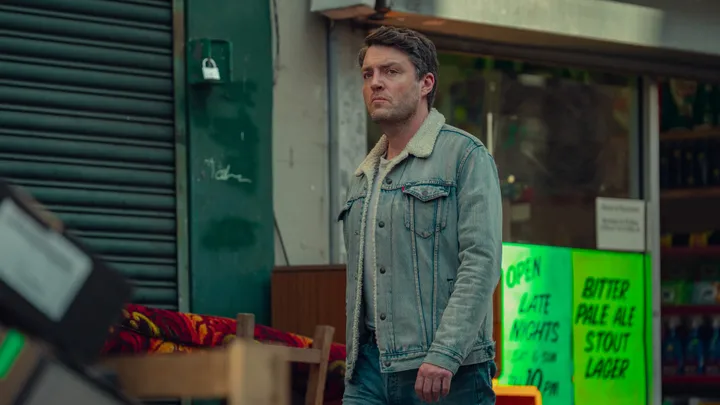
Helmed by The Gold creator Neil Forsyth and led by a sprawling all-star cast that includes Steve Coogan and Tom Burke, the six-part series has already earned positive reviews, and slowly began climbing the streaming service’s chart of most-watched shows upon its release last week.
With just six episodes in total and a gripping true story at its centre, Legends makes for ideal binge-viewing – but that does also mean that you may well have finished the whole thing by the end of the weekend.
Advertisement
Naturally, you might now be pondering whether or not more episodes of Legends could be coming in the future, so here’s a quick guide to everything we know at the moment…
Could there be a season 2 of Legends on Netflix?
Tom Burke’s performance as Guy in Legends has also been praised
The first thing to note is that Legends is based on a true story, which is wrapped up pretty well by the finale, so our immediate gut feeling is that it’s unlikely more episodes of Legends could be coming.
However, one glimmer of hope there could be for Legends viewers about the future of the show is that it’s not explicitly billed as a “miniseries” or “limited series” on Netflix, which its past offerings only intended to run for one season have said.
One interesting theory put forward by Radio Times is that if Netflix did want to carry Legends on, Neil Forsyth could look at other similar cases of ordinary people winding up in extraordinary circumstances, or undercover cases that made for great stories.
Advertisement
What should you stream next if you loved Legends?
Before Legends, Neil Forsyth oversaw the BBC drama The Gold
Both seasons of Neil Forsyth’s hit show The Gold are streaming on BBC iPlayer.
Starring Dominic Cooper and Hugh Bonneville, The Gold also features appearances from several Legends cast members, including Tom Hughes, Joshua Samuels and Thomas Coombes.
I often catch my multiply disabled daughter Millie in this pose: leaning forward in her rocker and staring at her lap, frowning.
My husband stands four feet from her, picking the first notes of a blues riff on his electric guitar. Millie smiles faintly when she recognises the clip-clop of the beat. As the G chord gives way to the C, and back to the G, she grins and sets her chair swinging. Next comes D, with its strong pull back to the opening note, and she snorts and cackles as my husband finishes the riff.
Sometimes, when he walks past Millie, he just hums the riff – ba-bum ba-bum ba-bum ba-bum – and the simple rhythm sung out loud makes her explode with laughter. I remarried a year ago, and Millie hasn’t known my husband long. But she still gets the joke.
Millie is 25 years old. She doesn’t walk on her own, or feed herself, or communicate with signs or symbols. Yet she lives along with the rest of us in a world of patterns and predictions, a world in which we wait for “tock” when we hear “tick”.
Advertisement
“The sense of an ending:” that’s what the literary theorist Frank Kermode called this most human of tendencies; he argued that it was the elementary structure of every story. Even though Millie can’t tell a story, or to my knowledge, understand one, she shares this sensibility. She lives knowingly in music, at play in the interval between beginnings and ends.
The most profound of beginnings and ends are those marking the opening and closing of a life. Our children die. But we act like they’ll live forever. We’re the ancestors; they’re the descendants – that’s how kinship is supposed to work.
It’s different when our children are profoundly disabled. Their lives are fragile and wondrous. Their life expectancy is more than a statistic; it’s a fact to reckon with. The longer you’ve loved them, the more it overshadows your days.
Millie is undiagnosed. Which means many things. Among them is the fact that I have no idea how long she will live.
Advertisement
Millie was 10 months old when the extent of her disabilities became evident. She’d had a normal birth and what looked like a normal early infancy, before missing all the developmental milestones.
No smiling, rolling, sitting, crawling. No babbling, looking into my eyes, or following my gaze. Our first geneticist tested her for the usual suspects: Rett Syndrome, Angelman Syndrome, plus some metabolic disorders. The lab techs sequenced, and sequenced again, but ruled all these conditions out.
This came as a blow, because Millie’s father and I wanted a road map. Back then, we were still thinking like most new parents. Millie’s childhood was our term of office. We were obsessed with the first 20 years of our daughter’s existence: the slow trip to the top of the rollercoaster, not the twists and turns that would confront her on the way back down.
When the doctors and therapists told us that Millie was “delayed”, we did everything we could to help her catch up. Our job was to help our daughter gather enough momentum to carry her through the rest of her life. We never gave a thought to how long the ride would last.
Advertisement
Then Millie’s father died of a heart attack, an end that expunged all thoughts of the future. I stepped off the rollercoaster and clung to my children, no longer worrying about who they would become. I made peace with the idea that Millie was just Millie – no labels or game plans required.
I went to work getting her the support she needed. The insurance company covered her wheelchair. The school district signed off on her services. I came up with my own answers for family and friends.
Then I learned something that made me long for a diagnosis again. Millie had begun taking the most benign drug for seizures when she was seven; in her late teens, it stopped working.
I had hoped she would grow out of seizures; instead, she was growing into them. They were getting worse. Millie might not lead a long life.
Advertisement
Millie’s doctors still thought that she showed signs of Rett Syndrome. Patients with Rett Syndrome have an average age of death of about 24 years – a year younger than my daughter. People with Rett Syndrome – who are almost always women – sometimes develop intractable seizures in their 20s.
Seizures are a common cause of sudden, unexpected death in this population.
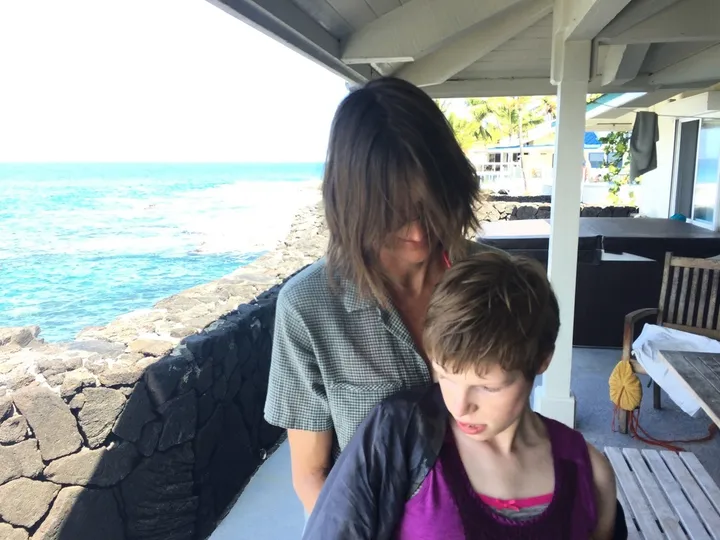
Photo Courtesy Of Danilyn Rutherford
The author’s favorite photo with her daughter.
In 2024, I enrolled Millie in the Undiagnosed Diseases Network, which maintains a database of rare genetic anomalies and conducts cutting-edge testing to identify them. Millie hadn’t been tested since 2012, and her full genome had never been sequenced.
“I’m pretty sure we’ll find something,” the genetic counsellor told me when she went over the consent forms.
Advertisement
Conditions like Rett are caused by what geneticists call “de novo mutations,” or random rearrangements of one or more of the genes that control brain development. A stroke of fate had created my daughter. Suddenly, it felt urgent to discover where it had hit.
I threw my understanding of statistics to the wind. This wasn’t a matter of maybe. I had to be ready for the worst. Would she lose me someday, or would I lose her?
“What are your expectations for this meeting?” The genetic counsellor spoke with compassion from the square on my screen, although I suspected she was reading from a script.
It was November 2025, and I’d been waiting for this Zoom call for months. I glanced at my sister. She raised an eyebrow. She’s a geneticist, and I’d brought her along as backup.
Advertisement
“An answer?” I offered meekly. “So I can plan?”
The genetic counsellor cut to the chase.
My sister and I stared at her, slack-jawed.
The furnace kicked on. That morning, on a whim, I had dived from a dock into the Atlantic: a split second of flight, then I hit the freezing water, and time stopped.
Advertisement
I felt that way now: shot out of the story I feared I would soon be living. I had spent months preparing myself to bear up under the weight of bad news. Wonder swept through me. The death sentence had been lifted. Millie was unique. Like a snowflake. Or a comet. Or a god.
“I’m sorry,” the genetic counsellor said.
“No,” I stopped her. “There’s something beautiful about the fact that Millie isn’t like anyone else.”
After catching our breath, my sister and I peppered the genetic counsellor with questions. We wanted details. Did nothing really mean nothing?
Advertisement
There was a research study Millie could enrol in. Scientists were searching for mutations in the regulatory regions of the genome. This is my sister’s specialty. Her eyes lit up.
But the genetic counsellor cautioned us. “It will take years to build up that part of the database. I always try to balance hope with being realistic. Even if they find something, 10 years can go by before another patient turns up with the same anomaly. Or longer. We just don’t know.”
Wonder swept through me again. This quest of mine – to find out how Millie became Millie – it wasn’t just about us. “We don’t know what caused Millie,” I finally said. “We don’t know now, and we may not know until long after Millie and I are both dead. But someday someone will know. There’s something beautiful about that, as well.”
My sister had the last word. “Yes. We’d be doing this for science.”
Advertisement
“Grows, dies, grow, dies, grows, dies,” the memoirist and computer scientist Becky Taylor repeated one night as a small child with cerebral palsy. “What are you talking about?” her parents asked her. “Life,” she replied. Death finds us all. It’s simply a matter of when.”
After the meeting, my sister went through Millie’s paperwork. In fact, there was an anomaly in one of the genes associated with Millie’s symptoms; it’s called FOXG1. It may not mean anything – the majority of mutations are “silent,” non-functional bits of genetic fluff.
A website with information on FOXG1 syndrome included a video featuring some of the 1,500 individuals worldwide who have the condition. Most were small children. Either there aren’t many who live to adulthood or the geneticists just haven’t found them. I watched, my eyes moist, as a little girl materialised on the screen, her face blank, then blossoming into a smile. She could have been my daughter.
The FOXG1 gene is associated with Alzheimer’s disease, which means there’s funding for research. A parents’ group is sponsoring a study that has led to a treatment that is close to qualifying for clinical trials. There’s talk on the website of a “cure,” but the language also suggests that these parents just want to extend their children’s lives – the way I’d love to extend Millie’s.
Advertisement
Tick, then tock. Stories upon stories. Where will this new one lead? I’m hopeful, but I’m also ready for my daughter to continue to elude me.
The disabled lawyer and activist, Harriet McBryde Johnson, called her memoir Too Old to Die Young. The doctors were sure she wouldn’t survive past childhood; the joke was on them. So much for life expectancy.
A statistic is just a statistic – not a fact, just a chance. When I told Millie’s caregiver Marilyn, who is in her 90s, about the test results, she laughed. “That Millie. There’s nothing wrong with her. She’s been faking it all along.”
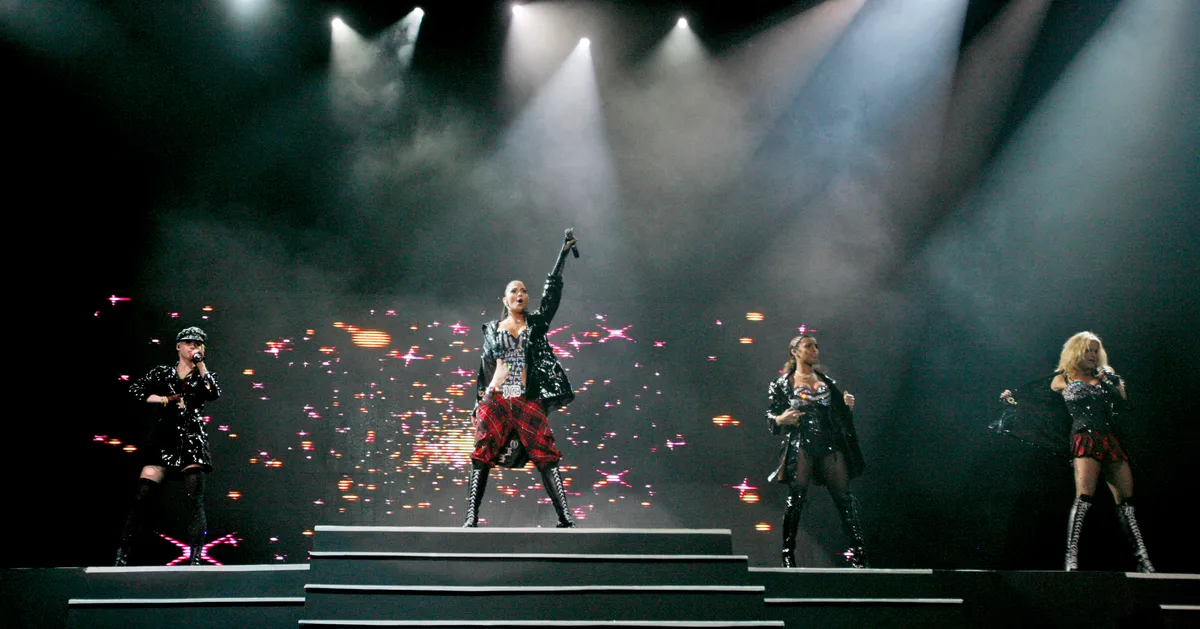
Earlier this week, the Pussycat Dolls cancelled almost every date on the US leg of their PCD Forever tour.
In a group statement posted on Instagram, they explained: “After taking an honest look at the North American run, we’ve made the difficult and heartbreaking decision to cancel all but one of the North America dates”.
This came after Meghan Trainor ditched her entire tour, citing “welcoming our new baby girl to our growing family of five” as her reason.
Meanwhile, Post Malone, who just canned six shows in his Big Ass Stadium Tour, said he did so to focus on his new album.
Advertisement
It all paints a pretty tough time for concert-goers. And some fans suspect that for certain artists, the real reason behind abandoned tour dates is what The Times has dubbed “blue dot fever”.
What is ‘blue dot fever’?
The trend’s name refers to the blue dots that represent unsold tickets on popular vendor Ticketmaster’s site.
Basically, it means not enough people are buying tickets to these concerts, making stars’ tours financially unviable.
The Times has noted that on Post Malone’s opening tour night, the site saw “blue dots populate all sections of the venue”.
Fans alleged that many seats on Meghan Trainor’s tour were unsold before she cancelled, while the Pussycat Dolls’ “heartbreaking decision” has also been linked to lower sales.
Advertisement
Eh… in that case why are my concert tickets still so expensive?
Exactly. Fortune said that might be part of the problem.
The publication said that the average ticket price has shot up in the last year in the US (where many stars have cancelled the most shows), from $115 (£84) last year to $144 (£106) in 2026. It was $82 (£60) in 2020.
That applies on this side of the Atlantic, too: data showed that between 1996 and 2025, the average UK concert ticket price increased 521%.
Advertisement
People simply might not be willing or able to pay. And if you think the inflated ticket costs might cover that shortfall, music data platform AndR claimed: “From a $100 [£73]ticket, the artist keeps an average of $8.16 [£6], [which is] less than the ticketing fees”.
Additionally, rising fuel prices following the Iran conflict mean that tours, which rely on planes, trains and automobiles to get artists from place to place, are seeing their already razor-thin margins shrink.
Iin America, musicians are battling for people’s wages against such stiff competition as 2026′s Fifa World Cup, tickets for which have been described as “extortionate”.
My two-year-old is definitely more of a daredevil than my eldest child ever was – she’s the stereotypical “second child” who would happily try and abseil down her high chair, or attempt to dive headfirst out of her cot.
At the park, she’ll run too close to the swings – we’ve had a few close calls where I’ve grabbed her last minute before she’s been wiped out by one.
She’ll go full-pelt on a scooter, trip over her own feet in the middle of a road or attempt to leg it away from me while brushing her teeth (cue the fear she’s going to trip and do some serious damage with her toothbrush).
She is incredibly curious, energetic, and a tad accident prone. On any given day I find myself telling her to “be careful” more times than I’d like to admit.
Advertisement
But experts caution against overuse of the phrase, which is vague (be careful of what exactly?) and can begin to lose all meaning or even instil fear and worry in kids.
The problem with ‘be careful’
“Toddlers are not yet able to interpret vague instructions, so when a parent says ‘be careful’, they are not extracting a clear rule or action,” senior educational and child psychologist, Dr Sasha Hall, tells me. “What they tend to pick up instead is the emotional message behind it.
“In simple terms, a toddler hears that something is not safe or that something is wrong, but they do not know what that is or what to do differently. Because the phrase is used across many different situations – climbing, running, carrying objects – they cannot link it to a specific cause and effect.”
Advertisement
The issue here, the expert says, is that rather than learning a usable safety rule, “they are left with a general sense that something might be risky, without the clarity needed to adjust their behaviour”.
Over time, using the phrase “be careful” too much, particularly when it becomes a frequent background message during play and exploration, can also instil fear.
“If a child repeatedly hears that something is wrong, without being shown what the risk is or how to manage it, the environment can start to feel unpredictable,” explains Dr Hall.
“For some children, this can lead to increased caution or reduced confidence.”
Advertisement
Meanwhile, for others, the opposite happens, and the phrase might begin to lose its meaning altogether.
And as children get older and enter their preschool years, repeated use of “be careful” can also lead to frustration or disengagement.
“The child may begin to ignore it or resist it, especially as their drive for independence grows,” says Dr Hall.
“So the impact is not only about anxiety. Overuse can also dilute the message, making it less effective when it is genuinely needed.”
Advertisement
What parents should say instead of ‘be careful’
Try to share something specific and actionable (I know it’s easier said than done when you’re trying to quickly stop them from harming themselves).
“This might involve naming the risk, giving a clear instruction, or showing how to make something safer. For example, ‘that wall is very high, hold the banister’, or ‘go slowly on that step’,” says Dr Hall.
By being more specific, you’re helping your little one understand what the actual risk is and giving them a practical strategy to manage it, which they can actually use going forward.
Advertisement
“Over time, this is what supports the development of confidence and judgement,” adds the psychologist.
“It is also important to recognise that not every situation requires adult input. Children learn where their limits are by testing them. Small mistakes and minor wobbles are a natural part of developing coordination and resilience.”
For some (hi, hello, it’s me) “be careful” can become almost like a reflex over time, which Dr Hall notes is a “very common pattern” – mainly because the phrase is often spoken in moments of instinctive concern.
If this tracks with you, instead of trying to eliminate it completely, it might help to notice it and build on it, says the expert. So, following up your “be careful” with a specific instruction like “hold on with both hands” can help offer more direction.







































You must be logged in to post a comment Login