
Politics
Trump may have spoken with Epstein years after ‘breaking contact’

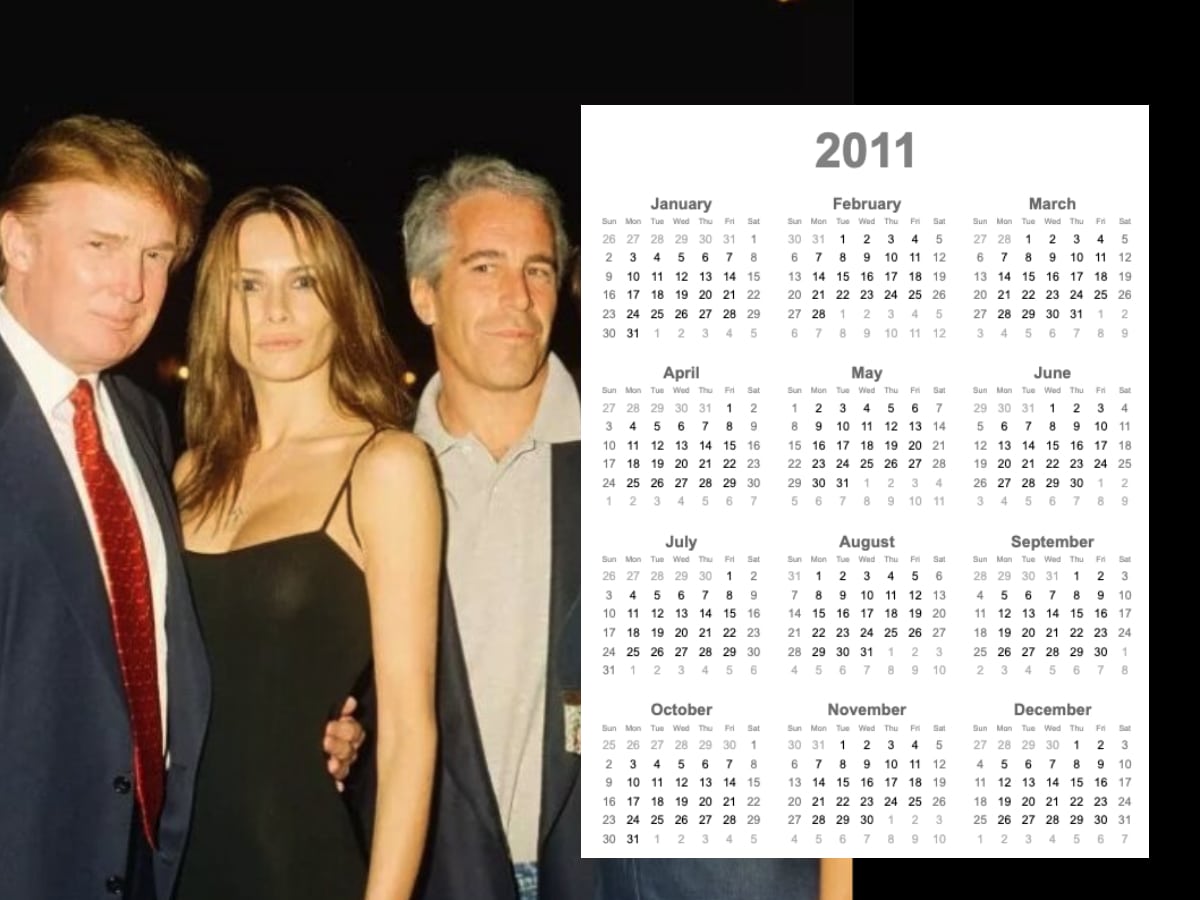
On 30 January, the US Department of Justice (DoJ) released the latest tranche of Epstein Files. As we reported, the release contained allegations Trump is ‘compromised’ by Israel, and that he raped and beat a child. Now, investigators have identified an email which suggests Trump may have had contact with Epstein long after the president is supposed to have broken off contact:
Trump says he cut off Epstein in 2003.
But in 2011 Epstein called Trump….
About Virginia Giuffre….
After asking his lawyer PI (who was recommended by Trump) if there “are any other alternatives” pic.twitter.com/lDJYGC2lxX
— Adam Cochran (adamscochran.eth) (@adamscochran) January 30, 2026
Trump’s ‘vrginnia’
It’s important to note that the above doesn’t confirm a phone call took place. It’s not a good look for Trump, however, considering everything else in the latest release of Epstein Files:
⚡JUST IN – Trump accused of raping a 13-yo in newly released epstein files pic.twitter.com/IbRk7KuSH2
— Ounka (@OunkaOnX) January 30, 2026
MASSIVE BREAKING: A witness swore under penalty of perjury that Donald Trump threatened a young girl, telling her she could “disappear like another 12-year-old female,” and then threatened to kill her entire family, according to Epstein-related court records.
This allegation… pic.twitter.com/y22zPWTb10— Brian Krassenstein (@krassenstein) January 31, 2026
Despite the spelling mistake, journalist Adam Cochran assumed that Epstein was talking about the late Virginia Giuffre. Giuffre accused the disgraced Andrew Windsor (formally prince Andrew) or sexual assault. In 2025, Trump claimed that Giuffre had been an employee at his spa, but Epstein “stole her”.
As PBS reported, there have been conflicting statements from Trump and his inner circle as to when the president last had contact with Epstein. The range is between 2003 and 2007 — before Epstein’s sex crime conviction in 2008. If Trump and Epstein spoke in 2011, this will show the president has lied about crucial information regarding his relationship with the dead paedophile.
Revelations
The latest release has shone a new light on the relationship between Epstein and the following individuals:
And that’s really just scratching the surface; there’s also this on Trump’s secretary of commerce:
Trump’s secretary of commerce, Howard Lutnick, said recently in an interview that a 2005 visit to Jeffrey Epstein’s home left him so revolted that he cut ties with Epstein.
Emails released today tell a different story, showing Lutnick remained in contact for years afterward,… pic.twitter.com/TryAhDcT1h
— Republicans against Trump (@RpsAgainstTrump) January 30, 2026
There are three million pages of documents in this latest release, and we’ll continue to update you as people unearth new information.
Featured image via Epstein Files

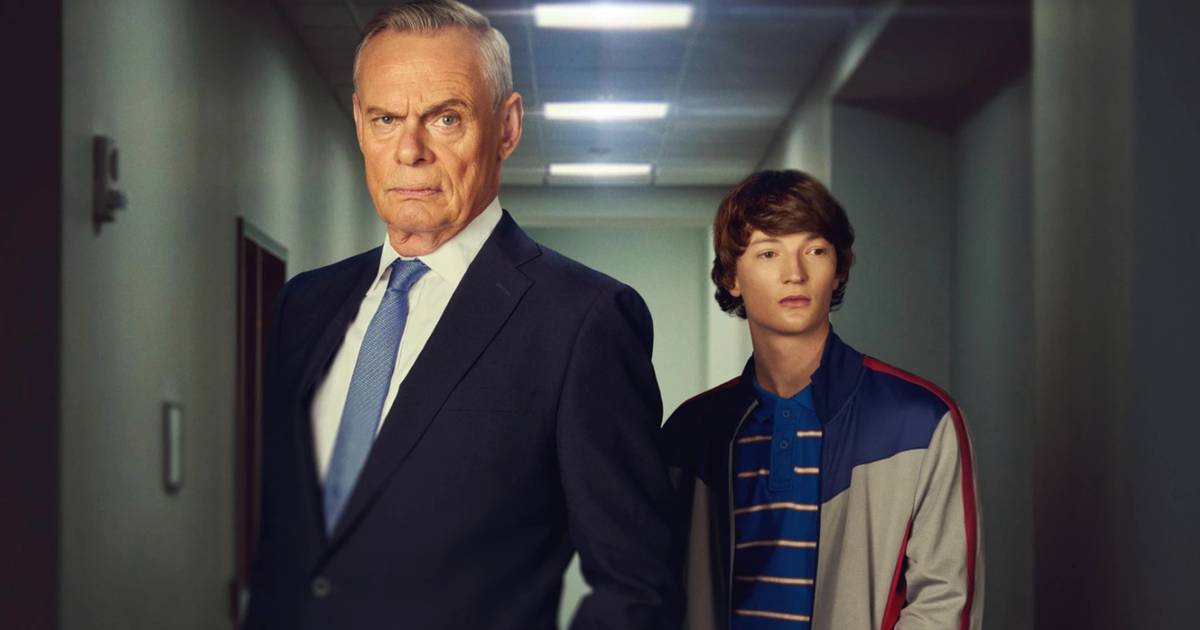
Martin Clunes has received widespread praise for his leading performance in a new drama about Huw Edwards, even if the show itself has proved to be more on the divisive side.
The Wuthering Heights star portrayed the disgraced BBC News anchor in Power: The Downfall Of Huw Edwards, a feature-length drama which aired on 5 (the broadcaster previously known as Channel 5) on Tuesday evening.
After the show aired, the Wuthering Heights actor received unanimous praise for his portrayal of Edwards.
However, reviews for the show itself were considerably more mixed, ranging from a lowly two stars in The Independent and The Standard to a perfect score in the Daily Mail.
Here’s a selection of what critics have had to say about Power: The Downfall Of Huw Edwards so far…
“Martin Clunes is in total go-for-broke mode in the title role, uncannily furrowing his brow to just the right degree and bringing overqualified Welsh-accented gravitas to a script that asks him to repeatedly sink to all kinds of mucky carnal urges. The project he’s in, though, doesn’t match him: it’s the kind of rush-job TV lobotomy that satisfies nothing but a viewer’s baser instincts.”
“[Martin Clunes] is horribly convincing in this ripped-from-the-headlines drama about the newsreader’s grooming scandal. You might not even be able to stomach it […]
“[Power] might not represent the pinnacle of drama – in truth, its eagerness to exist comes at the expense of nuance – but it does go an awfully long way to capture a sickening feeling in the pit of your stomach.”
“Arguably, the most eerie element is Martin Clunes’s portrayal of Edwards. It isn’t an attempt to imitate the Welsh newsreader, but he’s captured his essence, particularly the wafer-thin false modesty and barely concealed narcissism.”
“Clunes delivers an extraordinary portrayal that captures the body language, demeanour and menace of the man without descending into impersonation. His Welsh accent (never a Clunes strong point) sometimes wavers, but his refusal to allow Edwards an ounce of sympathy does not.”
“Clunes didn’t initially seem to me like the obvious casting choice, but he is skilful and convincing as Edwards, blending irascibility, a thin skin and self-importance with genuine terror that the media would crucify him if it discovered his secret.
“[He] also looks the part, perfecting the trademark raised eyebrow and the very distinctive rhythm of his voice and the way he sat at the BBC desk.”
“Clunes strikes a balance between the meek Welsh competence, with the needy, boozing predator in dark rooms and eternal running gear, conducting Ryan to do his bidding like a schoolteacher would. There’s also the calculating curmudgeon, always covering his own back and admonishing perceived missteps.”
“Clunes bears little physical resemblance to Edwards and doesn’t make a great effort to mimic his Welsh accent. But he does copy the arms-along-the-desk pose and that slight curl of the lip.”
“Clunes plays [Edwards] with a sociopathic stare […] [Power] should be chilling – and it is, especially given the fact that ‘Ryan’s’ own words [have] undoubtedly informed what we see on screen. Unfortunately, the drama itself is hamstrung by some surprisingly tin-eared dialogue and equally shaky acting, rather sapping the whole thing of its potency.”
Power: The Downfall Of Huw Edwards is now streaming on 5’s catch-up service.
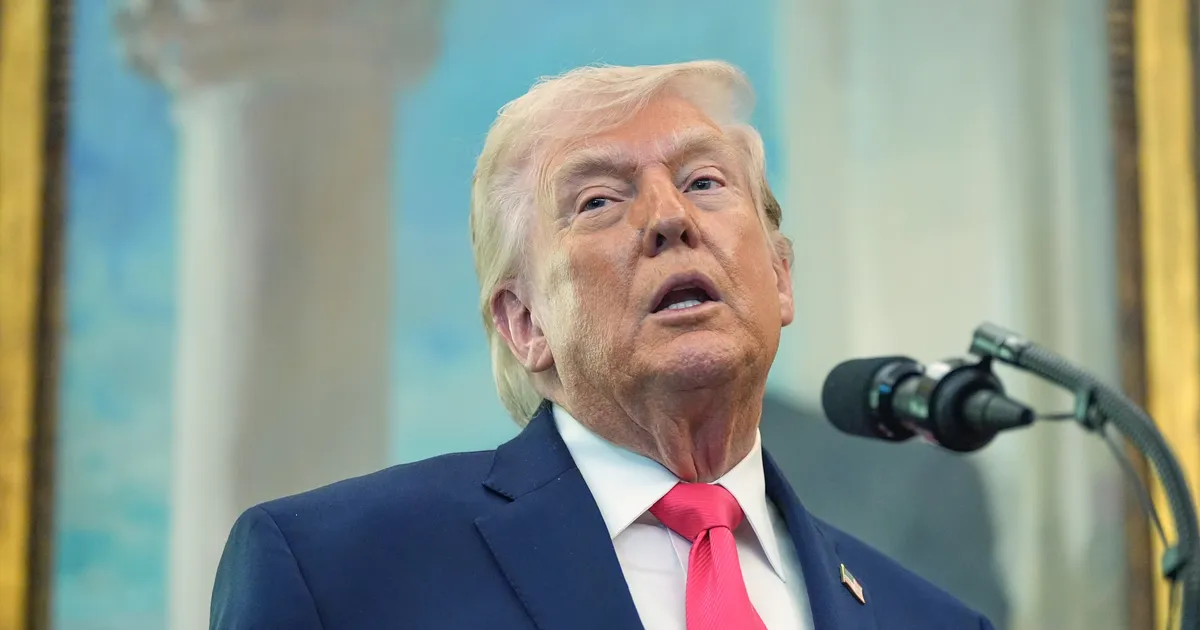
Donald Trump insisted overnight that Tehran wants a deal to end the conflict “so badly” after he declared a five-day ceasefire, but Iran has accused the US of “negotiating with itself”.
Meanwhile, Israel and Iran are still exchanging strikes – even though the US president claims to have wiped out the majority of Iran’s missile launchers – and the Pentagon is reportedly considering deploying some troops to the warzone.
Almost a month after the president attacked Iran without telling US allies, ex-secret intelligence chief Alex Younger said it was clear Iran have the “upper hand”.
Speaking to The Economist, Younger said: “I regret having come to this conclusion because like many MI6 officers of my generation, we faced the violence and brutality of the IRGC [Islamic Revolutionary Guard Corps] for most of our careers.
“There is no love lost between us and I shed no tears for [Iranian supreme leader] Ali Khamenei, who was killed at the beginning of this war.
“But the reality is the US underestimated the task and I think as of about two weeks ago, lost the initiative to Iran.
“In practice, the Iranian regime has been more resilient than I think anyone would have expected.
“They took some good decisions as early as last June about dispersing their military capability and delegating authority for the use of those weapons, which has given them significant extra resilience against this incredibly powerful air campaign.”
He said Tehran has embarked on “horizontal escalation”, meaning they’ve been firing rockets at anyone in range.
“At the time I thought it was nuts but in fact it has been a very good way of putting a direct price on the US – it sort of worked,” Younger said.
“And then they sort of understood the significance of the energy war and held the Straits at threat, and globalised ’[the conflict].”
Iran has effectively blocked the Strait of Hormuz, which carries a fifth of the world’s oil supply, by targeting any ships using the waterway.
The move has damaged the global economy as it has led to a spike in the price of oil.
Younger claimed the regime has “played a weak hand pretty well”.
He also said Trump’s own remarks about “regime change” will confirm to Iran that they’re in a “civilisational war”, a “war of existence”.
“Whereas America has embarked on a war of choice,” Younger claimed. “In those terms I think that’s imbued them with more staying power than the US and certainly US counterparts.
“They know that now, and that really is giving them the whip-hand.”
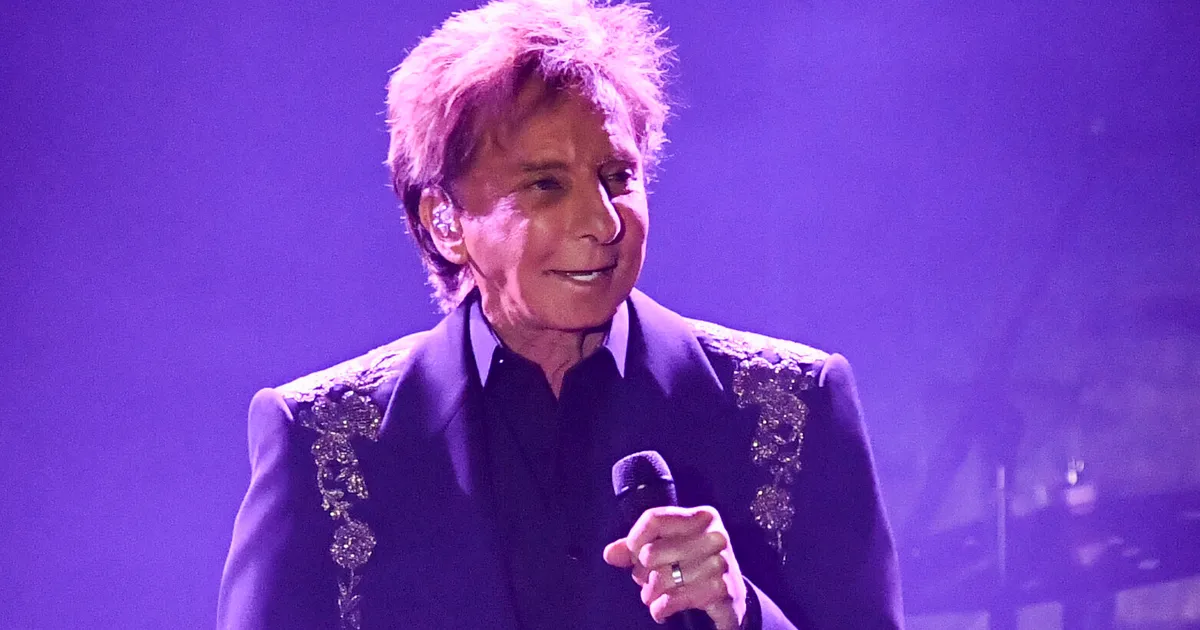
Barry Manilow has reflected on his “nightmare” lung cancer diagnosis, saying it led to an even greater appreciation for life.
“They don’t even know how long I had this thing sitting on me. It could have been years,” the singer told People in an exclusive interview, published on Tuesday.
“If it had gone any further, then I would be up shit’s creek. It just so happened that it hadn’t spread, and boy oh boy, I thought I might be dying.”
The Copacabana hit-maker explained that his doctor ordered an MRI for him after he complained about hip pain in November.
However, he also ordered an MRI for Barry’s lungs after learning the musician had recently faced two cases of bronchitis. That’s when he found something.
“If he hadn’t done that, man … He saved my life, because there’s no symptoms for what I had. I could go on, nothing hurt — but they found the dot in my lung,” the songwriter said.
“They called me and said, ‘Could be cancer.’ That’s a bad word. ‘Not me. Fuck you. I can’t have cancer’.”
More tests confirmed Stage 1 lung cancer, Barry said. Weeks later, he underwent a lobectomy to surgically remove the affected part of his lung.
“I don’t remember it, thank goodness, because it was a nightmare,” Barry said of his hospital stint, in which he spent seven days in the ICU, following the successful surgery. “I’m one of the lucky ones; I don’t have to have chemo, radiation and all that stuff.”
Barry said his cancer diagnosis has left him feeling like he’s “not all here”.
“You just don’t even think about [how fragile life is]. And suddenly, you have lung cancer,” he said.
“But I’m still here. I’m not all here; there’s part of me that isn’t here – they took out a part of me, and now I’ve got to figure out, ‘What do I do?’”
The crooner first announced that he was diagnosed with lung cancer in a December 2025 Instagram post.
Later in his interview with People, the singer said beating cancer “really made me take a stock of my life”.
“This made me stop and think about: Have I done what I wanted to do, and have I made people happy? Have I been a good friend? All of those cornball things that I’ve read for all of my life, I started to think about that, too. It really did stop me in my tracks,” he shared.
“And the answers are yes. And as a matter of fact, there are more yeses than I ever thought.”
Barry’s story about his diagnosis comes ahead of the June release of his upcoming new album, What A Time.
After cancelling a number of live shows during his recovery from his cancer treatment, he’s scheduled to perform a string of UK arena shows over the summer.
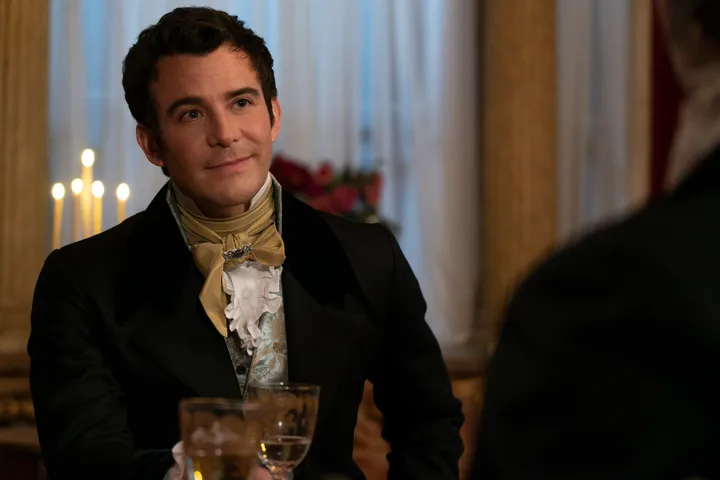
Bridgerton boss Jess Brownell has lifted the lid on what fans should expect from the show’s upcoming fifth season.
On Tuesday, Netflix announced that the next season of the hit period drama would focus on the romance between Francesca Bridgerton and Michaela Stirling, marking the first time the show has had a same-sex love story at its centre.
Speaking to the Netflix outlet Tudum following the announcement, Jess said: “What is most exciting about season five is that it is going to be a season about queer joy. It is not going to be a season about queer trauma.
“There are going to be difficulties for the characters and conflict in the same way there is for every Bridgerton character. But we are still always grounding our love stories in the fact that this series is about joy. It’s about humour.”
“If there’s anything really specific about this season, it is the yearning,” she added. “It’s big-time yearning.
“Those of us who know what it’s like to be in a sapphic relationship or have a sapphic crush understand that’s so baked into the experience. We had a lot of fun in the writers room for season five talking about what is really specific to women-loving-women relationships. Like the moment where you think, like, ‘Oh gosh, are we just friends? Or is this more?’. You know, the gay panic.”
Jess also revealed that Francesca’s brother Benedict Bridgerton could become a “potential ally” for her in the season ahead.
“Benedict is a queer person no matter what relationship he ends in,” she insisted. “It’s a really beautiful thing to get to tell a story about a queer person who, even if he ends up in a heterosexual-presenting relationship, still identifies as queer.”

In the most recent run of episodes, Benedict fell in love with, and eventually married, Sophie Baek, with the season featuring a scene where he comes out to her about his past experiences with men, which received widespread praise.
The next season will see Hannah Dodd and Masali Baduza stepping up as the show’s new leads, having been playing Francesca and Michaela since season three.
In the original Bridgerton novels, Francesca falls in love with her late husband’s cousin, Michael Stirling, but this character was gender-swapped for the TV adaptation.
Jess previously said: “I didn’t want to just insert a queer character for queer character’s sake. I want to tell a story that accurately reflects a queer experience, and the first time I read Francesca’s book, I really identified with it as a queer woman.”
Bridgerton author Julia Quinn also made it clear that this move has her seal of approval, insisting: “Anyone who has seen an interview with me from the past four years knows that I am deeply committed to the Bridgerton world becoming more diverse and inclusive as the stories move from book to screen.”
Production on season five of Bridgerton is now officially underway, following the success of the fourth run, which concluded last month.
Unfortunately, it looks like fans are still in for a bit of a wait until their next trip to the Ton, though, with Francesca and Michaela’s season expected to premiere in late 2027 at the earliest.
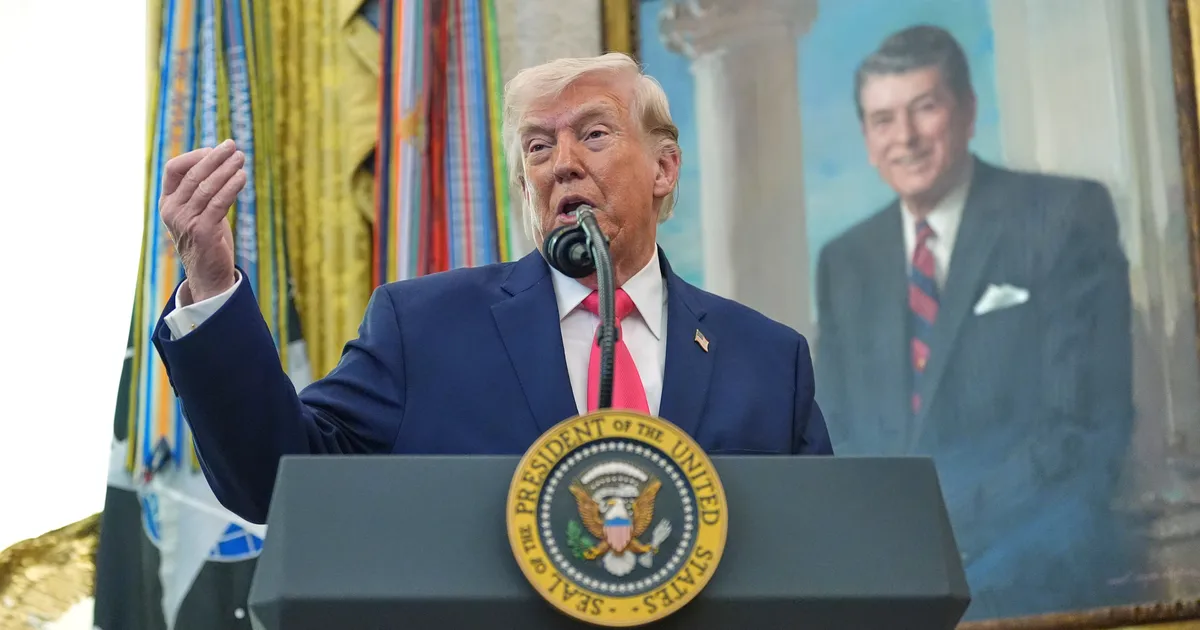
Donald Trump’s claims that peace talks are underway to end the war in Iran have been slapped down by the Tehran regime.
The US president claimed the country was ready to make a deal nearly four weeks and America and Israel launched their bombing campaign.
Bizarrely, Trump also said Iran had given him “a very big present” but refused to say what it was.
“What it showed me is that we’re dealing with the right people,” he said.
However, in a video statement, a spokesman for the Iran Revolutionary Guard Corp (IRGC) dismissed those claims and suggested that the country will not give up its control of the vital Strait of Hormuz shipping lane.
The spokesman said: “Has the level of your own conflicts reached the stage of negotiating with yourselves?
“Neither will you see your investments in the region, nor the former prices of energy and oil, until you understand the stability in the region is ensured by the powerful hand of our armed forces.”
He added that “someone like us will never come to terms with someone like you. Not now, not ever”.
On Radio 4′s Today programme, BBC foreign correspondent James Waterhouse said: “Once again we’re seeing Iran slap down these claims from the White House that it is desperate for talks to take place.”
He added: “Iran is holding firm for now. Iran is saying we will let friendly ships pass through the Strait of Hormuz if they co-operate with our officials.
“That is reflective of its continued control in the region, despite the heightened rhetoric from America on peace talks being imminent, but also the reports that America is having to put more resources into this. Iran isn’t budging.”

Dr Austen Morgan is a barrister at 33 Bedford Row Chambers. He is the author of: Pretence: why the United Kingdom needs a written constitution, London 2023.
The abandonment of the English IRA victims’ claim, against Gerry Adams, being heard by Mr Justice [Jonathan] Swift in the high court in London, on the last listed day, came as a surprise. There will be no judgment to debate (or appeal). But the three ageing claimants had risked losing their costs’ protection. And it was Gerry Adams – importantly – who ended the fight.
The context of the McCue Jury & Partners unusual tortious claim needs to be appreciated. This was private law, against an alleged natural tortfeasor (the IRA having no legal existence). And the context was the conservatives’ 2023 Northern Ireland legacy act (public law), which the feeble Starmer government set out to repeal and replace (now paused), in order principally to please the Irish government and reset relationships with the EU.
The three claimants (who gave evidence) – John Clark, Jonathan Ganesh and Barry Laycock – had been caught up respectively in the 1973 Old Bailey bombings, and the 1996 (London) Docklands and Arndale (Manchester) IRA attacks. One was left in no doubt – listening to their testimonies – about the lifelong physical and especially mental injuries of innocent passersby.
Gerry Adams – who was cross-examined relentlessly over two days by Sir Max Hill KC, a former director of public prosecutions – told us a different story: not only was he not a member of the army council in 1973 and 1996, and therefore not personally responsible (arguably) for the bombings; but, having joined Sinn Féin in 1964, he did not join the new provisional IRA in 1969 – he went through the troubles of the 1970s, 1980s and 1990s as a political activist while others did the killing and were killed!
Memoir evidence was adduced from Seán MacStíofáin, the English-born IRA chief of staff, and William Whitelaw, the secretary of state, about the secret Cheyne Walk talks in 1972, facilitated by the RAF, where Gerry Adams and Martin McGuinness were the youngest members of the Irish delegation; MacStíofáin, and especially Whitelaw, agreed that the UK government had negotiated with the IRA (not euphemistically with the republican movement).
Adams tried to allude, from the box, to the first Jonathan Swift, the Irish whig and hardly a republican, but his lordship was having none of this Irish familiarity and blather.
Adams was good on the historic crimes done Yeats’ Cathleen ni Houlihan (realized in 1902 by his unrequited love interest, Maud Gonne), even singing the praises of Dolours and Marian Price – the prison hunger-strikers after the Old Bailey bombing – who went on to oppose publicly the Irish Nelson Mandela (as Adams is characterised by some gushing identitarians). Dolours, the older of the two, breached the republican code of omerta, by identifying Adams as her IRA commander, but the latter went again to gaol as an alleged dissident republican.
Closing submissions began on the Thursday of week two, and that is when the case started to go wrong. Adams’ lawyers from Matrix chamber (including originally a certain Richard Hermer) had never tried to strike out the claim, one of the grounds for trying to do so being abuse of process because of the delays from 1973 and 1996 causing prejudice to Adams defence.
Observing from an overflow court, it seemed that the learned judge and Edward Craven KC for the defendant joined in confusing issues, when the question of the Limitation Act 1980 section 33 (discretionary exclusion – a statutory right – of time limit for actions in respect of injuries or death) should have been legally deconstructed. (Adams had portrayed himself as the Irish peacemaker – laughably from the early 1970s at times – , and it is difficult to see how he was prejudiced as a defendant from 2022 after the acquiring of this historical reputation.)
On the Friday morning, having undoubtedly discussed matters with Adams, his legal team offered to ‘drop hands’ – essentially walk away from the court. The claimants’ costs’ protection, granted by an earlier judge, had overnight become uncertain, because of the discussion of abuse of process.
The claimants’ solicitors (judging by their press release) are critical of the judge – the word unfairness has been uttered – but they would professionally have been required to bring their barristers and lay clients together on the last day on the risk of Adams demanding his not-inconsiderable legal costs.
The really perplexing thing about the case, is why Adams chose to fight in the royal courts of justice. He had two alternative options. One, he could have refused to leave his ‘Ireland’. The claimants securing a punny judgment in default in London would have permitted him to lecture them about the need to move on. Second, he could have taken ‘the fifth’ (in US speak): come into court and answered; on the advice of counsel, I decline respectfully to answer all questions on the ground that I might incriminate myself – the no comment defence.
Adams has been accused frequently of hubris. Members of the public, and the very many journalists in court, heard Sir Max Hill’s seemingly endless flow of questions and Adams staccato ‘not true’ replies, where every witness – from rehabilitated republicans to military intelligence officers, anonymous and identified – was contemptuously dismissed as part of a UK conspiracy of liars out to do down the bearded one.
I learned something from the two days of cross-examination. Perversely, Adams seemed to want to acknowledge the demonic figure created in the minds of his critics who had sworn to tell the truth. That is why he came to London. But in his consistent denials – counter-interrogation training anyone? – he turned himself into the major victim of the UK occupiers of his country, the habitué squatting in his mind for decades. He was fighting still, and selflessly, for Cathleen ni Houlihan.
The claimants’ perpetrator was really the victim, according to the defendant. An English high court judge would not be allowed to determine Gerry Adams’ involvement in the 1973 bombings, if not the 1996 ones. That is why he dropped hands. But, like the heroic victim, he was prepared to endure the four years of ‘torture’ constituted by the claim. That is why he sat in court for two weeks, with anti-national types (in his judgment) rubbing shoulders with his close-body protection.
Martin McGuinness – who claimed unconvincingly to have left the IRA after Bloody Sunday – acknowledged his IRA membership on his gravestone in Derry in 2017 (having enjoyed Lord Saville’s earlier grant of immunity and still not broken his IRA oath).
Will Gerry Adams (in the continuing absence of a united Ireland by consent and still maintaining the code of omerta), then give us the finding of fact we might have obtained, but did not get, from Mr Justice Swift?
Rachel Reeves has changed her mind. Since becoming Chancellor of the Exchequer she has come to realise the British state cannot compensate people for every misfortune they may suffer as they go through life.
There is no money, as an earlier Treasury minister confided on leaving office in 2010. But this is a lesson which successive Governments have been reluctant to proclaim.
Within a few sentences of starting her statement yesterday in the Commons on the economic impact of the war in the Middle East, Reeves declared that the Government will be sticking to “our ironclad fiscal rules”.
By making this promise, she sought to reassure the bond market. Her officials will have impressed on her how vital it is to do so.
As the Shadow Chancellor, Mel Stride, pointed out in his reply, Britain now has the highest borrowing costs in any major advanced economy, with gilt yields higher than those of Greece and Morocco.
Our public finances are so rickety that we are each year paying over £100 billion in interest on our debt. We would be in extreme peril if we tried to run an even larger deficit, and with the word “ironclad” Reeves indicated that she knows this.
If she had gone on to take the House and the wider public into her confidence, she would deserve credit for honesty, and might have wrested back the political initiative.
For no political party is yet being quite straight with the voters about this. Everywhere one finds a disinclination to express inconvenient truths, a sense that discretion is the better part of valour.
Reeves could have seized the initiative, and thrown the Conservatives off balance, by announcing that it is quite wrong to go on with the public finances in so shaky a condition that we have nothing to fall back on in an emergency.
Once the Government demonstrated both by its words and its actions that it recognises this, our borrowing costs would quite quickly come down.
A virtuous circle could begin, and a start could be made on tax reform, including the removal of various cliff edges which act as a disincentive to earn more, to expand a small business, or indeed to look for a job at all.
Reeves instead tried to justify the change in her position by attacking the Conservatives:
“As we respond to this crisis, we must learn from the mistakes of the past.
“The previous Government pushed up borrowing, interest rates, inflation and mortgage costs with an unfunded, untargeted package of support under Liz Truss that gave support to the most wealthiest of households.”
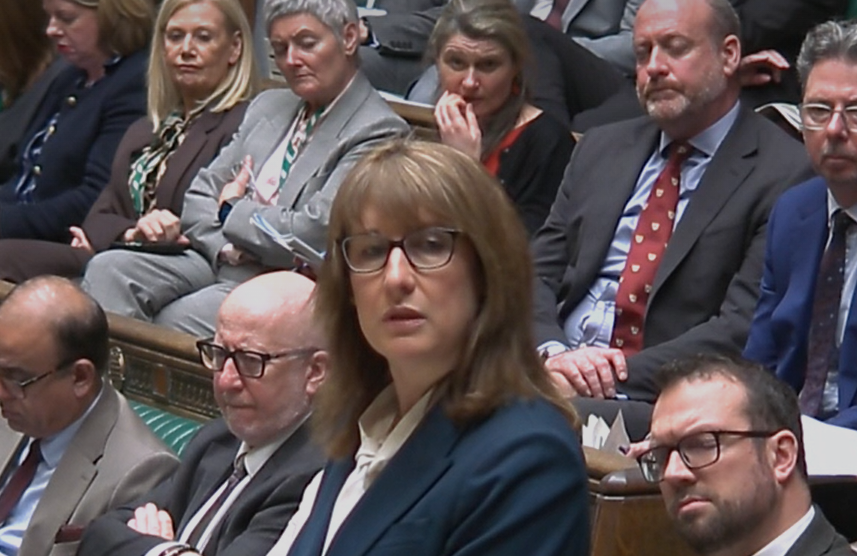
One could tell from the faces of Labour MPs (see the photograph above) as they listened to Reeves how depressing they found her statement. The Government feels compelled to make gestures of help: it has offered £53 million to be distributed among low-income households which depend on heating oil.
Gavin Robinson (DUP, Belfast East) pointed out that Northern Ireland’s share of this sum would amount to £34 per household, and that there is no data to target the support.
Simon Hoare (Con, North Dorset) observed that Dorset Council’s share of the money is £474,000, “which really will not touch the sides”.
We found ourselves invited by the Chancellor to enter a world of futile gestures, where the Government pretends to help, without actually being able to do anything that would make a noticeable difference.
Reeves’s predecessor as Chancellor, Sir Jeremy Hunt (Con, Godalming and Ash), said:
“Could I gently ask the Chancellor to be less partisan at a time of crisis? If she brings before the House difficult measures that are right for the country, she will have the support of the whole House, but if she is partisan, she will not.”
This was advice Reeves was unable to follow. She uttered no national rallying cry about uniting round difficult measures.
The Father of the House, Sir Edward Leigh (Con, Gainsborough), suggested:
“Is there not a sensible, middle-of-the-way approach here? We should by all means proceed with green energy—such as offshore wind, in which we lead the world, in the North Sea off the Lincolnshire coast—but we should also keep an open mind about new extraction from the North Sea.”
Reeves could not agree to keep an open mind on this, for at Energy questions, held just before her statement, Ed Miliband, Secretary of State for Energy Security and Net Zero, had once again shown that his mind remains firmly closed to the possibility of new extraction from the North Sea.
Miliband suggests by his haughty demeanour that he considers himself cleverer and better informed than anyone else. This could be true, but does not, unfortunately, mean he has better judgement.
Tony Blair used to convince Middle England that he must be sound because at frequent intervals he annoyed and distressed Labour MPs. Sir Keir Starmer, Reeves and Miliband instead go out of their way to appease Labour MPs, with the result that they look narrow and partisan at the very moment when the nation might unite, as Hunt said, round difficult measures.
Politics
John Redwood: When it comes to the Bond markets, by her own measures Reeves has ‘crashed the economy’
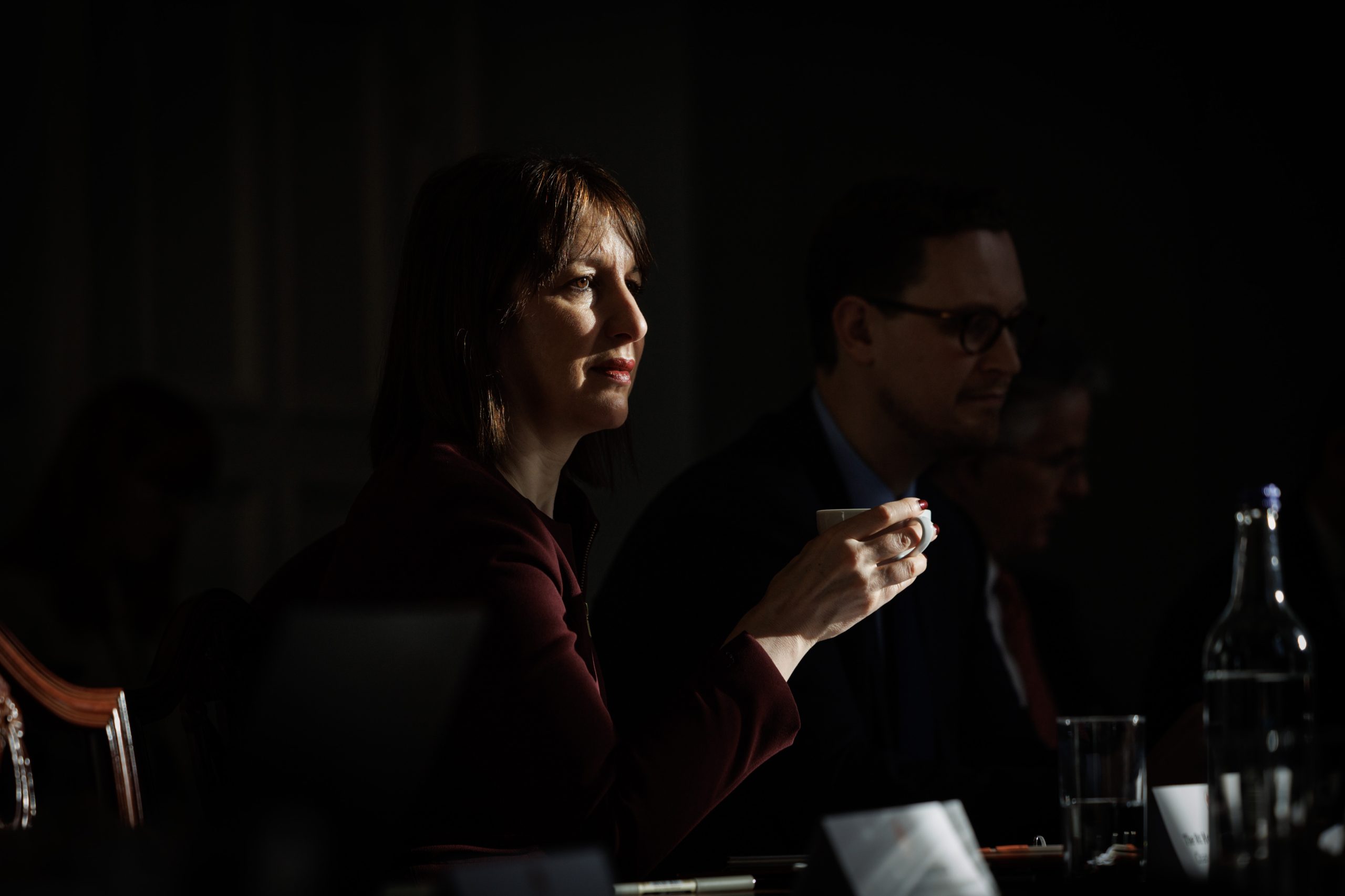
Sir John, Lord Redwood is a former MP for Wokingham and a former Secretary of State for Wales.
For one day under Liz Truss as Prime Minister the ten year UK government borrowing rate of interest hit 4.38 per cent. Thirty year money cost 4.8 per cent. The government did not actually borrow at these rates.
The Bank of England changed its policy from selling government bonds to buying them again and the interest rate subsided as the bonds rose in price in relief.
These longer term rates of interest are settled by the bond market. When the market loses confidence in the government and the Bank, and or fears inflation will rise, bond prices fall as more want to sell than buy. When the markets think the government is controlling the amount of debt sensibly and inflation is under control the price of bonds rises as more want to buy.
The prices of the very long bonds change a lot to change the interest rates. If the government borrowed £100 through a 1 per cent bond with no repayment date at a price of £100, it would pay the holder £1 of interest every year. If the market then decides the interest rate should go up to 2 per cent because it is concerned about developments, then that £100 bond can only be sold on to another owner at £50 or half price, so the continuing £1 of interest being paid is then 2 per cent of its new value.
When markets forced up the interest rates in 2022 Rachel Reeves said Liz Truss had crashed the economy. Rachel Reeves said 4.38 per cent for ten year money was too high and would leave the government paying too much interest. It would also mean dearer mortgages and company loans whose interest levels reflect the government borrowing rates.
So we have to report today in her own words that Rachel Reeves has crashed the economy more seriously and for far longer than Liz Truss did. Today the ten year rate is at 4.95 per cent and the thirty year rate at 5.6 per cent, rates 13-16 per cent higher than 2022. Indeed the Truss effect was so short lived no lasting damage was done. Rachel Reeves has presided over 10 year and 30 year rates higher than the worst day of Liz Truss for most of the last fifteen months. She has been borrowing large sums at these rates and lumbering future taxpayers with heavy bills to pay the elevated interest charges.
She seems unwilling to accept this, though her own words in 2022 condemn her actions since. She seems unaware of the role she has played in driving down the price of these bonds and therefore driving up the longer term rates of interest. We see the results of her work in last week’s withdrawal of many mortgage offers, as mortgage banks seek to increase the rates they are going to charge borrowers.
There are three main reasons why she has lost control of the bond markets. She has put up public spending and borrowing too much. The market worries about just how much she plans to borrow over this Parliament. It will mean massive new bond issues in excess of what savers are willing to lend at the old prices.
The market is alarmed that she put inflation up from the 2 per cent she inherited to nearly double as a result of allowing large managed price rises for water, energy, rail fares and Council taxes. The government decided to allow large rises in public sector and utility costs and allowed some of that to be passed on in price rises. Government policy is to import much more of our energy, accelerating the shut down of domestic oil, gas, coal and fossil fuel electricity. The current world energy crisis leaves the UK badly exposed to having to pay ultra high prices for imports in a world of shortages.
The market is also concerned that instead of delivering faster growth as promised the government has slowed our growth almost to a standstill. Higher taxes on jobs, on family farms, on business premises, on producing and using energy have led to many business closures, lost jobs and less activity. As growth slows the state has to borrow more. Tax revenues are less with no growth, and more people are out of work needing benefits so the government deficit goes up. The state has to issue more bonds to pay the bills.
This leaves the government in a bind. They would like to cushion consumers from the surge in imported energy prices, but do not have the money to do so. They want to reassure the bond markets that the deficit is under good control, but economic developments mean it is not. As consumers pay more for their energy they have to cut back on other things, slowing the economy more. The deficit rises. As the bond market takes fright so interest rates go up. People have to pay more for their mortgages and companies more for their loans. That can cause a further reduction in growth.
There are no good options once the government is in such a doom loop. The best course is to cut out wasteful and less desirable spending before the bond market insists on spending cuts as it did to past Labour governments in 1975-6 and in 2008-9.
The government needs to set out a growth plan which will work, as its present one is delivering the opposite. It needs to take the cost of living pressures seriously, commencing by getting value for money in the public sector and keeping down state and managed prices.
An easy option is to allow more oil and gas extraction in the UK, easing the need for imports and bringing in large extra tax revenues from products that are very heavily taxed. The investment would also create more well paid jobs. Cancelling the proposed fuel tax rise this autumn and reducing the current tax rate to allow for the extra VAT coming in as a result of higher fuel prices would also help.
A necessary tougher option is to find ways to restore lost public sector productivity, which has cost us at least £20bn of extra spending for no extra output. Is it so difficult for this government to get us back to 2019 levels of public sector efficiency?
The sooner the government acts the better it will be. We cannot afford current levels of borrowing and cannot afford current levels of interest rates on the new borrowing. The two go together. Controlling spending, boosting growth and raising public sector productivity combine to ease the pressures. Failure to act could end in a bigger bond market sell off and great difficulty in the government borrowing to pay all those spiralling bills.
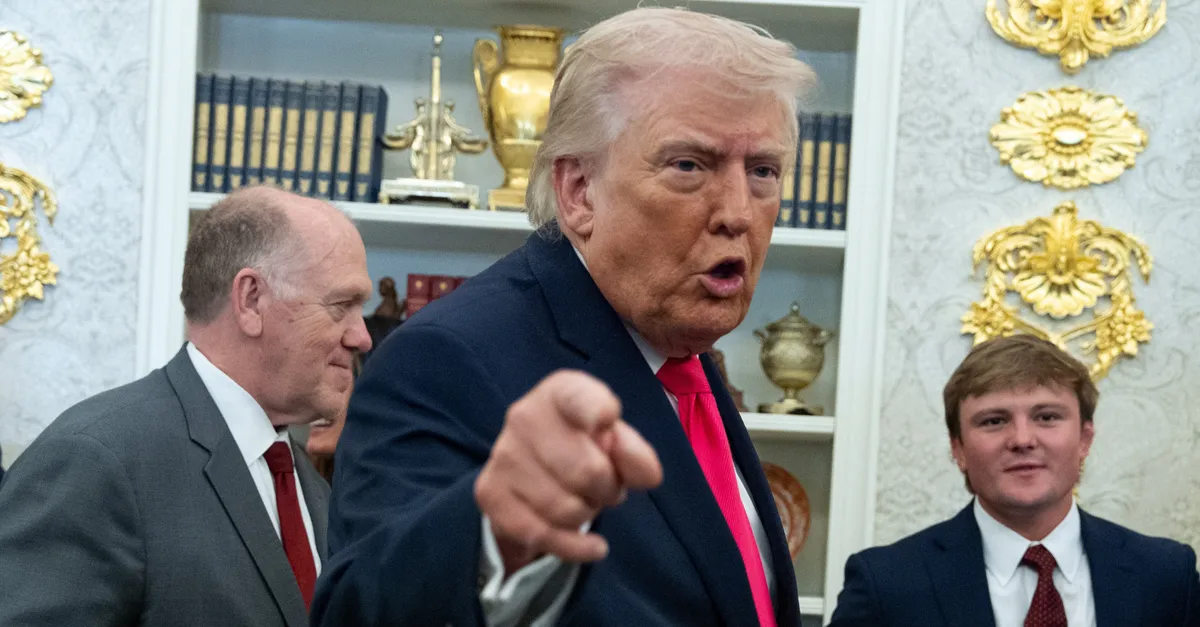
President Donald Trump mysteriously boasted on Tuesday about a “very big present” that Iran supposedly gave him while claiming the country is ready to make a deal to end the war.
“They’re gonna make a deal. They did something yesterday that was amazing, actually,” Trump told reporters during Homeland Security Secretary Markwayne Mullin’s swearing-in ceremony.
“They gave us a present, and the present arrived today. It was a very big present worth a tremendous amount of money. I’m not gonna tell you what that present is, but it was a very significant prize.”
When pressed by a reporter on what the supposed gift was, Trump said it “wasn’t nuclear related,” but rather “oil and gas related.”
“What it showed me is that we’re dealing with the right people,” he added.
In a social media post on Monday, the president cited the ongoing talks with Iran as the reason for his pausing strikes on the country’s energy infrastructure.
Iranian officials have repeatedly denied that any talks with the United States to end the war are taking place.
Iranian Parliament speaker Mohammad Bagher Qalibaf quickly labelled Trump’s claims on Monday as “fake news aimed at influencing financial and oil markets.”
Watch Trump’s full remarks here:
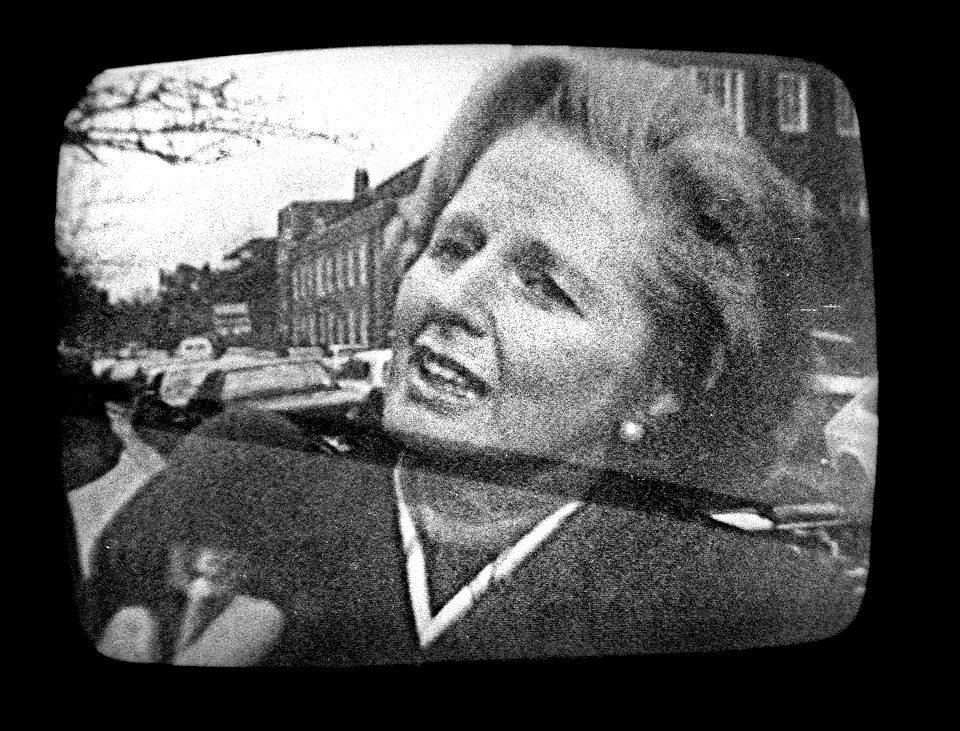
Peter Bedford is a qualified Chartered Account, having spent 17 years in industry, prior to his election as the Conservative MP for Mid Leicestershire at the 2024 General Election.
Peter Bedford spoke to the 2026 Freedom Festival, hosted by the Margaret Thatcher Centre, at the University of Buckingham.
I was born and raised, with my two younger brothers, by my single mother.
Conservatism, Thatcherism, let alone engagement with the political process was not something we as a family engaged with. But it was certainly the Thatcherite instincts of Aspiration, Opportunity, and Hard-work that has allowed me to ‘get on’ – despite my humble and challenging upbringing.
Sadly, those on the political left, who subscribe to identity politics, may look at me, a mixed-race, working-class lad from a single parent family and wonder why I am a Conservative.
Mrs Thatcher just got it didn’t she?
She changed the Conservative Party from acceptance of ‘managed decline’ to a party of optimism and aspiration. She understood that it doesn’t matter who you are or where you are from; it’s what you do with your life that matters. I was certainly not walking the streets of Eton or Harrow in my youth.
She challenged the typically Conservative assumption of hierarchy and opened up the party to people like me.
She believed in aspiration; something that should sit at the very heart of every Conservative MPs philosophy.
I believe in people from all backgrounds: Earning a few bob, through hard work. Going out and spending it and being proud that they are able to do so. And why shouldn’t people be proud of economic success, particularly when they’ve come from modest beginnings?
There should be no boundaries, be it class, creed, colour; everyone should be able to climb the ladder as high as their talents will take them.
Her steadfast belief in freedom is something I hold at the very core of my own Conservatism. That is why I was proud to vote against what I saw as a draconian and misguided smoking ban. We all know smoking is harmful. But Government should trust adults to make decisions for themselves.
As a new MP I have been amazed by the sheer scale of waste I see, day in, day out in Westminster and Whitehall. From the sprawl of arm’s length-bodies to the vast expansion of the public sector – The British state needs a reset.
When Mrs Thatcher came to office: Britain was in decline. Un-democratic Trade Unions dominating industry, inflation out of control, strike after strike, and a dangerous dependency on the state. We had become a country forced to go cap in hand to the IMF. And as we all know:
“The problem with socialism is that you eventually run out of other people’s money.”
That is why the Thatcher revolution was needed and is needed again, now more than ever.
Thatcherism sparked two great transformations. First a boom in social mobility. Rooted in freedom it gave people, especially those from modest backgrounds, the chance to shape their own future. Through Enterprise Schemes, through lower taxes, through the Right to Buy millions moved from dependency to ownership, gaining not just property, but also, a pride and a stake in society.
And second a renewed sense of national pride. Mrs Thatcher ensured that Britain was no longer the “sick man of Europe.” The Falklands showed we would stand up for our values. And from my own visit there last year, her legacy still resonates, and she alongside other Western Allies, such as President Reagan, Britain helped bring the Cold War to a close. From the fall of the Berlin Wall to the opening of the first McDonalds in Moscow, these were not just symbolic moments, but victories for freedom over tyranny.
So, even in today’s bleak times: why can’t we reignite that spirit?
Even Tony Blair recognised the success of Thatcherism. By reforming Clause IV and actually, embracing enterprise: New Labour accepted that they could not take Britain back to the 1970s. Within the Conservative Party there are also encouraging signs.
The 2024 intake is rediscovering a more Thatcherite voice: championing a free, entrepreneurial and property-owning democracy.
But we are only mere foot soldiers. I am glad that Kemi is keeping right on – refusing to drift back towards the bland malaise of centrist fence-sitting. Because as we all know that standing in the middle of the road is very dangerous; you get knocked down by the traffic from both sides.
But what is clear, is that for Britain to rediscover its sense of purpose we do need leadership like Thatcher brought. We need a leader that believes in conviction politics and is not to be pulled from pillar to post by Civil Servants. We need a leader that will be thoughtful in how they carry out their policies. We need a leader that is not a technocrat and is not afraid to make the bold decisions that they believe are right for the country.
We need to restore these values to be at the heart of British politics.
Because Britain today needs a State that is: Better, not Bigger. A state that is smarter in how it acts, and more restrained in what it does.One that supports those in genuine need but never creates dependency.
One that serves the public, not one that is driven by bureaucracy, the Civil Service or unelected bodies that stand in the way of growth. We must end the culture of waste and inefficiency, where taxpayers’ money is too often funnelled into Quangos whose sole purpose is seemingly to deliver little and block much.
And alongside that we must lift the burden on working people. Not by imposing stealth taxes or freezes to personal tax thresholds, but by simply allowing people to keep more of what they earn. And by rewarding responsibility, encouraging saving, and trusting individuals to make decisions about their own futures.
A strong nation and economy can never, ever, be built on dependency. We must stand firm behind businesses from family farms to high-growth start-up. From local enterprises to global investors Britain should and could be the best place in the world to start, grow and succeed in business. This means we will back our farmers and other family businesses, ease the pressure on employers, and create a tax system that rewards investment not punishes it.
Because when business succeeds Britain succeeds.
We must have the courage to cut back unnecessary regulation. We did not take back control from the European Union only to reimpose barriers to growth at home.
So, as a country the choice before us is clear:
We can continue the path of higher taxes, greater state control and declining ambition.
Or we can choose a different path. One of pride in our nation, aspiration, personal responsibility, enterprise, and of course freedom.
Let us get out there and tell others that Britain must be more dynamic, more self-sufficient and more confident.
And perhaps then we will look back at the 2030s as a political revolution with roots in the one Mrs Thatcher oversaw in the 1980s.

Irish police crack lost Bitcoin wallet tied to drug dealer
Copy Rihanna’s Chocolate Brown Sweater Style an Under-$45 Pick

Greggs and easyJet team up to launch 5 new sausage roll dips


-
 Crypto World4 days ago
NIO (NIO) Stock Plunges 6.5% as Shelf Registration Sparks Dilution Worries
-

 Fashion5 days ago
Weekend Open Thread: Adidas – Corporette.com
-

 Politics5 days ago
Jenni Murray, Long-Serving Woman’s Hour Presenter, Dies Aged 75
-

 Crypto World3 days ago
Best Crypto to Buy Now: Strategy Just Spent $1.57 Billion on Bitcoin During Fear While Early Investors Quietly Enter Pepeto for 150x Potential
-

 News Videos7 days ago
RBA board divided on rate cut, unusually buoyant share market | Finance Report | ABC NEWS
-

 Crypto World3 days ago
Bitcoin Price News: Bhutan Sells $72 Million in BTC Under Fiscal Pressure, but the Smart Money Entering Pepeto Sees What the Market Does Not
-

 Politics7 days ago
The House | The new register to protect children from their abusers shows Parliament at its best
-

 Tech5 days ago
inKONBINI Lets You Spend Summer Days Behind the Register
-

 Crypto World7 days ago
Canada’s FINTRAC revokes registrations of 23 crypto MSBs in AML crackdown
-

 Sports2 days ago
Remo Stars and Kano Pillars Strengthen Survival Hopes in NPFL
-
 NewsBeat6 days ago
Residents in North Lanarkshire reminded to register to vote in Scottish Parliament Election
-

 News Videos7 days ago
PARLIAMENT OF MALAWI – PAC MEETING WITH REGISTRAR OF FINANCIAL ON AMARYLLIS HOTEL – INQUIRY LIVE
-

 Politics6 days ago
Gender equality discussions at UN face pushbacks and US resistance
-

 Business3 days ago
No Winner in March 21 Drawing as Prize Rolls to $133 Million for Next
-

 Business7 days ago
Who Was Alex Pretti? 5 Key Facts About the ICU Nurse Killed by Federal Agents in Minneapolis
-

 Sports2 days ago
Gary Kirsten Accuses Pakistan Cricket Board Of ‘Interference’, Mohsin Naqvi Responds
-

 Tech3 days ago
Give Your Phone a Huge (and Free) Upgrade by Switching to Another Keyboard
-

 Tech7 days ago
Inventec’s bizarre VeilBook laptop hides its touchpad under a sliding keyboard just to give cooling fans a little breathing room
-

 Sports5 days ago
2026 Kentucky Derby horses, odds, futures, preview, date: Expert who nailed 12 Derby-Oaks Doubles enters picks
-
Sports6 days ago
Vikings Free Agency Enters Phase 2 with Key Questions
You must be logged in to post a comment Login