Politics
Trump underestimated Iran’s resilience, Chatham House hears

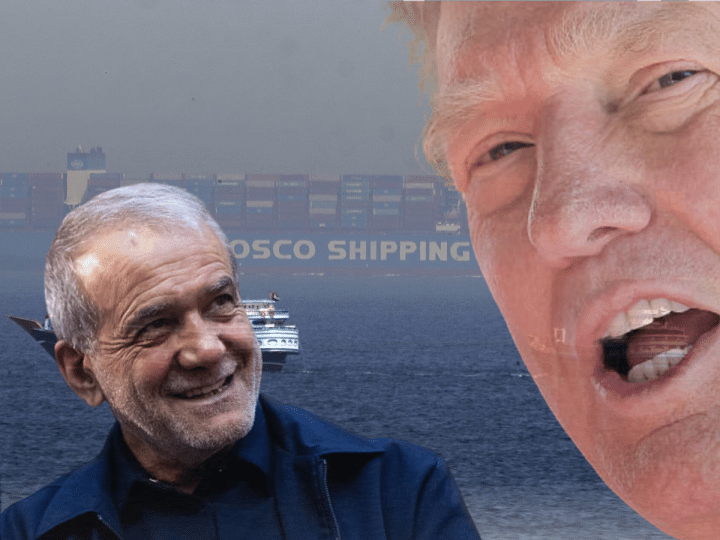

At Chatham House’s London Conference on 9 July 2026, a panel on “The new geopolitics of the Middle East” noted the failure by Trump to underestimate Iran’s resilience.
The comments were made by Professor Mohsen Milani (University of South Florida), who said his comments were not of a political persuasion but were offered as an academic. The video was published by Chatham House on their YouTube channel.
He said that American policymakers and think tankers have been wrong about Iran for 47 to 48 years, and that one of the primary reasons is that they have “underestimated the resiliency of a revolutionary government.”
Betting on Iran “regime change”
Milani said that Trump and his administration had bet on a quick collapse of the Islamic Republic through military pressure, but that this assumption was flawed.
individuals play a much bigger role in the Islamic Republic than institutions.
This is why they thought by killing the supreme leader of Iran the entire system is going to collapse. Well, we know that didn’t happen because the nature of power in Iran is diverse.
Iran’s offensive capabilities
He also said that the US and Israel had underestimated Iran’s offensive capabilities.
Finally, we underestimated Iranian offensive capability and its will to fight. I think many people in Washington were surprised when Iran directly attacked the Gulf countries, when Iran weaponized the Strait of Hormuz, and most importantly Iran basically in that war violated its long-established policy of not directly confronting America — never directly attack America. It was always through proxies and indirectly. But this time Iran attacked American bases and American assets.
History of the Strait of Hormuz
Milani noted Iran’s control over the Strait of Hormuz as one of the most significant developments to emerge from the conflict.
He said that while military analysts had long anticipated the possibility of Iran disrupting the strait, few believed Tehran would actually be capable of essentially closing it down. The move, he argued, represents a fundamental shift in the region’s balance of power.
Drawing on historical context, Milani traced the strait’s strategic importance over the centuries. He noted that the Portuguese first captured the waterway, before Iran, with British assistance, expelled them, paving the way for British dominance in the Persian Gulf until 1968. The Shah of Iran then assumed the role of regional enforcer, followed by a period of Pax Americana, during which the United States guaranteed the security of the Gulf’s shipping lanes.
Milani suggested that Iran now seeks to replicate its historic role as the power that expelled the Portuguese, aiming to reshape the regional order to diminish American dominance while allowing China to expand its influence in the Gulf.
He said:
I think you’re going to see Iran helping China become a much more powerful country in the Persian Gulf.
He said that Iran is “unlikely to accept the status quo” and will insist on maintaining “some degree of control” over the strait in any future arrangement.
Qatar says “we are all losers”
While Milani described the conflict as being “in the middle of a football game” with no clear winner yet, Qatar’s chief foreign policy adviser, Majid Alansari, also on the panel, painted a more sombre picture, saying:
To comment very slightly on what Professor Milani said, yes, the US did not win this war but that doesn’t mean that the other side would not lose. We are all losers in this war.
If you look at the region right now, who is going to benefit anything from what’s happening? Who is going to gain the most from any trajectory that this war is going to go into?
For our countries in the GCC, the economic impact is strategic. On my country, you have in one attack 17% of our ability to produce natural gas was destroyed. We haven’t exported normally since the beginning of the war.
He pointed to the economic impact on Gulf states, noting that a single attack by Iran destroyed 17% of Qatar’s natural gas production capacity.
Alansari said Qatar would not recognise any Iranian claim to sovereignty over the Strait of Hormuz, stating that Iran has “no legal claim” to the waterway.
He said that granting Iran any form of control would leave the region “hostages to whatever radical element in Iran that wants to take over the strait at any time.”
However, Qatar, which has long been firmly in the US camp, said it had to diversify. Alansari stated:
There is no alternative to our partnership with the United States… But we need to diversify. We need to take back some of our agency.
He added:
Now we need to build defense partnerships that go beyond military acquisitions, weapons acquisitions and defense pacts. There need to be joint investments in defense military industrial complexes as we have done in the region.
So seems jury is still out on who won the war.
Featured image via the Canary
By The Canary
You must be logged in to post a comment Login