Politics
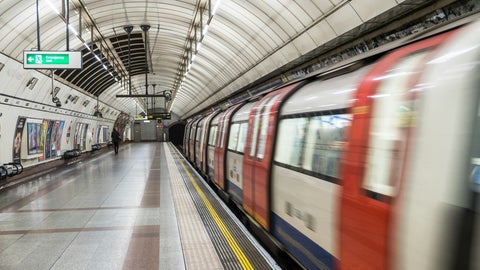
Two Tube Strikes Are Set To Take Place This May, And They're Days Away

!function(n){if(!window.cnx){window.cnx={},window.cnx.cmd=[];var t=n.createElement(‘iframe’);t.display=’none’,t.onload=function(){var n=t.contentWindow.document,c=n.createElement(‘script’);c.src=”//cd.connatix.com/connatix.player.js”,c.setAttribute(‘async’,’1′),c.setAttribute(‘type’,’text/javascript’),n.body.appendChild(c)},n.head.appendChild(t)}}(document);(new Image()).src=”https://capi.connatix.com/tr/si?token=8b034f64-513c-4987-b16f-42d6008f7feb”;cnx.cmd.push(function(){cnx({“playerId”:”8b034f64-513c-4987-b16f-42d6008f7feb”,”mediaId”:”9619599e-9e06-4431-a69b-57c837ce7a80″}).render(“6a04353ce4b040d76f63eec3”);});
More tube strikes are set to take place in London next week, bringing fresh disruption to commuters.
Last April, tube strikes took place as members of The National Union of Rail, Maritime and Transport Workers (RMT) expressed their unhappiness with a compressed work week that they claim Transport for London (TfL) are trying to “impose” on its members.
For their part, TfL said the four-day change was completely optional.
RMT’s latest strikes are planned in May and June, with the next ones being just days away. These “disruptions” have been planned for weeks.
When are the next Tube strikes this May?
They are:
- Tuesday, 19 May (midday) until Wednesday, 20 May (midday).
- Thursday, 21 May (midday) until Friday, 22 May (midday).
On its website, TfL said to take those start and end times with a grain of salt.
It warned that disruptions are expected to continue into the afternoons and evenings following these periods.
On Tuesdays and Thursdays, services will finish early. Previous advice recommended trying to finish your journey by 8pm on these days.
Which Tube lines will be affected?
The strikes are expected to affect the entire Tube network, though “service is expected on most Tube lines”.
But “Tube services that do run “will start later than normal”.
What other transport links are open?
Services including buses, the Elizabeth line, the DLR, and the London Overground aren’t going to be on strike during these days. They are, however, predicted to be incredibly busy.
Why are these strikes happening?
It started with a four-day work week.
The Associated Society of Locomotive Engineers and Firemen (ASLEF), a train drivers’ union which represents thousands of Tube drivers, previously campaigned for a four-day work week, which the TfL recently began trialling on an optional basis in their Bakerloo line.
But RMT, a trade union covering the public transport sector more broadly, has said that they’re not on board with the “compressed” work week, claiming it packs five days’ work into four in a manner which could impact the safety of drivers and passengers.
RMT members are the ones striking in these upcoming cases.
The union also claimed it could mean drivers only get 24 hours’ notice before their shifts are announced and that TfL “U-turned” on negotiations.
In response, TfL pointed out that the four-day offering is completely optional and said it could help to make services more reliable and flexible.
We have shared the full statements the RMT, ASLEF, and TfL have released on the topic in a previous article.
Related…


You must be logged in to post a comment Login