

Politics
Ukraine to open first drone factory in UK


Ukraine has opened its first drone factory in the UK. The facility, near a US military base in Suffolk, will mass produce unmanned aerial vehicles (UAVs) for the war with Russia. Arm firm Ukrspecsystems will fulfill the contract.
Ukrspecsystems’ UK director Rory Chamberlain told the BBC:
The war has changed but this keeps soldiers safe and it keeps the nation fighting.
There is your chessboard and another piece has been added – another player has been added to the board that can do different things and that’s drones in modern warfare.
It’s changed how they have to defend themselves and it’s changed how they attack as well.
UK’s Minister for Defence Readiness Luke Pollard attended the opening. He told those assembled:
We’ve been supporting Ukraine with training of military personnel for quite a few years now, but for Ukraine to stay in the fight having more assured and resilient industrial production is essential.
That’s what this factory provides, so it is a really important step in the UK-Ukraine partnership, making sure we can keep Ukraine in the fight for longer as we get towards what I hope will be peace.
The UK is also building an arms manufacturing hub in Ukraine.
Ukraine arms base
The British government has said that a three-year fully funded deal has been struck between Ukraine and the UK.
Defence secretary John Healey said on 16 January:
An Armed Forces is only as strong as the industry that stands behind them.
Healy said the new deal ensured even small UK arms firms could get involved. This was all framed as “supporting Ukraine” “and securing peace”:
This new centre will supercharge that effort and ensure British companies, no matter how small, can support Ukraine in the fight today and help secure the peace we hope to see tomorrow.
The National Armaments Director Group will manage the centre. The current director is Rupert Pearce, appointed in October 2025.
The BBC said the new drone factory in Suffolk:
It is also close to Elmsett Airfield, near Ipswich, which will be used to train drone pilots and test out the machines before they are deployed to soldiers on the frontline.
The factory will make up to eight types of UAV to send on to Ukraine. Militarisation is accelerating across Europe. President Donald Trump’s demands that European nations stop relying on the US have compounded this. In the clamour to rearm, there is very little space to discuss what a more just and less war-like economy might look like.
Featured image via the Canary

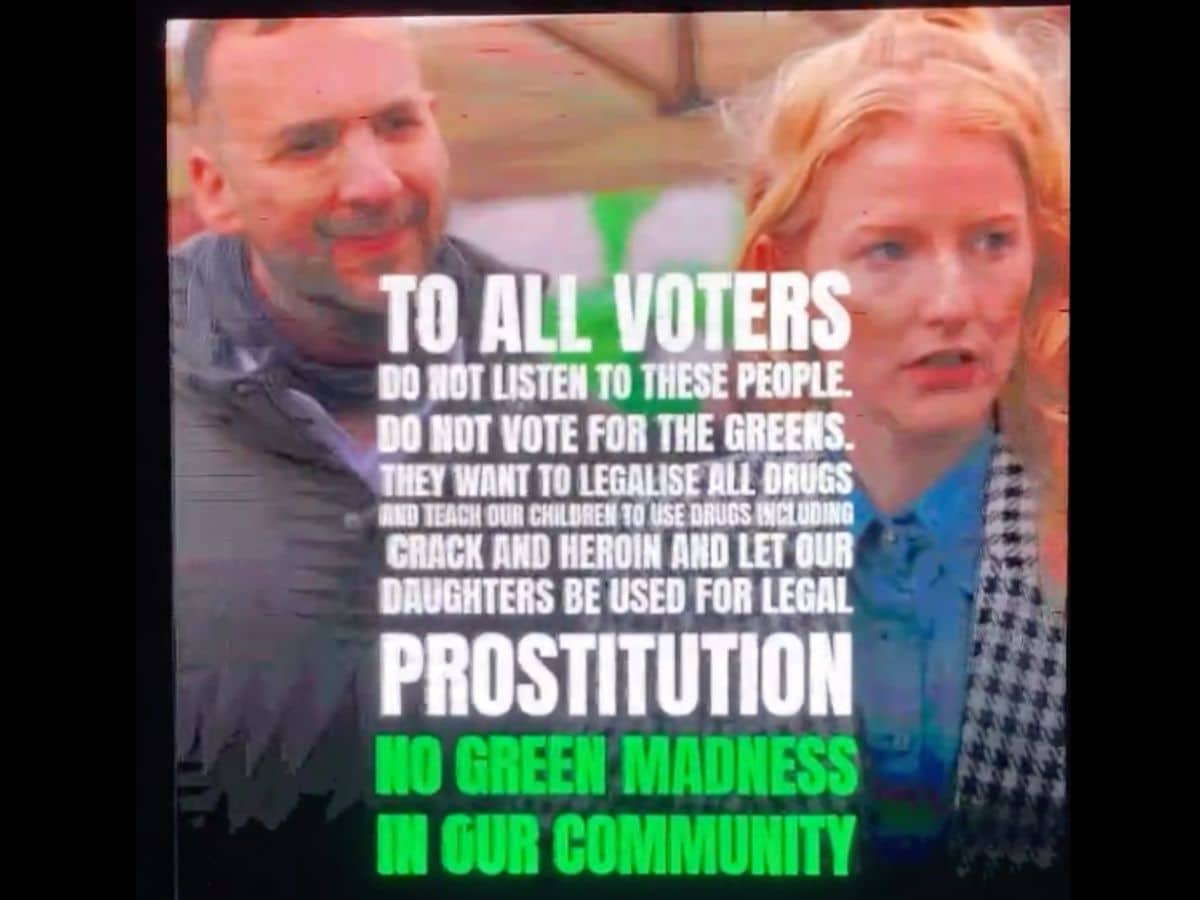
Labour’s desperate, dirty tricks in the Gorton and Denton by-election took a disgraceful new turn on polling day 26 February 2026.
The party had already been caught out delivering leaflets purportedly from a fake ‘tactical voting’ organisation — that it had made up — to try to scam voters into avoiding Green party candidate Hannah Spencer. But on the day local voters went to the ballot box, it toured the constituency with a video truck playing a string of lies against Spencer and party leader Zack Polanski.
The smears were a clear attempt to use locals’ children to scare them away from the Greens — a sick irony given the all-pervasive presence of paedophiles and other sex offenders among Starmer’s faction:
It’s not the first time Labour has resorted to such scandalous tactics. In 2023, the party waged a sewer-level smear campaign against independent left-winger Sam Gorst in Garston in South Liverpool.
That campaign backfired when Gorst and his colleague Lucy Williams trounced Labour in what had previously been a stronghold. Let’s hope the gutter party sees its foul tactics blow up in its face in Gorton and Denton, too.
Featured image via the Canary

Green party deputy leader Mothin Ali has made a defiant response to death threats from fascist Israel supporters, telling them that he’s not hiding.
One threat came from a racist X account “WillyBrams3”, telling Ali that he hopes Israel finds and kills him soon. Ali’s response: “Hi, I’m not playing hide and seek”:
Hi, I’m not playing hide and seek… pic.twitter.com/caWlNHakBX
— Mothin Ali (@MothinAli) February 26, 2026
Ali has long been on the Israel lobby’s hate list for his willingness to call out Israel’s Gaza genocide and to challenge UK politicians who act as mouthpieces for the apartheid colony.
The Willy Brams account is a flood of Islamophobic and anti-left hate speech, including support for further destruction and slaughter in Gaza:
The devil in disguise . Let them bleed Israël https://t.co/LCbFfRjl3z
— Willy Brams (@WillyBrams3) February 26, 2026
Unsurprisingly, given the prevalence of sex crime in the colony, he’s also a keen sharer of Israel’s ‘thirst trap‘ soft-porn posts and other far-right misogyno-racism:


Ali is no stranger to such fascist threats. In 2024 he was threatened repeatedly for daring to say “Allahu akbar” – “God is Great” – at the end of a speech. Israel’s campaign against the Greens has intensified since party members put forward a motion to the party’s approaching conference correctly declaring Zionism to be racism.
Featured image via the Canary

Keir Starmer has lost control of which documents are made public relating to his appointment of Peter Mandelson as his senior adviser and UK ambassador to the US.
Starmer had indicated he would decide which information was released and keep some back for “national security and international relations”. This was barely-disguised shorthand for withholding information concerning Israel. Serial child rapist Jeffrey Epstein is now known to have been an Israeli intelligence asset. Mandelson, whose closeness to Epstein has been further exposed but was known by Starmer when he appointed him, is also a Zionist.
But the parliamentary ‘Intelligence and Security Committee’ (ISC), made up of peers and MPs, has now said that it will hold sole control over what files are released. Of course, Starmer will still try to influence decisions and his home secretary Shabana Mahmood, to whom police forces report, will have more influence than she should.
Mandelson documents
Number 10 has already said that the Met has agreed some documents should not be disclosed, including reports of three questions Starmer asked Mandelson about Epstein. Parliamentarians on the ISC may also have an eye on potential political or future legal consequences for themselves if they withhold material information, but Starmer’s handlers are evidently still trying to minimise damage.
The Met Police and the Starmer regime have also stipulated a supposed ‘framework’ for agreeing which documents can be made public without prejudicing its criminal investigation into Mandelson, who was arrested on 23 February 2026. Commons speaker Lindsay Hoyle had told police that Mandelson was planning to flee the country.
Mandelson’s protégé Morgan McSweeney resigned as Starmer’s chief of staff two weeks earlier in an attempt to save his boss. Since then, Starmer has tried to portray himself as shocked, but has tried to hide behind police process to avoid confessing what he knew about Mandelson and Epstein when he appointed him — which seems certain to be more or less everything.
Documents are likely to start coming out as early as next week.
Featured image via author
On 26 February, Your Party members decided who would sit on the Central Executive Committee (CEC). The election results rolled in just before lunchtime. Jeremy Corbyn’s team ‘The Many‘ secured 14 successful candidates, giving them a majority on the CEC. In contrast, Zarah Sultana’s ‘Grassroots Left’ saw 7 gain a seat with three independent candidates completing the CEC.
However, questions remain about what this means for the ‘peoples party’. Will this mark a line in the sand and prompt genuine efforts to work together? Or will factionalism double down, leaving sore winners and resentful losers across the political divide?
Jeremy Corbyn, his slate, and his team have faced considerable member backlash for controlling and divisive tactics that have turned what was once an exciting project into a toxic, polarised environment. After all, not letting people have a say or seat at the table is bound to increase suspicion and provoke defensive actions from those blocked out. This resulted in accusations of toxic ‘Labour Right’ tactics being rampantly deployed in a fight for a small few to control the process.
The Many must remember that cheering a victory for one faction will sting those who backed the other. That’s hardly a recipe for bringing people together.
Congratulations to Jeremy Corbyn and @TheManyYP for a clear victory in the CEC elections!
Your Party can now move forward to build a mass party that defends the interests of the many, not the few. pic.twitter.com/OKxW2kCk0u— Socialist Action (@SocialistAct) February 26, 2026
Party politics and factionalism putting off members
Despite the party having had a reported interest of 800,000 people following the announcement from its co-founders last July, that transpired to approximately just 60k members at the time of its inaugural conference. The announcement of results today informed that membership now lies at 40,985, with just 25,347 votes received to decide the party’s pivotal direction of travel. Not a great indictment on how either leader has read the room, with factional games undeniably having a role in the loss of enthusiasm among the wider public.
For instance, losing nearly 20k members after the conference could either be due to the public fighting and briefing, in which both sides were at odds with each other. Corbyn’s team deplorably chose to brief the right-wing press about ‘communist takeovers’ prior to it commencing, drawing accusations of similarities shared with the ‘Labour Right’ intrinsic in his downfall.
Unfortunately, this has highlighted that public leaders have not sufficiently taken note of public feeling: and that is that there is no time to waste fighting with each other with the far-right at our door.
One Your Party member despairingly told us:
How can we win people over from the far-right if we can’t even navigate disagreement together on the left?
At the Canary, we have faced relentless abuse and criticism for insisting on transparency and holding those in power to account. Yet we have refused to back down, because we believe all power deserves scrutiny — not just the power of those we oppose. After all, power corrupts, and humans are fallible.
The left must get it together
From the very outset, members made it abundantly clear that one of the most important factors in building this party was the safeguarding of democracy. When so many are left feeling unheard and sidelined, this party was meant to be the salve that healed that wound by allowing all engaged to be heard. This led to pushes for a member-led democratic party, which was overwhelmingly voted through at conference.
However, since then we have received multiple reports supported by verified evidence which informed the suggestion that Corbyn and his team were more than happy to subvert democracy for their own desire to control the party building process. Considering reports from the outset of Sultana being blocked from contributing equally, seemingly preferring for her to be seen and not heard, a significant proportion of members have raised alarm over patriarchal ‘sexist man club’ attitudes inherent in The Many.
We wrote earlier this year about Corbyn ally Karie Murphy’s shady tactics to fix the odds, saying:
Originally, members of Your Party made it clear that they wanted an elected oversight committee formed ahead of the CEC election. Supporters argued that this approach would make committee members more representative of the entire membership, bridging divides and differences of opinion.
However, figures on The Many slate allegedly objected, instead pushing for – and implementing – a sortition process that selected five members to carry out crucial oversight. Given the public bickering and clashes driven by strong views on both sides, members generally accepted this compromise as fair in principle.
However, it now appears that principle and process are not the priority for those gearing the party’s democratic processes.
The Canary has been told that Karie Murphy excluded one sortition member from being involved in the Your Party committee, literally blocking her number and ignoring her very existence.
NEW: Jeremy Corbyn set to become parliamentary leader of Your Party after his slate won 14 seats to 7 on the central executive committee
— Sienna Rodgers (@siennamarla) February 26, 2026
Corbyn to be Your Party’s ‘parliamentary leader’
It is being widely reported that the significant TM-majority on the CEC will elect Corbyn to be Your Party’s representative in Parliament. This undoubtedly raises questions as to whether this victory for TM will be used to force a sole leadership model that members overwhelmingly voted down at its inaugural conference. It equally raises fresh concerns that what will unfold now will be akin to the ‘Labour Right’ jostling for power, excluding and sabotaging others in the process, to create a party in their image alone.
Not too unlike the warnings we heard from Sultana that a Labour Party 2.0 was awaiting if her slate and aligned independents didn’t win a majority.
An unavoidable dichotomy has surfaced: if members voted for collective leadership to ensure that decisions are made fairly with no centralised power in the hands of one person, it’s hard now to see how that really can be delivered upon. Those aligned solely with Corbyn’s TM slate have made it abundantly clear they wanted sole leadership from the start. Equally, they have made clear in practice that they won’t work in tandem with people who aren’t on ‘their team’. Now they have control of the party’s decisions, it’s impossible to avoid the optics of the birth of a ‘Labour 2.0’.
This is especially true when we consider the briefing and ‘attack dog’ sabotage tactics that belong firmly in the Labour right playbook.
Undoubtedly to cause frustration among members, we have a sole leader with a majority overseeing the foundational processes of a party formed on a collective leadership model. Square peg, round hole springs to mind.
Something that it appears Zarah Sultana alludes to in her public statement after the results were announced:
In November, Your Party conference voted for a collective leadership.
From today, that work begins. Congratulations to everyone elected to the CEC! pic.twitter.com/1jOaDL616y
— Zarah Sultana MP (@zarahsultana) February 26, 2026
Change comes from uplifting people, not suppressing them
In conclusion, Corbyn and those aligned with him would do well to remember that the vast majority of the public watching this unfold are likely more emotionally mature than those in powerful, privileged positions. Equally, Sultana’s team will have a tricky line to tread, yet again, where they maintain scrutiny on how much power the members actually have, whilst not being seen to be the ’cause’ of people losing interest.
The vast majority see that we have to hear each other to find a way forward, not shut the door from the very outset if we don’t like what we’re hearing. This has unsurprisingly put people off and hindered the movement as a whole.
Nevertheless, Corbyn and his allies have achieved victory and the ‘control’ that comes with it. We hope they choose now to listen to all of us without fear or favour. How he chooses to wield this control will have wide-reaching consequences for YP members, and the viability for the party to truly compete against the rising far-right.
Featured image via the Canary

The boss of pharmaceutical giant AstraZeneca’s pay rose to £17.7 million in 2025. That’s after Keir Starmer’s administration bent over for Donald Trump and Big Pharma in December last year, accepting a 25% increase in pricing for NHS drugs.
AstraZeneca— Extracting wealth from people’s healthcare
Unsurprisingly, AstraZeneca CEO Pascal Soriot welcomed the increased NHS costs in February. He called them a “very positive step”, suggesting he wants to milk even more from the NHS.
That’s all despite AstraZeneca cancelling investment plans in the UK.
Big pharma companies stopped nearly £2bn in investments in the UK in 2025. For example, US drugmaker MSD announced that it would abolish its £1bn London research centre. Shortly after, AstraZeneca said it would scrap a £200m investment in research facilities in Cambridge.
It was the US ambassador to the UK, Warren Stephens, who asked chancellor Rachel Reeves to enable pharmaceutical companies to drain more resources (via profit) from the NHS.
Trump and big pharma holding the NHS to ransom comes despite MSD, for instance, making £3.27bn in net income in the first quarter of this year.
End privatisation
The price gouging makes it clear that big pharma should be brought in-house to relieve pressure on the NHS. Moneyed rewards can remain with nationalisation. Scientists already receive prizes for breakthroughs and the same could be done in a public sector pharmaceutical division to further incentivise discoveries beyond public good.
That way private suppliers cannot use their position to demand more and more money from the NHS. Indeed, drug company Roche has refused to offer the NHS drugs for terminal cancer because of its excessive profit motive. It’s worth noting that a lobbying firm that has represented that company also donated £55,800 to former Labour cabinet minister Anneliese Dodds.
Healthcare should be public including all its resources. That means pharmaceuticals and land.
Although, it seems Starmer is in the pocket of the corporate extractors.
Featured image via DW
The official Israeli embassy ‘X’ account, with the colony’s typical arrogance, has publicly demanded the UK Green party drop its anti-Zionist motion. The party’s conference will debate and vote on a motion that accurately describes Zionism as racism. It will also affirm support for the Palestinians’ legally-guaranteed right to resist Israel’s occupation by “any available means”.
Cue an entitled hissy fit from the official account, which spouted “utter condemnation” at the “extreme” motion and absolutely demanded the party reject it:
The Embassy of Israel expresses its profound concern and utter condemnation regarding the “Zionism is Racism” motion currently under consideration for the Green Party’s upcoming spring conference. a motion so extreme, so hostile, and so intellectually bankrupt that its very inclusion on the agenda raises urgent questions about the direction of the party.
Zionism is the fundamental right of the Jewish people to self determination in their ancestral homeland. It is not an ideology of exclusion, but one of liberation. By seeking to categorise Zionism as a form of racism, this motion attempts to revive the long discredited and hateful equation once promoted by UN Resolution 3379. That resolution was a moral stain on the international community and was decisively revoked by the UN General Assembly in 1991. To attempt to resurrect this falsehood in 2026 is a regressive and dangerous step.
But antisemitically spouting that ‘Jewish self-determination’ entitles Israel to steal the Palestinians’ ancestral homeland so Zionism can’t possibly be racist wasn’t enough. ‘@IsraelinUK’ needed to throw in some genocide-justifying atrocity propaganda. It ignored — of course — that all its lies have been disproven. And the genocidal colony, which has murdered hundreds of thousands of innocent Palestinians, whined that a party motion “creates a hostile and threatening environment”:
Furthermore, the motion’s explicit support for “armed struggle” is nothing less approval of terrorism. To suggest that “all available means” should be supported is to provide a blank cheque for the same atrocities witnessed on October 7th, 2023: mass murder, torture, rape, and the kidnapping of civilians. To endorse this is to abandon every moral and humanitarian principle the Green Party once claimed to uphold.
Just the existence of such a declaration creates a hostile and threatening environment, providing a justification for further antisemitic hostility. The Green Party should feel nothing but shame for allowing such a motion to reach its conference. Instead of championing social justice, equality, and human rights, this proposal transforms the party into a welcoming refuge for those who hate the different, despise minorities, and promote violence.
The Embassy of Israel calls on the Green Party to reject this motion decisively and unequivocally, to make an effort to prevent their platform from being hijacked by extremism.
“Mass murder” — nope. Israel itself killed most Israelis that died on 7 October 2023 through its ‘Hannibal directive‘. It even admits it did, since just days after it happened — but only in Israel. When it’s trying to mug British people and other nations, that ‘never happened’.
“Torture” — nope. Israel routinely tortures thousands of innocent Palestinians in detention. But there is no evidence of torture of Israelis, either on 7 October or during the captivity of some Israelis in Gaza.
“Rape” — nope. The UN found not one credible account of rape during the 7 October raid. Even Israel’s own prosecutor had to admit it. You know who does rape — every day? Yep, you’ve guessed it: the ol’ genocidal colony itself.
“Kidnapping of civilians” — almost entirely nope. A small number of civilians were kidnapped. Children taken to keep them with their parents. A few old people. But apart from the kids, everyone in Israel has to do military service. Many of those taken were on active duty or military reservists. The kidnapping of civilians is a crime — but it was almost absent on 7 October. Israel, by contrast, has abducted thousands as a means of terror — and continues to do so.
Writer Matt Kennard summed it all up perfectly:
Embassy under control of a war criminal wanted by ICC thinks it has right to tell Green Party it must censor a conference motion
Too late. Levees have breached. Zionism is racism—and the whole world knows it. Armed resistance to occupation is also legal under international law https://t.co/3WReiGQkFx
— Matt Kennard (@kennardmatt) February 24, 2026
Featured image via Twitter
Direct military force has, for centuries, been the principal means by which States have achieved ambitious foreign policy objectives, whether seizing or defending territory, altering a state’s military behaviour, or reshaping its internal political and economic structures.
Since the First World War and the rampant development and consolidation of world financial markets, a shift in attention towards non-violent economic force has developed to an extent which has forged a set of coercive measures surpassing direct military force as the principal mode of engagement.
At the apex of contemporary economic warfare, sanctions serve as our post-war world’s ‘enlightened’ alternative to open conquest and bloodshed, a humane and non-violent mechanism for the ends of global norms and the so-called ‘rule of law’, which compels rather than overtly subdues antagonists.
The mark of a civilised country, it seems, is aversion to open conflict and a commitment to quieter, more technocratic means of dominance.
Sanctions: 100 years of the ‘indispensible tool’
Over the past century international relations scholarship has championed the utility of sanctions, casting them as indispensable tools in the arsenal of statecraft and a mark of the refinement of contemporary geopolitical engagement.
This intellectual edifice has no doubt served to lend relative credence to the recent wave of punitive measures levied by the UK, US, and allied governments against Russia following its invasion of Ukraine in 2022. Sanctions are treated not only as necessary but as morally superior, a form of pressure that preserves the legitimacy of those who wield them. Yet their historical record suggests something closer to continuity with older forms of coercion than any genuine departure from them.
Economic warfare is indeed ancient, but our present method of sanctions traces its origins to the interwar period in Europe, when the League of Nations sought to harness economic coercion as a means of enforcing a premature form of collective security during the rise of openly militaristic European leadership.
Sanctions imposed on Italy during the 1935 invasion of Ethiopia marked one of the earliest attempts to deploy such measures in lieu of direct military engagement. While these efforts failed to halt Italian aggression, they laid the groundwork for the widespread adoption of sanctions in the post-war international order.
The US leading the charge
The United Nations further refined the art of sanction. In theory, sanctions were to be wielded collectively, targeting states that violated international law. In practice their deployment became increasingly selective and frequently unilateral, driven by the strategic interests of the United States and its closest allies.
With unrivalled command over the global financial architecture that emerged after the Bretton Woods accords, the US asserted itself as the preeminent enforcer of sanctions, capable of excluding adversaries from international markets, payment systems, and access to capital.
This role became more entrenched after the collapse of the Soviet Union removed the only meaningful counterweight to American geopolitical and financial power. The integration of Britain and Europe into this system strengthened its reach, embedding sanctions within global trade, insurance, shipping, and banking networks.
Whether the objective is regime change, policy reversal, or containment, sanctions have consistently fallen short of their most ambitious goals. Their failure stems from a recurring miscalculation: the belief that forced economic hardship will translate into political pressure sufficient to compel either the citizenry of the targeted state into open revolt, or the state itself into negotiation and compliance.
Cuba: a case in point
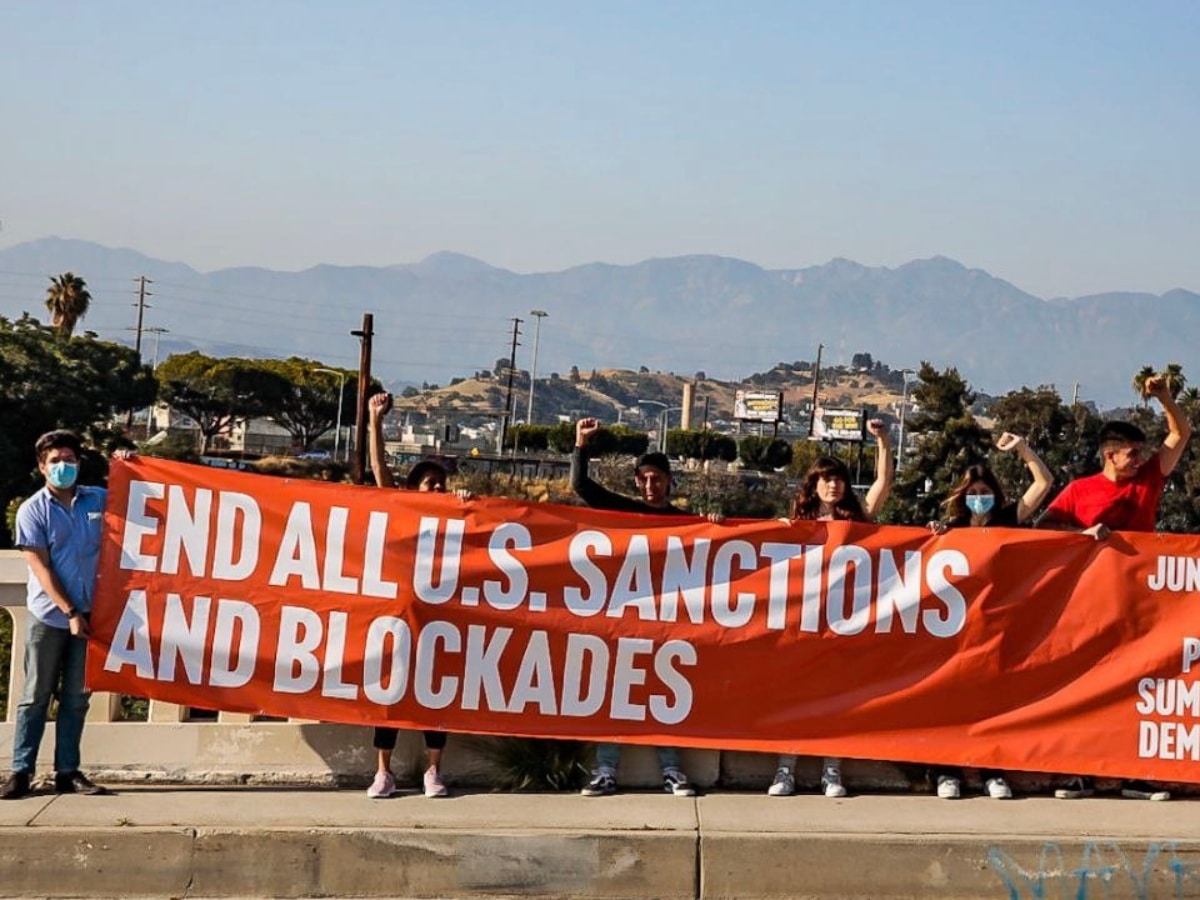
The decades-long embargo on Cuba remains one of the clearest examples. It has neither toppled the government nor facilitated meaningful political transformation. Instead, it has contributed to chronic shortages, restricted access to finance and trade, and periodic humanitarian crises, while reinforcing the state’s legitimacy as a defender against external pressure.
A limited diplomatic opening during the administration of Barack Obama briefly raised the possibility of gradual normalisation. This approach was reversed under Donald Trump, who expanded financial restrictions, limited remittances, and re-designated Cuba as a state sponsor of terrorism shortly before leaving office. These measures have largely remained in place.
In recent years, Cuba has experienced its most severe economic crisis since the collapse of the Soviet Union. Energy shortages, blackouts, declining tourism revenues, and constraints on fuel and food imports have driven mass protests and large-scale outward migration. Yet despite these pressures, the political system has endured.
The persistence of sanctions across successive US administrations illustrates the degree to which they have become embedded not only in foreign policy but in domestic political cycles. Their humanitarian impact has been significant, but their political outcomes remain limited.
Sanctions are rarely successful
In Iran, sanctions have significantly damaged the economy, contributing to inflation, unemployment, and shortages, but they have not fundamentally altered the state’s strategic posture. In North Korea, which has been subjected to one of the most extensive sanctions regimes in history, these measures have left the regime’s core military ambitions unaffected.
Instead, they have reinforced domestic narratives of siege and external threat. The result has been increased internal cohesion and the consolidation of authority, rather than destabilisation. A further consequence has been the deepening of security and technological cooperation among sanctioned states, including closer alignment between Russia, Iran, and North Korea.
Even in cases where sanctions are presented as successful, the costs often extend beyond their intended targets. The sanctions imposed on Russia since 2022 were expected to produce rapid economic collapse and compel a change in strategic behaviour. The early period appeared to support this assumption.
Currency instability, inflation, and the departure of Western firms generated a perception of acute crisis. However, this shock was followed by a period of adjustment. Trade flows were redirected, financial transactions shifted toward non-Western systems, and energy exports increasingly moved to Asian markets.
Russia
The departure of Western firms unfolded in ways that reshaped ownership structures inside Russia. Companies exiting the market were often compelled to sell assets at steep discounts. Factories, infrastructure, and logistical networks transferred into domestic hands, frequently supported by state financing.
This process accelerated import substitution and industrial policy in ways that would have been politically and economically difficult to impose prior to the sanctions. Rather than isolating the Russian economy, these measures contributed to a partial restructuring, increasing its insulation from Western pressure while reinforcing the state’s role in strategic sectors.
For Europe, the consequences were immediate and structural. The disruption of long-standing energy relationships exposed deep dependencies. Governments were forced to subsidise households and industry, expand liquefied natural gas infrastructure, and secure alternative supplies at higher cost.
The political effects have been visible across the continent, where parties critical of sanctions and energy policy have gained ground, reflecting broader concerns over competitiveness, industrial decline and sovereignty.
At the same time, global trade has adapted.
Trade has adapted
Commodities have continued to flow through intermediary states, with complex supply chains obscuring origins while preserving market access. Turkey, the Gulf states, and parts of Central Asia have played an expanding role in facilitating rerouted trade and financial transactions.
Parallel payment systems and local currency settlements have gained attention, particularly among emerging economies seeking insulation from Western leverage. The expansion of BRICS and related initiatives reflects a broader search for alternatives within an increasingly fragmented global economy.
Financial and logistical restrictions frequently affect broader populations rather than governing elites. Access to medicine, infrastructure, and essential goods is shaped by compliance regimes and banking constraints. In some cases, this pressure contributes to negotiation; in others, it strengthens internal cohesion and legitimises state authority.
The unintended consequences of sanctions extend beyond individual cases.
A global reshaping
They are reshaping the structure of global economic relations, encouraging diversification, regionalisation, and institutional innovation. The increasing use of export controls, tariffs, and technological restrictions has extended economic coercion into areas once associated with commercial competition. The strategic contest over semiconductors, artificial intelligence, and supply chains reflects a growing perception that interdependence can generate vulnerability as well as efficiency.
The return of Donald Trump to the presidency has reinforced this trajectory. His administration has renewed emphasis on tariffs, industrial policy, and economic leverage as central instruments of foreign policy. At the same time, this approach reflects a broader bipartisan shift within Washington, particularly in relation to competition with China and the use of economic power to shape global outcomes.
Paradoxically, sanctions have proved not to cripple the West’s antagonists but embolden them, accelerating a major renegotiation of the dynamics of world trade, revealing wrought contradictions at the centre of our global economic order. The record demonstrates a persistent pattern: sanctions frequently exacerbate humanitarian crises, inflict suffering on civilian populations, while ultimately failing to achieve the political and economic ambitions of their imposers.
Sanctions do not work
Rather than reinforcing the post-Cold War US-led order, the US, UK, and Europe have helped facilitate new alliances and a restructuring of global financial and geopolitical architecture against themselves. In the West’s failed attempt to scupper Russian ambitions, the price we ultimately pay as Westerners is with our own sovereignty and economic security.
For Western powers to save face, they first ought to realise the limits of their capacity to play hegemon; second, renegotiation must take place with Russia and the East at large while we still have a hand to play.
Britain’s place in the rising global economic and collective security architecture must remain an open question, lest we lose everything for the pursuit of another country’s lost and irrational cause.
Featured image via the Canary
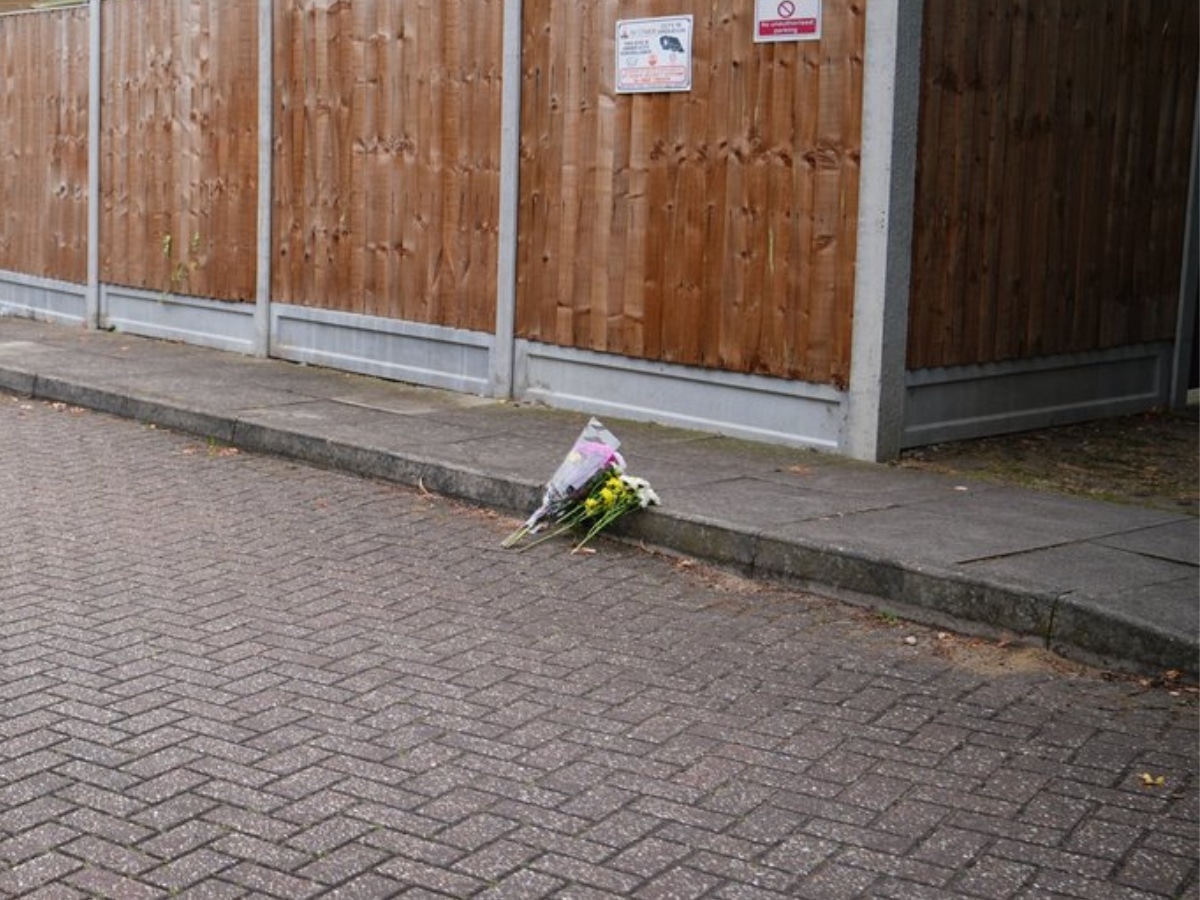
An alleged murderer told the court he “highly regret[s] his actions” on the night Zahwa Mukhtar died but had no intention to harm her and didn’t think she was injured.
Duane Owusu delivered a fatal blow to Zahwa’s neck that led to her falling backwards and hitting her head on the ground in Chadwell Heath Lane, Romford.
Moments before, the 27-year-old was allegedly pushed from a parked Mercedes when events continued to escalate inside the car.
Zahwa Mukhtar murder trial continues
Giving evidence at his trial on Thursday, Owusu denied hitting Zahwa with his fist and said he “shoved her” so she didn’t stop him from getting back into the car.
He said: “I had no reason to cause her serious harm. I was basically looking after her the whole night, stopping all the fights, making sure that she was alright. I just wanted her out of the car to deescalate the situation.”
He later added: “I’m not going to punch a woman…Because I wanted her out of the car, I just shoved her out the way. If I had punched her that would have caused some sort of injury. That’s not what my intention was.”
The incident was captured on CCTV outside a care home in the early hours of Saturday 16 August last year. It shows two kicks aimed towards Zahwa’s face while she’s on the ground near the rear passenger side door, where she’d been sitting on the defendant’s lap in the overcrowded car.
Henrietta Paget KC, prosecuting, summarised what Owusu had told jurors earlier.
She said: “I was getting my other leg out of the car. I tried to sweep her leg out of the way to create distance from the car because I felt like I couldn’t close the car door, and I didn’t want the car door to hit her leg, and I didn’t want us driving off and the wheel going over her feet.”
Later addressing what Ms Paget suggested was a “savage attempt to stamp her face”, Owusu said: “100 per cent not” and claimed he only wanted to “push her legs out the way”.
How the night allegedly began for Zahwa
Owusu and his group had come from a house rave and Zahwa was socialising in Stoke Newington Road, north London, when the two parties crossed paths.
When he left the rave, Owusu was “tipsy and lively” but wasn’t drunk. He told the court he’d taken a swig of white rum before going in, a quarter of an ecstasy pill and had smoked cannabis earlier in the day.
“I was happy,” he said and called himself a “people [person]”.
“I just talk to random people if I’m in a good mood,” he explained when shown footage of himself.
The 36-year-old first encountered Zahwa while trying to deescalate a tense situation between one of his group and another man, Owusu told jurors.
He said: “This is when I remember seeing Ms Mukhtar, she’s holding on to my arm saying, ‘Brother, please stop. These guys, they’re going to stab you. These guys are going to stab you’. At that point when she was saying that, I was thinking, why is she saying that? Who is this? I don’t even know her.”
Alleged tension
The court heard evidence earlier in the trial about Zahwa’s interactions with the group and her suddenly jumping into the car.
Owusu said Zahwa had asked the driver if she could “chill” with the group, some of whom were going back to Dagenham to continue the party at one of their homes. He denied having a sexual interest in the victim.
He said: “I didn’t have an issue with her coming so I said to come and sit in the back.”
But once inside the car, Owusu described several fights between Zahwa and two other women, Paige Allen and Abigail Winter, beyond hair pulling, and which he had to break up.
“Little girly stuff,” he said, but blows were allegedly thrown, which escalated at a petrol station. The defendant said Abigail had dragged Zahwa to the ground and both women attacked the victim.
He led Zahwa away because she was angry and had tried to both calm her down and protect her, Owusu said. The two women didn’t want her back in the car, but “I couldn’t just leave her there like that,” Owusu stated.
The situation changed
The court then heard Zahwa’s demeanour changed. “She started being abusive and biting her nails, threatening to stab people,” Ms Paget said.
With Zahwa on his lap, the defendant could see she took out her phone and began scrolling through contacts, which worried him.
He said: “I was thinking, I hope she’s not trying to ring someone and escalate the situation saying she’s been attacked by two girls. I was just thinking the worst at that point.”
Then she began filming the women. Answering what was so bad about Zahwa doing this, Owusu said he believed it could provoke further conflict.
He said: “It felt awkward. It felt weird. You just said you’re going to stab them, you’re going to kill them, and then you’re going to take a video of them. I thought that was a bit weird.”
After he asked the driver to “Please stop the car,” Owusu claimed he “snatched the phone” and threw it out as bait to get Zahwa out. His intention was to book her an Uber, he told the court.
“At what stage did you call her a ‘dumb bitch’?” Ms Paget asked.
“I don’t remember saying that,” the defendant replied.
“I highly regret my actions”
Owusu told jurors Zahwa fell from the car when he loosened her grip from his gilet attempting to get her off his lap. He denied throwing her from the vehicle.
The defendant also said he didn’t see Zahwa on the ground after the incident, but had heard one of the other women saying that she was.
He said: “I highly regret my actions that night. I feel bad that I showed a lack of interest because at that point then, I was still concerned with her getting back in the car. I didn’t want problems to escalate.”
Until he was arrested, Owusu didn’t know Zahwa had died, he told the court. He’d been informed about the heavy police presence outside his home and conversations being had with neighbours, which led him to assume the worst.
He said: “I was just trying to recollect how I pushed her. Starting to think, did she hurt herself? Did something happen after we left her there? I was just praying, I hope it’s not nothing too serious.”
Michael Borrelli KC, defending, explained Owusu’s searched the internet for information that weekend, such as ‘Incident Chadwell Heath girl found unconscious’, to no avail.
He said: “I was just so depressed, I was scared, I was praying. I remember being that stressed on the phone and the emotions I was going through at that moment that I completely slept the whole day until the next day.”
Mr Borrelli asked: “At any point during that incident outside the care home did you deliberately hurt Ms Mukhtar?”
“No,” he said.
Owusu, of Althorne Way, Dagenham, denies murder and manslaughter.
The Old Bailey trial continues.
Featured image via the Canary

Alvi Choudary, a young British-Asian man, was arrested earlier this week for a burglary in Milton Keynes. The only problem? He’s never even entered the city, which lies 100 miles from his home in Southampton. Nevertheless, racist AI facial recognition technology placed him at the scene of the crime.
The news comes after calls from Labour to increase the use of AI in both policing and the court system. On top of that, just two days ago — 24 February — a police chief in charge of AI use admitted that a new £115m national police data centre will produce biased and racist results.
AI facial recognition — Wrongful arrest
Choudary appeared on Good Morning Britain to talk about what happened to him. He explained to presenters Kate Garraway and Richard Madeley that he was held in custody for around 11 hours before police would even speak to him or hear evidence against his arrest.
Adding insult to injury, the arrest turned out to be due to a custody photo taken of Choudary some four years previously. This, too was a wrongful arrest. And, despite the fact that officers assured him at the time that his DNA and information would be removed from the system, his photograph was kept on record.
It was this photo that police AI facial recognition software matched to an image of the suspect. As it turned out, the suspect didn’t resemble Choudary in the slightest. The police officers were laughing at this racist error even as they released Alvi.
Madeley then asked why asked why exactly the AI technology performs so poorly for BAME individuals. Akiko Hart, the director for the human rights organisation Liberty explained that:
It’s because the AI is trained on white faces. And so, essentially, you are more likely to be misidentified if you are young, you are more likely to be misidentified if you’re a woman, and obviously we’ve seen there’s really shocking statistics about how you’re more likely to be misidentified if you’re Asian, if you’re Black, and 250 times more likely to be misidentified if you’re a black woman. And that is because of the way the AI is trained.
AI racism
Choudary‘s wrongful arrest is a case-in-point for the problems being caused by the increasing use of AI in the justice system. However, Labour remain hellbent on pushing AI into policing and the courts, in spite of its well-documented biases.
Earlier this month, on 12 February, the Ministry of Justice announced plans to use predictive policing to overhaul the youth justice system. Part of the proposal was to use “machine learning and advanced analytics” to “support early, appropriate intervention” in youth crime.
At the time, the Canary published an article on how this initiative would automate the discrimination that had already been part of the lives of racialised individuals for decades.
Then, on 24 February, justice secretary David Lammy proudly announced that Labour was also pushing AI use into the courts. He stated:
we are going to invest more in our in-house Justice AI Unit – a specialist team within my department, forward-deployed to the frontline, working with staff to tackle the challenges they face.
Over £12 million in additional funding in the next financial year will expand our AI capabilities, putting this powerful tool, finally, into the hands of staff.
A problem, here and now
On that same day, 24 February, police AI lead Alex Murray acknowledged that a new £115m police data centre would produce discriminatory results. However, he also tried to assure the public that the police would work to reduce that discrimination.
As if, that is, they’ve ever done the work of addressing their non-digital discrimination. Beyond that, the police even have form for neglecting to reduce or act on bias in their AI use already.
On the failure of a previous police venture in facial recognition technology, the Association for Police and Crime Commissioners (APCC) stated that:
System failures have been known for some time, yet these were not shared with those communities affected, nor with leading sector stakeholders.
As Alvi Choudary’s wrongful arrest clearly demonstrated, AI racism in policing is not a problem to deal with in the future. It is already here, and it’s already affecting people’s lives.
Labour and the police know that this is a problem; they know it’s racist. But never mind — they’re going ahead with it anyway. Oh, and they’ll try to mitigate the risk, honest.
Featured image via 3DIVI

Click here to subscribe to Guido’s YouTube channel. You’ll get all our latest video interviews and investigations sent straight to your inbox. Here’s our latest video, on the ground in Gorton and Denton… There’s much more to come…

Jack Dorsey’s Block Cuts Nearly Half of Its Staff In AI Gamble

Ant and Dec reveal one ITV show they won’t host ‘never again’

Intel Stock Rises on AI Partnership with SambaNova as Company Navigates Foundry Challenges and Market Recovery


-

 Video7 days ago
XRP News: XRP Just Entered a New Phase (Almost Nobody Noticed)
-

 Politics5 days ago
Baftas 2026: Awards Nominations, Presenters And Performers
-

 Fashion6 days ago
Weekend Open Thread: Boden – Corporette.com
-

 Sports3 days ago
Women’s college basketball rankings: Iowa reenters top 10, Auriemma makes history
-

 Politics3 days ago
Nick Reiner Enters Plea In Deaths Of Parents Rob And Michele
-

 Business2 days ago
True Citrus debuts functional drink mix collection
-

 Crypto World3 days ago
XRP price enters “dead zone” as Binance leverage hits lows
-

 Business4 days ago
Mattel’s American Girl brand turns 40, dolls enter a new era
-

 Business4 days ago
Law enforcement kills armed man seeking to enter Trump’s Mar-a-Lago resort, officials say
-

 Tech2 days ago
Unsurprisingly, Apple's board gets what it wants in 2026 shareholder meeting
-

 NewsBeat23 hours ago
Cuba says its forces have killed four on US-registered speedboat | World News
-
 NewsBeat1 day ago
Manchester Central Mosque issues statement as it imposes new measures ‘with immediate effect’ after armed men enter
-
 NewsBeat4 days ago
‘Hourly’ method from gastroenterologist ‘helps reduce air travel bloating’
-

 Tech4 days ago
Anthropic-Backed Group Enters NY-12 AI PAC Fight
-

 NewsBeat4 days ago
Armed man killed after entering secure perimeter of Mar-a-Lago, Secret Service says
-

 Politics4 days ago
Maine has a long track record of electing moderates. Enter Graham Platner.
-
 NewsBeat2 days ago
Police latest as search for missing woman enters day nine
-

 Business19 hours ago
Discord Pushes Implementation of Global Age Checks to Second Half of 2026
-

 Crypto World2 days ago
Entering new markets without increasing payment costs
-
 Sports4 days ago
2026 NFL mock draft: WRs fly off the board in first round entering combine week