
Politics
We must help survivors bring enablers of Mohammed Fayed to justice



The late Mohamed Fayed pictured in 2008 | Image by: Jeff Moore / Alamy
3 min read
Many parliamentarians will either represent survivors in their constituencies, or simply feel the utter outrage at the crimes which have taken place. Please join the APPG and support its work
The crimes of Mohamed Fayed in gross abuse of his power, and the alleged crimes of those connected with him, are horrific.
There is evidence that over the course of decades Fayed systemically used his power within Harrods to select, groom, and sexually abuse girls and women. There are further allegations which remain under investigation relating to his other business interests including Fulham Football Club and House of Fraser.
This is not a case of one bad apple. The abuse that took place was enabled by systems within and outwith Harrods. Survivors were subjected to invasive medical tests by doctors, they were moved from place to place, their families were intimidated, and the police failed to investigate complaints.
And now for the first time a link to Jeffrey Epstein has come to light, with a survivor reporting being trafficked by Epstein to London for Fayed. Perhaps it is no surprise: two predators, operating at the same time, using their powerful positions and institutional links to do so.
Fayed and Epstein may be dead – but their systems, institutions, and many enablers live on. And crucially so do the survivors of their crimes. Several hundred women have come forward already in relation to the abuse of Mohamed Fayed – and certainly there will be more who have not yet chosen to speak.
This is why last year we established the All-Party Parliamentary Group for Survivors of Fayed and Harrods to be their voice in Parliament. We have met dozens of survivors over the past 12 months and pay tribute to their tenacity and strength.
And now for the first time a link to Jeffrey Epstein has come to light, with a survivor reporting being trafficked by Epstein to London for Fayed
We also know how hard it can be for survivors to put their trust into another institution after decades of being let down. To that end we have spent some months now working with survivor networks, putting in place best practice standards, and establishing a framework of trust which we do not take for granted. The APPG is also working closely with The Survivors Trust to make sure we are working in a safe way – bearing in mind the trauma that survivors have suffered.
There was one underlying message that came through from the APPG’s recent consultation with survivors: there is a web of implicated individuals and institutions which must be investigated fully. And this can only be achieved by framing the police investigation into crimes of trafficking; alongside a statutory public inquiry.
This is the drum beat that the APPG will be playing over the months and years to come. In the short term we are hearing the concerns of survivors in relation to the redress scheme and the ongoing investigations of the Metropolitan police and IOPC and will be pushing for answers. We are also pleased to be facilitating engagement with the minister for safeguarding and the Prime Minister.
Many parliamentarians will either represent survivors in their constituencies, or simply feel the utter outrage at the crimes which have taken place. Please join the APPG and support its work. Fayed’s crimes were abhorrent – but so were the actions of those who enabled him and covered it up. Indeed, we don’t yet know the extent of the enterprise. But let this be the institution that stands with survivors in their campaign for justice.
Wendy Chamberlain, Liberal Democrat MP for North East Fife, and Dave Robertson, Labour MP for Lichfield, are co-chairs of the APPG for Survivors of Fayed and Harrods


Campaign group 350.org has responded to the World Meteorological Organisation’s (WMO) latest report. It sounds the alarm on a global climate “state of emergency”, saying that the crisis will worsen the humanitarian toll of soaring oil and gas prices driven by the Iran war. 350.org urged countries to protect their citizens from climate harm and rising costs, and to start urgently transitioning their economies away from fossil fuels.
The World Meteorological Organisation’s State of the Global Climate 2025 pronounced 2015-2025 as the hottest 11 years on record. And it warns that weather has become more extreme on a day-to-day basis, impacting millions of people and causing billions in economic losses.
The report also said that the increase in the annual carbon dioxide concentration in 2024 was the largest annual increase recorded, driven by continued fossil fuel emissions. Amid an energy crisis described by the International Energy Agency as the ‘worst’ in decades, United Nations secretary-general Antonio Guterres points to “our addiction to fossil fuels” as destabilising both the climate and global security.
The UN’s World Food Programme has warned that if the Iran conflict continues, 45 million more people could face acute hunger due to rising prices. Meanwhile, scientists warn of the possibility of El Niño pushing heat records to record highs and causing severe heatwaves, droughts and floods this year.
Anne Jellema, 350.org executive director said:
Soaring prices for fuel, fertiliser and food could be the last straw for millions of families in the global South already pushed into poverty by climate change.
Governments must act now to stop oil and gas companies profiting from the war— by taxing their windfall profits to finance protections for ordinary people. Some of the revenues should be used to fund wider access to rooftop and balcony solar and other renewable solutions that will immediately reduce families’ bills while also strengthening national energy security.
If governments care about their people, the time is now to end our addiction to crisis-ridden and planet-destroying fossil fuels.
On 24-29 April, the first conference on transitioning away from fossil fuels will take place in Santa Marta, co-hosted by the governments of Colombia and the Netherlands. 350.org urges all governments to join this momentous gathering of countries to plan a fossil fuel phaseout, pursuing a global commitment first made at the COP28 UN climate talks.
Featured image via the Canary

The post ‘The intifada has come to London’ appeared first on spiked.
A parliamentary debate on Thursday 26 March will aim to give much-needed publicity to a group of chronic, genetic illnesses that most medical professionals class as ‘rare’ – when in fact they are just rarely diagnosed. Moreover, it will hopefully shine a light on two even less diagnosed conditions that are comorbid with this group – but which can be life-threatening.
EDS: not rare, just rarely diagnosed
The Ehlers-Danlos syndromes (EDS) are a group of 13 complex genetic tissue disorders. These conditions affect the entire body, often leaving people in daily pain, exhaustion, and isolation. The hypermobility spectrum disorders (HSD) are connective tissue disorders whose features overlap with the most common type of EDS, hypermobile EDS.
These conditions are lifelong, incurable, and chronically under-recognised, with limited treatment options and far too little understanding. EDS and HSD also often come with other long-term conditions such as mast cell activation syndrome (MCAS), postural orthostatic tachycardia syndrome (PoTS), gastroparesis, myalgic encephalomyelitis (ME), and Long Covid.
Peer-reviewed studies indicate that as many as 1 in 500 people in the UK (over 135,000 individuals) are living with EDS or HSD, many of whom remain undiagnosed for years or even decades. The lack of awareness means people are often misdiagnosed with anxiety, depression, or psychosomatic illnesses. This leaves them feeling dismissed, isolated and without access to the care they need.
Life-threatening conditions
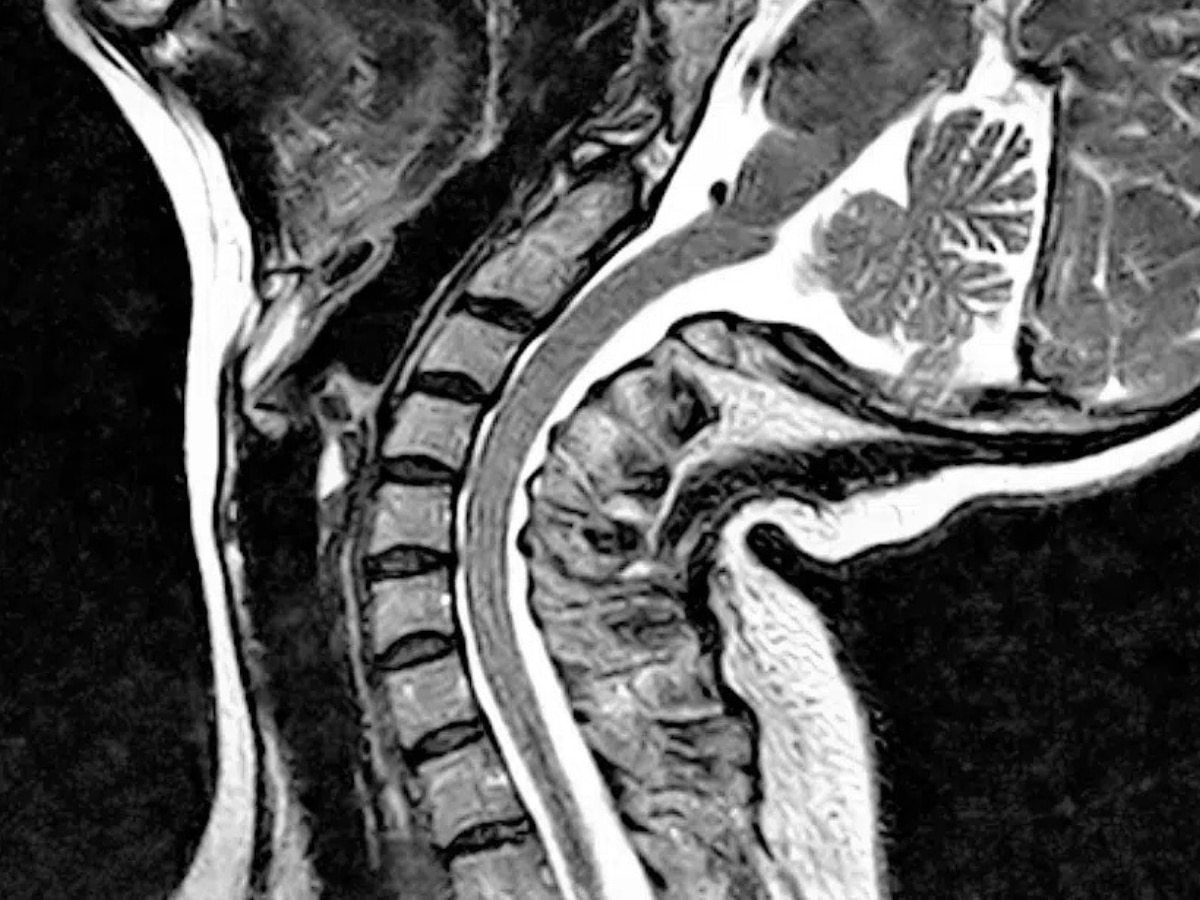
However, what are even less-readily diagnosed are craniocervical and atlantoaxial instabilities (CCI and AAI). These conditions are characterised by the joints in the cervical junction moving in ways they wouldn’t in someone without EDS. It means that often, blood flow to the head is restricted, and nerves in the neck are compressed or even damaged.
In the worst cases, any injury to a person’s neck or head can cause cerebrospinal fluid leaks from either the neck or head areas. Crucially, CCI and AAI can also be so severe that a person’s brain and skull begin to sink onto their cervical junction – which can be life-threatening.
Yet on the NHS, these conditions are not recognised in the context of EDS and HSD. They cannot readily be diagnosed due to the need for an upright MRI scanner. And if they even are, there are no treatment options available.
For people in the UK with severe CCI and AAI, the only options are to pay privately abroad for surgery to effectively fuse their cervical junctions in place – and this carries huge risks.
Neglected and ignored
Yet the government knows all too well about EDS, HSD, and CCI/AAI. However, successive administrations have failed to take any meaningful action. The Canary was told by one senior NHS neurosurgeon that he and a group of other senior practitioners advised the-then health secretary Jeremy Hunt in 2013 that upright MRI scanners were desperately needed in the NHS. He ignored them.
Fast-forward to earlier in March 2026, and the now-Labour government effectively batted-away an MP’s question over CCI and AAI; failing to recognise the disastrous state of care for people living with the conditions.
There are a lot of reasons why medical professionals and successive governments have ignored EDS and is associated comorbidities. Misogyny is one. Most people living with the conditions are women. Prejudicial tropes are another. For too many years, people called those living with EDS ‘double jointed’ and they were all too often misdiagnosed with other illnesses. The psychiatry lobby is involved, too – as it all too often seems determined to psychologise what are actually physical illnesses. Plus, a lack of robust research is another.
So, on 26 March Labour MP Josh Newbury organised a Westminster Hall debate on EDS, HSD, CCI, and AAI. You can get involved by asking your MP to attend. Charity EDS UK has created an online letter tool, which you can access here.
EDS must be properly recognised
EDS UK is calling for urgent, practical changes to improve care:
-
Integration of EDS and HSD into NHS service specifications and long-term condition strategies.
-
Joined-up, multidisciplinary care across primary and secondary services.
-
Training and support for healthcare professionals.
-
A national multidisciplinary team (MDT) for rare complex cases like CCI.
However, the Canary is well aware this will not be easy. So, the more MPs that attend the debate the better. EDS and its comorbidities are devastating for the people living with them and their loved ones. The government needs to do so much more – and this debate could hopefully be the start of that.
Featured image via the Canary

Nuclear Transport Solutions sign new strategic agreement on development of transport package designed to safely move the next generation of nuclear fuel.
Nuclear Transport Solutions (NTS), the world’s leading nuclear transport specialist, and nuclear technology company Westinghouse have signed a new strategic agreement to work together on the development of Pegasus – NTS’s revolutionary transport package designed to safely move the next generation of nuclear fuel.
The signing took place at the British Embassy, in Washington DC, as part of a prestigious event celebrating the UK and US commitment to advancing nuclear energy generation.
Pegasus is designed as the world’s leading transport package for High Assay Low Enriched Uranium (HALEU), a more efficient type of nuclear fuel that will power many of the next generation of advanced reactors.
These reactors are key to delivering low-carbon, homegrown energy and powering emerging technologies such as artificial intelligence.
The UK-US agreement reinforces secure, reliable energy supply in both countries. It formalises the sharing of technical expertise, safety protocols, and design insights between NTS and Westinghouse, accelerating development of Pegasus for deployment. It also strengthens collaboration on engineering, regulatory compliance, and fuel handling standards.
Ben Whittard, NTS Co-CEO, said:
“This partnership allows us to deliver our expertise in the secure transport of advanced nuclear fuel in the UK and US. The growth of AI and the need for reliable, ultra-low carbon energy demonstrates the importance of nuclear power in our future, and we’re thrilled to be at the forefront of its development.”
NTS brings over 50 years of international experience and is recognised as a trusted partner for safe, secure and reliable nuclear transport expertise.
In 2024, the UK government awarded NTS £10.5 million to lead the development of the UK’s transport capability for HALEU. As part of the Nuclear Decommissioning Authority (NDA), NTS benefits from close links to government and access to some of the UK’s strongest nuclear expertise.
Sophie Lemaire, Interim Co-President of Westinghouse Nuclear Fuel, said:
“We are very pleased with our new collaboration with NTS to co-develop the Pegasus HALEU transport package. This is an important step in making HALEU available in the US and UK.”
The signing marks another significant step in the UK-US golden age of nuclear energy security. It is helping to unlock a major expansion of new nuclear projects across both countries, supporting energy security and the UK’s mission to deliver more clean, homegrown power.
Minister for Nuclear Lord Vallance said:
“Developing our own capability to make and transport advanced nuclear fuel is critical to shoring up our position as a nuclear world leader.
Not only does this improve our energy security at home and reduce our reliance on Russian nuclear fuel, it provides export opportunities to grow our economy and ensure our allies can build resilient supply chains.
This agreement builds on our close co-operation with the US on nuclear energy.”
NDA Group CEO, David Peattie, said:
“This agreement is yet another example of how the NDA group is driving forward the Government’s ambition to become a clean energy superpower.
Pegasus represents a transformative step in advancing the UK’s energy independence and low-carbon ambitions, unlocking export potential and cementing the nation’s role as a world leader in nuclear innovation.
It also further reinforces NTS’s place as a global leader in delivering safe, secure, and dependable nuclear transport and logistics solutions.”
British Embassy in Washington Chargé d’Affaires, James Roscoe, said:
“Between the UK and the US, our commitment to developing new frontiers in nuclear energy is shifting from promise to reality – and this partnership between NTS and Westinghouse is a prime example of that ambition.
This deal will see British and American innovators deepen collaboration on engineering, safety, regulatory understanding, and fuel handling expertise – ensuring that our two nations maintain the technological edge in nuclear energy.”
Almost 200 containers of low-level radioactive waste that once formed part of Britain’s experiment with fast breeder nuclear reactors are being entombed.
Almost 200 containers of low-level radioactive waste that once formed part of Britain’s experiment with fast breeder nuclear reactors are being entombed in a purpose-built underground vault at Dounreay.
The containers are stacked 4 high and the spaces filled with grout before being covered by a steel reinforced concrete slab. This slab will become a floor to support more containers going to the vault for disposal.
Low-level waste from the clean-out and dismantling of the site’s reactors, fuel plants and laboratories is being packed into drums, super-compacted to become pucks and stacked inside containers that are filled with grout before being moved to their final resting place in a cavernous below-ground vault. Some larger waste items go into the containers and are grouted alongside the pucks.
Originally, it was planned to half-fill the low-level waste vault with almost 1,000 containers before entombing them in grout and covering with a reinforced concrete floor. This provides a stable base upon which another 1,000 containers can be stacked.
But the project team at Nuclear Restoration Services re-evaluated their methodology and concluded there were practical advantages by adopting a staged approach to carrying out the intermediate floor slab works.
The first stages are now complete, marking the permanent disposal of 192 half-height ISO containers that cover a fifth of the available floor-space and giving the team and their contractors valuable experience.
“The original plan was to pour concrete slabs to a depth of 500mm over the full 80m x 50m area once the vault was half full,” explained operations manager Graham Bremner.
“We looked again at this and realised there were benefits from moving to a staged approach in line with grouting instead – a significant reduction in downtime during mid-life closure of the vault for waste disposal operations and minimising significant demand of concrete supply that would impact local contractors.”
The reinforced concrete floor will eventually support point loads of containers 4 high up to 160 tonnes in weight.
The vault is one of 2 operational disposal facilities, with the other being used for low-level demolition waste.

Five years on from the publication of the landmark report from the Commission on Race and Ethnic Disparities, the lead author, Tony Sewell, is still angry. Successive governments have ignored his warnings that England’s schools are failing white working-class boys. This week, Lord Sewell will tell Keir Starmer that ‘boys from the poorest homes are still stuck at the bottom of the class’ and are outperformed by every other group.
Established in the wake of the 2020 Black Lives Matter protests, Sewell’s inquiry reported in 2021 that inequalities between different groups were primarily linked not to race but to class, geography and family stability. On all counts, the white working-class group was doing worst. Now, new research from the Centre for Social Justice shows that little has changed. White British boys on free school meals are more likely to fail GCSE English and maths, most likely to be excluded from school, and least likely to stay on in education after 16, compared with all other groups.
Just over a third of white British boys on free school meals passed GCSE English and maths last year. This compares with 82 per cent of Chinese boys on free school meals, 68 per cent of Bangladeshi boys and 58 per cent of African boys. Only black Caribbean boys on free school meals, with a 39 per cent pass rate, come close to matching the dismal results of white British boys. But it’s not just exam results: white working-class boys account for 83 per cent of permanent school exclusions and are more likely to be out of education, employment or training than any other group.
Clearly, something is going badly wrong in England’s schools. The ‘soft bigotry of low expectations’, a phrase often used to refer to the treatment of black pupils, now seems just as applicable to white boys. More pointedly, as education has become increasingly politicised, white boys have come to be seen as a problem. Education secretary Bridget Phillipson has called the outcomes of white working-class pupils a ‘national disgrace’. She’s right. But, at the same time, she has called for schools to focus on challenging ‘toxic masculinity’ and the ‘scourge’ of misogyny. And Starmer backed a campaign to have the Netflix drama, Adolescence, shown in every school. He said that violence carried out by young men, influenced by what they see online, was ‘abhorrent’. It seems that all the Department for Education has to offer boys is panic-fuelled hectoring.
At schools today, white British boys learn not just that they are toxic because of their sex, but also that they are sinful because of their skin colour. Critical race theory-inspired classroom exercises promote the idea that white people need to make amends for their inherent privilege, while campaigning organisations seek to imbue reading lists, resources and lesson plans with the same message. Heroic figures from the past are shot down. Teachers are told to avoid a ‘white-saviour narrative’ by focussing lessons on slavery around white abolitionists such as William Wilberforce. Rather than feeling pride in their nation’s achievements, white pupils are taught to feel ashamed of Britain’s past.
The decades-long emphasis on diversity, equity and inclusion (DEI) in British institutions means there are few specific schemes targeting white working-class boys. Stormzy and HSBC bank continue to support scholarships for black students studying at Cambridge. At the same time, two leading private schools – Dulwich and Winchester colleges – rejected a substantial donation to fund places for disadvantaged white boys.
This DEI penalty carries over into the workplace. In 2023, the Royal Air Force was found to have engaged in unlawful practices to boost the numbers of women and ethnic-minority recruits. In the police force, diversity schemes use ‘positive action’ to target recruitment campaigns at non-white officers. It is hardly a surprise that white working-class boys see little point in working hard at school.
Lord Sewell’s report also found that geography plays a part in reinforcing the disadvantage experienced by white working-class boys. Year after year, pupils in London achieve significantly better exam results than pupils in the north east of England. Yet, in December, Phillipson cancelled plans for Eton to open a free sixth-form college in Middlesbrough.
Instead, Labour highlights its Pride in Place programme, which gives additional financial support so deprived communities can fund improvements in ‘pavements and high streets’ or invest ‘in culture and green spaces.’ Such schemes do nothing to challenge the lack of ambition that comes with intergenerational unemployment. The Sydney Harbour Bridge in Australia was constructed using steel produced on Teesside. Nearly a century on, its giant beams still bear the words ‘Made in Middlesbrough’. A lick of paint and a few new plant pots may make towns look nice, but they do not provide working-class boys with either jobs to aspire to or a sense of genuine pride in their town’s achievements.
White working-class boys are being failed by a cultural elite that views them as irredeemably racist, misogynistic and violent. They are being failed by a political class that, for successive generations, has had little to offer by way of well-paid, meaningful employment. And they are being let down by a school system that prioritises therapeutic interventions over discipline and high standards. All children deserve better.
Joanna Williams is a spiked columnist and author of How Woke Won. Follow her on Substack: cieo.substack.com.

Easter is on the horizon. So chocolate, and therefore cocoa, is in the spotlight. The Fairtrade Foundation is calling on the UK government to introduce a mandatory Human Rights and Environmental Due Diligence (HREDD) law. It could provide protection for cocoa farmers and workers around the world from poor working conditions, volatile prices and exposure to environmental harms.
Whilst some chocolate companies are already doing the right thing, many are not. Without additional regulation and investment, many cocoa farmers and other agricultural workers will continue to remain exposed to low incomes, human rights abuses and environmental harms across global supply chains.
New research into cocoa production
New Fairtrade research involving almost 500 cocoa farmers in Côte d’Ivoire found 58% said climate change impacts on production (including changing weather, pests and disease) are their biggest challenges as farmers. In many cocoa-growing countries, climate chaos has driven increasingly volatile prices and deepening financial instability for farming communities.
With one of the busiest chocolate-buying moments of the year fast approaching, Fairtrade is urging shoppers to look for the FAIRTRADE Mark. It’s also calling on the public to sign its petition demanding decisive government action to ensure cocoa supply chains are fair to both people and planet.
This call for change comes at a time when rising chocolate prices are also reshaping what UK shoppers choose to buy. The Fairtrade Foundation commissioned new consumer research from Kantar for the next phase of its Do it Fair campaign, Fair to People.
It reveals that two thirds (65%) of UK adults have changed their chocolate-buying habits in the past year due to rising prices. Over a third (35%) say they are buying less chocolate, while 3% report they have stopped buying it altogether.
Despite this shift in purchasing behaviour, most chocolate buyers remain unaware of the challenging realities behind their favourite treats. One in four (25%) believe the cocoa in their Easter eggs is grown by farmers earning more than £10 a day. In reality, most will be earning less than the international poverty line of around $3 a day, leaving them unable to support their family and farms.
The survey also shows strong public support for fairer treatment of cocoa growers. More than half of UK adults (54%) say they would be willing to pay more for chocolate if it guaranteed fairer pay and rights for farmers (rising to 73% among 16–34 year olds).
Volatile cocoa markets
These findings come amid extreme volatility in global cocoa markets. Prices surged in 2024 and 2025, driven by climate change, erratic weather, and a rise in pests and diseases that devastated harvests in Ghana and Côte d’Ivoire – the world’s largest cocoa-producing countries.
Prices have since dropped for a range of reasons, including weaker demand and increased global supply, but geopolitical instability is fuelling fresh concerns about renewed volatility. That volatility is already having profound consequences for cocoa-growing communities.
Many farmers who are already living on extremely low incomes face even greater uncertainty, and many urgently need long-term investment to build resilience. Choosing Fairtrade chocolate helps ensure their families can thrive through the Fairtrade Minimum Price and additional sums of money to invest in their farm or communities, and offering training and programmes that address human rights and environmental challenges.
Fairtrade tackling exploitation and instability
Fairtrade Foundation’s senior sustainable sourcing manager for cocoa, Marina El-Hasni said:
Most people aren’t aware of the exploitation and challenges faced by cocoa farmers. And even if chocolate prices ease for consumers, the long-term future of our favourite Easter treat will remain in jeopardy without meaningful investment, living incomes, long‑term contracts and regulation that holds businesses accountable for tackling human rights and environmental harms in their cocoa supply chains. Ensuring farmers are paid fairly, especially when prices are volatile, has never mattered more.
This Easter, we are urging people to look for the Fairtrade Mark on their Easter eggs so they can enjoy the chocolate knowing that farmers have been supported with fairer pay, investment in their communities and farms.
And as the Government concludes its Responsible Business Conduct Review, we urge Ministers to put fairness for farmers and workers at the heart of UK supply chains by introducing a new responsible business law.
One young cocoa farmer, Dora Atiiga, from Kukuom Union co-operative in Ghana, is bringing about positive change in her community. Dora’s leadership journey began when she joined Fairtrade’s Women’s School of Leadership. She said:
Since then my life has changed… I am now able to advocate on living income and climate action… without fear or panic.
The practical training in financial management, confidence‑building and project planning helped her understand not only her rights as a woman, but also her potential as a community leader. As she gained leadership experience, Dora began identifying issues in her own community:
Since there was no school for little children in my community, I decided to start one as a dream.
The school is now registered with around 170 students, eight teachers, and a cook – offering free care and education to families in her community.
Featured image via Nipah Dennis / Fairtrade Foundation
Sellafield’s Remote Technologies Group is the first to use an innovative contamination swabbing tool for quadruped robots, developed through the RAICo collaboration.
Sellafield Ltd and the Robotics & AI Collaboration (RAICo) have successfully completed the first trial of a specially designed, patent-pending contamination swabbing tool, mounted on a quadruped robot, in an area containing radioactive material.
The trial demonstrates how robotics could support routine health physics activities efficiently while reducing the need for people to enter potentially hazardous environments.
Swabbing is a common task at the Sellafield site. The health physics team carries out hundreds of swabs each day in contaminated areas. Using circular paper filters, these swabs monitor radiation levels across a range of surfaces, providing vital data that informs decommissioning strategies and ensures compliance with safety regulations.
The swabbing tool was developed through RAICo – a collaboration between the UK Atomic Energy Authority, the Nuclear Decommissioning Authority (NDA), Sellafield Ltd and the wider NDA nuclear estate, the University of Manchester, and AWE Nuclear Security Technologies – as part of its mission to accelerate the deployment of robotics and AI for nuclear decommissioning and fusion engineering.
Key to its design is its ability to replicate the complex and dextrous non-linear swabbing motion normally carried out by humans. This is possible due to the unique shape of the attachment, alongside an off-the-shelf haptic controller from Haply Robotics, and custom RAICo-developed software, which captures an operator’s real time hand movements and translates them into commands for Spot’s manipulator.
The deployment was conceived and planned by Sellafield’s Remote Technology Group, which is responsible for evaluating and deploying robotics, AI, and unmanned systems at the site.
During the controlled deployment, Spot was sent into a restricted area to inspect a simulated radiological spill and take a physical swab from a mock-contaminated surface.
The robot used the new tool to swab the surface and bring back a sample of blue chalk, used to simulate the contamination. The robot completed the task successfully, showing that a process traditionally performed by humans could potentially be carried out remotely without compromising accuracy or safety.
The successful trial points to the potential for wider use of robotics across Sellafield and the nuclear estate, helping to reduce risk, improve efficiency, and maintain high safety standards in nuclear decommissioning operations.
Deon Bulman, ROV Equipment Programme Lead, Remote Technologies Group at Sellafield Ltd, commented:
“Demonstrating a quadruped robot capable of remotely deploying swabbing equipment represents the significant opportunity we have to improve both safety and efficiency for nuclear decommissioning here at Sellafield.
The quadruped’s agility and stability allow it to access areas that are hazardous for personnel, while intuitive haptic feedback provides precise, human-like manipulation, reducing task time and increasing confidence in the samples collected.
Together, these capabilities support faster, safer, and more cost-effective decommissioning operations while pushing forward the adoption of advanced robotics in the nuclear sector.”
Ewan Scholefield, systems engineer, engineering and maintenance, Sellafield Ltd, who originated the idea of using Spot in emergency scenarios, commented:
“Deployments like this demonstrate how quickly the use of robotics is moving in the nuclear decommissioning industry. People are starting to recognise the versatility of robots like Spot and how they can be used to carry out a whole range of tasks.
This is being accelerated through the availability of bespoke tools, attachments, and interfaces like those produced by RAICo that enable robots to mimic specific human movements, such as swabbing.”
Dr. Kirsty Hewitson, Director, RAICo commented:
“This deployment is a perfect example of how collaboration between RAICo partners generates significant benefits for end users in the nuclear sector. In this case, innovation developed collaboratively by RAICo members, academic institutions, and companies in the UK supply chain, was trialled at another member’s site to support a specific task that their frontline operators have to deliver every day.
By working as a single, integrated team, we are all avoiding duplication and together we are delivering greater value from the public investment of taxpayer money.
Furthermore, the deployment at Sellafield follows a similar successful inactive test at the Joint European Torus (JET) facility in Culham earlier in 2025, suggesting that this new technology could have an impact on both nuclear decommissioning and fusion engineering sites.”
A shocking investigation has laid bare how minoritised communities are being illegally targeted by US-style immigration, compliance and enforcement (ICE) officers, led by the Home Office.
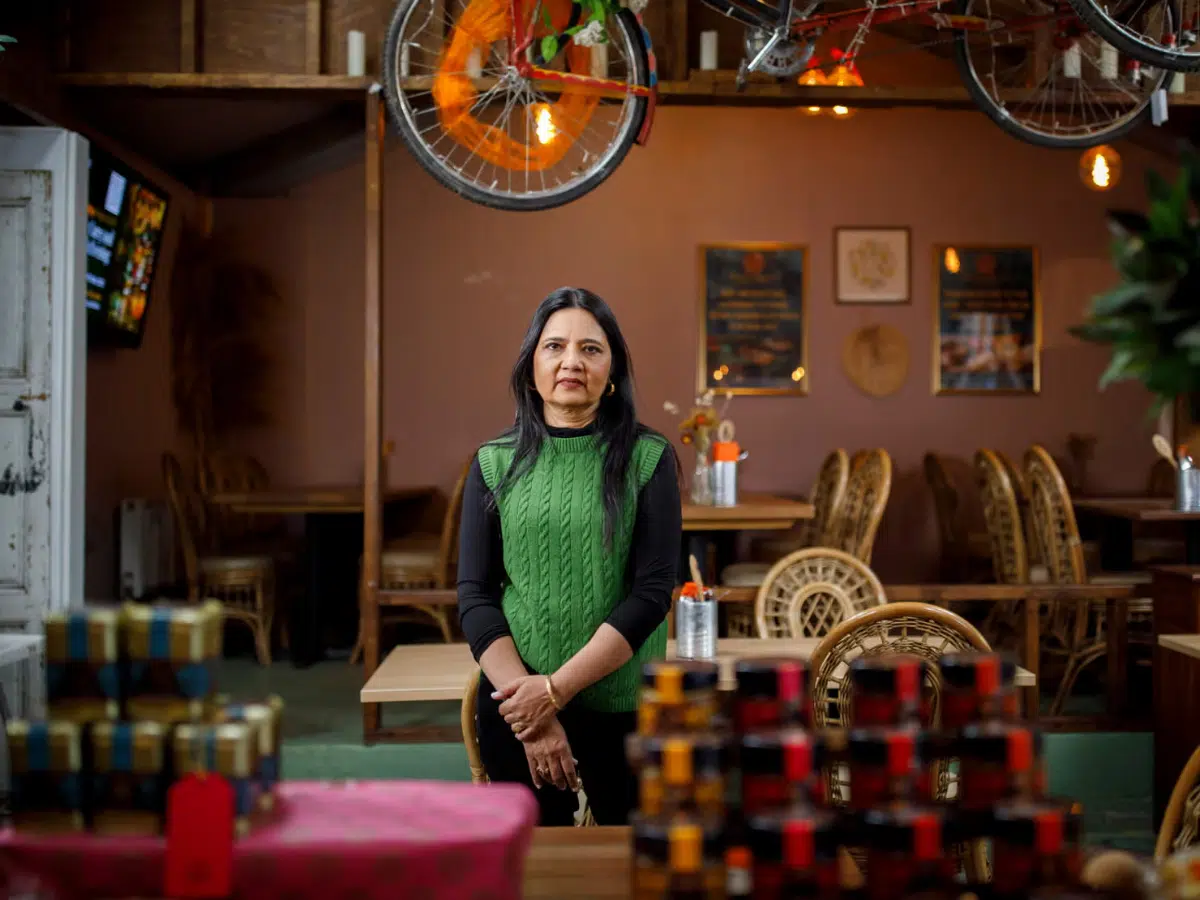
“Armed with sun guns and clad in stab vests, the 11-strong unit blocked off every entrance before moving in on their target: Mandira’s Kitchen,” an award-winning Indian restaurant in Surrey, the Guardian reported.
ICE agents “stormed the restaurant” last September with police but without a warrant, and demanded to see staff members’ passports. Chefs were separated and asked inappropriate questions about their personal lives while officers created a scene in the popular restaurant. Then, having found no evidence of anyone working illegally, they left.
This was one of tens of thousands of unjust Home Office raids on businesses across the UK since Labour came to power in July 2024.
ICE agents in the UK — why do we have them?
ICE officers were introduced as part of Theresa May’s ‘hostile environment’ policies in 2012, when she was home secretary. The Conservative politician aimed to make life in the UK unbearable for people living here without legal immigration status.
The West has seen increasingly vile rhetoric pushed by far-right politicians and pundits. This has deepened division in communities with racism unashamedly on full display. Furthermore, reports of aggressive tactics — and even murder — inflicted by ICE in the US are fueling fears in the UK about how similar tactics could be used against Brown and Black people.
Evidence of these traumatic raids will likely worsen the anxiety already felt by migrants as ICE agents reportedly:
singled out non-white, foreign-born workers.
‘They singled out non-white, foreign-born workers’: the restaurants raided by Britain’s version of ICE
A continuation of the Tory #HostileEnvironment that we’d hoped to see the back of and horribly reminiscent of MAGA
Not a vote-winner for Labour…
— Dr Tim Kinsella #FBPE @timkinsella.bsky.social (@51TJK) March 24, 2026
Mandira’s Kitchen owner, Mandira Moitra Sarkar, has a strong culinary reputation, having earned praise from fellow chefs Nigella Lawson and Jamie Oliver. Her ready meals were shown on a Channel 4 competition to source products for Aldi.
However, a successful business or persona, sadly, does not protect minoritised groups from racial harassment or discrimination. Sarkar told the Guardian she was “astounded” at what transpired, especially as it was likely in response to a flimsy tip-off.
The Guardian further reported:
Kevin Barker, a former Ice officer and the director of the paralegal firm Immigration Compliance Ltd, says that while raids are always “intelligence-led”, a tipoff can be enough to trigger one.
However, intelligence can range from “discreet drive-by surveillance” to the “suspicion of illegal workers”.
The nature of anonymity means a tipoff can relate to a personal or commercial grievance. Often, it’s “competitors within the local area” filling out the forms, he says.
A pretty expensive hostile practice from the state with little value for the taxpayer, it must be said. Meanwhile, the Home Office owes Sarkar for parking on the premises without paying.
Sarkar: ‘It’s guilty until proven innocent’
The restaurateur gave her perspective on why she was likely targeted:
Oh, you’re brown and you’re running a food business? Of course you’ve got illegal immigrants. It’s guilty until proven innocent.
Seema Syed, advocacy and communications director at charity, the Joint Council for the Welfare of Immigrants (JCWI), agreed. She told the Guardian racial profiling is a factor for Home Office raids.
Syeda says she has seen “many cases where people are raided, arrested and then released”. It is, she says, “very clear to us that this is a performative act”.
American business owner, Julian Denis, who owns a vegan Chinese restaurant in East London was also raided last year. His testimony highlights how it is less about whether you’re foreign and more about the colour of your skin.
Denis said ICE agents told him they were looking for “five to six illegal workers” while they:
singled out non-white, foreign-born workers for interrogation, scaring them with the possibility of being immediately jailed.
ICE’s cruelty doesn’t end there. LGBTQIA+ advocate, India Willoughby, recently spoke up about policy changes that will hurt the trans community too.
New power granted stating ICE can detain someone for “looking trans” . While held in indefinite detention, HRT will be denied.
The Gender Critical’s are trying to wipe trans out.
What @wesstreeting and @bphillipsonMP are doing to trans in the UK, is in tandem with MAGA US. pic.twitter.com/2s57sJLdzD
— India Willoughby (@IndiaWilloughby) March 13, 2026
Fuck ICE
Keir Starmer’s government has increased the number of raids by 77% since July 2024. Shockingly, the Guardian reports that the total number of raids under Starmer’s brief tenure already surpasses the entirety of raids carried out by the previous parliament.
This huge ramping up compared to previous right-wing governments is harrowing. After all, it further signifies how the Labour government is more interested in giving way to the hateful far right than they are in heeding any calls from the left of politics.
Its focus on foreign workers, who are cruelly scapegoated for problems they haven’t caused, signals the rising racism in British society. Meanwhile, the government gives white, heterosexual people the benefit of the doubt while denying that same presumption to minoritised groups.
It’s a deplorable step backward for British society and one that demands firm resistance.
Featured image via The Guardian/ Alicia Canter

Palestine TV has reported that the Israeli military brutally tortured a one-year-old Palestinian child to exert pressure on his father during interrogation.
According to TRT World:
the Israeli soldiers burned the child’s leg with a cigarette, pricked him and inserted a nail to his leg.
Torture is illegal under multiple bodies of international law. Common Article 3 of the Geneva Conventions prohibits “cruel treatment and torture” of individuals not partaking in any aggressions.
Going further, the UN Convention Against Torture came into effect in 1987 and banned torture in all circumstances. In fact, Article 2 specifically states that there can be no possible justification for torture including war or national emergencies.
Once again, Israel disregards the rule of law, going beyond even what existing legislation anticipated. It is accused of torturing an innocent child to exert pressure on a parent – an act so cruel that most would agree any parent might say anything under such circumstances.
Israel kidnapped and tortured a one-year-old child in front of his father for 10 hours, burning cigarettes and inserting nails into his legs, in an attempt to extract a false confession under duress.
Israel kidnapped and tortured a baby! pic.twitter.com/ExRFq14T4M
— Mohamad Safa (@mhdksafa) March 22, 2026
Israeli military torture baby
Palestinian journalist Osama Al-Kahlout reported the alleged torture, with Palestine TV citing his account. Footage has since aired showing the disturbing injuries sustained by Karim, a young toddler, after the Israeli military detained his father while he was out buying supplies. This traumatising ordeal for both father and child came on top of earlier hardship, when the man’s horse died, cutting into the family’s already limited income.
After gunfire erupted near his home, the child’s father, Osama Abu Nassar, apparently had to leave his little boy on the ground and report to a nearby military checkpoint. There, soldiers forced him – like many other Palestinian men and boys – to strip and undergo interrogation.
However, this is where Israel demonstrates yet another horrific escalation in brutality in its genocide against Palestinians. Soldiers reportedly directed their cruelty at the man’s child. A medical report has confirmed that Karim suffered burn marks from cigarettes on his body and puncture wounds in his leg caused by a nail.
Israeli forces have long been seen to abuse Palestinian children. This report suggests they now seek to use child abuse as a weapon of war against Palestinian men.
This innocent and suffering child was released 10 hours later to his family, via the International Committee of the Red Cross in Al-Maghazi. The father continues to suffer in Israeli detention alongside thousands of other Palestinian men and children.
What was that about Israel being the ‘most moral army’?
A child who carries no weapon, who knows nothing of war except its sound… is taken from his family, tortured, and cigarettes are extinguished on his small body. What kind of world allows childhood to be violated in this way? Silence is no longer neutrality… silence is a… https://t.co/h5qmq43tbp pic.twitter.com/2dps7bTTvC
— Mohammed (@Mohammedgaza334) March 22, 2026
Where is Western condemnation of child torture?
We’re sure that Western media and captured politicians will have little to say to condemn this absolute depravity inflicted by Israeli forces.
As this X post points out, silence can only mean complicity:
Even with photographic evidence & availability to interview the parents – Western media continues to remain silent & therefore complicit in all IDF war crimes. https://t.co/V09yhoi5kr
— Bakhtawar B-Zardari (@BakhtawarBZ) March 23, 2026
This soul-destroying news came alongside Francesca Albanese’s report to the UN’s Human Rights Council in which she underscored how Israel’s “torture extends far beyond prison walls”:
“My report shows that torture extends far beyond prison walls, in what can only be described as a torturous environment imposed by Israel across the entire occupied Palestinian territory,” @FranceskAlbs told the @UN Human Rights Council in Geneva.#HRC61➜https://t.co/TnkLkevBCq pic.twitter.com/SjHLMY5tie
— UN Human Rights Council (@UN_HRC) March 23, 2026
The cruelty and degradation is the point
International law, including the Geneva Conventions, strictly prohibits torture under all circumstances. Most people find such acts so unthinkable that lawmakers never felt the need to explicitly prohibit the torture of children as a separate offence. Yet once again, Israel appears willing to disregard these legal and moral boundaries, pushing into territory that lawmakers never anticipated.
Since the alleged ‘ceasefire agreement’ in October 2025, the IDF have murdered 677 Palestinians and injured a further 1,813.
Following the events of October 7 attacks, Keir Starmer moved quickly to offer diplomatic support for Israel, defending its siege on Gaza.
The longer Starmer keeps his mouth shot on the horrors the Israeli military inflict on Palestinians, the longer he will show himself up for what he is: an unrepentant genocide apologist.
Featured image via X

Asking AI to Predict Ethereum Price in 2030

Newscast – Are US-Iran Talks Actually Happening?

Private sector growth hits 3.5-year low in March


-
 Crypto World4 days ago
NIO (NIO) Stock Plunges 6.5% as Shelf Registration Sparks Dilution Worries
-

 Fashion4 days ago
Weekend Open Thread: Adidas – Corporette.com
-

 Politics4 days ago
Jenni Murray, Long-Serving Woman’s Hour Presenter, Dies Aged 75
-

 Crypto World3 days ago
Best Crypto to Buy Now: Strategy Just Spent $1.57 Billion on Bitcoin During Fear While Early Investors Quietly Enter Pepeto for 150x Potential
-

 News Videos6 days ago
RBA board divided on rate cut, unusually buoyant share market | Finance Report | ABC NEWS
-

 Crypto World3 days ago
Bitcoin Price News: Bhutan Sells $72 Million in BTC Under Fiscal Pressure, but the Smart Money Entering Pepeto Sees What the Market Does Not
-

 Politics6 days ago
The House | The new register to protect children from their abusers shows Parliament at its best
-

 Tech5 days ago
inKONBINI Lets You Spend Summer Days Behind the Register
-

 Crypto World6 days ago
Canada’s FINTRAC revokes registrations of 23 crypto MSBs in AML crackdown
-

 Sports1 day ago
Remo Stars and Kano Pillars Strengthen Survival Hopes in NPFL
-
 NewsBeat6 days ago
Residents in North Lanarkshire reminded to register to vote in Scottish Parliament Election
-

 News Videos6 days ago
PARLIAMENT OF MALAWI – PAC MEETING WITH REGISTRAR OF FINANCIAL ON AMARYLLIS HOTEL – INQUIRY LIVE
-

 Politics5 days ago
Gender equality discussions at UN face pushbacks and US resistance
-

 Business2 days ago
No Winner in March 21 Drawing as Prize Rolls to $133 Million for Next
-

 Business6 days ago
Who Was Alex Pretti? 5 Key Facts About the ICU Nurse Killed by Federal Agents in Minneapolis
-

 Sports1 day ago
Gary Kirsten Accuses Pakistan Cricket Board Of ‘Interference’, Mohsin Naqvi Responds
-

 Tech2 days ago
Give Your Phone a Huge (and Free) Upgrade by Switching to Another Keyboard
-

 Sports4 days ago
2026 Kentucky Derby horses, odds, futures, preview, date: Expert who nailed 12 Derby-Oaks Doubles enters picks
-
Sports5 days ago
Vikings Free Agency Enters Phase 2 with Key Questions
-

 Tech7 days ago
Subnautica 2 might finally be entering early access in May
You must be logged in to post a comment Login