

Politics
What Is ‘Empty Weekend Parenting’?

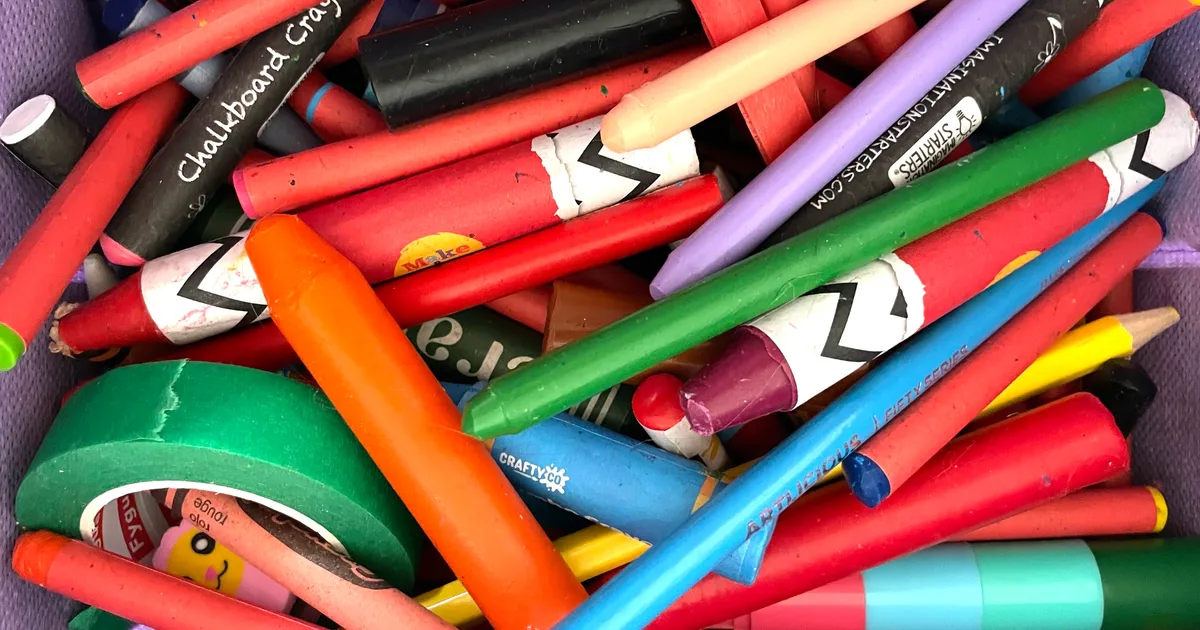
There are plenty of families who have weekends so jam-packed there’s not a moment to spare. Then there are the families embracing ‘empty weekend parenting’.
As the name suggests, empty weekend parenting is about keeping your weekends, well, empty.
Instead of rushing around trying to get kids to a combination of extra-curricular activities (football, ballet, swimming, climbing, you name it), alongside the inevitable double-bill birthday party, empty weekend parenting is about clearing the schedule and just seeing where the weekend takes you.
After a busy week of school, childcare and work, it’s all about maintaining a relaxed, low-stress environment (well, as low-stress as is possible with kids) and focusing on family bonding with spontaneous activities or prioritising rest.
Colin Drury has made a consistent point of keeping his weekends free with his kids. Writing for the i Paper, he said: “We wanted their weekends to be filled with something those clubs don’t necessarily provide: new experiences, variety and spontaneity.” He also noted they wanted to have the odd lie-in, too. (And hey, who can blame him?)
This way of weekending has meant they’ve enjoyed the odd trip away, museum visits, woodland walks, bike rides, trips to farms, adventure playgrounds, you get the idea.
But it has also meant “playing with cars on the living room floor, getting crafty with old toilet tube rolls, and having them do some weeding in the garden”.
“And it has been fabulous,” he noted.
My kids are under five so I’m yet to really feel the pressure of extra-curricular culture; however we’ve also made a concerted effort to deliberately keep weekends free over the years – and I have to say, after each chaotic week which usually ends in a big Friday meltdown from one or both children due to sheer exhaustion, I love that all of us can recharge during our empty weekends.
Perhaps it is most suited to those with young children – as Drury noted, his children are both older now (five and seven) and have both developed a love of gymnastics, which led to him caving and booking them in on a Saturday morning. (Goodbye lie-ins.)
Research by The University of Bath has found that kids who participate in extra-curricular activities gain confidence and build up their social skills – so it’s clearly important for development. Yet being overscheduled has also been linked to poor mental health in kids.
As with everything, balance is key.
Empty weekend parenting offers a more manageable schedule littered with lots of downtime and the ability to be bored (which, yes, is good for them). Some parents find that sticking to one main activity per day strikes the right balance.
With plenty of parents (mums especially) feeling depleted and burnt out, and Pinterest’s Parenting Trend Report highlighting rising interest in ‘slow motherhood’ and ‘slow parenting’, an empty(ish) weekend every now and then surely wouldn’t go amiss.


Exclusive footage provided to Skwawkbox direct from migrant workers in Doha, Qatar shows large fires from Iranian missile strikes — and continuing barrages overnight from 28 February into the early hours of 1 March 2026.
Iran continues to strike US bases in Doha and Bahrain in retaliation for illegal and unprovoked US and Israeli attacks on its people:
While the air defences in Qatar appear to intercept some of the barrage, other missiles are clearly getting through. The US has tried to deny significant damage to its bases, but at least some of its radar facilities in the region have been destroyed.
Featured image via the Canary
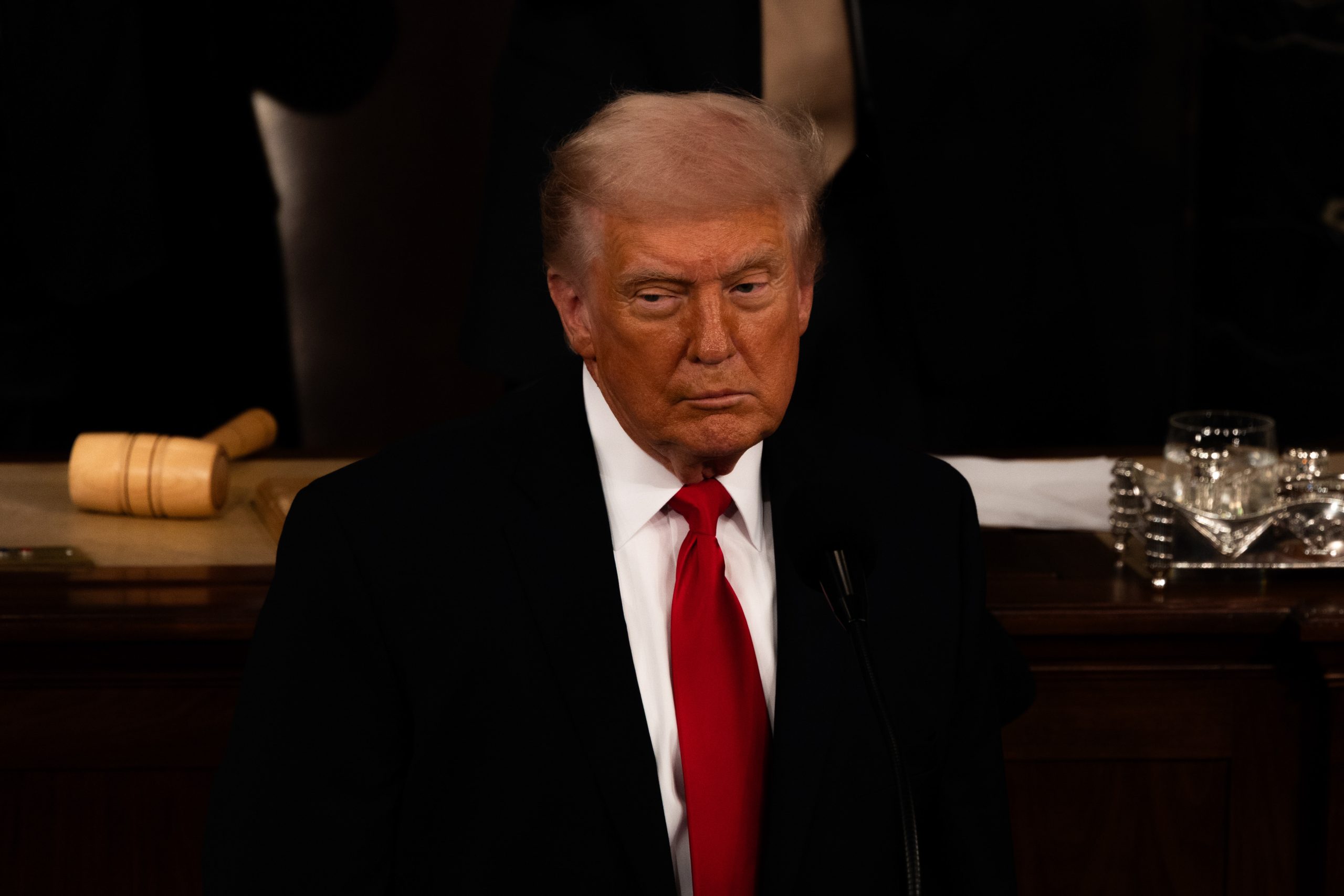
President Donald Trump’s overnight strikes are forcing a hypothetical debate into reality.
And a president with extraordinary control over his party’s base will test how far his supporters will follow him on an issue that polling showed divided his coalition.
Just half of 2024 Trump voters, 50 percent, supported military action in a POLITICO poll last month — but 30 percent opposed it. Those fractures, combined with largely unified opposition from Democrats, meant Americans broadly did not want an attack on Iran.
In the January POLITICO poll, nearly half of Americans, 45 percent, said the United States should not take military action in Iran; fewer than one-third, 31 percent, said it should. An Economist/YouGov poll conducted last weekend similarly found broad public opposition to military action in Iran.
The stakes are particularly high for a Republican Party already staring down a difficult midterm landscape, where even small defections from their winning 2024 coalition could carry outsized consequences.
Part of the challenge for Trump is that support for military intervention in Iran was strongest among Trump’s base — and far weaker outside of it. A 61 percent majority of Trump voters who self-identified as “MAGA Republicans” said they support military action, according to The POLITICO Poll conducted Jan. 16 to 19, when Trump was ramping up his rhetoric against Iran but an outright attack remained hypothetical. That’s much higher than the 42 percent of Trump voters who do not identify as “MAGA” who said the same.
That leaves Trump navigating an evolving issue where support within his coalition — at least before the strikes — was real but not overwhelming and where overall public opposition outweighed support.
Democrats were largely unified. Two-thirds of voters who backed former Vice President Kamala Harris in 2024 said the U.S. should not intervene in Iran, while just 18 percent said it should, the POLITICO survey conducted by Public First found. The Economist/YouGov found 76 percent of Democrats opposed an attack. That Democratic unity is a warning sign for the GOP: It means that before the strikes, there were not enough pro-intervention Democrats to offset the anti-intervention Republicans.
Trump has repeatedly demonstrated an ability to reshape Republican public opinion, bringing his voters along on issues including trade and foreign policy. Whether that pattern holds here may depend on how the conflict unfolds.
“The political risk depends on the outcome,” Michigan-based Republican strategist Jason Roe told POLITICO. “If we break Iran without terrorist attacks coming to America or harm coming to allies in the region, it will be a political win for Trump. … If this expands into a protracted conflict, or ends up with troops on the ground, it will be a liability.”
That dynamic underscores the broader tension inside the modern GOP — a party base deeply loyal to the president and largely unified around an “America First” prerogative, now being tested by his own foreign policy decisions.
The divide also illustrates the longtime debate within the Republican Party between the hawks favoring a more aggressive posture on the world stage and those skeptical of intervention.
Mercedes Schlapp, a senior fellow at the Conservative Political Action Conference, said the length and severity of conflict could determine how Trump’s MAGA base responds.
“I think that the MAGA base will make it very loud and clear to the President that they will not necessarily agree, if it becomes a situation that it becomes a prolonged war,” she said on C-SPAN’s Ceasefire earlier this week.
Polling was already showing early signs of skepticism about overseas entanglements, including among Republicans. A February POLITICO Poll found that 47 percent of Americans said the U.S. government is too focused on international issues and not focused enough on domestic ones, while roughly one-quarter said it is striking the right balance.
The question did not reference Trump directly. Even so, 41 percent of his 2024 voters said the U.S. government is too focused on international issues, including about half — 49 percent — of Trump voters who do not consider themselves MAGA Republicans.
Those non-MAGA Trump voters are especially important for the GOP heading into November, and the president’s ability to overcome their initial opposition could prove crucial to maintaining control of Congress. Otherwise, if they swing back to Democrats — or sit out the midterms — Trump’s base alone is not enough to carry his party to midterm successes.

Researchers increasingly think that our Circadian rhythm, or body clock, matters more to our sleep than we realise. In fact, one study suggested our internal rhythm might matter more than sleep duration when it comes to feeling rested.
And in an Australian paper, which was published in Sleep Medicine, researchers found that people who struggle with racing thoughts that keep them up at night seem to have differences in their Circadian rhythm.
“Unlike good sleepers, whose cognitive state shifted predictably from daytime problem-solving to nighttime disengagement, those with insomnia failed to downshift as strongly,” the study’s lead researcher, Professor Kurt Lushington, said.
Why might people with racing thoughts at night have different body clocks?
In this research, scientists placed 32 adults (half of whom had insomnia; the other half were healthy sleepers) in an environment with as few external body clock cues as possible.
They were placed in a bed in a dimly-lit room for 24 hours, with carefully-measured food and activity. This was done to isolate the participant’s Circadian rhythms.
The scientists noticed that, even with no factors like sunlight, most participants’ body clock worked roughly in tandem in the daytime: their mental acitivty was highest in the morning and tapered off in the afternoon.
But among the insomniacs, whose racing thoughts kept them up at night, some differences were noted later on.
Not only was their “cognitive peak” – the time at which their mind was busiest – 6.5 hours later, on average, than those without insomnia, but, Dr Lushington said, “Their thought patterns stayed more daytime-like in the nighttime hours when the brain should be quietening”.
Sleep, he added, is “about the brain disengaging from goal-directed thought and emotional involvement.
“Our study shows that in insomnia, this disengagement is blunted and delayed, likely due to circadian rhythm abnormalities. This means that the brain doesn’t receive strong signals to ‘power down’ at night.”
Is there anything I can do to stop my brain racing at night?
According to study co-author Professor Jill Dorrian, this research could help to guide insomnia treatments which focus on sufferers’ body clocks in the future.
“These include timed light exposure and structured daily routines that may restore the natural day-night variation in thought patterns,” she said (sleep experts have previously recommended getting some outdoor morning light if you can, as this helps to regulate our Circadian rhythm).
Additionally, Professor Dorrian ended, “Practising mindfulness may also help quieten the mind at night”.
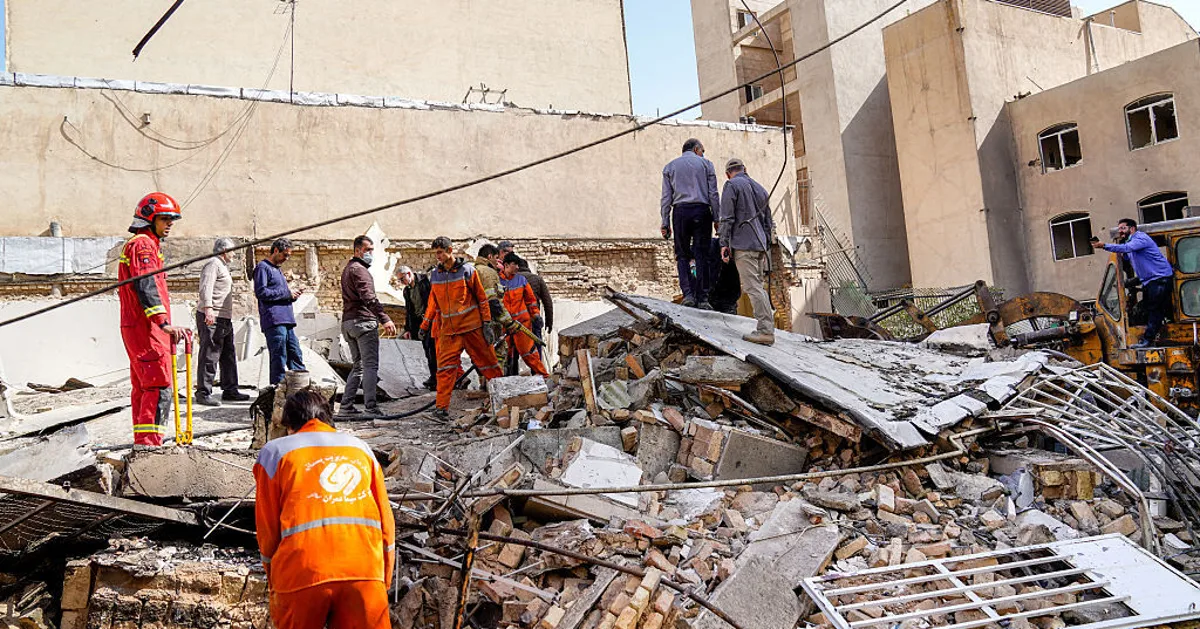
John Healey has refused to say whether the UK government backs the US and Israeli bombing of Iran which killed the country’s Supreme Leader Ayatollah Ali Khamenei.
The defence secretary would only confirm that Britain “played no part” in the military action.
Iran’s paramilitary Revolutionary Guard confirmed in the early hours of Sunday that Khamenei had died, and said it would launch its “most-intense offensive operation” against American and Israeli targets in response.
That led to Donald Trump warning they “better not do that, because if they do we will hit them with a force that has never been seen before”.
Countries across the Middle East have already been attacked by Iran as tensions in the region threaten to explode into a full-blown war
Nevertheless, Healey refused to be drawn on the government’s position when asked by the BBC’s Laura Kuenssberg.
She asked the cabinet minister whether he thought the American and Israeli action was “reckless or do you think it was right”?
Healey said: “We played no part in these strikes as Britain.”
But Kuenssberg told him: “We know that, you’ve said that already. But this is a moment of history.
“Everyone watching this morning will want to know and expect to know from their government is Britain on the side of those two countries who have killed Iran’s Supreme Leader?”
Healey said: “I think people watching will want to know now, today, that Britain is on top of what’s necessary to do what we can to keep them safe, to reinforce regional stability, prevent further escalation, and that’s my task and that’s my priority as defence secretary of the UK.”
The US and Israel described Saturday’s attacks on Iran as a “pre-emptive” strike against a Tehran government intent on developing nuclear weapons.
It retaliation from Iran, with strikes reported in several Gulf countries including the United Arab Emirates, Qatar, Bahrain and Saudi Arabia.
In a statement from Downing Street on Saturday, Keir Starmer said the UK “played no role” in the strikes on Iran.
“But we have long been clear – the regime in Iran is utterly abhorrent,” he added.
“They have murdered thousands of their own people, brutally crushed dissent, and sought to destabilise the region.”
Starmer said Iran “must never be allowed to develop a nuclear weapon” and called for the resumption of diplomatic efforts to prevent that from happening.
He said: “Iran can end this now. They should refrain from further strikes, give up their weapons programmes, and cease the appalling violence and repression against the Iranian people – who deserve the right to determine their own future, in line with our longstanding position.
“That is the route to de-escalation and back to the negotiating table.”
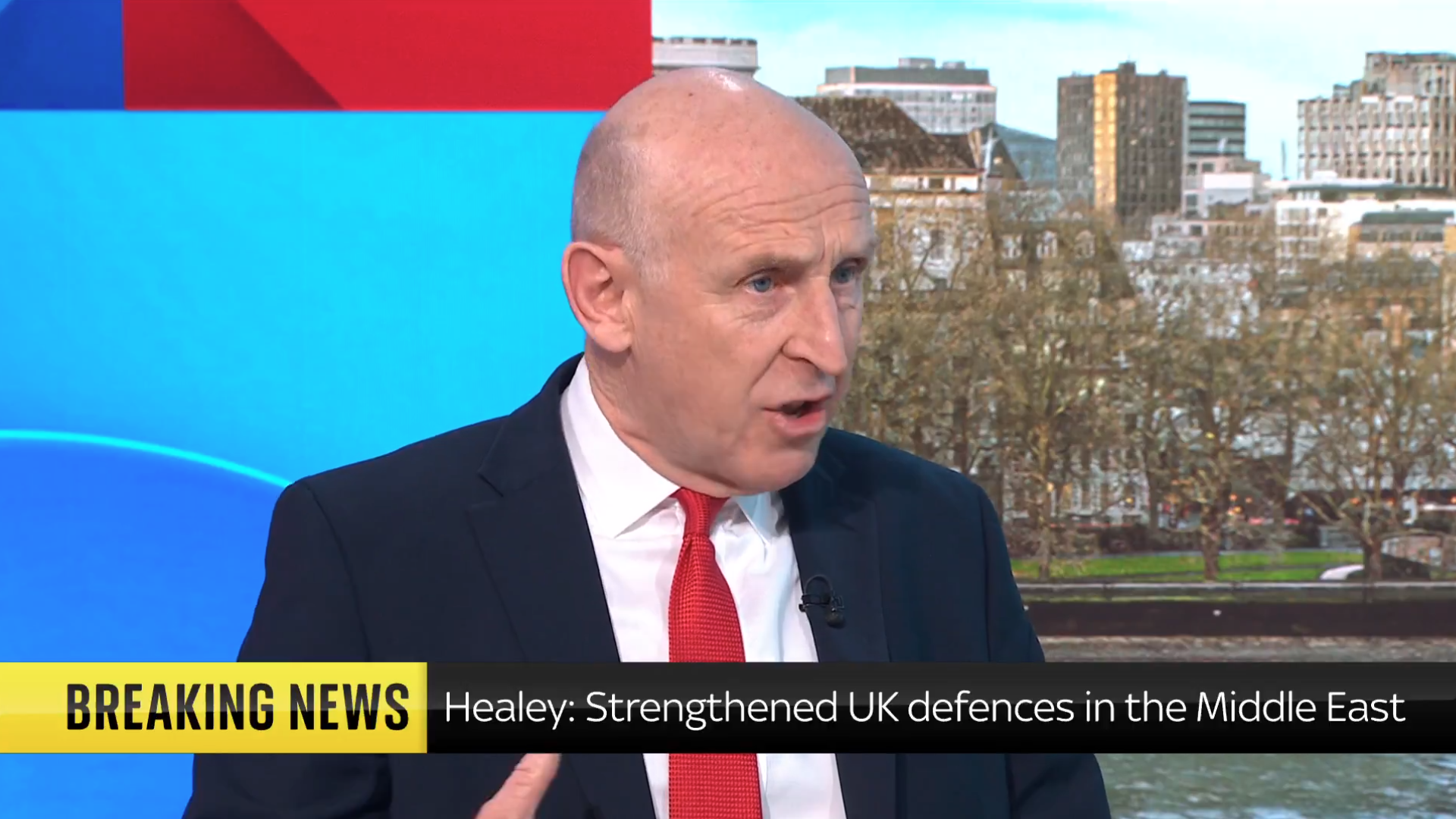
‘Iran and the regime Ayatollah Khamenei has led for so long, it’s a source of evil’
Defence Secretary @JohnHealey_MP tells @TrevorPTweets: ‘Few people will mourn the Ayatollah’s death’
Latest: https://t.co/e3lpOq42Nx pic.twitter.com/6HPq8ZwtWk
— Sky News (@SkyNews) March 1, 2026

Bahrainis have been filmed cheering “like it’s New Year’s fireworks” as a new barrage of Iranian missiles hit a US base in Bahrain:
The footage brings to mind scenes from the June 2025 ’12-day war’ in which Palestinians cheered as they watched Iranian missiles slam into their oppressor’s military facilities.
The small island in the Persian Gulf, which was a British protectorate (also read: colony) in the 19th century, has a majority Shia population and a Sunni king. In 2011, Bahrain saw a popular uprising violently crushed by an army from Saudi Arabia and its allies, which remain stationed (also read as occupying) on the island.
Iran’s strikes on the US and Israel are in retaliation for the axis’s unprovoked attacks on Iran, which murdered hundreds on 28 February 2026, including at least 85 schoolgirls and their teachers.
Featured image via the Canary
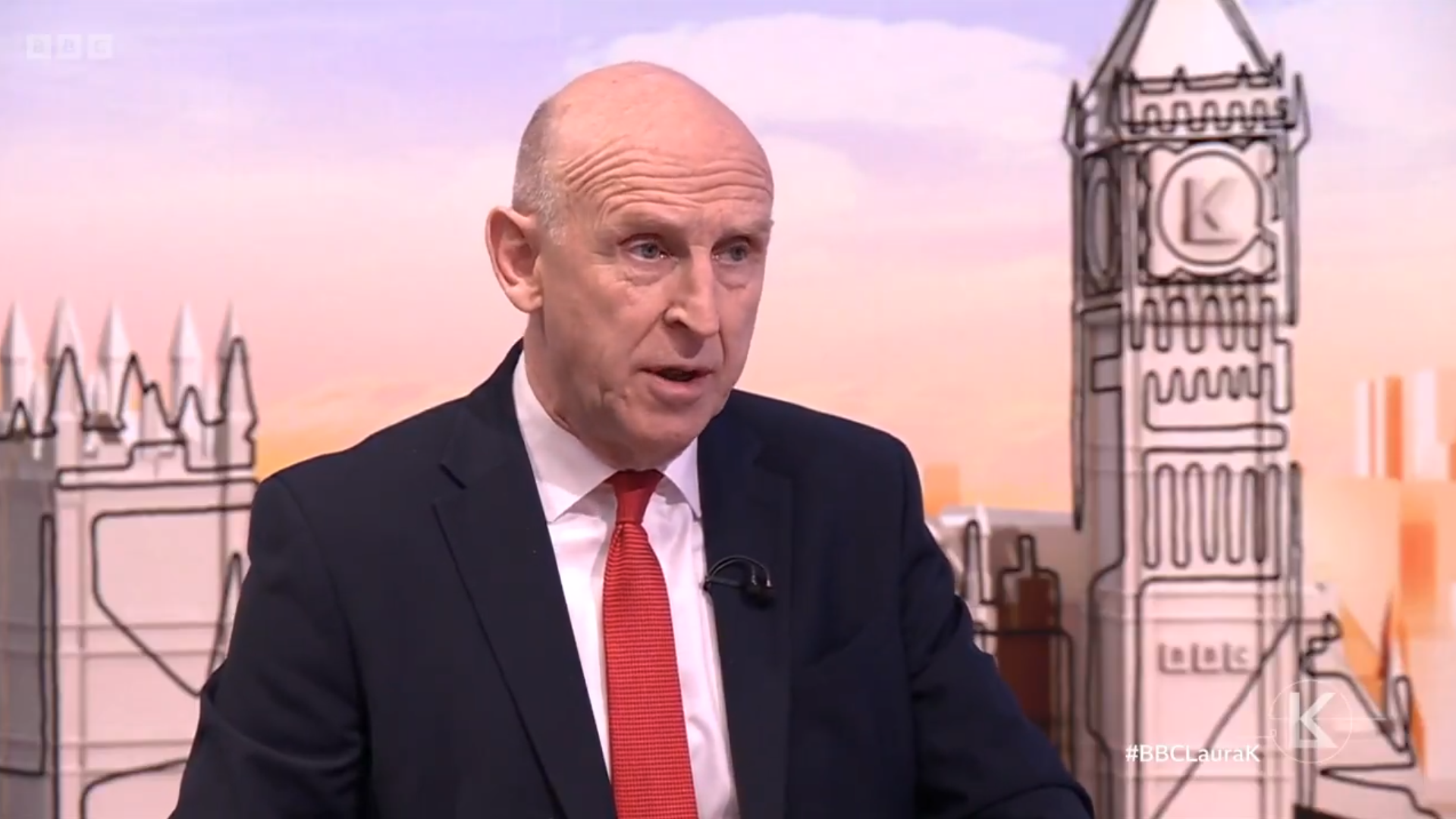
“Britain played no part in the strikes on Iran”
Defence Secretary John Healey says “it is for the US” to explain whether its strikes on Iran are within international law#BBCLauraKhttps://t.co/CkTHGctZ4k pic.twitter.com/1aIAJAiPZe
— BBC Politics (@BBCPolitics) March 1, 2026
John Healey Refuses Six Times to Say if UK Backs Strikes on Iran
Zack Polanski Defends Iranian Regime: It Was Already at the Negotiating Table
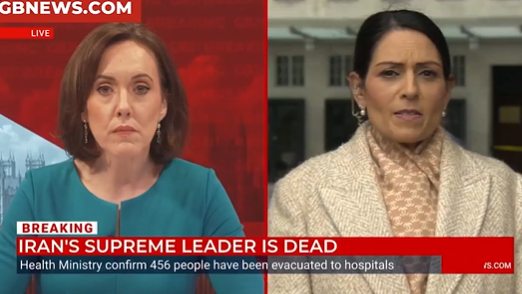
Priti Patel: Once Again Feeble Starmer Sits on the Fence

China’s Wang Yi says attacks on Iran ’unacceptable’, urges ceasefire and talks

Social media, crypto, AI, and orbital data centers converge

Exclusive footage shows Iranian missiles over Doha


-

 Sports6 days ago
Women’s college basketball rankings: Iowa reenters top 10, Auriemma makes history
-

 Fashion2 days ago
Weekend Open Thread: Iris Top
-

 Politics6 days ago
Nick Reiner Enters Plea In Deaths Of Parents Rob And Michele
-

 Business5 days ago
True Citrus debuts functional drink mix collection
-

 Politics2 days ago
ITV enters Gaza with IDF amid ongoing genocide
-
Sports1 day ago
The Vikings Need a Duck
-

 Crypto World5 days ago
XRP price enters “dead zone” as Binance leverage hits lows
-

 Tech8 hours ago
Unihertz’s Titan 2 Elite Arrives Just as Physical Keyboards Refuse to Fade Away
-

 Business7 days ago
Mattel’s American Girl brand turns 40, dolls enter a new era
-

 Tech5 days ago
Unsurprisingly, Apple's board gets what it wants in 2026 shareholder meeting
-
 NewsBeat19 hours ago
Dubai flights cancelled as Brit told airspace closed ’10 minutes after boarding’
-

 Business7 days ago
Law enforcement kills armed man seeking to enter Trump’s Mar-a-Lago resort, officials say
-

 NewsBeat3 days ago
Cuba says its forces have killed four on US-registered speedboat | World News
-
 NewsBeat24 hours ago
The empty pub on busy Cambridge road that has been boarded up for years
-
 NewsBeat4 days ago
Manchester Central Mosque issues statement as it imposes new measures ‘with immediate effect’ after armed men enter
-
 NewsBeat6 days ago
‘Hourly’ method from gastroenterologist ‘helps reduce air travel bloating’
-

 Tech7 days ago
Anthropic-Backed Group Enters NY-12 AI PAC Fight
-

 NewsBeat15 hours ago
Abusive parents will now be treated like sex offenders and placed on a ‘child cruelty register’ | News UK
-

 NewsBeat7 days ago
Armed man killed after entering secure perimeter of Mar-a-Lago, Secret Service says
-

 Politics7 days ago
Maine has a long track record of electing moderates. Enter Graham Platner.