Politics
What People With Small Penises Bring Up Most In Therapy

Penis size is not a matter of choice, but for many people with penises, size matters.
Usually, it matters more to the person with the penis than to their partner. People with smaller penises often live with the anxiety that they don’t measure up. This worry, known as small penis anxiety, is a very real thing.
Dr. Mindy DeSeta, a certified sexologist and sexuality educator for the Hily dating app, said there’s a strong cultural message that “size matters,” not just for sexual pleasure, but for masculinity, too. “Penis size is often treated like a shortcut — the bigger the penis, the more pleasure someone can supposedly give,” she said.
“Men who are believed to be ‘well-endowed’ are often labeled as more masculine or sexier,” DeSeta continued. “When someone internalises these messages, self-esteem can take a hit. They may start assuming they won’t be able to satisfy a partner, and that fear can lead them to avoid sex, dating, or relationships altogether.”
Porn and media are big drivers of these beliefs. “Over time, men who worry their penis is small can start seeing themselves as ‘less than’ or at a sexual disadvantage. That mindset fuels daily anxiety, self-doubt, and relationship stress. Many feel pressure to overcompensate, and sex starts to feel like a pass/fail test instead of a pleasurable and connected experience.”
The first thing Sarah Sumner, a sex and relationship therapist, tells her clients who come in with concerns about penis size is: “There is nothing wrong with your body. Fixating on penis size is a body image issue, and it works the same way any body image issue does: it distorts how you experience yourself during sex.”

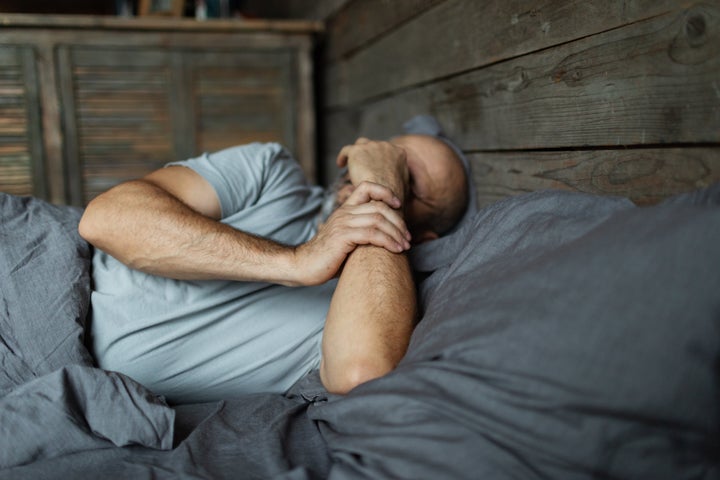
The most common concern Sumner sees is men defining their sense of self based on how “good” or “bad” they think they are at sex. “Their sexual identity is based on compensating: Some avoid sex, some rush through it, some become hyper-focused on their partner’s orgasm as proof they’re good enough. The through line is that they’re not able to be present during sex, and their partners can tell. Sex starts to feel like a performance.”
From self-doubt to sexual performance anxiety, the concerns that bring people into a therapist’s office reveal just how much small penis anxiety can affect self-esteem and relationships.
Shame and avoidance are both really common.
In therapy, concerns about penis size rarely come out right away. Most men start by talking about anxiety, shame or relationship stress, but their size could be what’s underneath it all.
“Usually, people with smaller penises don’t walk into therapy saying, ‘I have a small penis,’” DeSeta said. “They first start talking about anxiety, avoiding sex, shame or relationship stress. Their penis size is what is sitting underneath it all. It is the foundational pain point that projects all their fears, emotions and avoidance.”
According to DeSeta, people who perceive their penis as small most often fear that they will not be able to please or give their partner an orgasm: “They fear their date will reject them the moment they take their clothes off. This humiliation and fear of rejection can be enough for people with small penises to ward off sex, and even relationships, altogether.”
Men are measuring themselves against a visual selected specifically because it’s unusual.
– Sarah Sumner, sex and relationship therapist
Another stressor for people with small penises, said DeSeta, is “if” or “when” to bring it up to a partner.
“Some people feel that they should ‘warn’ their partner ahead of time, but they worry that bringing it up will turn it into a bigger issue than it needs to be, and possibly lead to rejection before anything has a chance to happen,” she explained. “Others prefer to say nothing and let the moment unfold naturally, but then they’re stuck in their head, waiting for their partner’s reaction instead of enjoying the experience.”
Men with smaller penises consistently struggle with feeling like “enough.”
According to Sumner, porn has created “this insane baseline where men are measuring themselves against a visual selected specifically because it’s unusual. Locker room culture, “big dick energy,” size as shorthand for power … gets internalised before most men have had a single sexual experience.”
Underneath the size thing, she said, is usually a much older wound about being enough. “Man enough, desirable enough, worthy of someone’s want,” Sumner explained. She said she asks men: “How early did that start? Who told you that, and how many times did you hear it before you believed it? That doesn’t get fixed by a partner’s reassurance, no matter how many times they say it doesn’t matter.”

martin-dm via Getty Images
This can also lead to overcompensation, which can make sex less enjoyable and connective.
In Sumner’s experience, some men who worry about their penis size may “compensate by becoming extremely giving lovers, which sounds great until you realise the giving is driven by not feeling good enough. They’re working overtime to make sure their partner comes so they won’t be evaluated on size,” she said. “Their partner might be having orgasms and still sense something’s off because the generosity isn’t coming from desire, it’s coming from fear. And their partner can feel the difference between giving and performing.”
Either way, she said, the anxiety takes over. “They’re so busy scanning their partner’s face for disappointment that they’ve left their own body.”
Sumner advises clients to talk to their partners about their fears. “Tell your partner about how you’re feeling in your body, if it’s impacting your capacity to be present. It’s not your partner’s job to make your insecurities go away, and their reassurance will fall flat because of it. You are responsible for your own pleasure and advocating for what you are available for sexually. Feeling insecure and don’t want your partner to look or touch your penis that day? Tell them, and see if they’re into exploring what else feels good. Don’t apologise, own it.”
But experts are begging you to understand: Penetrative sex isn’t everything. Seriously.
Sumner said it’s important for people with small penises to remember that penetrative sex isn’t the only way to perform or enjoy sex with a partner.
“Your partner is almost certainly less focused on your penis than you are,” she said. “If you’re fixating on size as the measure of whether you’re good in bed, you’re solving for the wrong thing. What makes sex satisfying is communication, presence and play, and none of those require a specific body part.”
DeSeta also recommends choosing positions that maximise sensation: “Explore positions that create deeper contact and more friction.”
For people having sex with partners with vulvas, she recommends: “Try missionary with a pillow under the hips, from behind on all fours, or face-to-face sitting with one partner on the other’s lap. These positions allow for more control of angle, depth, and pressure.”
If you’re having sex with a partner who also has a penis and prostate, the same principles apply: Angles that provide more friction and more control over the depth of penetration for anal sex can include: penetrating your partner from behind on all fours, having your receiving partner “ride” on top (finding their own desired rhythm and leaving your hands available for additional stimulation) or side penetration.
Though, it should be noted, there are plenty of ways to feel pleasure on the receiving end of anal sex without an overemphasis on prostate stimulation, there’s no limit to the toys you can introduce as accomplices if your partner really likes those sensations.
And, most of all, for any partner with any parts, it can be helpful to engage with and get curious about different erogenous zones instead of putting all of the pressure on penetration: “A lot of people define ‘sex’ as penetration, but sex is so much more than that, and penetration isn’t the only way to create pleasure,” DeSeta said. “Expand your definition of sex, explore the body’s erogenous zones, and remember that sex is mental, not just physical. Like I always say, ‘Sex is between the ears, not just the legs.’”
As DeSeta concludes: “There was no sex ed lesson on pleasure, so it’s time to educate ourselves now.”
And, most of all, she urges people who want to elevate their sex lives to “learn the basics” of their own and their partner’s anatomy and bust open your preconceived notions about what sex is supposed to look like.
You must be logged in to post a comment Login