Politics
What Will Reform UK’s Foreign Policy Look Like?


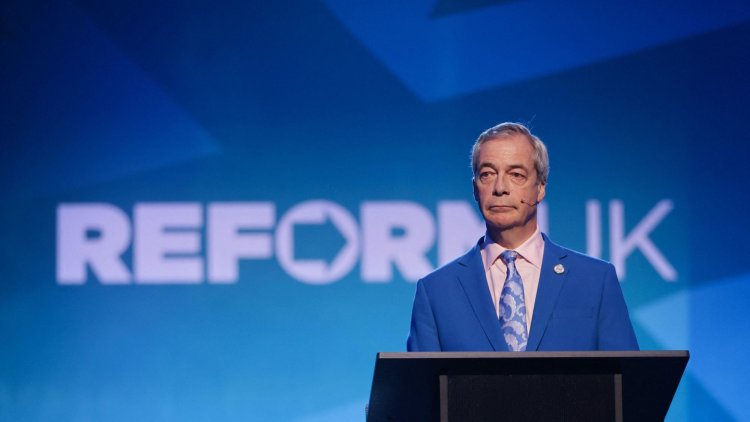
Nigel Farage at a press conference in Westminster (Alamy)
7 min read
Nigel Farage may be an election away from representing the UK on the world stage. Tom Scotson investigates the battle to fill in the blanks on Reform’s foreign policy
Reform UK’s foreign policy is, it is fair to say, a work in progress. While Nigel Farage recently nominated spokespeople for the economy, home affairs, business and education, the identity of the person who would serve as his foreign secretary remains unknown.
Farage likes room for manoeuvre and has trimmed and tacked his way around big foreign policy questions for decades. But, as he seeks to project his outfit as a government-in-waiting, pressure is increasing on him to define how he would lead Britain on the world stage.
The Reform leader does not start with a blank page, however. And while support for Donald Trump and Israel and opposition to the EU and China might be givens, Farage faces persistent attacks from his enemies over his past support for Vladimir Putin.
I think the ECHR is going to take up the majority of Reform’s thinking around foreign policy
In 2014, asked about the world leader he admired most, he cited the Russian President: “As an operator, but not as a human being”. A decade later, the Reform UK leader suggested to the BBC that the West had provoked the Ukraine invasion, saying it was clear that “the ever-eastward expansion of Nato and the European Union was giving this man a reason to his Russian people to say, ‘They’re coming for us again,’ and to go to war”.

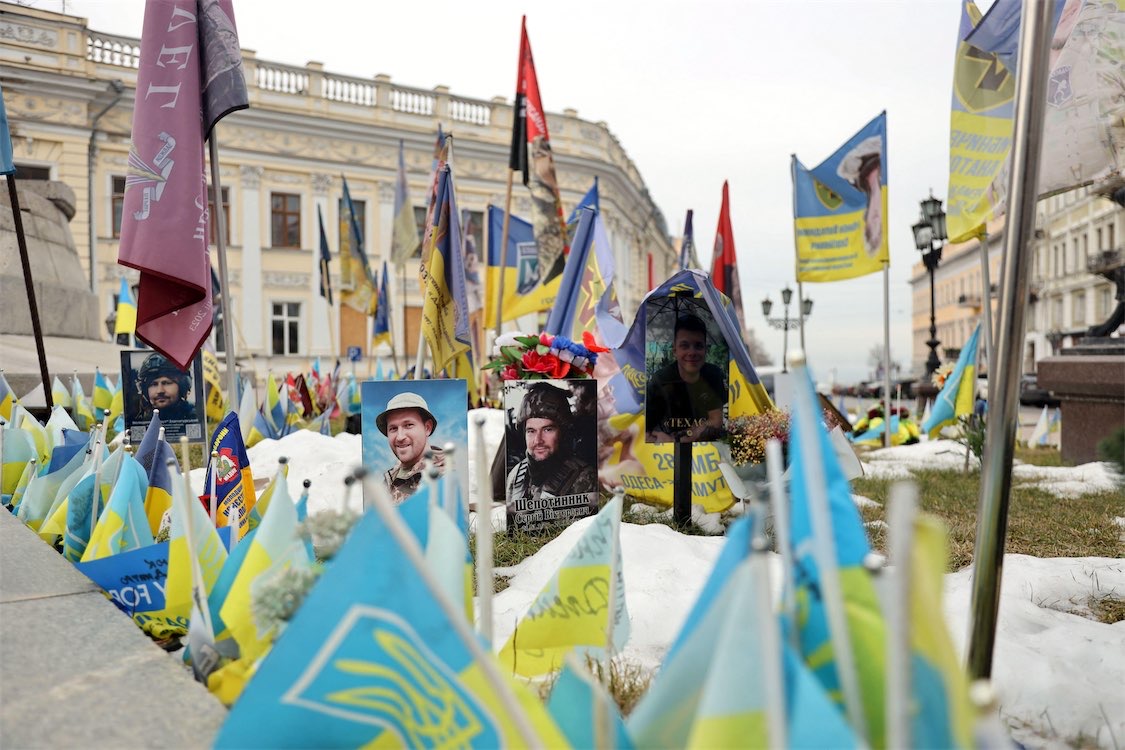
Farage does his best to disavow these past positions, for example, telling The House that President Trump had finally seen Putin was “not anyone you can do business with” last July. But they remain a drag on his support. Polling by More in Common found only 26 per cent think that Farage sides with Ukraine in its conflict, the lowest of any mainstream party leader.
In seeking a reset, Reform has turned to Alan Mendoza, executive director of The Henry Jackson Society, and now the party’s chief adviser on global affairs.
Speaking to The House magazine, Mendoza was keen to stress that Reform does not have an official formulated foreign policy as it develops. But his insights are a useful indicator of where the party is moving.
“The Elizabethan age gives a sense of what Britain is beyond just its immediate confines,” he says, referring to a time when Britain had an “expansive” trading relationship and presence with the outside world.
“Now, you could say that the date we stopped doing that was the east of Suez decision in 1967 onwards,” he says, referring to Harold Wilson’s decision to cut Britain’s military presence in Singapore, Malaysia, and the Persian Gulf.
“When you ally that to entering the European Union, which brought its own complexities in terms of our foreign policy positioning, and suddenly you no longer necessarily had a global British outlook. You had more a parochial Britain as part of the European Union outlook.”
He adds: “I think it’s fair to say that sometimes what we have done in recent years is put, for example, alliance interests above necessarily strict British interests.
“And now it’s about a time of rediscovering what British interests actually are. That’s the key thing. What are British interests? What are they overseas? What should this country be doing in a post-European age?”

One early concrete step in this effort to reassert national interest over alliances would be taking the country out of the ECHR. Invoking Article 58 of the ECHR, which would start a six-month countdown to leave the convention, would require consequent changes to the UK’s trade agreement with the EU and the Good Friday Agreement.
“I think the ECHR is going to take up the majority of Reform’s thinking around foreign policy,” predicts Fred de Fossard, director of strategy at the Prosperity Institute.
The Prosperity Institute, highly rated by Reform insiders, published a paper on withdrawing from the ECHR last year, with a foreword from new recruit Suella Braverman.
“It’s what their voters will care about,” Fossard adds. “They will get credit in the bank for stopping the boats, fixing the borders, ensuring proper deportations, no longer having to pay money into the European Union.”
The United Nations has come under pressure from much of the British right, but it appears Reform UK has no plans to leave the organisation, despite raising serious concerns over the Human Rights Council (HRC) and UNRWA.
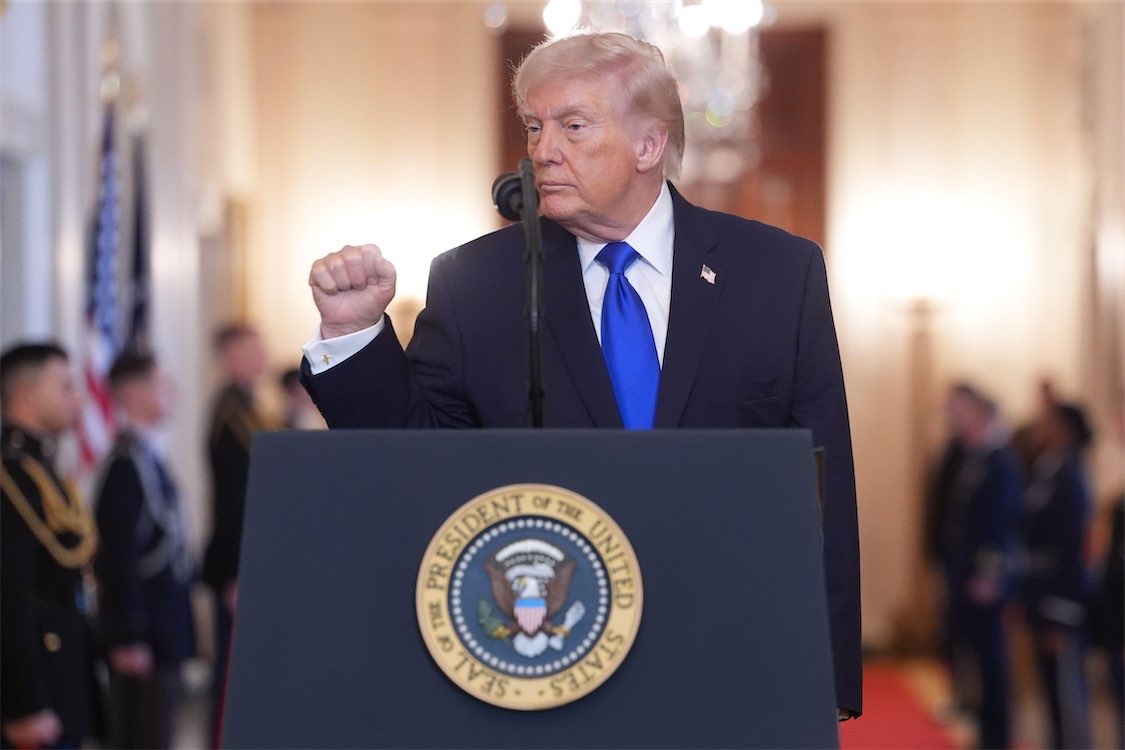
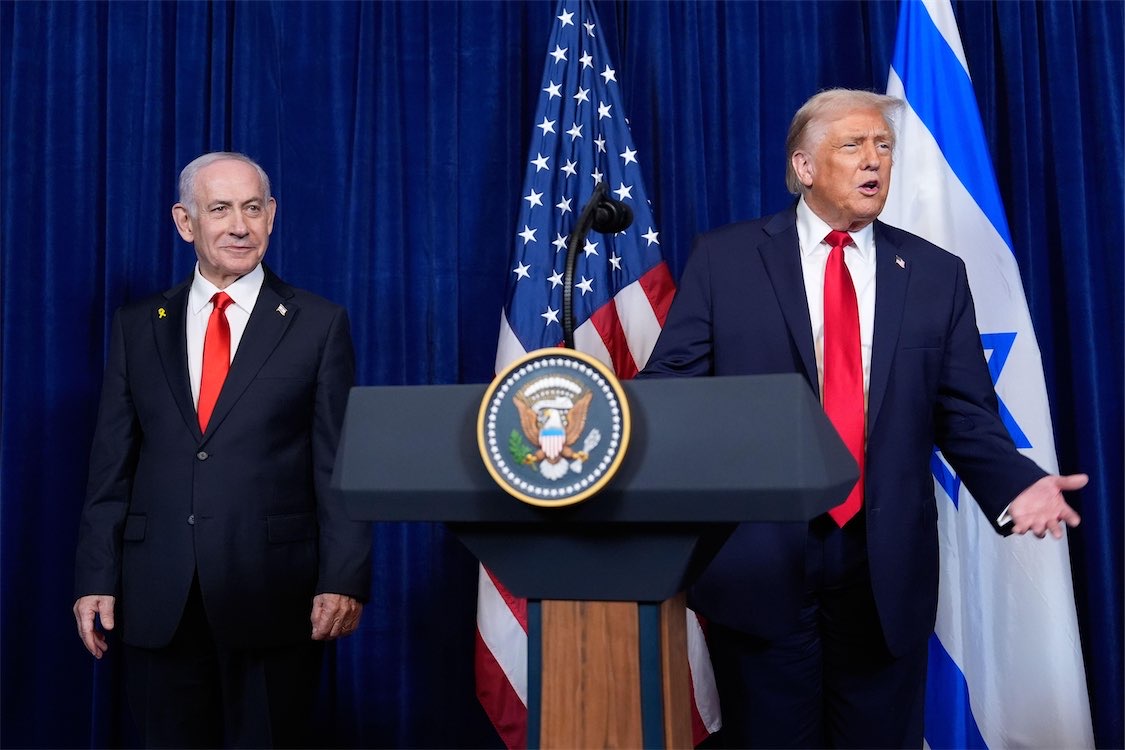
Then there is the question of the US – and a relationship with Trump that is, by turns, a help and a hindrance. “Farage’s foreign policy is probably a natural outgrowth of his personal links and issues over the years,” Jonathan Brown, an ex-foreign office diplomat and former chief operating officer of Reform UK, says. “So, that’s both with American and Europe, moderated by concern for what’s electorally popular.”
Another constant is the party’s relationship with Israel, with many of its MPs and members holding strong pro-Israel views. “Nigel Farage’s party have openly supported Israel, and we’re really grateful for it,” Sharren Haskel, Israel’s deputy foreign minister, told The House in December.
“It shows quite a lot of courage and backbone to [stand] by the right side of history, talking in depth and not in slogans, not to populism and not to the surrender to very radical and loud voices.” Reform Friends of Israel has sent two delegations to the Jewish state, which have included party chairman David Bull and board member Dan Barker.
“What is there to be nuanced on the pro-Israel question? What, be pro-Hamas? That’s your nuance on that? Of course, Reform is not going to be a pro-Hamas party,” Mendoza tells The House. “Reform is going to be a party and is a party that is very supportive of a democratic state fighting Islamist terrorists.”
I’m not sure anyone wants to pay a billion dollars to [sign up to the Board of Peace]
Despite these twin pillars – Trump and Israel – Mendoza is sceptical that Farage would join the Board of Peace, not least because of the cost. “I’m not sure anyone wants to pay a billion dollars to do that, but I suspect we might have some input because of our traditional relationships in the region.”
Mendoza faces competition for influence over foreign policy. Reform UK MP Danny Kruger and Farage’s senior adviser James Orr both met with vice-president JD Vance on his holiday to the Cotswolds in August. Although Kruger tells The House he is “not very close” with Vance, he describes himself as “a great admirer of his”.
The MP, who heads Reform’s preparing for government unit, says of the vice-president: “I know he’s not very popular among all sections of our population, but I think he is a decent, thoughtful man who – by the way – loves this country.”
The party also continues to pursue relationships with individuals from other parties around the world. Gawain Towler, a Reform UK board member, met with New Zealand First and Australia’s Liberal Party recently. He has also increased the party’s outreach and developed contacts with Danish and Hungarian embassies.
“Broadening our scope – as we must, as a responsible party that may be in government – it is essential we build those links,” Towler says. “[Farage] went to Davos to say, ‘I am here!’”
He adds: “We are not isolationists in any way; we understand that geopolitics is not going away, we can’t live in a small bubble.”
As PM, Farage might find his biggest headaches are closest to home. “I can’t imagine the UK-French relationship is going to be as close,” Ed Arnold, fellow of defence think tank Rusi, tells The House. “The UK-German relationship might be difficult; the UK-Poland relationship will also be pretty difficult.”
One of the architects of Brexit might be about to be confronted with the task of building Britain a new home in the world.
