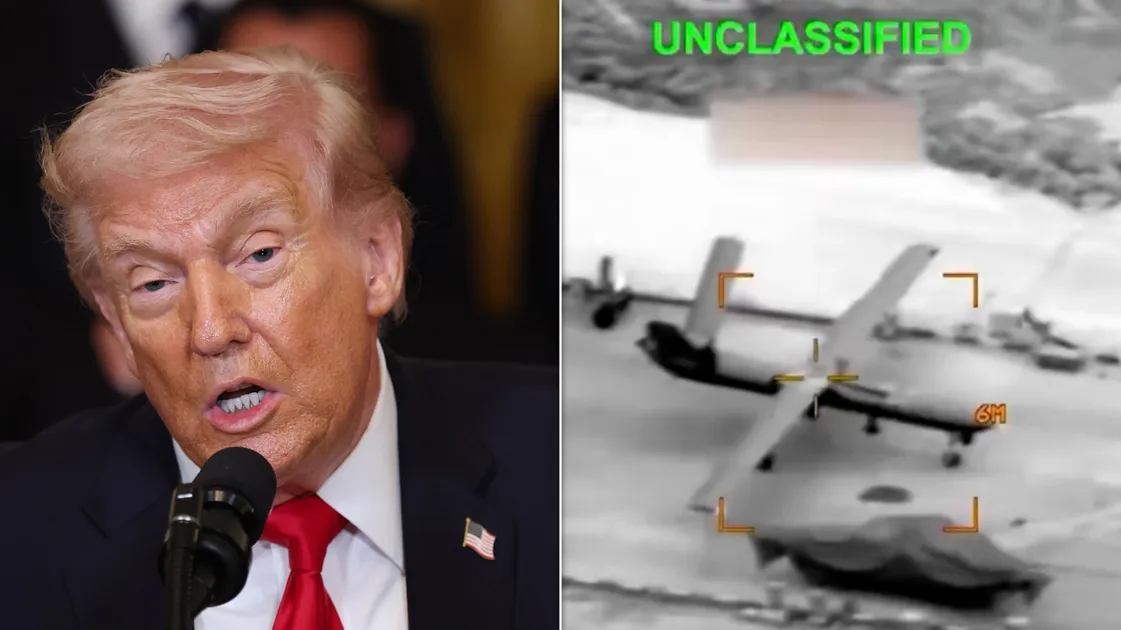
The White House is facing criticism after it posted a montage of clips from the popular video game series Call of Duty alongside what appeared to be real footage of the missile strikes in Iran — just days after the US entered an armed conflict with the Middle Eastern country.
The video posted by the White House’s official account Wednesday begins with a killstreak animation from the video game before real military strike footage against Iranian targets appears. A killstreak in Call of Duty is when players receive rewards for getting a series of kills without dying.
The animation of the military video game used by the White House shows a player reaching a certain amount of kills and subsequently activating a massive missile strike to exterminate the opposing team.
The compilation was simply captioned: “Courtesy of the Red, White & Blue.”
Advertisement
The clip has been viewed nearly 50 million times, sparking outrage among X users, with one user writing, “What in the fuck is wrong with you people? Americans don’t wanna see you treat war like call of duty. Who the fuck is running this account.”
Another commented, “[Not gonna lie] it’s pretty disgusting for the WH to gamify war and killing like this,” while someone else added, “Actually terrifying that this is our government.”
HuffPost has reached out to the White House and Call of Duty’s developer Activision for comment.
Iran has retaliated in response by attacking Israel and US bases around the region. More than 1,000 people, including children, have been killed, and more than 5,400 civilians injured. Six US service members who were killed in Iranian counterattacks have been identified.
Iran has also warned that the US would “bitterly regret” torpedoing an Iranian warship.
In a February 28 Truth Social post, Trump wrote, “Khamenei, one of the most evil people in History, is dead. This is not only Justice for the people of Iran, but for all Great Americans, and those people from many Countries throughout the World, that have been killed or mutilated by Khamenei and his gang of bloodthirsty THUGS.”
He added: “There was not a thing [Khamenei], or the other leaders that have been killed along with him, could do.”
Advertisement
Elsewhere in the post, Trump cryptically warned that “the heavy and pinpoint bombing” will continue “as long as necessary to achieve our objective of PEACE THROUGHOUT THE MIDDLE EAST AND, INDEED, THE WORLD!”
The White House has controversially used imagery from popular video games like “Pokemon” and “Halo” in videos to promote Immigration and Customs Enforcement officers’ propaganda in recent months.
After facing widespread backlash, a Department of Homeland Security spokesperson said in a statement, “We will reach people where they are with content they can relate to and understand, whether that be Halo, Pokémon, Lord of The Rings, or any other medium.”
As we’ve covered extensively, Keir Starmer appointed Peter Mandelson to be our ambassador to the US despite knowing that the man enjoyed a weird friendship with the dead paedophile Jeffrey Epstein. Further revelations led to Mandelson being sacked; they also led to Starmer’s chief of staff and Mandelson protege Morgan McSweeney resigning in disgrace.
All of this is known and on the record.
And yet Labour politicians want you to believe that people who speculate on the finer details are ‘conspiracy theorists’:
Phillipson: the wider coverage around McSweeneys phone is drifting into conspiracy theory
Because the PMs chief of staff ringing the police like any ordinary person, not identifying himself, giving false details, no apparent govt security protocols, thats all perfectly normal! pic.twitter.com/hXlOcoSaUQ
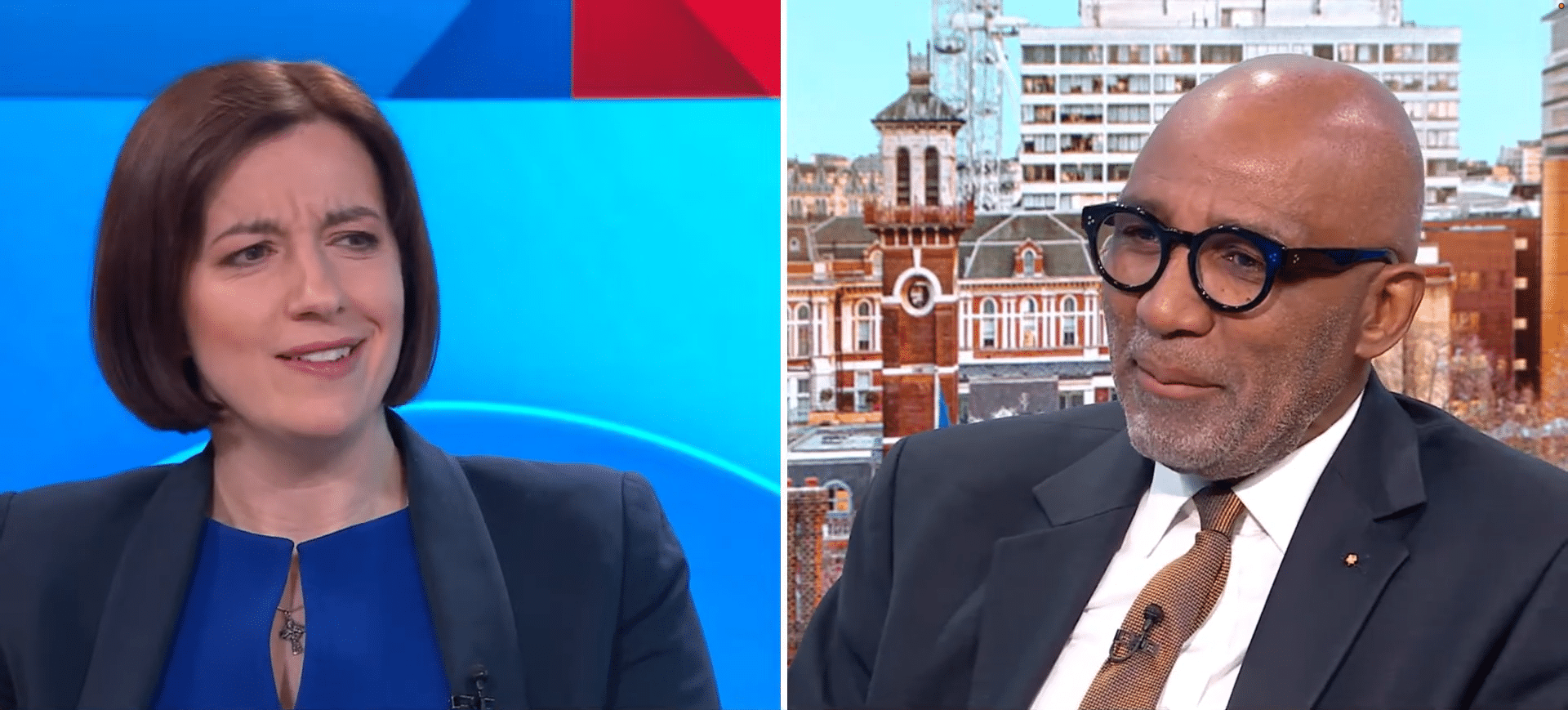
In the clip above, host Trevor Phillips said to Bridget Phillipson:
Advertisement
Let me ask you about the story of the week. Why is Morgan McSweeney the only person in the modern world who doesn’t have his messages automatically backed up to the cloud so that we can recover them and see what traffic there was between him and our former ambassador to the United States?
Smirking as ever, Phillipson responded:
I think your question’s a bit of a reach in terms of that.
When asked why, she said:
It’s hyperbole and you know it.
Oh, sorry — she’s right — some people don’t backup their messages. That’s the real issue here — somewhat exaggerated language.
After confirming that Phillipson’s messages were backed up in line with government guidelines, Phillips asked:
Advertisement
Why aren’t Morgan McSweeney’s?
Phillipson answered:
What happened here, which we all know, is that Morgan McSweeney was mugged
Oh yeah, we’re all 100% confident that the famously dishonest McSweeney was truthful about this ‘theft’ which happened at the maximum moment of benefit to himself.
She continued, noting that McSweeney:
reported that to the police, followed all of the processes that were asked of him.
“That were asked of him” — ignoring the fact that the police didn’t ask him to do more because they weren’t told he was the prime minister’s chief of staff.
Advertisement
Getting to the truly offensive part, Phillipson said:
And I do think some of this wider coverage is drifting into… conspiracy theory territory here.
Oh, is that right?
Do you think that’s because the official narrative is so full of holes that people need to use their imagination to make it make sense?
Phillipson got a similarly harsh response from Lewis Goodall on LBC:
Advertisement
‘He’s not some geezer down the pub – he’s the Prime Minister’s chief of staff!’ @Lewis_Goodall responds to Bridget Phillipson’s suggestion that coverage of Morgan McSweeney’s phone is ‘getting ridiculous’. pic.twitter.com/nkmluPxk7a
Interestingly, Phillips would later turn the conspiracy logic on Kemi Badenoch:
Absolutely wild scenes here as Peter Mandelson’s best friend insists there’s nothing weird about Peter Mandelson’s protege misplacing his phone at the height of a very serious scandal about Peter Mandelson passing information to a foreign agent. And he is *the host of the show*. https://t.co/4jx9MRhmsa
This isn’t a conspiracy; this is what it looks like when your political and media establishment are so firmly entwined that you can’t tell where one ends and the other begins.
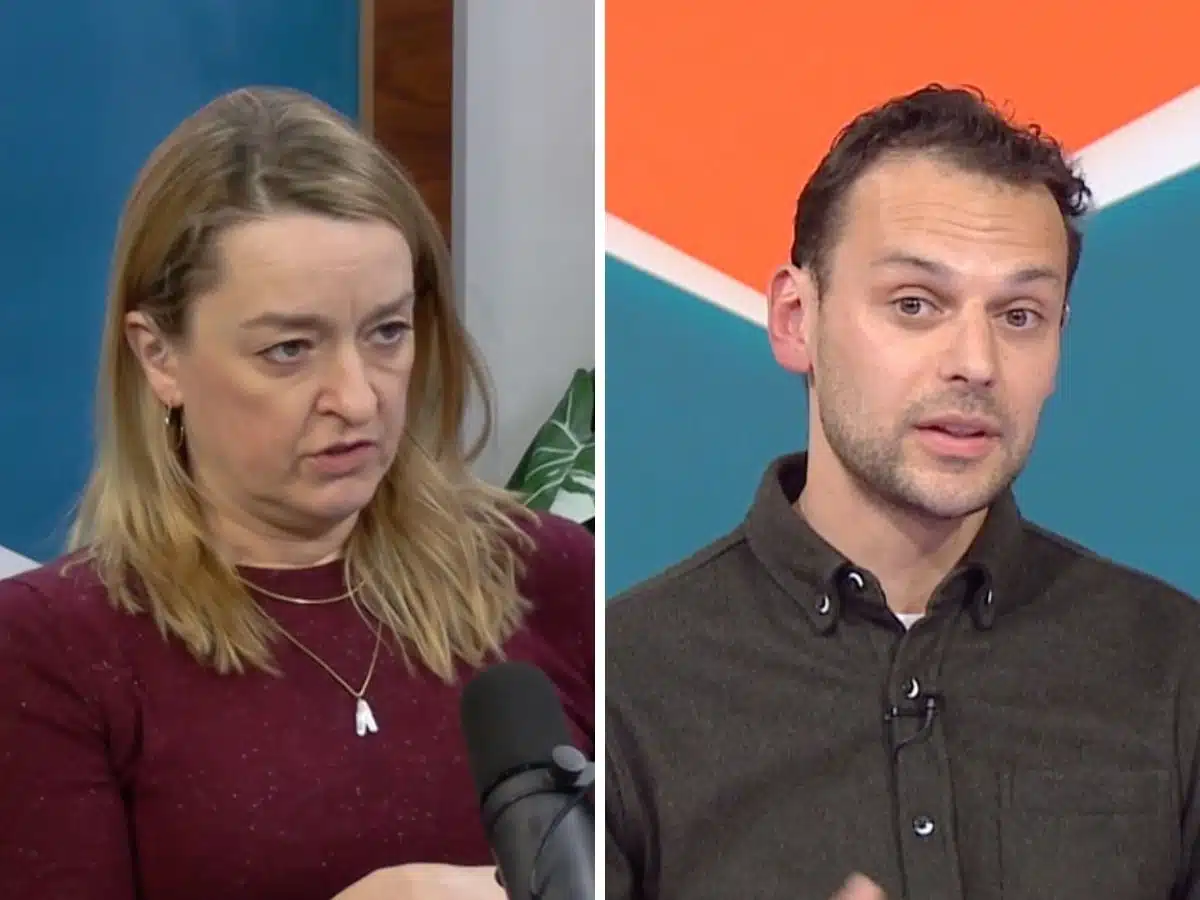
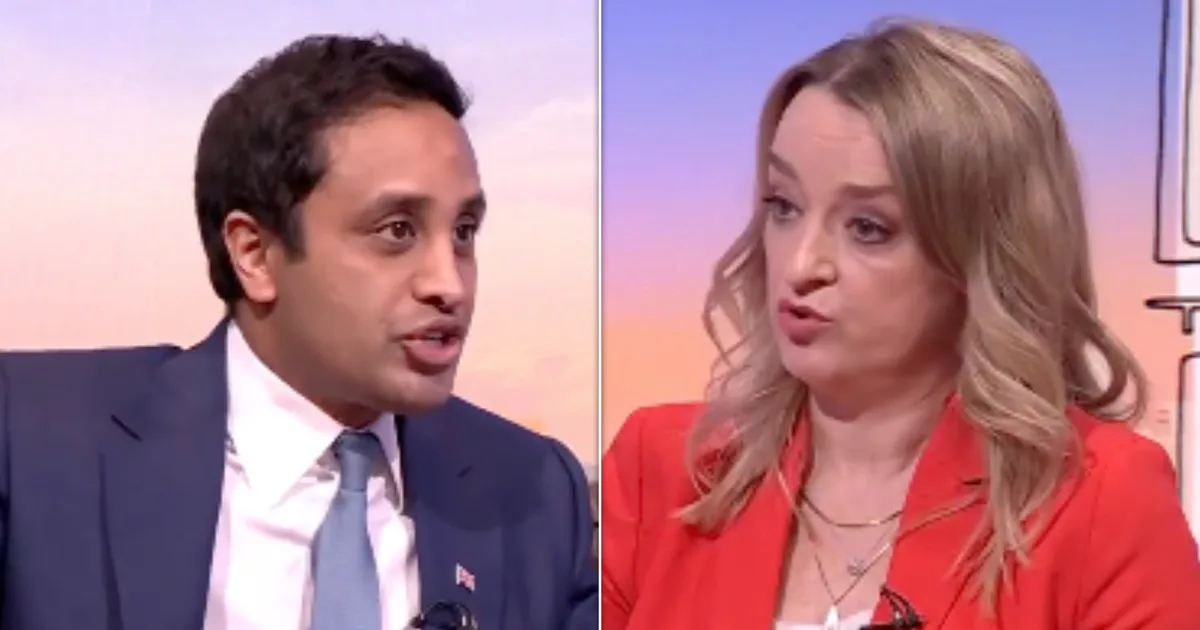
Josh Simons is the ex-cabinet minister who had to resign in disgrace because he’d been running a spying operation on UK journalists. Or, if you’re the BBC or in specific Laura Kuenssberg, he’s a naive young man who simply didn’t realise it was wrong to do blatantly bad things in secret:
What the above headline doesn’t convey is that Laura Kuenssberg raised the idea that Simons was simply “naive” and “foolish”. And she suggested it in one of those wretched moments in which an establishment journalist provides an answer and then asks the interviewee if they’d like to claim it as their own.
Just in case readers are unfamiliar with the case, or are tempted to take anything Simons says at face value, Labour Together were caught paying tens of thousands to a firm run by a fellow Labour right-winger’s wife to spy on independent journalists.
From 2022to 2024, Simons ran the sabotage outfit, Labour Togther. He took over after disgraced Morgan McSweeney moved on to become Keir Starmer’s (now former) chief of staff.
The following is the clip in which Kuenssberg furnished Simons with his excuses.
Advertisement
I am trying to imagine a universe in which an actually left-wing politician would spy on journalists, report them to the security services, belatedly get called out for doing so, and then Laura Kuenssberg would sympathetically ask “were you just a bit naive?” pic.twitter.com/GK1RT3ivMy
Do you now think that you were naive? Do you think you were foolish? You say you weren’t meaning to do anything wrong – it wasn’t what you intended for a journalist to be investigated. But, if you went to a PR firm saying, ‘please, can you find out about where this story came from?’ – surely, actually, it was inevitable they were going to look into what the journalists had been doing, if you’re asking where a story comes from.
So looking back now, do you think, were you naive? Were you foolish? Were you mistaken? How do you characterise it?
We’re going to write this in capitals so it’s clear:
Advertisement
THIS IS NOT HOW INTERVIEWS SHOULD WORK.
You can’t give someone a helpful answer and then ask if they want to claim it.
And of course he did want to claim it, because it presented him in the most flattering light possible.
This was how he answered:
Advertisement
Absolutely, I was naive. And there’s a lot I’ve learned from it. And there’s things that I would have done differently.
A Labour MP who resigned as a Cabinet Office minister has said he was “naive” and “so sorry” in his first full interview since leaving his role.
This should read ‘Laura Kuenssberg suggested he was naive, and Simons agreed‘.
Abysmal stuff.
Kuenssberg — Form
As academic Nicholas Guyatt added, Kuenssberg has a history of laundering the reputation of Britain’s worst politicians:
Advertisement
Laura Kuenssberg is the GOAT of rehabilitating disgraced Labour right figures: she also threw a lifeline to Peter Mandelson back in January, hailing his “unique perspective” on Trump and giving him twenty minutes to pose as a geopolitical expert before even mentioning Epstein pic.twitter.com/dZG2BqsKxn
I imagine that Paul Holden, author of The Fraud (@StarmertheFraud) and one of the journalists targeted by Josh Simons, will be looking very carefully at Simons’s remarks (transcript below); it’s quite the claim that you decided to investigate a journalist because of his publisher pic.twitter.com/80ndi9GgQO
You can read a serialisation of the first chapter of Paul Holden’s The Fraud here. It covers the dirty tactics that Labour Together used to maneuver Keir Starmer into Downing Street — tactics they sorely needed because Starmer has all the political competence of a quiche.
To be absolutely fair, though, when they did all the bad stuff, many of these career politicians could simply have been a bit naive.
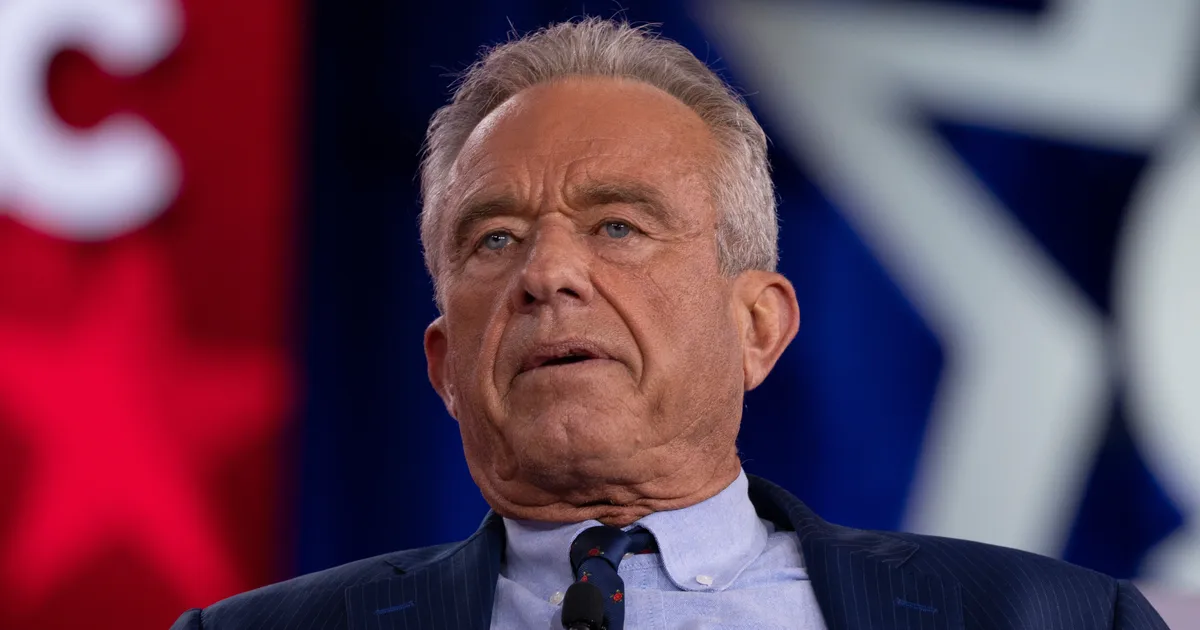
Health Secretary Robert F Kennedy Jr, who once flexed his disdain for Donald Trump and his base of “belligerent idiots,” stressed on Saturday that he “drank the Kool-Aid,” and the president wasn’t as “ill-informed” as he once believed.
In remarks at the Conservative Political Action Conference, Kennedy claimed Trump has “encyclopedic, molecular knowledge” across a “wide range of very, very eclectic interests” before recalling a time the two dined on McDonald’s aboard his plane during the 2024 campaign.
“We started talking about Syria and he got a placemat and he turned it on its back and then he took a Sharpie and drew a perfect map of the Mid East,” said Kennedy of Trump, who claimed that he “never wrote a picture” in his life last year while denying that he gave a racy 2003 birthday card to Jeffrey Epstein.
Kennedy continued, “Then he put the troop strength of every country on every border on that map. It challenged a lot of the assumptions that I had been told about him.”
Advertisement
He added that Trump has an “extraordinary depth of knowledge” about what’s happening in each agency alongside an “instinct for making good choices” before concluding that the president is better than his uncle, John F. Kennedy, at understanding the use of power in the White House.
Social media users swiftly clowned Kennedy over his Trump story, with one user on X calling out the health secretary over his “asinine BS” and another writing that it’s “genuinely crazy to watch the North Korean level hero worship manifest in real time.”
When you stay at a hotel, the rules are mostly clear: blasting music at 2am is not OK. Running through the halls is not OK. Someone at the front desk will intervene if things get out of hand.
Airbnbs and other holiday shares operate in more of a grey zone. You’re basically staying in someone else’s home, and it doesn’t have a concierge or staff on-site to set expectations or step in when guests cross a line.
“We never take a vacation from good manners,” said Jodi RR Smith, president of Mannersmith Etiquette Consulting. “Even when you are off and away, you still must take into consideration how your behaviours impact those around you.”
Even if no one is watching, the way you act can have real consequences – from negative reviews to cancelled bookings or fines. Here are the seven rudest things you can do in an Airbnb, according to etiquette experts.
Advertisement
Taking things that aren’t yours
“Towels, décor, kitchen tools, robes, or specialty products are not souvenirs,” explained Jacqueline Whitmore, etiquette expert in Palm Beach, Florida. “Even small items add up, and replacing them is costly and frustrating. If you are unsure whether something is complimentary, ask. When in doubt, leave it.”
You may be thinking: Is this even worth mentioning? Apparently, yes. Hosts routinely report stolen items – from pillows to utensils. At first, I optimistically wondered whether some of the confusion stems from hotel culture, where toiletries, slippers, and mini bottles are fair game. In a short-term rental, however, all items are simply part of someone’s home inventory.
Smoking (anywhere)
Advertisement
“Most rental properties are nonsmoking and most guests get that at this point,” Smith said. “But the guests think (hope?) that if they are outside, the no-smoking does not apply. However, unless otherwise noted, the entire property is nonsmoking.”
If that sounds overly strict, there’s a reason for it. Smoking on rental properties can cause lingering odours, damage furnishings, and create outdoor fire risks. Discarded cigarettes tossed into planters or mulch have ignited porch fires, leading to serious property damage.
Being noisy
On vacation, my everyday routine goes out the window. I sleep in, stay out later, and generally abandon the discipline required for a 9am conference call. But just because I’m on holiday doesn’t mean everyone else is.
Advertisement
“Late-night gatherings, screaming kids, drunken arguments, and loud music can disturb nearby neighbours,” Whitmore said. “Observe quiet hours and be mindful that your neighbours are not on vacation.”
And it’s not just the 1am DJ set that can get you in trouble – though most short-term rental agreements include no-party clauses, so that’s worth noting. It’s also the less conspicuous noises that add up: slamming doors in a shared hallway, dragging suitcases at dawn, speakerphone calls on a balcony, or kids racing up and down stairs in a multi-unit building.
Ghosting your host
Nobody likes to be ignored, especially when you’re staying on their property. “Prompt communication builds trust,” Whitmore said. “Be a considerate guest. Respect the host, the neighbours and the property, and you will always be welcomed back.”
Advertisement
That courtesy goes both ways. Whether you have a question about turning off a fire alarm or need to let the host know you’ve broken something, it’s better to speak up than stay silent.
“If there’s a problem, speak up,” said Nick Leighton, co-host of the Were You Raised by Wolves? podcast. “Hosts would much rather know about a problem during your stay and try to address it rather than just learn about something for the first time in your negative review.”
The Good Brigade via Getty Images
Leaving your rental reasonably tidy and respecting the space goes a long way with Airbnb hosts.
Treating your rental like a hotel
When I’m staying at a hotel, I regress a little to my teenage self: towels on the floor, bed unmade, room service tray lingering longer than it should. It feels like part of the perk. No disrespect intended, just the luxury of not having to reset the space before you leave.
Advertisement
But at a holiday rental, you don’t have those same perks.
“Treat the home as if you were staying with a friend or family member,” said Whitmore. “Follow house rules and leave it reasonably tidy. Don’t create excessive mess, move furniture, or break something without telling your host.”
Inviting friends or pets
It may feel harmless to have your mom stay the night before an early flight or let a friend crash on the couch after dinner. But in a short-term rental, occupancy limits aren’t just suggestions. They’re often tied to insurance policies, local regulations, homeowners association rules, and cleaning arrangements. Adding even one unapproved overnight guest can put hosts in a difficult position.
Advertisement
“Unannounced visitors raise safety and insurance concerns,” explained Whitmore. “If you plan to bring a guest or a pet, get approval first. Many hosts may charge an extra cleaning fee.”
While an extra overnight guest can create insurance or occupancy issues, pets raise even more concerns – even if you’re certain yours “wouldn’t do anything.”
“Your pup may be extraordinarily well-behaved, but if the property says no pets, you need to adhere to the agreement,” Smith said. “Whether it is cameras on the property, just nosy neighbours or the cleaning staff, most owners end up learning of a pet on the premises. (Certified service animals aside.)”
Ignoring the checkout procedure
Advertisement
You’re packed, you’ve called your car, and you’re mentally already at the airport. But before you shut the door, did you take out the trash? Is there still half a pint of milk in the fridge?
“Be sure to read and understand the checkout instructions before you book,” Leighton said. “Some can be quite onerous, but once you’ve agreed, you’ve agreed! So, be sure to follow the list before departure.”
Experts recommend leaving the rental as you found it. That can include tidying up messes, returning moved furniture to its original place, and taking care of smaller details like turning off lights and adjusting the heat.
“Be sure to understand how to strip the beds, where to put the wet towels, whether you need to empty the refrigerator, and how to handle the garbage and recycling,” Smith said.
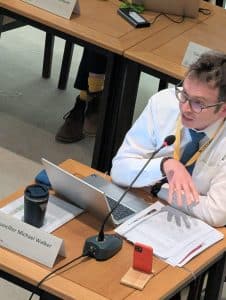
Michael Walker of Reform UK and Jonathan Dulston of the Conservatives claim they want to protect ALL women. Yet the pair spent Thursday 26 March 2026 pushing a transphobic motion that would have stripped away rights from some of Darlington’s most vulnerable residents. This moment, the mask slipped, exposing their “safety” rhetoric as nothing but a thin veil for their politics of hate.
Walker, a new Reform UK councillor in the area, chose a targeted attack on trans people as his first ever motion. Fucking shocking, I know. Alongside ex-leader of the council and Tory-boy Dulston, Walker tabled a proposal to enforce “biological sex-based” exclusions from single-sex spaces across the borough. They used their shitty platform to champion their bullshit vision, but they didn’t count on a tactical masterclass from the Green Party.
And it was fucking stunning to behold.
A masterclass in inclusion
Local Green party leader Matthew Snedker refused to let the right-wingers set the terms of the debate. His amendment to the motion absolutely gutted the transphobic language, whilst keeping the title: ‘Women’s Privacy, Dignity and Safety Across Darlington’.
Advertisement
Snedker, who himself has a trans daughter, delivered a powerful defence of human dignity. He told the chamber:
“Gender is a symphony, not a harmony. It is complex, it is lived, and it is diverse. To suggest that protecting the rights of women must come at the expense of the dignity of transgender people is a false choice.”
The amendment affirmed that protecting women and protecting trans people are ‘compatible obligations’ under the Equality Act 2010. It commits the council to rejecting ‘blanket exclusions’ and ensuring that any restrictions are justified on a case-by-case basis.
Michael Walker spewing his division
By the time the vote was called, the Green party, backed up by local Labour councillors, had verbally battered both of Reform’s Walker and conservative Dulston. Dulston’s hateful proposal of the motion claimed to champion the voices of women, spoke of protection and the usual divisive drivel. We all knew Walker’s first motion would never be about trying to solve Darlington’s child poverty rate which currently stands at a fucking third. We all knew it wouldn’t be about helping with bills. Of course it was about fucking toilets. Even before he was councillor, Walker was obsessed with trans people and toilets, but to a weird degree.
But by the time the vote was called, the Greens had successfully ripped out the hateful core of the motion, and replaced it with a shield for trans rights. They had effectively turned the right-wingers own motion against them. Their failure proved that, in Darlington, the politics of hate could fuck off entirely.
Reform — A mask off meltdown
The hypocrisy was not limited to the wording of the motion. Dulston, Conservative councillor and former head of the council, pitched the proposal on a ticket of elevating women’s voices. His actions during the debate, however, told a different story.
Advertisement
During the debate, there had been cheers and jeers from the gallery. And for some reason this appeared to get right up Dulston’s nose. Weird, when public input annoys someone, isn’t it? Like, come on my guy, these are the people you’re meant to represent. Yet this offended him to such a degree that the little Tory turned and addressed the gallery directly. I believe the line was:
“No one has done more for the LGBTQ community than me”
And then, choosing to address those filming directly, he went on an increasingly angry rant of changes he had made to the town. At one point he directly pointed at me and I couldn’t help but laugh. And it went on, and on until the mayor herself asked him to be quiet as his rant was getting boring. Dulston turned to her and snapped:
“No, I won’t, I’ve listened to the opposition talk and I’ll carry on, thank you.”
After being asked a second time by the FEMALE mayor to stop talking, the lad snapped:
“No, you’ve let everyone whine on, I’ll continue.”
Advertisement
Jonathan Dulston after he finally shut up
Yeah, Dulston, nothing screams elevating women’s voices and safety than shouting over one when you’re having a tantrum. He was waffling on about all the changes he had made for the LGBTQ+ community, but here’s the thing. If you’re doing all that but also trying to target the T in the LGBTQ+, you never were true ally. You cannot pick and choose who you get to protect in our community, a strike on one is a strike on all. He was more than happy to stand in front of a trans-inclusive flag for photoshoots though, when it suited him.
Reform — aggression in the gallery
The hostile environment extended to the supporters of Reform UK and the Tories in the public gallery. At one point, a supporter was caught taking photos of the opposition in attendance. This included a number of trans people. When a member of the public politely asked if he had taken a picture, this lad flew off the handle in a big way. Like, explosive rage.
He reported shouted ‘nonces’ and ‘smelly’ at those on the opposite side. His aggression grew to the point that the Mayor had to ask him twice for silence. He was repeatedly asked to calm down by those who had seen him take the images. It later emerged that the angry dickhead had in fact taken some, which he posted on Facebook with the transphobic caption “I bet it was one of these smelly blokes’. Grow up, my guy.
One of the original motion’s supporters didn’t look too happy with the amendment
This aggression highlights the real-world consequences of this culture war Walker and Dulston are trying to stoke. When these councillors use their first motion to signal that a vulnerable minority is ‘other’ or ‘dangerous’, their followers feel empowered to harass them in public. It’s the real human cost of this absurd politics of hate.
A rejection of hate
The failure of the Reform-Tory motion was absolutely a stunning political play from the Greens. By adopting their inclusive amendment, the council rejected the politics of hate in Darlington.
As Snedker noted in his closing remarks:
Advertisement
“When they came for the trans community, I spoke out because I have heard the poem before.”
Stunning stats by Labour allies who backed the amendment sealed the deal in a stunning humiliation for the right. The council will now move forward with clarity and compassion, upholding dignity over hate.
And just to end on a weird note, the BBC coverage of this seems pretty hostile. Yet the coverage in the local Northern Echoseems pretty tame and more inclusive, but both written by authors called Bill Edgar. Wonder if it could be the same one? Because why would one post be more inclusive on a local level, yet wholly hostile on a national one, all from the same guy?
Oh wait, it is the same one… seeing propaganda and narrative control like that is fucking buck wild.
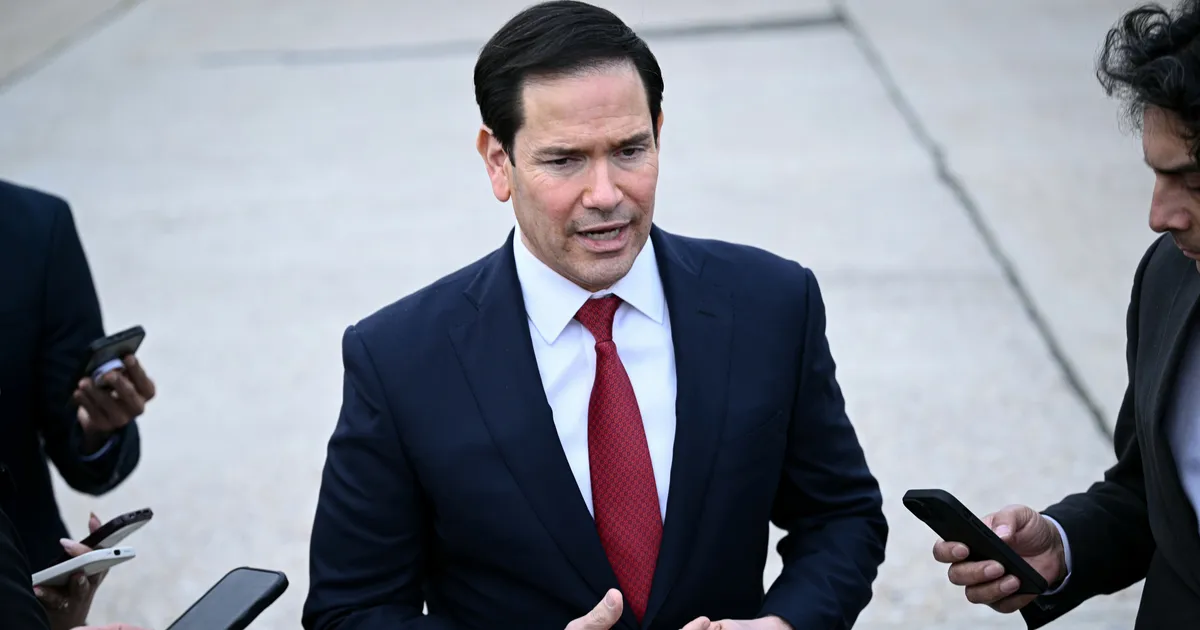
Marco Rubio perfectly demonstrated the US’s inconsistent messaging over Ukraine in a one-minute interview.
Donald Trump has vowed to end the Ukraine war as soon as possible and has frequently suggested Kyiv bow to Russia’s demands – even though Moscow started the conflict by invading its European neighbour.
Pressed over how the trilateral talks are going on Friday, the US’s top diplomat initially accused Volodymyr Zelenskyy of misrepresenting America’s stance in the ongoing negotiations.
In his next answer, he appeared to prove the Ukrainian president right.
Advertisement
Asked if American security guarantees for Ukraine after the war were dependent on the country giving up the eastern Donbas territory, Rubio immediately slapped it down.
He told reporters: “That’s a lie. I saw him [Zelenskyy] say that and it’s unfortunate that he would say that because he knows it’s not true and that’s not what he was told.”
“Security guarantees are not going to kick in until there’s an end to the war because otherwise you’re getting yourself involved in the war,” Rubio insisted.
“It’s a truce that you’re willing to step in and secure. If you’re putting that in place, that means you’re injecting yourself in the war.”
Advertisement
He said the guarantees were not attached to giving up the Donbas, adding: “I don’t know why he says these things, they’re just not true.”
Rubio said: “We’ve told the Ukrainian side what the Russians are insisting on.
“We’re not advocating for it, we explained it to them. It’s their choice to make. It’s not for us to make. We never told them to take it or leave it.
“The role we have played is to try and figure out what both sides want and to try and reach a middle ground.”
Advertisement
But, in the next breath, he suggests the war will only end – meaning, Ukraine will only get US security guarantees, if it concedes to Russian wishes.
Rubio said: “The decision ultimately is up to Ukraine, if they don’t want to make concessions, then the war keeps going.”
Zelenskyy told Reuters that questions remain around the security guarantees Ukraine could receive once the war ends, such as how allies would respond in the face of future Russian aggression and who would help to fund the country’s weapons purchase to sustain its military deterrent.
He added that the US will finalise questions “once Ukraine is ready to withdrawfrom Donbas”, which is one of Vladimir Putin’s maximalist demands – but that is a red line for Kyiv.
Advertisement
“I would very much like the American side to understand that the eastern part of our country is part of our security guarantees,” Zelenskyy said.
Over 100 church leaders have written an open letter to Paul Marshall, a self-professed Christian and owner of GB News. The missive criticised the far-right media baron for platforming climate-hostile pseudoscience, and called for Marshall to right his channel’s wrongs.
I am a committed Church of England Christian. I believe we are all made in God’s image, that we all have gifts and that education is the key to realising our potential.
Unfortunately, that commitment to education doesn’t seem to extend to his GB News channel. The far-right propaganda distributors frequently platforms fossil-fuel shills and demonstrably false climate-hostile views. In fact, it hosted 953 attacks on climate action in and around the 2024 general election.
GB News — ‘Significant responsibility’
As such, church leaders have now called out Marshall’s glaring hypocrisy. The open letter’s signatories include three assistant bishops, two bishops, and the former archbishop of Canterbury, Rowan Williams.
Advertisement
The open letter stressed the need to love and care for the world itself, going on to state that:
It is this love which has led climate scientists Katharine Hayhoe and the late Sir John Houghton, both evangelical Christians, to dedicate their lives to understanding why the planet is heating beyond what can be explained naturally, and then to suggest, with passion and conviction, what our response should be to this human-caused crisis.
They then get to the heart of the matter, and their reason for writing to Marshall:
We share all of this with you not only because you are a professing Christian and fellow brother in Christ, but because you have significant responsibility given your portfolio of media holdings (UnHerd, GB News, The Spectator): outlets which shape the thinking of millions of people and have a significant impact on our public discourse and politics.
‘Personal financial interests’
After listing numerous examples of GB News shilling for the climate-wrecking lobby, the letter moved on to hitting Marshall where it will hurt the most — his vast wealth. They called for the millionaire to make his fossil-fuel investments clear, and for his media empire to do likewise:
As of 2023, your hedge fund had £1.8 billion invested in fossil fuels. If you have personal financial interests in fossil fuels, we ask, in the spirit of transparency, that you declare these interests before making public statements about the climate crisis and what our collective response to it should be.
Likewise, we would ask that GB News presenters and guests, as well as contributors to The Spectator or UnHerd, might also, in the spirit of transparency and in the interest of honest debate, declare any personal interests in fossil fuels up front (on air or in print/online) prior to engaging in any discussion related to climate, energy, the natural world or decarbonisation.
Advertisement
Given a direct callout from the leaders of a faith Marshall claims to follow, you might hope that he’d show at least a mote of contrition. But of course, the far-right darling did no such thing.
I share the concerns for stewardship of the planet, which is currently in a gradual warming cycle. This has to be balanced with a commitment to human flourishing.
For that reason I do not support the current policy of unilateral net zero, which the UK is pursuing out of step with the rest of the world. It is undermining the country’s long-term prosperity, imposing excess costs on businesses, discouraging new growth industries and having an outsized negative impact on the elderly and the poor.
This bollocks about a “warming cycle” is pseudoscience. The vast majority of experts agree that global warming is caused by human actions — and that we need to reverse course, desperately and urgently.
Advertisement
Unfortunately, men like Marshall don’t have to listen to experts. They have something better than expertise — they have money and power. With those two things, they can buy — just as an example — their own news channel to repeat their lies. And, with enough repetition, those lies become accepted ‘truth’.
Marshall’s reaction to his own faith leaders is as predictable as it is depressing. After all, the Bible doesn’t mince words about the fate of the wealthy, but the GB News owner is still busy building his portfolio. It’s just a pity that he seems determined to bring fire down on us all before he meets his judgement.
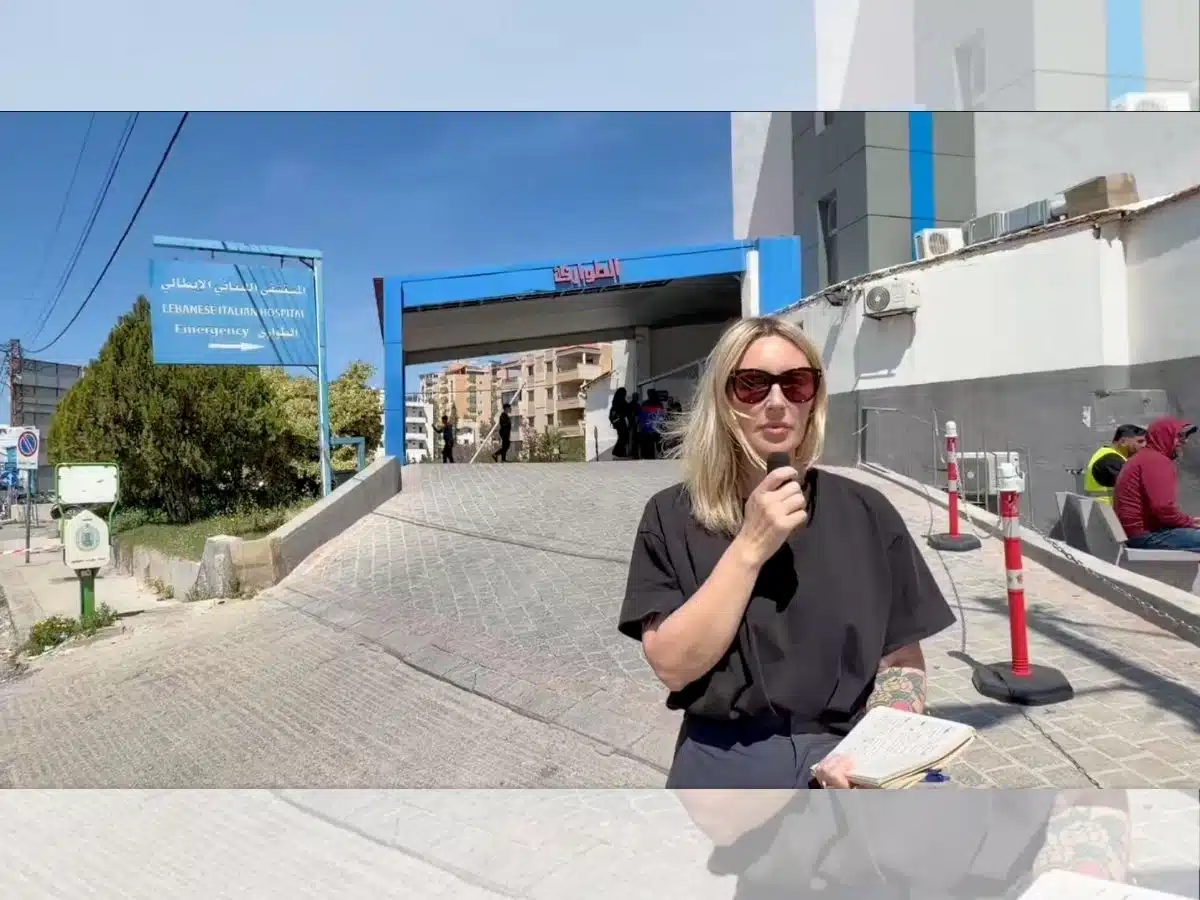
On 28 March, Israel continued its bloody streak of murdering journalists. This time, the invading Israeli forces killed Ali Shuaib (Al-Manar), Fatima Ftouni (Al-Mayadeen), and camera operator Mohamad Ftouni. Now, their colleague Courtney Bonneau has mourned their passing:
Journalists Ali Shuaib (Al-Manar) and Fatima Ftouni (Al-Mayadeen), along with Fatima’s brother, camera operator Mohamad Ftouni, join a long list of Lebanese journalists killed by Israel. An Israeli warplane fired five missiles at their car, travelling in the countryside next to the city of Jezzine, around 30 Km north of the border with occupied Palestine. The last two missiles were fired at 2 civilians, one of them from the Lebanese Civil Defence, who were trying to save the targeted journalists.
Hi, I’m reporting to you from the city of Sur. As you may already know, my colleagues Fatima Ftouni and Haj Ali Shuaib were killed today in a targeted Israeli drone strike.
Ali Shuaib worked for Al Manar and Fatima worked for Al Mayadeen. I worked with them in the fields on the borders for the last 15 months documenting Israeli war crimes.
Haj Ali Shuaib was a veteran journalist and devoted his entire career to documenting Israeli war crimes in South Lebanon. Fatima was one of the bravest journalists that I’ve ever met. She never shied away from danger. She never shied away from a report, ever. And today, while documenting these war crimes and the Israeli invasion of Lebanon, they became victims of a war crime themselves.
They were shining examples of integrity and ethics. And we, as journalists in Lebanon, will honor their memory by continuing to work today and tomorrow and every day until the Israeli army is out of South Lebanon.
Dedication
Bonneau is a war correspondent working with Vocal Politics:
Advertisement
Five paramedics, three journalists and six Syrian farm workers were killed today in targeted Israeli strikes.
This is the report I was working on today when I received news of a massacre in Jezzine. It turned out to be Ali and Fatima. pic.twitter.com/J7WyRo6ixu
— courtneybonneauimages (@cbonneauimages) March 28, 2026
Speaking further on her fallen colleagues, Bonneau said:
What I admired about Hajj Ali and Fatima the most was their style of journalism. Their dedication to telling the story, not going for sensationalism or making the story about themselves. They led by example and I am a better journalist after spending this time with them.
— courtneybonneauimages (@cbonneauimages) March 28, 2026
The right-wing party has lost at least 67 candidates since May 2025, according to Lib Dem peer and polling expert Mark Pack.
In the last week, past social media posts from candidate Linda Holt referred to the former first minister of Scotland Hamza Yousaf as an “Islamist moron” – and the party has stood by her.
Corey Edwards was photographed appearing to perform the Nazi salute, and has since stood down from the upcoming Senedd elections in Wales.
Reform vowed last year that their vetting process would improve and they would not face the same problems they did during the general election.
When questioned over these controversies on Sunday with Laura Kuenssberg, Yusuf said: “Firstly, all of that is abhorrent and the party has taken action on that.”
“Why does it keep happening?” The BBC presenter replied.
Advertisement
Reform’s home affairs spokesperson said: “Laura, Reform has vetted over a thousand candidates over the last couple of years.
“Even if our success rate is 99.9%, a handful will slip through.”
He then went on to attack the BBC, saying: “Yes, of course it’s reasonable to hold Reform to account.
“But what consistently happens is the BBC pounces on every single Reform mishap and gives it vastly disproportionate coverage in your news cycles – and completely ignores the far most voluminous misdemeanours and frankly egregious things from other parties do.”
Advertisement
But Kuenssberg cut in: “No, proportionally, Reform has lost more candidates over this kind of thing happening than other political parties.”
He claimed that was “actually incorrect” – before pointing to reports that Green activists had made a series of antisemitic remarks in a group chat.
He claimed a Green Party council candidate made that same claim but “the BBC hasn’t even reported on that and I think that’s unbecoming of the BBC.”
This is a reference to a story from The Telegraph about the Greens for Palestine group, one faction of the party.
Advertisement
A spokesperson told the newspaper: “We do not tolerate discrimination against anyone and also reject deliberate and disingenuous attempts to conflate Zionism and Judaism.”
The BBC has reported on antisemitism allegations within the Greens in the past, and how the party dropped candidates in the run-up to the 2024 general election over problematic or extreme social media posts.
The leader of Reform UK in Scotland, Malcolm Offord, was also asked this week if his party was “shambolic” after losing five Holyrood candidates in a matter of days.
He claimed: “I wouldn’t say it was shambolic, I’d say in fact he opposite. I would say we’ve done an extraordinary thing in a short space of time to interview over 300 candidates to get 73 wanting to stand.”
Advertisement
He claimed the party’s vetting process has been “terrific”, adding: “As I said, it’s gone from over 300 to 73 in six months.
“That’s an extraordinary achievements for a brand new party with a lot of very interesting people coming in, a really interesting mix of people of whom 80% have not been politicians before,” Offord said.
With the local elections fast approaching, Reform UK are working overtime to scale their operation. In aid of this, Farage descended on the capital to push his London-phobic message to the people of London. In response, hecklers made it clear what sort of welcome he should expect:
🚨 WATCH: Nigel Farage is repeatedly heckled at the launch of Reform UK’s London local election campaign pic.twitter.com/QCshvLKvU0
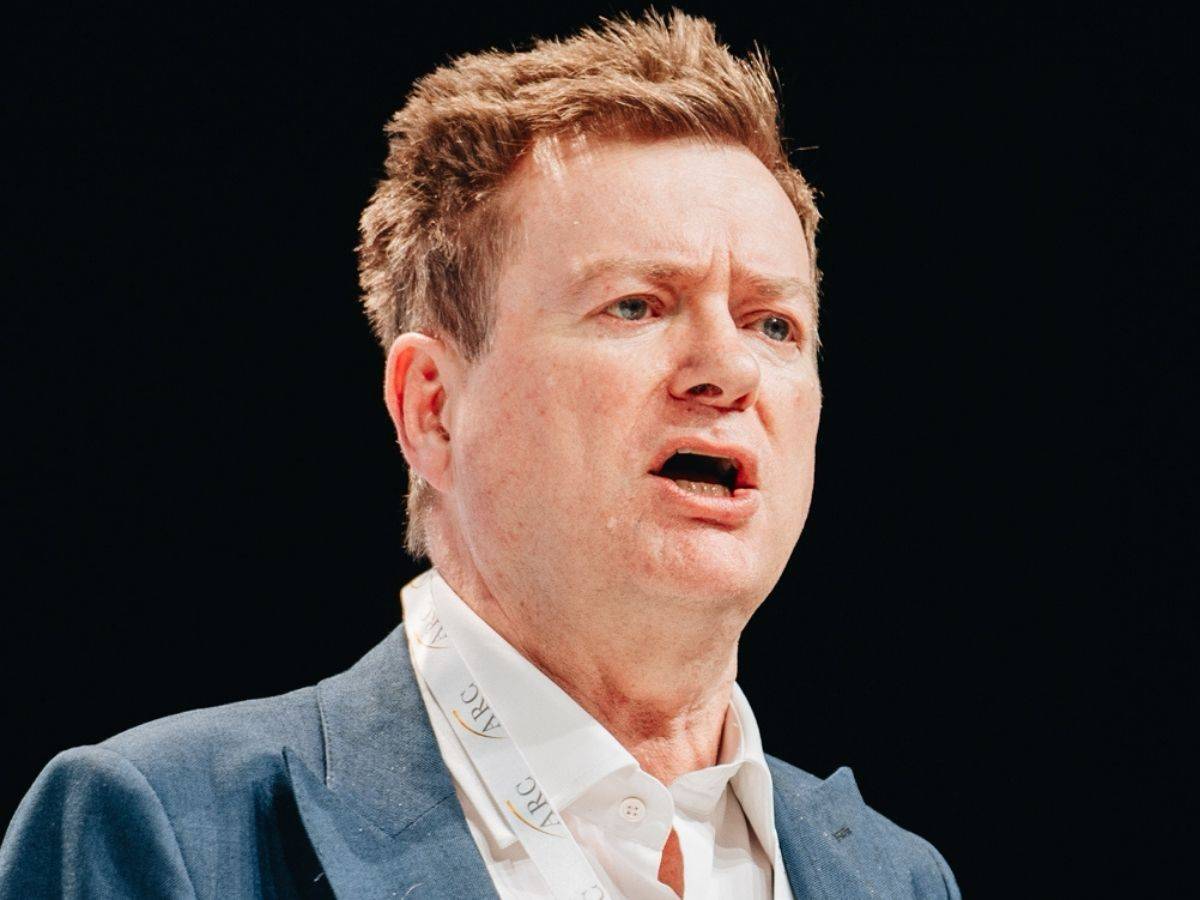
Try not to look at the above image for too long, by the way, and especially don’t look him in the eyes.
Back to the London launch, the clip begins with Farage slagging off London fashion before descending into chaos as a heckler shouts over him:
Advertisement
In the most fashionable parts of central London, men now don’t wear… Oh, we’ve got a screamer! We’ve got a screamer! Boring! Boring! Boring!
As he said this, the word ‘BORING’ was flashing on the screen behind him.
Tip for next time, Nigel; it’s never a good idea to repeatedly shout the word ‘boring’ in the middle of your own speech. Also, from a branding perspective, you should have been saying ‘Now then, now then‘ to hammer the Saville stuff home.
Farage continued:
Oh, it’s… Well, that was fun, wasn’t it? And do you know what I’d say to that young man? Do you know what I’d say? I’d say this. What other party leader in modern Britain would have a public event in the Fairfield Halls in Croydon and invite anyone to come along and listen to what I have to say. And you know what? You can agree, you can disagree, it doesn’t matter. Doesn’t matter. Who else would come along and do that?
This would be a good point if people’s concern was ‘party leaders won’t come to Croydon‘, and not that Reform is pursuing a far-right agenda of antagonising migrants and diminishing state capacity for the benefit of their tax exile donors.
Advertisement
The heckler resumed heckling, anyway, with Farage finishing:
Listen, mate, you’ll have a coronary. You’ll have a coronary. Do you know? Do you know I’d pay to watch this? And that is what… Well, as I always say, boring, boring.
It wasn’t that boring, to be fair, and it did at least draw attention away from the Saville stuff.
Perspectives
The following video shows things from the perspective of the hecklers:
As people noted, Farage might have suspected an easy ride given the massive anti-fascist protest going on elsewhere in the capital:
He tried to go under the radar in Croydon as everyone was at the march in central London. Some Croydon antifash stayed back though.
— Dr Iain Darcy 🍉 🇮🇪 💚 (@doctoriaindarcy) March 28, 2026
Advertisement
We covered that protest here:
We’ve joined the short march at the Together Alliance demo in central London today – oh and the rave on Trafalgar Square is already popping off 💚 pic.twitter.com/aRVWsfBulm











 News Videos4 days ago
 Sports6 days ago
 Sports6 days ago
 Tech7 days ago
 Tech7 days ago
 Business3 days ago
 News Videos6 days ago
 NewsBeat2 days ago

 Tech6 days ago
 Sports7 days ago


 Fashion5 days ago

 Business5 days ago
 Sports4 days ago
 Politics6 days ago
You must be logged in to post a comment Login